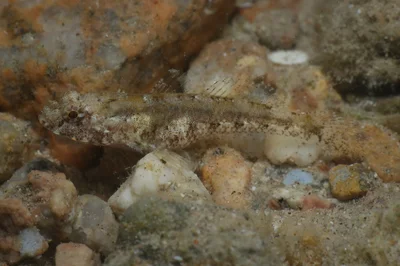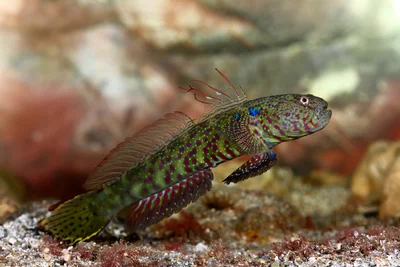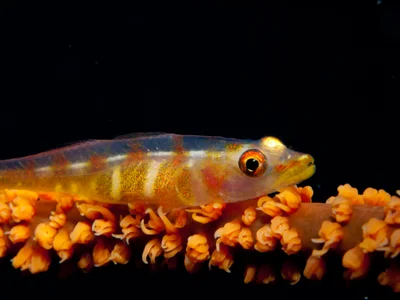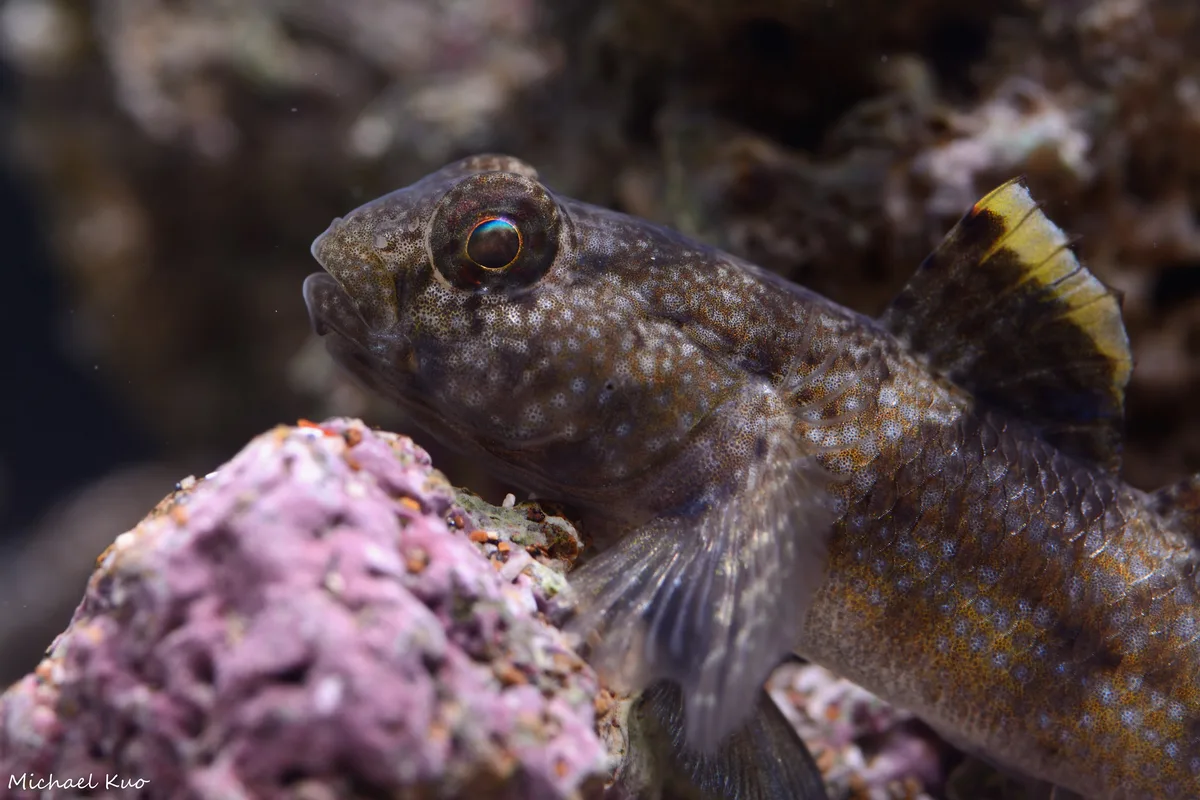
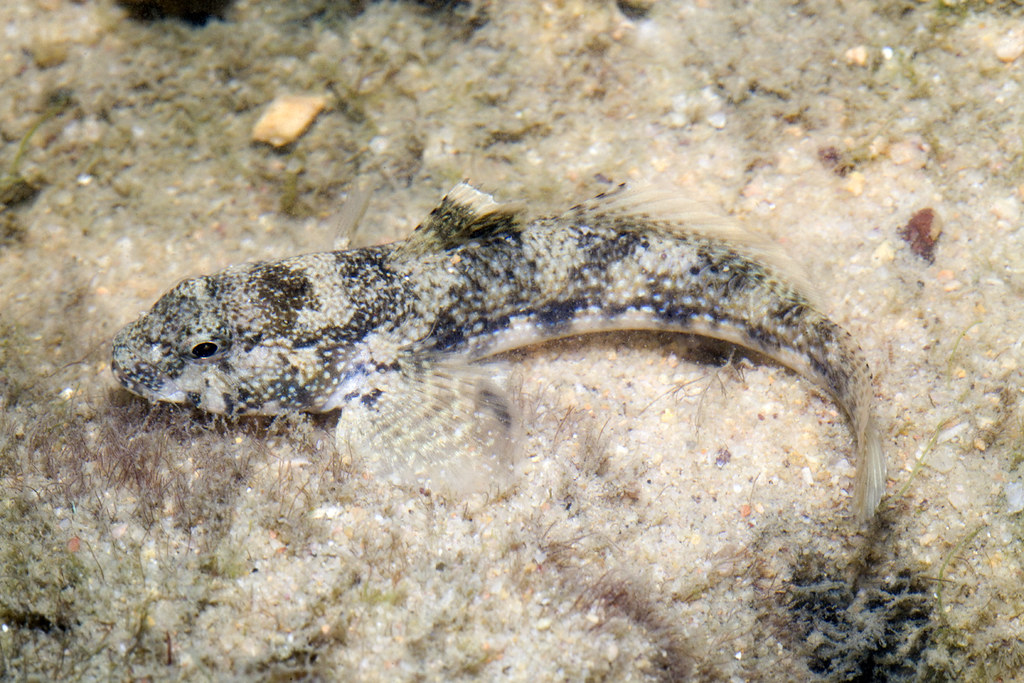
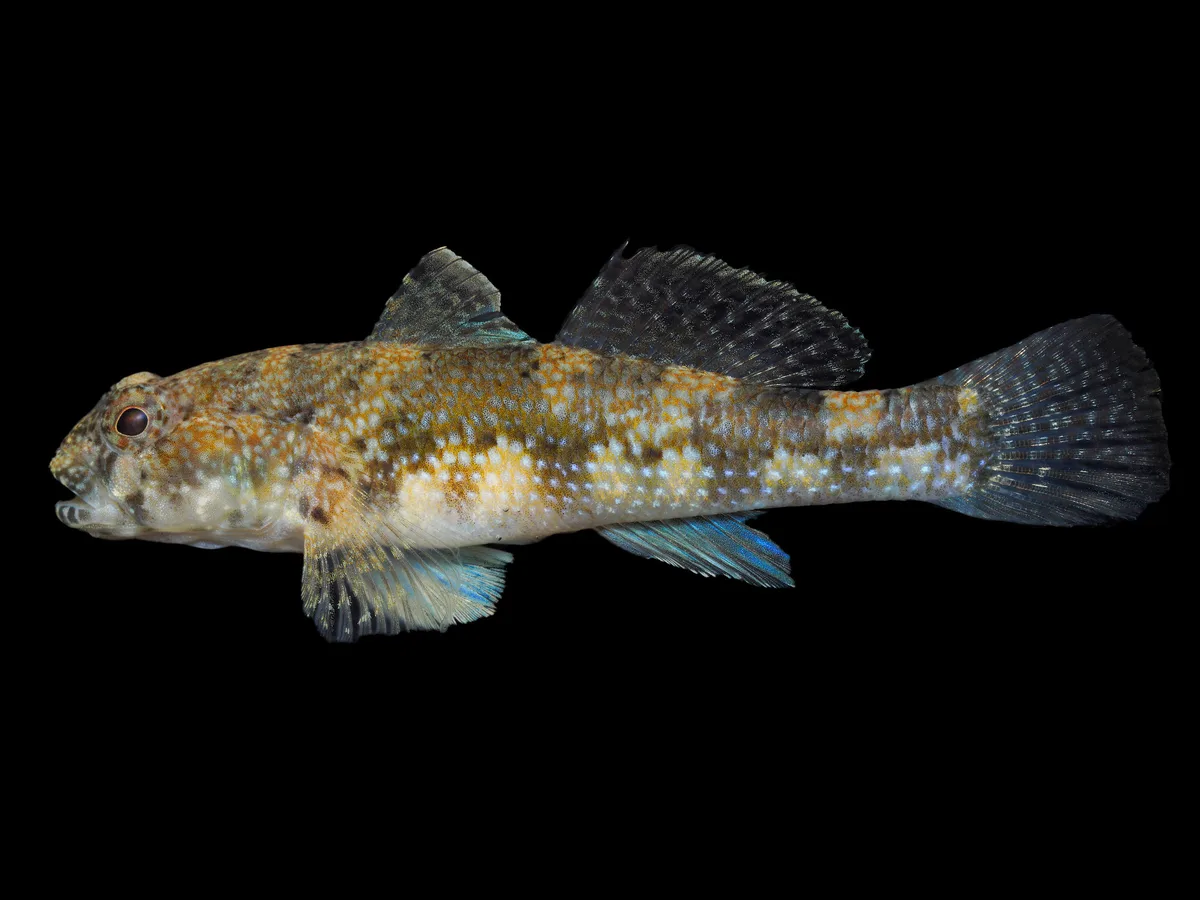
Dusky Frillgoby
Dusky Frillgoby
Dusky Frillgoby
Dusky Frillgoby
© Michael Kuo
Fishes · Bony fishes · Gobies

Dusky Frillgoby

Bathygobius fuscus (Rüppell, 1830)
syn. Bathygobius fuscus fuscus, Bathygobius samberanoensis, Bathygobius sambiranoensis, Bathygobius vergeri, Gobius darnleyensis, Gobius fuscus +11 more
12 cm1-6 mLeast Concern
749

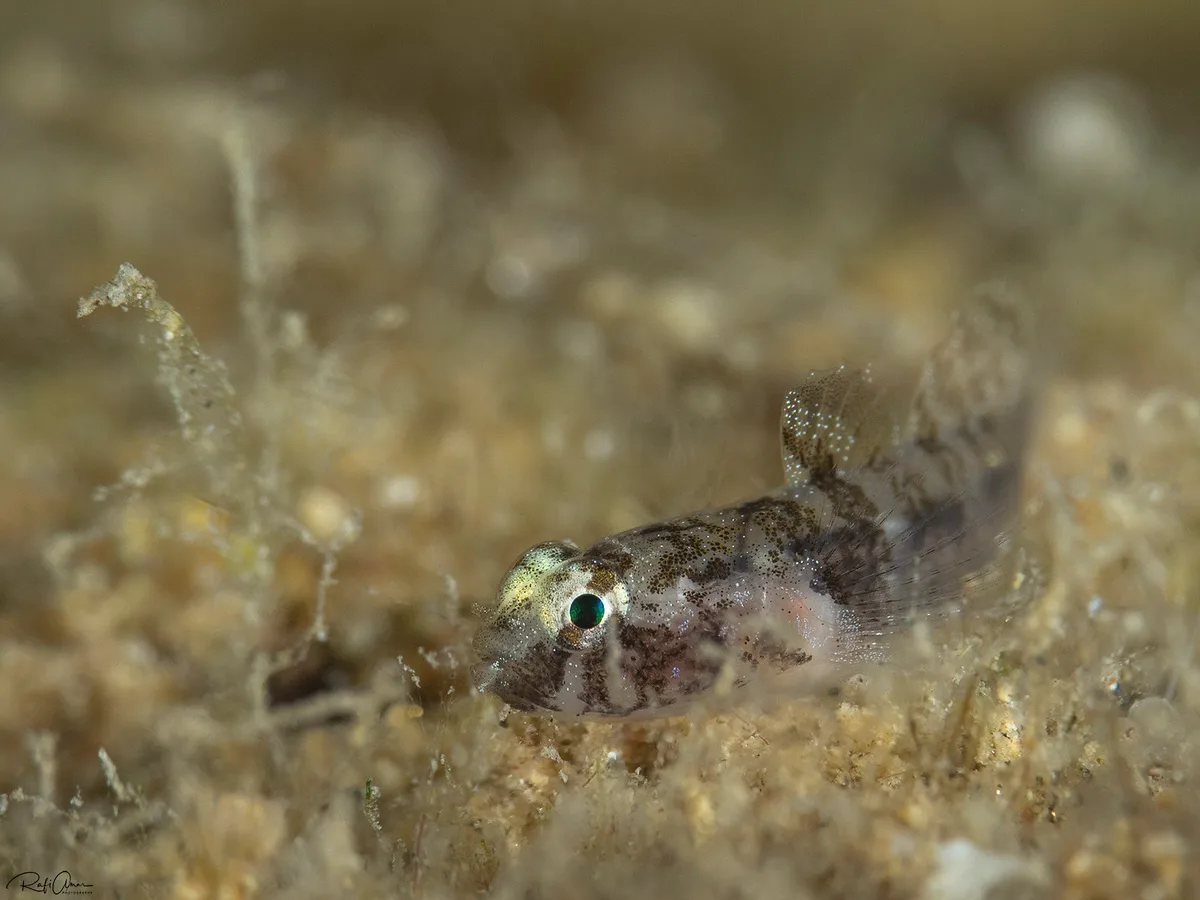
The Dusky Frillgoby, also known as the brown frillfin and scientifically referred to as Bathygobius fuscus, is a species of goby fish that inhabits the Indo-Pacific region. This area stretches from 🇿🇦 South Africa, through the 🌊 Red Sea, as far east as 🇹🇴 Tonga, and northward to 🇯🇵 Japan, as well as south to 🇦🇺 Australia. Predominantly a coastal species, the Dusky Frillgoby exhibits an amphidromous life cycle, meaning it can transition between salt and freshwater environments. You can find this species in estuaries and sometimes venturing into freshwater streams.

This fish thrives in environments rich in sand, rubble, soft coral, and open reefs and makes its home in shallow waters ranging from 1 to 6 meters (approximately 3 to 20 feet) in depth. It measures up to 12 centimeters (4.7 inches) in length. You might spot this goby in tidal pools within rocky intertidal zones, as well as between coral branches where it finds plentiful feeding opportunities.

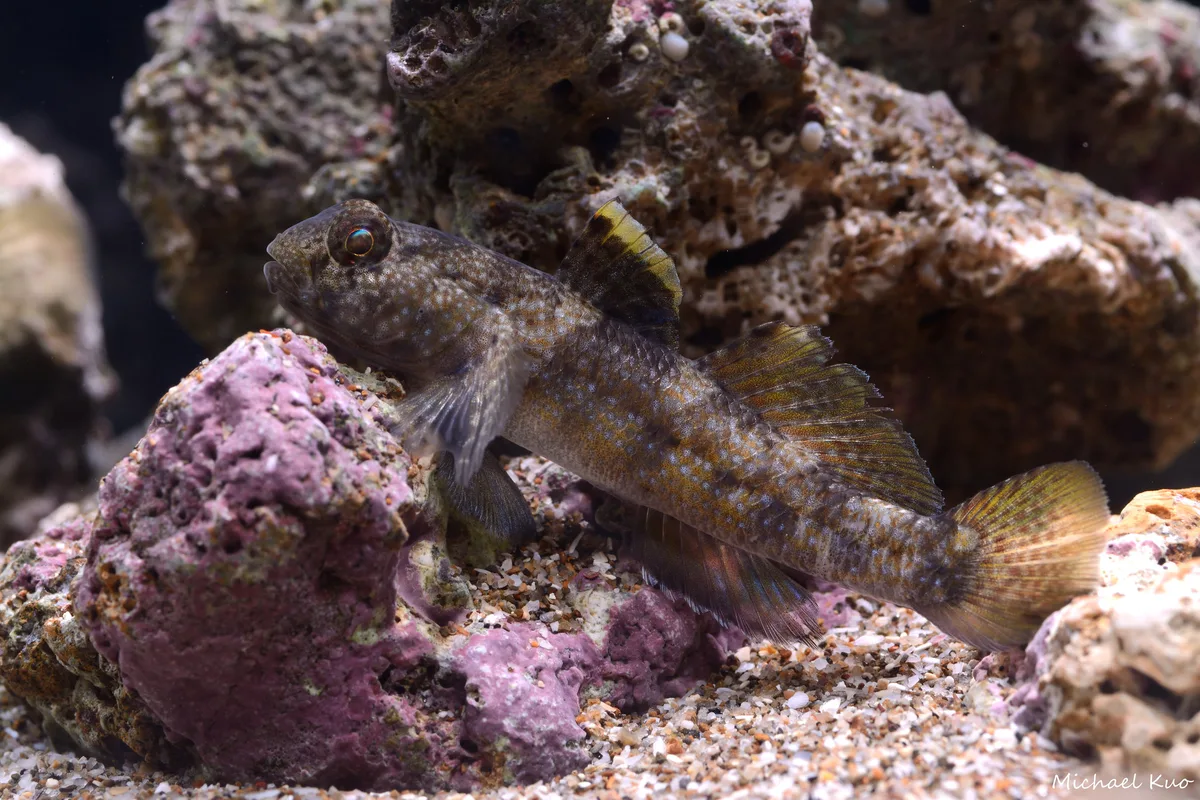
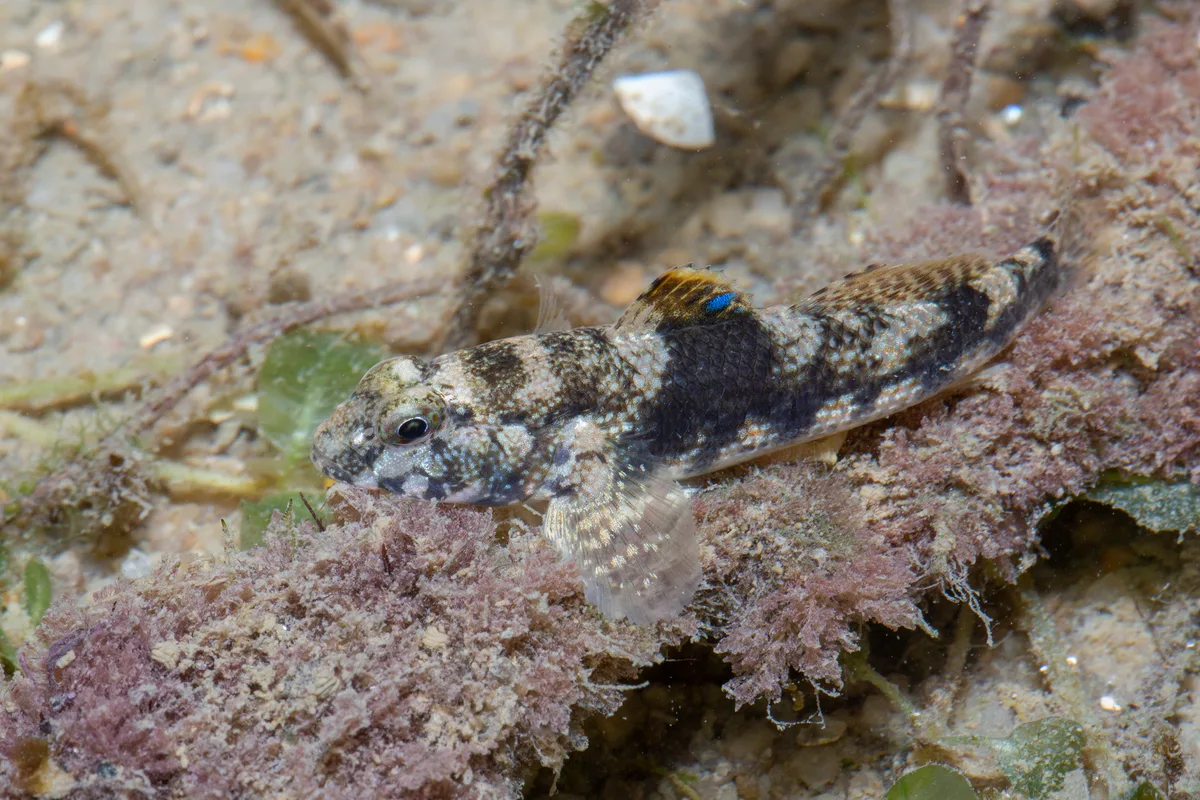
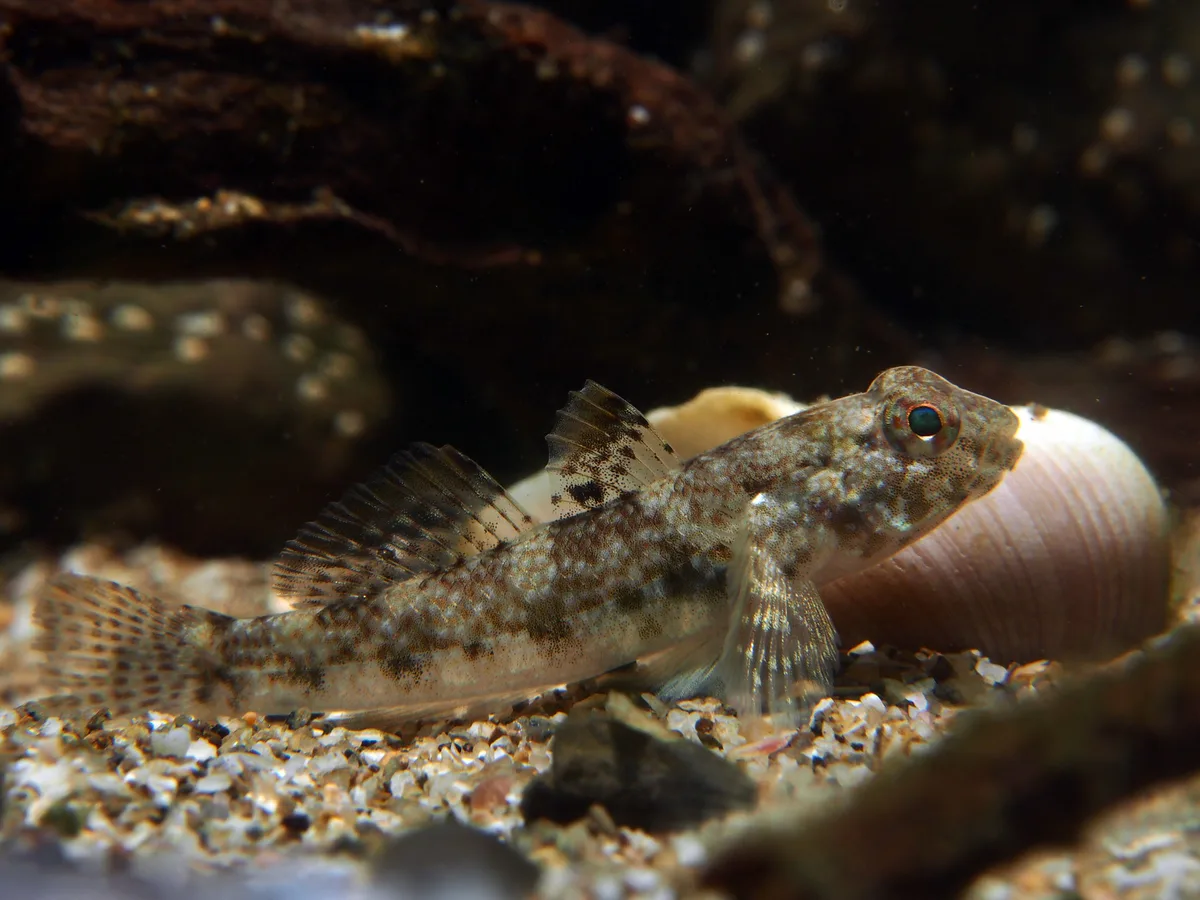
The Dusky Frillgoby's diet consists of detritus, crustaceans, smaller fish, and algae, and it reproduces by laying eggs on the ocean floor, a behavior known as benthic spawning. As for its appearance, this fish is pale yellowish-brown with large, irregular dark brown blotches across its body. It features small, pale blue spots in neat, longitudinal rows on each scale, while its dorsal and caudal fins are adorned with small blue spots and have broadly yellow outer edges.

Anatomically, the Dusky Frillgoby has seven dorsal spines, nine dorsal soft rays, one anal spine, and eight anal soft rays. Its caudal fin is rounded, and it possesses a distinct body scale pattern with 29 to 36 scales in a longitudinal series and 10 to 19 predorsal scales. Although the cheek and opercle lack scales, the fish's body is covered with a combination of ctenoid and cycloid scales. Its head is depressed, with its width greater than its depth, and its body depth relative to its standard length ranges between 4.4 and 5.0.

Though commonly found in non-Hawaiian parts of the 🌊 Indo-Pacific Ocean, the Dusky Frillgoby is sometimes observed in local markets. Its name derives from Greek and Latin, with "Bathygobius" meaning deep gudgeon.

Why it's threatened

Residential & commercial development
Housing & urban areas · Commercial & industrial areas · Tourism & recreation areas
Human intrusions & disturbance
Work & other activities
Other
Other threat

Bathygobius fuscus is not experiencing any known threats at this time (H.K. Larson pers. comm. 2013).

In the Persian Gulf, substantial sea bottom dredging, resulting in changes of water flow and sedimentation rates, for industrial, infrastructure-based, and residential and tourism development along the coast have caused deterioration in most benthic habitats (Sheppard et al. 2010). It is not known whether or not Bathygobius fuscus is directly affected by this coastal development, but due to the large-scale of coastal development throughout the Persian Gulf and given Bathygobius fuscus's habitat preferences, it is likely that Bathygobius fuscus is impacted negatively in some parts of the region.

Threat classification from the IUCN Red List.

Comments

Please, sign in to leave a comment

Continue with a social account — yours will be created automatically.

No comments yet — be the first.

Last Update: June 28, 2026