A reef eats these. Not occasionally: constantly, and in numbers that turn out to run the whole system.
The small cryptic fishes that live wedged in rubble and coral - dwarfgobies, blennies, gobies of a dozen other kinds - are almost invisible to a diver and almost impossible to count. When researchers finally did count them, the arithmetic came out startling: they supply close to sixty percent of the fish flesh consumed on a coral reef. They achieve it by dying. They hatch in enormous numbers, grow in weeks, breed, get eaten, and are replaced, over and over, so a tiny standing population moves a huge amount of food upward into everything larger.
That is the answer to an old puzzle about reefs. They are among the most productive places in the sea while sitting in water that carries almost no nutrients, and a large part of the explanation is a layer of three-centimeter fish nobody was looking at.
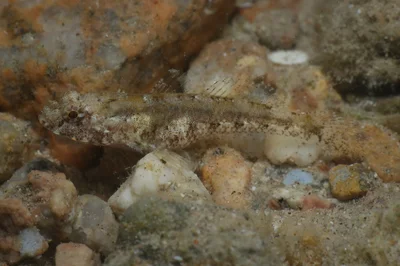
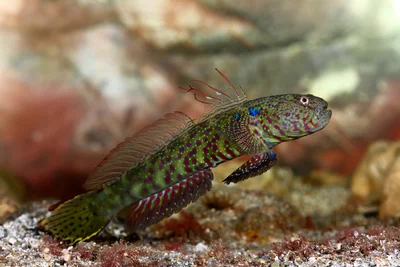
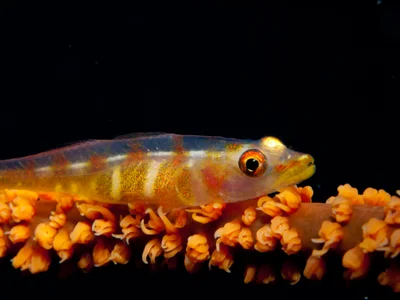
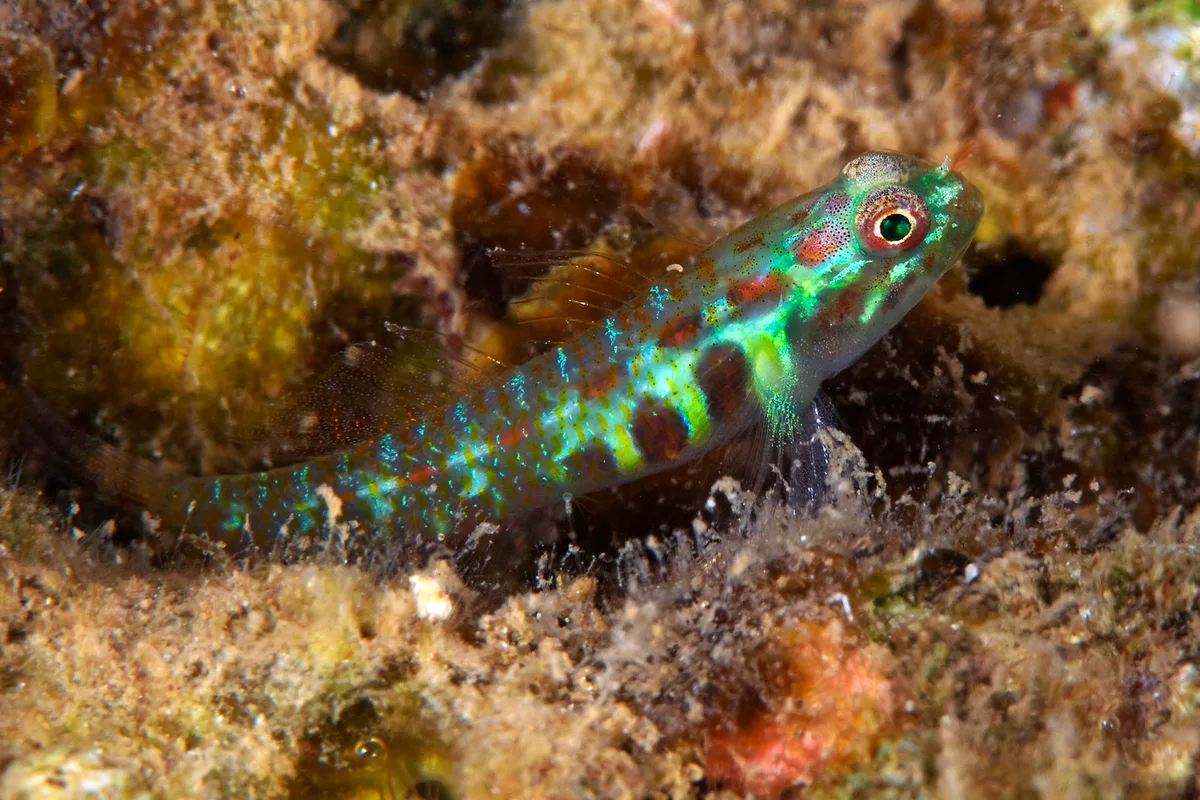
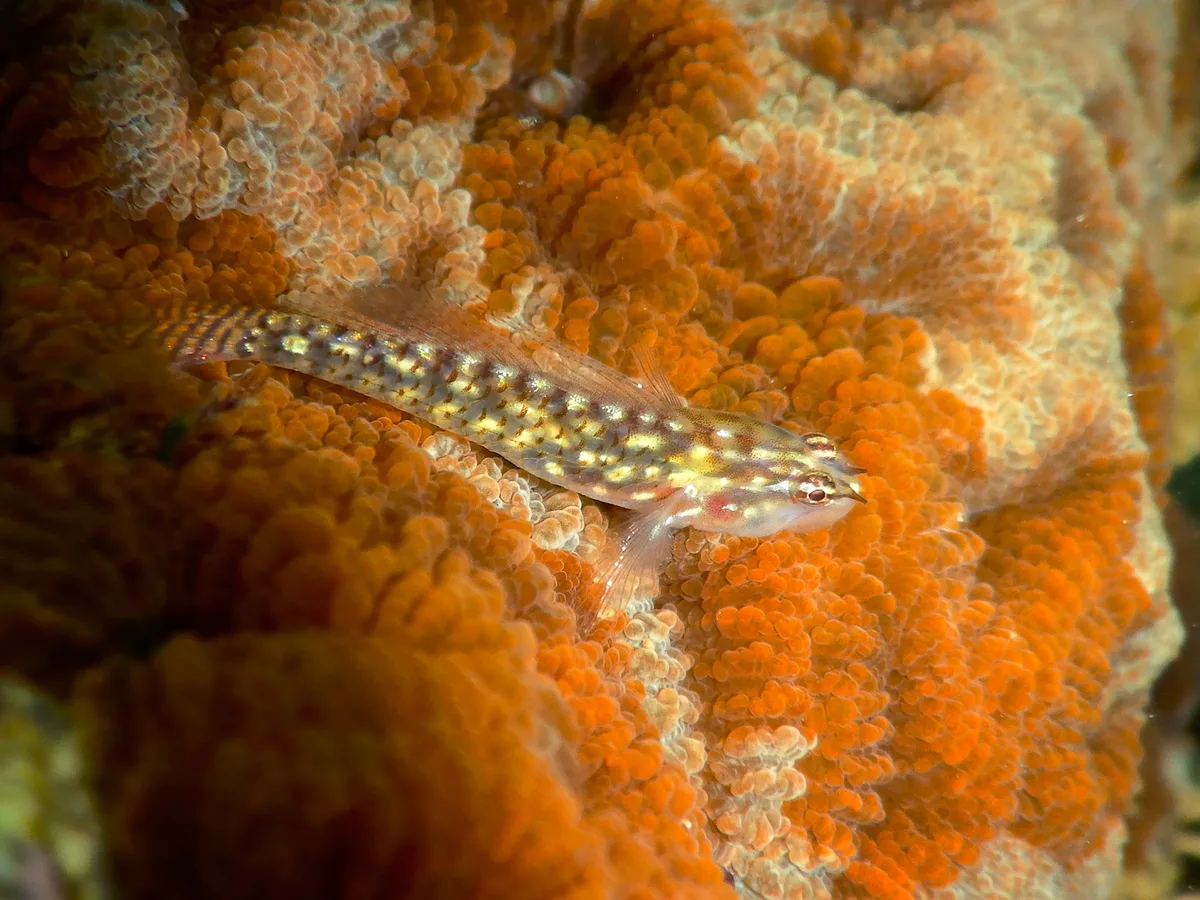
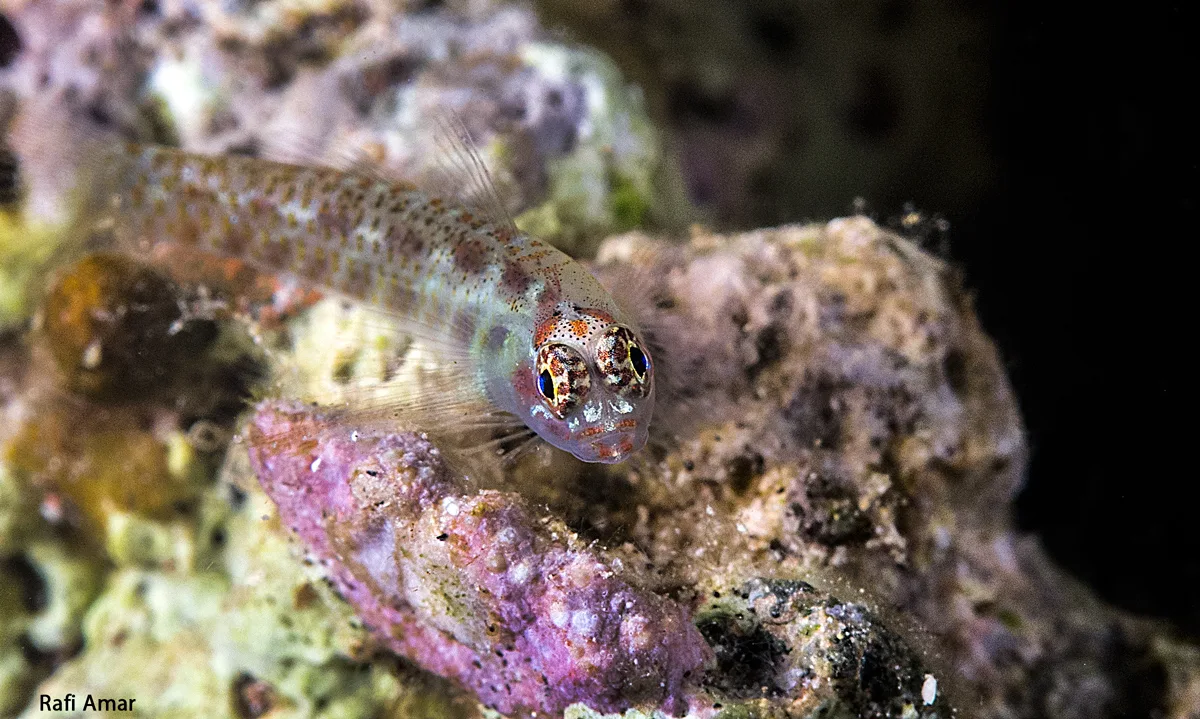
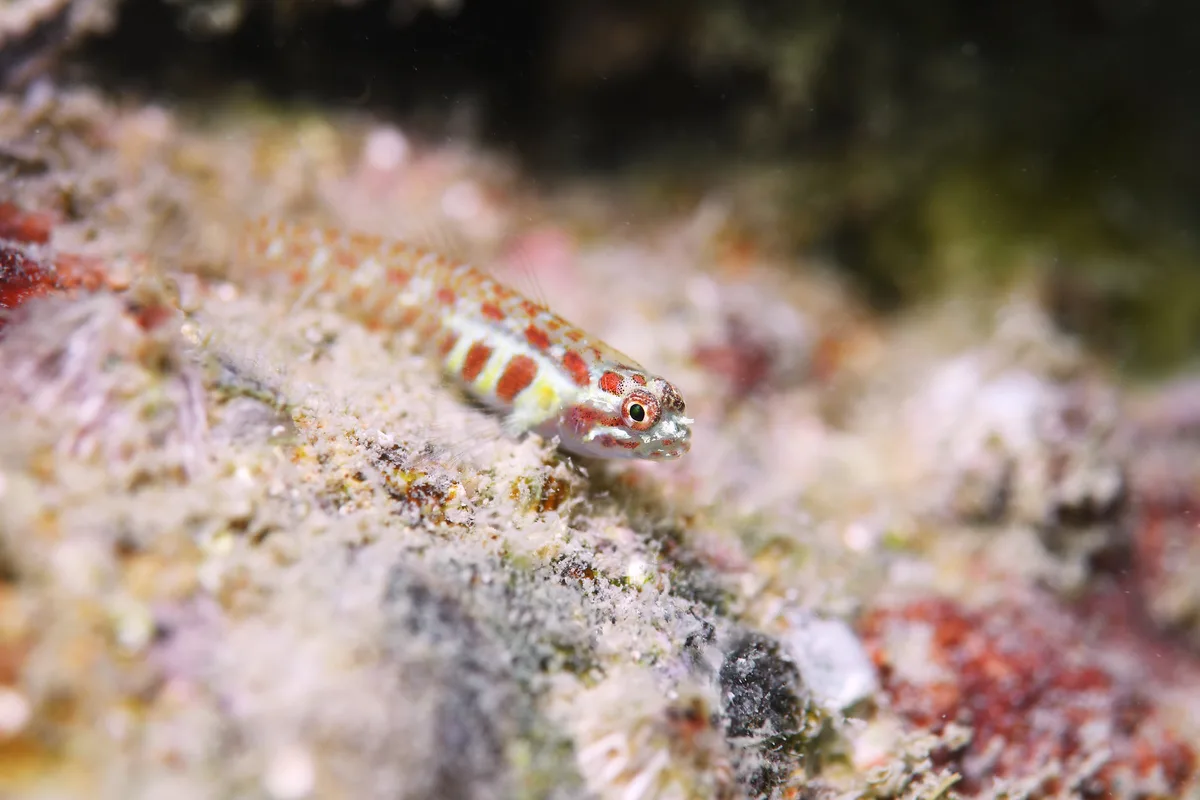
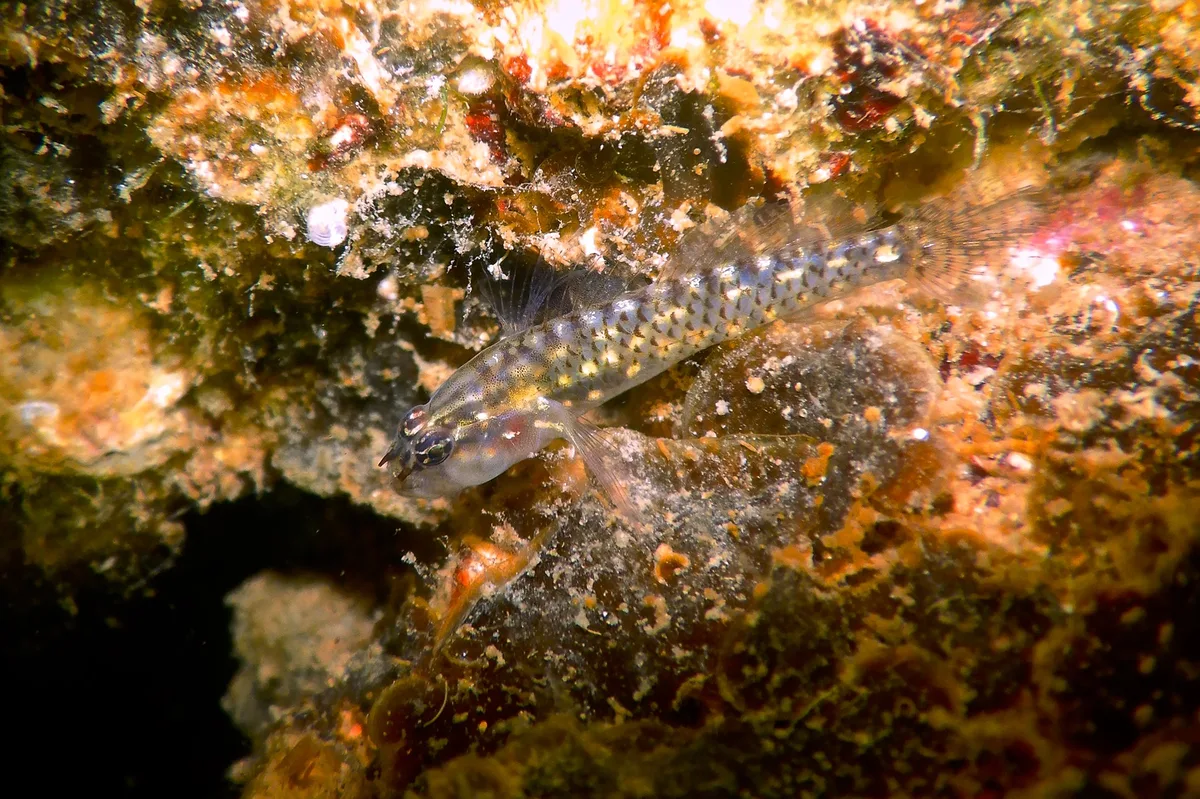
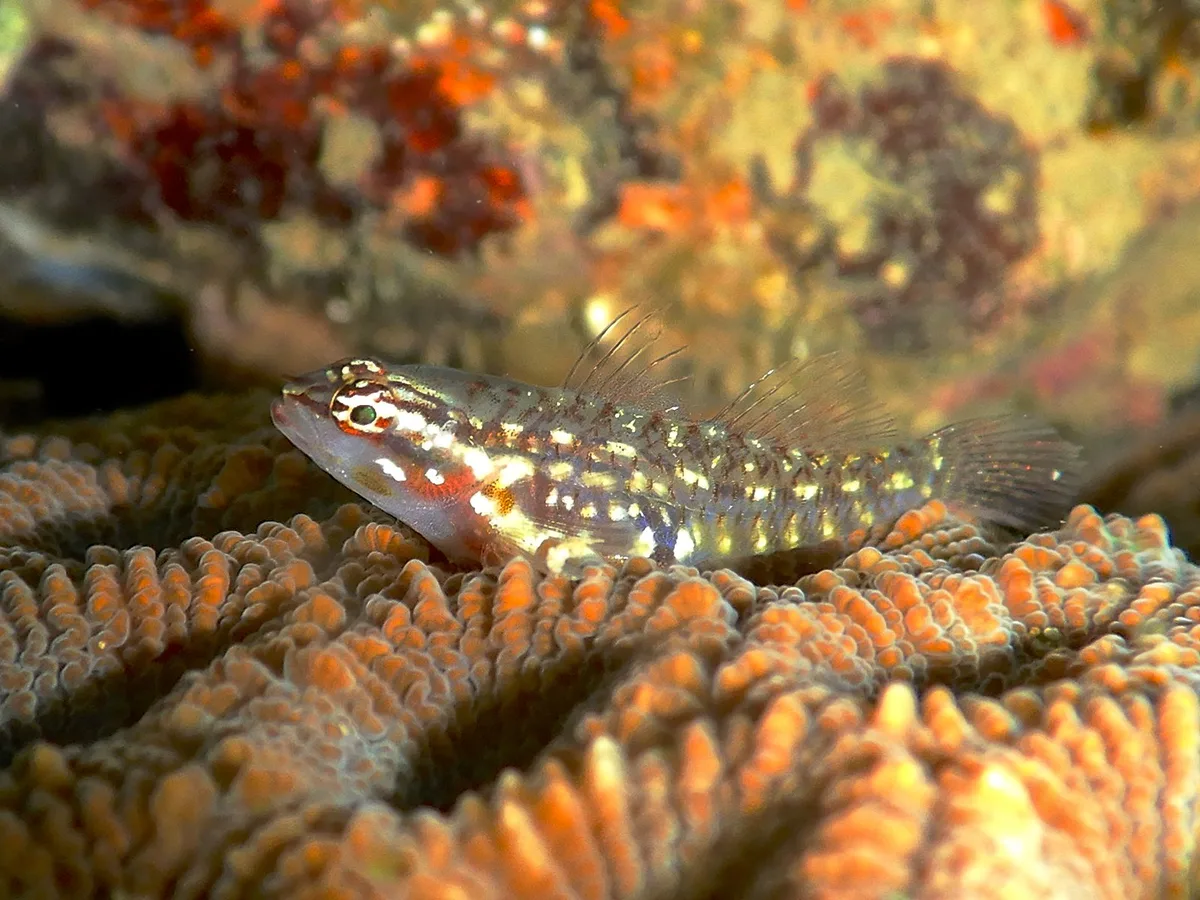
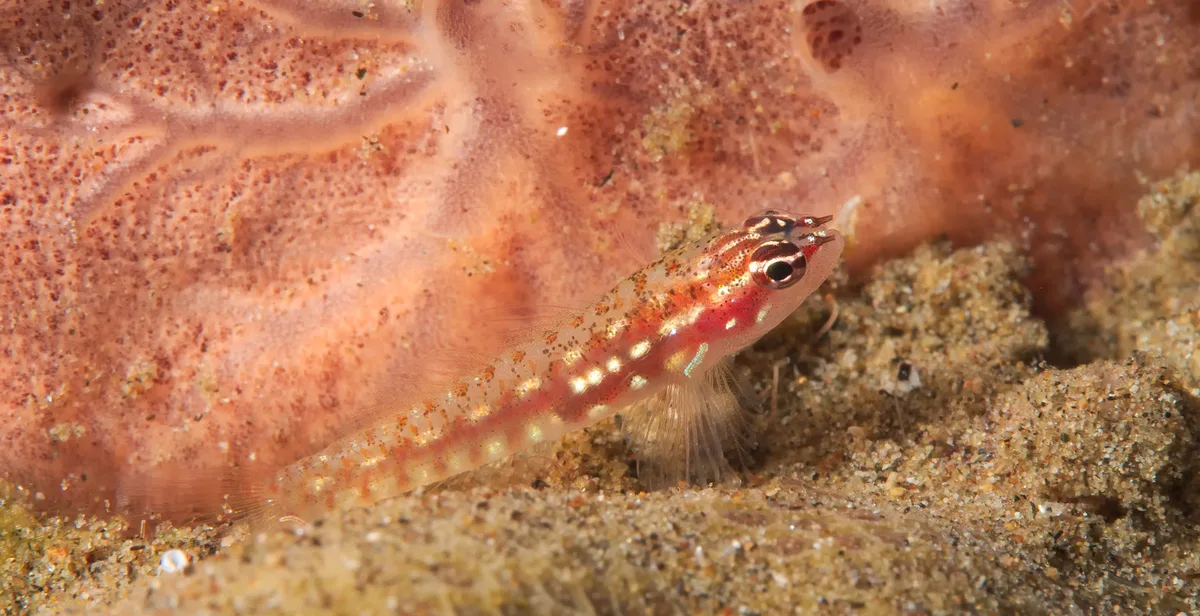
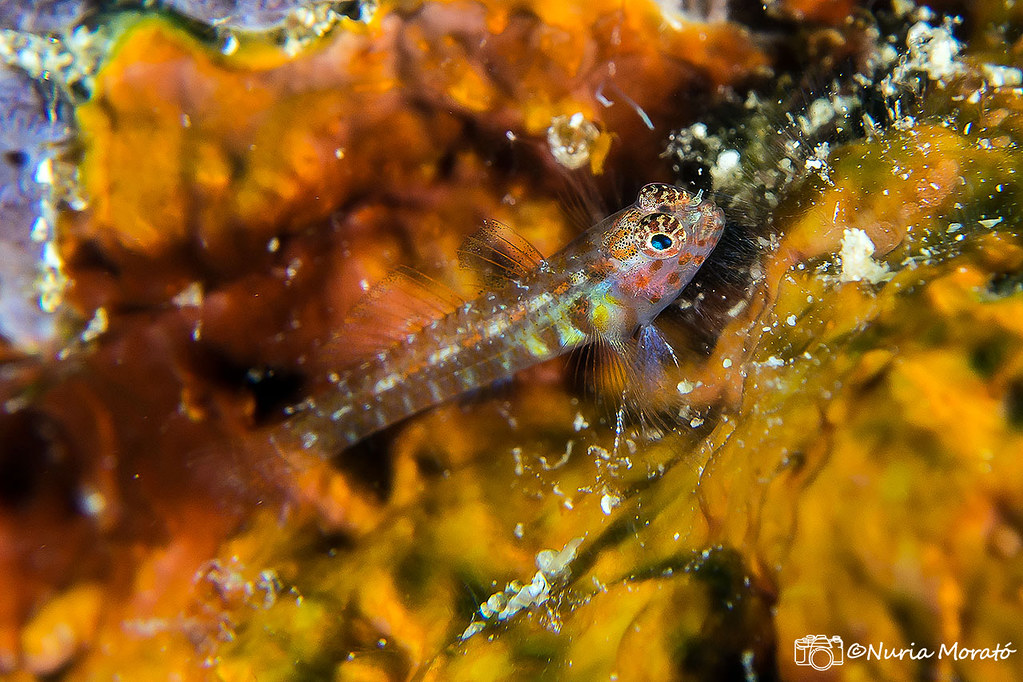
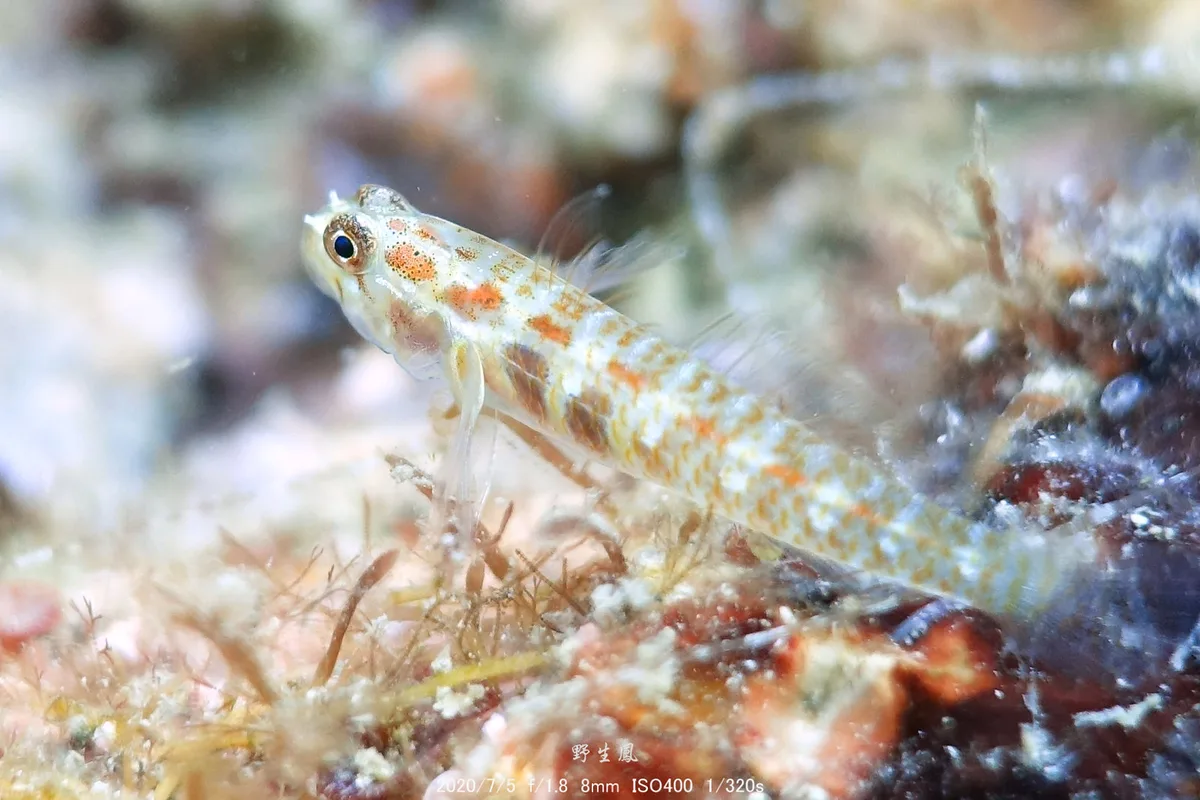
This is one of them: translucent, spotted, propped on its pelvic fins on a piece of coral, hopping from perch to perch. There are probably a hundred within ten meters of you.
The genus. Eviota Jenkins 1903 - ev- (Latinization). ETYFish
- about three centimeters, translucent with dark spotting
- sits propped on its pelvic fins on coral or rock
- hops rather than swims, in short bursts between perches
- up to 3.2 cm