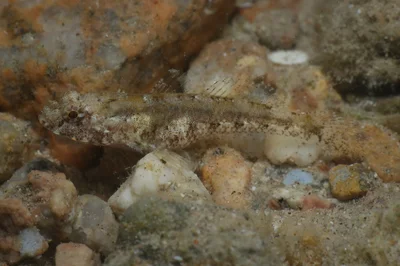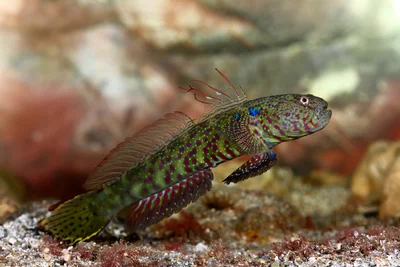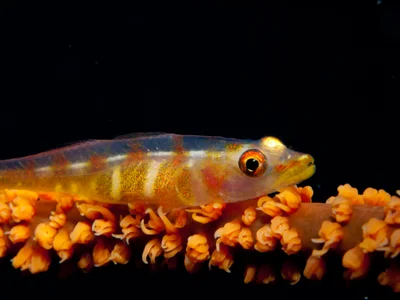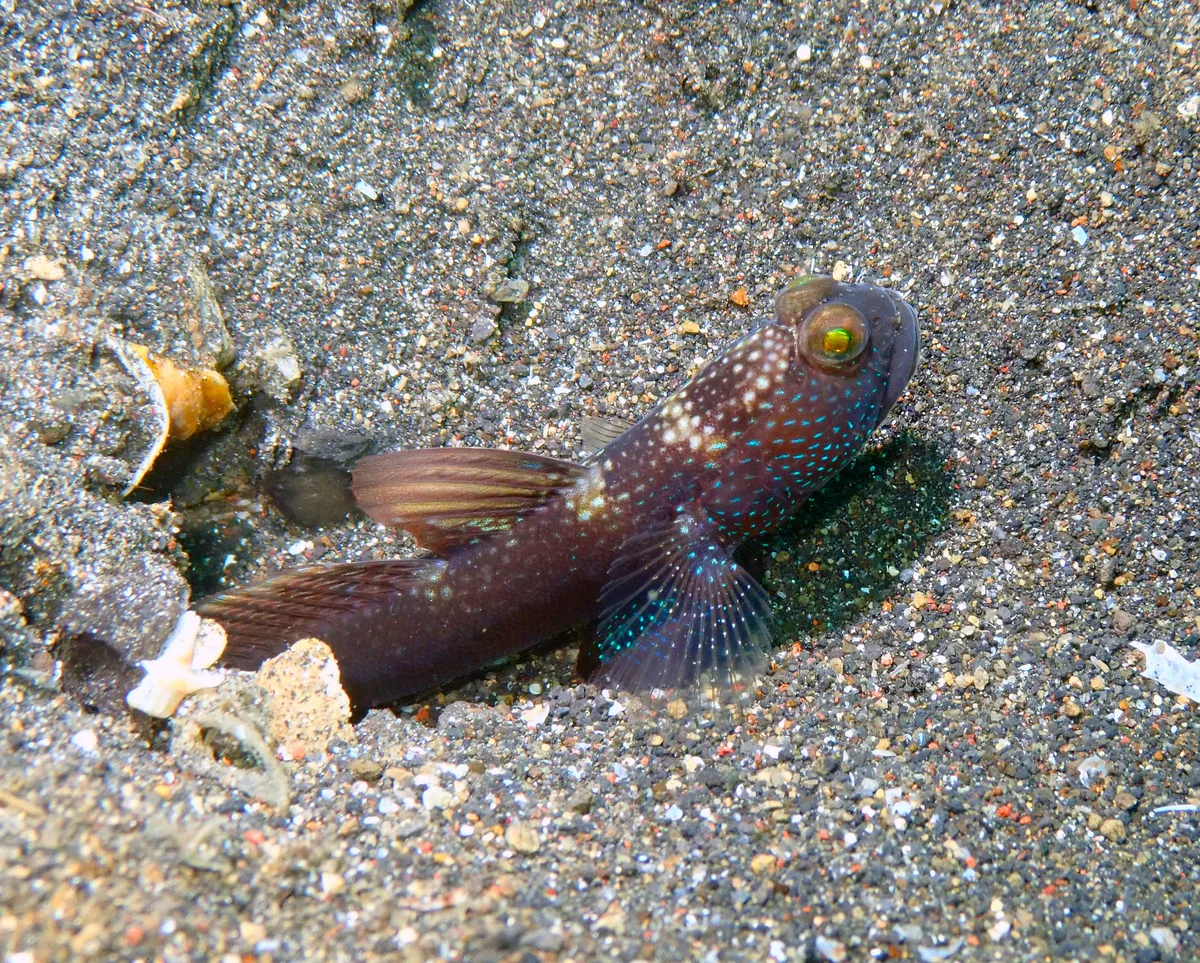
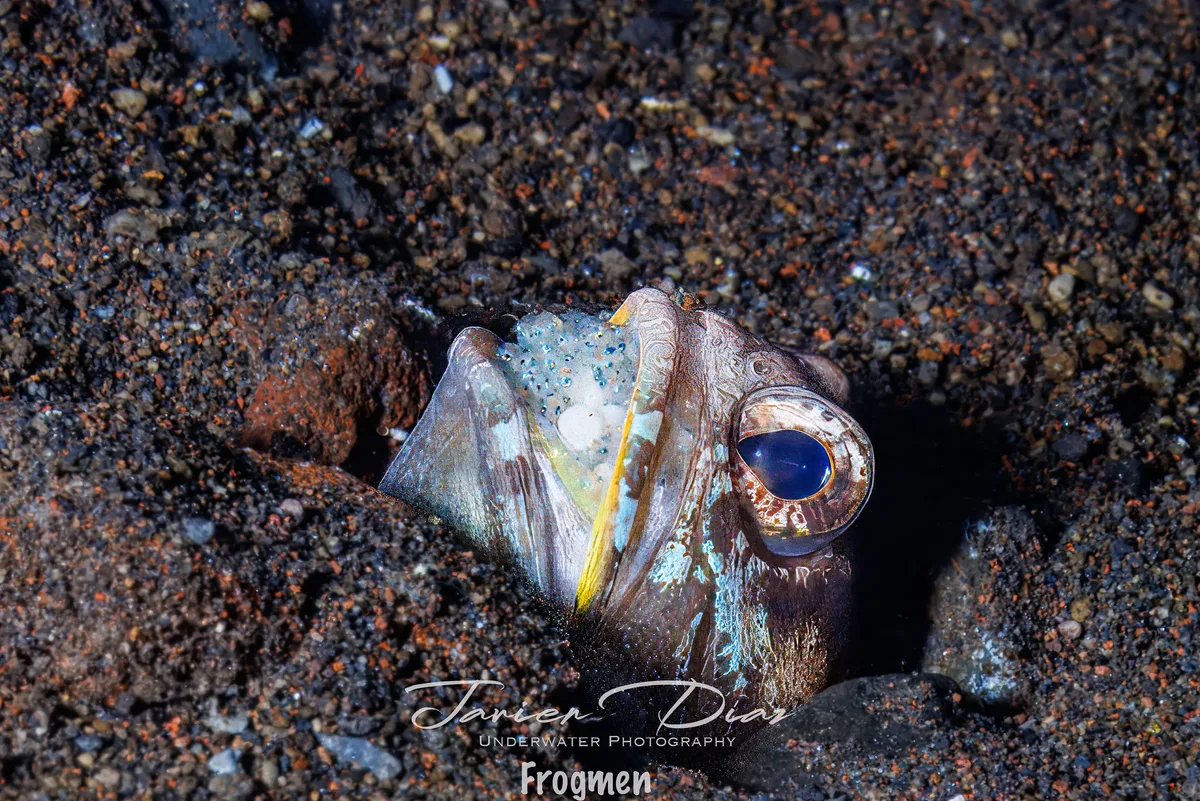
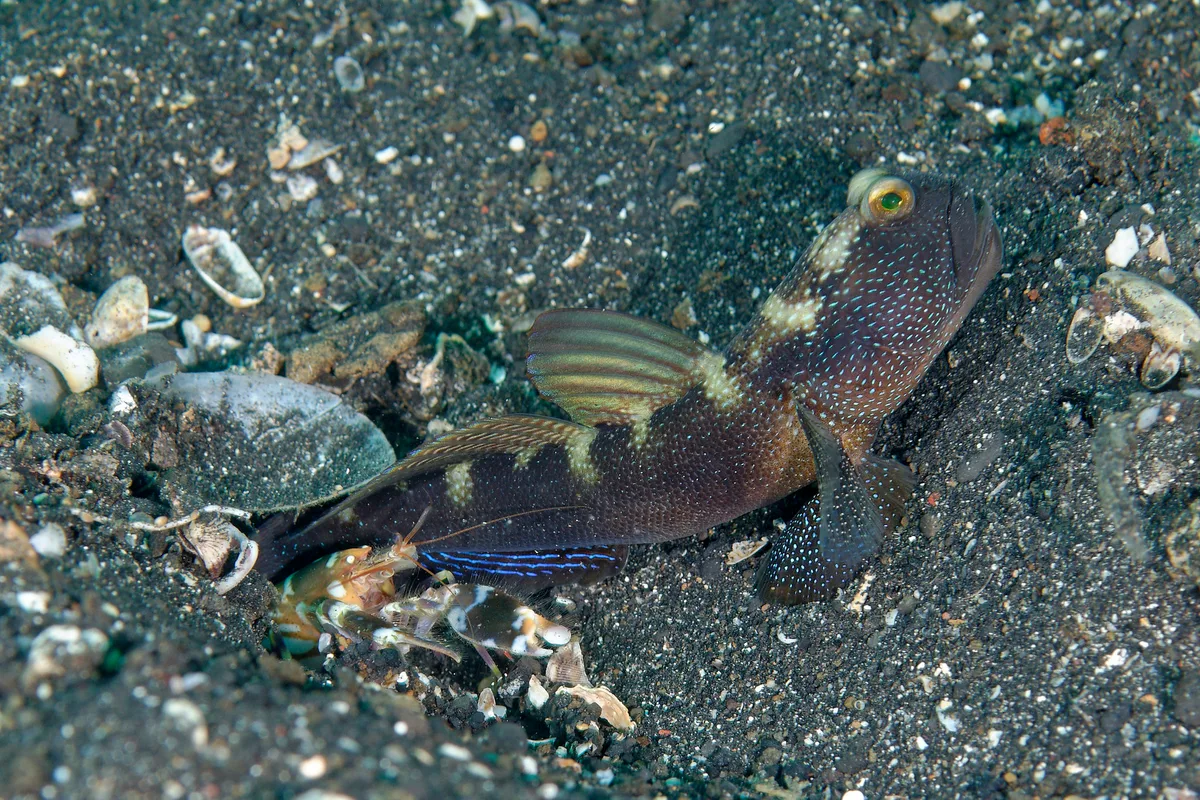
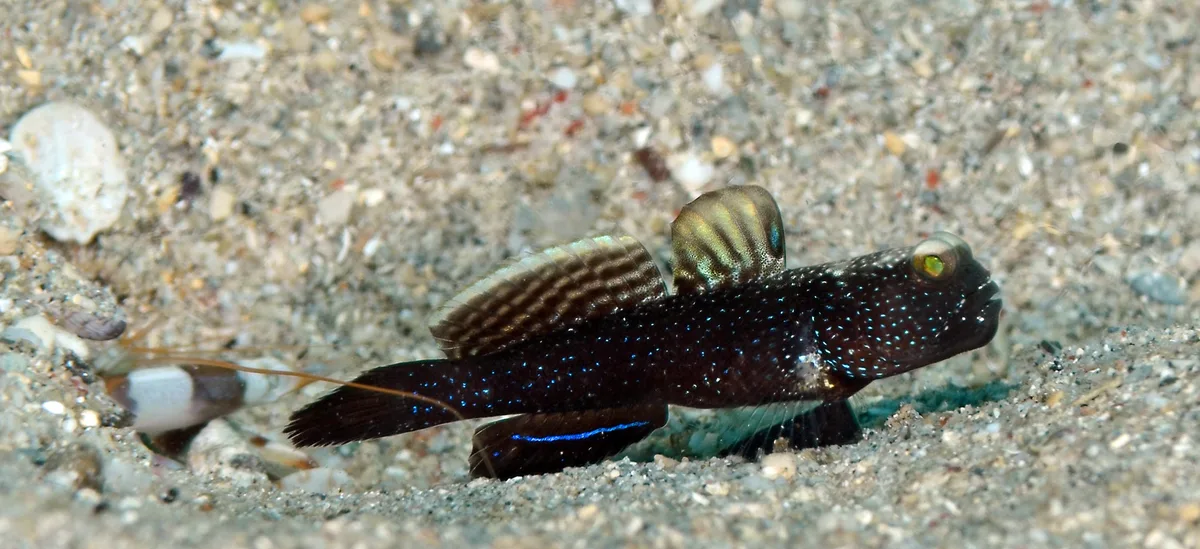
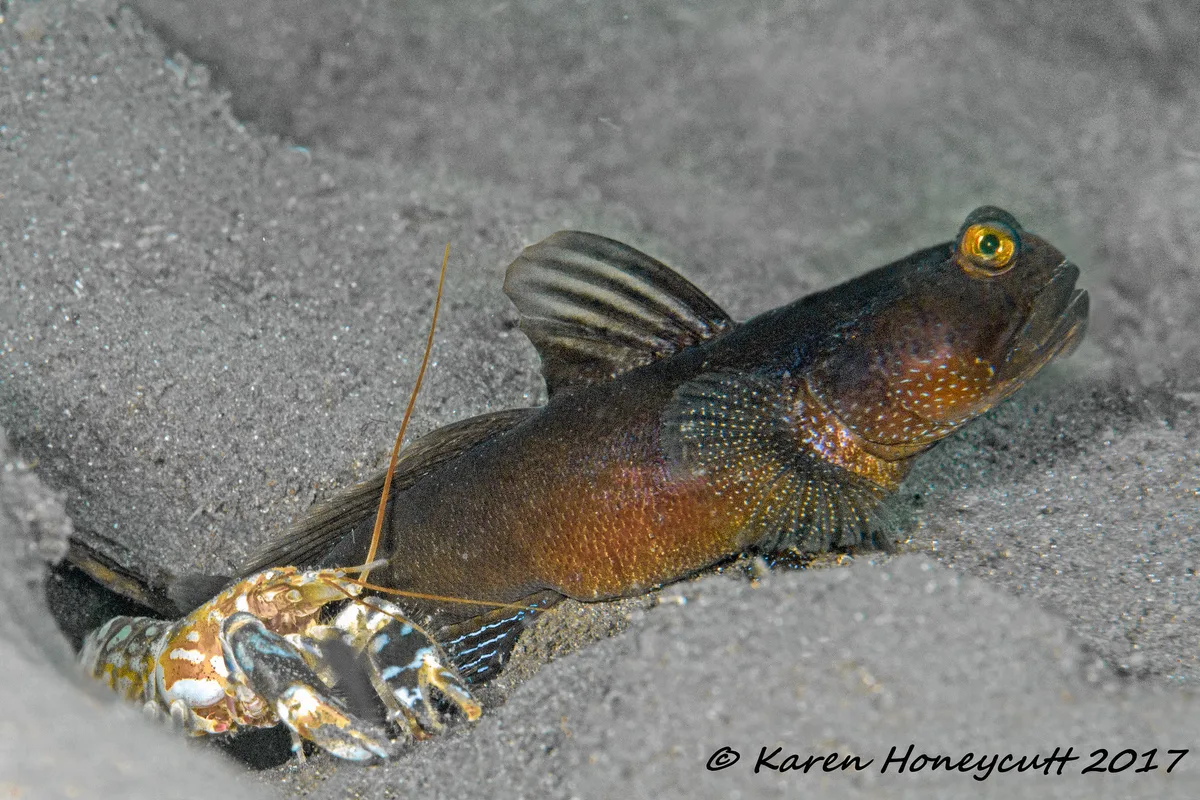
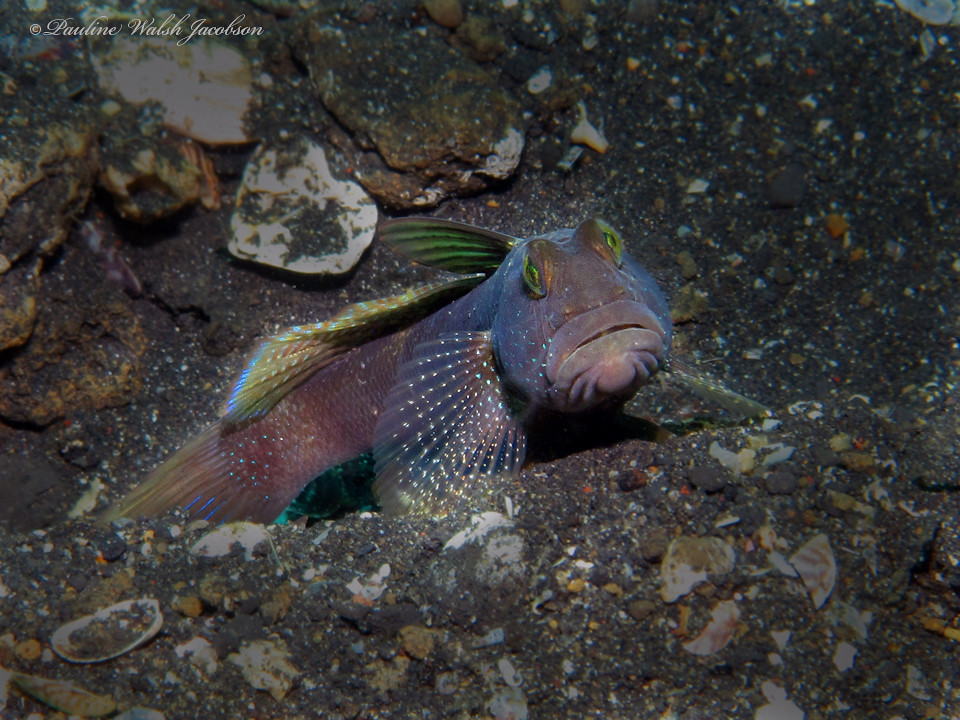
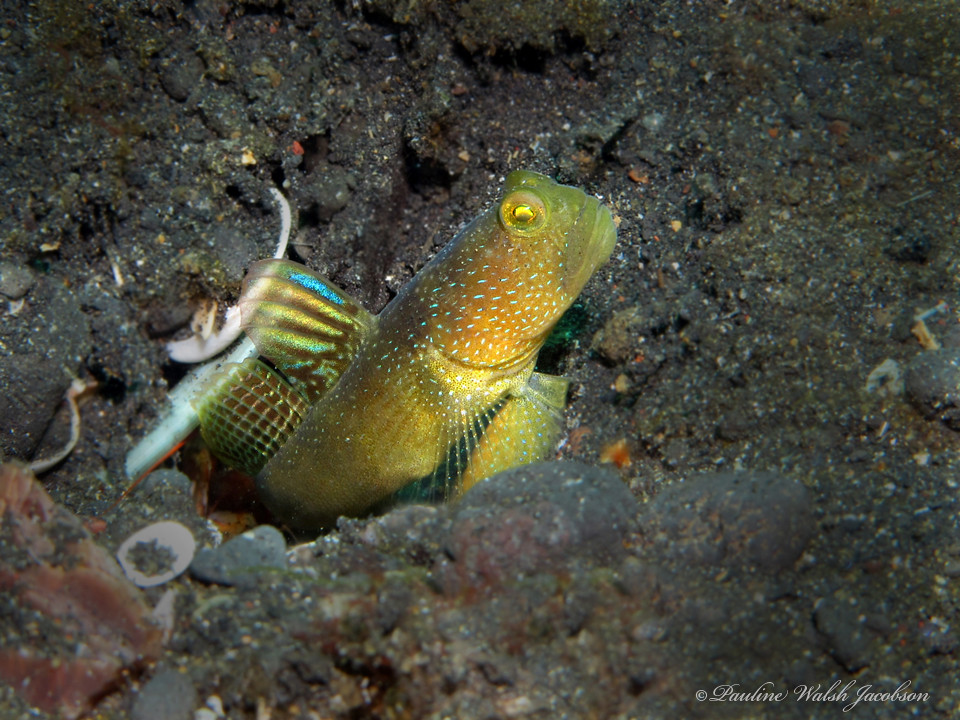
Two of these fish can share one burrow and look like two different species. One may be near black with pale spots, the other pale gray with wide brown bars, and a third animal on the next patch of sand may be yellow. The regional guide for this sea drops the Y-bar name and calls it the variable shrimpgoby, which is the more useful label.
There is one mark that survives all of it. The anal fin carries blue lines running lengthwise along the fin, in every color form, and the head is dashed with bluish white, the dashes breaking into spots as they run back onto the body. If you have those two things you have this fish, whatever color it decided to be. The known forms are a barred one with four or five brown saddles and blue spots on the pelvic fins, a saddled one that is dark brown with whitish saddles, and a mottled one with diffuse brown bars.
It is one of the larger shrimp gobies at up to 14 centimeters, which makes it one of the easier ones to approach. It lives where sand meets reef, on inner reef slopes and clear coastal sand between about 5 and 20 meters and most often between 5 and 15, in a burrow dug and maintained by a snapping shrimp that it never leaves for long.
The deal is the standard one and it is worth watching for a few minutes. The shrimp comes out pushing a load of sand, one antenna trailing on the goby's flank; the goby holds position facing out; something moves, the tail flicks, and both are gone. Then the shrimp's claws reappear at the entrance and the whole thing starts over.
They occur in loose colonies, so a single burrow usually means more of them within a few meters. It is a widespread Indo-West Pacific fish, from East Africa and this sea east to Melanesia and the Great Barrier Reef, and it is one of the shrimp gobies a diver here can reasonably expect to find.
- anal fin with lengthwise blue lines, whatever the body color
- bluish white dashes on the head becoming spots on the body
- color ranges from barred gray to near black to yellow
- rounded tail; sits half out of a burrow in sand
- up to 14 cm
Why it's threatened
There are no major threats to this species. This species is harvested and sold in the aquarium trade (Burgess et al. 1990).
Threat classification from the IUCN Red List.