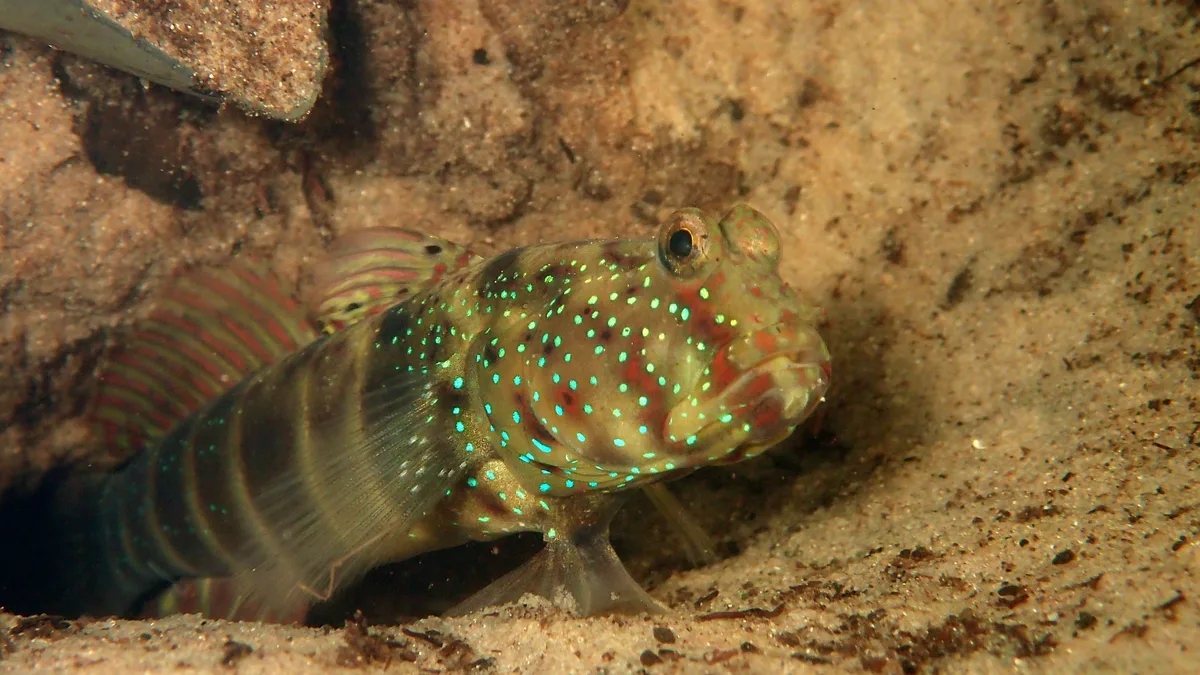
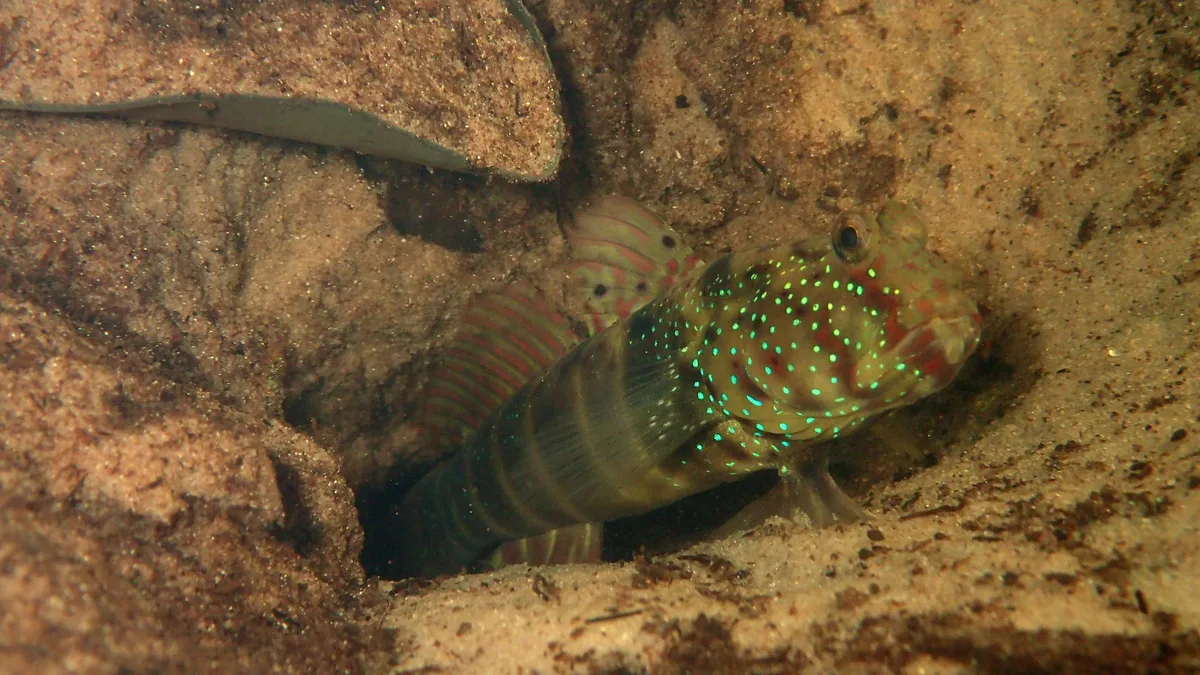
Most of what is known about the inside of a shrimp goby's burrow was learned on this fish, and it was learned here. Working in the northern 🌊 Red Sea, researchers pumped epoxy resin into occupied burrows and dug out the hardened casts, which is how the branching, chambered shape of the tunnel system became visible at all. Then they built artificial burrows with walls you could see through, put this goby and the shrimp Alpheus djiboutensis into them, and watched a partnership that had only ever been guessed at from the surface.
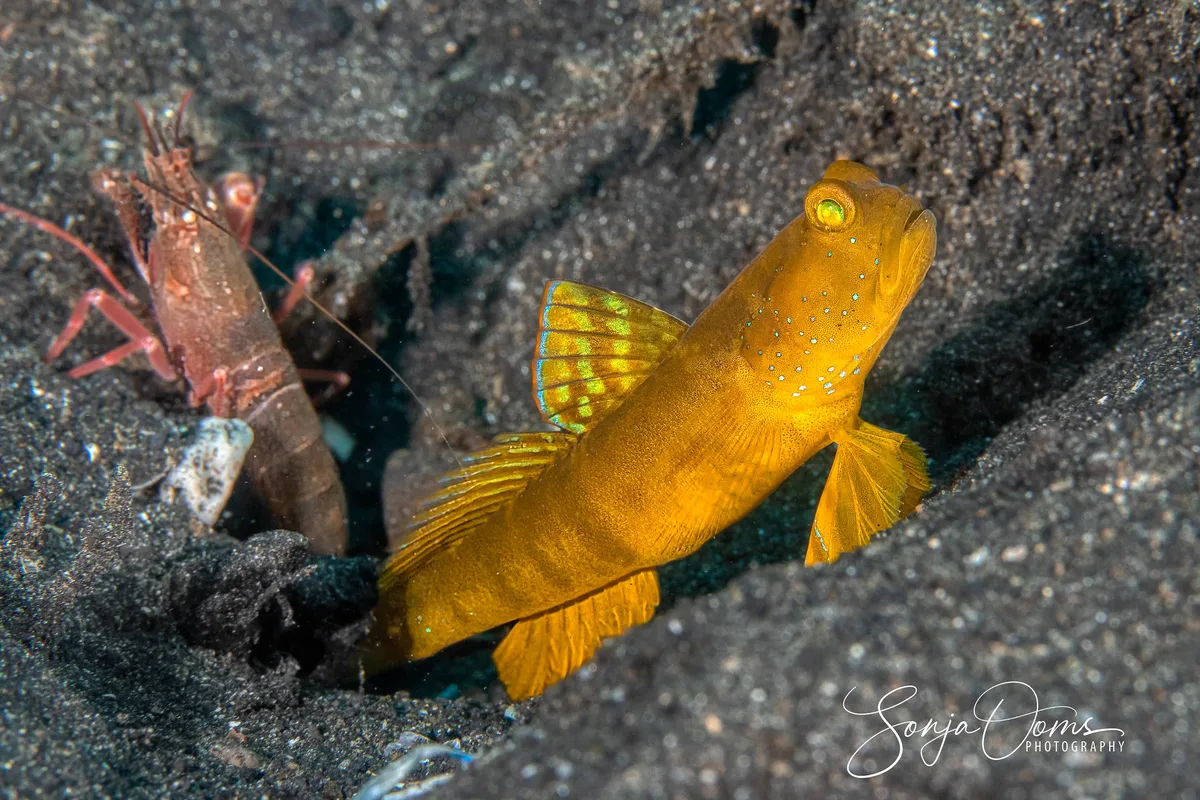
What the burrow does for each animal turns out to be different. For the shrimp, which digs constantly and sees almost nothing, the goby is an alarm system. For the goby, which cannot dig, the burrow is shelter by day and a bed at night. Outside the hole the shrimp keeps an antenna in contact with the fish; a rapid tail flick from the goby sends it straight back down.
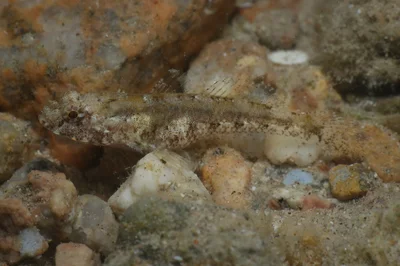
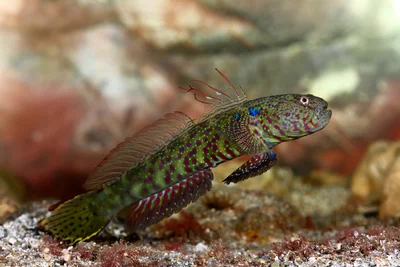
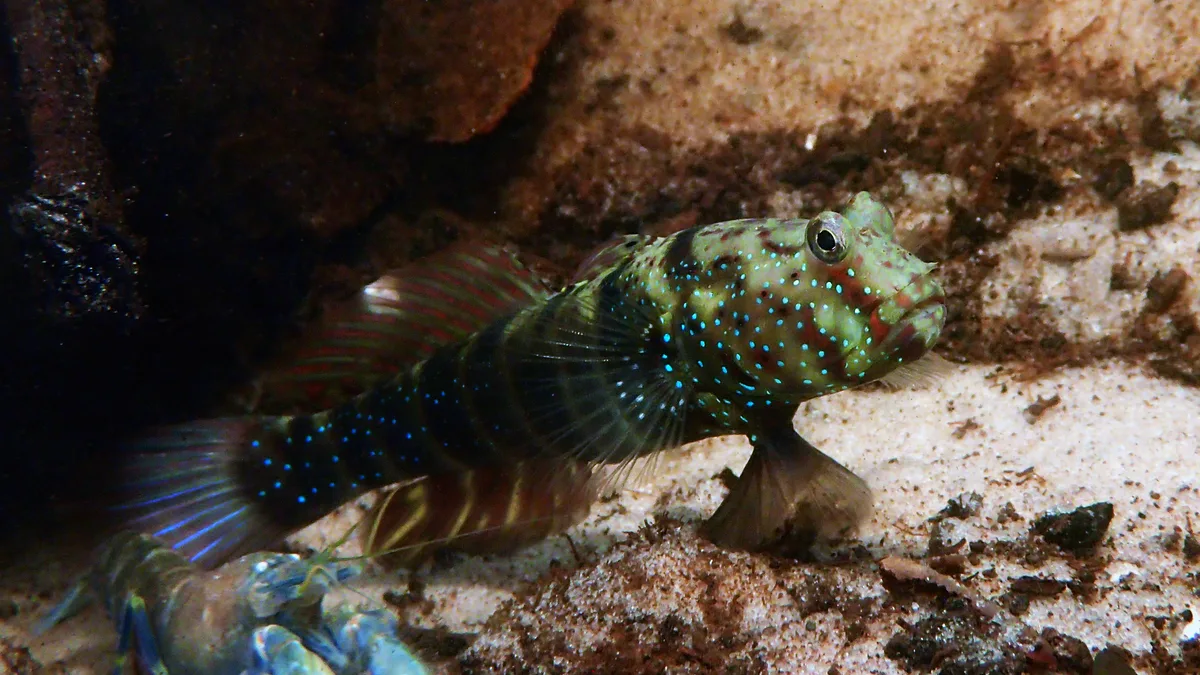
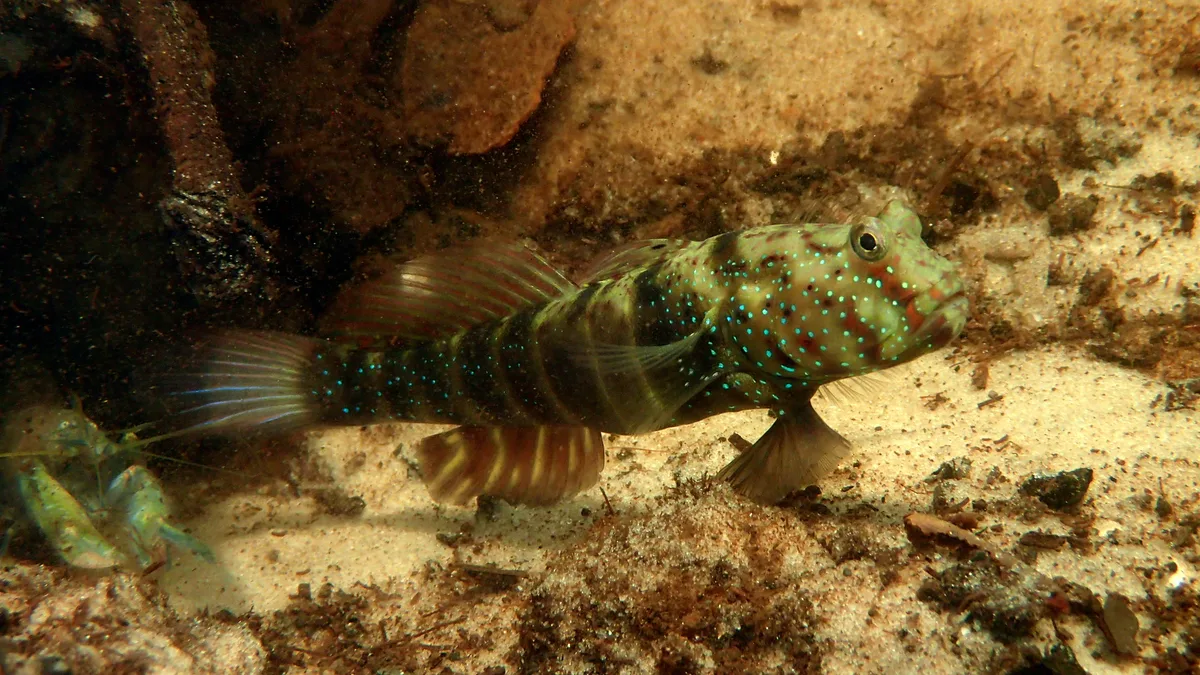
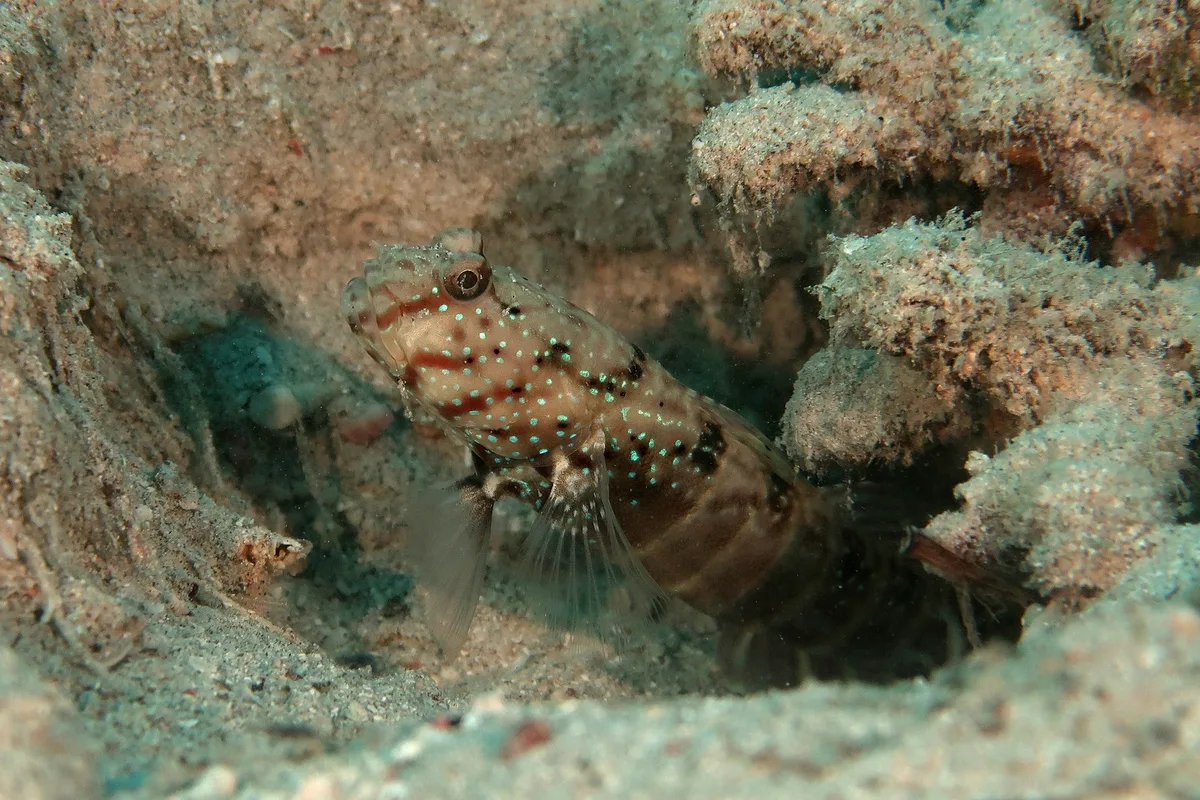
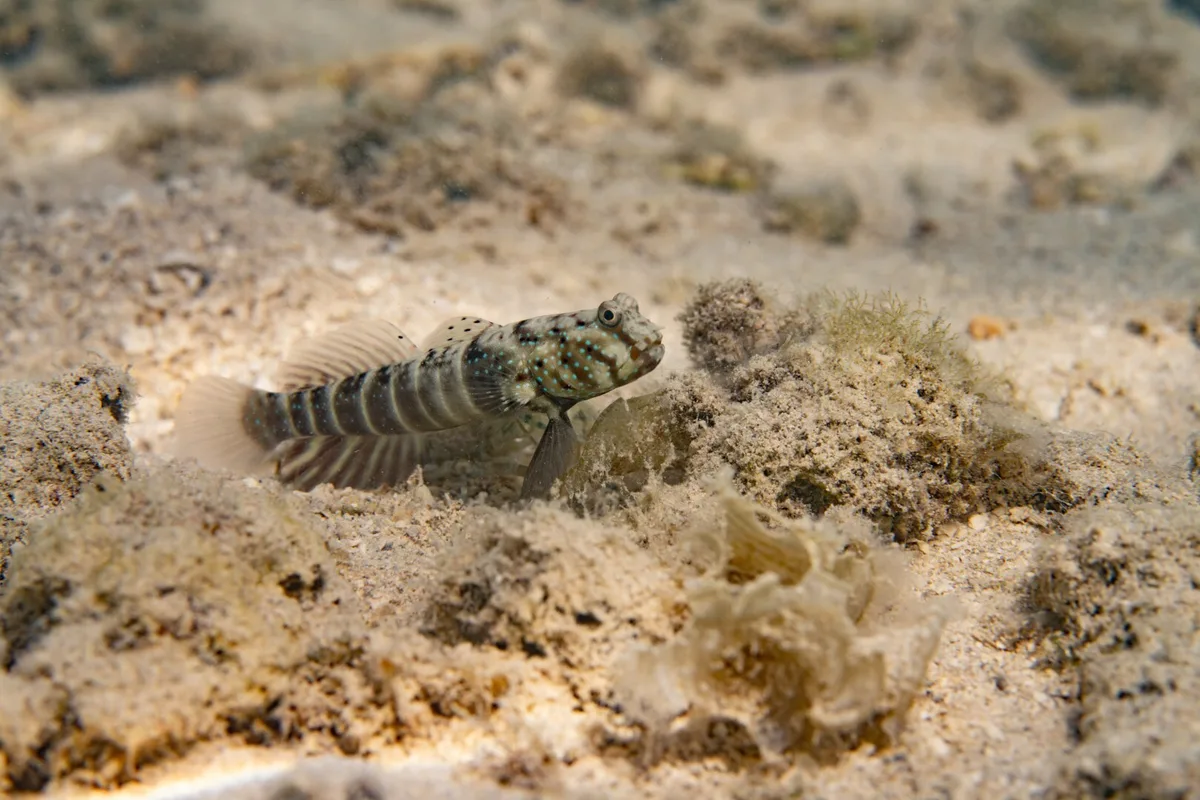
It is a big goby, up to 13 centimeters, tan to dark brown with seven or eight narrow pale bars down the body - the count that gave it the name ninebar. The head is thickly covered with blue or green spots, and the spotting continues onto the back half of the body. At a distance the bars read first; up close the head is the giveaway.
Look for it away from the coral, on shallow sand and seagrass flats and sandy lagoon bottoms rather than on the reef itself. It occurs from the 🌊 Red Sea south along East Africa, east to the 🌊 Persian Gulf, and out to the western 🌊 Indian Ocean islands.
One warning about identification. The barred, blue-spotted Cryptocentrus of this region are hard to tell apart in a photograph, and records of this species from southern Africa are suspected to be Luther's shrimpgoby instead. If your picture shows rows of oval blue spots on the head rather than scattered ones, consider that species first.
The species. Cryptocentrus cryptocentrus (Valenciennes 1837) - crypto- (hidden) + centrus (any sharp point). ETYFish
- head thickly covered with blue or green spots
- tan to dark brown with seven or eight narrow pale bars
- spots carry back onto the rear of the body
- shares a burrow mouth with a snapping shrimp
- up to 13 cm
Why it's threatened
Major threats to this species are unknown.
Threat classification from the IUCN Red List.