A frillgoby trapped in a tide pool by the falling water does not wait for the sea to come back. It jumps out, over dry rock, into a pool it cannot possibly see from where it started, and it lands in water.
How that works was taken apart in the laboratory on an Atlantic relative, Bathygobius soporator. Fish allowed to swim over the whole rock platform at high water jumped accurately once the tide dropped and left them stranded. Fish denied that swim did not. The animal appears to build a map of the pools while everything is submerged and one continuous space, then use the map hours later when the map is the only thing left. It is a memory of a landscape, held by a fish the length of a finger.
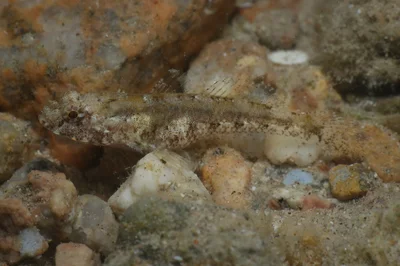
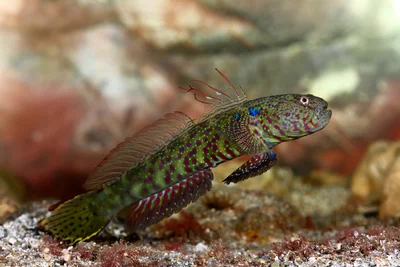
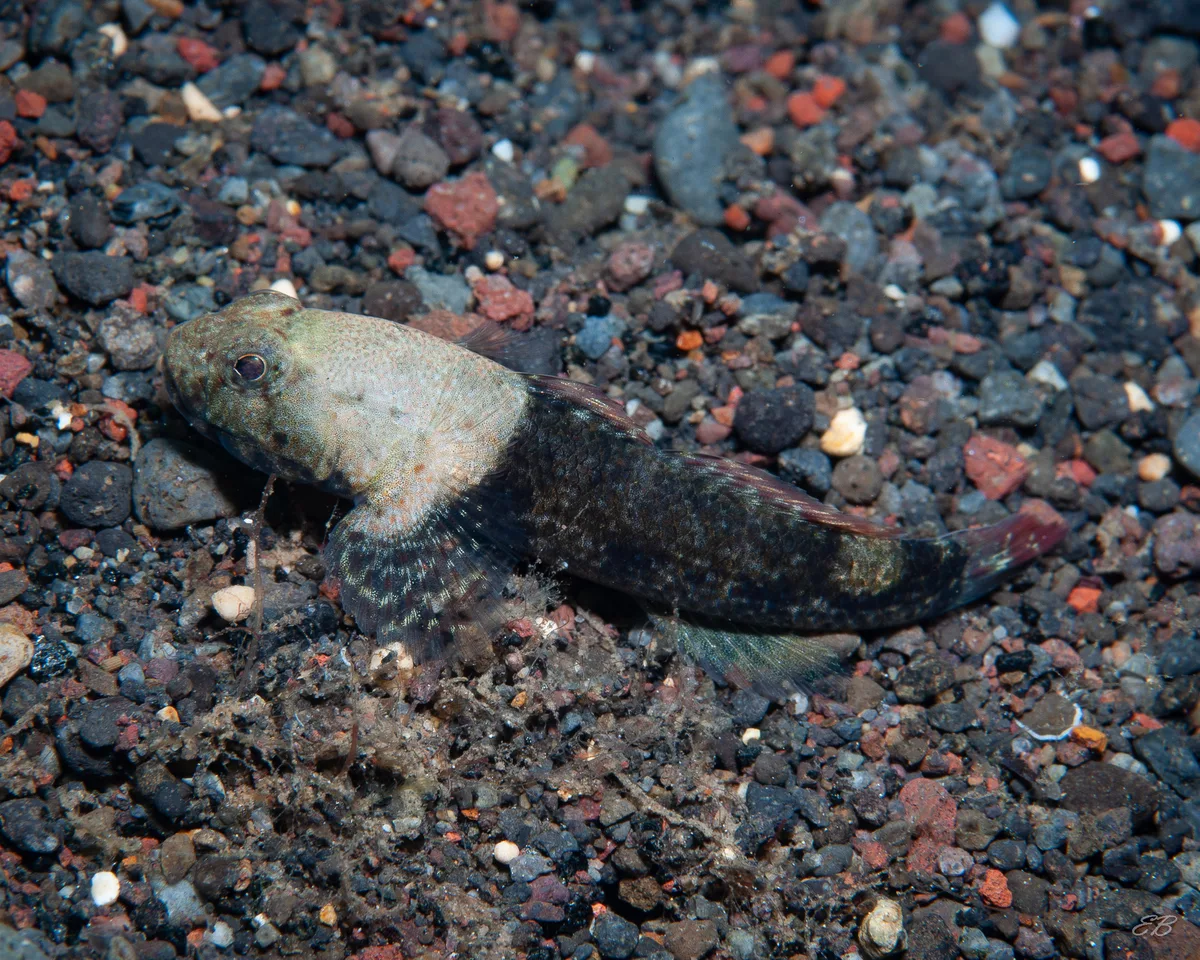
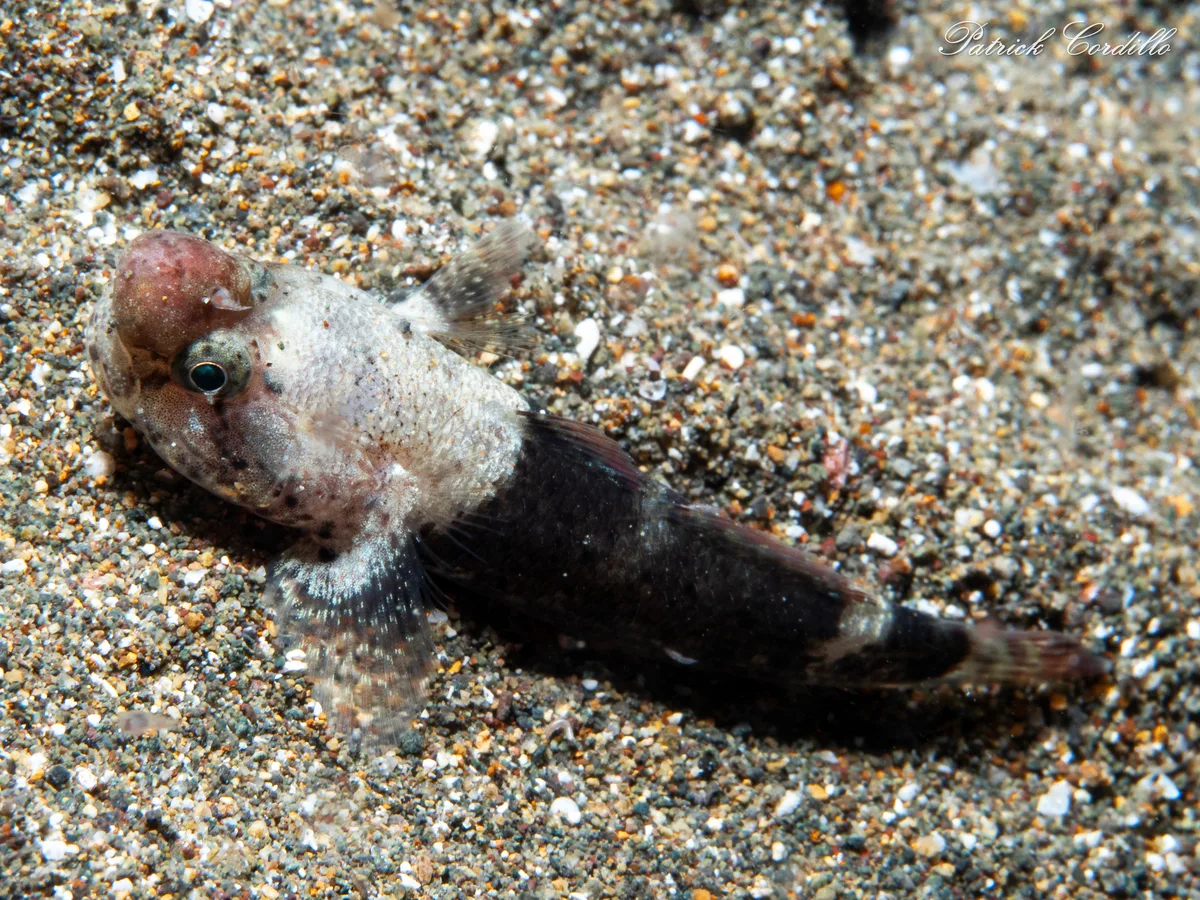
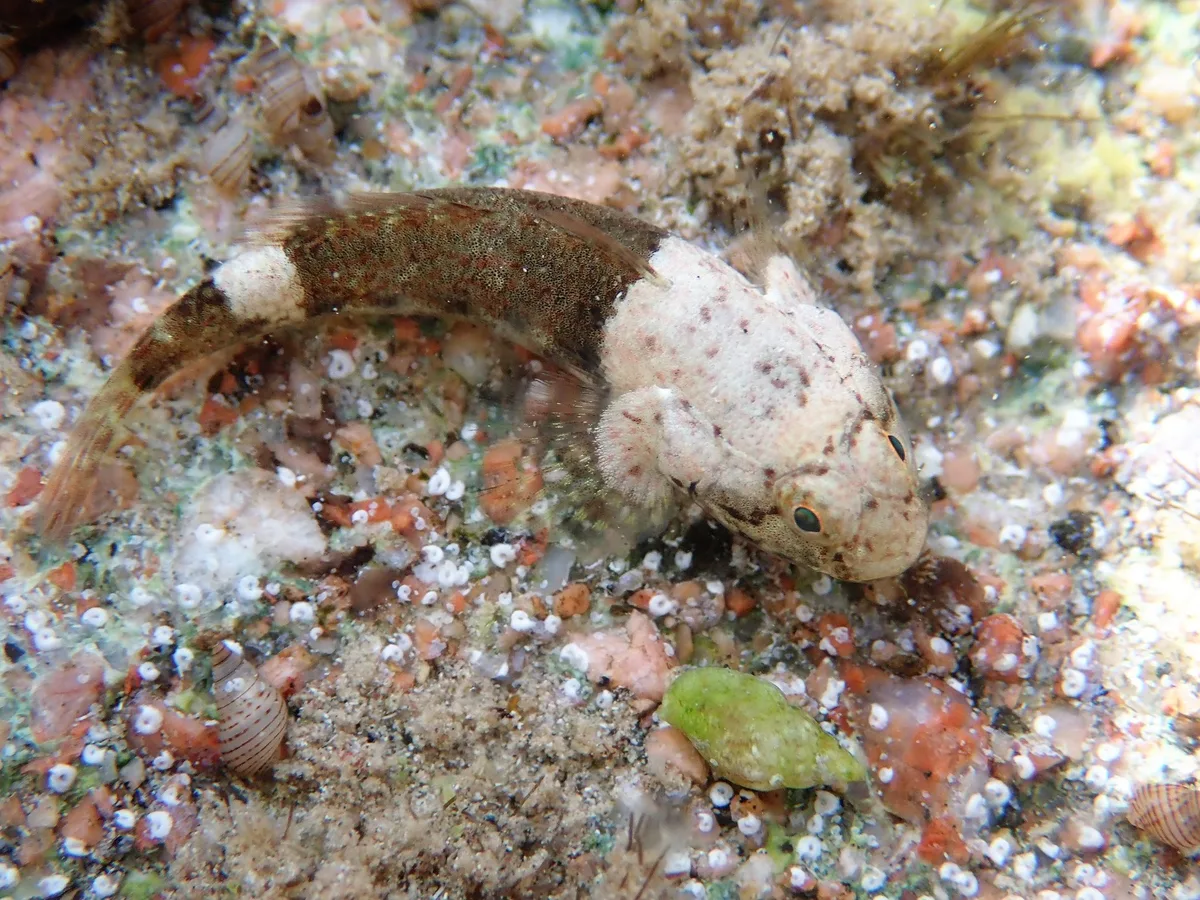
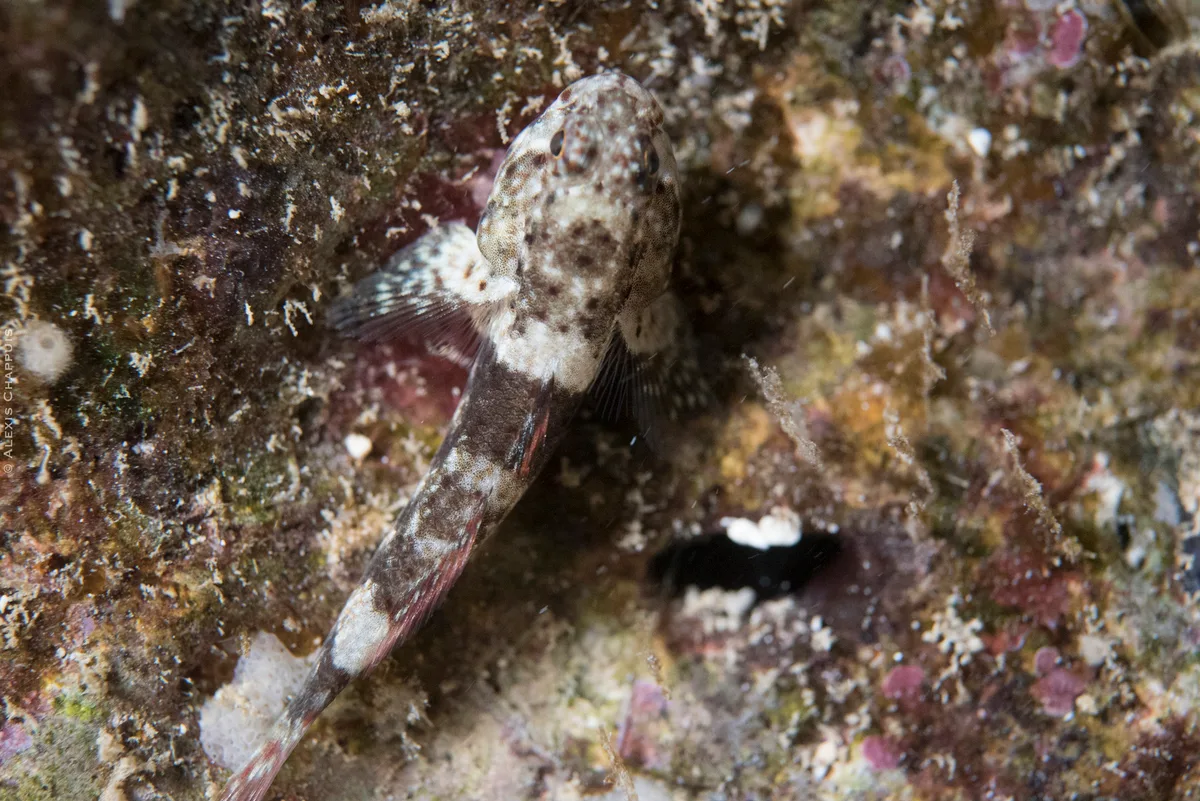
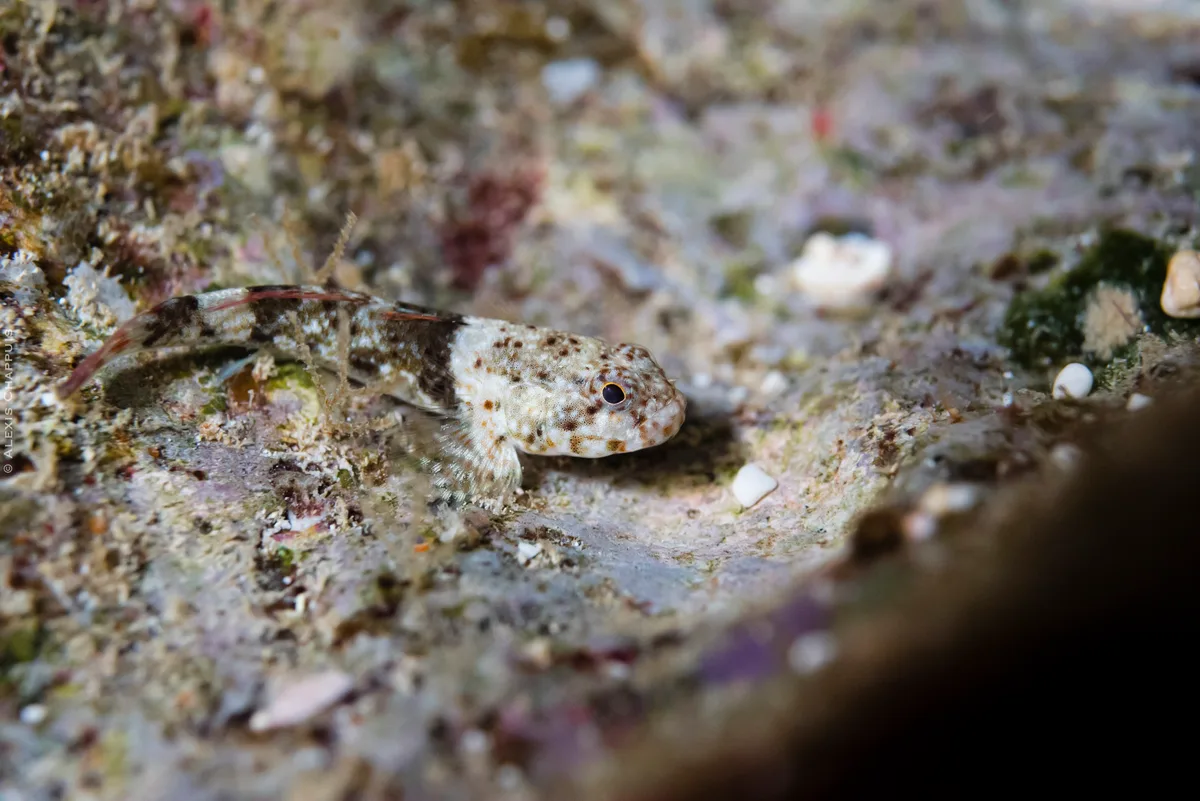
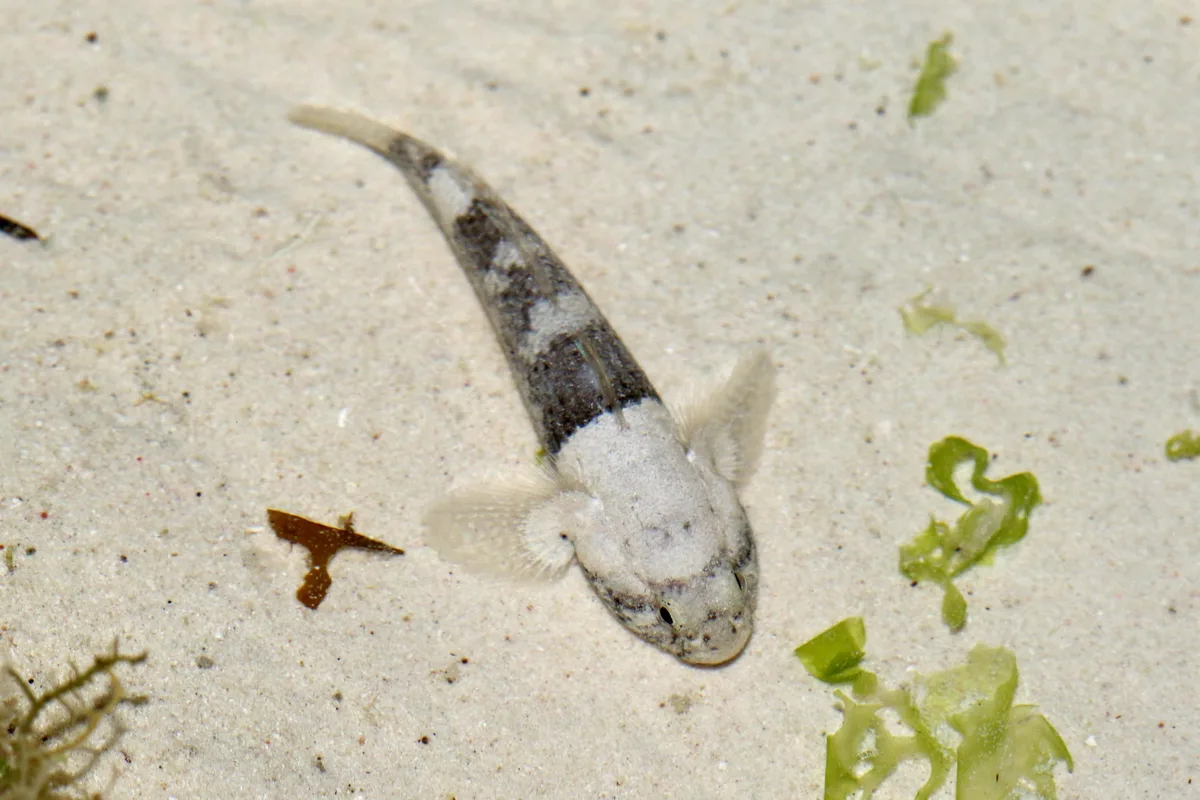
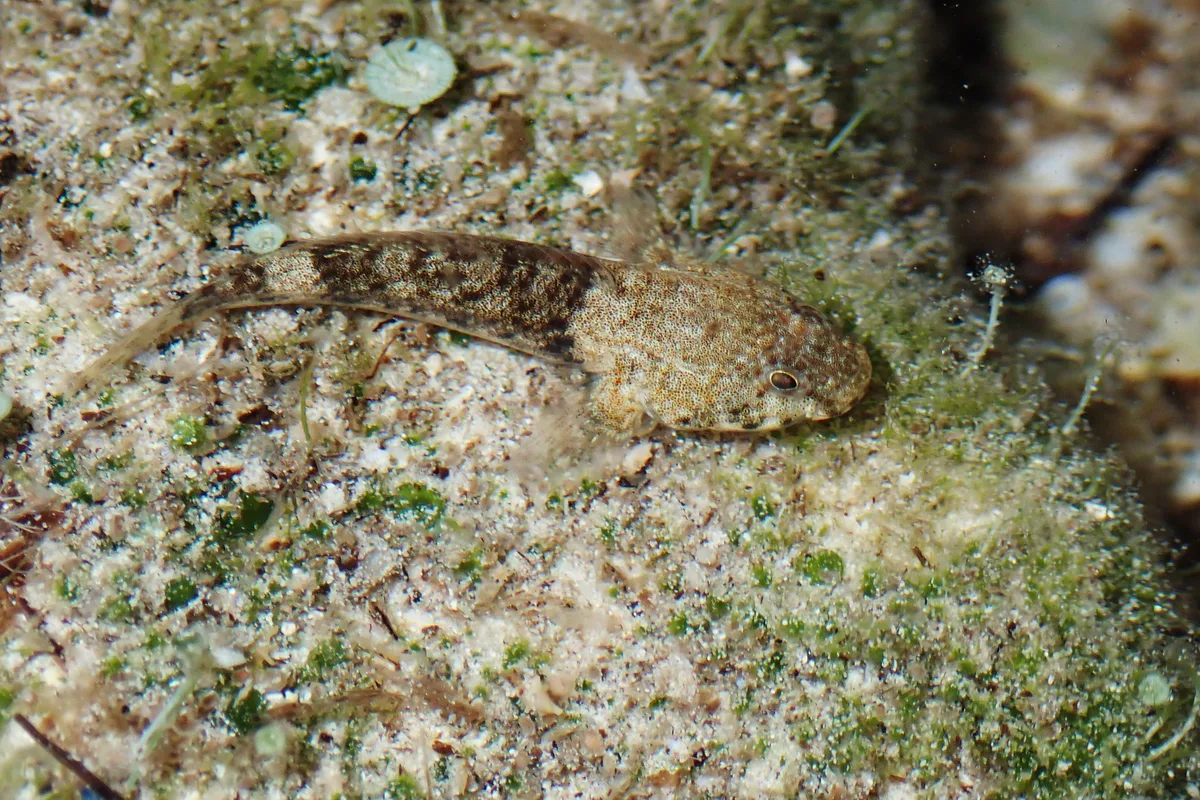
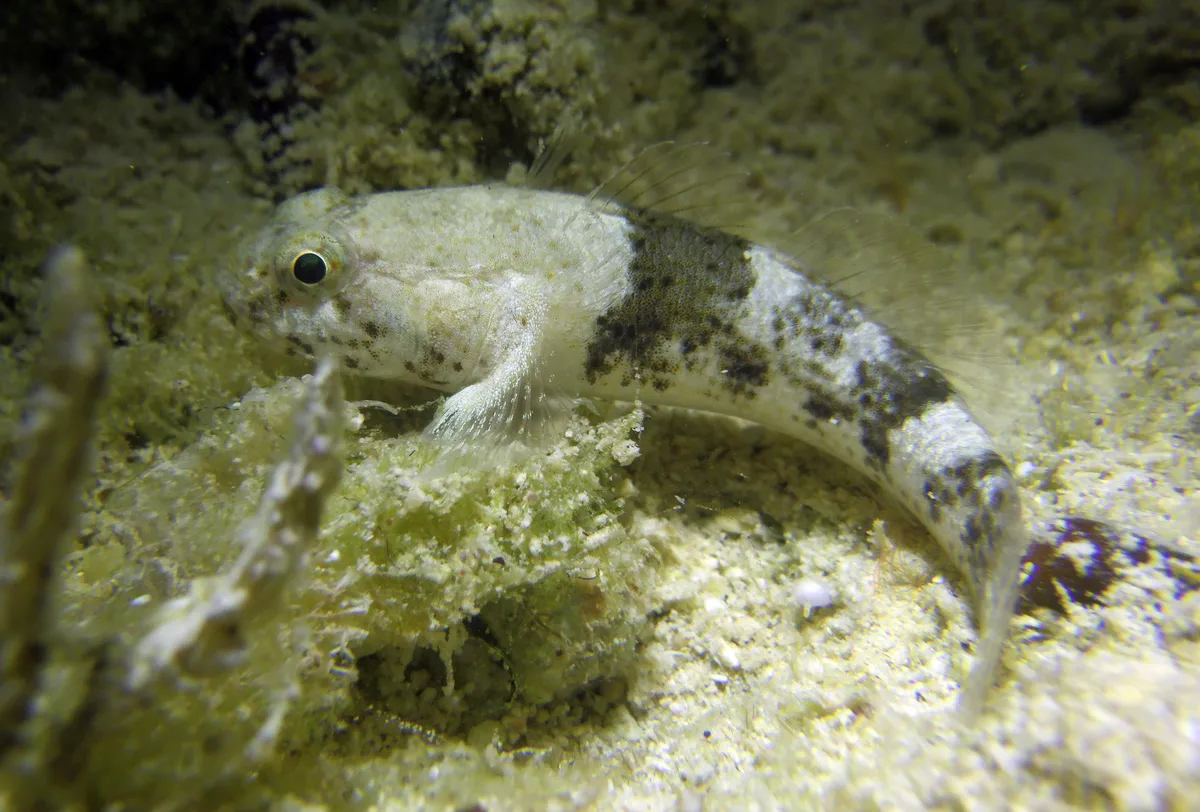
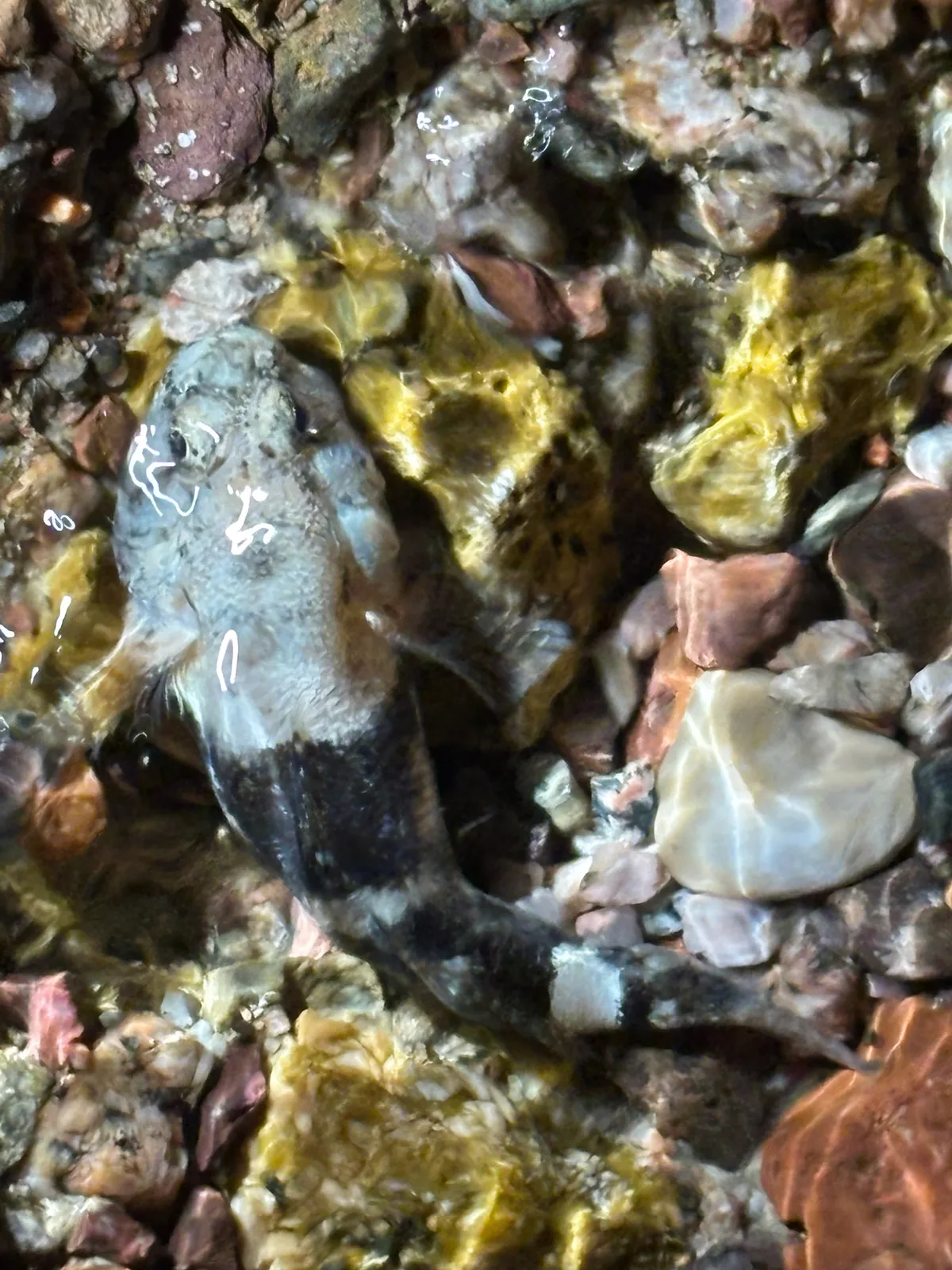
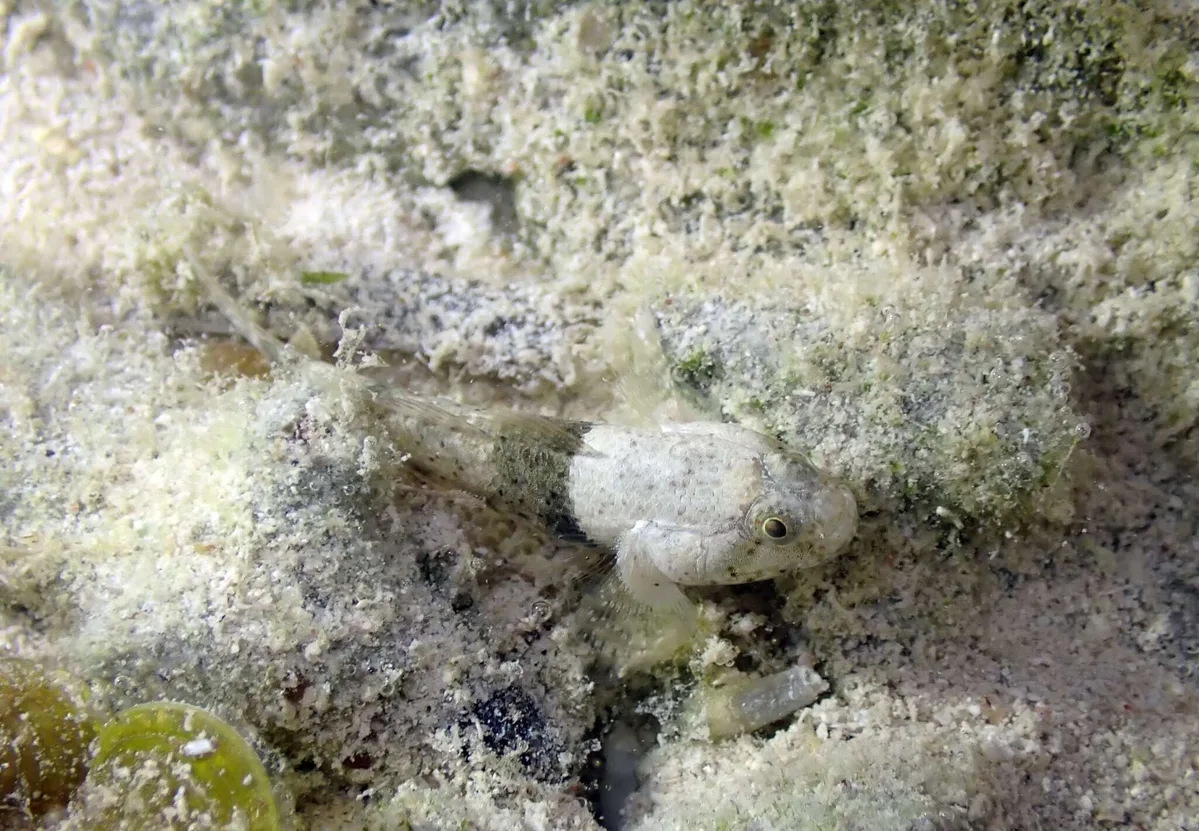
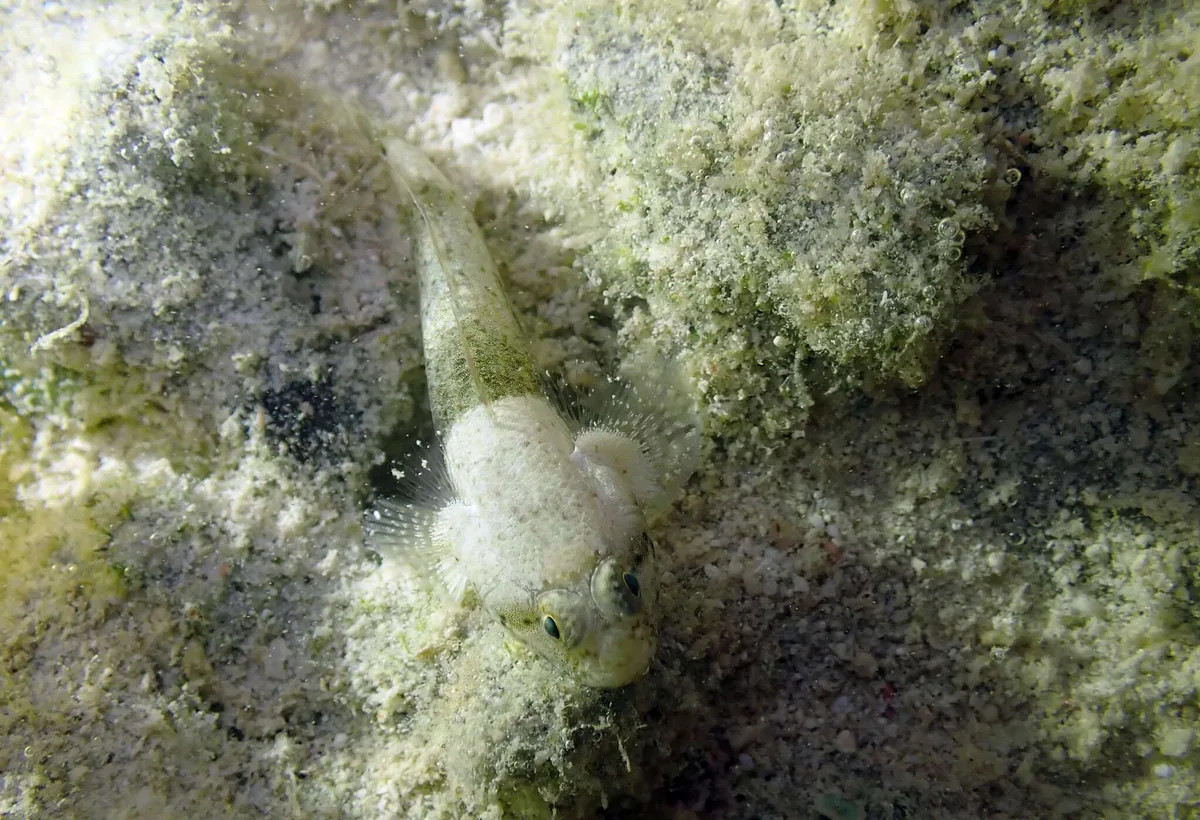
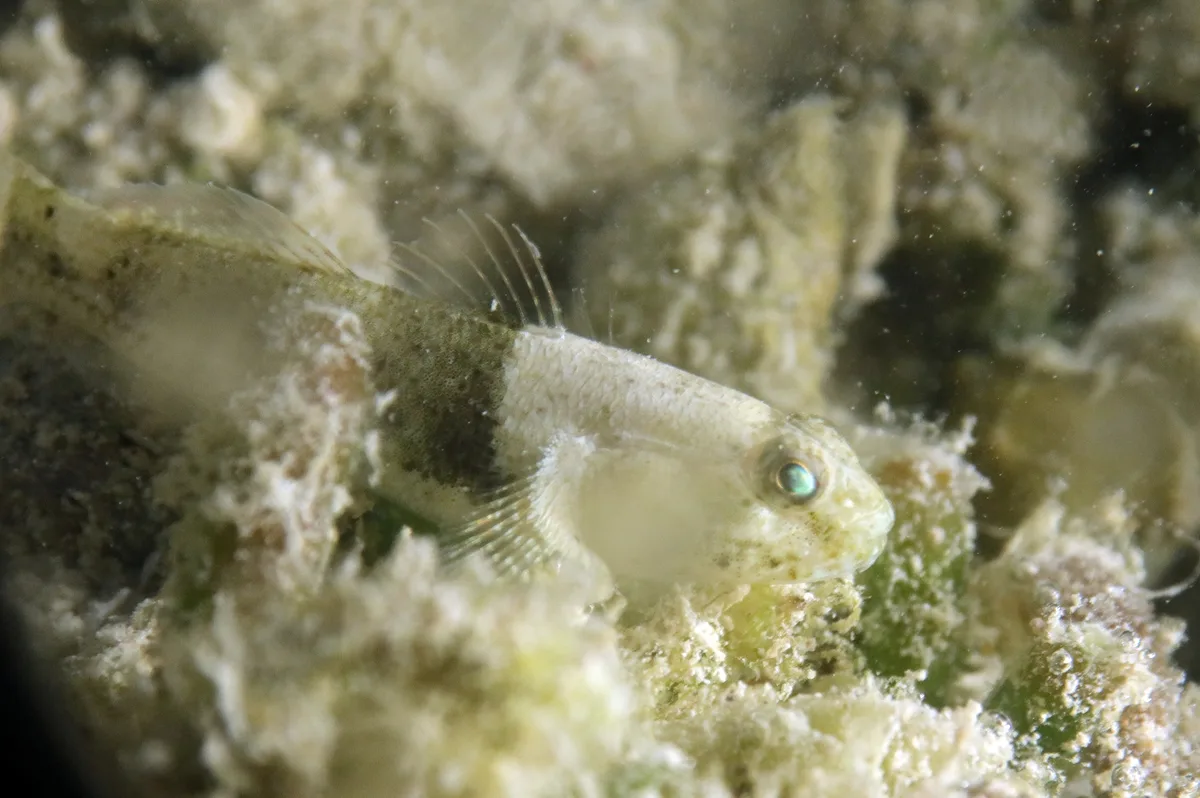
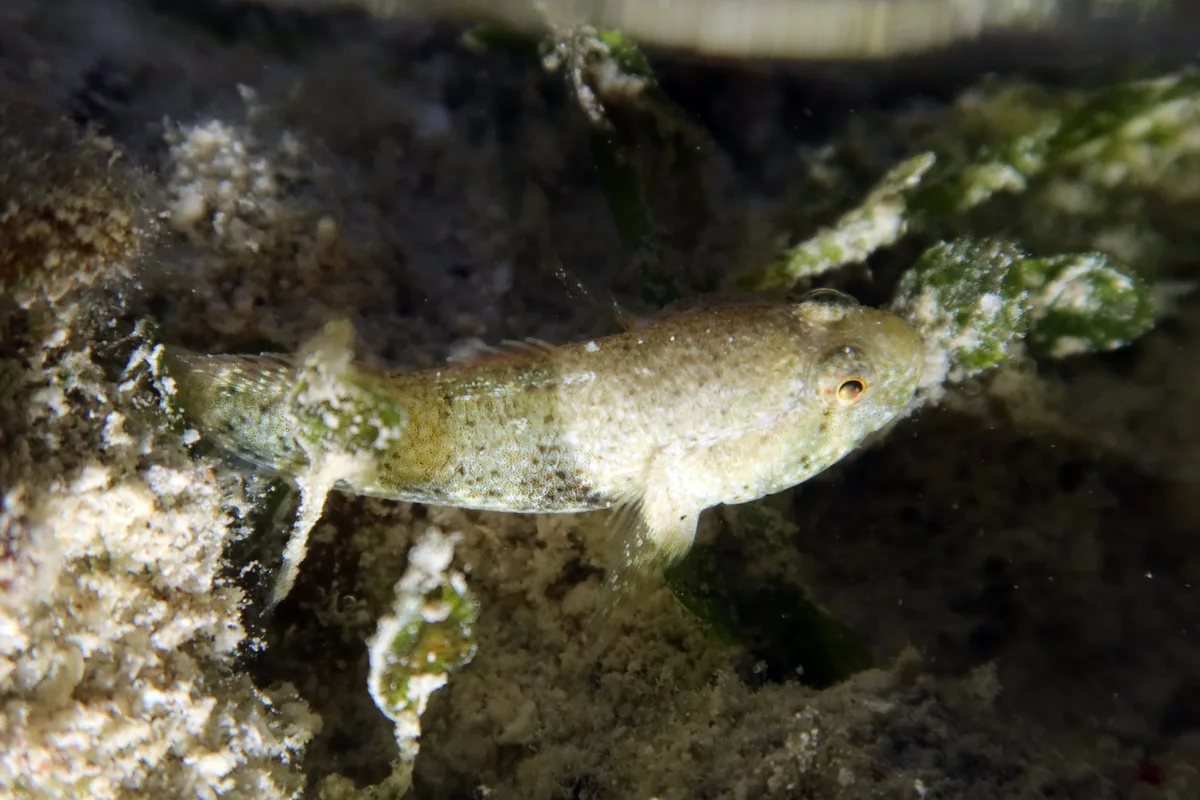
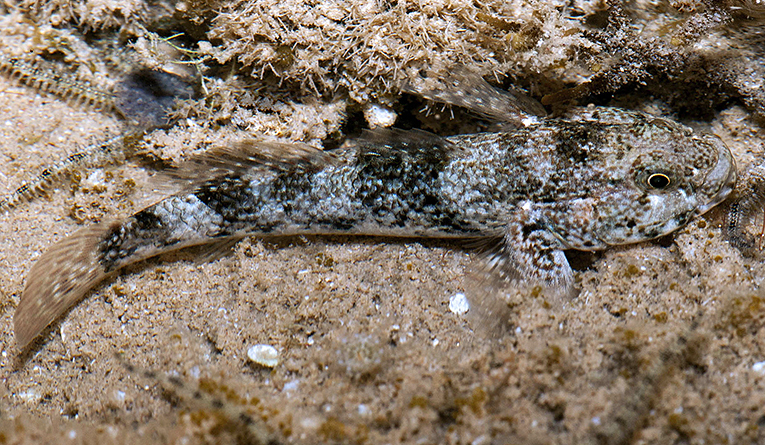
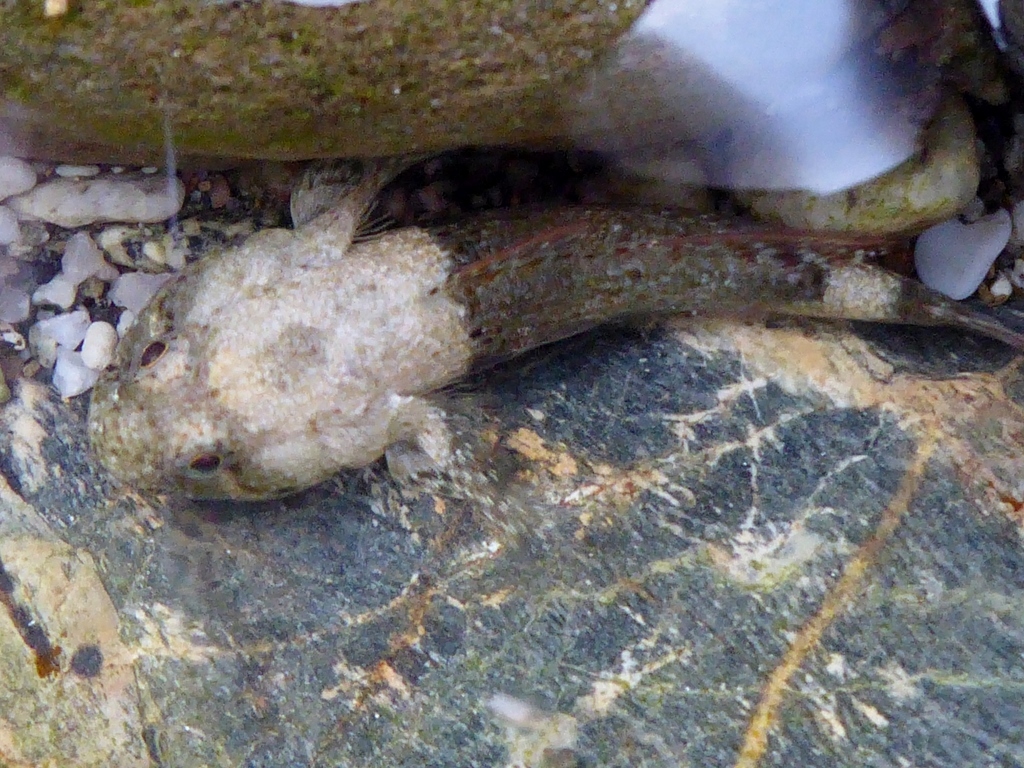
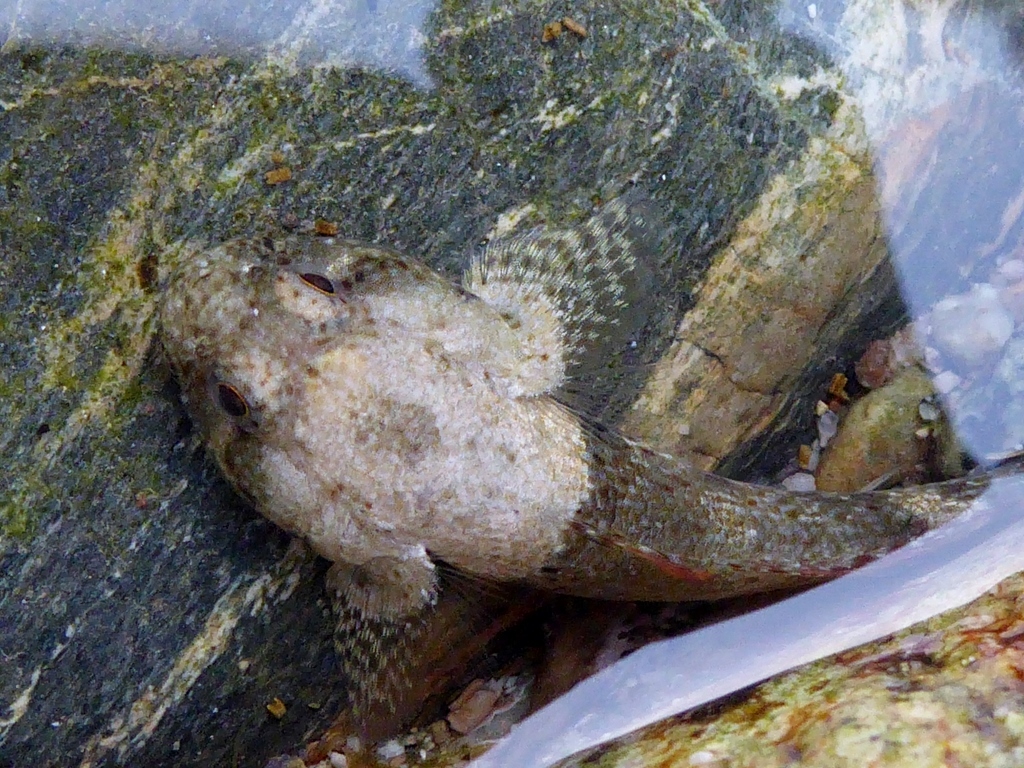
The 🌊 Red Sea species has not been put through that test. What you can see of it is a small brown fish mottled with darker spots, with a dark brown saddle sitting under each of the two dorsal fins. Females carry banded dorsal and tail fins, males dusky ones. The upper rays of the pectoral fin end in free filaments that stand clear of the fin membrane; that fringe is the frill the genus is named for, and the fish uses it as a set of feelers against rock.
Its habitat is the part of the reef divers skip. Shallow rock, surge channels, intertidal flats, brackish creek mouths, generally in the first meter or two of water even though the species is recorded down to about 20 meters. Its working clock is the tide rather than the sun.
One caution, and it is the guide's own. The regional reference marks its 🌊 Red Sea photograph of this fish ID tentative. Several Bathygobius look alike in a picture and are separated on pectoral ray structure and scale counts, so treat any sighting here as a probable rather than a certainty.
The genus. Bathygobius Bleeker 1878 - bathýs (deep). ETYFish
The species. Bathygobius cyclopterus (Valenciennes 1837) - cyclo- (ring or circle) + pterus (fin). ETYFish
- brown, mottled with irregular darker spots
- dark brown saddle under each of the two dorsal fins
- free filament tips on the upper pectoral rays
- rounded tail; females have banded fins, males dusky ones
- up to 7.5 cm
Why it's threatened
There are no known major threats to this species.
Threat classification from the IUCN Red List.