This fish was described from the wrong sea. In 2021 it was named from specimens that came up in bottom trawls off Ashdod on the Israeli Mediterranean coast, between 60 and 80 meters, and the authors had to say plainly that nobody had ever recorded it in the 🌊 Red Sea - the sea it had come from.
It came through the Suez Canal (🇪🇬 Egypt). Shrimp gobies had already crossed twice before, and this was the third, so the animal was recognized in its new range before anyone knew it in its old one. That happens, but rarely, and it is a fair measure of how thinly the sea floor of the 🌊 Red Sea has actually been searched.
The way it was proved new is also modern. Nothing about a small brown goby announces a new species, so the case rested on DNA barcodes: two gene fragments that matched no goby on record and placed the fish inside the shrimp goby group, where Cryptocentrus is the largest genus. The formal description of scales, fins and head papillae followed the sequence rather than leading it.
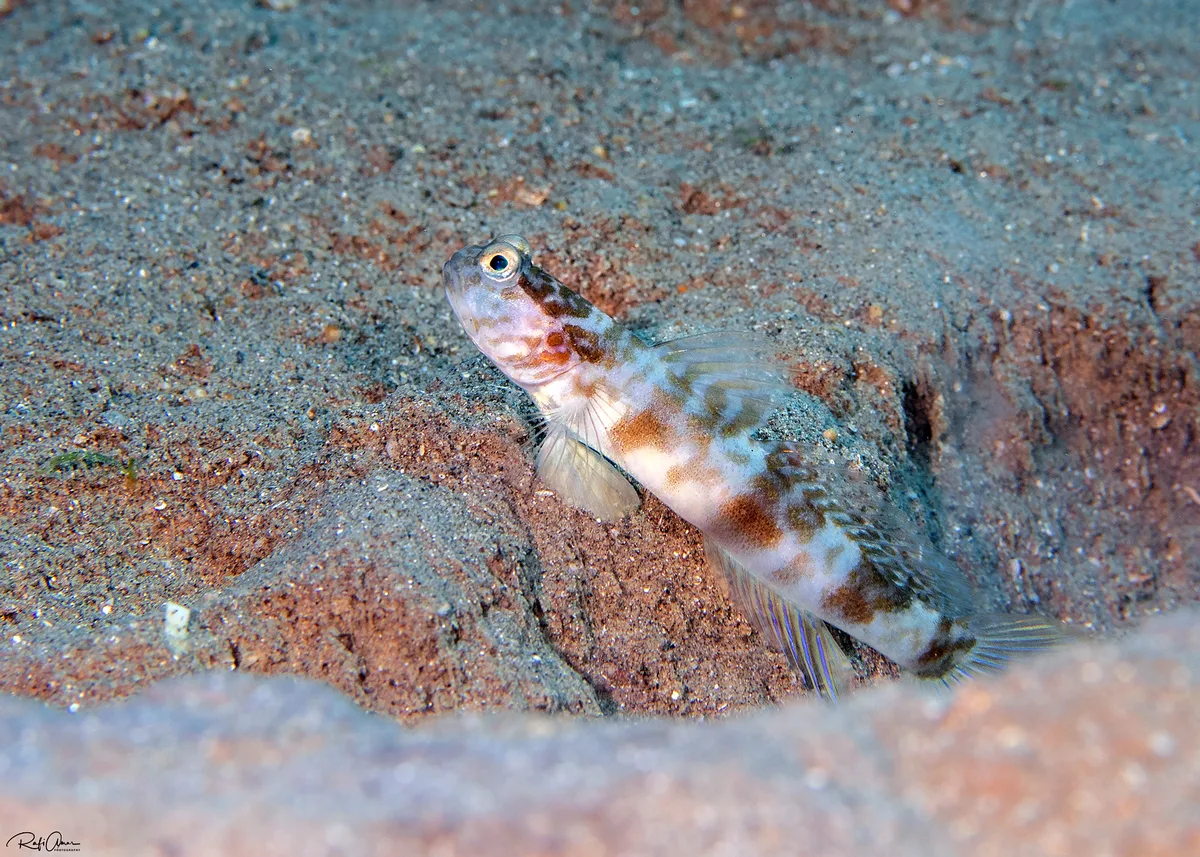
The 🌊 Red Sea side of the story is short. The regional guide for this sea carries what it calls the first live photograph of the species, taken at Eilat in the Gulf of Aqaba. So it is here, it presumably always was, and how widely it occurs and at what depth is simply not established.
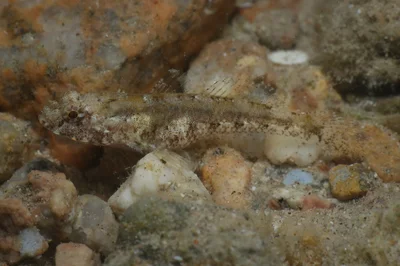
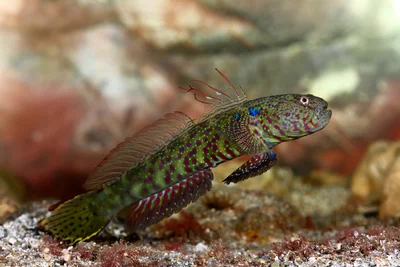
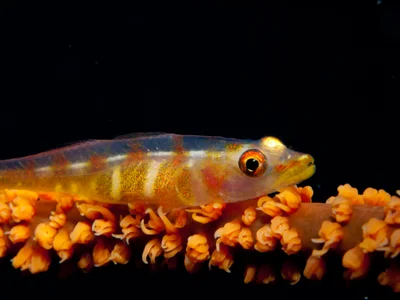
What there is to look at: a fish reaching 8.2 centimeters, yellowish with brown pigment that thickens over the head and back, three wide dark bars on each side, scattered brown spots, and a black outer band on the first dorsal and the anal fin. Those colors are from preserved specimens, which fade and darken, so treat them as a guide. Do not expect to find one. This is a card about a fish that science met on the wrong side of a canal.
- yellowish body, dark brown pigment heaviest on head and back
- three wide dark bars on each side
- black outer edge to the first dorsal and the anal fin
- pelvic fins completely joined into a disc
- up to 8.2 cm
Why it's threatened
Threat classification from the IUCN Red List.