The Remora: The Ocean's Ultimate Hitchhiker and its Biological Suction Cup

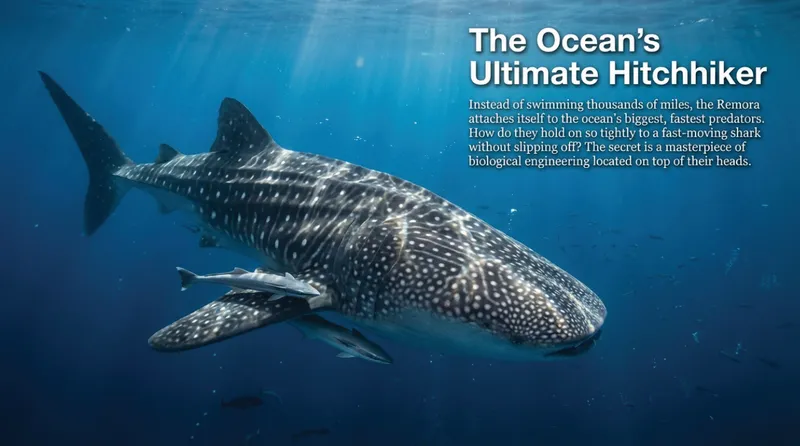
When you spot a massive whale shark, manta ray, or sea turtle gliding through the Red Sea, look closely at their bellies. You will almost always see a few sleek, torpedo-shaped fish stuck tightly to them. These are Remoras (often called suckerfish), the marine world's most famous and brilliant hitchhikers.
Instead of swimming thousands of miles across the ocean, they simply attach themselves to the biggest, fastest predators and get a free ride. But how do they hold on so tightly to a fast-moving shark without slipping off? The secret lies in a masterpiece of biological engineering located right on top of their heads.
The Migrating Fin
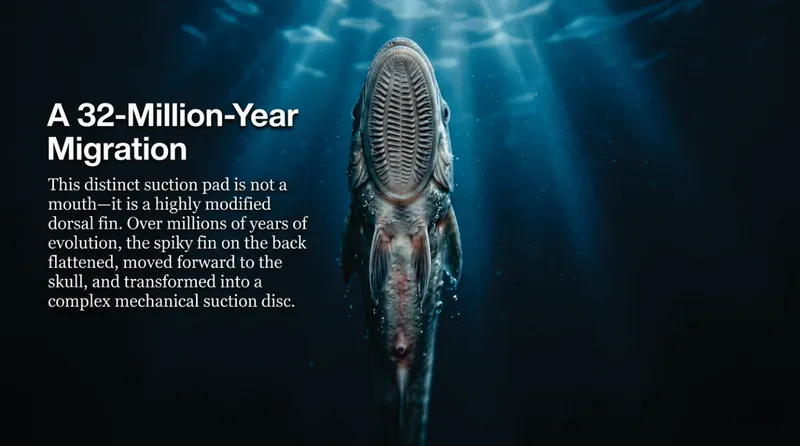
If you look at a remora from the top, its head looks bizarrely flat, almost like the rubber sole of a sneaker. This ribbed, oval-shaped suction pad isn't a mouth - it is actually a highly modified dorsal fin!
Over nearly 32 million years of evolution, the spiky fin on their back flattened out, moved forward to the top of their skull, and completely transformed into a complex mechanical suction disc.
The Blood-Engorged Seal
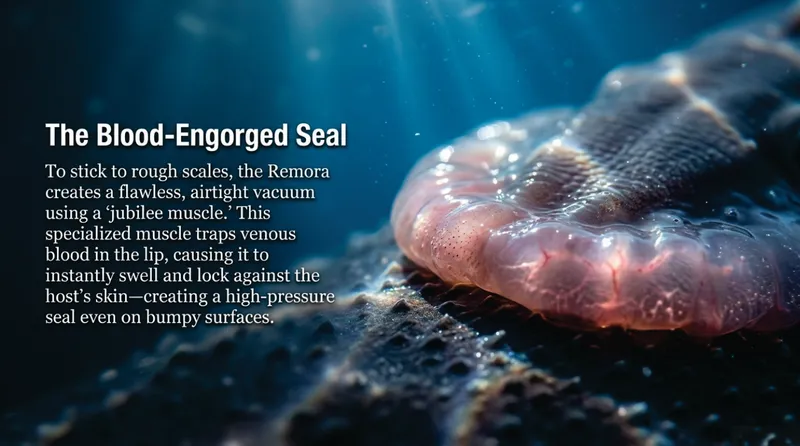
To stick securely to a host, the remora first needs a perfect, airtight vacuum seal. The outer edge of the suction disc features a thick, fleshy lip made of soft collagen and elastic fat. But it has a hidden, almost sci-fi trick.
When the remora finds a host, a specialized muscle (known by scientists as the "jubilee muscle") temporarily stops the venous blood from leaving this lip. The lip instantly swells up with blood, becoming incredibly tight and squishy. This creates a flawless, high-pressure vacuum seal against the host's skin - even if that skin is rough, bumpy, or covered in scales.
The Friction Spikes
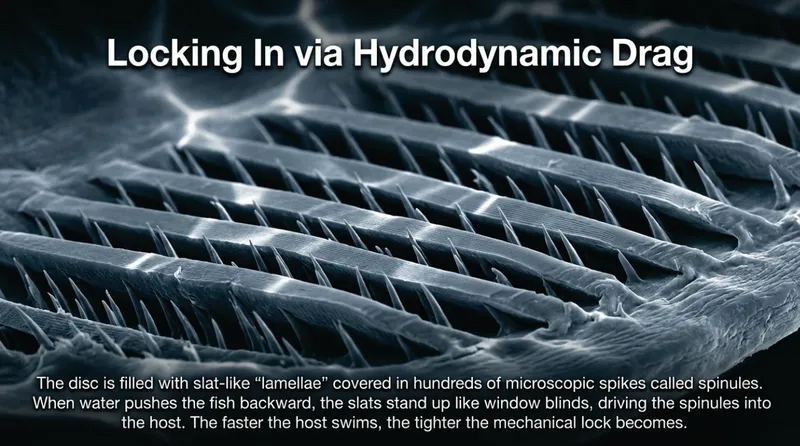
A vacuum seal alone isn't enough. When a host shark bursts into a high-speed sprint, the sheer force of the water should rip the remora right off. To prevent this, the inside of the suction disc is filled with rows of horizontal slats (called lamellae), which look much like the blinds on a window.
These slats are covered in hundreds of microscopic, tooth-like spikes called spinules. When the water pushes the remora backward, this backward motion automatically causes the slats to stand up. The tiny spinules dig into the host's skin, locking the fish in place. The faster the host swims, the tighter the remora's mechanical lock becomes! To detach, the remora simply swims slightly forward, the slats fold flat, and it releases in a fraction of a second.
The Power of Being Passive
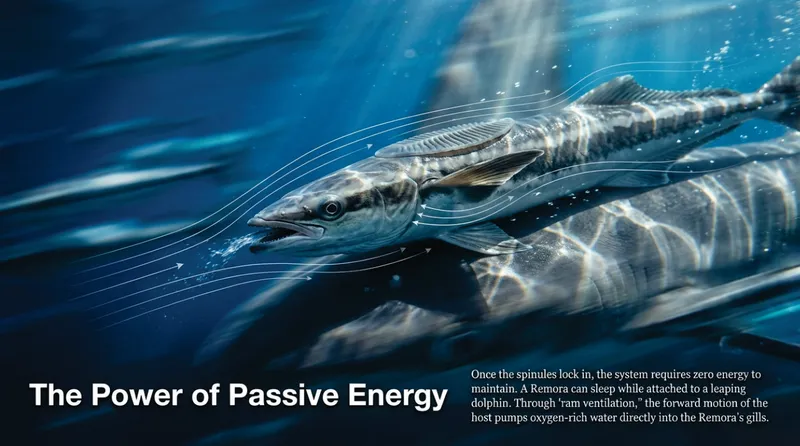
The most mind-blowing part of this biological lock is that it requires absolutely zero energy to maintain. Once the remora is locked on, the system is completely passive. A remora can literally go to sleep while stuck to a leaping dolphin!
They even take their laziness one step further. Because the host is constantly moving forward, water is forced straight into the remora's mouth and over its gills. This is called "ram ventilation." It means the remora doesn't even have to use energy to breathe. They just open their mouths slightly and let the host pump oxygen into their bodies.
The Ultimate Cleaning Crew
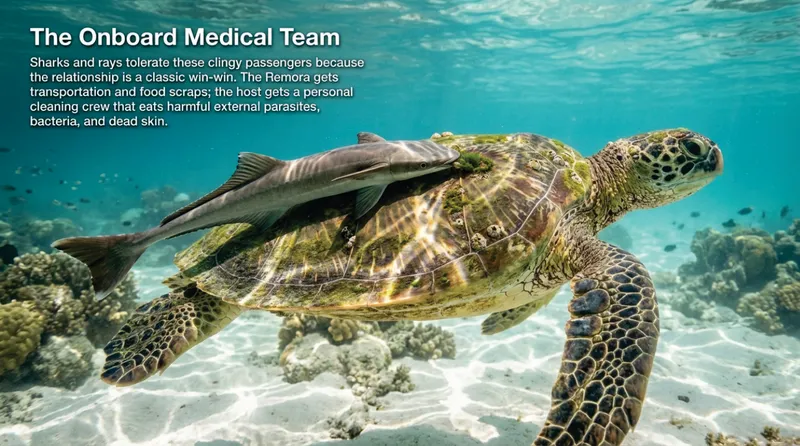
Why do sharks, turtles, and manta rays put up with these clingy passengers? It’s a classic win-win relationship. The remora gets free transportation, protection from other predators, and leftover food scraps from the host's meals.
In return, the remora acts as a personal, onboard medical team. It constantly scurries over the host's body, eating harmful external parasites, dead skin, and bacteria. By keeping these giant predators healthy and clean, the remora pays for its first-class ticket across the ocean.
PADI Divemaster and underwater storyteller with over 7 years of hands-on Red Sea diving experience, documenting marine life, mapping dive sites, and promoting responsible ocean conservation.