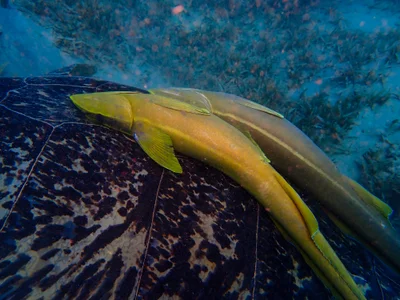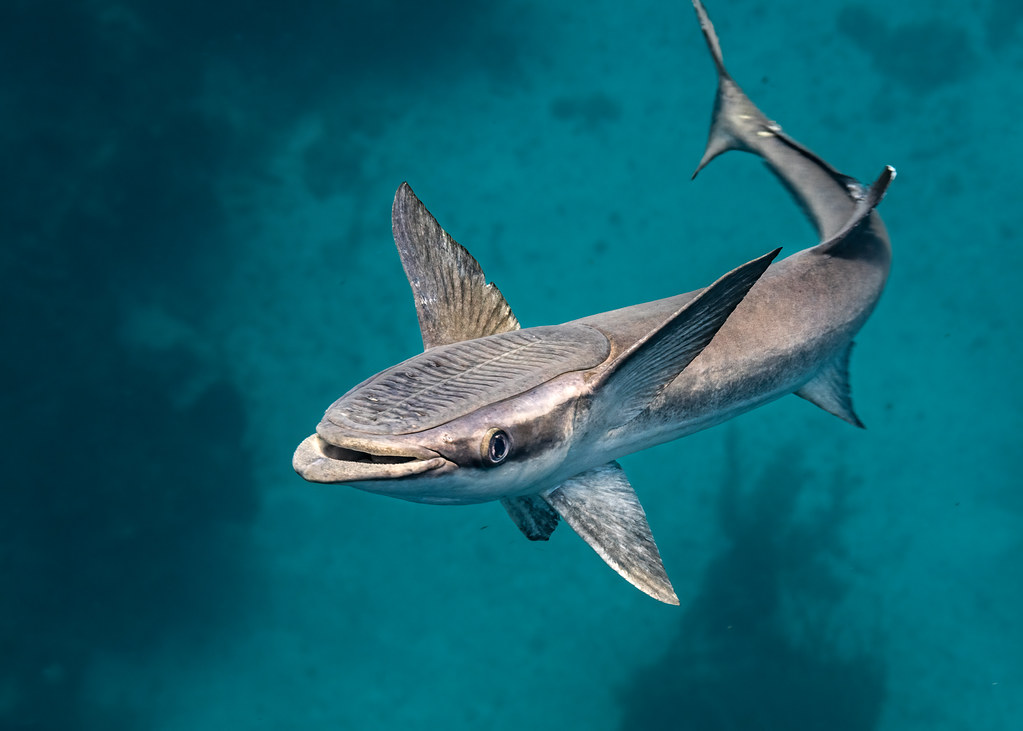
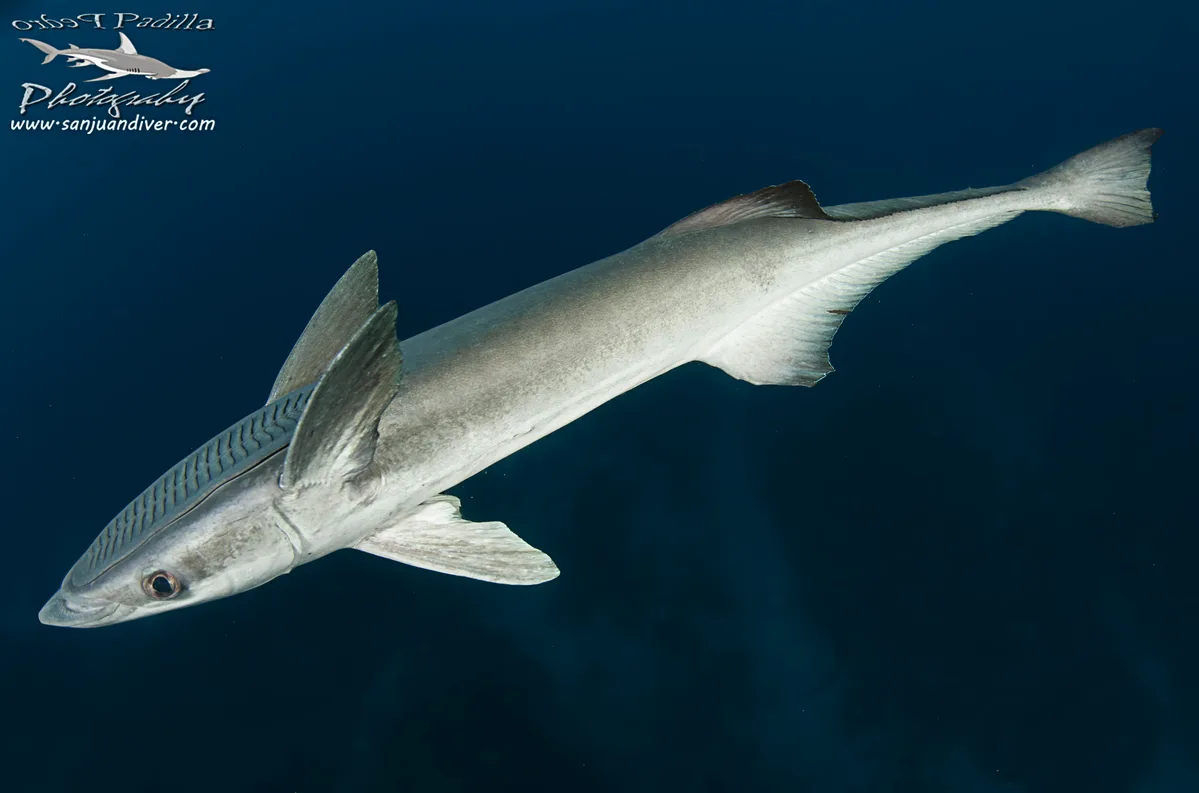
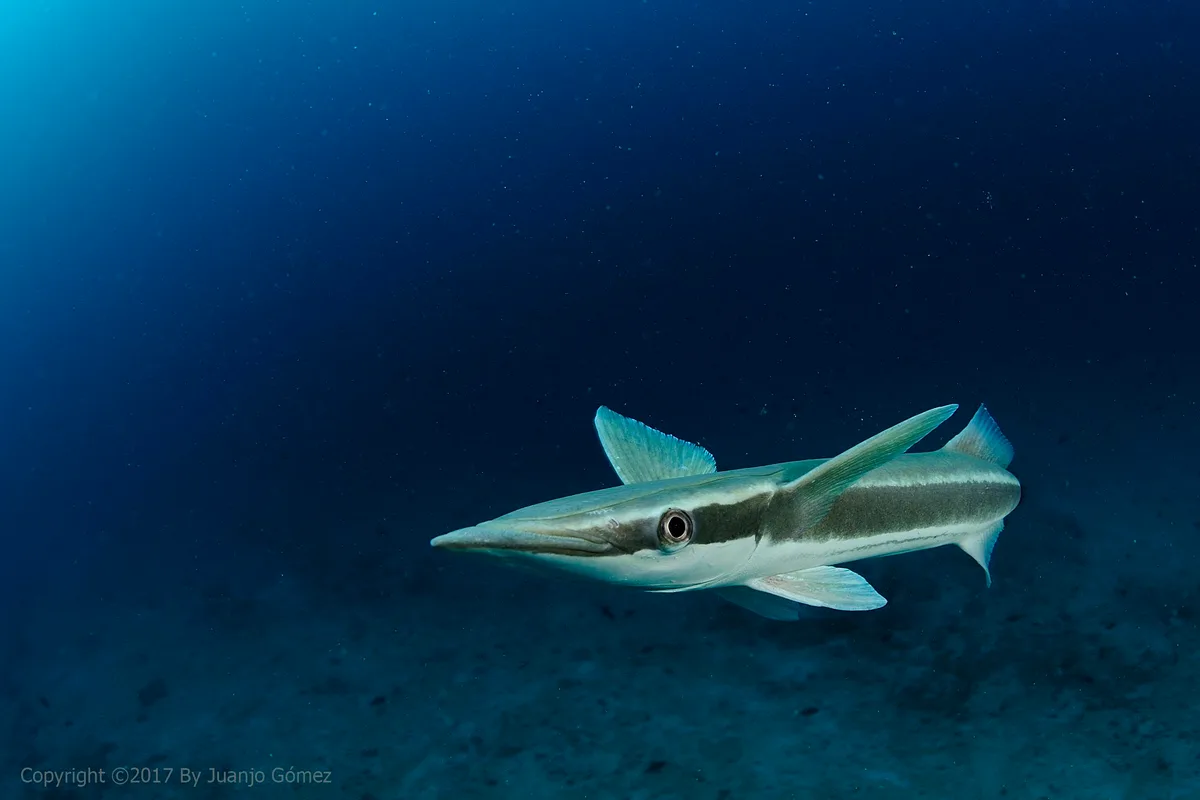
The fish stuck to the underside of a shark, usually upside down, riding for free. Eighty-six centimeters (34 in) at its largest and a fine piece of engineering at any size.
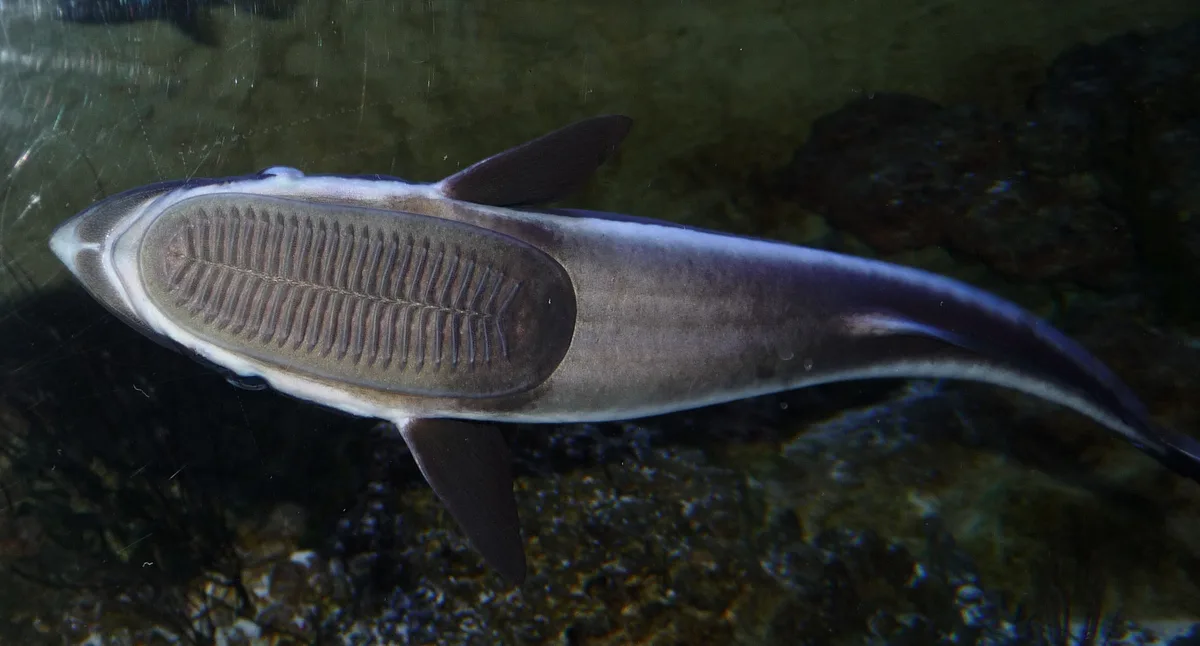
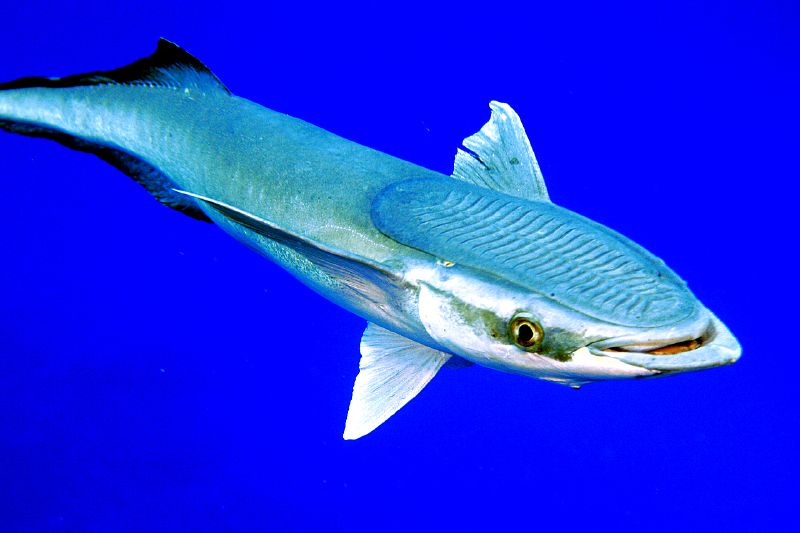
The disc on its head is a dorsal fin. Not a modified sucker that happens to sit there - the spines of the first dorsal fin flattened, split and rotated over millions of years into rows of movable slats. The remora slides backward to seat it, the slats lift to make the seal, and the harder the host pulls away the tighter the grip becomes. Measured attachment forces run to many times the fish's own weight, and researchers have spent years copying the design for underwater robots.
It is not a parasite. It eats scraps from the host's meals, plankton, and the parasitic copepods off the host's skin - which is a service, not a theft - and it detaches to feed and reattaches at will.
Remoras will try a diver, a boat hull, and each other. Being ridden by one is harmless and briefly alarming, and the fish is easier to discourage by moving into open water than by pulling at it, since pulling is precisely what its disc is built to defeat.
- flat oval sucking disc on top of the head, ridged like a shoe sole
- dark uniform brown-gray body, slim and firm
- attached upside down under a shark, or swimming free in short bursts
- length up to 86 cm