The Ocean’s Elegant Outlier: Why the Seahorse is Evolution’s Most Beautiful Rule-Breaker

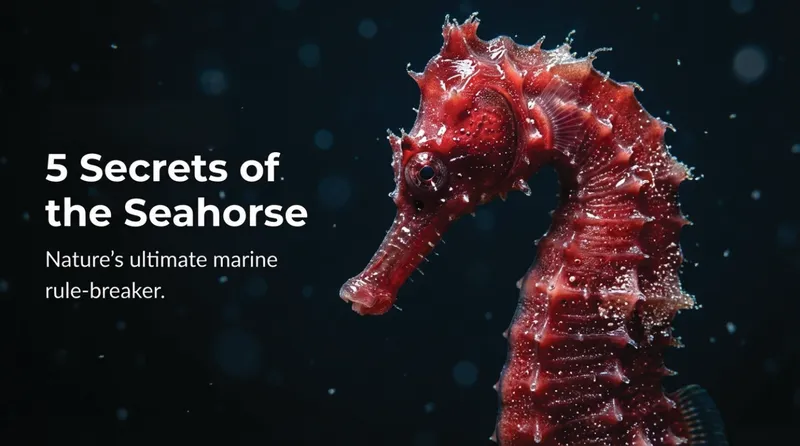
To look upon a seahorse is to witness a delightful visual dissonance. This horse-headed ghost of the seagrass beds doesn’t just look like a creature out of a fable; it functions like one, too. While we traditionally envision fish as sleek, horizontal bullets designed to pierce the water with speed, the seahorse stands in quiet defiance of these norms. Familiar as they may be from childhood aquariums, their biology is deeply counter-intuitive, hiding a suite of survival strategies that challenge our fundamental understanding of life beneath the waves.
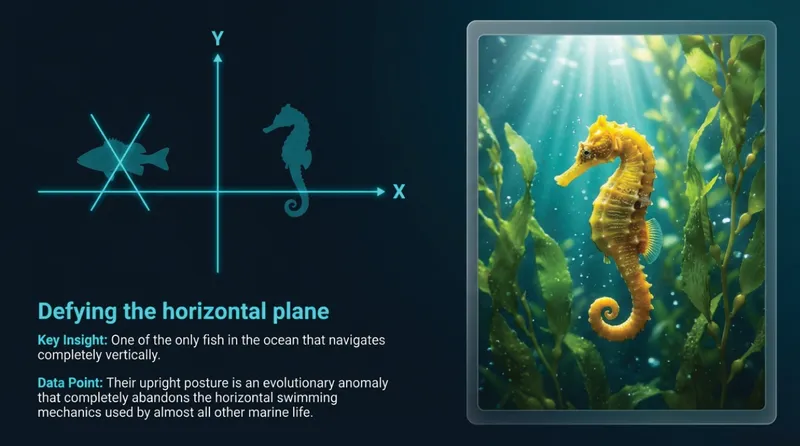
The Only Fish That Stands Tall
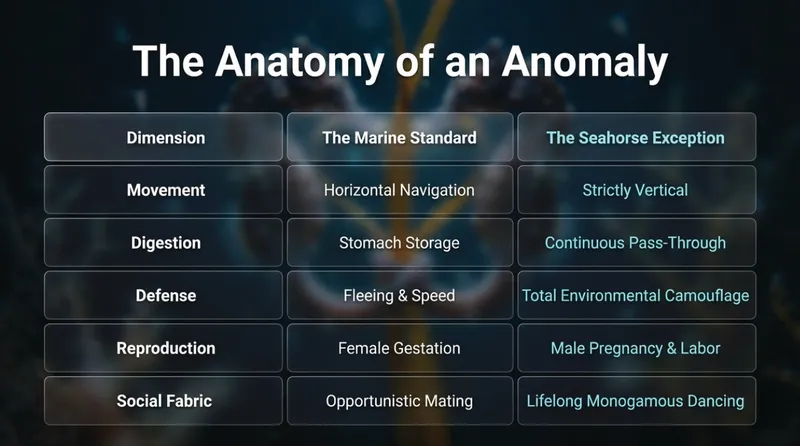
In an environment defined by the "interstate highway" of horizontal currents, the seahorse has chosen a different path entirely. It is one of the only fish species on Earth that swims vertically. Utilizing a small dorsal fin to flutter through the water column, it navigates the world as if it were walking on air.
This vertical posture represents a profound shift in survival philosophy: it trades power for precision. By standing tall, the seahorse leaves the open-water sprints to the tuna and mackerel, choosing instead to master the "tight alleyways" of coral reefs and swaying grass. Its movement is calculated and deliberate, allowing it to navigate complex, cluttered environments with a degree of control that more "traditional" fish simply cannot match.
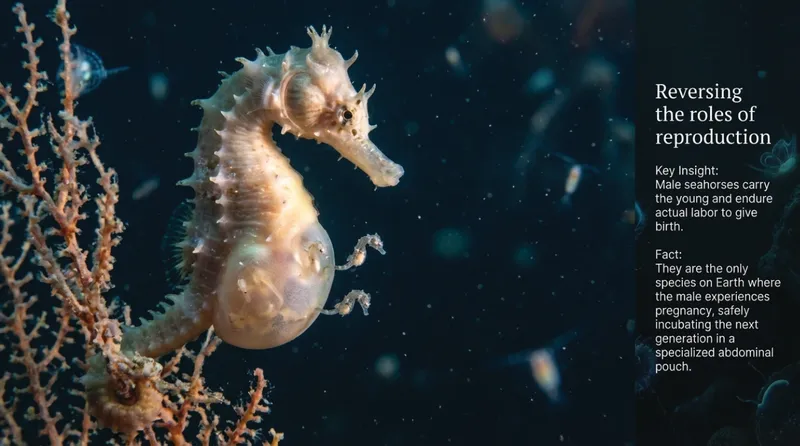
The Ultimate Role Reversal: Male Labor
Evolution has rarely produced a more striking subversion of gender roles than the seahorse’s reproductive cycle. In this corner of the ocean, the biological burden of pregnancy is shifted, making the pair a unique "reproductive powerhouse." While the female produces the eggs, it is the male who takes on the heavy lifting of gestation.
"Dads give birth - Male seahorses carry the babies and go through actual labor."
This is far more than simple protection; it is a full biological commitment. By carrying the brood to term and undergoing actual labor, the male allows the female to immediately begin producing the next clutch of eggs. This partnership challenges the standard "vulnerable parent" trope in the animal kingdom, proving that teamwork can be the ultimate evolutionary advantage.
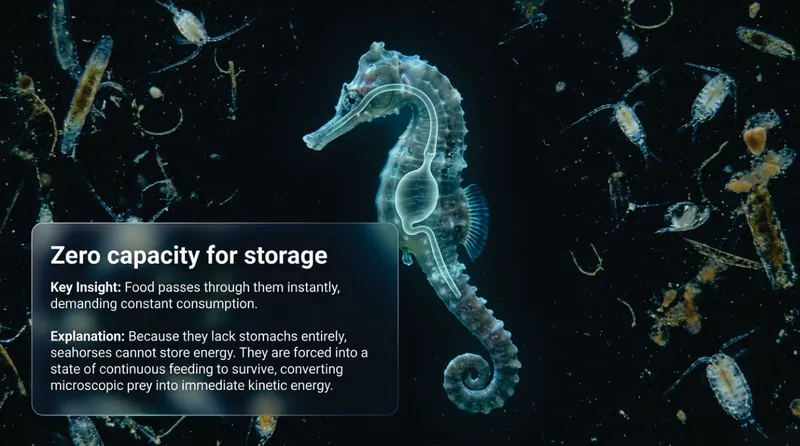
The Bottomless Appetite: Life Without a Stomach
There is a frantic irony to the seahorse’s existence. While they appear to be the most sedentary and tranquil of creatures, they are actually locked in a life-or-death race against their own metabolism. This is because seahorses possess a startling anatomical quirk: they have no stomachs.
Because they lack a storage organ to hold and break down nutrients slowly, food passes through their digestive tracts with extreme speed. Consequently, they must eat constantly to survive. What looks like a lazy drift through the seagrass is actually a relentless hunt. The seahorse cannot afford the luxury of storing a meal for later; it must remain a perpetual predator, anchored to its environment by a prehensile tail while its eyes scan for the next essential calorie.
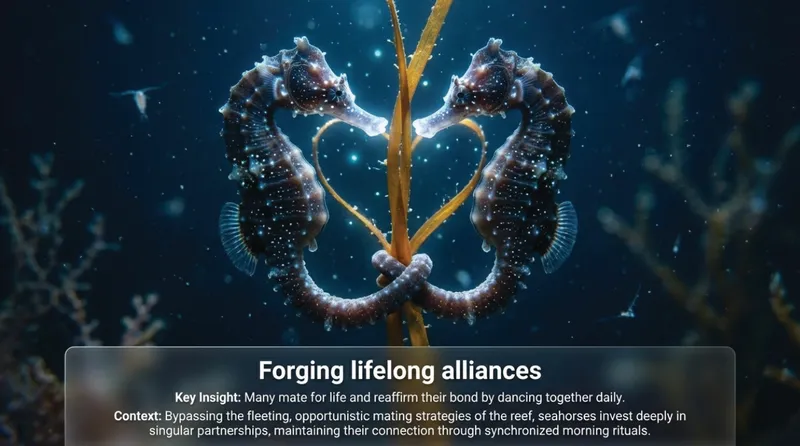
Marine Romance: Daily Dances and Lifelong Bonds
Beyond the oddities of their anatomy, seahorses exhibit a level of social devotion that feels almost human. Many species mate for life, but they do not take their bond for granted. Every morning, partners reinforce their connection through a sophisticated "morning greeting" - a synchronized daily dance where they change color and swirl together through the water.
This ritual suggests a level of sentience and social complexity that is rare for such small creatures. For the seahorse, survival isn't just a solitary hunt; it is a shared experience. These daily dances ensure the pair remains perfectly in sync, maintaining a lifelong bond that provides stability in an often-chaotic marine environment.
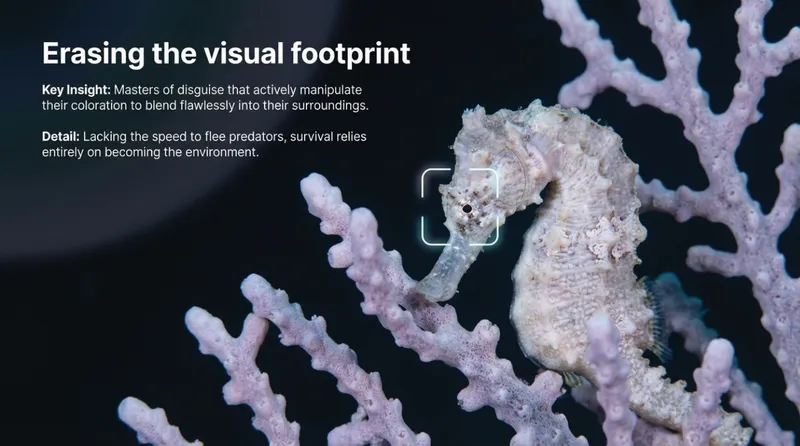
Masters of Disguise: The Invisible Hunter
Because the seahorse is a slow-moving, vertical swimmer, it cannot outrun a predator. Instead, it has mastered the art of being a "living shadow." As masters of disguise, they can change their color and even their skin texture to blend seamlessly into their surroundings.
This camouflage is their primary defense and their greatest hunting tool. By becoming virtually invisible against the coral or kelp, they negate the need for speed. They are the ocean’s most patient snipers, relying on the fact that the best way to survive a dangerous neighborhood is to ensure that no one knows you are there in the first place.
Rethinking the Familiar
The seahorse is a powerful reminder that the ocean’s greatest mysteries are often hiding in plain sight. From the reversal of traditional birth roles to a metabolism that forbids them from ever truly resting, these creatures have carved out a niche that defies every rule of "standard" fish biology.
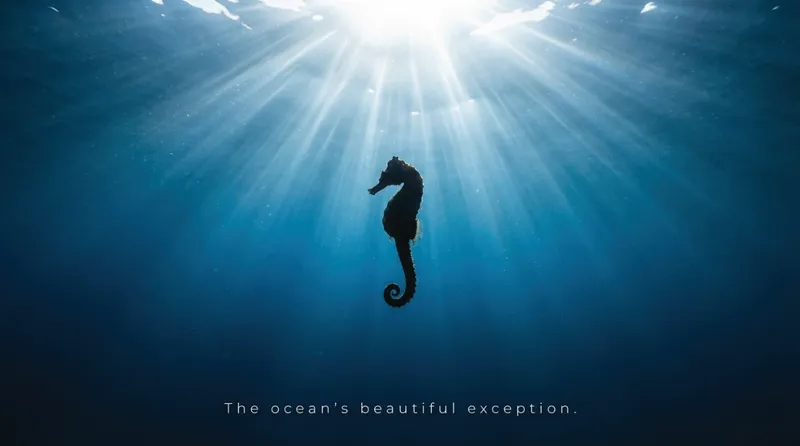
As we pull back the curtain on their sophisticated social rituals and anatomical wonders, we are forced to wonder: if a creature as familiar as the seahorse is this strange, what other secrets are the deep oceans still keeping? The more we look, the more we realize that the sea is not just a habitat, but a masterclass in the complexity and resilience of life.
PADI Divemaster and underwater storyteller with over 7 years of hands-on Red Sea diving experience, documenting marine life, mapping dive sites, and promoting responsible ocean conservation.