More Than a Prop: 5 Reasons Your 'Quick Photo' Is Killing Sea Stars

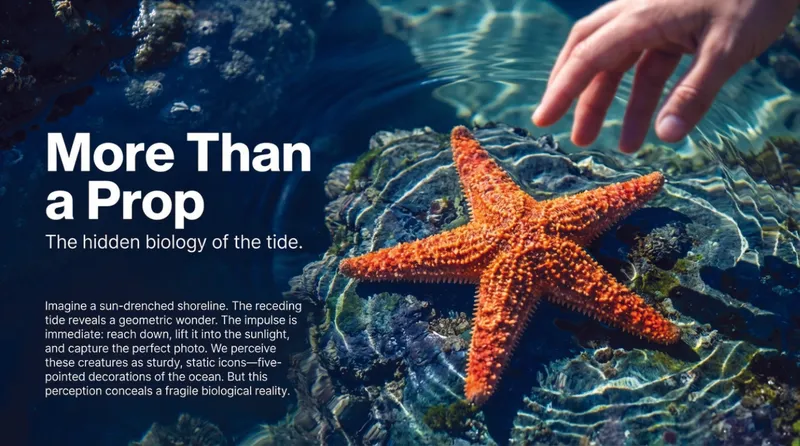
Imagine a sun-drenched shoreline where the receding tide reveals a vibrant geometric wonder nestled in a pool. For many travelers, the immediate impulse is to reach down, lift the animal into the sunlight, and capture a "perfect" photo for social media. We perceive these creatures as sturdy, static icons of the ocean - little more than living, five-pointed decorations.
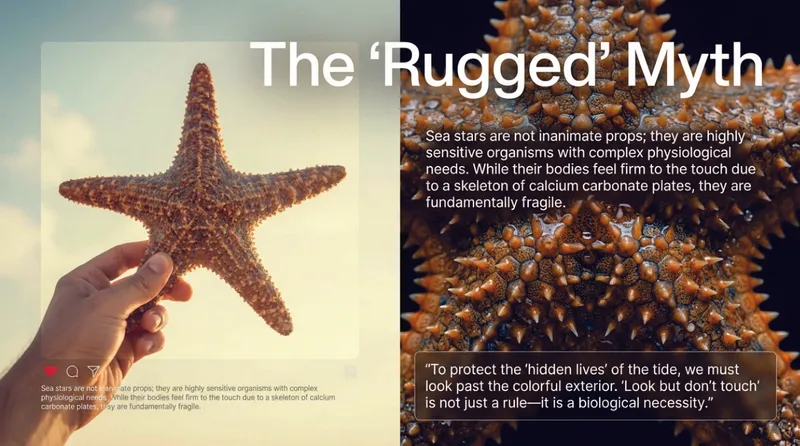
However, this perception is a dangerous misunderstanding of marine biology. Sea stars are not inanimate props; they are highly sensitive organisms with complex physiological needs. While their bodies feel firm to the touch, they are fundamentally fragile. To protect the "hidden lives" of the tide, we must look past their colorful exterior and understand the biological reality of why "look but don’t touch" is the only rule that ensures their survival.
They Breathe Through Their Skin (Literally)
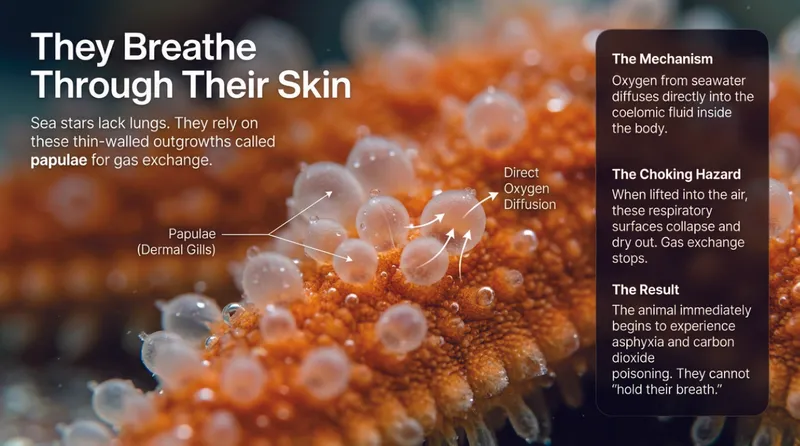
Unlike fish that possess internal gills or humans who rely on lungs, sea stars utilize a decentralized respiratory system that is inseparable from their outer surface. They breathe through their tube feet and specialized, thin-walled skin outgrowths known as papulae, or dermal gills.
For a sea star, the entire body surface is a breathing apparatus. Oxygen from the seawater must diffuse through these delicate papulae directly into the coelomic fluid inside their bodies, while carbon dioxide diffuses out. This vital gas exchange requires constant submersion. When a sea star is removed from its aquatic environment, this system doesn't just slow down - it suffers a total failure. It is not merely a matter of the animal "holding its breath"; air exposure effectively shuts down their ability to process oxygen entirely.
For a Sea Star, Air is a Choking Hazard
Lifting a sea star into the air for a photo triggers a cascading internal crisis. Without the surrounding seawater to facilitate gas exchange, the animal enters a state of immediate physiological distress. As the body surface dries out in the air, the tissues become damaged, further impairing the animal's ability to function even after it is returned to the tide.
There is no universal "safe time" for a sea star to be out of the water. Even a few seconds can compromise their internal chemistry.
"The animal begins to experience oxygen deprivation (asphyxia) and a build-up of carbon dioxide in its body fluids."
This asphyxiation is an invisible trauma. While the animal cannot gasp or struggle in a way humans easily recognize, it is effectively suffocating the moment it leaves the water.
Your Sunscreen is Their Toxin
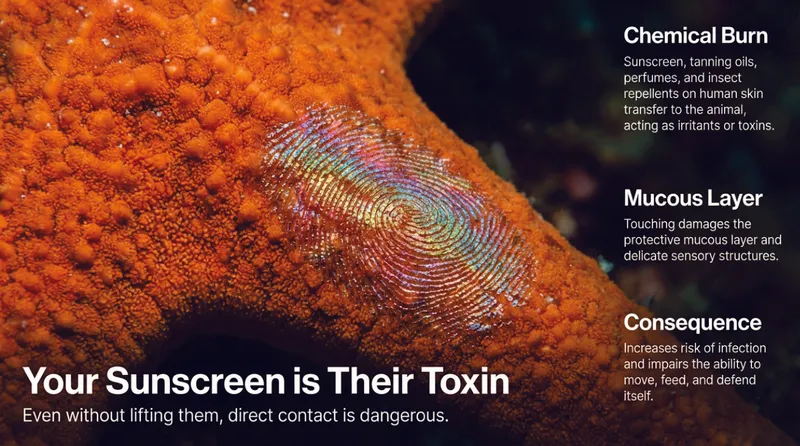
Even when a sea star remains submerged, the act of touching it with bare hands introduces a cocktail of foreign chemicals into its environment. Human skin at the beach is typically coated in a variety of products:
- Sunscreens and tanning oils
- Perfumes and fragrances
- Insect repellents
- Alcohol-based disinfectant gels
These substances act as potent irritants or toxins to the sea star’s delicate mucus layer and sensory structures. A simple touch transfers these chemicals, poisoning the animal’s protective barrier and increasing its vulnerability to lethal infections. There is a tragic irony in the fact that the very products we use to enjoy our day at the beach are often the same substances that compromise the wildlife we claim to admire.
They Are High-Pressure Hydraulic Machines
A sea star’s anatomy is a masterclass in biological engineering. Their bodies are organized with pentaradial symmetry around a central axis, supported by an internal skeleton of calcium carbonate ossicles (plates) bound together by collagenous tissue. This provides a deceptive sense of "toughness," but the machinery inside is incredibly refined.
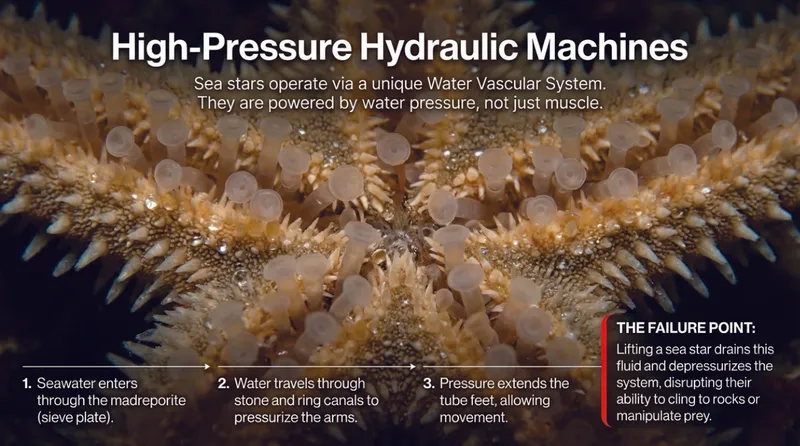
Sea stars move and hunt using a water vascular system - a unique hydraulic network. Seawater enters through a sieve-like structure called the madreporite and travels through internal canals to the ampullae. When an ampulla contracts, it forces fluid into the tube feet, extending them so their suction cups can grip rocks or pry open prey.
When a human squeezes a sea star for a photo, they disrupt the precise internal pressure required for these basic functions. Because each arm contains repeated sets of vital organs - including digestive glands and gonads - physical pressure is never just superficial. You aren't just touching a limb; you are potentially crushing the animal's vital internal machinery.
The "Seeming Fine" Fallacy
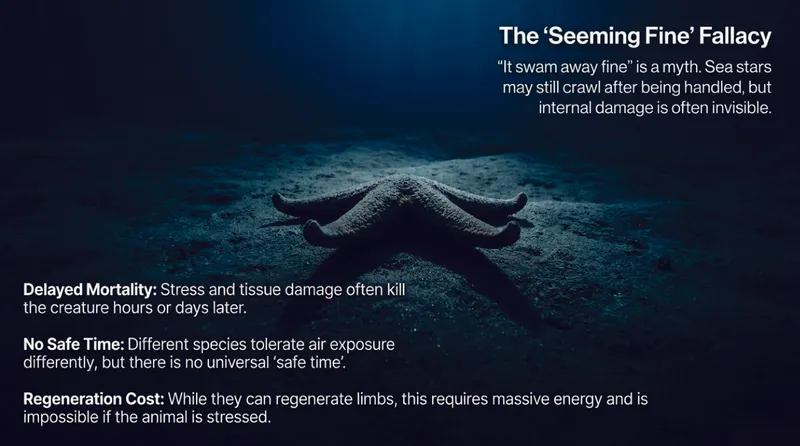
The most dangerous justification for handling sea stars is the observation that the animal "seems fine" when returned to the water. If the sea star crawls away, the visitor assumes no harm was done.
This is a biological trap. Because sea stars lack a "flight response" - they cannot scream, swim away rapidly, or change color in distress - we misinterpret their slow pace as sturdiness. In reality, the damage is often internal and delayed. A sea star that appears to move normally immediately after handling is often a "walking ghost," destined to succumb to tissue damage, oxygen deprivation, or chemical-induced infections hours or even days later. This invisible tragedy makes the "it's okay, I put it back" excuse entirely invalid.
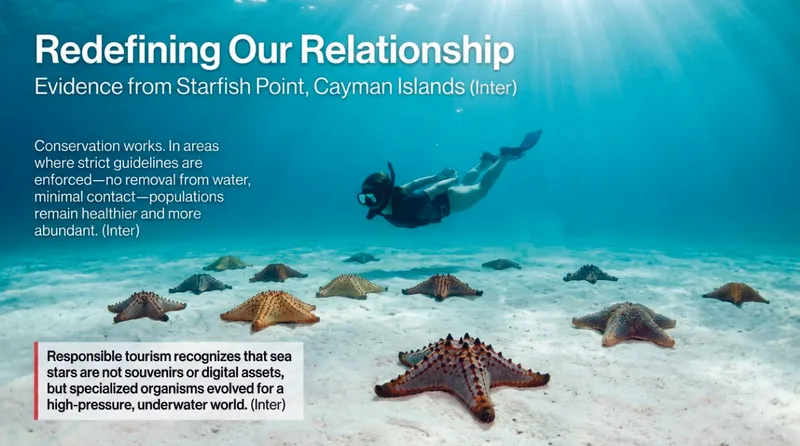
Redefining Our Relationship with the Tide
Sea stars are specialized organisms evolved to thrive in a high-pressure, underwater world. They are not souvenirs or digital assets. Responsible tourism means recognizing that our presence in their habitat should be as non-intrusive as possible.
We know that conservation works. In areas like Starfish Point in the Cayman Islands, where strict "no handling" guidelines are enforced and visitors are educated on the animal's fragility, populations remain healthier and more abundant.
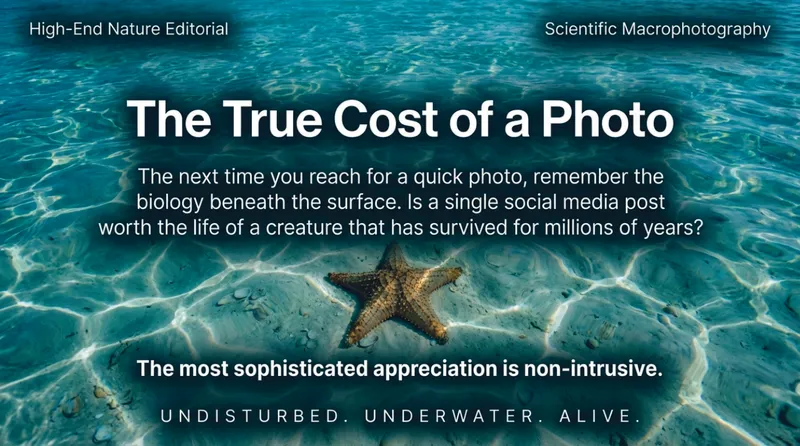
The next time you find yourself reaching for a "quick photo," consider the true cost of that image. Is a single post for social media worth the life of a creature that has survived in our oceans for millions of years? The most sophisticated way to appreciate the ocean’s beauty is to leave it exactly as you found it - undisturbed, underwater, and alive.
PADI Divemaster and underwater storyteller with over 7 years of hands-on Red Sea diving experience, documenting marine life, mapping dive sites, and promoting responsible ocean conservation.