
17 species in Starfish
Aquilonastra
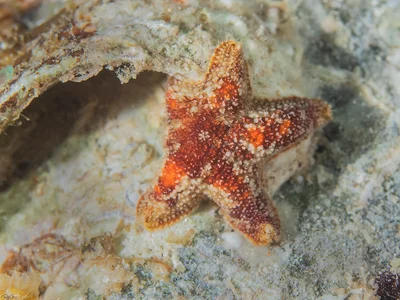
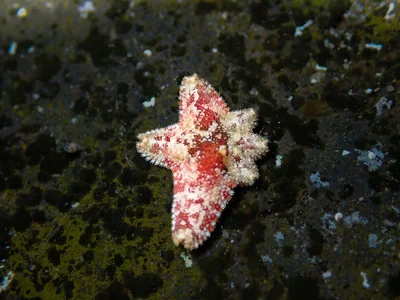
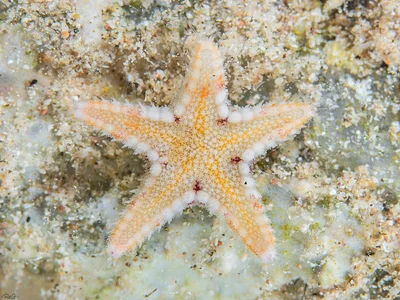
2Tiny stars under two centimeters, living on the undersides of stones rather than on top of them, and almost always with arms of unequal length. That is not damage: the genus reproduces by splitting in half and regrowing the missing side, so most individuals are caught mid-rebuild.
Culcita
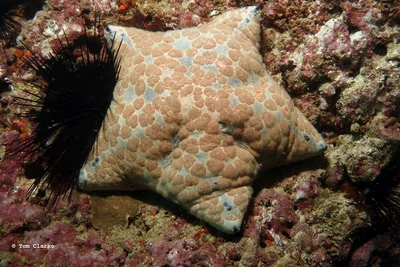
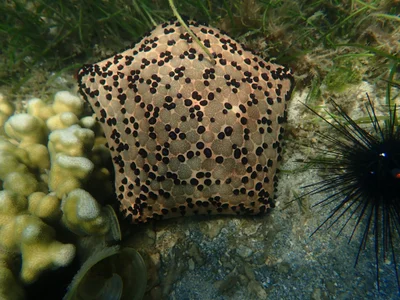
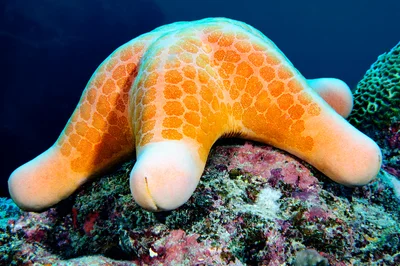
2Cushion stars: the arms have been absorbed into a swollen pentagonal cushion, so the animal reads as a stone rather than as a star. Underneath it is still a sea star, with the grooves of tube feet running out to five corners, and it feeds the way its relatives do - by pushing its stomach out onto the surface it is sitting on.
Fromia
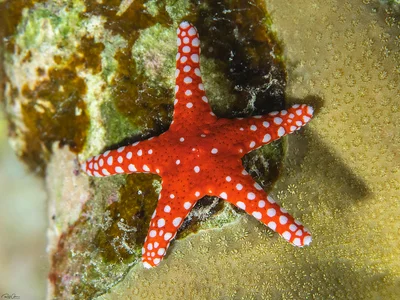
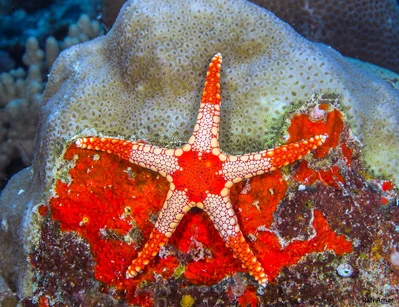
2Small bright stars, red to orange, with the whole upper surface tiled in flat plates - a neat mosaic rather than the granular or spiny finish of the big species. They are stiff and flattened, built to lie against rock and graze the film on it, and they are the first stars most divers here learn to name.
Other genera
11

Other groups in Echinoderms
Nearby in the catalogue.



Last Update: August 23, 2026