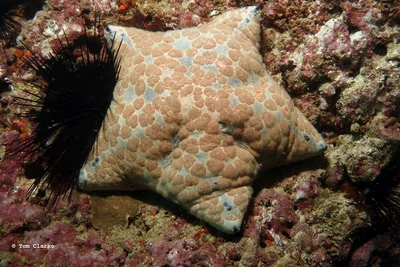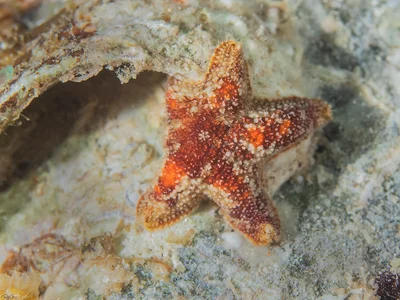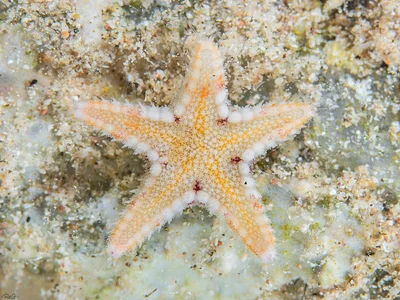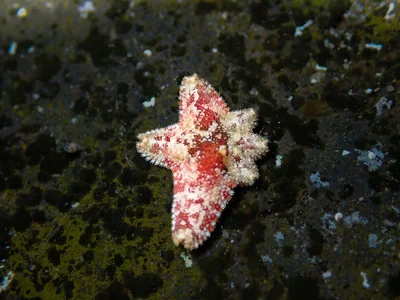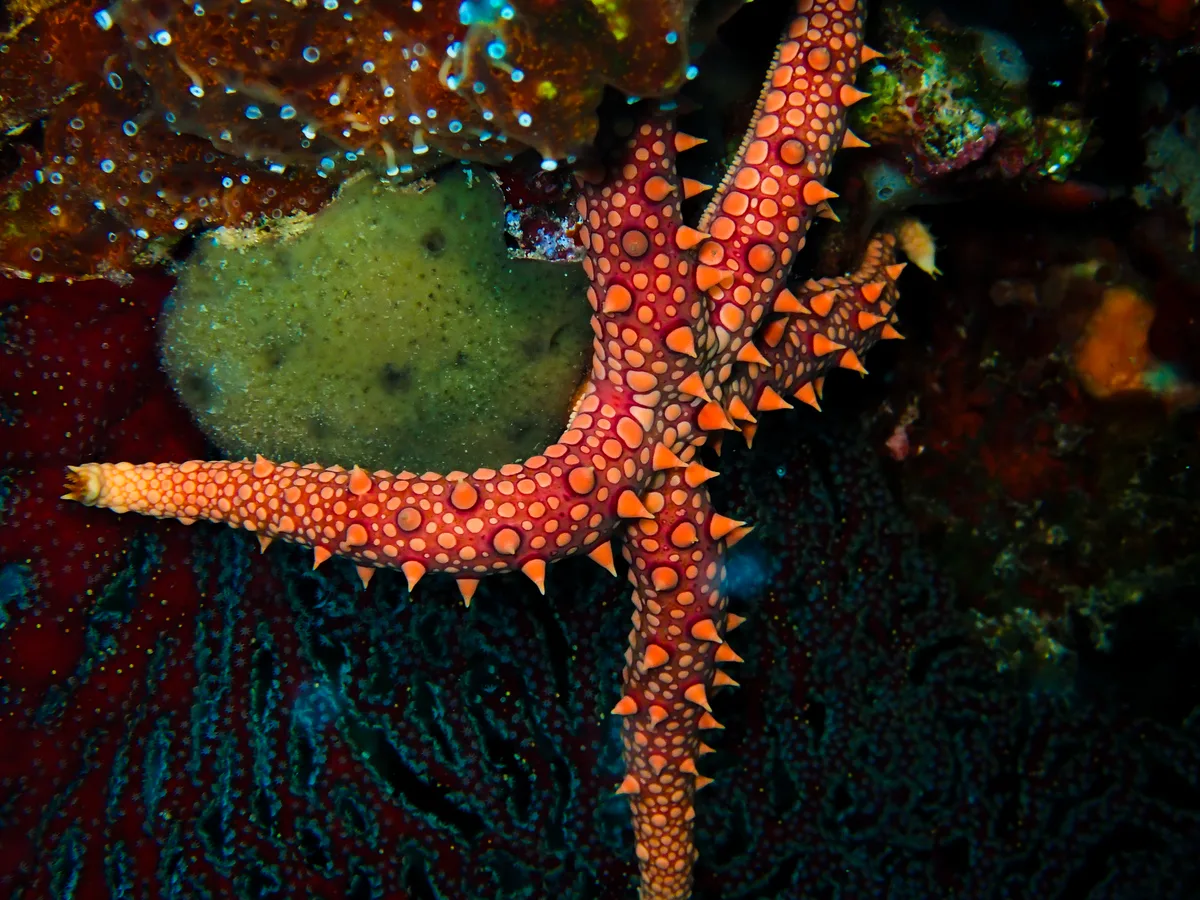
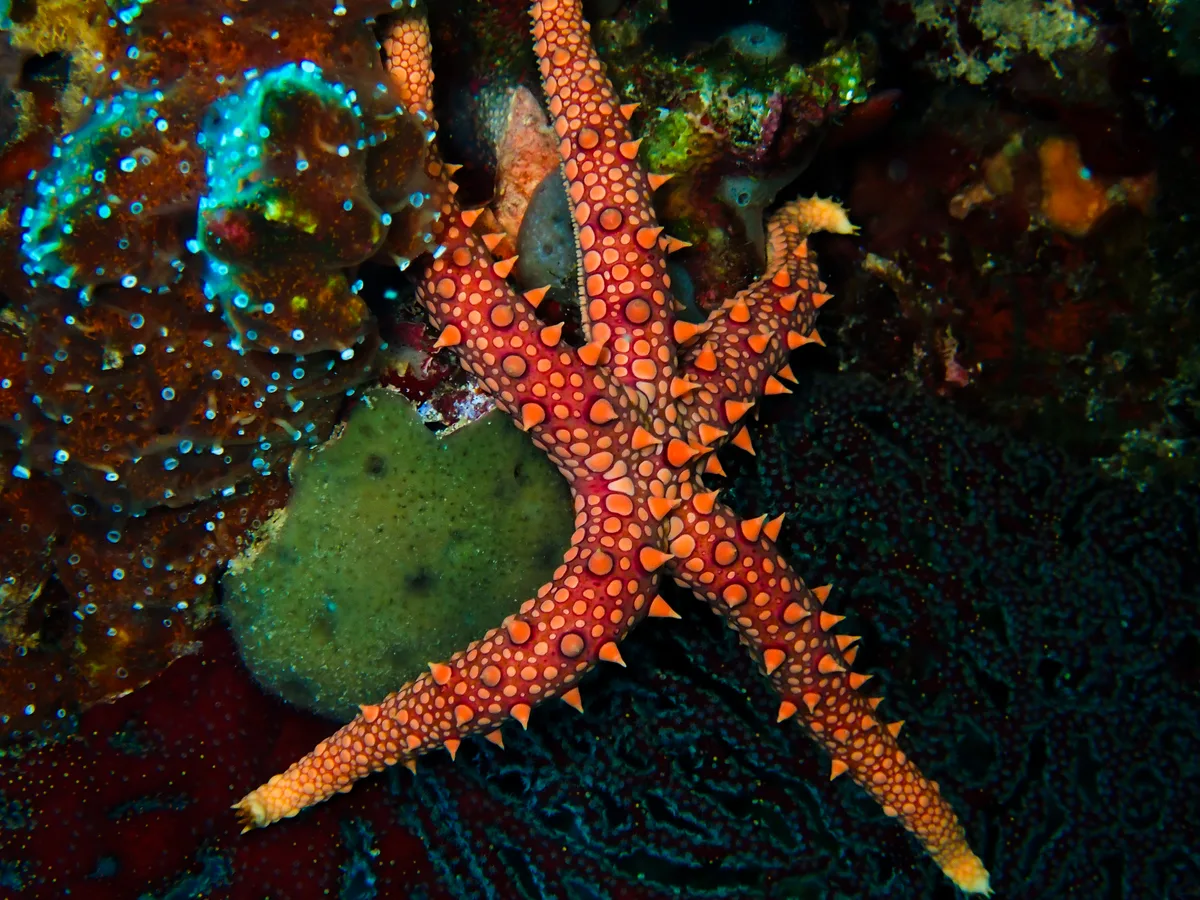
A knobbly five-armed star in orange and cream, out on the rubble at night, with the knobs arranged in neat rows down each arm. Thirty centimeters (12 in) across, and the reef's most obvious example of a body that treats its own parts as replaceable.
Arms are expendable. A star caught by a predator sheds the arm it is held by and walks away, and regrows it over months - which is why so many individuals have arms of four different lengths at once. The animal is doing accounting we would find alarming: losing a fifth of the body is cheaper than losing all of it.
Underneath, hundreds of tube feet run in grooves along each arm, driven by a hydraulic system that has no heart, no brain and no blood - just seawater pumped through a network of canals. There is no head, and no front: the star moves in whichever direction an arm decides to lead.
It feeds at night on sponges, encrusting animals and detritus, digesting some prey by pushing its stomach out over it. Like other sea stars it carries saponins in the body wall, so the same rule applies as for sea cucumbers: hands off the face, and put it back the way you found it.
- five stout arms covered in blunt rounded knobs, red-orange on cream
- knobs arranged in regular rows along each arm
- arms often unequal - regrowing after damage
- diameter up to 30 cm