Tiny Guardians of the Reef: How Trapezia Crabs Protect Their Coral Homes

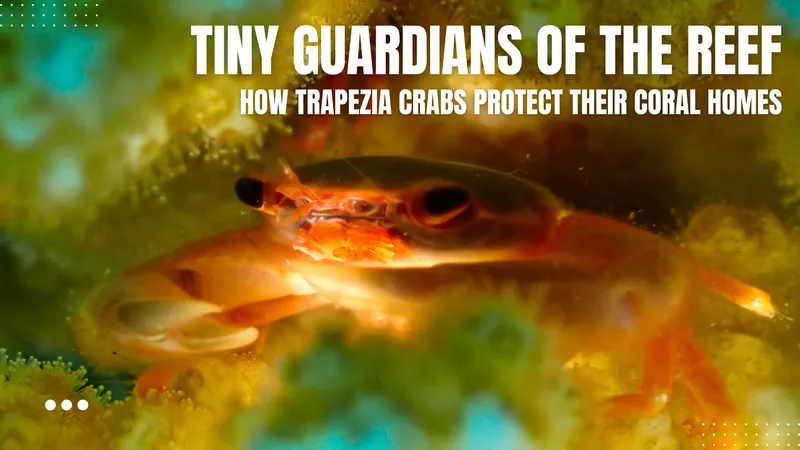
Imagine diving into the vibrant world of a coral reef, surrounded by the kaleidoscope of colors and life. Among the intricate branches of stony corals, you might spot tiny, often overlooked creatures - Trapezia crabs, the unsung heroes of the reef. These diminutive crustaceans, sometimes no bigger than a fingernail, play a crucial role in the survival of their coral hosts, acting as fierce defenders against a variety of predators [3].
The Symbiotic Relationship
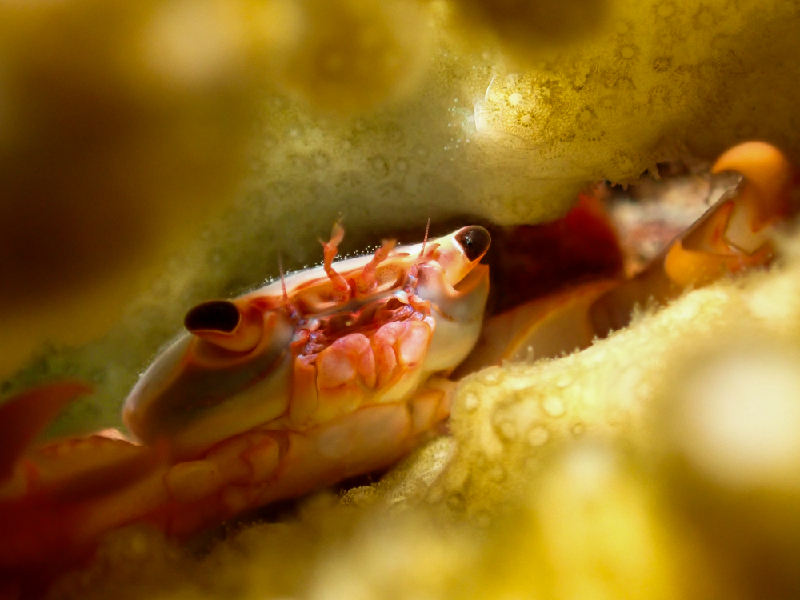
Trapezia crabs, commonly known as coral guard-crabs, live in a mutualistic relationship with their coral hosts, particularly branching corals like Pocillopora and Acropora [4]. The coral provides shelter and a source of nutrition, while the crabs offer protection from predators such as the notorious crown-of-thorns starfish (COTS), coral-eating snails, and cushion stars [3]. This partnership is a perfect example of nature’s teamwork, where both parties benefit from each other’s presence.

Defenders of the Reef
When a predator like the crown-of-thorns starfish approaches, the Trapezia crabs spring into action. They emerge from the coral’s branches and aggressively pinch the starfish’s tube feet, causing enough discomfort to drive the predator away [4]. This defense is not just a random act of bravery; it’s a well-coordinated effort. A single mating pair of Trapezia typically occupies each coral colony, but larger colonies can host multiple species and additional juveniles, creating a diverse and effective defense force [1].
Size and Species Matter
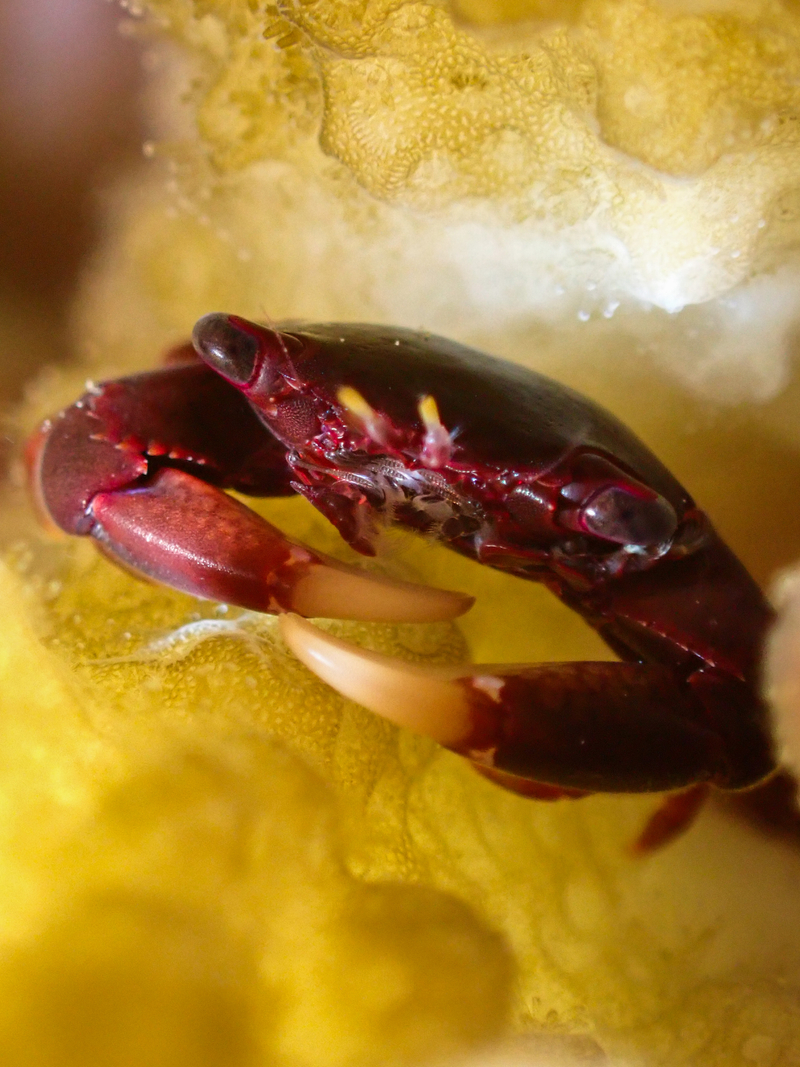
Not all Trapezia crabs are created equal. Research shows that larger crabs (with a carapace width of 9-11 mm) are more effective at defending against larger predators like the cushion star Culcita, while smaller crabs are better suited to fend off smaller threats such as the snail Drupella [1]. This ecological complementarity means that a mix of crab sizes and species within a coral colony provides the best protection against a range of predators.

Feeding Habits and Behavior
While Trapezia crabs are known for their protective role, their diet is more varied than once thought. In addition to grazing on coral tissue and mucus, they actively forage for demersal plankton that drifts through the coral compartments, especially at night [2]. This nocturnal feeding behavior adds another layer to their ecological importance, as they contribute to the reef’s trophic web by preying on small zooplankton [2].
For Divers, Biologists, and Photographers
- For Scuba Divers: Keep an eye out for these tiny guardians during your dives. They are most active at night, so night dives offer the best chance to observe their defensive and feeding behaviors [2].
- For Marine Biologists: The Trapezia-coral mutualism is a fascinating subject for research, offering insights into ecological complementarity, predator-prey dynamics, and the resilience of coral reefs [1].
- For Photographers: Capturing the interaction between Trapezia crabs and their coral hosts can result in stunning images. Look for colonies with visible crab activity, especially during night dives, to document their unique behaviors [3].
The next time you explore a coral reef, take a moment to appreciate the tiny guardians that help keep these vibrant ecosystems thriving. Their story is a reminder of the intricate and often unseen relationships that sustain life beneath the waves.
References
PADI Divemaster and underwater storyteller with over 7 years of hands-on Red Sea diving experience, documenting marine life, mapping dive sites, and promoting responsible ocean conservation.



I love this guys!