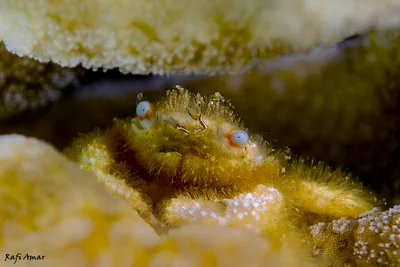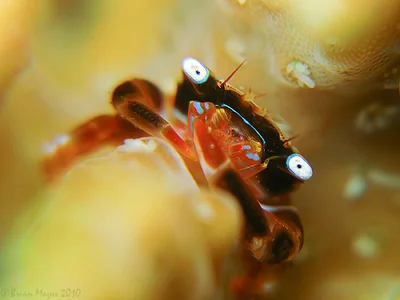
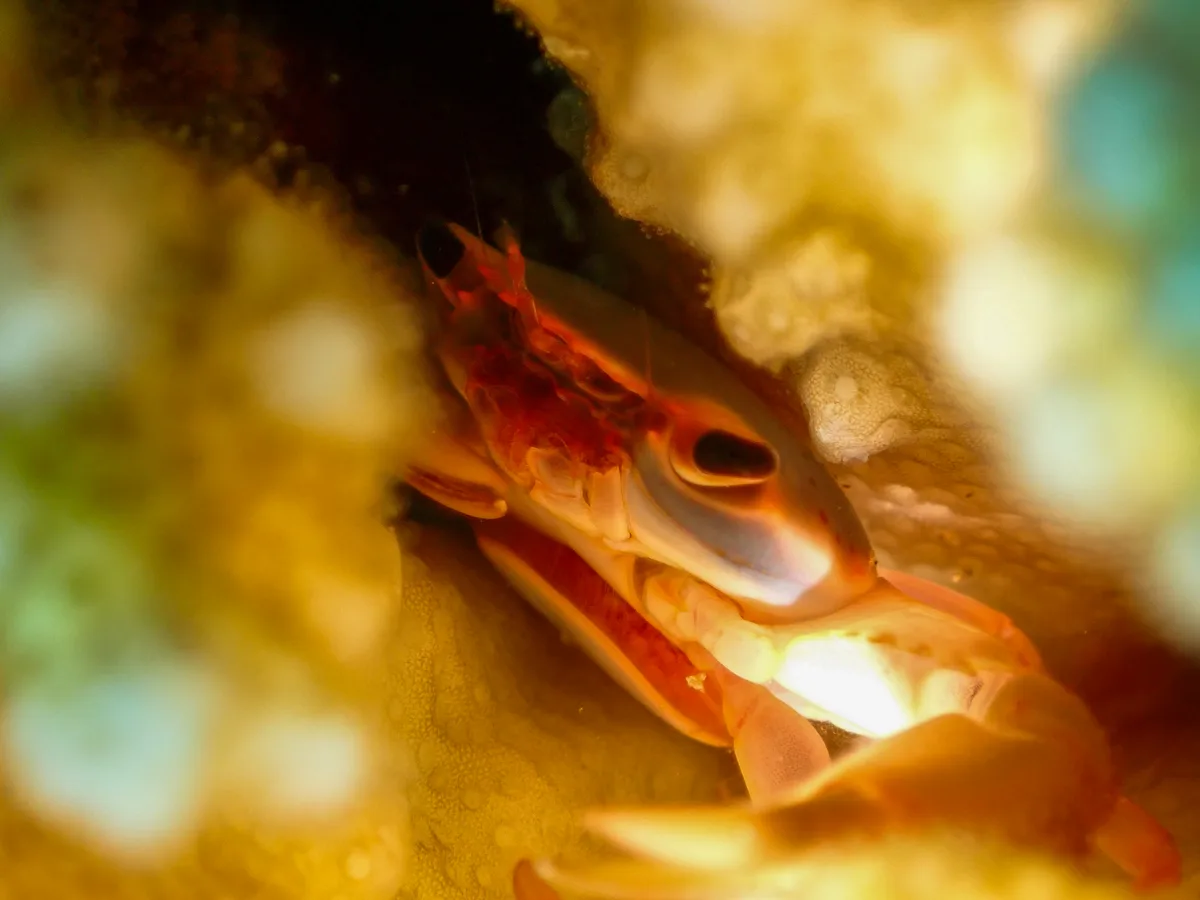
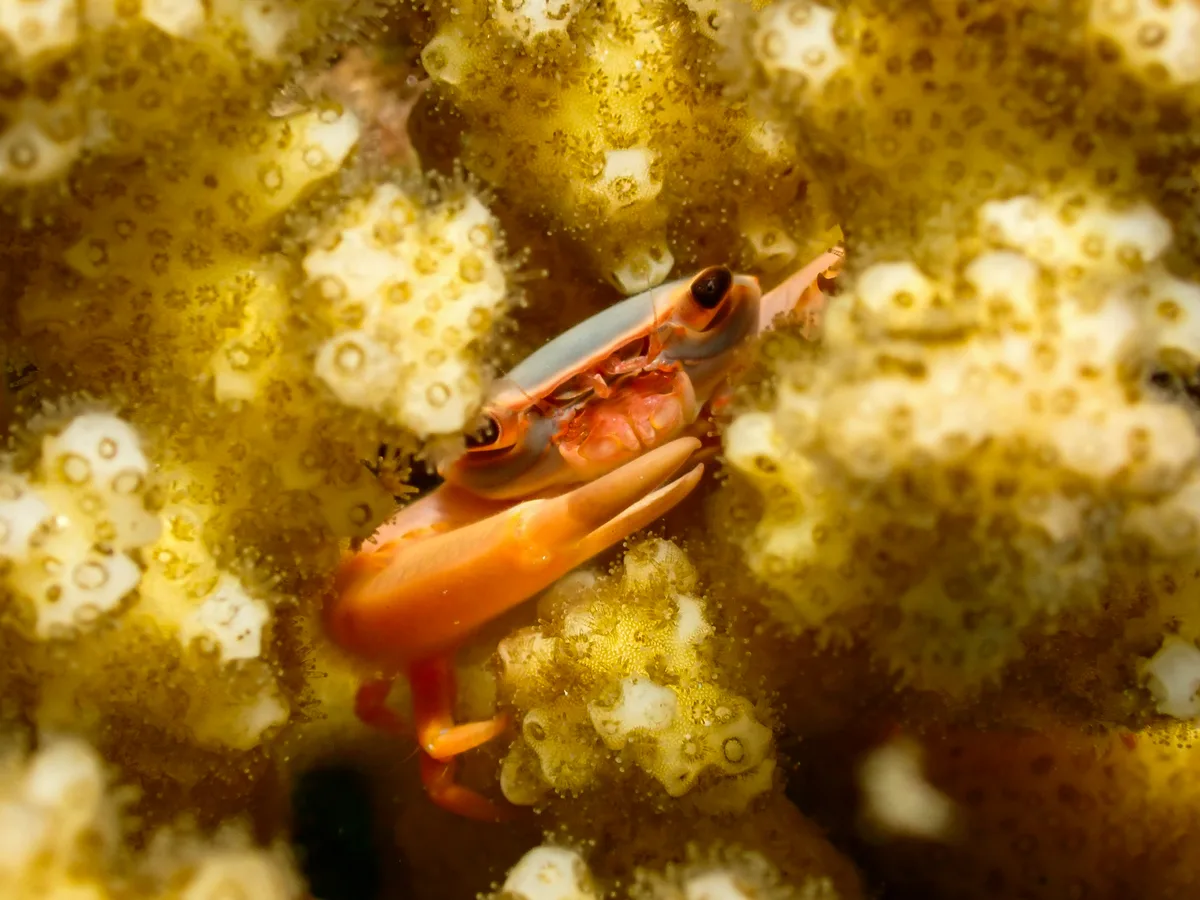
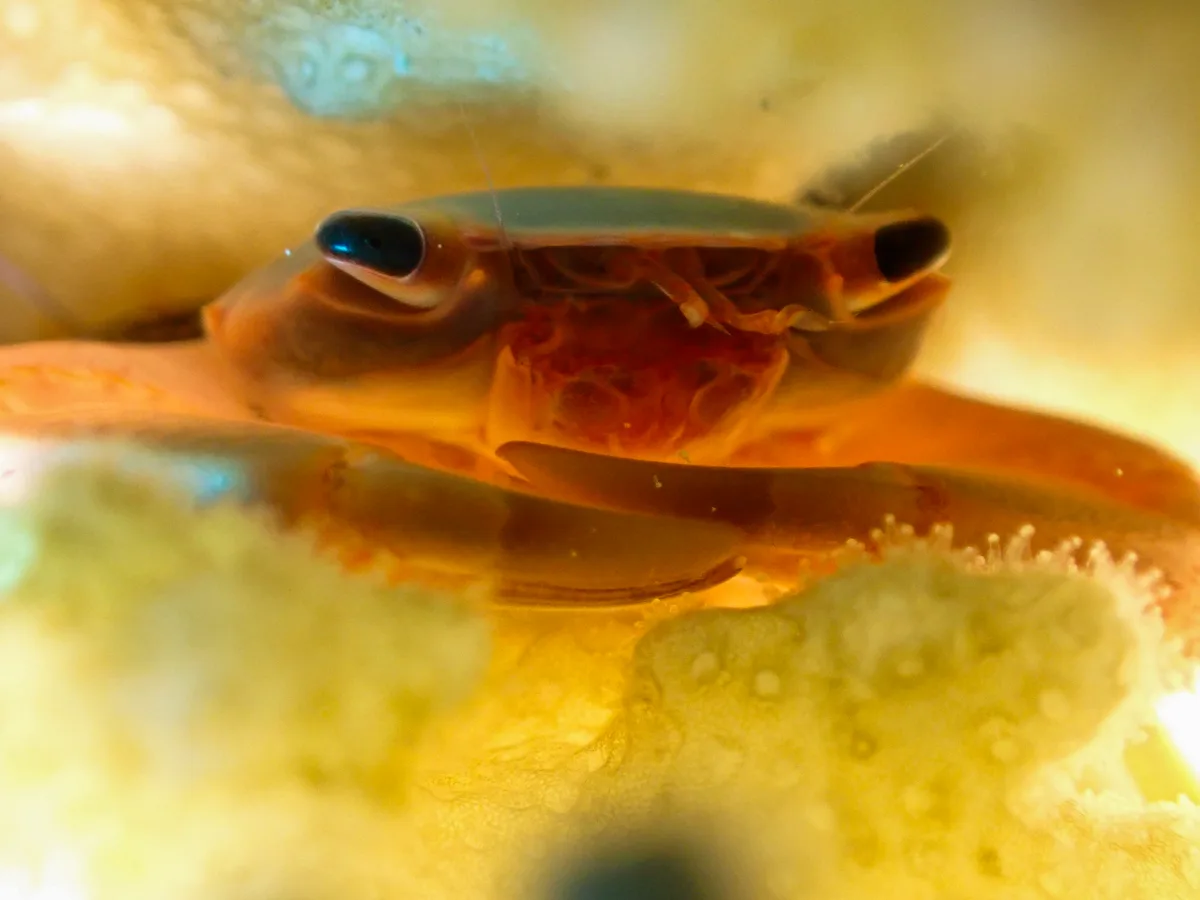
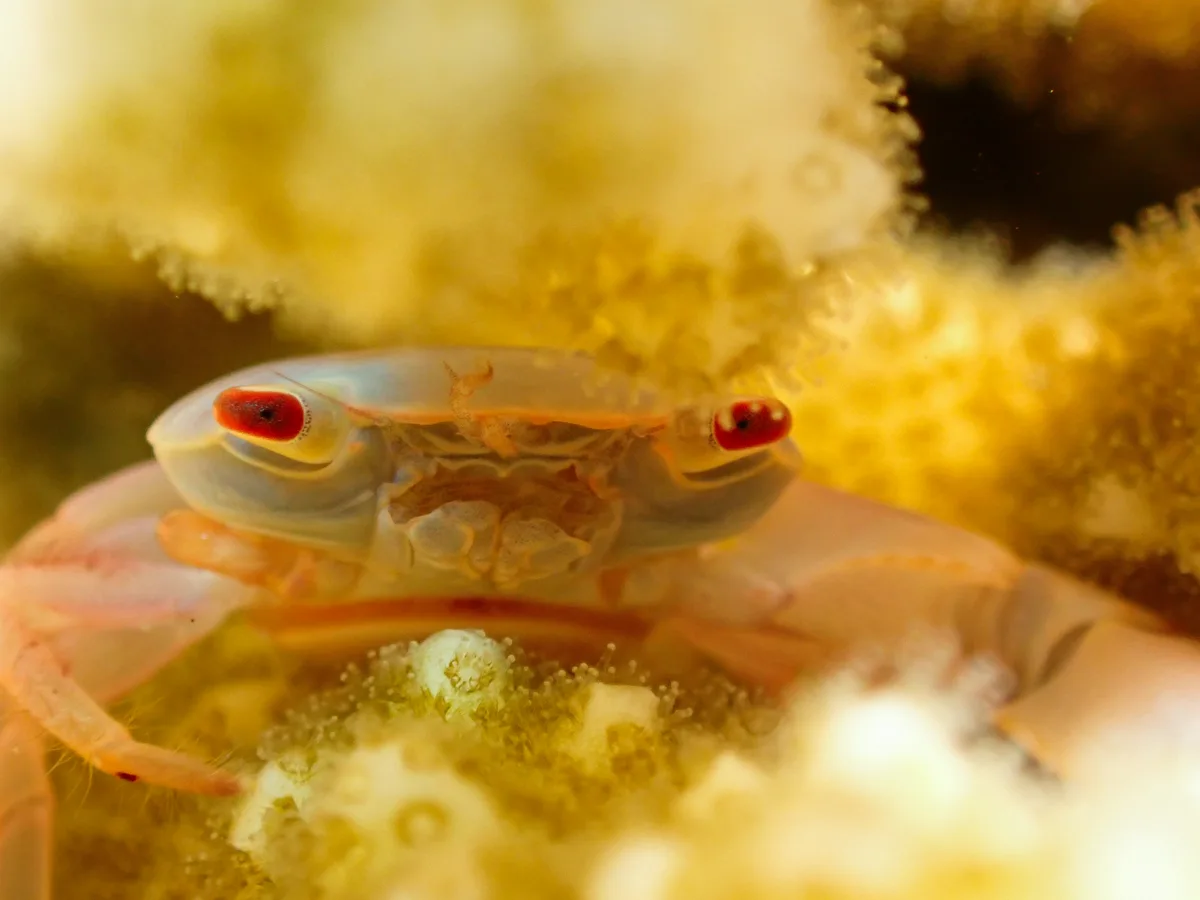
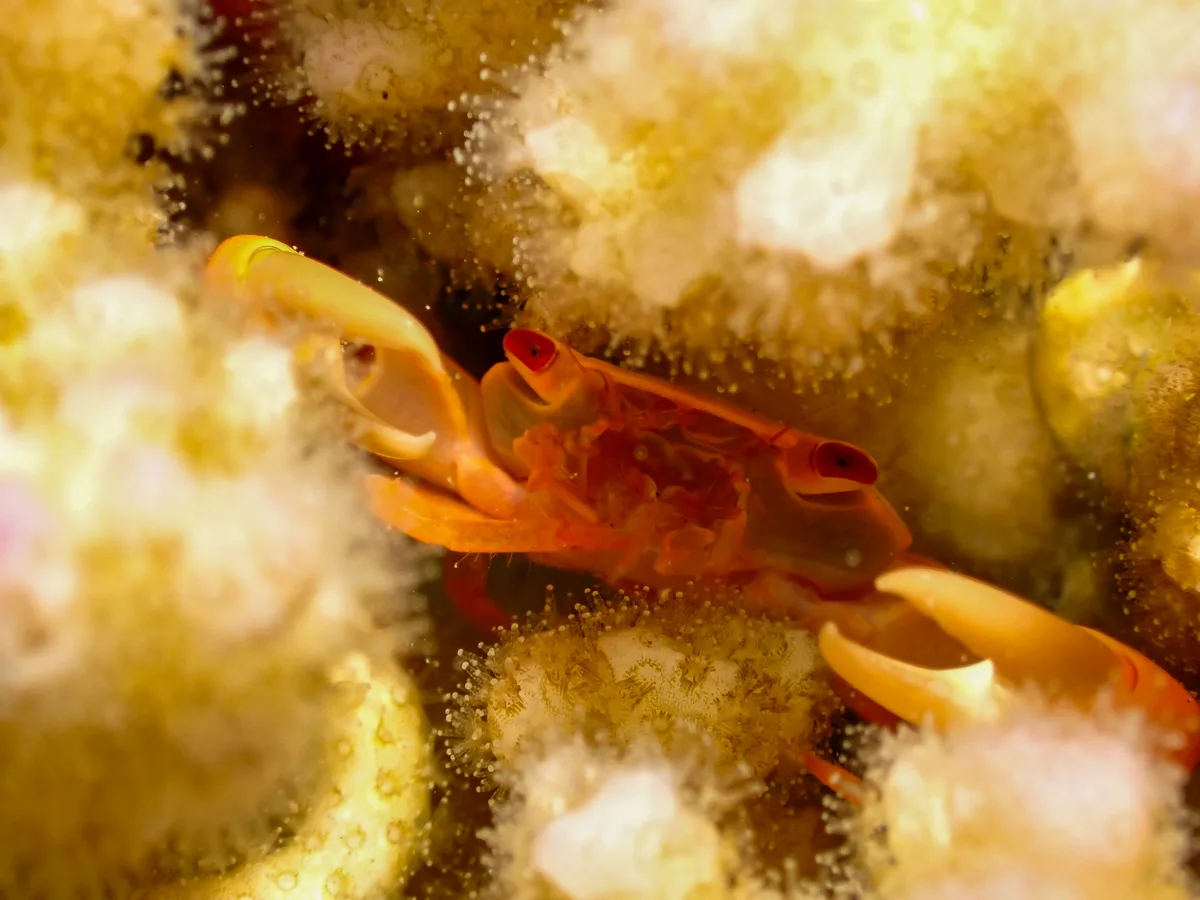
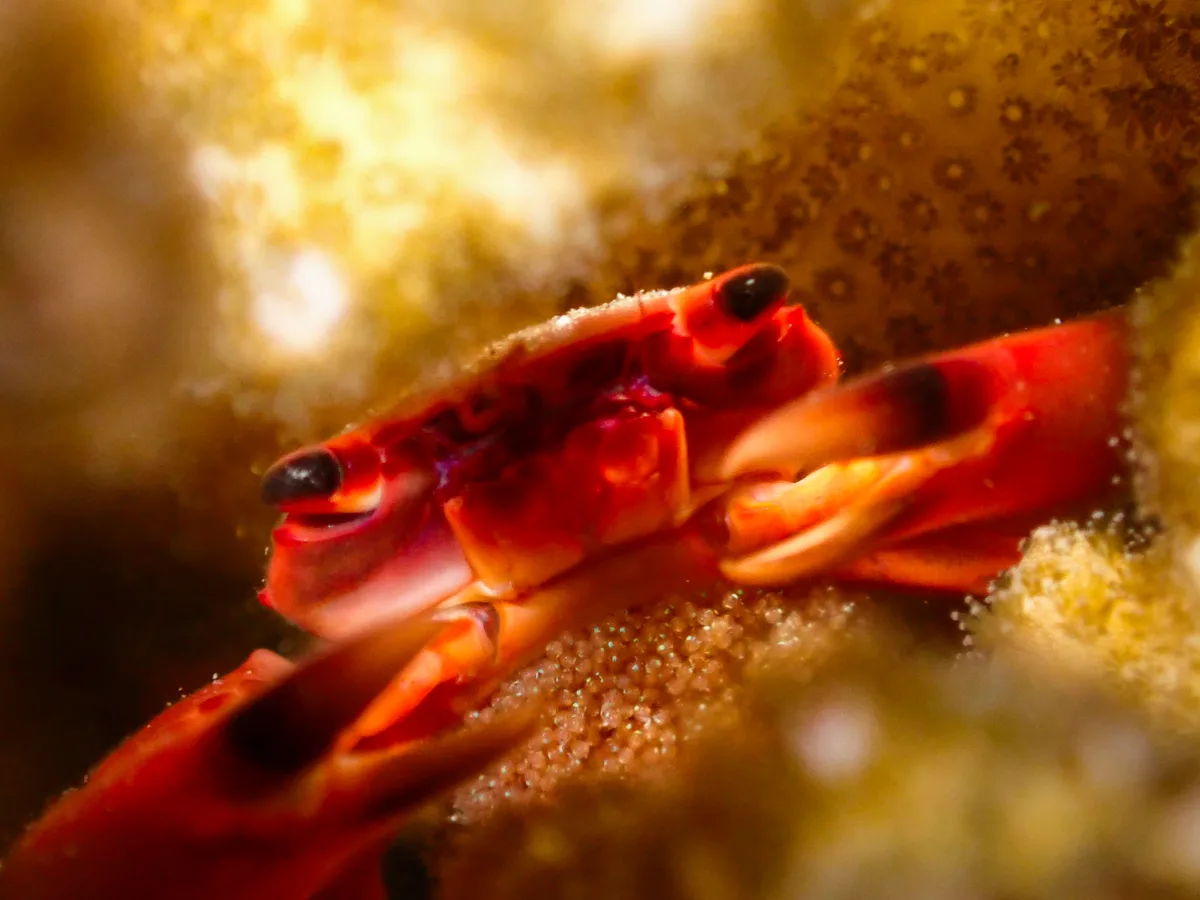
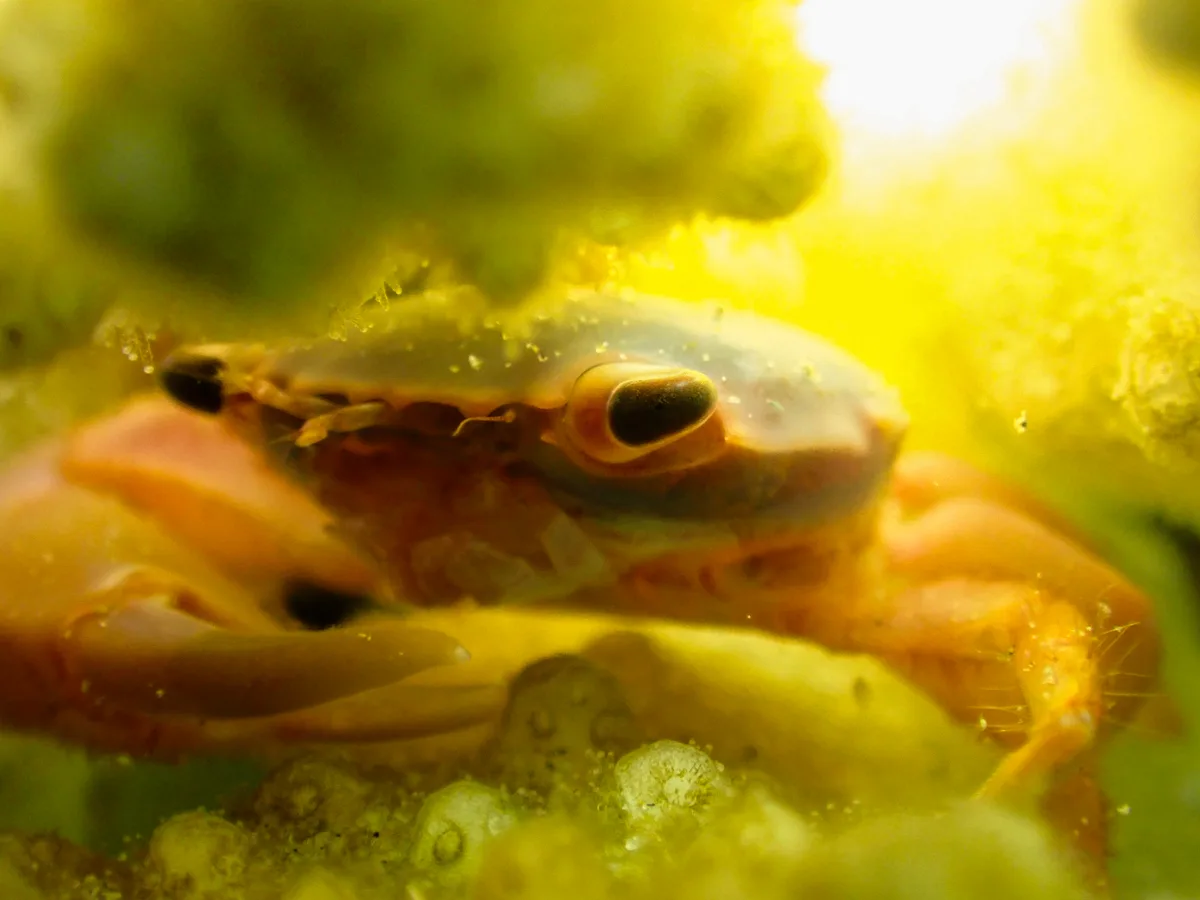
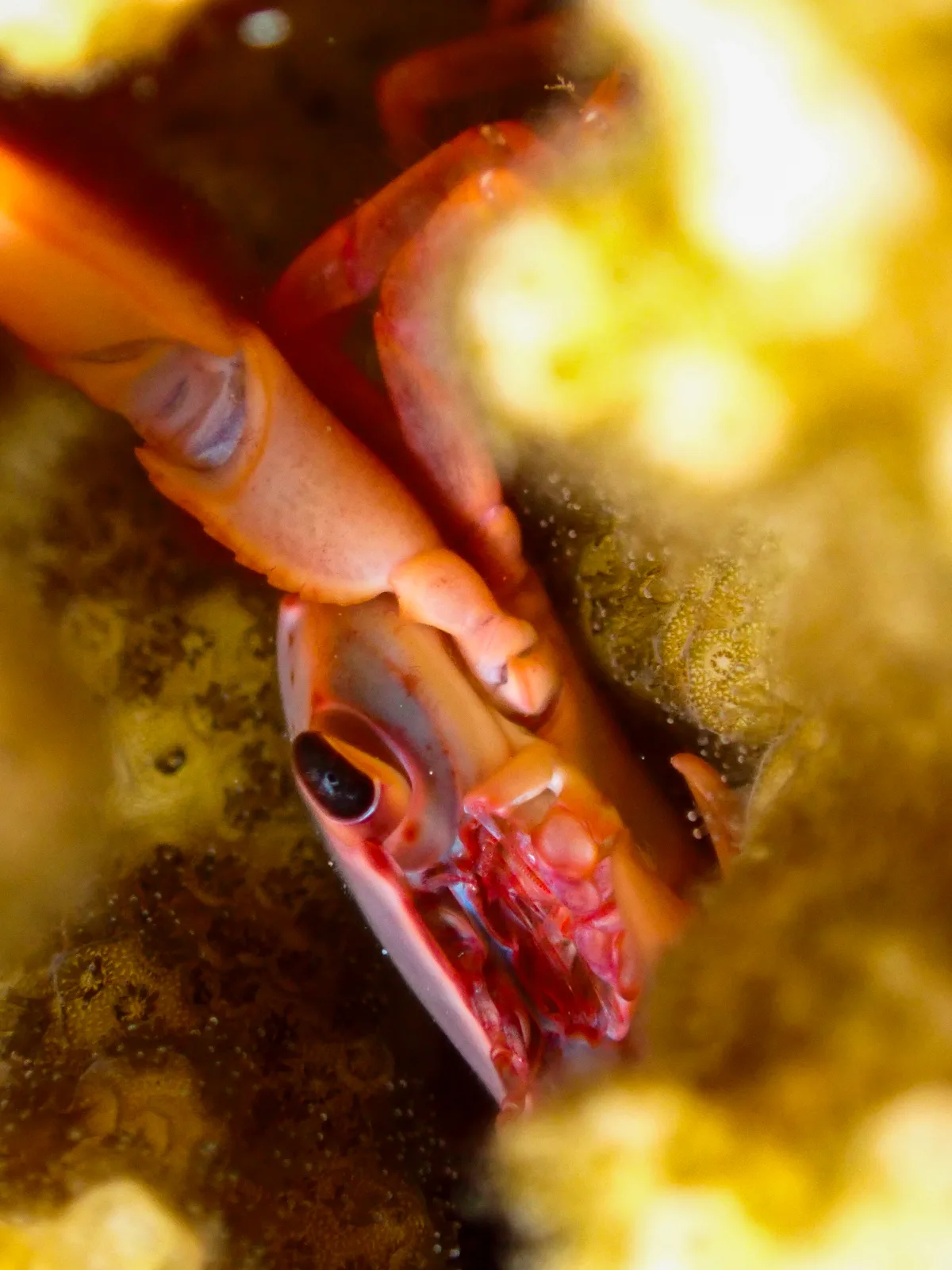
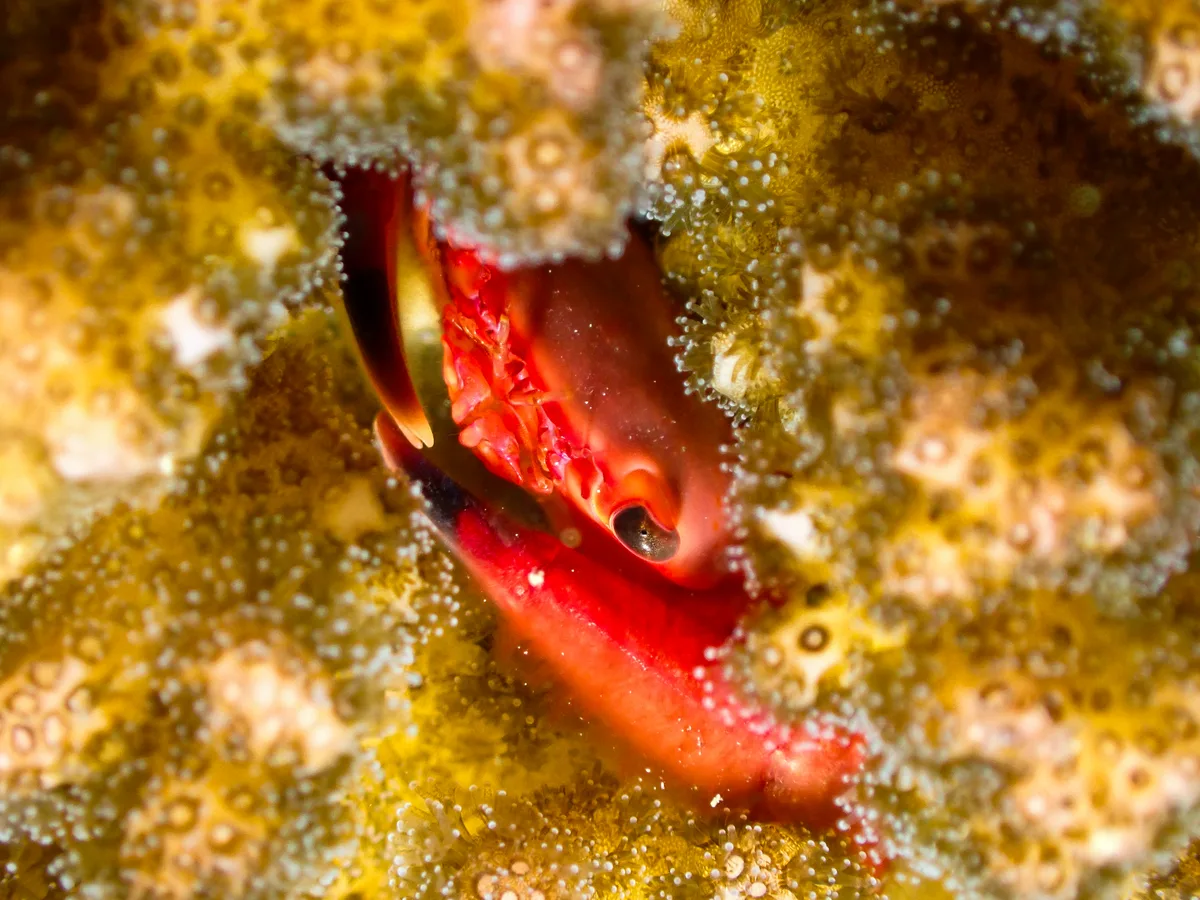
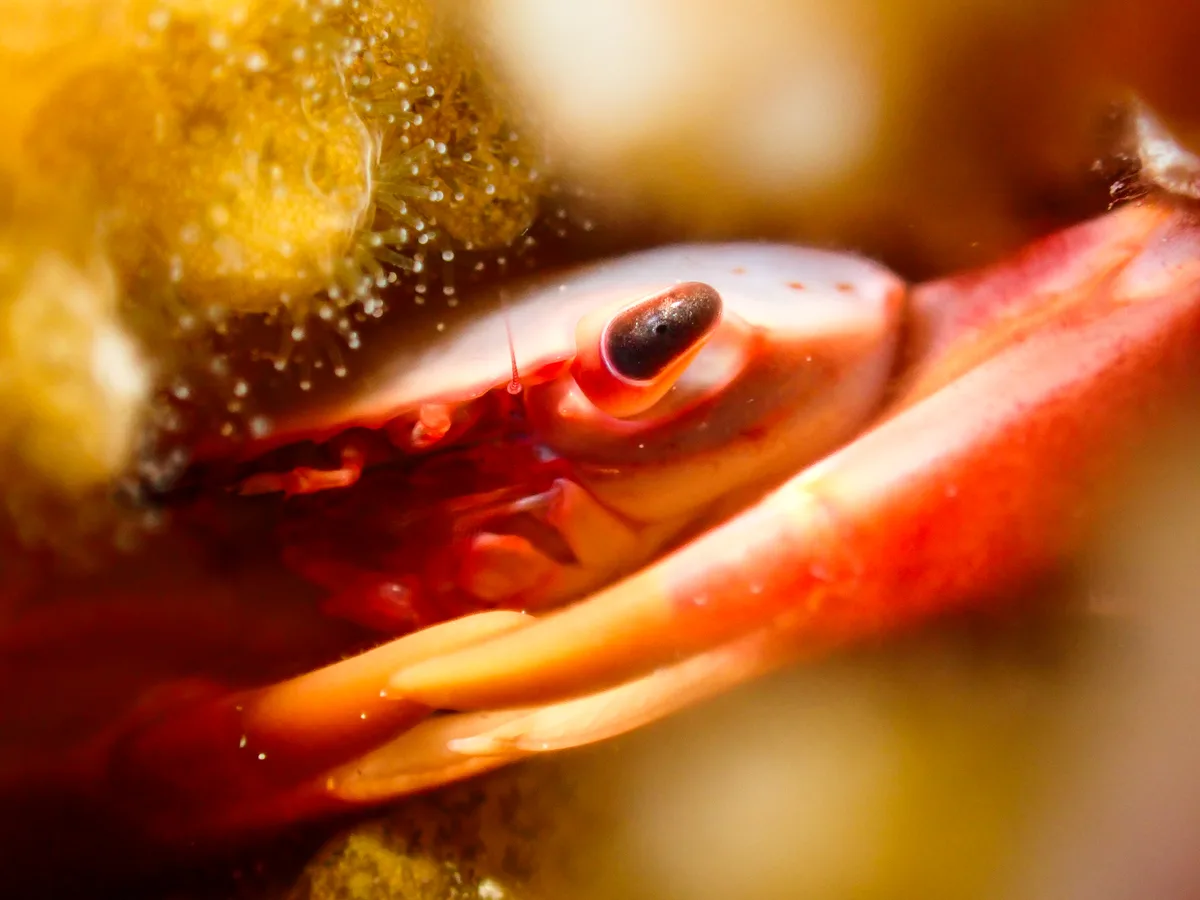
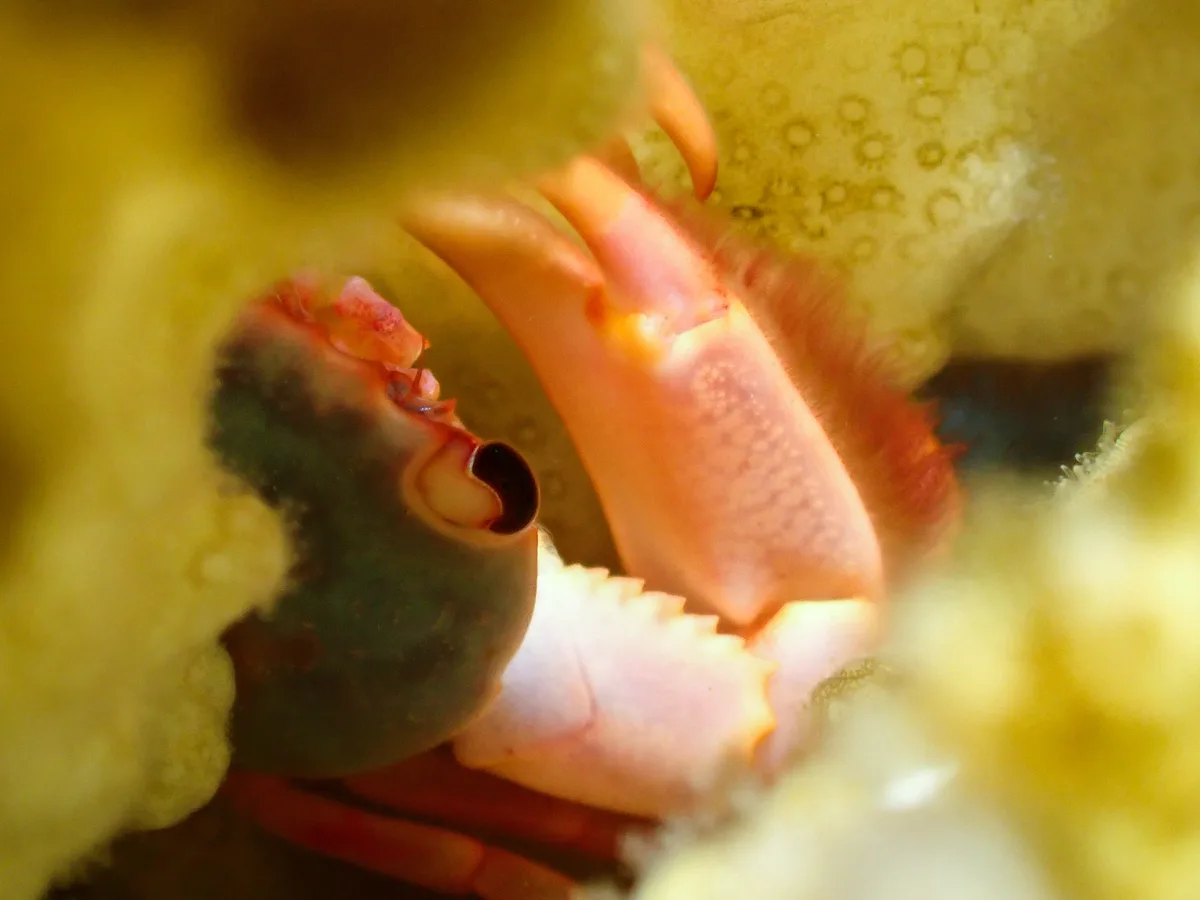
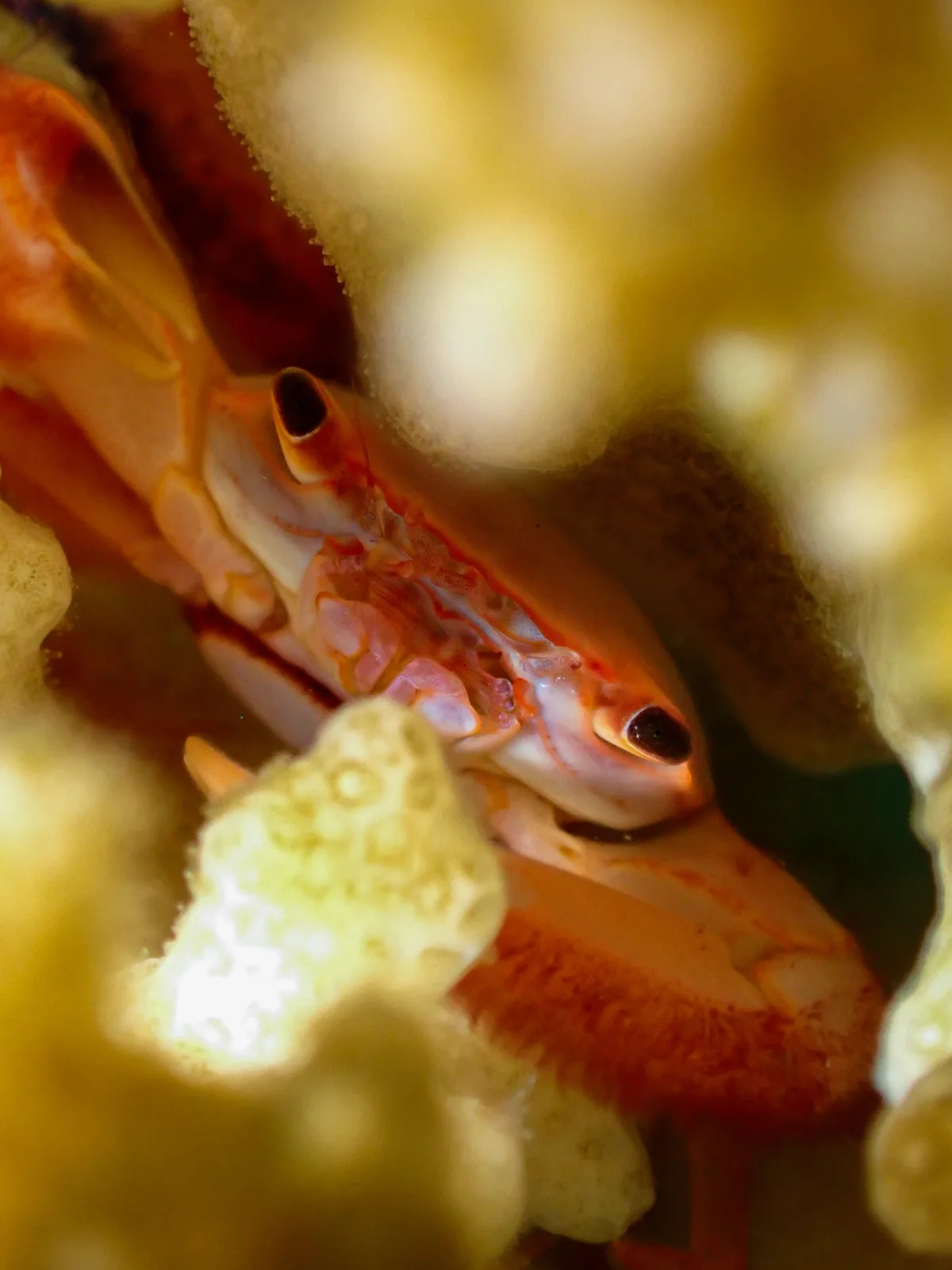
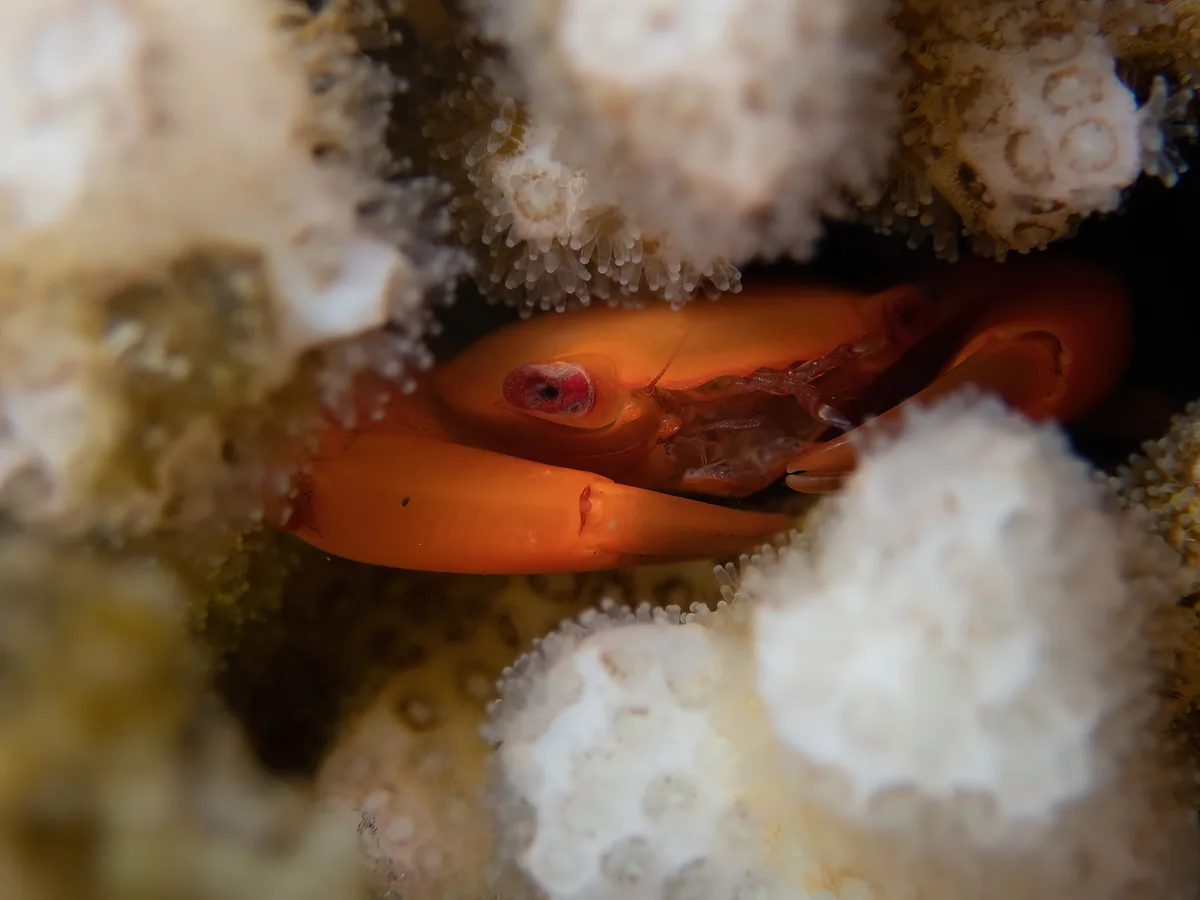
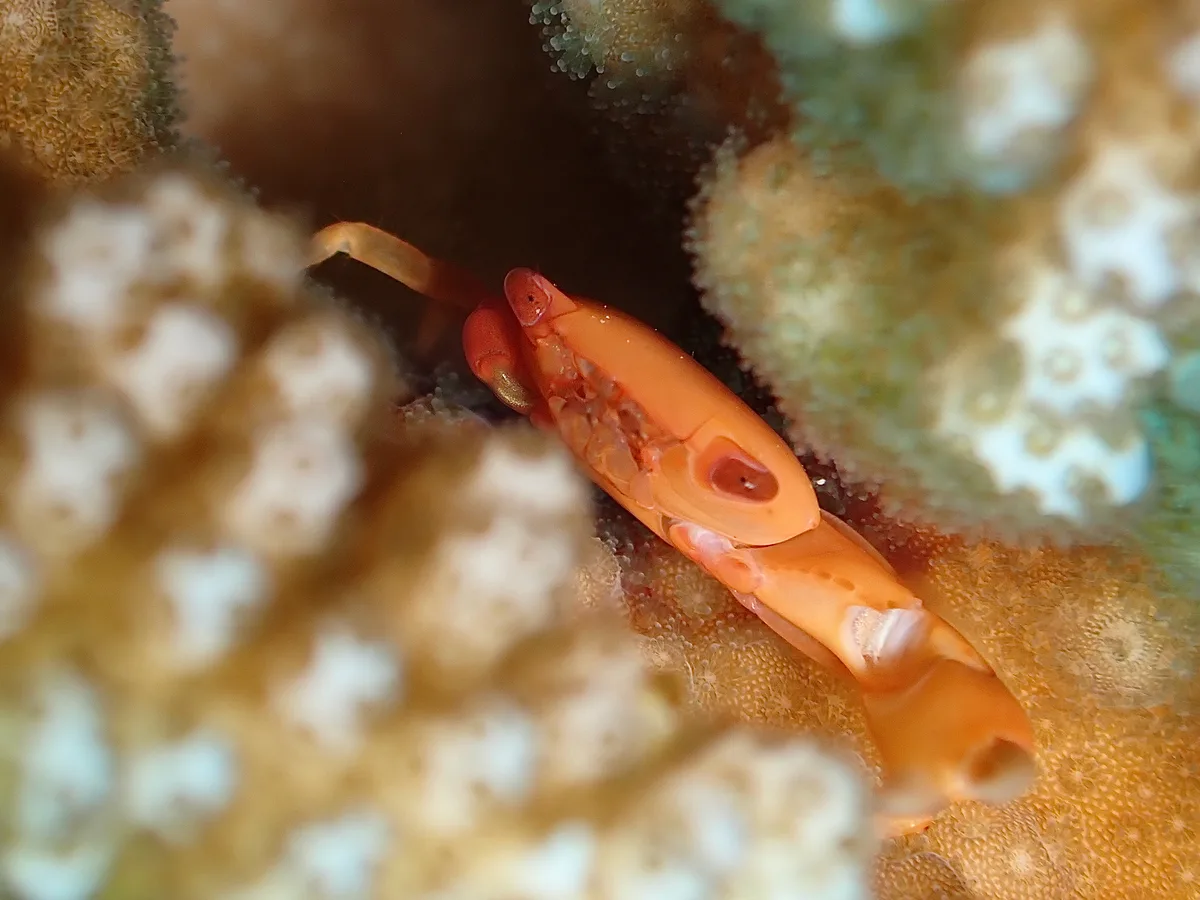
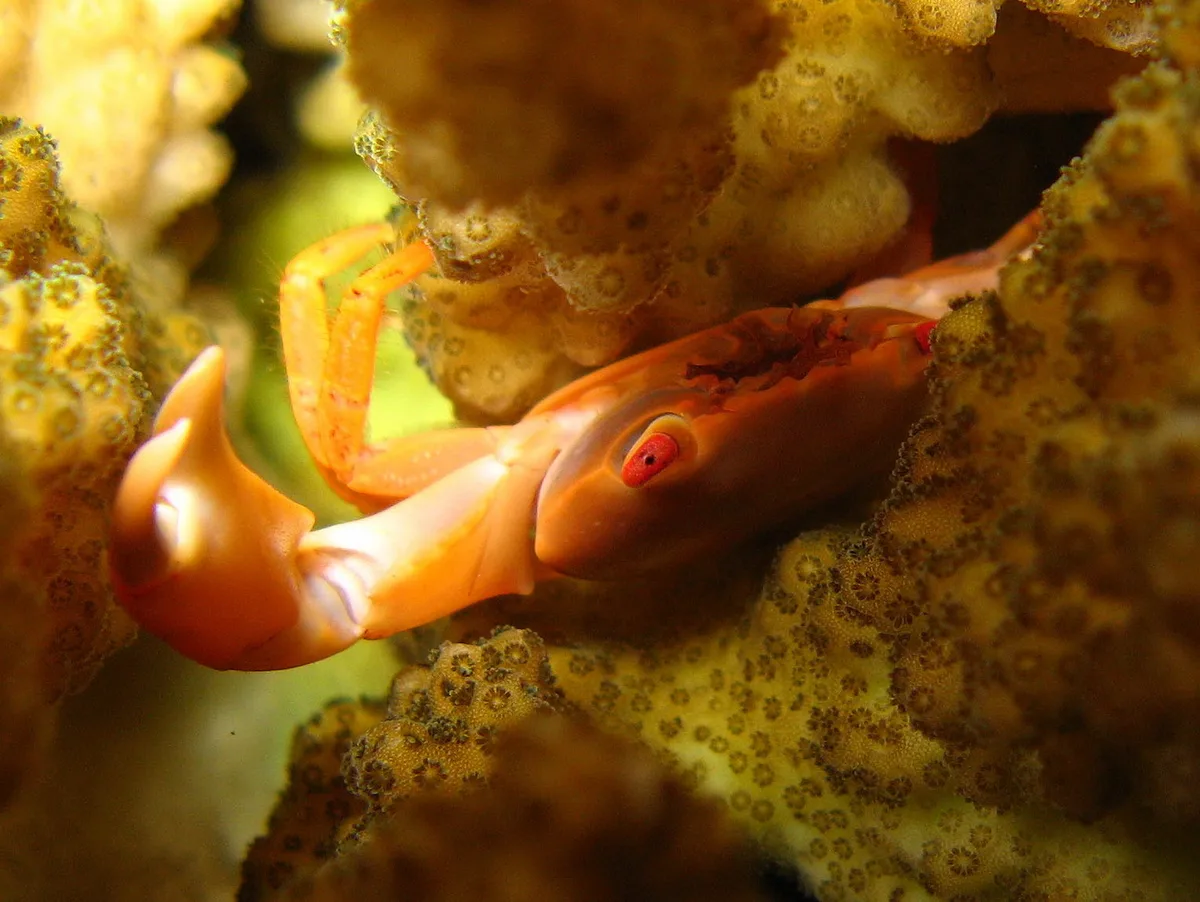
The coral feeds this crab deliberately. Pocillopora grows fatty, lipid-rich tissue at the tips of its polyp tentacles, and the guard crabs living in the colony graze it. That is not a theft the coral tolerates. It is payment, and what the coral buys with it is a bodyguard.
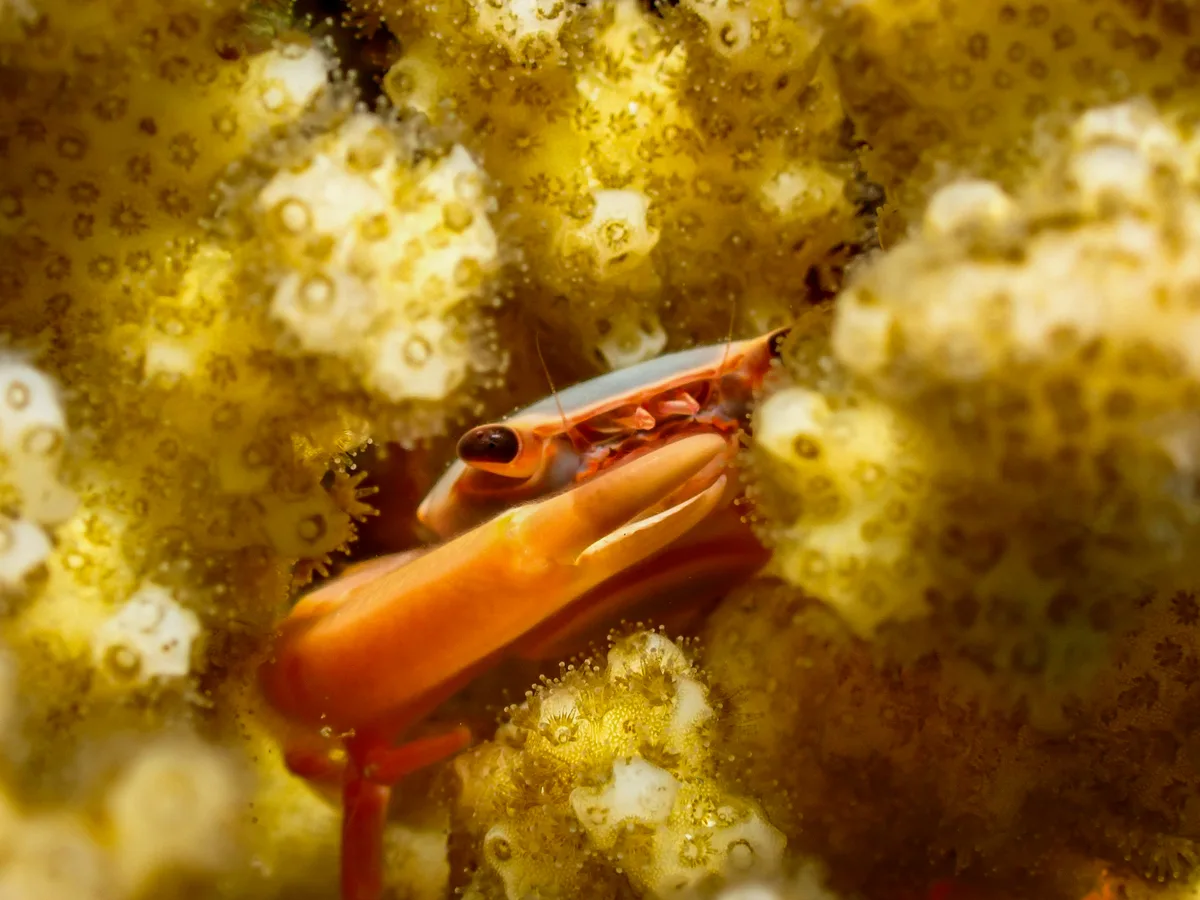
When a crown-of-thorns starfish climbs onto the colony, the crabs come out of the branches and go at its tube feet with their claws until it leaves. The experiment that proved the arrangement was done on a larger relative in Moorea: colonies stripped of their guard crabs were eaten overnight by the starfish, while colonies that kept theirs were still standing in the morning. Size matters in a way nobody expected. Small guard crabs like this one turn back coral-eating snails that the big species cannot handle, and the big species turn back sea stars too heavy for the small ones. A coral wants both.
The crabs also keep the colony clean. They shovel out the sediment that settles between the branches, and a colony whose crabs are removed can be smothered by it.
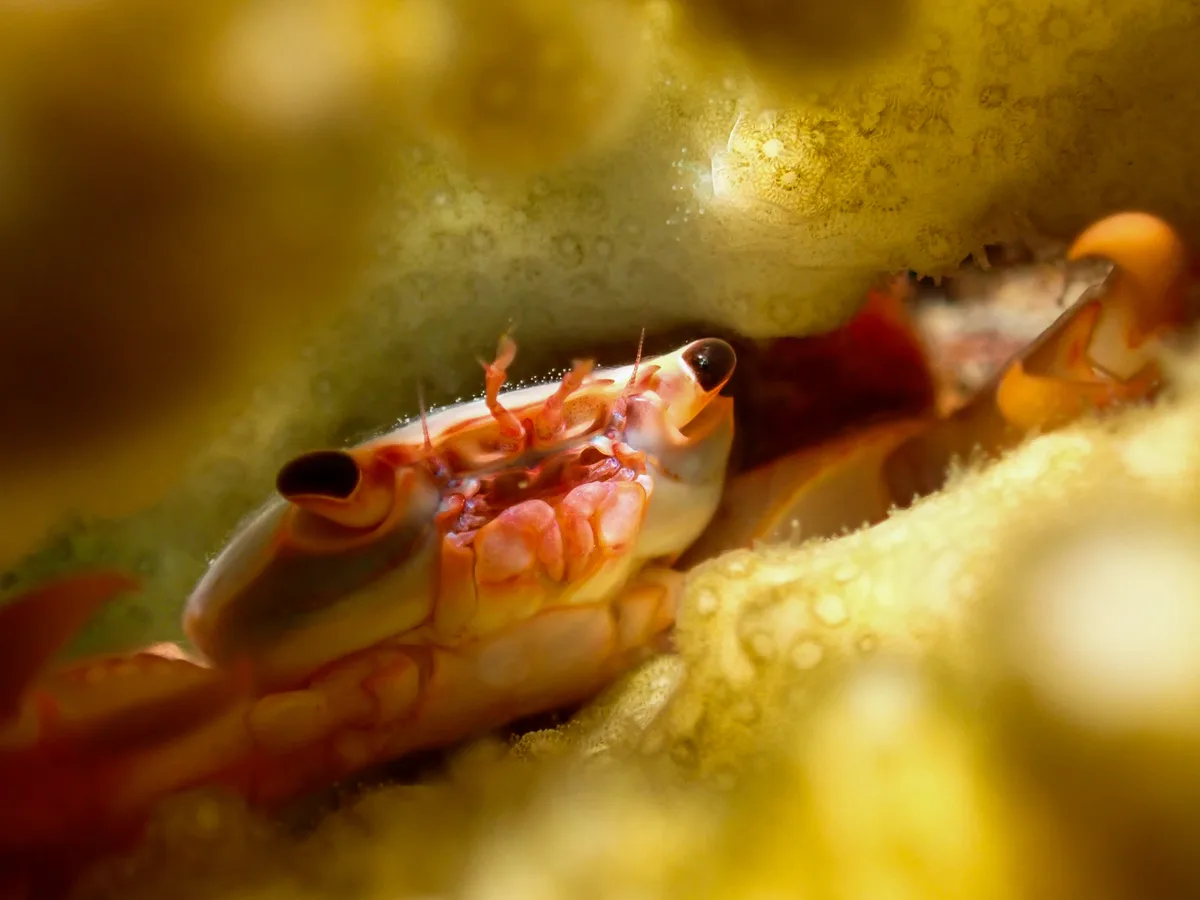
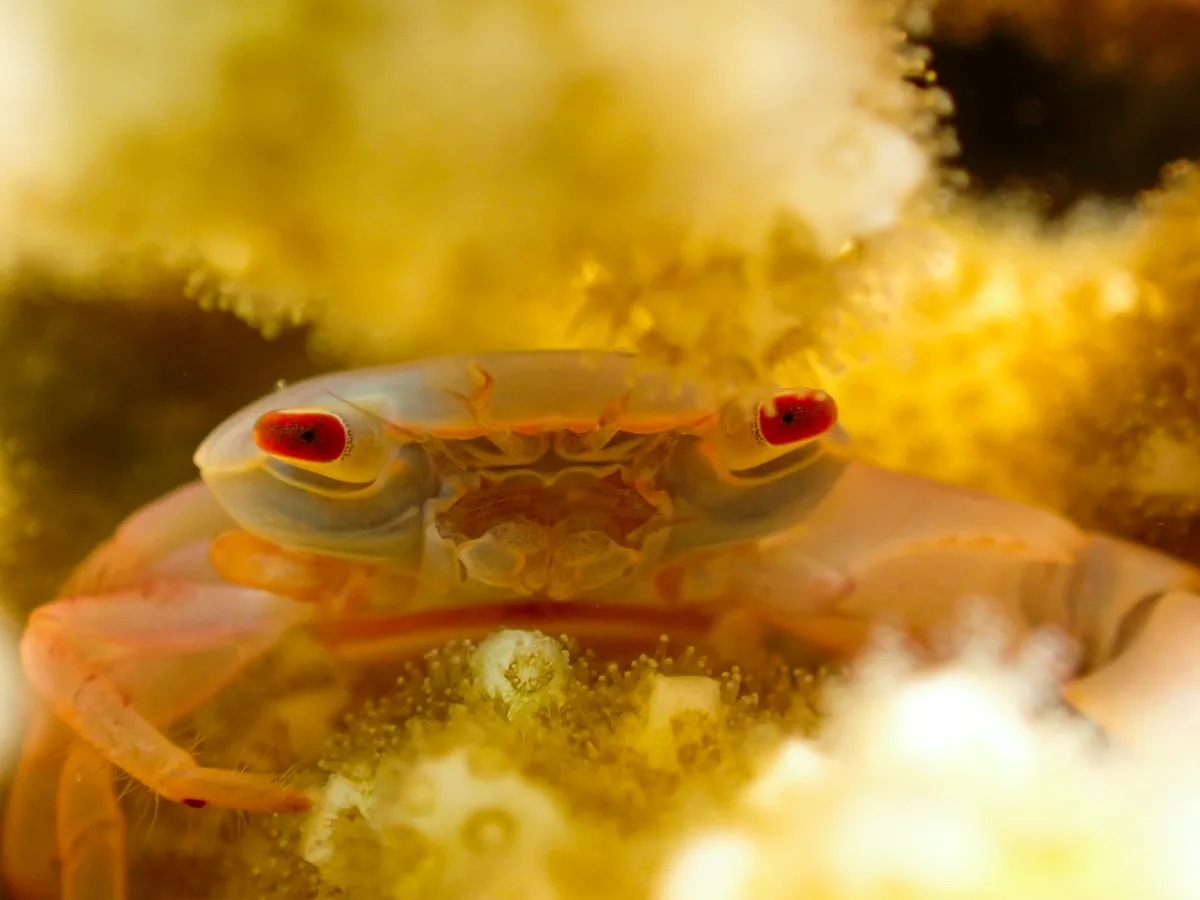
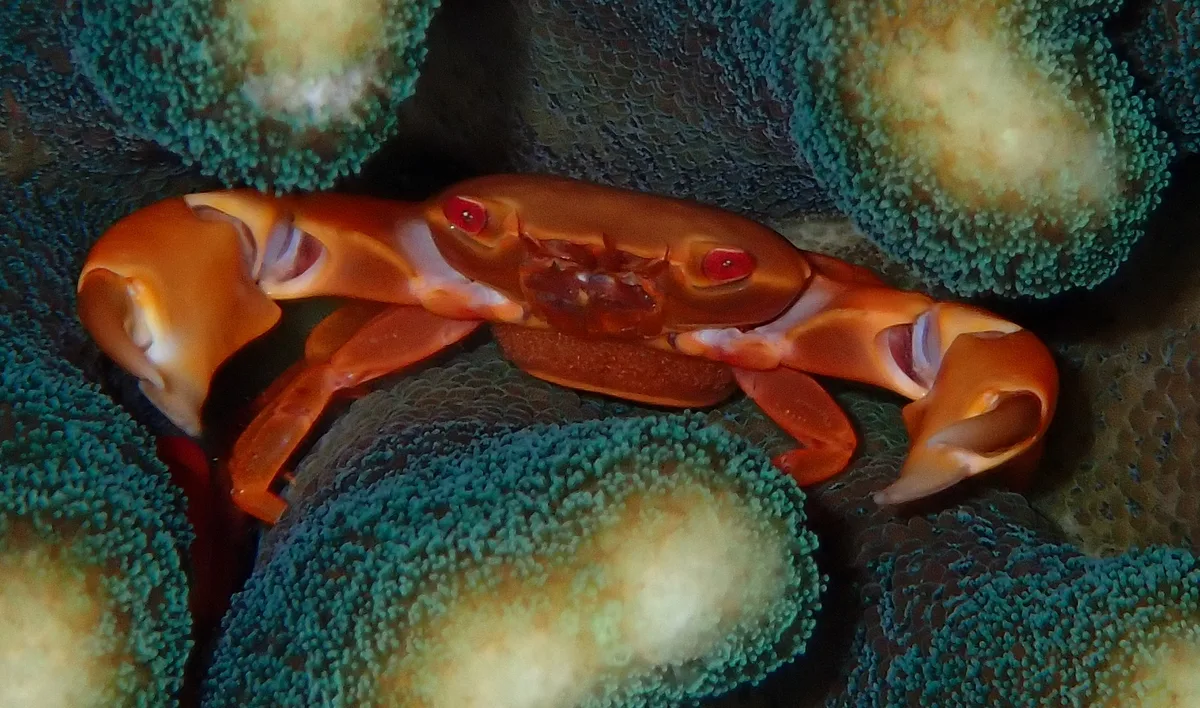
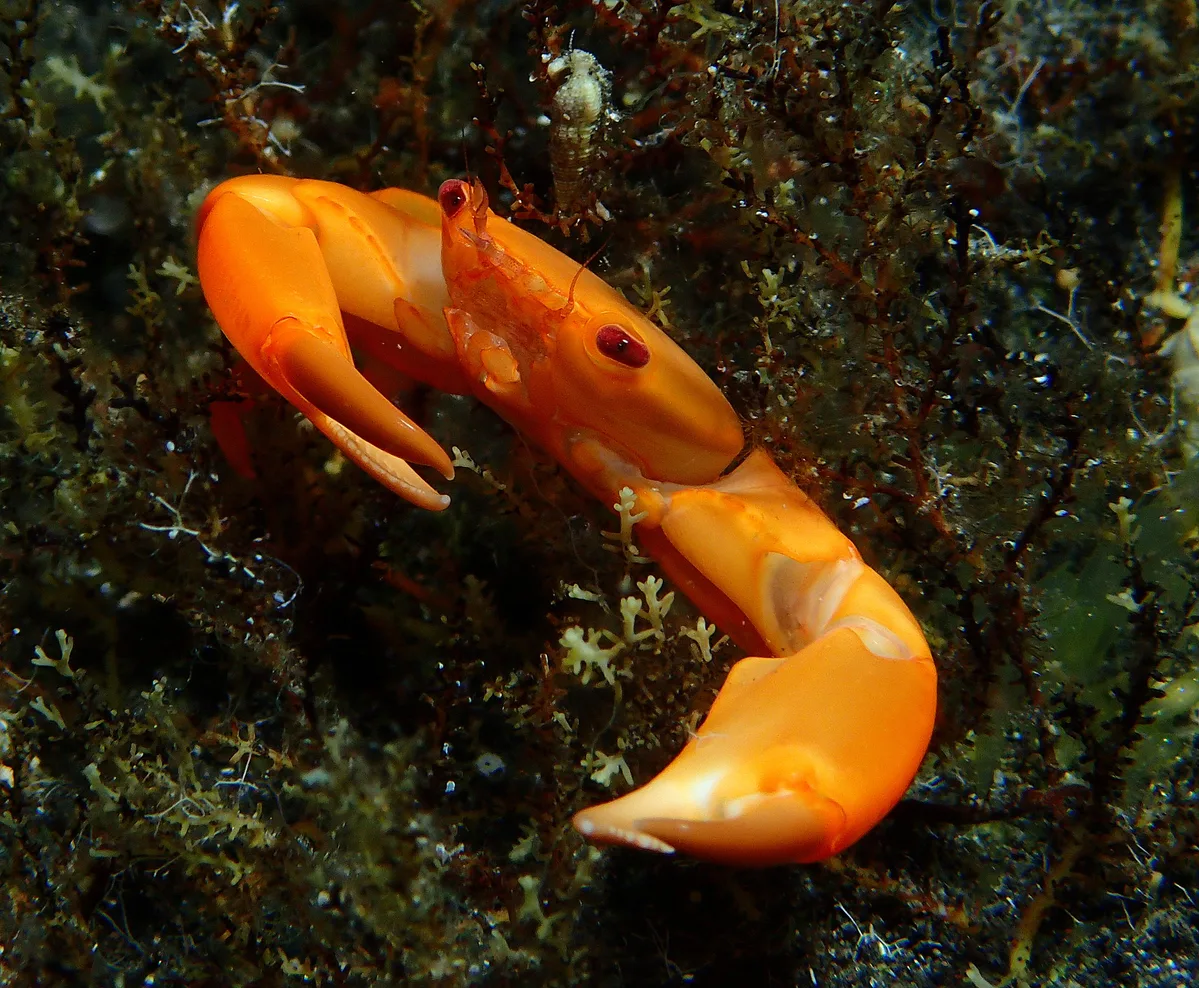
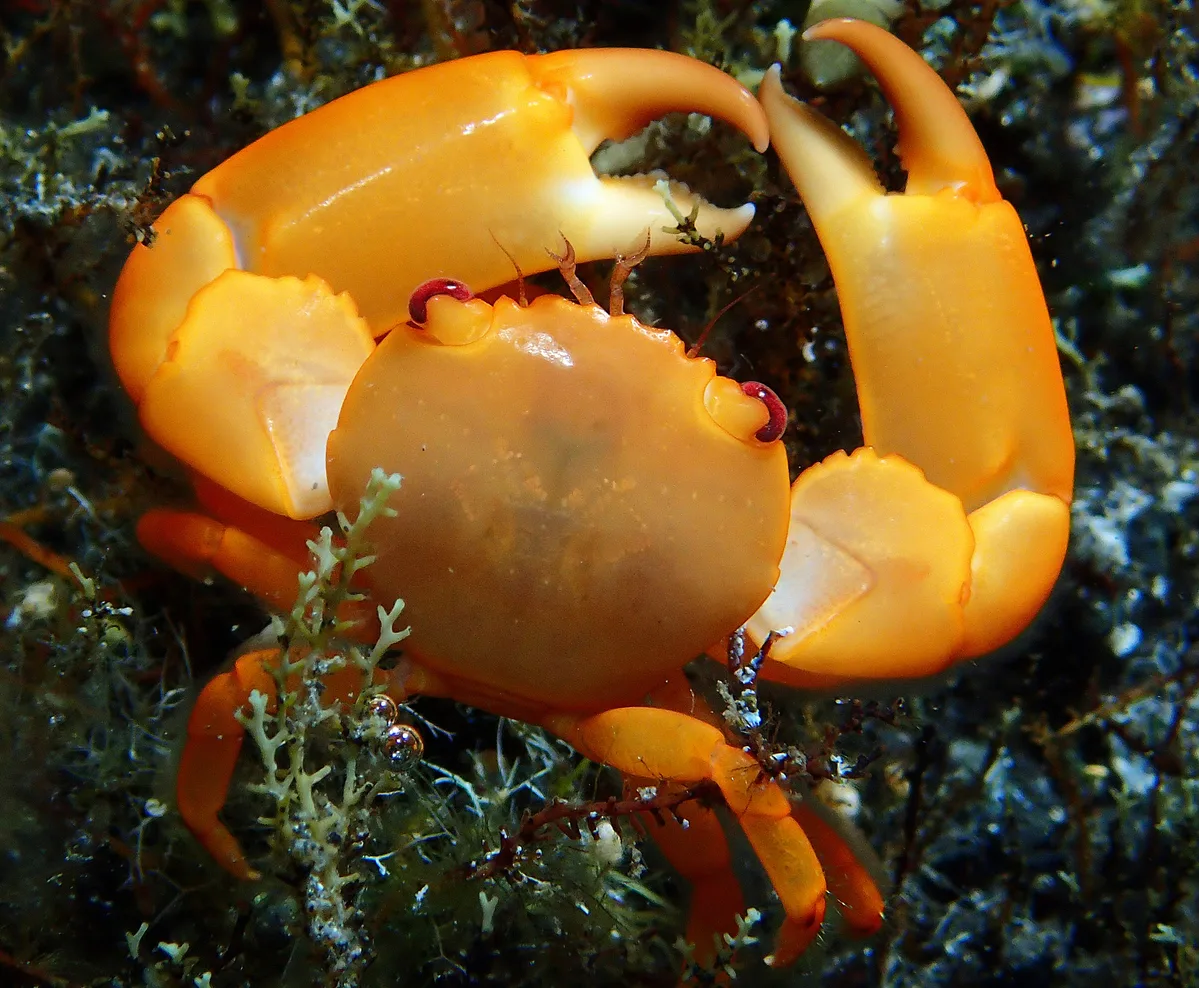
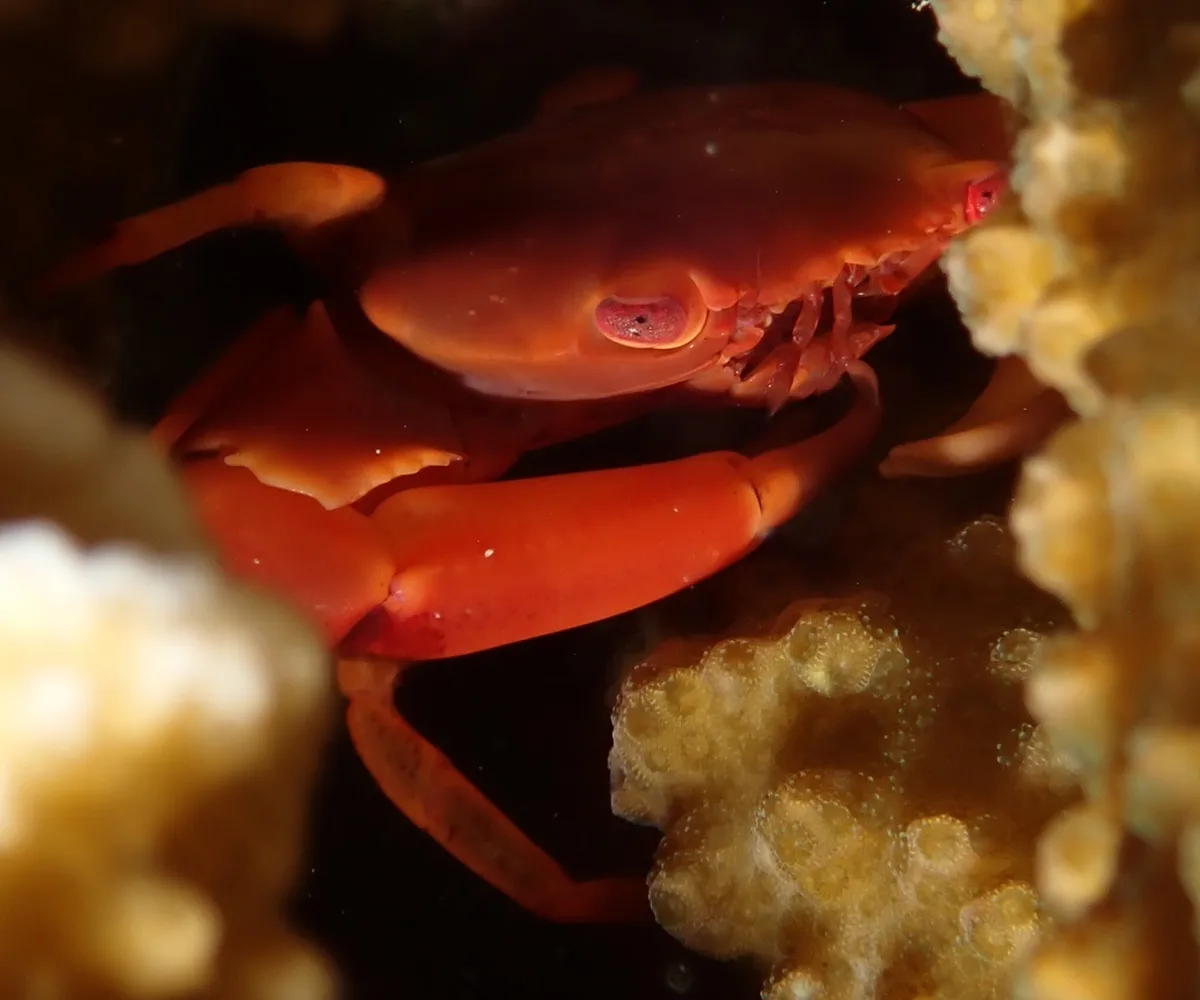
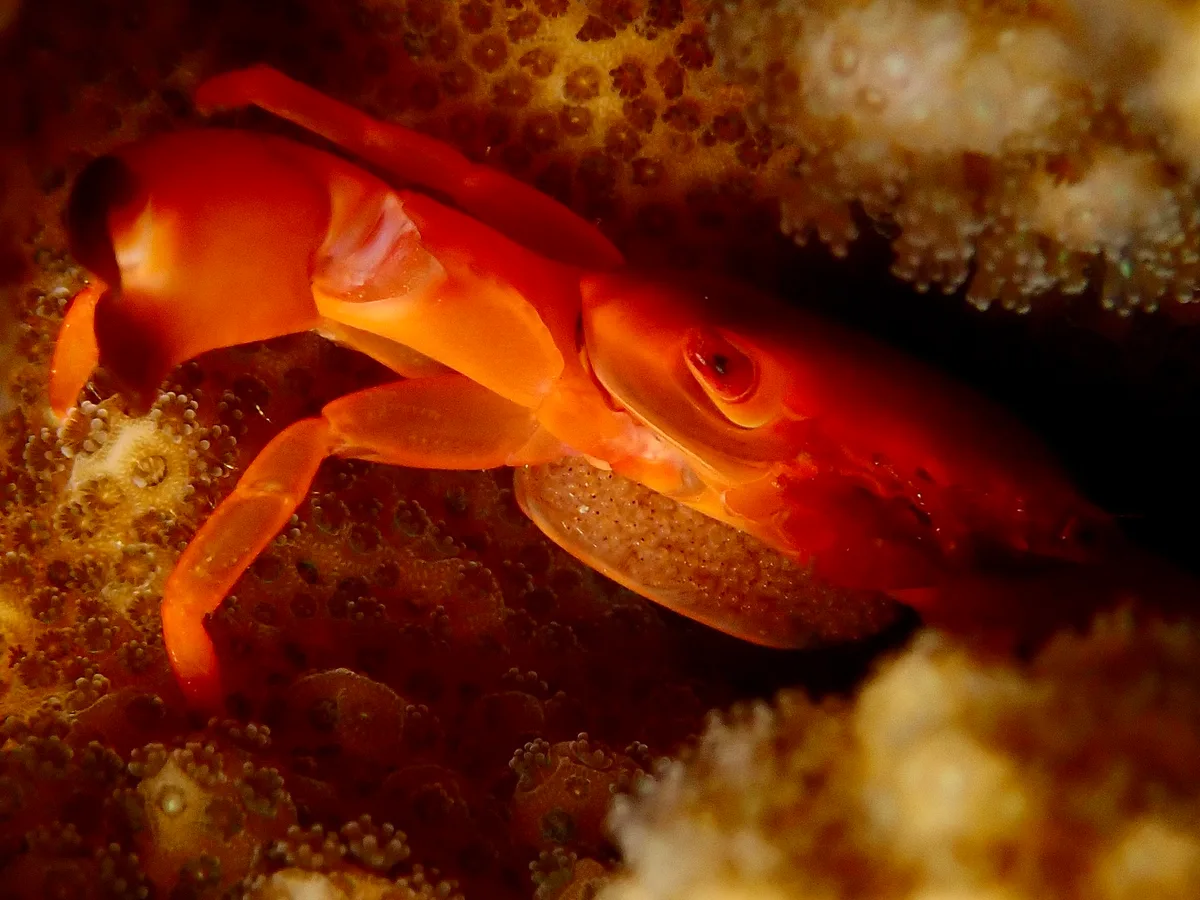
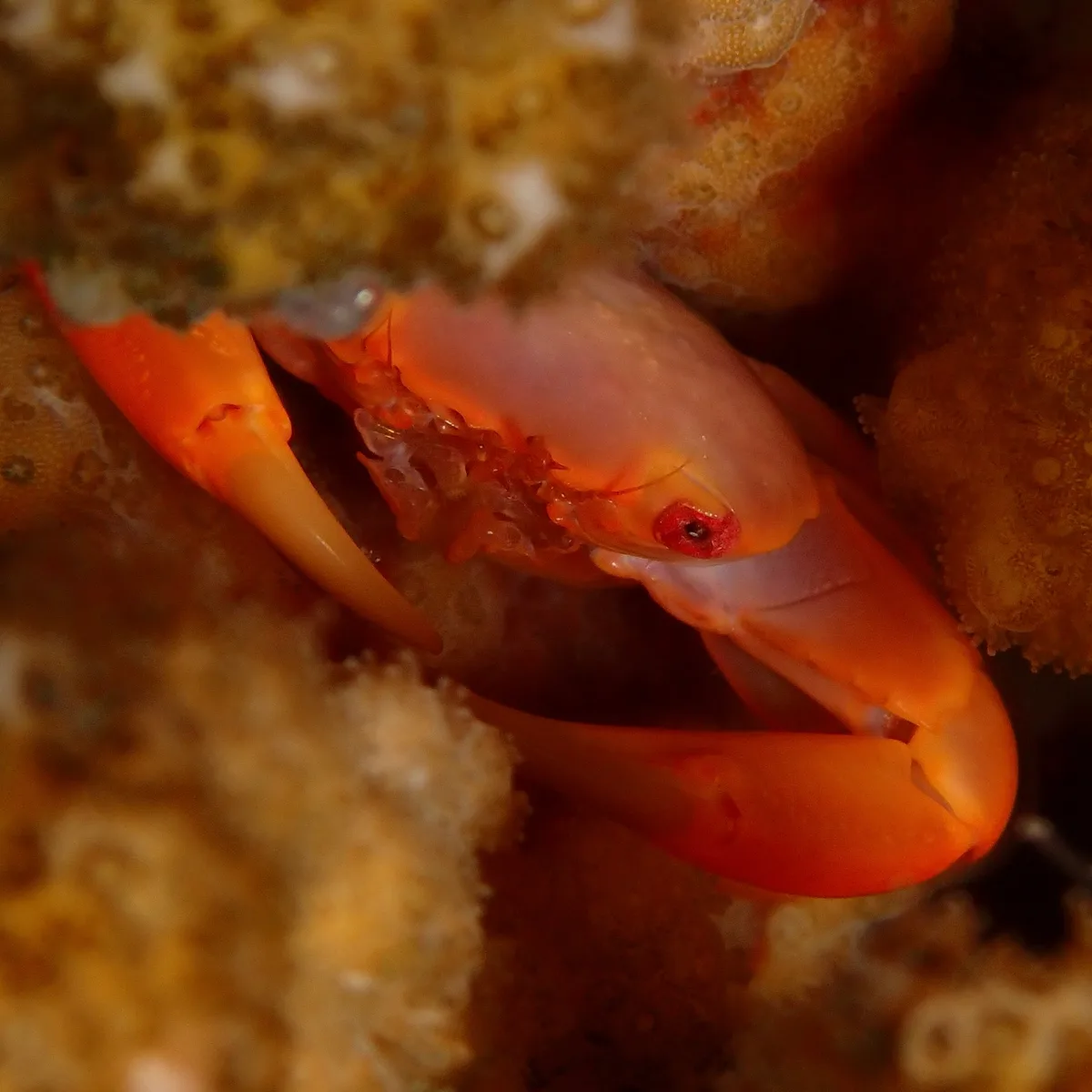
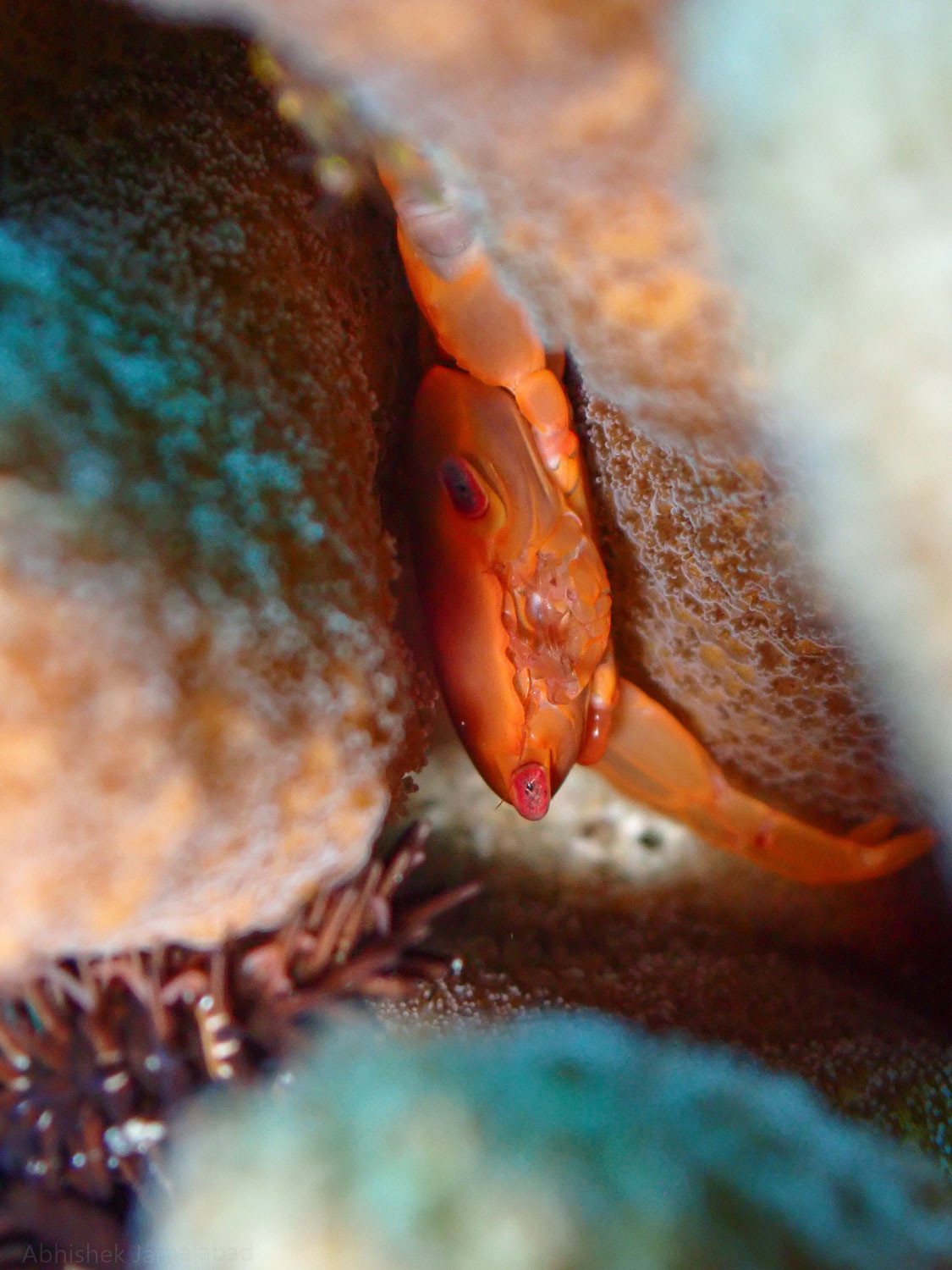
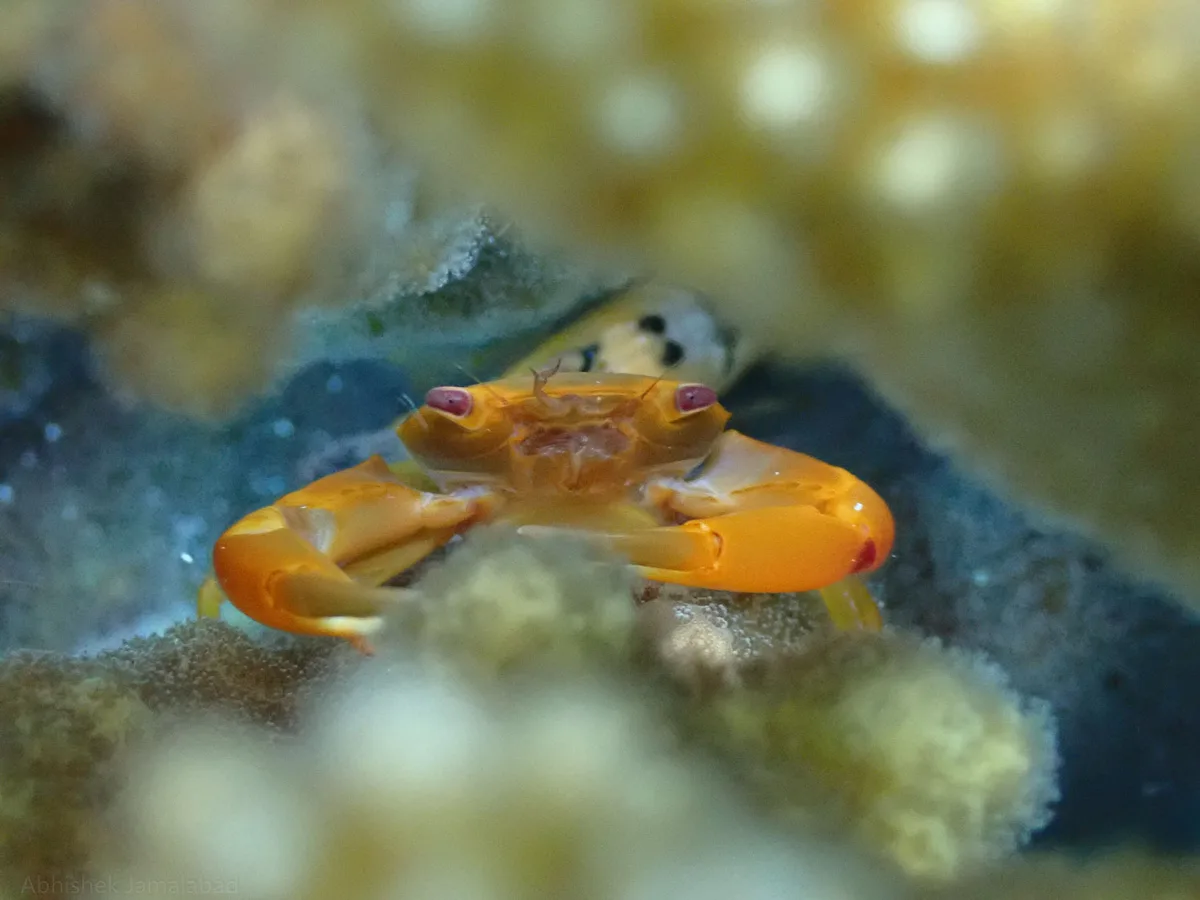
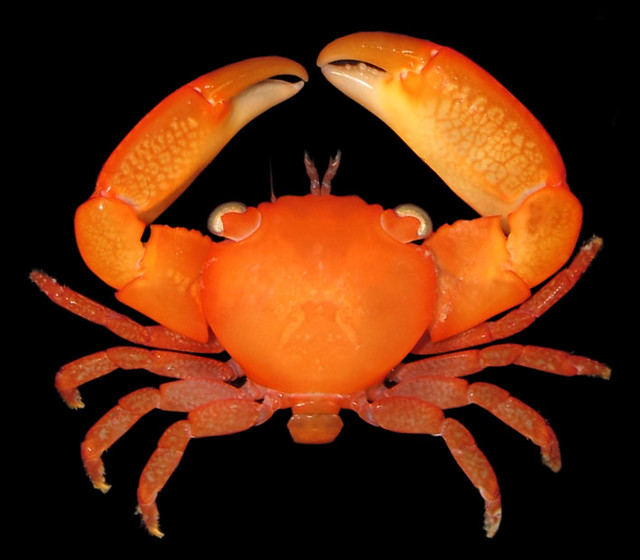
Look for a rusty orange animal about 2 cm across, the carapace a rounded trapezoid broader at the front than the back, red-brown marks on the leg joints and along the claws, and red eyes with black pupils. On each front corner of the carapace sit two small teeth, which is what bidentata records. A colony normally holds one male and one female, and that pair drives off any other adult of their own species that tries to move in.
To grow, the crab has to climb out of its whole skeleton, claws and eyestalks included, and for hours afterward it is soft and cannot close a claw on anything. It spends that time jammed as deep into the branches as it can get.
- rusty orange body, wider across the front of the carapace than the back
- red-brown marks on the joints of the legs and along the claws
- red eyes with black pupils
- two teeth on each front side edge of the carapace, which is what bidentata means
- up to 2 cm across the carapace