
28 species in Crabs
Calappa
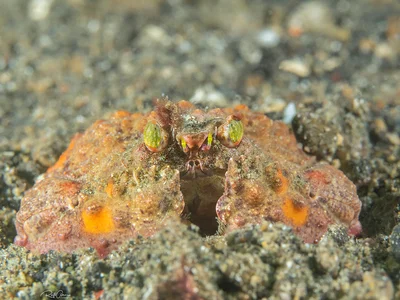
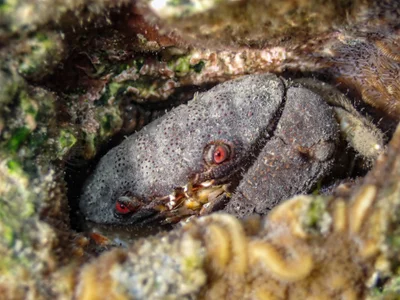
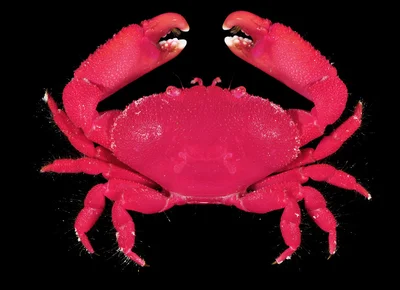
2Box crabs, and the name is literal: the claws fold flat across the front of the body like shutters and close the animal into a smooth sealed box with nothing to grip. They spend the day buried in sand with only the eyes showing, and the right claw carries a tooth used as a can opener on snail shells.

Chlorodiella
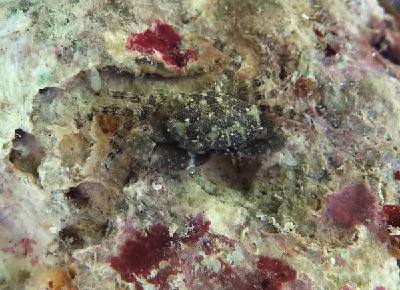
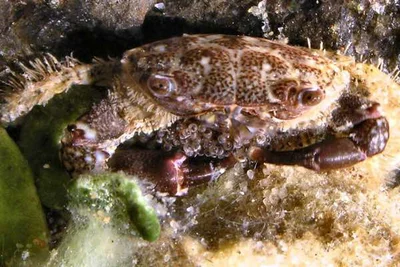
2Rubble and coral crabs with the claw fingers hollowed out at the tips into small spoons, used to scrape algal film off dead coral. The walking legs lock against the segment before them, so a crab wedged into a branch has to be dug out rather than pulled.
Cymo
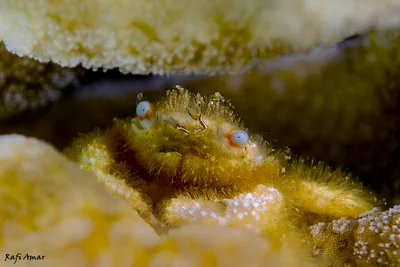
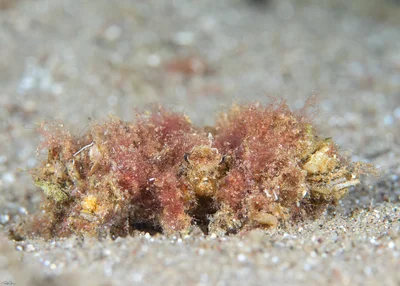
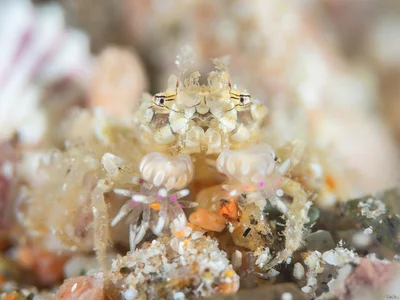
2Small hairy crabs that share a coral head with the guard crabs and sit lower down in it, near the base of the branches. The shell carries short bristles that collect sediment, which is most of the camouflage, and the claw tips are the field mark - black in one of the two species here and not in the other.
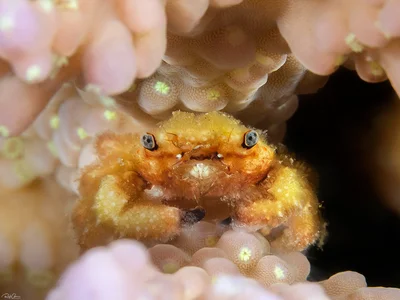
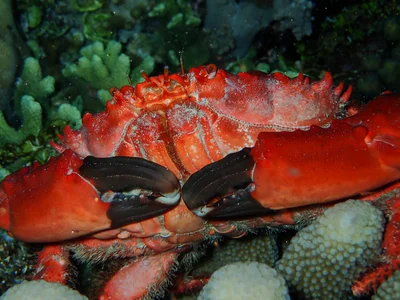
Etisus
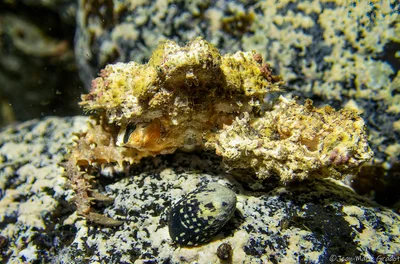
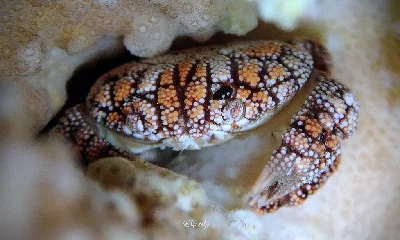
2Round crabs with heavy black-tipped claws of unequal size - one for crushing, one for picking - and a shell either divided into raised lobes or entirely smooth. They spend the day jammed under coral and rock, and the larger of the two here reaches 15 cm, which is big for this page.
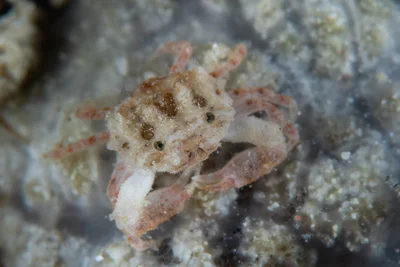
Tetralia
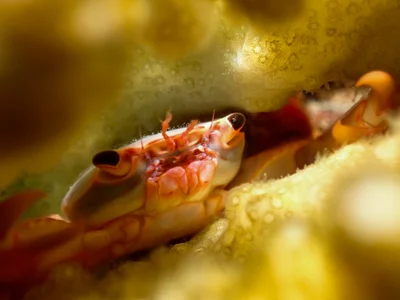
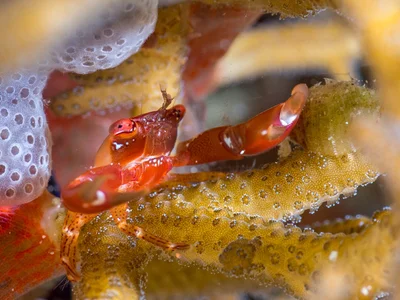
2The same job as Trapezia in a different coral: these hold Acropora where the guard crabs hold Pocillopora. Flatter, paler, and they move sideways along a branch or onto its underside rather than backing away, so the way to see one is to look at the far side of the branch you are already looking at.
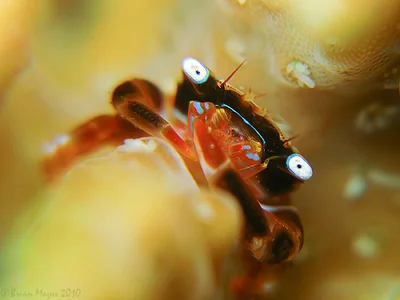

Trapezia
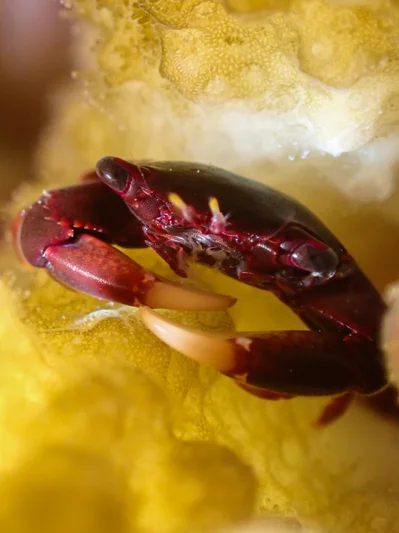
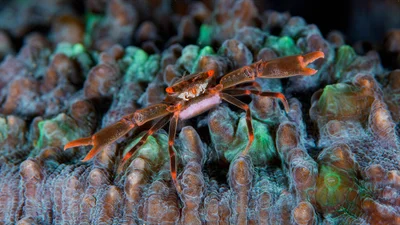
4Guard crabs, and the arrangement is a contract. The coral grows fatty tissue at the tips of its polyps and the crabs graze it; in exchange they come out and fight crown-of-thorns starfish and coral-eating snails off the colony, and shovel out the sediment that would otherwise smother it. One pair holds a colony and keeps every other adult of their species out of it.

Other genera
14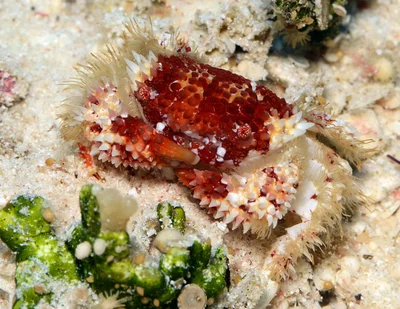
Other groups in Crustaceans
Nearby in the catalogue.


Last Update: August 23, 2026