From Sand to Seahores: How Parrotfish Poop Creates the World's Most Beautiful Beaches

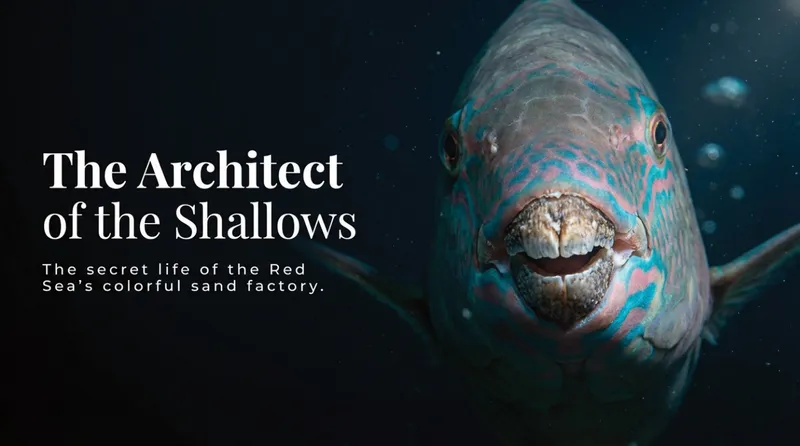
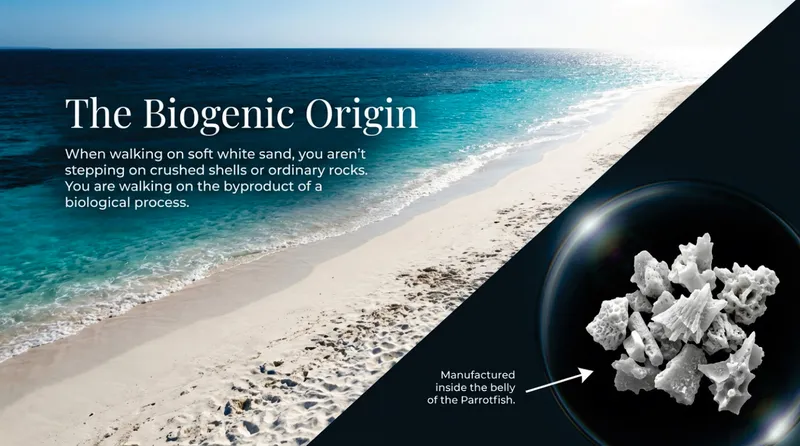
When you walk along the stunning white beaches of the Red Sea, you might think you are stepping on tiny crushed shells or ordinary rocks. But the truth is far more bizarre and wonderful. Most of that beautiful, soft white sand was actually manufactured inside the belly of one of the ocean's most colorful residents: the Parrotfish.
If you have ever snorkeled or scuba dived along a coral reef, you have probably seen them. They are brightly colored, rather chunky fish that constantly scrape away at the rocks. But there is a lot of hidden bio-engineering behind their everyday routine. Let's look at the superpowers of the reef's most important construction worker.
The Unbreakable Beak
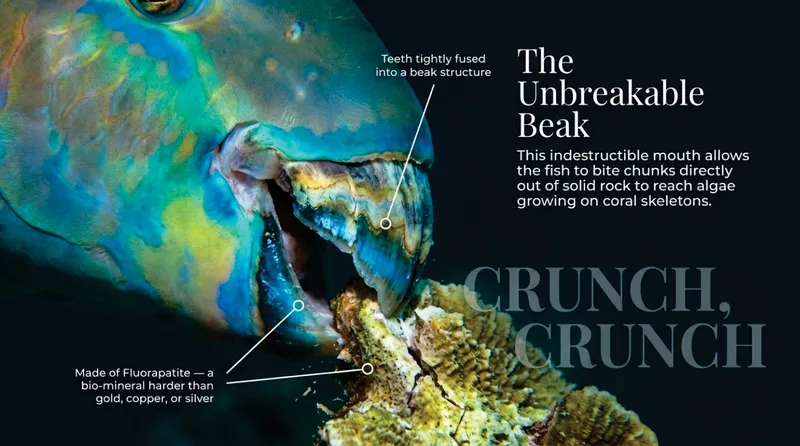
The first thing you notice about a parrotfish is its mouth. Instead of regular rows of teeth, their teeth are tightly fused together to form a shape that looks exactly like a parrot’s beak.
But this isn't just any beak. It is made of a bio-mineral called fluorapatite, which is one of the hardest substances found in any living animal - even harder than gold, copper, and silver! Why do they need such an indestructible mouth? Because their favorite food is the algae that grows directly on hard coral skeletons. To get a good meal, the parrotfish has to literally bite chunks out of solid rock. If you listen closely underwater, you can actually hear the loud CRUNCH, CRUNCH, CRUNCH as they chew on the reef!
The Ultimate Sand Factory
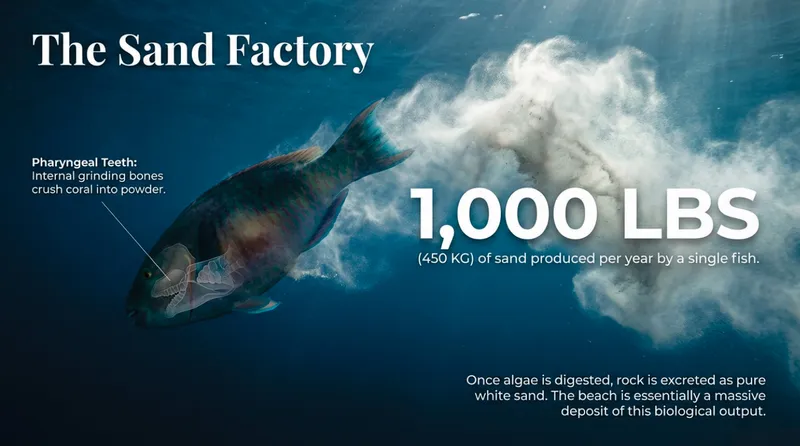
So, what happens when a fish swallows a mouthful of solid rock? Inside the parrotfish's throat is a special set of grinding bones called pharyngeal teeth. These internal teeth crush the hard coral into a fine powder so the fish can digest the nutritious algae hidden inside.
Once the algae is digested, the leftover crushed rock has to go somewhere. The parrotfish simply poops it out as pure, pristine white sand. And they do this a lot. A single large parrotfish can produce up to 1,000 pounds (about 450 kilograms) of sand every single year! So, the next time you are relaxing on a tropical sandy beach, you can thank a parrotfish for making it.
The Invisible Sleeping Bag
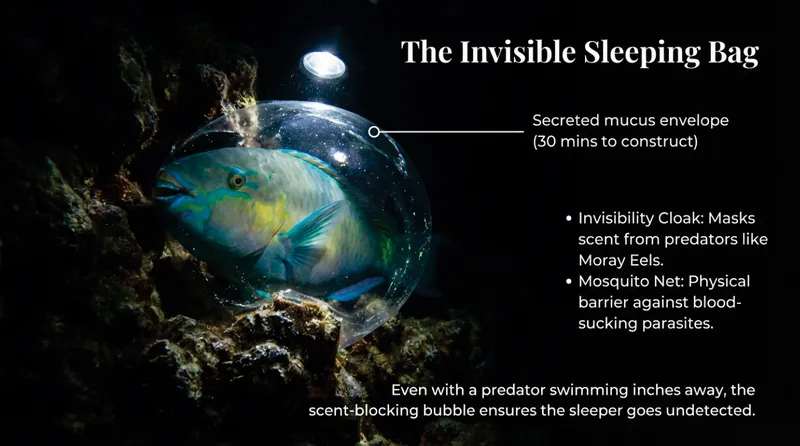
Life on the reef gets dangerous when the sun goes down. Nighttime predators, like the moray eel, use their incredible sense of smell to hunt sleeping fish in the dark.
To survive the night, the parrotfish has evolved a brilliant defense mechanism. Before going to sleep in a rocky crevice, the fish secretes a special mucus from its mouth and wraps itself in a giant, transparent jelly bubble. This biological "sleeping bag" takes about 30 minutes to make and acts as a scent-blocking invisibility cloak. Moray eels can swim right past without ever smelling their dinner. As a bonus, this mucus bubble also acts like a mosquito net, keeping tiny, blood-sucking ocean parasites away while the fish sleeps.
A Wardrobe (and Gender) Change
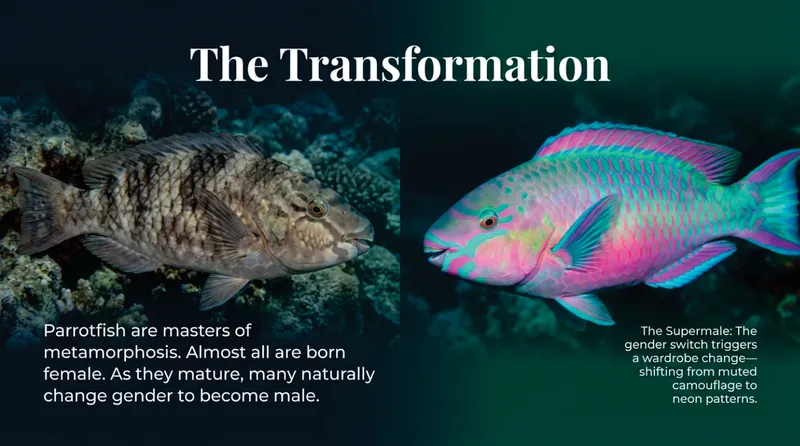
Parrotfish don't just stick to one look; they are masters of transformation. Almost all parrotfish are born female. As they grow older and larger, many of them will naturally change their gender and become male.
When they make this change, their outfits change, too! They go from their muted, camouflaged childhood colors into a "supermale" phase, developing vibrant, neon-like patterns of bright pinks, greens, and blues.
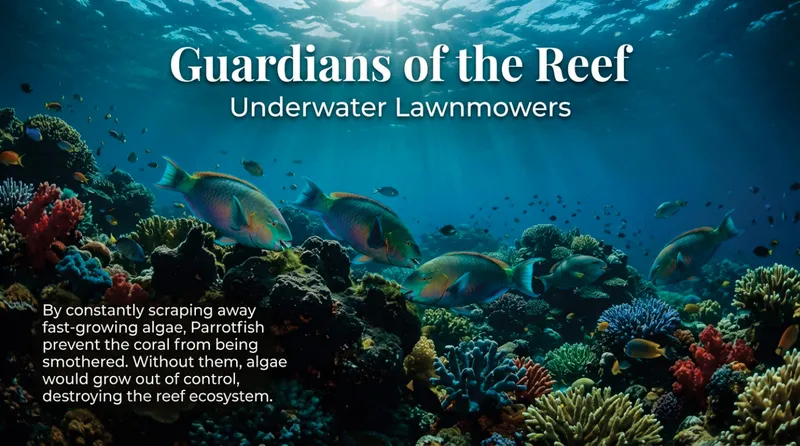
Guardians of the Reef
Parrotfish aren't just fascinating; they are absolutely essential for the survival of the Red Sea's coral reefs. By constantly eating the fast-growing algae, they act like underwater lawnmowers. Without them, the algae would grow out of control and completely smother the slow-growing corals, destroying the reef ecosystem.
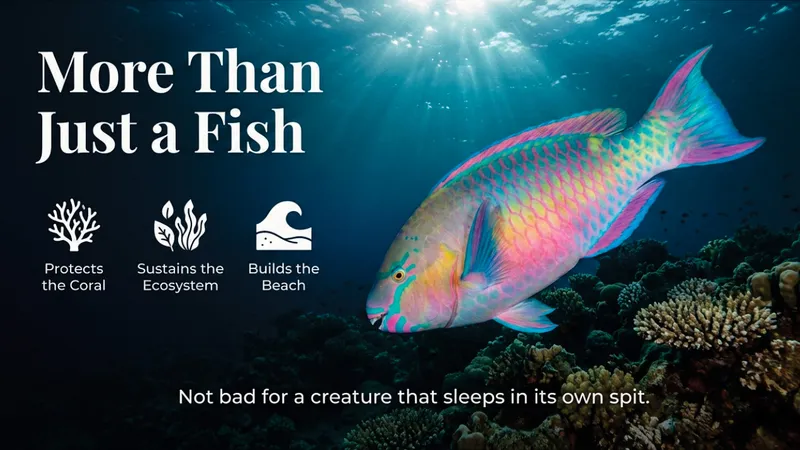
So, they protect the coral, keep the reef clean, and build our beautiful beaches. Not bad for a fish that sleeps in its own spit!
PADI Divemaster and underwater storyteller with over 7 years of hands-on Red Sea diving experience, documenting marine life, mapping dive sites, and promoting responsible ocean conservation.