The Deadly Delicacy: Unlocking the Secrets of Tetrodotoxin (TTX)

The ocean is home to some of the most beautiful, yet deadly, creatures on the planet. While sharks and jellyfish often steal the spotlight for danger, there is a silent, chemical killer lurking in the tissues of unassuming marine animals: Tetrodotoxin (TTX). Famous for making the Japanese delicacy fugu (pufferfish) a gamble with death, this potent neurotoxin is far more widespread - and fascinating - than many realize.
In this deep dive, we explore the science behind the poison, the myths surrounding its "cure," and how this molecule might one day save lives.
What is Tetrodotoxin?
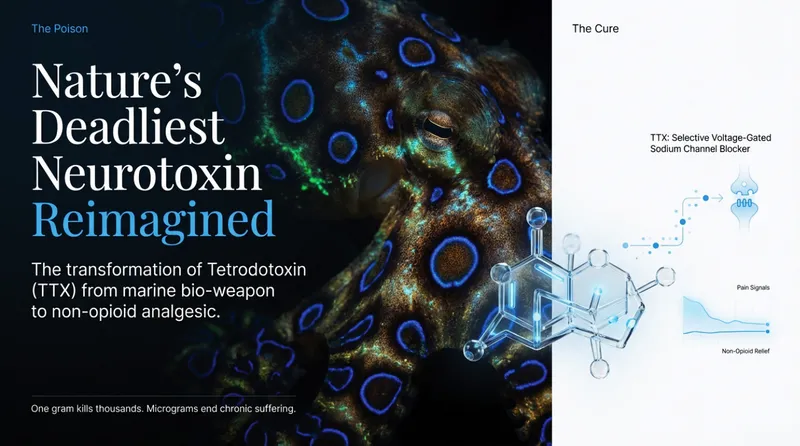
Tetrodotoxin is a non-protein neurotoxin that is heat-resistant and water-soluble. It is one of the deadliest natural toxins known to man - estimated to be over 1,200 times more toxic than sodium cyanide.
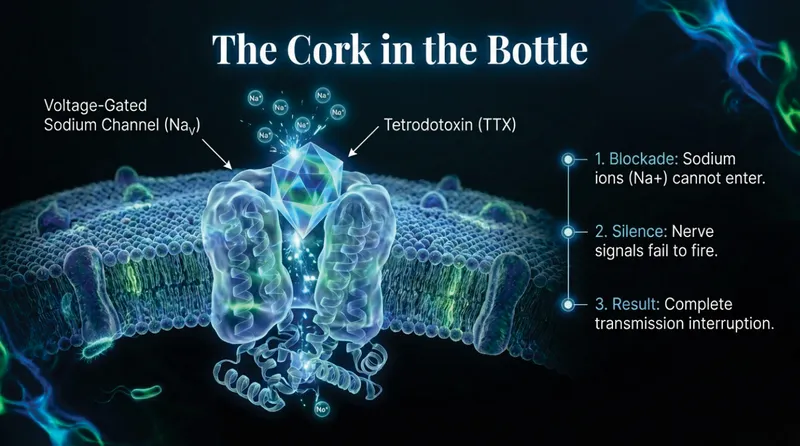
The mechanism of TTX is terrifyingly precise. It acts as a selective blocker of voltage-gated sodium channels on the surface of nerve membranes. Imagine your nerves as electrical wires; sodium channels are the switches that allow signals to flow. TTX acts like a plug, physically blocking the outer opening of these channels. This prevents sodium ions from entering the cell, effectively shutting down the transmission of nerve impulses. The result? Muscles cannot contract, and sensory signals cannot reach the brain.
The Toxic Menagerie: Who Carries TTX?
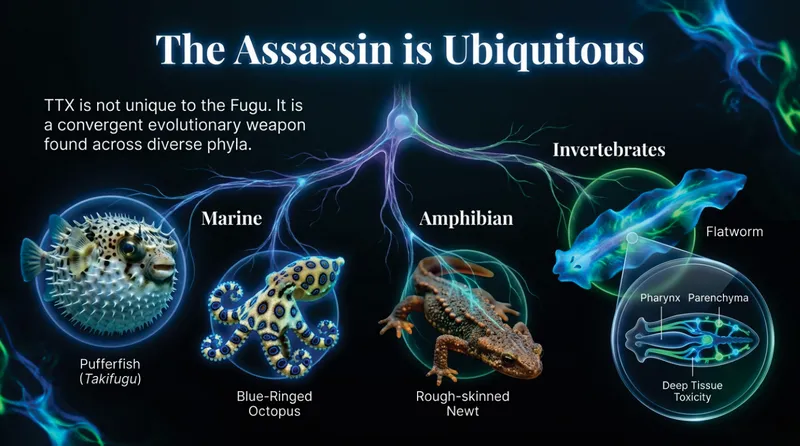
While the pufferfish is the "poster child" for TTX, this toxin has been discovered in a surprising variety of animals across unrelated groups.
1. The Pufferfish (Tetraodontidae)
The pufferfish is the most famous carrier. In Japan, fugu has historically been a high-stakes meal; the liver and ovaries are typically the most toxic organs, followed by the skin. The toxicity is severe; historically, even famous figures like the Kabuki star Bandō Mitsugorō VIII died after consuming toxic liver, believing he could handle the sensation.
2. The Blue-Ringed Octopus (Hapalochlaena)
Relevant to tropical divers, this small but lethal octopus carries TTX in its venom glands. The toxin is distributed throughout their bodies, including the arms and mantle, but is concentrated in the posterior salivary glands, ready to be deployed via a bite.
3. Marine Worms and Snails
Ribbon worms (Nemertea), specifically the species Cephalothrix simula, contain extremely high concentrations of TTX, particularly in their proboscis. Certain sea snails, such as the trumpet shell and moon snails, have also been implicated in food poisonings.
4. The Evolutionary Arms Race: Newts vs. Snakes
TTX is not limited to the ocean. Rough-skinned newts (Taricha granulosa) in North America harbor massive amounts of TTX in their skin. This has led to a fascinating evolutionary "arms race" with their predator, the garter snake (Thamnophis sirtalis). Over time, these snakes have evolved genetic resistance to TTX, allowing them to eat toxic newts that would kill almost any other predator.
The Origin Story: You Are What You Eat
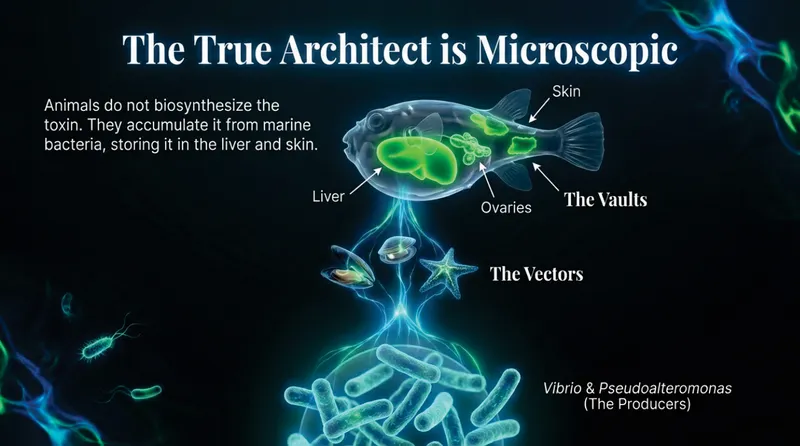
For decades, scientists debated where TTX comes from. The prevailing theory today is exogenous origin. Research suggests that TTX is primarily produced by marine bacteria, such as species of Vibrio, Pseudomonas, and Shewanella. These bacteria enter the food chain and are accumulated by larger animals.
The strongest evidence comes from aquaculture. Pufferfish raised in captivity on non-toxic diets do not possess TTX. However, if these non-toxic pufferfish are fed tissues from wild, toxic pufferfish, they begin to accumulate the toxin in their livers.
Poisoning: Symptoms, Treatments, and Myths
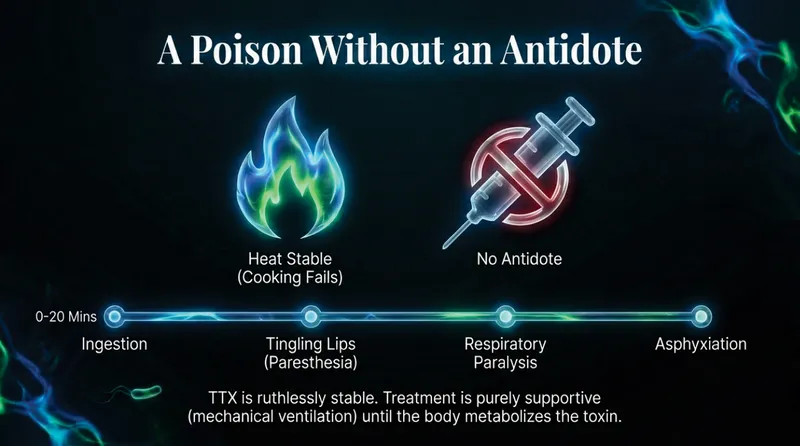
TTX poisoning is rapid and frightening. Symptoms usually begin within 30 minutes to a few hours after ingestion.
The Progression of Toxicity:
- Numbness: Perioral (mouth) tingling and numbness of the lips and tongue.
- Paralysis: Loss of motor function, slurred speech, and incoordination.
- Respiratory Failure: As the diaphragm muscles become paralyzed, the victim cannot breathe. The heart may continue to beat, and the victim often remains fully conscious while unable to breathe or move.
🚑 Is There a Cure? (The Reality)
There is currently no known specific antidote for Tetrodotoxin in humans. Survival relies entirely on immediate medical intervention:
- Decontamination: If caught within 60 minutes, activated charcoal or stomach pumping may be used.
- Life Support: The only way to survive a lethal dose is mechanical ventilation. Since the toxin paralyzes the muscles required to breathe, a machine must breathe for the patient until the body naturally metabolizes and excretes the toxin. If the patient survives the first 24 hours with respiratory support, they usually recover fully.
🏖️ Myth Buster: The "Sand Cure"
Pop culture has created dangerous misconceptions about treating fugu poisoning. In the 1977 Japanese film Torakku yarō (Truck Guys), a character poisoned by pufferfish is buried neck-deep in sand as a "traditional cure" to draw out the poison. This is total superstition. Burying a victim in sand does nothing to neutralize the neurotoxin or help them breathe. Modern experts confirm that relying on such folk remedies instead of seeking a ventilator will result in death.
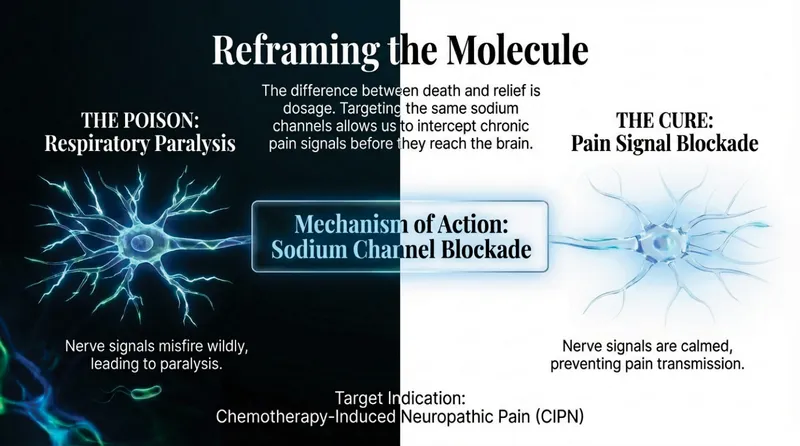
From Poison to Medicine
Despite its deadly reputation, TTX is finding a new life in medicine. Because it is a powerful sodium channel blocker that does not cross the blood-brain barrier easily, it can act as a potent painkiller without the addictive side effects of opioids.
Clinical trials are exploring TTX as a treatment for:
- Cancer-Related Pain: Studies have shown that subcutaneous TTX injections can significantly relieve moderate to severe cancer pain, with effects lasting for weeks.
- Chemotherapy-Induced Neuropathic Pain: Patients suffering from nerve pain caused by chemotherapy drugs have seen relief with TTX treatment.
- Opioid Alternatives: Since it targets the peripheral nervous system rather than the central nervous system, it does not cause the respiratory depression or addiction associated with morphine.
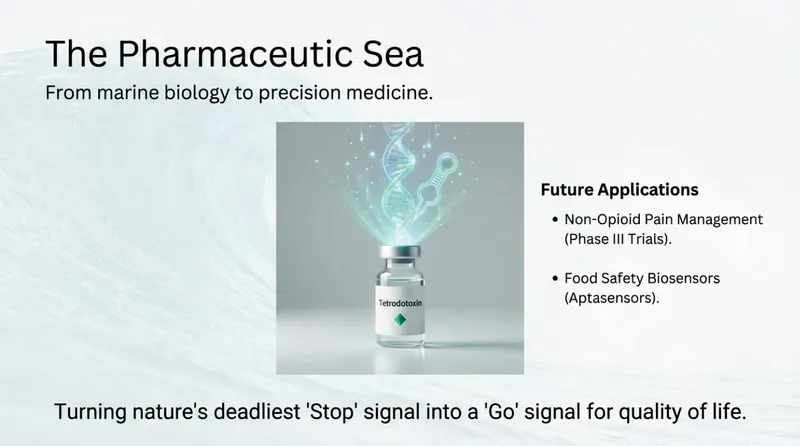
Tetrodotoxin is a marvel of evolutionary biology - a lethal weapon forged by bacteria, accumulated by pufferfish, and resisted by snakes. While it remains a serious threat to the careless diner, its transition from a culinary hazard to a potential pharmaceutical breakthrough highlights the complexity of the natural world. Whether you are a diver in the Red Sea or a diner in Tokyo, remember: respect the toxin, ignore the myths, and trust the science.
PADI Divemaster and underwater storyteller with over 7 years of hands-on Red Sea diving experience, documenting marine life, mapping dive sites, and promoting responsible ocean conservation.