The poison in a puffer is not made by the puffer. Tetrodotoxin is built by bacteria, works its way up through the food chain, and is concentrated by the animals that eat it, ending up in the liver, the gonads and the skin. Fish farms proved it: puffers raised from the egg on clean feed grow up harmless, and turn toxic again when the toxin is put back into their diet. The fish is a container, not a factory.
What tetrodotoxin does is stop nerves from firing. It blocks the sodium channels a nerve signal runs on, so the body goes numb and then slack from the outside inward while the mind stays exactly where it was. Cooking does not break it down, there is no antidote, and hospital treatment means keeping the patient breathing until the body clears the toxin itself. It is a poison rather than a venom: this fish is dangerous to eat and harmless to meet.
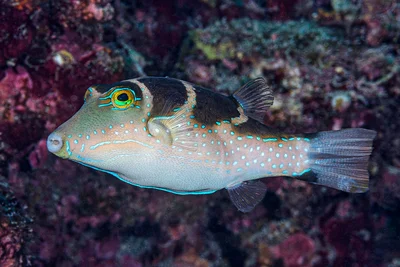
🇯🇵 Japan eats it anyway. Fugu is prepared by cooks who hold a license for that alone, sale of the liver is banned outright, and most poisonings on record involve somebody who cleaned their own catch at home. One of the puffers listed here has taken the problem somewhere new. The silver-cheeked toadfish went north through the Suez Canal (🇪🇬 Egypt), settled across the eastern Mediterranean, and has poisoned enough people there that several countries banned its sale.
The front end is a beak. Tetraodontidae means four teeth and that is the literal count: two above, two below, fused into plates that grow continuously and are ground back down on snails, hermit crabs, urchins and coral. Inflating is the famous part and the least of it. The beak is the tool a puffer actually lives by, and it is strong enough that fishermen keep their fingers away from one in a net.
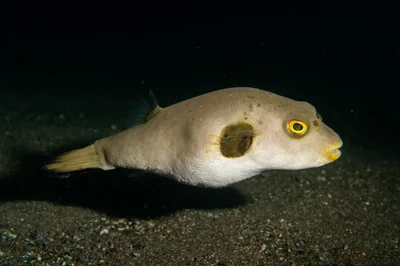
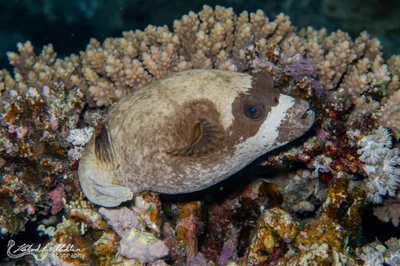
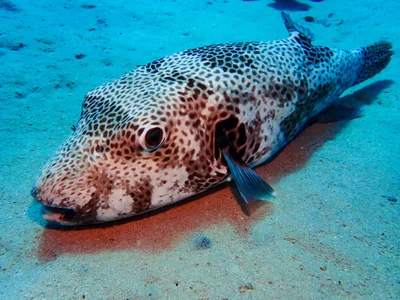
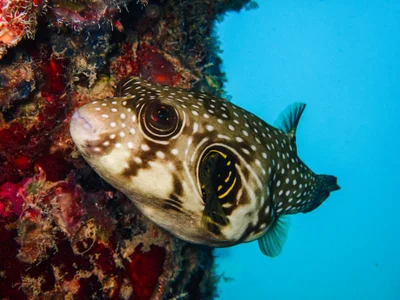
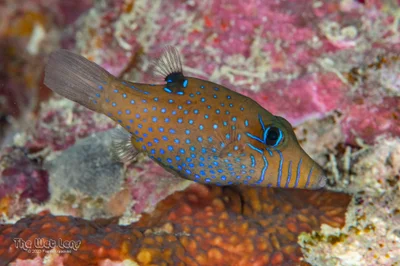
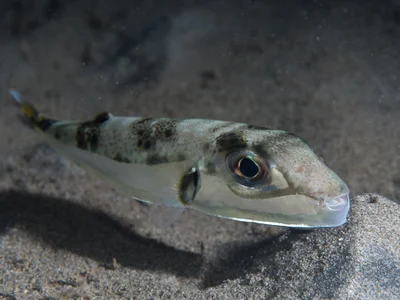
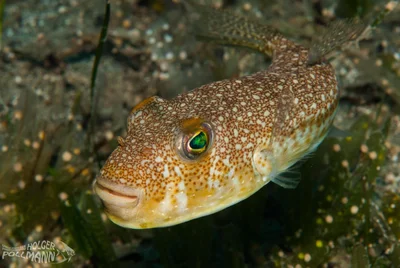
Nine species are listed here, from tobies the length of a thumb to a starry puffer over a meter, and several of them are found in this sea and nowhere else. They are slow, unbothered and easy to approach, which is exactly the problem: a puffer does not run, so it is the fish that ends up handled.
How to recognise puffers
BoxRigid, boxy or globe-like body that cannot bend - boxfishes, puffers, porcupinefishes.
- robust, rounded body outline
- small fins
- scaleless skin, smooth or with prickles
- ability to inflate body into a sphere
- slow, deliberate swimming