The Hidden Danger of the Reef: A Guide to Ciguatera Fish Poisoning

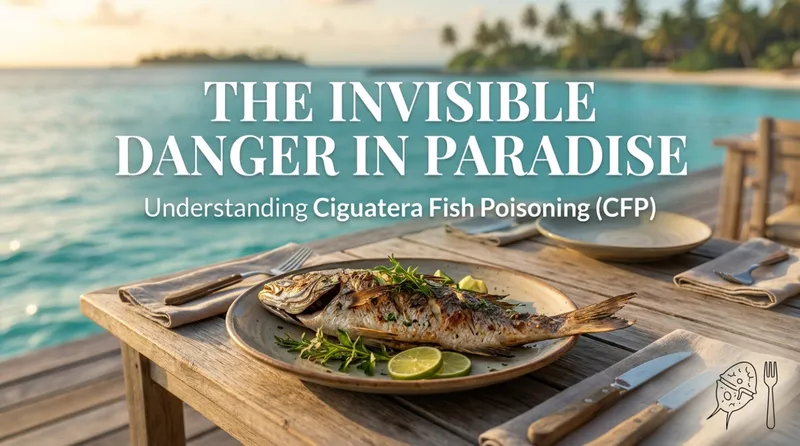
We all love the coral reef. Whether you are diving along a drop-off or enjoying a fresh seafood dinner by the shore, the reef provides beauty and sustenance. However, there is a hidden hazard lurking in tropical waters worldwide that every ocean lover and seafood enthusiast should know about: Ciguatera Fish Poisoning (CFP)
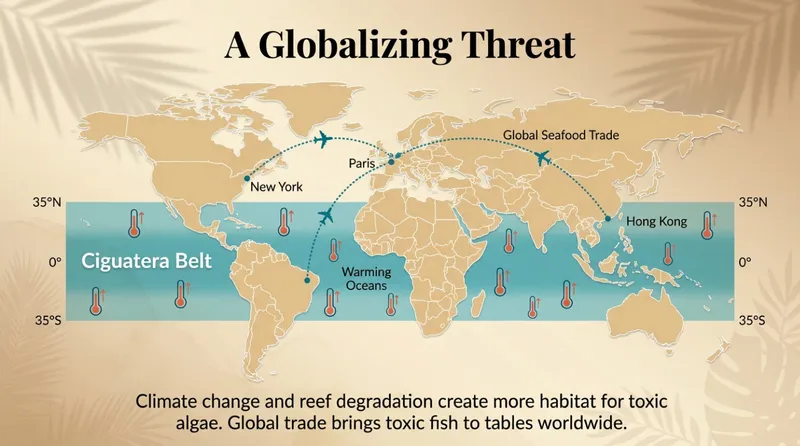
While often associated with the Pacific and Caribbean, the microscopic organisms responsible for this illness have been identified in the Red Sea and other tropical waters. Here is everything you need to know to stay safe while savoring the bounty of the sea.
What is Ciguatera?
Ciguatera Fish Poisoning is the most common non-bacterial foodborne illness associated with eating fish. It is caused by consuming reef fish that have been contaminated with naturally occurring toxins called ciguatoxins.
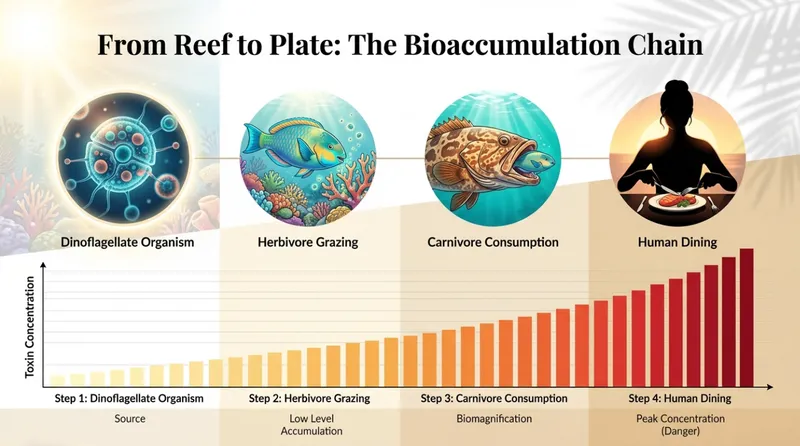
The Chain of Toxicity
The problem doesn't start with the fish; it starts with the algae.
- The Source: Microscopic marine algae (dinoflagellates) from the genera Gambierdiscus and Fukuyoa grow on dead coral and seaweed.
- The Accumulation: Herbivorous fish eat this algae. The toxins don't harm the fish, but they accumulate in their bodies.
- The Biomagnification: Carnivorous predators eat the herbivores. As the toxin moves up the food chain, it becomes more concentrated (bioaccumulated). By the time it reaches a large predator - the kind humans love to catch and eat - the toxin levels can be dangerous.
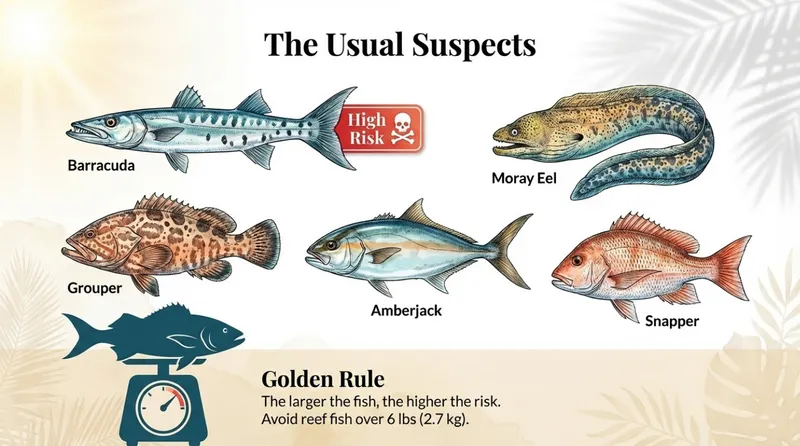
The Usual Suspects: Which Fish are Risky?
Because the toxin concentrates as it moves up the food chain, large, predatory reef fish pose the highest risk. More than 400 species have been implicated as vectors for ciguatera. Some of the most common high-risk species include:
- Barracuda (Great Barracuda is a major culprit)
- Grouper
- Snapper (Red Snapper, Dog Snapper)
- Moray Eel
- Amberjack
- Parrotfish and Surgeonfish (herbivores can also be risky)
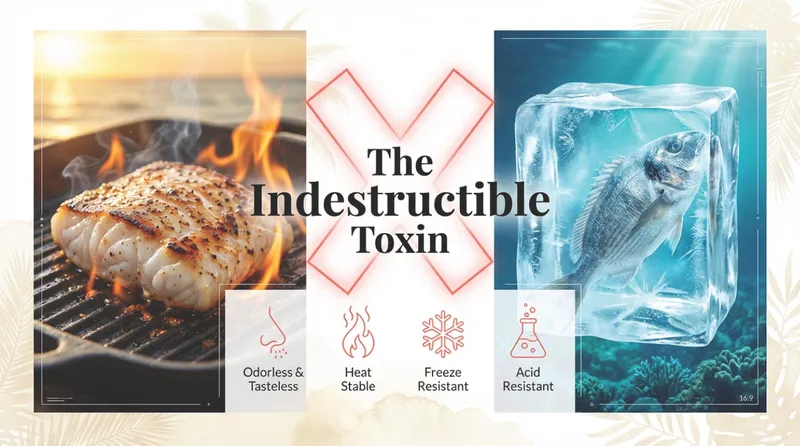
Important Note: You cannot tell if a fish is toxic by looking at it. Ciguatoxins are odorless, tasteless, and colorless. Furthermore, these toxins are heat-stable, meaning cooking, freezing, smoking, or canning will not destroy them.
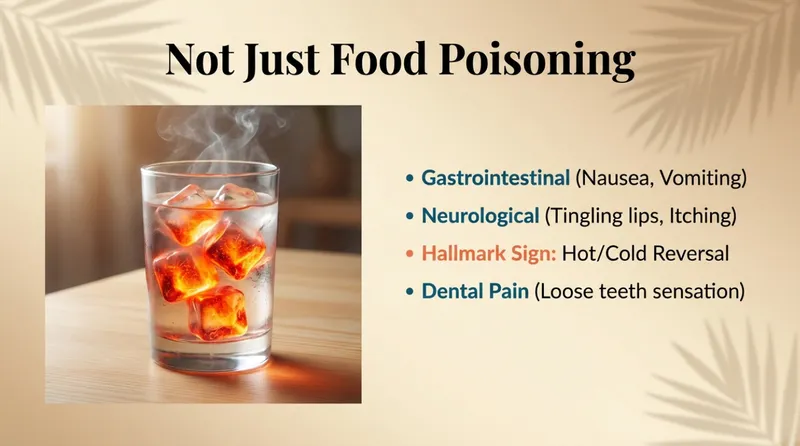
Symptoms: The "Hot Ice" Phenomenon
Ciguatera is famous for its bizarre and uncomfortable symptoms, which affect the gastrointestinal, neurological, and cardiovascular systems. Symptoms usually appear within 6 to 24 hours of eating the fish, though they can start as soon as minutes or be delayed up to 30 hours.
The Three Phases:
- Gastrointestinal: The illness typically starts with nausea, vomiting, acute diarrhea, and abdominal pain. These symptoms usually resolve within a few days.
- Neurological: These are the most distinctive and persistent symptoms. They include:
- Hot-Cold Reversal (Dysesthesia): This is the hallmark of ciguatera. Cold objects feel hot or cause a burning sensation (e.g., holding a cold soda can feels like burning ice), and hot objects may feel cold.
- Paresthesia: Tingling or numbness in the lips, tongue, hands, and feet.
- Itching (Pruritis): Intense itching that can be worsened by alcohol or exercise.
- Dental Pain: A sensation that teeth are loose or painful.
- Cardiovascular: In the early stages, some patients experience low blood pressure (hypotension) and a slow heart rate (bradycardia).
How Long Does It Last?
While the stomach issues usually pass quickly, the neurological symptoms can be stubborn. They often last for weeks or months, and in rare cases, even years.
Diagnosis and Treatment
Diagnosis: There is currently no simple clinical test to confirm ciguatera in humans. Doctors diagnose it based on your symptoms and a history of eating reef fish. If you still have leftovers of the fish, it can sometimes be tested by specialized labs (like the FDA) to confirm the presence of toxins.

Treatment: There is no specific antidote for ciguatera. Treatment focuses on relieving symptoms:
- Supportive Care: Fluids and electrolytes are critical if vomiting or diarrhea is severe.
- Intravenous Mannitol: Some studies and anecdotal reports suggest that IV mannitol (a diuretic) can reduce neurological symptoms if administered within 48 to 72 hours of eating the fish. However, its effectiveness is debated in the medical community.
- Medication: Doctors may prescribe antihistamines for itching or specific medications for chronic pain and fatigue.
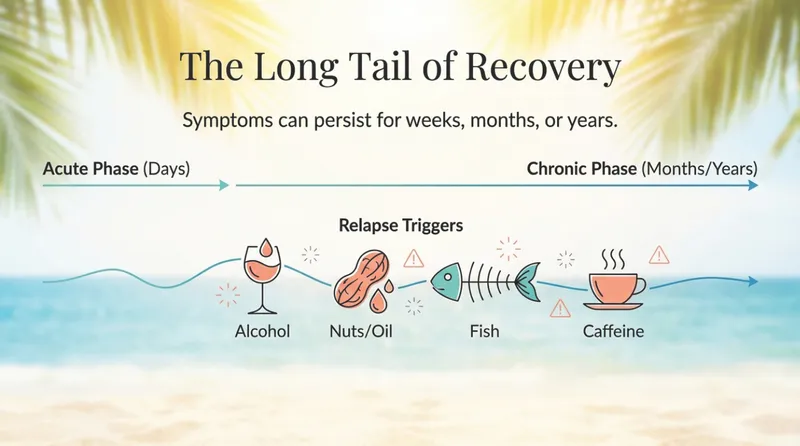
The "Avoidance" Period: If you are recovering from ciguatera, your body may remain hypersensitive. Consuming certain things can trigger a relapse of symptoms ("flare-ups"). For 3 to 6 months after recovery, it is recommended to avoid:
- Fish (all types)
- Alcohol
- Nuts and nut oils
- Caffeine
- Pork and chicken (in some reports)
- Excessive physical exertion.
How to Protect Yourself
Since you can't cook the toxin out, the only prevention is careful selection of what you eat.
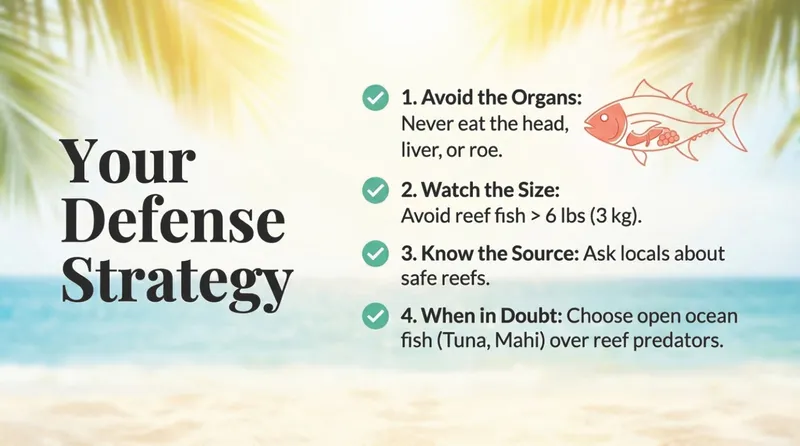
- Avoid Large Reef Predators: The larger the fish, the more toxin it has likely accumulated. Avoid eating large barracuda, moray eels, and large groupers (often those weighing over 6 lbs or 3 kg).
- Skip the Organ Meat: Toxins concentrate most heavily in the liver, intestines, roe (eggs), and head of the fish. Stick to the fillets and never eat the viscera.
- Know the Area: Local fishermen often know which reefs are "hot" (unsafe) and which are safe. Listen to local knowledge.
- Divers Beware: If you see a fish behaving erratically - swimming upside down or lacking coordination - do not catch or eat it. While rare, high toxin loads can affect fish behavior.
A Note on the Red Sea
While the Red Sea is famous for its stunning biodiversity, the organisms that produce ciguatoxins (Gambierdiscus species) have been found in Red Sea waters. Though large-scale outbreaks are less frequently reported here compared to the Pacific, the risk exists. Always exercise caution when consuming large predatory fish caught near coral reefs.
References
PADI Divemaster and underwater storyteller with over 7 years of hands-on Red Sea diving experience, documenting marine life, mapping dive sites, and promoting responsible ocean conservation.