The Invisible Lethality: Unveiling the Chemical Arsenal of the Reef Stonefish

Picture this: you're gliding over the vibrant coral reefs of the Red Sea, eyes peeled for sleek sharks slicing through the blue or the hypnotic swirl of orange anthias darting among the corals. Everything's dazzling up there. But then, glance down at the rugged rocky bottom. That lumpy, mossy stone? It might not be a stone at all. It could be staring right back at you, loaded with venom and ready to ruin your dive.
Meet the Reef Stonefish (Synanceia verrucosa), the undisputed champ of venomous fish - and a total camouflage wizard. This isn't just some grumpy rock with a sting. Recent science has uncovered it's a walking (or rather, sitting) chemical factory, armed with two killer defense systems: spine-injected venom for predators and a sneaky skin toxin to stay pristine. Let's dive deep into this Red Sea menace that's as fascinating as it is terrifying.
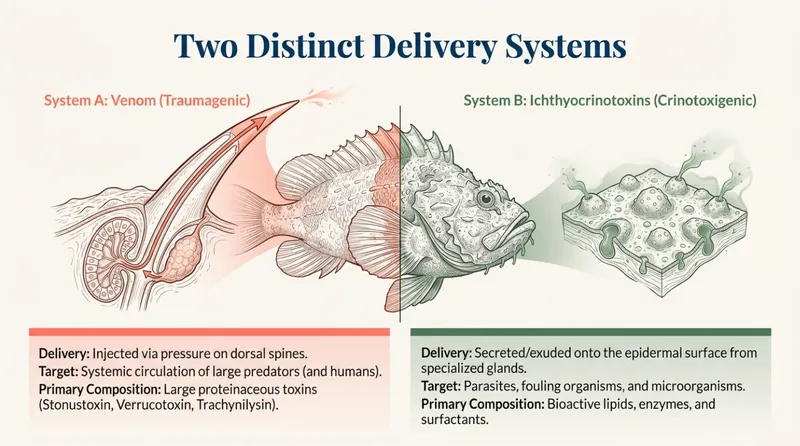
The Spines: A Hypodermic Nightmare
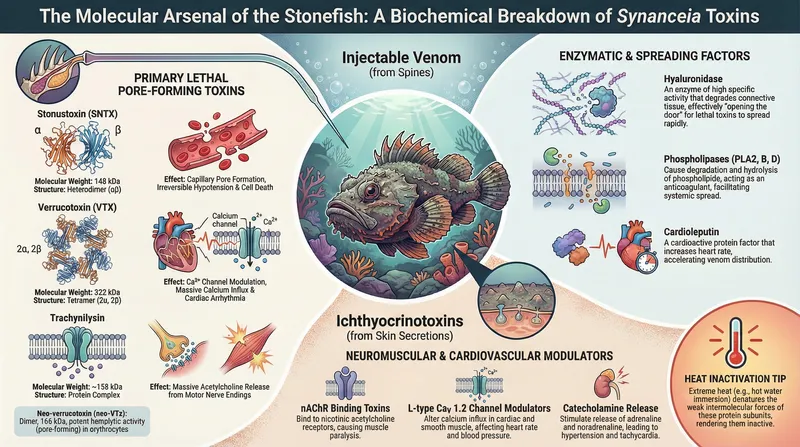
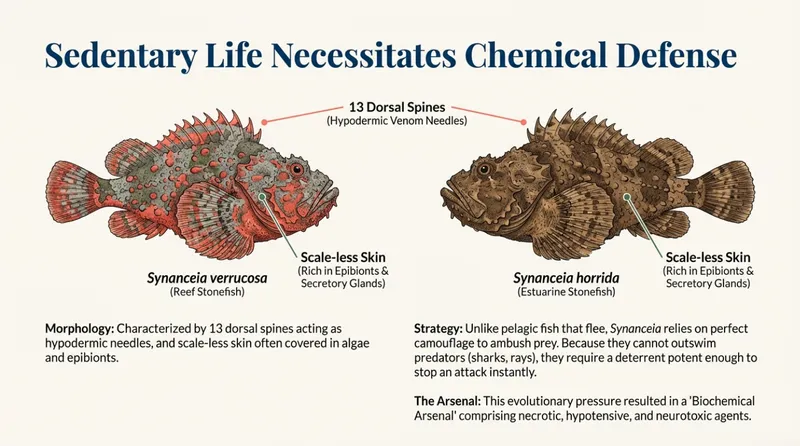
Stonefish don't mess around. Their dorsal fin packs 13 razor-sharp spines that laugh at wetsuits and dive booties. Step on one - bam. Each spine has venom glands at the base, and pressure triggers a hypodermic jab straight into you, venom racing up grooves like a biological syringe.
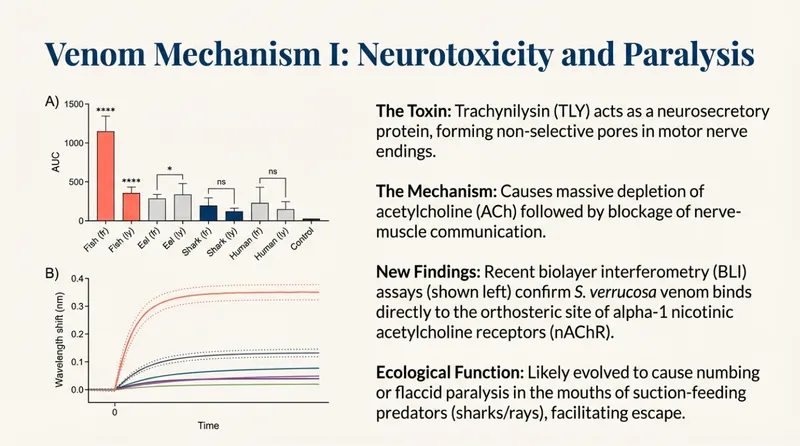
For decades, we knew stings meant agony: pain that feels like hot lava, ballooning swelling, and in bad cases, heart failure. But now, researchers have cracked the code on the venom's star players.
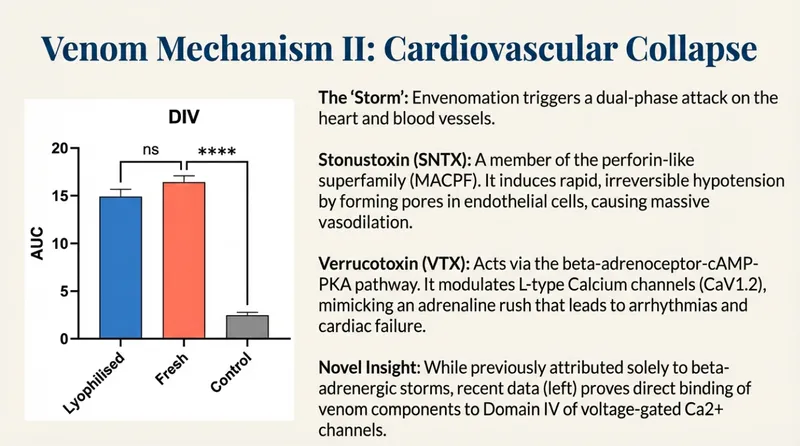
- Verrucotoxin (VTX): The heart-stopper. It hijacks your body's adrenaline signals, overstimulating β-adrenoceptors and flooding cardiac cells with calcium. Result? Arrhythmias or total cardiac meltdown. Short, sharp shock to the system.
- Stonustoxin (SNTX): From close cousin Synanceia horrida, but analogs lurk in our Reef Stonefish too. This perforin-like beast punches holes in cell membranes, lysing cells and dilating blood vessels for a hypotension nosedive.
- Neurotoxins: They latch onto nicotinic acetylcholine receptors (nAChR), scrambling nerve-to-muscle signals. Paralysis sets in - muscles go limp when you need them most.
- Anticoagulant twist: It shreds phospholipids to stop clotting, letting the poison zip through your bloodstream faster. Sneaky, right?
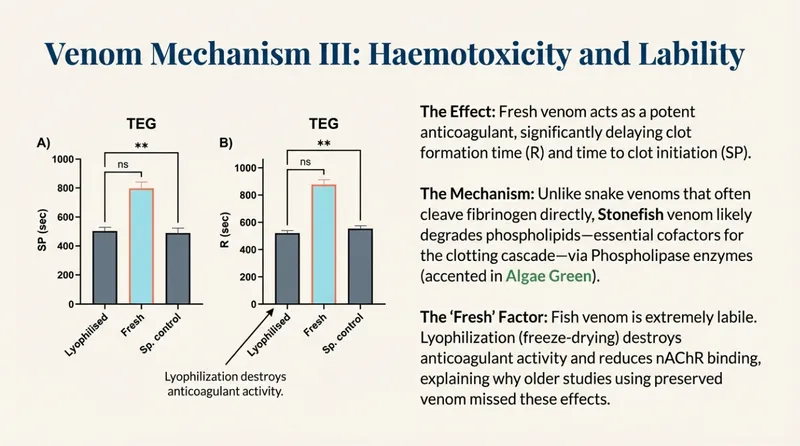
These aren't random poisons; they're a targeted arsenal evolved for one job: make predators regret their life choices. One wrong fin kick, and you're the one swimming away in tears.
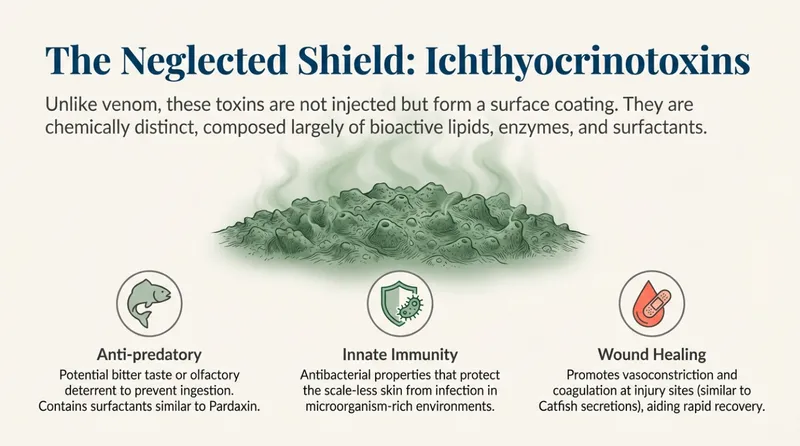
The Skin: A Chemical Shield
Okay, so spines handle the big threats. But stonefish are ambush pros - they freeze like statues for hours, blending into the reef. That stillness invites trouble: parasites, algae, barnacles eyeing them as free real estate.
No scales? No problem. Enter ichthyocrinotoxins, toxins oozing from their skin like a toxic lotion. These aren't for scaring off sharks (some predators chomp anyway). Nope, they're a hygiene hack.
- Anti-parasitic power: Keeps bloodsuckers and hitchhikers from latching on that bare skin.
- Anti-fouling magic: Proteins like "FI" in the mucus paralyze tiny invaders - ciliated protozoans freeze, barnacle muscles twitch out. No squatters allowed.
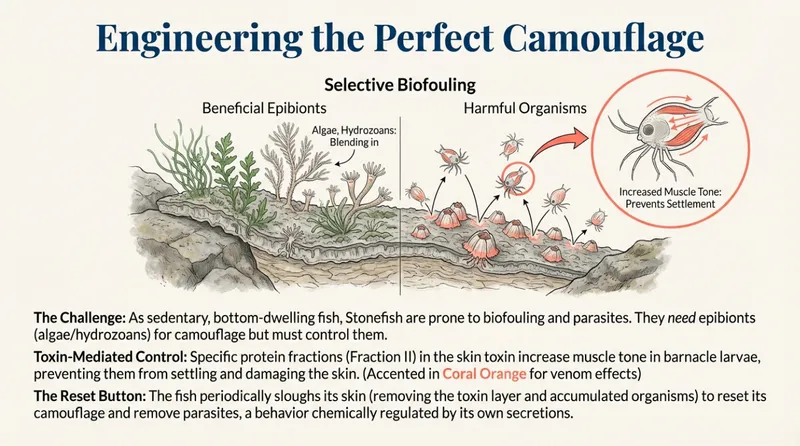
And for the stragglers? Stonefish slough their skin like snakes, shedding algae and gunk to stay rock-perfect. Camouflage on point, hygiene A+.
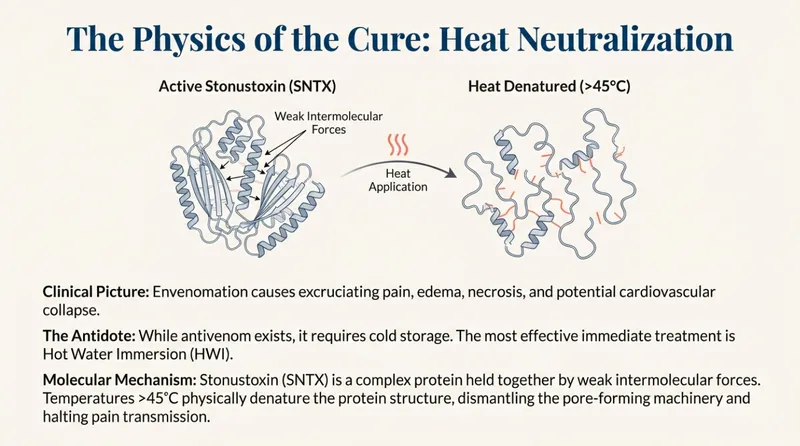
The Cure: Fight Fire with Heat
Here's the silver lining - these toxins are protein powerhouses, but fragile ones. "Labile" means heat wrecks them, denaturing their structure like overcooking an egg.
Stung? Dunk that wound in the hottest water you can stand (no burns, though - around 45°C/113°F). It unravels VTX, SNTX, and crew, slashing pain and neutralizing the worst. Science-backed first aid that turns a nightmare into a bad memory.
Next time you're suiting up for a Red Sea plunge, hover high, fin smart, and respect the bottom. This evolutionary beast isn't hunting you - it's just defending its turf with ocean's most sophisticated bio-weapons. Spot one? Snap a pic from afar and count your lucky drifts.
References
PADI Divemaster and underwater storyteller with over 7 years of hands-on Red Sea diving experience, documenting marine life, mapping dive sites, and promoting responsible ocean conservation.