Lionfish: Native Beauties of the Red Sea, Invasive Nightmares in the Caribbean

Introduction: A Striking Predator of the Seas
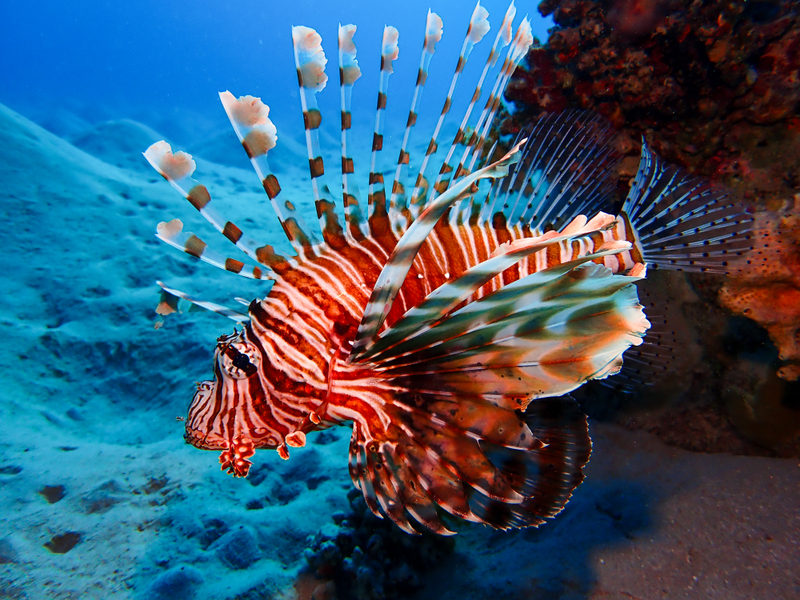
The common (red) lionfish (Pterois volitans), with its zebra-striped body, elongated fins, and venomous spines, is a mesmerizing marine marvel.[1][3] Growing to 12-15 inches long, this carnivorous fish captivates scuba divers, marine biologists, and photographers alike with its bold reddish-brown bands over a whitish-yellow background and spotted fins that shimmer in the water column.[1][3] Native to the Indo-Pacific, including the Red Sea, it thrives in reef habitats, but its invasion of the Caribbean has turned it into an ecological catastrophe.[2][8]
Native Habitat: Graceful Inhabitants of the Red Sea and Indo-Pacific
In its native range - from the Red Sea and Indo-Pacific reefs spanning western Australia, Malaysia, and the Coral Triangle to southern Japan, French Polynesia, and Lord Howe Island - lionfish are perfectly integrated into the ecosystem.[1][2][4] They prefer coral reefs, rocky areas, lagoons, estuaries, and shipwrecks up to 50-55 meters deep, often sheltering motionless under ledges, caves, or crevices by day with heads tilted downward.[1][3][4] At night, they glide along reefs to hunt small fish, shrimps, crabs, and invertebrates, capitalizing on peak reef activity at sunset when prey seeks resting spots.[2][4]
For scuba divers exploring Red Sea sites like those in Egypt's Ras Mohammed or Saudi Arabia's Farasan Islands, lionfish offer thrilling sightings. Their preference for crevices makes them ideal subjects during night dives, where their slow, fan-like fin movements create dramatic silhouettes against coral backdrops.[1][6] Marine biologists note their solitary adult behavior, fiercely defending territories, while juveniles form small groups; natural predators like eels, frogfish, and scorpionfish keep populations balanced.[3][6]
Photographers will appreciate the species' variable coloration - shifting with depth and location - which produces stunning contrasts in shallow, sunlit waters or eerie glows in deeper caves. Use a macro lens for spine details or wide-angle for reef scenes, but respect their venomous dorsal spines that deliver painful stings (non-fatal to humans).[3][7]
The Invasion: From Aquarium Pets to Caribbean Conquerors
Lionfish first appeared in the western Atlantic in the early 1990s off Florida, North Carolina, and Bermuda, likely introduced via aquarium trade releases or ballast water transport of larvae.[1][3][5] Today, they dominate from New York to Florida, the Gulf of Mexico, Bahamas, Caribbean islands, and as far as Trinidad & Tobago and northern South America.[2][5][6] Without natural predators in these waters, they have exploded in numbers, reaching depths beyond 300 feet (91 meters) - expanding their typical range.[3][7]
In the Caribbean, lionfish prefer artificial structures, low-lying reefs, mangroves, seagrass beds, and canals from shallow waters to over 500 feet.[2][6] This adaptability allows them to infiltrate diverse habitats, outcompeting natives by quickly adapting to new prey.[5]
Ecological Nightmare: Devastating Impacts on Reef Ecosystems
As generalist predators, invasive lionfish devour over 40 fish species, crustaceans, and invertebrates - including juveniles of commercially vital Nassau grouper, blennies, wrasses, squirrelfish, and more - that fit their mouths.[2][5] Their insatiable appetite disrupts food webs, reduces native fish biomass by up to 80% on some reefs, and promotes algal overgrowth by culling herbivorous grazers.[2] Cannibalism occurs, but reproduction rates - year-round in warm waters - fuel rapid spread.[3]
Marine biologists are studying temperature tolerance, foraging, and defenses to predict spread, with juveniles confirming establishment along the U.S. East Coast.[1] For reef health, this means biodiversity loss and fishery declines across the Caribbean and Gulf.[5][6]
Opportunities for Divers, Biologists, and Photographers
Scuba divers play a frontline role in control efforts: organized hunts in the Caribbean, like those in the Bahamas, encourage spearing lionfish (handle with care due to venom).[2] Events turn invasive culling into sport, with derbies yielding thousands removed annually - check local regulations and join guided hunts for safe, impactful dives.
- Depths: 10-175m preferred, but hunt shallow for safety.[5]
- Tips: Use lionfish-safe poles; avoid free-diving releases to prevent escapes.
- Benefits: Healthier reefs mean better visibility and diverse marine life for future dives.
Biologists monitor via citizen science apps for sightings and depths, aiding models of invasion dynamics.[1] Photographers can document invasions ethically - capture pre-hunt portraits showcasing invasive beauty amid coral decline, or before/after hunt transformations. Wide-angle reef shots highlight ecosystem contrasts; ethical guidelines: no baiting or disturbance.[3]
Conclusion: Balancing Beauty and Action
The lionfish embodies nature's duality: a Red Sea reef jewel, now a Caribbean villain demanding vigilance.[8] Divers, biologists, and enthusiasts - embrace the hunt, research, and imagery to restore balance. By turning nightmare into opportunity, we protect these vital waters for generations.
References
PADI Divemaster and underwater storyteller with over 7 years of hands-on Red Sea diving experience, documenting marine life, mapping dive sites, and promoting responsible ocean conservation.