Titan Triggerfish in the Red Sea: Why They Attack and How to Avoid Problems

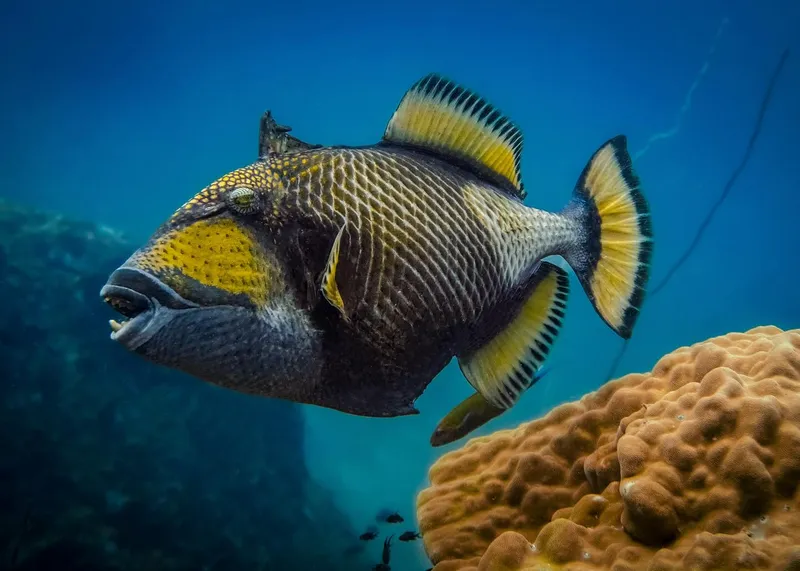
The Titan triggerfish (Balistoides viridescens) is one of the largest and most territorial reef fish found in the Red Sea, known for its striking appearance and sometimes aggressive interactions with divers and snorkelers. While many divers fear sharks, it’s actually this seemingly small but fiercely territorial fish that can be the most unpredictable and aggressive encounter underwater. Ever wondered why these incredible yet scary creatures can turn aggressive - and what that means for us when we cross paths with them? Let's explore what triggers their attacks on people and grab some solid strategies to help you stay safe around them.
Overview of the Titan Triggerfish
-
Appearance and Size: Titan triggerfish can grow up to 75 cm (30 inches) in length. They are recognized by their bold color patterns - yellow faces and fins with a blue-grey body - and a distinctive eye mask area. Their powerful jaws and strong teeth are specialized for crushing hard shells and coral, vital for their carnivorous diet of sea urchins, molluscs, crustaceans, tube worms, and coral[2][3].
-
Behavior: These fish are diurnal (active during the day) and mostly solitary. They are known to be bottom-dwellers who often forage by flipping over rocks and stirring up sediment to find hidden prey[2]. During night or times of threat, they wedge themselves firmly into coral crevices by erecting their dorsal spines, making them difficult prey for predators[1].
Why Do Titan Triggerfish Attack?
The primary reason for aggression is territory defense, especially around their nests. This behavior is most pronounced during the mating and nesting season, which typically lasts about a week each month, often following the full or new moon, depending on the population[2]. Key reasons for attacks include:
-
Nest Protection: Male and female titan triggerfish aggressively guard flat, sandy areas on reefs where they build their nests. Any perceived intruder - divers, snorkelers, or other fish - that enters this territory is at risk of being charged or bitten[1][2].
-
Territorial Nature: Their territory extends upwards in a cone shape above the nest. Approaching vertically often puts a diver deeper into the fish’s claimed area, increasing the chance of attack[1][2].
-
Warning and Defense Postures: Before attacking, the fish often signals irritation by holding its first dorsal spine erect and may even roll onto its side to get a better look at the intruder[2][3]. Not all charges result in bites; sometimes the fish swim aggressively towards intruders to escort them away[1][2].
-
Occasional Unprovoked Behavior: Some observations suggest titan triggerfish might occasionally attack without clear provocation, possibly out of territorial instinct or "for fun," although this is less common[1].
How Dangerous Are Titan Triggerfish?
Titan triggerfish have strong teeth designed for crushing shells and coral, meaning bites can inflict serious wounds that often require medical attention. While their bites are not venomous, their powerful jaws and protective aggressive behavior make them one of the more dangerous species to encounter on coral reefs[1][2][3].
Notably:
-
Their skin and flesh can sometimes contain ciguatoxin, a toxin that can cause ciguatera poisoning if consumed[2].
-
Despite their aggressive stance, they often prefer to chase rather than bite, using charges as a warning[1][3].
How to Avoid Problems with Titan Triggerfish
Divers and snorkelers in the Red Sea can follow these guidelines to minimize risks of encounters turning dangerous:
-
Stay Alert for Warning Signs: Watch for the fish holding its dorsal spine erect or rolling on its side - clear indicators of agitation[2][3].
-
Respect Nesting Areas: Avoid shallow, flat sandy patches among corals where titan triggerfish might be nesting. These areas are vigorously defended and should be approached with caution or avoided altogether[1][2].
-
Maintain Horizontal Distance: If a titan triggerfish becomes aggressive, swim horizontally away from its nesting territory rather than ascending. Swimming upwards takes you deeper into its cone-shaped territory, increasing the chance of attack[1][2].
-
Use Fins to Keep Distance: If a fish charges, use your fins defensively to push it away and create space[1][3].
-
Avoid Provoking the Fish: Do not try to touch or corner the fish. Their territorial aggression is often triggered by perceived threats, so giving them space is best.
-
Be Extra Cautious During Mating Season: Because aggression peaks during nesting periods, extra vigilance is needed, especially if you notice multiple titan triggerfish or recent nest-building activity[1][2].
What to Do If Attacked
-
Do not panic: Move calmly but decisively away horizontally.
-
Use your fins: Kick gently to deter the fish.
-
Seek Medical Attention: If bitten, clean wounds promptly and seek professional medical care to avoid infection and properly manage injury[1][2].
Conclusion
The titan triggerfish is an impressive and vital reef species of the Red Sea, commanding respect through its territorial and occasionally aggressive behavior, particularly around its nesting grounds. Understanding their biology and behavioral cues can help divers and snorkelers enjoy encounters safely, avoiding potentially serious injuries. By respecting their space and following best practices, these remarkable fish can remain a captivating element of the Red Sea underwater world rather than a hazard.
References
PADI Divemaster and underwater storyteller with over 7 years of hands-on Red Sea diving experience, documenting marine life, mapping dive sites, and promoting responsible ocean conservation.