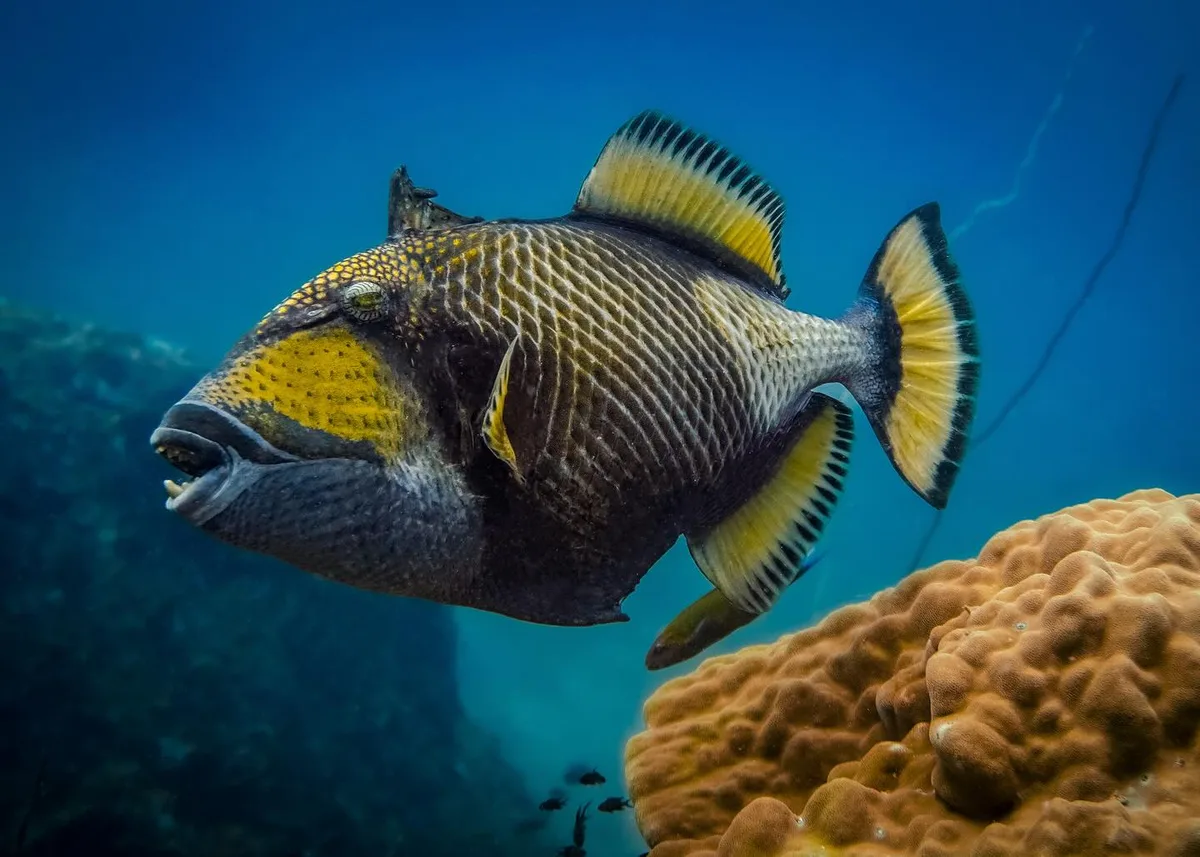
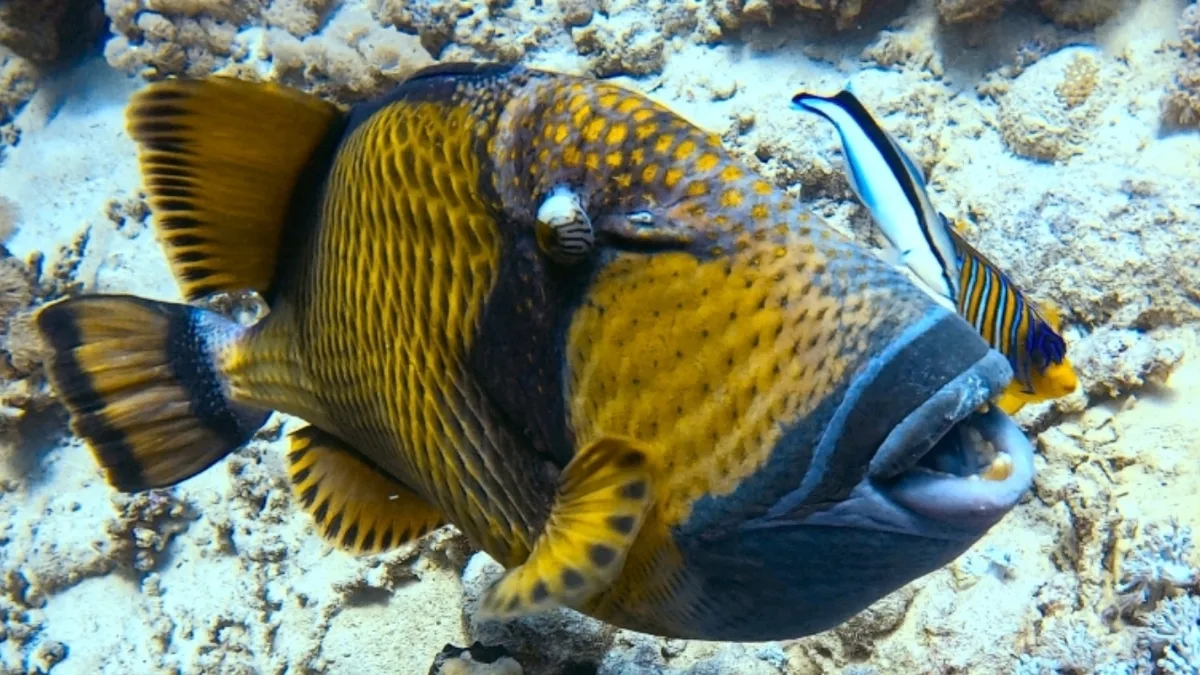
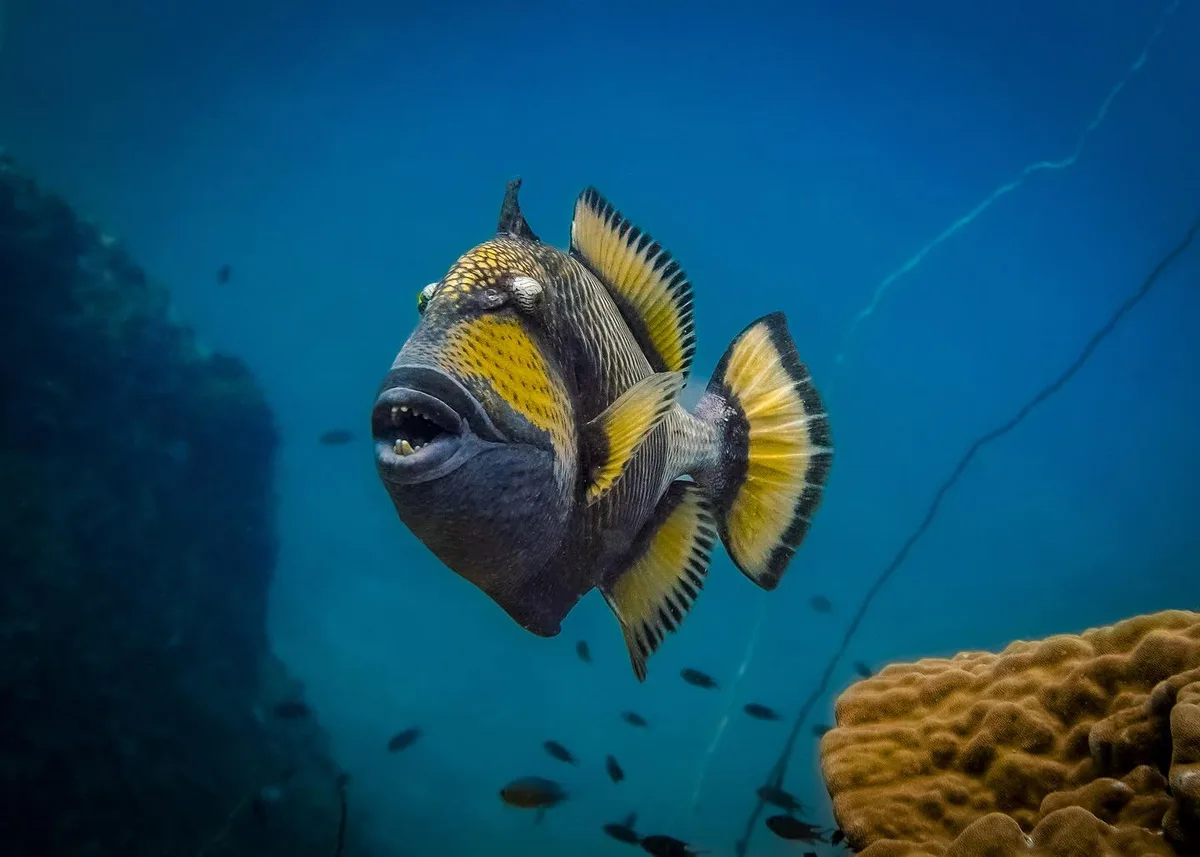
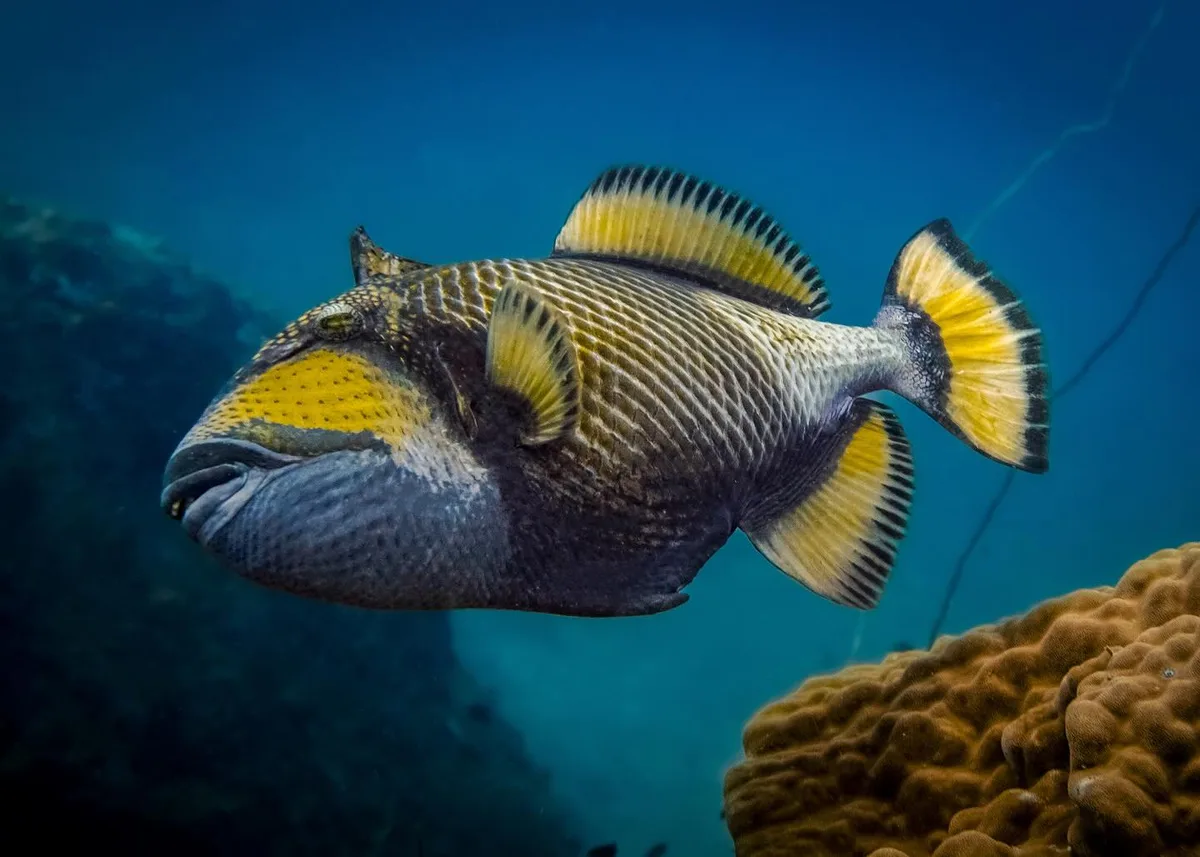


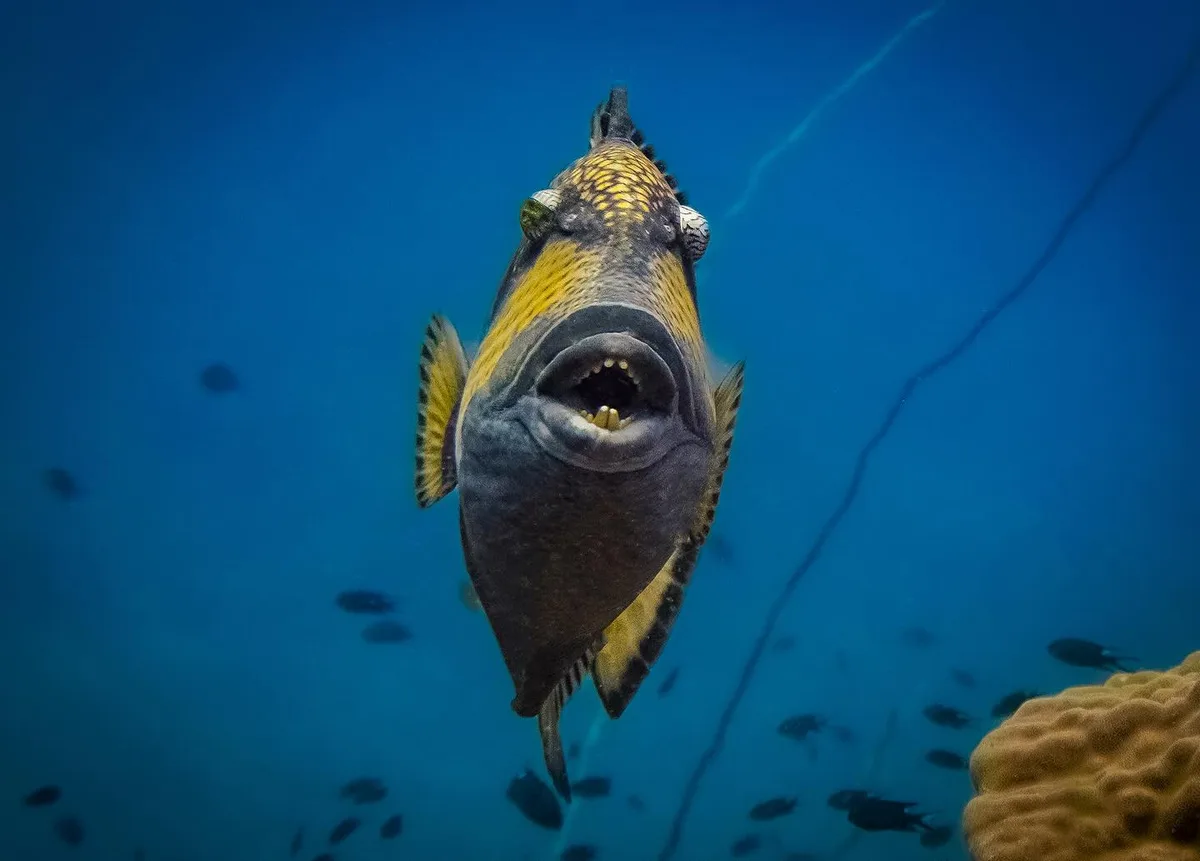
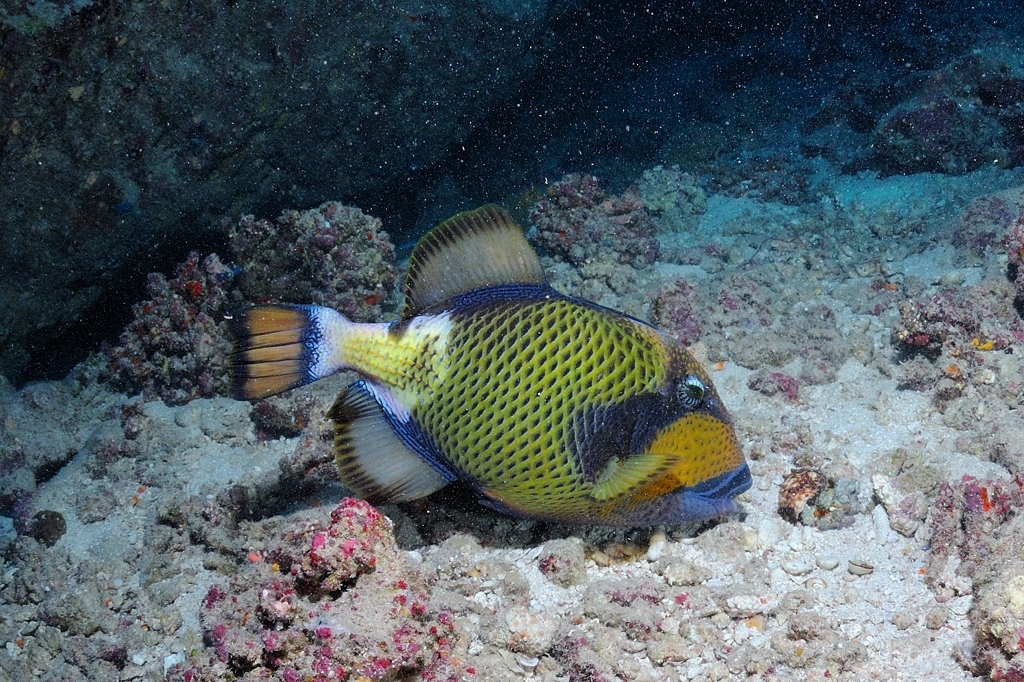
A titan triggerfish coming at you is not being aggressive. It is defending a nest, and the shape of what it defends is the whole reason the encounter goes wrong.
The nest is a shallow crater in sand or rubble, and the territory the female defends stands on it as a cone that widens toward the surface. Swimming up keeps you inside that cone the whole way, and swimming up and away puts you further in rather than further out. Leave sideways, stay low, keep the fish in sight, and put your fins between the two of you.
That geometry is the single most useful thing to know about this fish, because the instinct - get up, get away - is the one move that keeps you in the territory. A guarding female will follow, and at this size she can take a piece out of a fin, a foot or a hand.
The teeth are why it matters. Eight heavy incisors in each jaw crush sea urchins, coral and thick-shelled molluscs, and the fish routinely picks up rocks and flips them over to reach what is underneath. Smaller fish follow it all day to take whatever the excavation turns up.
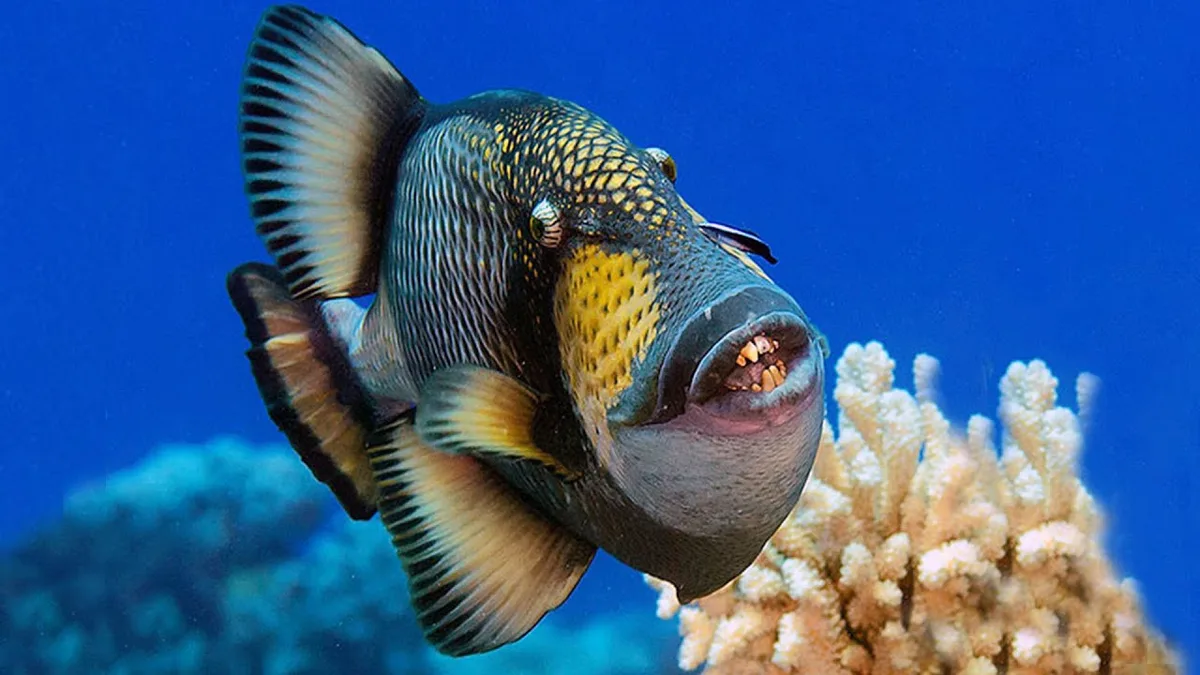
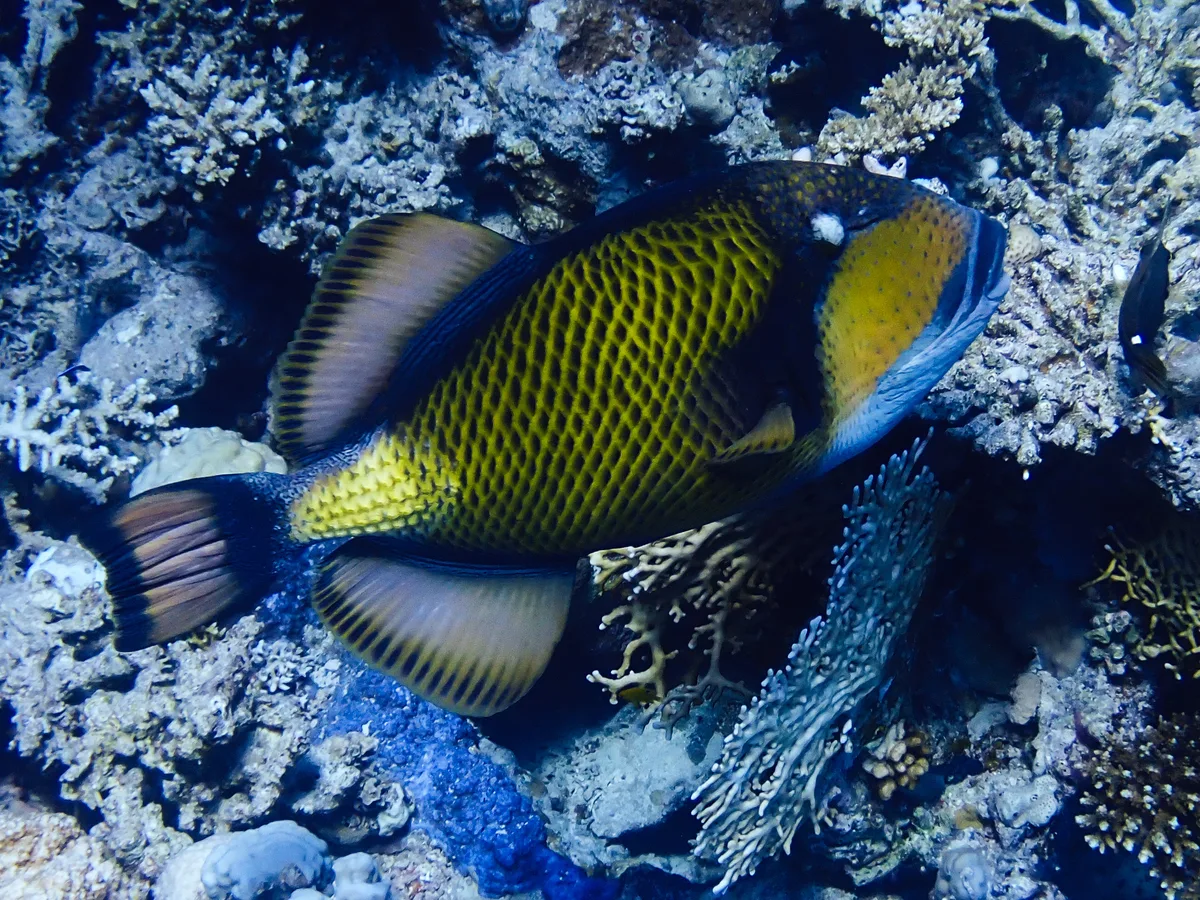
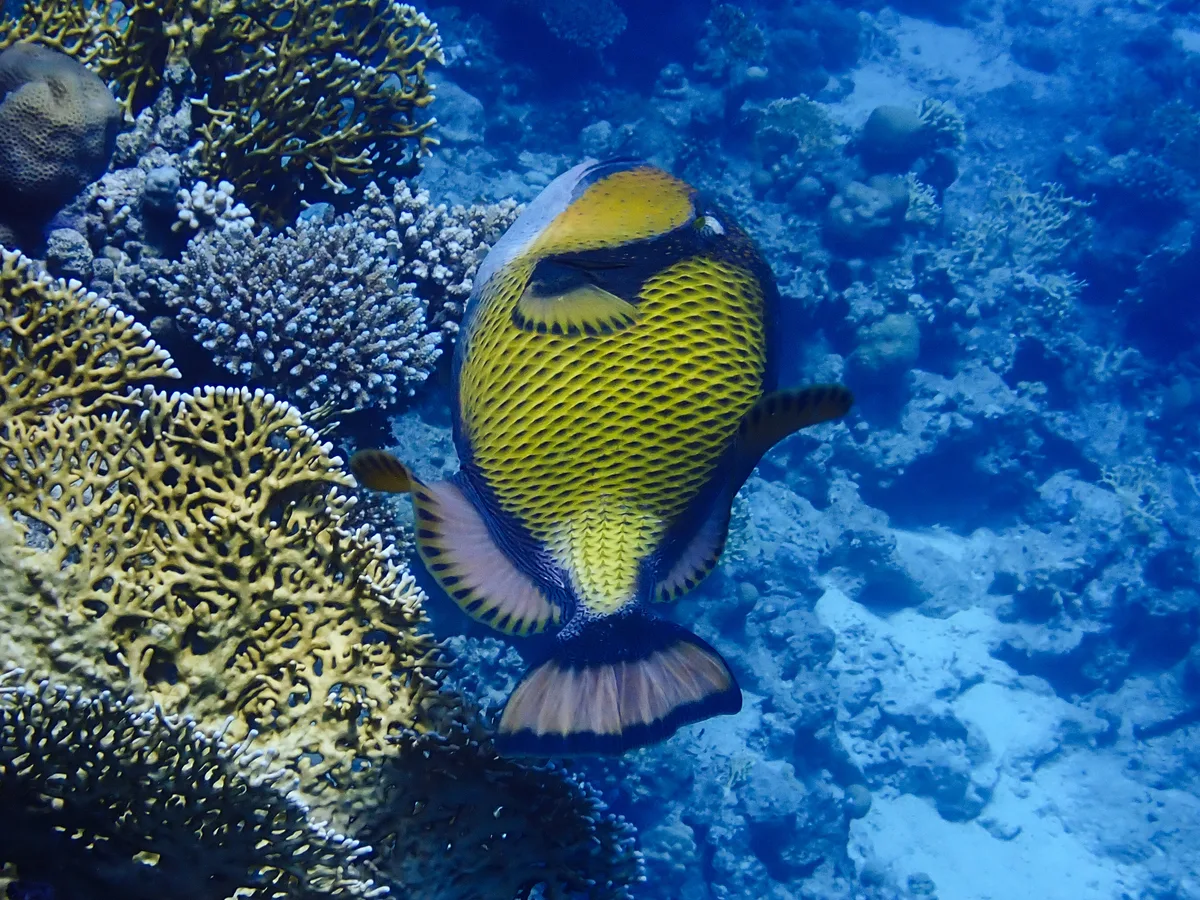
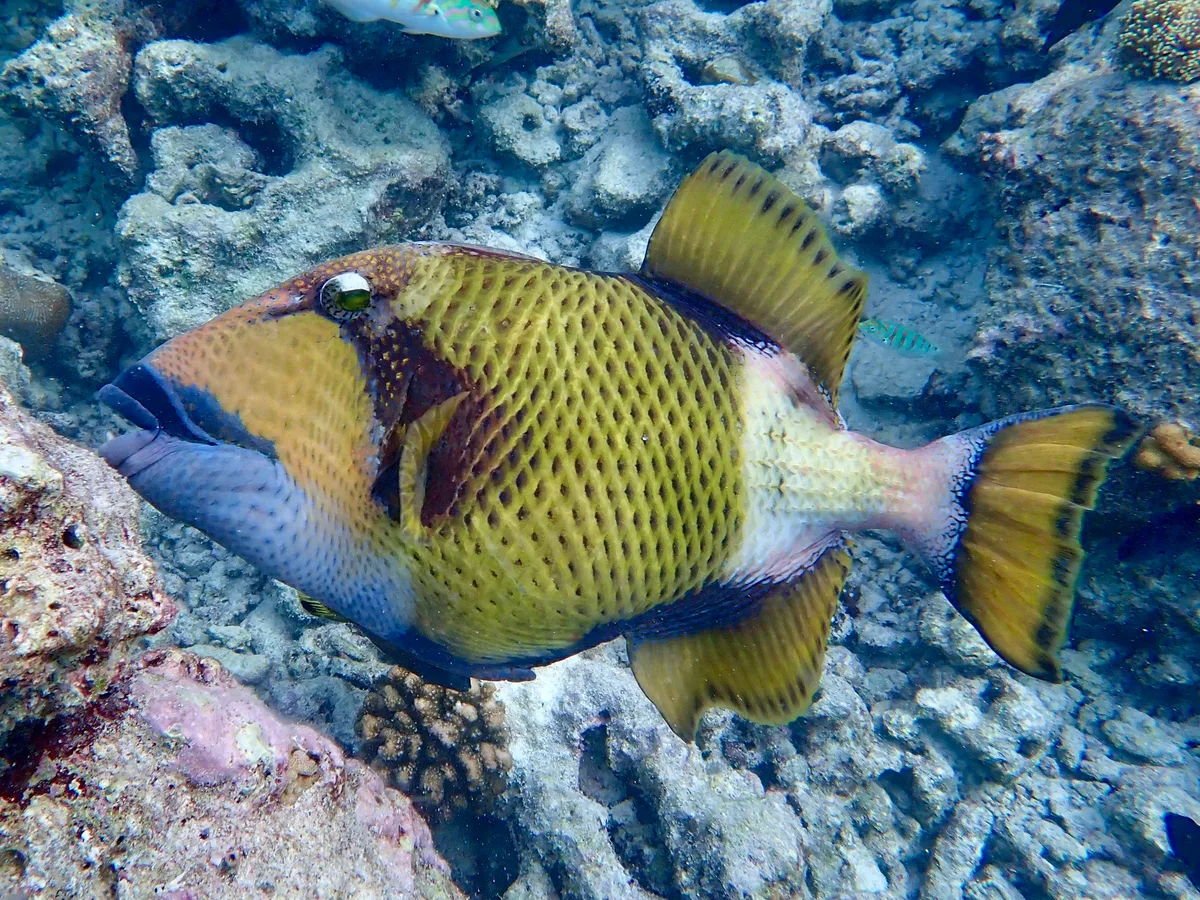
At 75 cm (30 in) it is the largest triggerfish on the reef: a heavy diamond of a body in olive and dark green, every scale outlined so the animal looks tiled, with a dark moustache line above the mouth and small high-set eyes that swivel independently of each other.
The trigger of the family name is mechanical. The first dorsal spine locks upright and can only be released by a second, smaller spine behind it, which lets the fish jam itself into a hole so tightly that nothing can pull it out.
The genus. Balistoides Fraser-Brunner 1935 - -oides (having the form of Balistes). ETYFish
The species. Balistoides viridescens (Bloch & Schneider 1801) - greenish. ETYFish
- heavy diamond-shaped body, each scale outlined so the fish looks tiled
- dark moustache line above the mouth
- small eyes set high on the head, swiveling independently
- nests in a crater in sand and will come out to meet a diver
- up to 75 cm
Why it's threatened
Exploitation impacts this species in parts of its range (e.g., Philippines; Lavides et al. 2010). It may also be impacted by ongoing coral reef degradation.
Threat classification from the IUCN Red List.