
34 species in Pomacentridae
Abudefduf
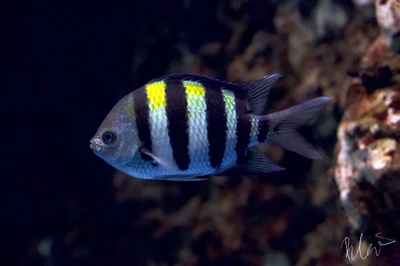
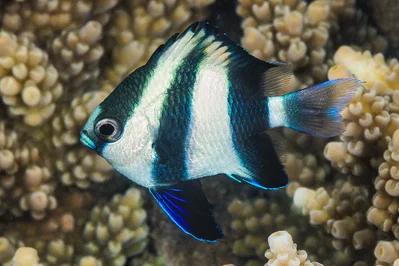
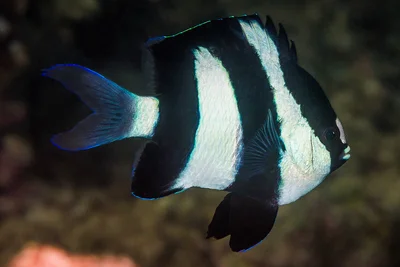
3The sergeants: the big, bar-sided damselfish of the shallows and the reef crest, feeding in midwater in loose schools rather than holding a plot. Males turn dark while guarding eggs on bare rock. The bars are the family name in every language; the marks that separate the species are on the tail and at the base of the pectoral fin.


Amblyglyphidodon
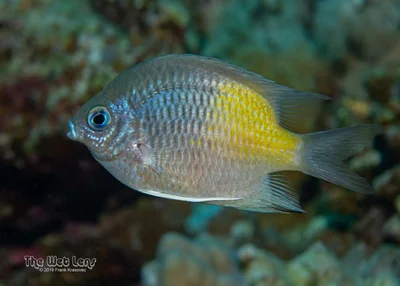
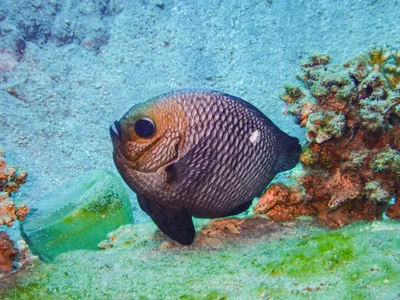
2Deep, almost disc-shaped and pearly, built more like a small batfish than a damsel. They hang above the reef in loose groups instead of down in the rock, and the species are separated by which part of the body carries the yellow or gray wash.

Chromis
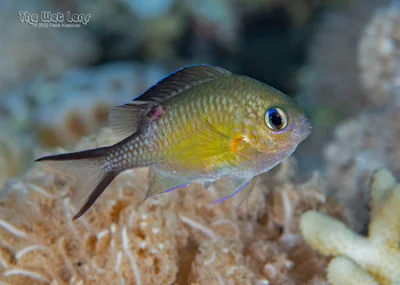
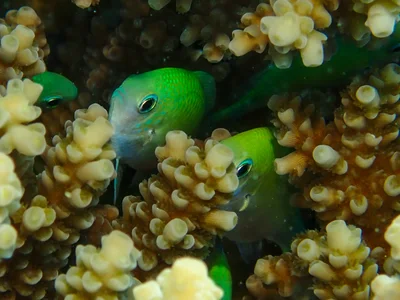
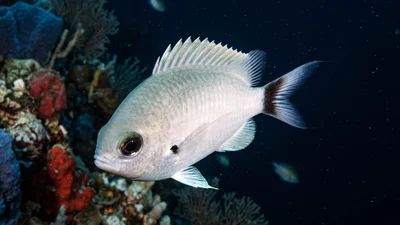
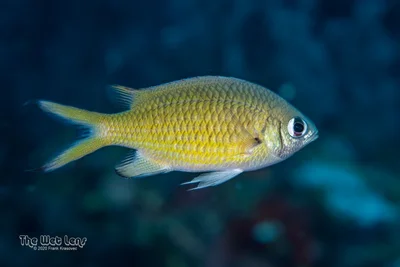
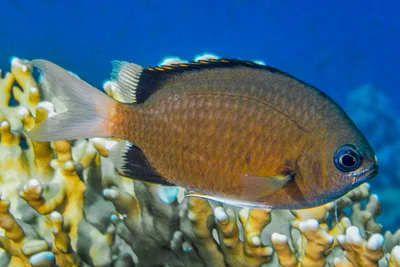
6The plankton half of the family. They hang in clouds above a coral head facing into the current, pick items out of it one at a time, and drop into the branches together at dusk or at a threat - which moves open-water food onto the reef every day. Separating the species is done on the tail and the armpit: a dark bar, a black tip, a colored patch at the base of the pectoral fin.

Dascyllus
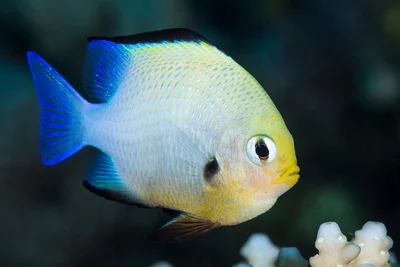
4The coral-head damsels. Each group belongs to one branching colony and never leaves it - the whole lot drops into the branches at once when something comes, which is the behavior rather than the pattern that names them. Two of the species here are visually identical and are separated by range and genetics rather than by anything you can see.
Neopomacentrus
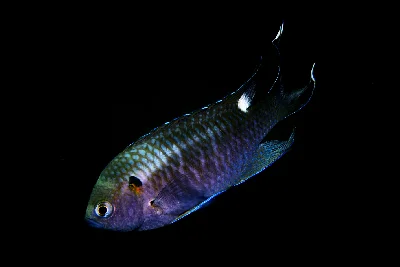
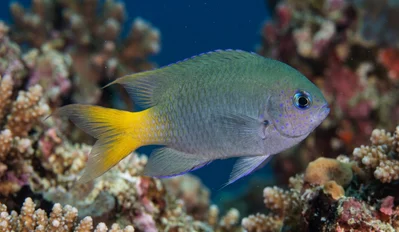
3Plankton-pickers of the mid-water, told by the tail: gray-brown fish with a clean yellow tail and yellow rear fins, hovering a meter above the bottom in loose groups rather than sitting on it.

Pomacentrus
6The largest damselfish genus here and the hardest to work with: six species of much the same size and build, separated on small differences in fin color and on a spot at the base of the pectoral fin. Most hold a small territory over rubble and dart back into it, somewhere between the farmers and the plankton-pickers.


Pycnochromis
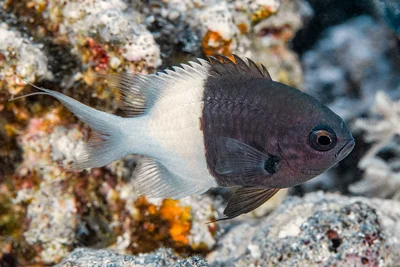
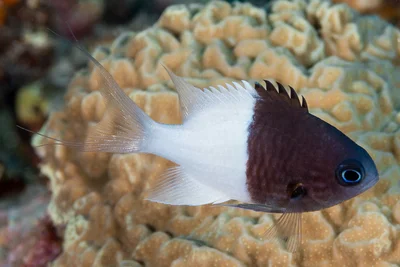
2Split out of Chromis recently, and the two species here make the split easy to remember: both are cut in half by a clean vertical line, dark in front and white behind, which no true Chromis does. Older books and photo sites still file them as Chromis.
Stegastes
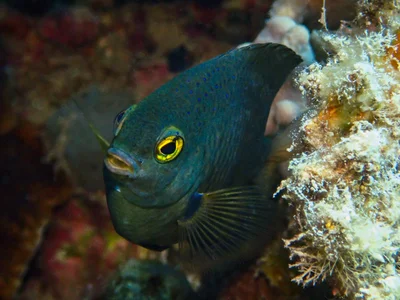
3The farmers, and the ones that charge a diver. Each fish holds about a square meter of dead coral rock, weeds it - biting out the algae it does not want and carrying them off the plot - and defends the result against everything, including animals a thousand times its size. A patch of long turf standing out from the reef around it usually has one of these over it.


Other genera
5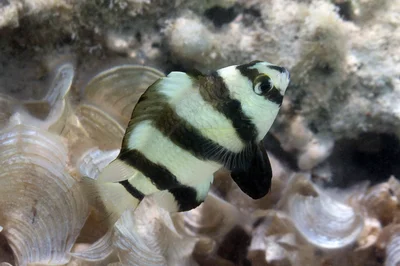


Other oval-bodied groups
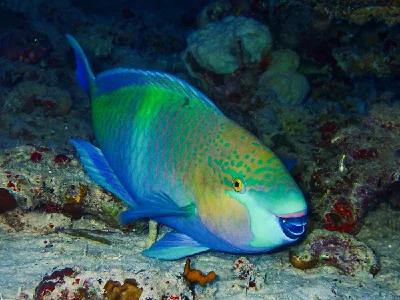
Similar silhouette underwater - worth a look if this was not your animal.



Last Update: August 23, 2026