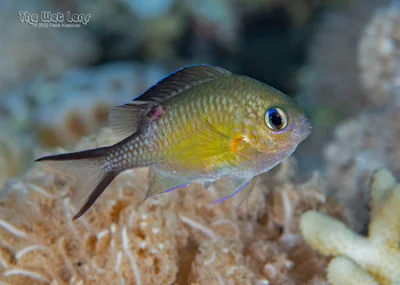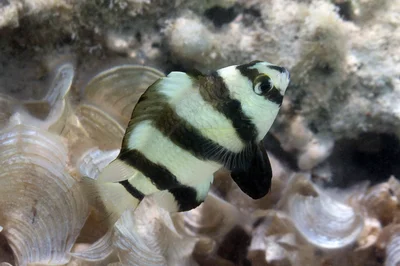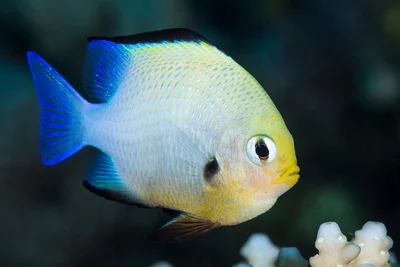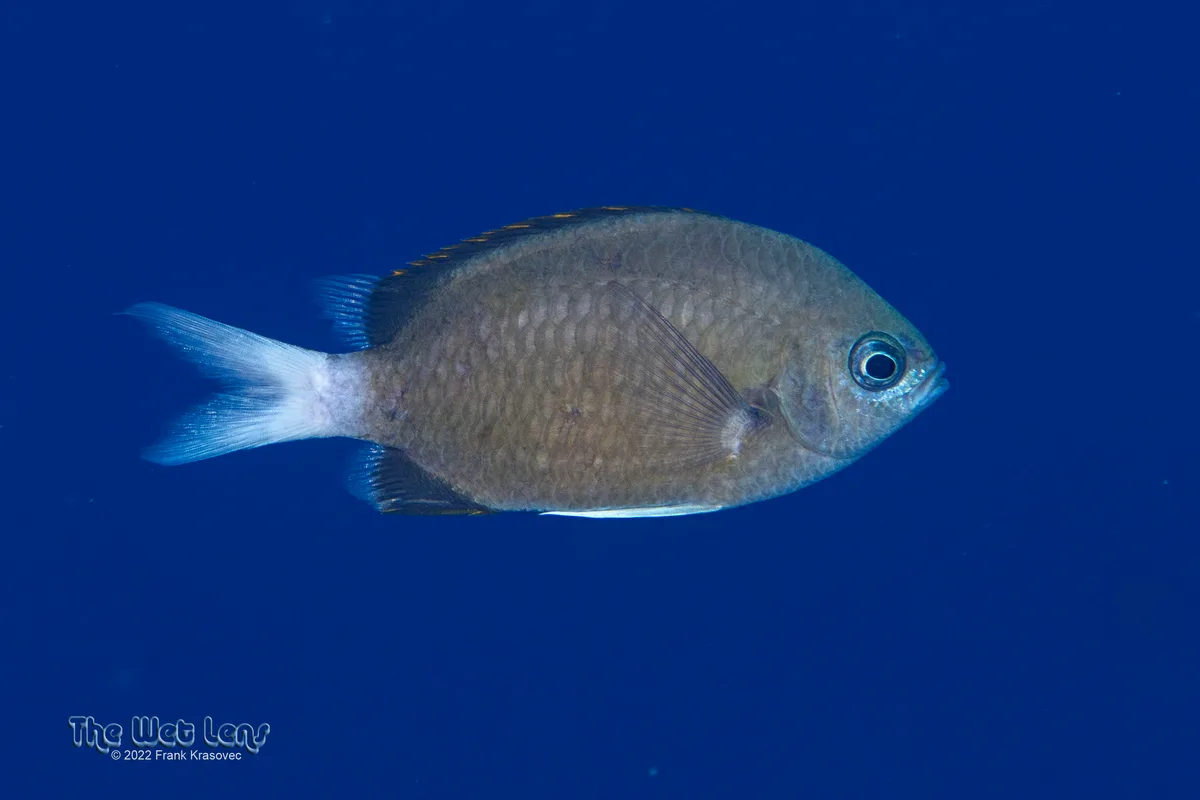
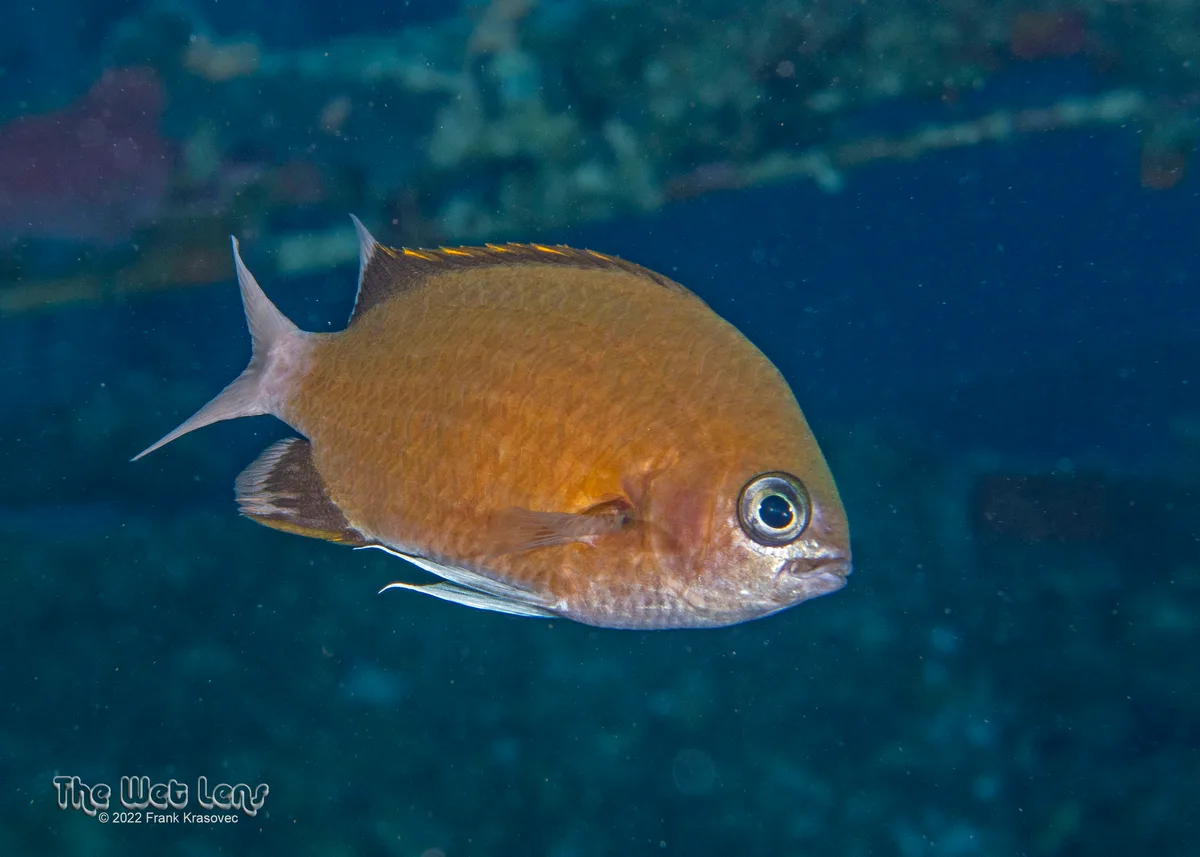
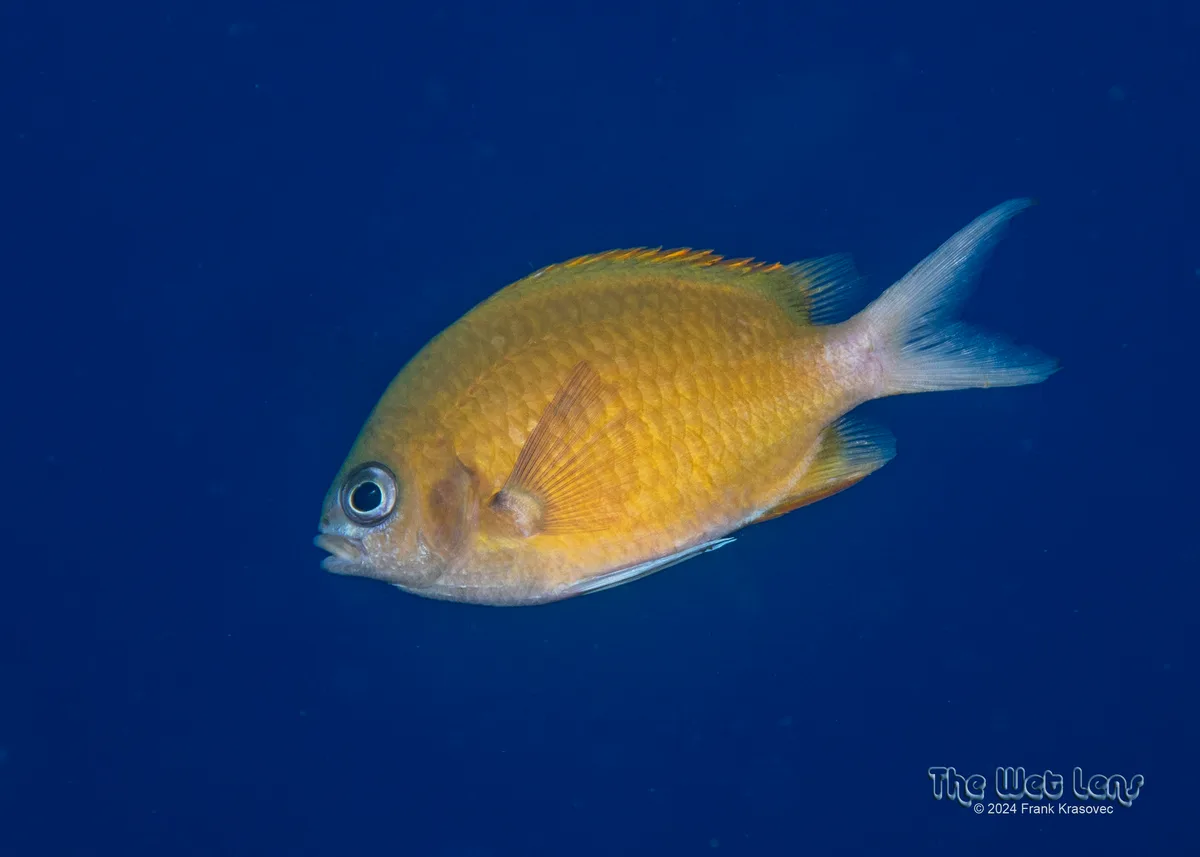
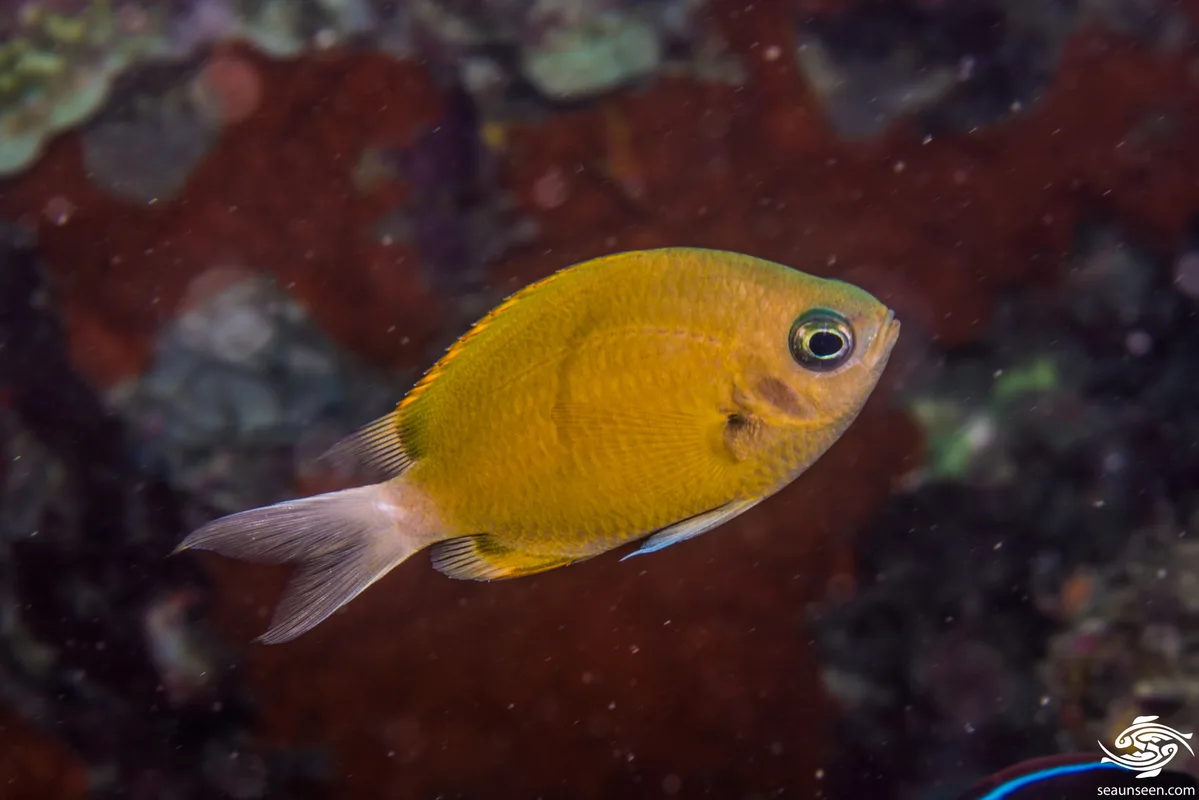
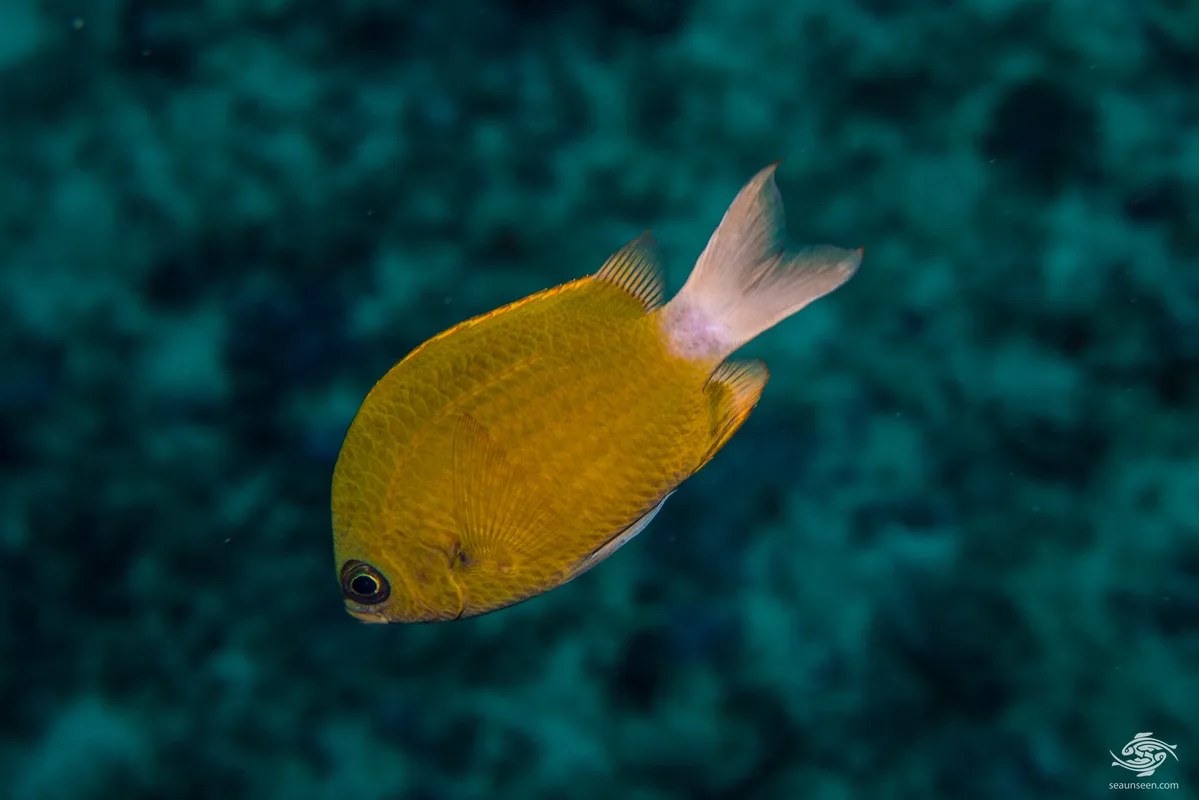
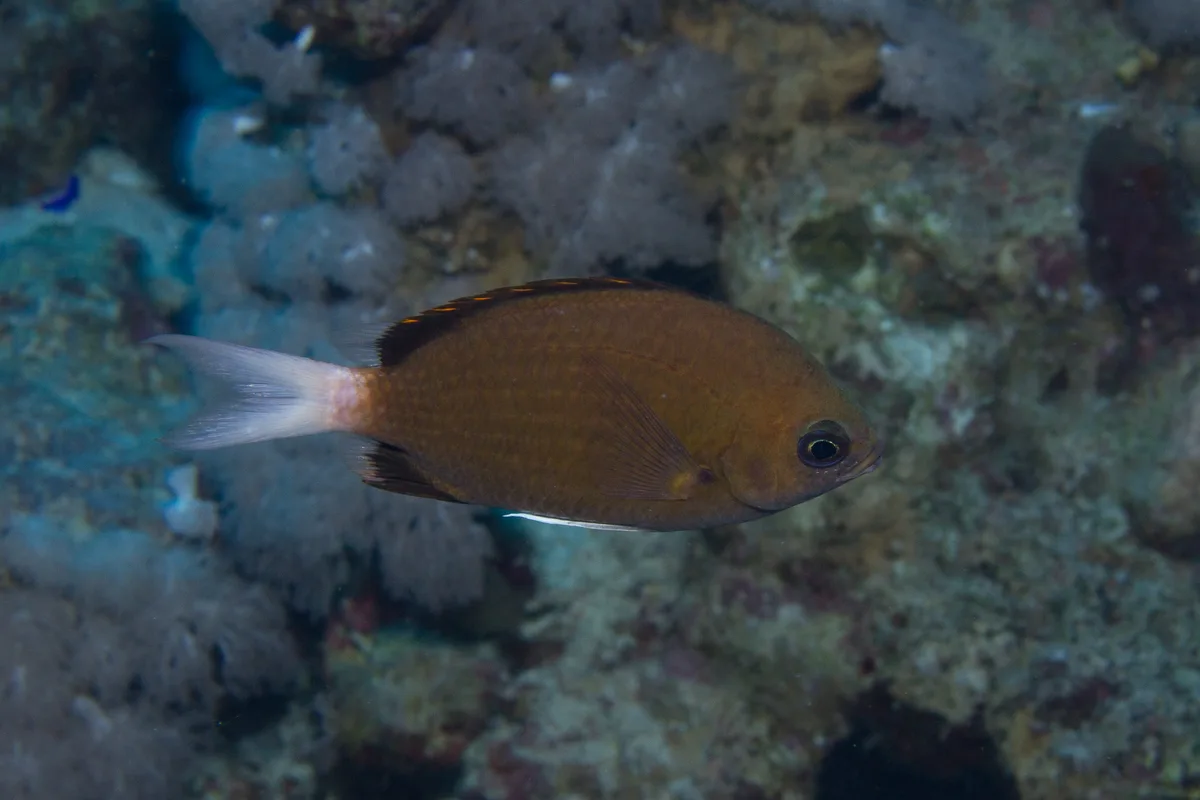
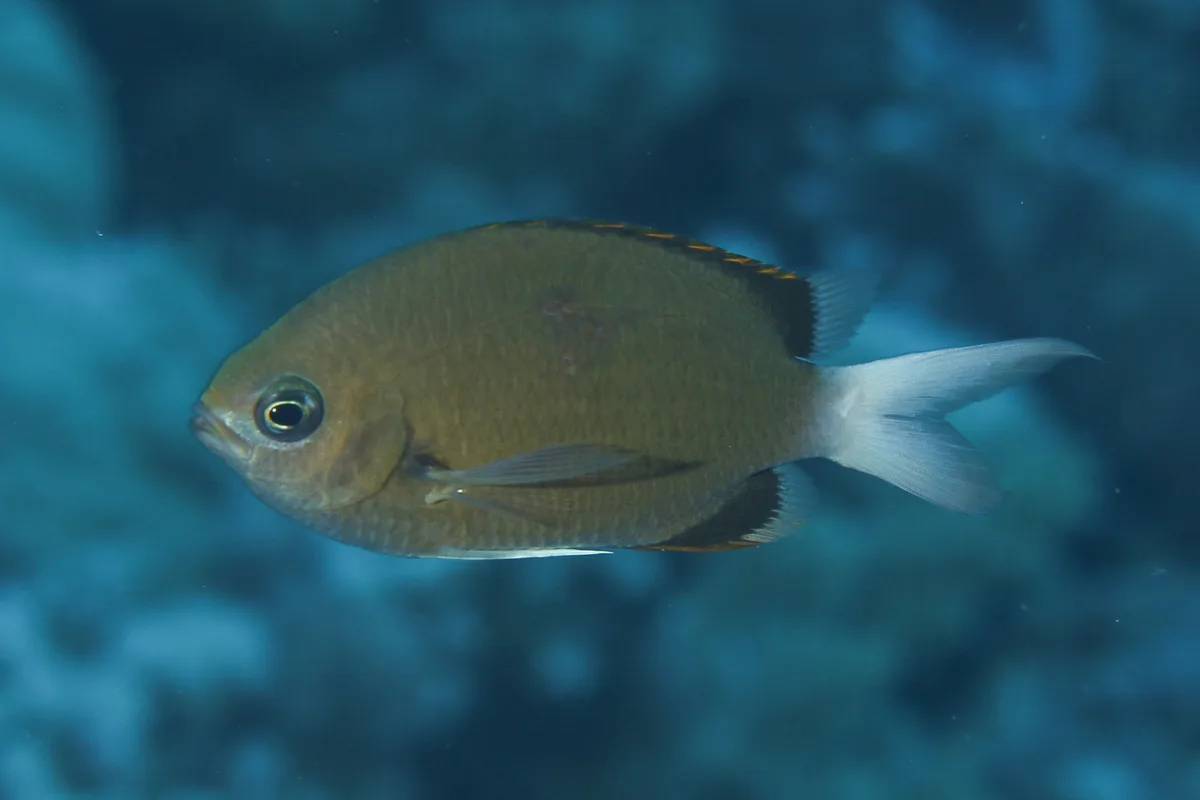
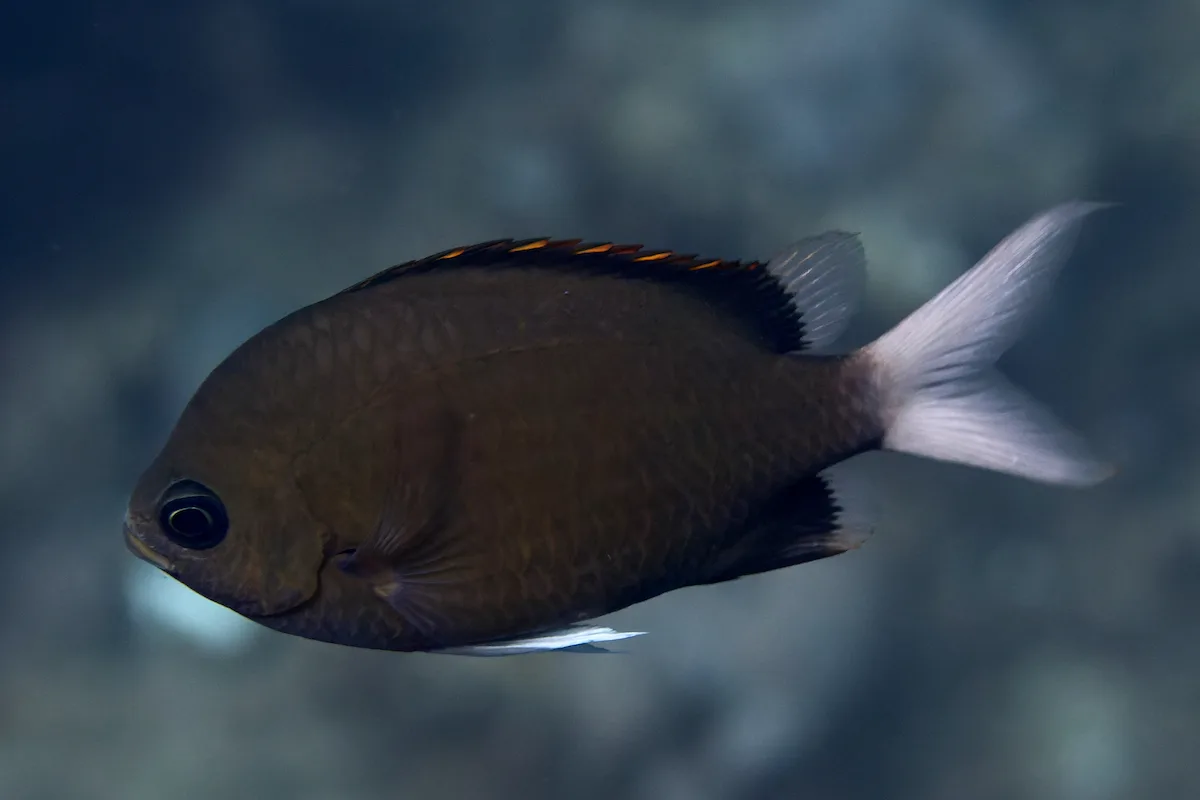
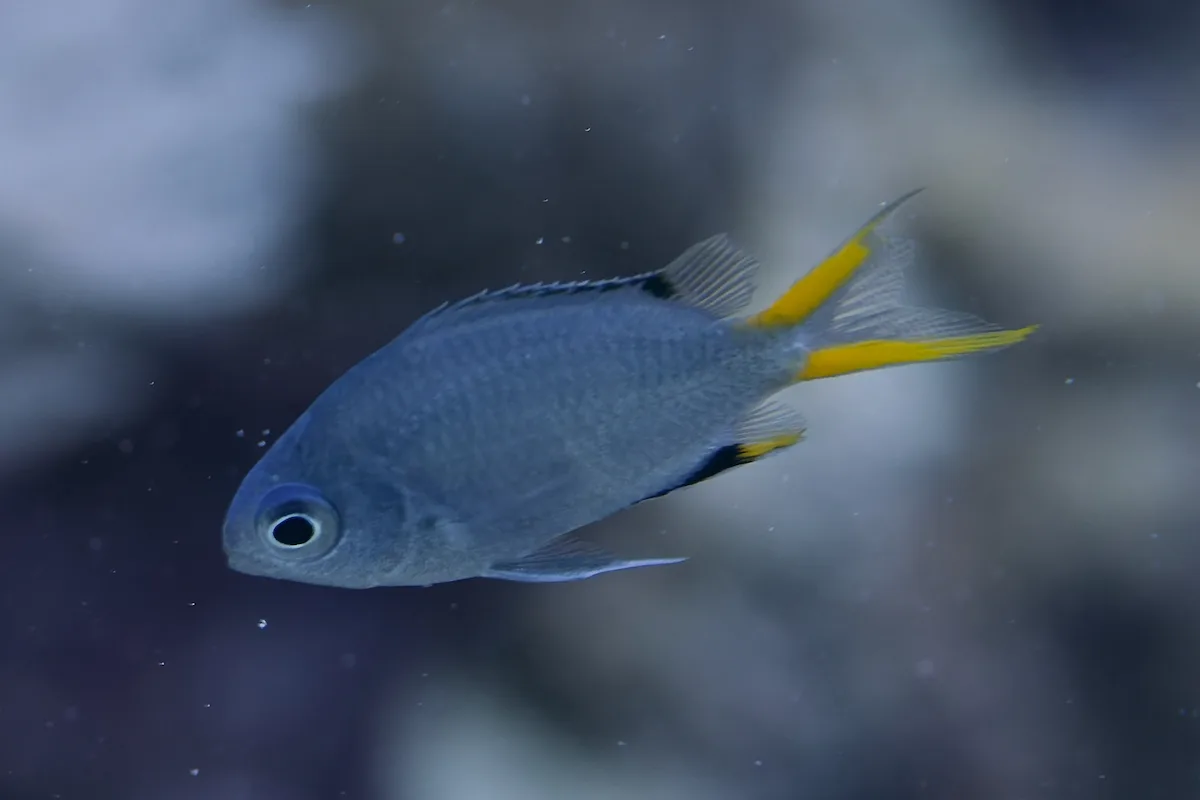
Below 20 m the red goes out of the water and every brown chromis on the wall looks like the same fish. The yellow-edge chromis is the one with a yellow line running along the edge of the dorsal fin, and at that depth you will usually need a light to see it.
It is a deep-slope species, recorded from 12 m to 50 m and most often well down, in small loose groups that hang above pinnacles and steep outer reef with shelter directly underneath. At 13 cm it is one of the larger members of a genus most people associate with fish half that size.
The feeding is the thing worth stopping for. A chromis facing into the current is not filtering: it is picking individual animals out of the drift, one at a time, a copepod here and a larval crab there, hundreds of times an hour. The whole group holds station in the flow at the same height above the rock, and when a hunter comes along the wall the entire cloud collapses into the reef at once and comes back out fish by fish.
Breeding puts the eggs on the bottom rather than into the current. The male cleans a patch of hard surface, the female sticks a layer of eggs to it, and he guards them and fans them with his pectoral fins until they hatch, at which point the larvae spend a few weeks in open water before settling back onto a reef.
J.L.B. Smith named the species in 1960 for Pemba Island off Tanzania. It occurs from the 🌊 Red Sea down the East African coast and out to 🇸🇨 Seychelles and Chagos (🇮🇴 British Indian Ocean Territory), so a 🌊 Red Sea diver is seeing it at the northern end of its range.
The species. Chromis pembae Smith 1960 - of Pemba Island. ETYFish
- dark brown body with a yellow edge along the dorsal fin
- large for a chromis, deep-bodied and heavy-looking
- small loose groups hanging above pinnacles and steep slopes
- deeper than the common shallow chromis, usually below 20 m
- up to 13 cm
Why it's threatened
Threat classification from the IUCN Red List.