
SweepersPempheridae
Some sweepers glow, and the odd part is where the chemistry comes from. Parapriacanthus, two species of which are listed here, does not build its own light. It eats ostracods, tiny crustaceans that make light for their own reasons, and takes out of them not only the fuel but the working enzyme that burns it, intact, transferred into the fish's own light organs. Animals that glow either manufacture the chemistry themselves or keep bacteria that do it for them. Borrowing a functioning enzyme from dinner was not known anywhere until this fish was looked at properly.
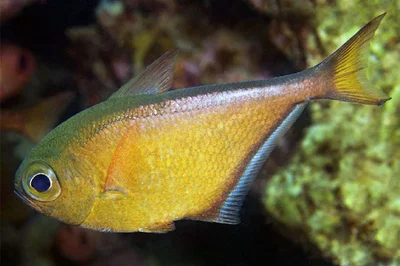
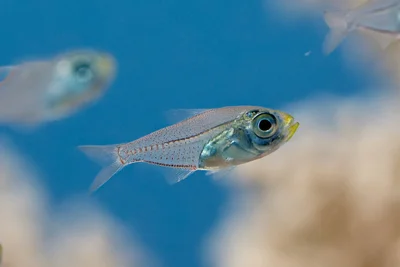
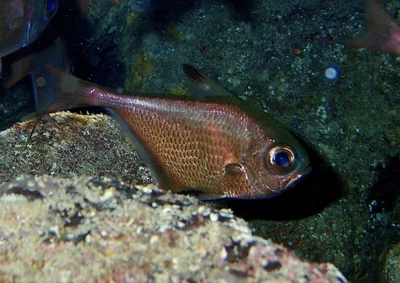
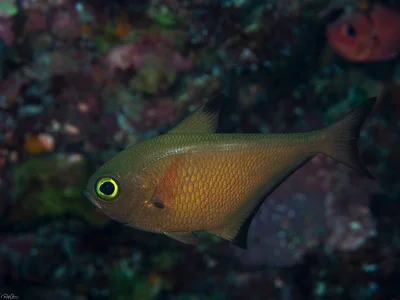
A sweeper is small, deep across the chest and thin from the side, shaped like a wedge with an eye set high on the head and far too large for daylight, and it spends the day in the dark. A cave, the underside of a big overhang, the hold of a wreck. The school packs into that space and holds formation inside it, the same overhang year after year, facing one way in light barely sufficient to see by. This is not idling. The spacing between fish is maintained continuously, which is the only reason several hundred animals in a confined space can move at once without touching.
At dusk the whole thing empties. The school breaks up over open reef and open water and spends the night picking plankton out of the dark one item at a time, and is back inside before it is properly light. A coral reef sits in water with very little in it, and sweepers are one of the pipes: food caught out in the blue after dark ends up as waste on the roof of a cave where the reef can use it.
Seven species are listed for this sea and telling them apart underwater is close to hopeless, a dark edge on the anal fin, a spot on the dorsal, a difference of tone between copper and silver.
- oval, deep-bodied, laterally compressed
- typically silvery body coloration
- very large eyes
- short dorsal fin and long anal fin
- dense schools in caves or under overhangs
7 species in Sweepers



Other oval-bodied groups
Similar silhouette underwater - worth a look if this was not your animal.




Last Update: August 23, 2026