Reefs & wrecks

Red Sea Dive Sites

Browse the Red Sea's coral reefs and historic wrecks — search, filter and explore them on the map.

Get your Divevolk housing with 6% discount
Affiliate partner
39 sites
El Fanadir North dive site mapReef25 m

El Fanadir North

Hurghada4.0

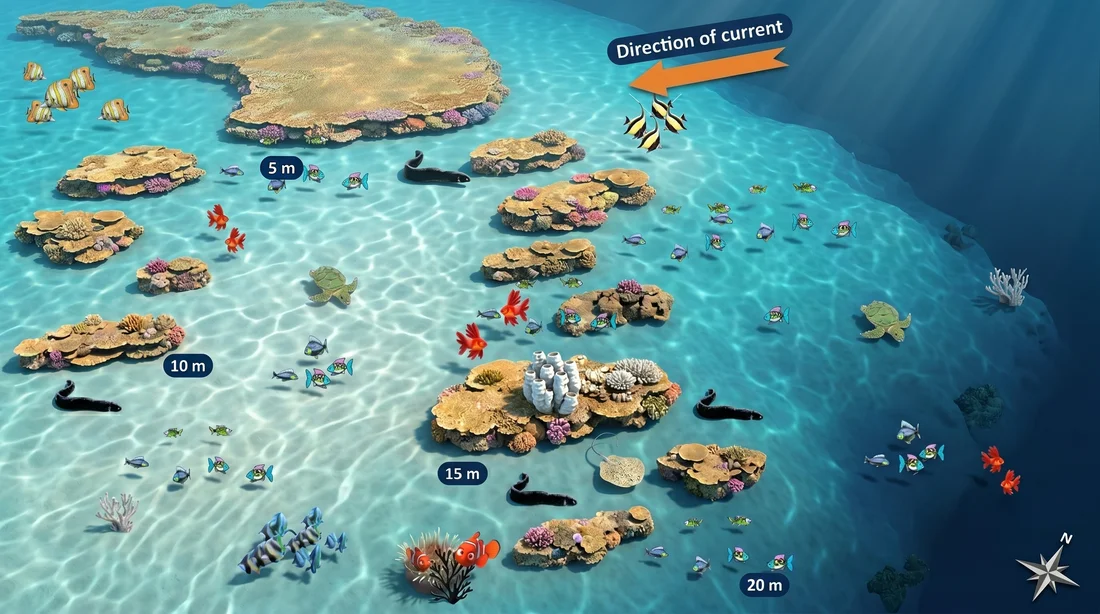
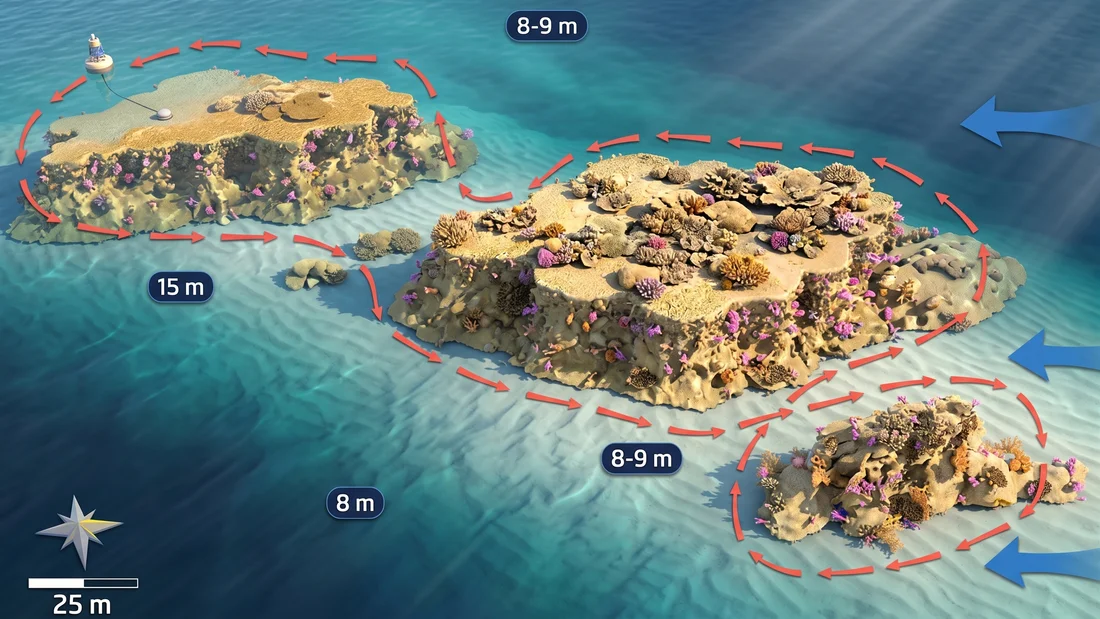
Fanadir is a long narrow reef just north of Hurghada. It can be dived on the south end, on the east side or in good weather, on the north end. The illustration shows the east side, which is the most popular as it is protected from the wearher by a slight curve in the reef. It is marked by 4 low lying rocky islets. A shallow hard coral wall slopes(at about 60°) to a sandy ledge at 12m. This sandy ledge is about 50m wide and narrows as you head northwards. At 20-25m, it drops off to greater depth. **Sea Conditions:** Current comes from the north and is usually mild. The south end and east side are protected from northerly or northwesterly winds (most of the time). **Dive Plan:** The drop-off is naturally sandy, devoid of coral and fairly depressing. Don't waste your time here, you should be shallow, heading out at 12-15m and returning at 3-4m. In fact, the shallower the better. There is a small but very photogenic coral block at 14m and just north of the islets. It has glassfish, cardinal fish, soft corals, etc. and usually a resident stonefish. 100m north of here are some impressive gorgonians. **Marine Life:** This place is crawling with pipefish. They must provide food for the stonefish, scorpionnsh and hump-back scorpionfish which abound. If you had to choose any one site to look for stonefish, this should be it. Near the surface is teeming with silversides and occasionally small packs of tuna and jacks cruise by hunting them. Other residents include snowflake morays, yellow mouth morays, octopus and lots of lionfish. There have also been reports of frogfish, guitar sharks, mantas, and even a hammerhead at this site.

ExpertWall
El Fanadir South dive site mapReef25 m

El Fanadir South

Hurghada3.0

Fanadir is a long narrow reef just north of Hurghada. It can be dived on the south end, on the east side or in good weather, on the north end. The illustration shows the east side, which is the most popular as it is protected from the weather by a slight curve in the reef. It is marked by 4 low lying rocky islets. A shallow hard coral wall slopes (at about 60°) to a sandy ledge at 12m. This sandy ledge is about 50m wide and narrows as you head northwards. At 20-25m, it drops off to greater depth. **Sea Conditions:** Current comes from the north and is usually mild. The south end and east side are protected from northerly or northwesterly winds (most of the time). **Dive Plan:** The drop-off is naturally sandy, devoid of coral and fairly depressing. Don't waste your time here, you should be shallow, heading out at 12-15m and returning at 3-4m. In fact, the shallower the better. There is a small but very photogenic coral block at 14m and just north of the islets. It has glassfish, cardinal fish, soft corals, etc. and usually a resident stonefish. 100m north of here are some impressive gorgonians. **Marine Life:** This place is crawling with pipefish. They must provide food for the stonefish, scorpionfish and hump-back scorpionfish which abound. If you had to choose any one site to look for stonefish, this should be it. Near the surface is teeming with silversides and occasionally small packs of tuna and jacks cruise by hunting them. Other residents include snowflake morays, yellow mouth morays, octopus and lots of lionfish. There have also been reports of frogfish, guitar sharks, mantas, and even a hammerhead at this site.

Advanced
Erg Somaya location map
Reef

Erg Somaya

Hurghada

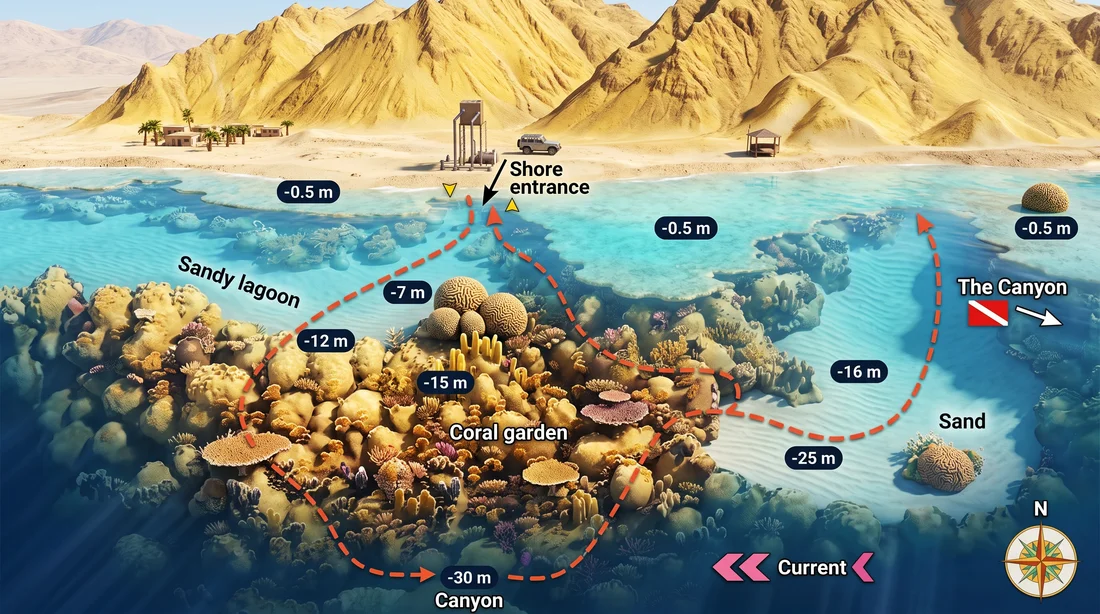
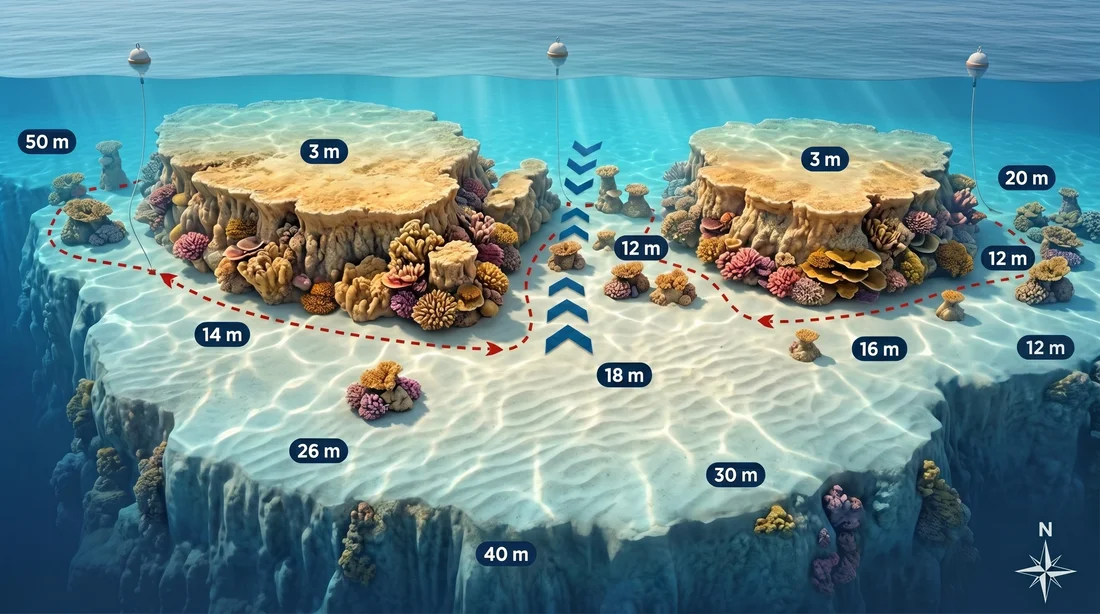
http://www.redseariviera.info/en/To-Know/Erg-Somaya Location - About 75 minutes outside Hurghada, on the east side of Giftun Soraya, is Erg Somaya. To the south is the tower of Giftun police station, to the north is a prominent ridge of mountain. The reef slopes steeply to a sandy ledge between 15m and 24m, beyond which it drops o 50m+. There are two pinnacles on the ledge. One between 18m and 10m has a mooring buoy attached. To the north between 20m and 12m is another shaped like a pyramid and overgrown with a thick crop of purple soft corals. Beneath the ledge and between the two ergs is a distinct nose with two caves at 25m and 32m joining to form a chimney. Sea Conditions - The moorings are very close to the reef so in rough weather it can be difficult to put a boat there. The area is ravaged by a strong current much of the time in which case it is easier to drift dive. Dive Plan - If you choose to drift then jump in to the north and surface at the boat which waits on the moorings. Alternatively, the site connects with "Small Giftun drift." So drop in at the moorings and follow the wall southwards until you reach the south plateau of Small Giftun. Leave the drop-off and head to the shallow reef. Shortly after you round the corner you will start to sec the moorings, your boat should be waiting on one of these, Whichever way you dive it, make sure you visit the cave to be hypnotised by the billowing curtain of glassfish. Go through only if you're experienced enough and take your time along the drop-off to admire the deep rich colors of soft corals and the gorgonians. Marine Life - Batfish, barracuda, tuna, jackftsh, Spanish mackerel, napoleons, morays, tunics, groupers, and if you're lucky, whitetips. Feeding on glassfish in the cave, lionfish and redmouth groupers. You can also find Spanish dancers here by daylight.

All levels
Hamda dive site mapReef50 m

Hamda

Hurghada

Hamda, nestled on the northeast side of the Big Giftun Island, is approximately an hour's boat ride from Hurghada. It's tucked beneath several striking rock formations and overlooks a pristine white pebble beach. This small plateau, ranging from 15 to 35 meters in depth, is flanked by drop-offs on both sides, merging into a steep wall that easily extends to a depth of 50 meters. Currents at Hamda are typically mild, making it accessible for divers of all skill levels. However, if you're planning a drift dive at Hamda, it's recommended that you have some experience under your belt. Renowned as a cleaning station, Hamda regularly sees small skids awaiting larger species to come for cleaning. The dive commences at a large, green, winding crater coral. As you head north, you'll encounter two expansive sandy areas, one at 15 meters and another at 18 meters. A little further, the steep wall begins, offering an intriguing glimpse into the deep blue. On your return, you'll ascend to the shallow area at a depth of 3 to 4 meters. Hamda is enveloped in vibrant, colourful corals, making it a diving spot that's not to be missed. The primary hub of underwater life at Hamda lies above 15 meters, where you'll primarily observe a variety of reef fish, nestled among the diverse soft and hard coral species that adorn the wall. The plateau is home to a host of marine life, including moray eels, stonefish, scorpionfish, barracuda, and occasionally, sharks and turtles. Above the plateau, schools of Fusiliers, snappers, and triggerfish can be spotted. Venturing into the open water may yield sightings of triggerfish, jacks, barracudas, tuna, turtles, and if you're lucky, reef sharks. Whale sharks have also been reported in the vicinity of Hamda. If you opt for a drift dive at Hamda, starting from the north is advisable. The wall along the way boasts several captivating coral formations.

ExpertWall
Marsa Abu Galawa location map
Reef

Marsa Abu Galawa

Hurghada

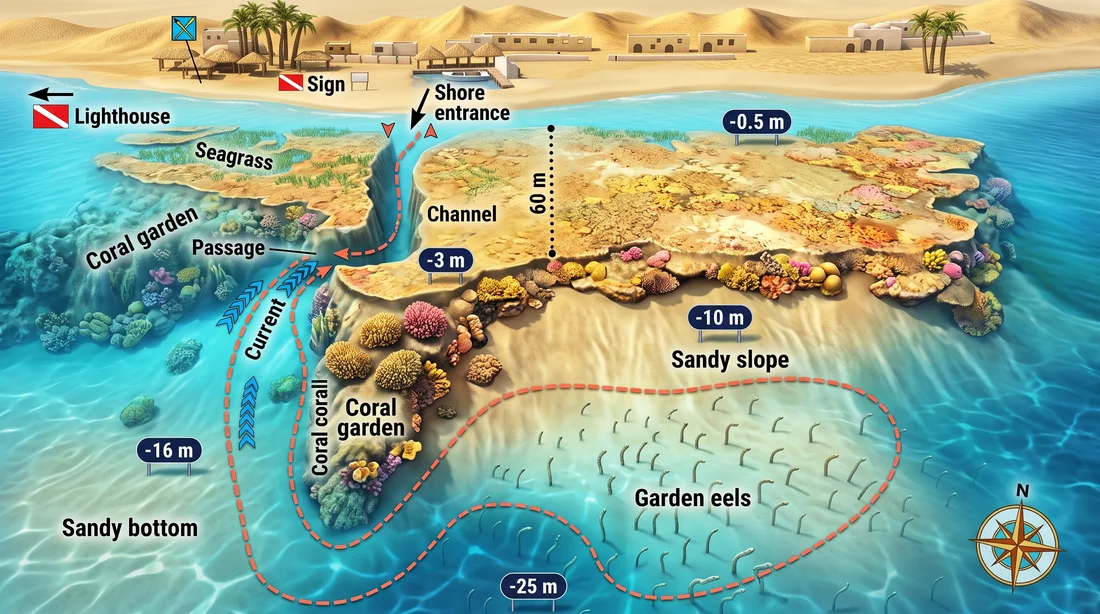
Abu Galawa, situated in the dive region north of Hurghada, boasts six distinct dive sites: Abu Galawa, Shaab Abu Galawa, Sachwat Abu Galawa, Habibi Abu Galawa, Gota Abu Galawa, and Marsa Abu Galawa. It's approximately an hour's sail from Hurghada. Our focus is on diving at Marsa Abu Galawa. The diverse topography of the reef complex makes Marsa Abu Galawa a suitable dive site for divers of all levels. The mooring point is conveniently located at the entrance of the lagoon. Although the lagoon is around 5 meters deep and hosts a seagrass bed and a few seahorses, there isn't much to see on the sandy floor. You'll start your dive exploring a coral block, home to several stonefish. As you approach the drop-off, you'll be greeted by stunning table corals. The closer you get to the drop-off, the more diverse marine life you'll encounter. The edge of the drop-off, at a depth of 16 meters, features small hard coral pinnacles cascading down the slope. A bit further north, you can find an eel garden at around 14 meters. Don't overlook the reef's shallow part. On your way back to the boat, follow the reef wall at a more manageable depth of 9 meters. Expect to see bass, moray eels, scorpionfish, and small caves teeming with glassfish. You'll also find a variety of hard corals here, some boasting extraordinary colors. Though sandy and sloping down to the drop-off, careful exploration of this area can reveal hidden treasures. The site is always bustling with schools of vibrant fish. Turtles, moray eels, and groupers are also frequently spotted here. Two distinct diving routes can be taken at Marsa Abu Galawa. The first route takes you south along a smaller reef, past an old lobster cage and a garden, across the plateau and back to the boat via the ridge. Alternatively, you can head straight for the plateau's ridge, then return to the reef over the plateau, home to its eel garden.

All levels
MS Balena dive site mapWreck9 m

MS Balena

Hurghada

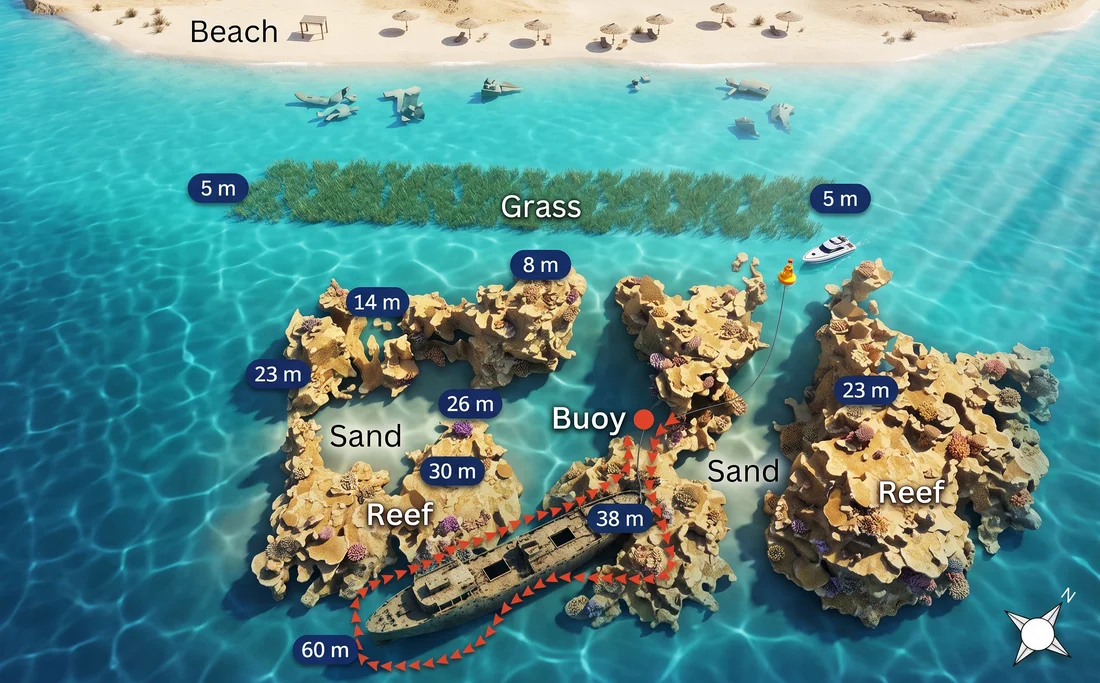
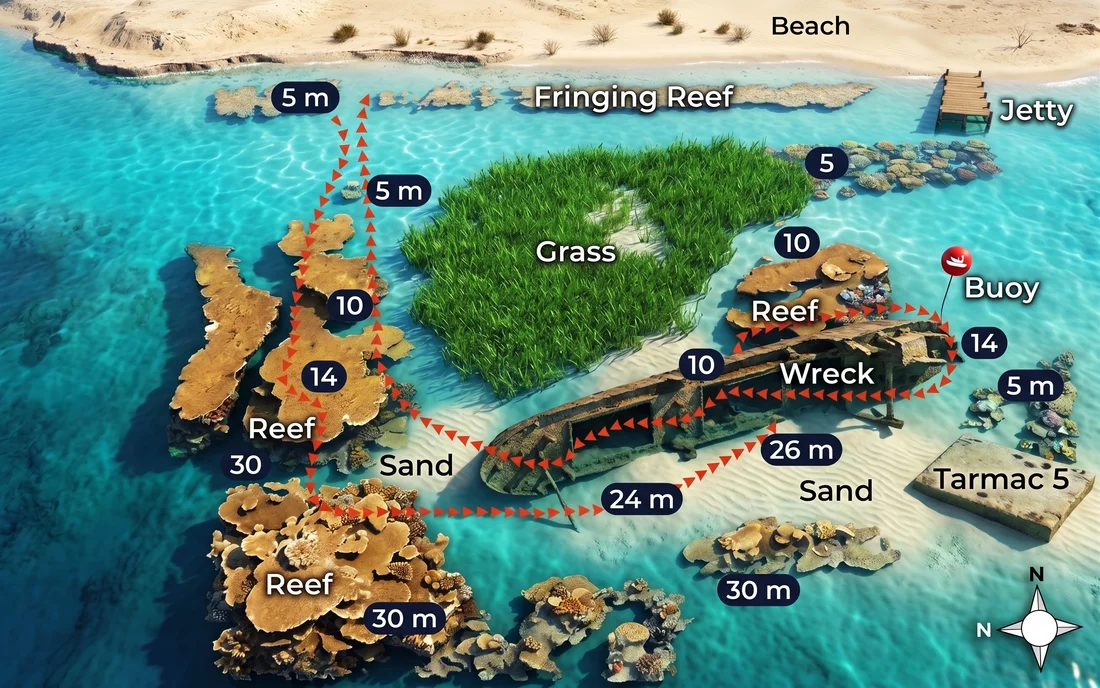
The MS Balena, measuring 40 meters in length and 7 meters in width, is a former liveaboard vessel that sank in 2001 near Hurghada, mere hundreds of meters from the shoreline. Originally constructed in Norway as a mail ship in 1952, it underwent conversion into a liveaboard during the 1990s after being transported to Egypt under new ownership. By 1999, with another change in ownership, the vessel had significantly deteriorated and was not adequately maintained by the newly established diving travel company. Consequently, it was anchored in close proximity to the Giftun Village Hotel in Hurghada, where it succumbed to rust and neglect. By early April 2001, the hull had started to lean, and during the night of April 12th to 13th, a sudden fire erupted, causing the ship to sink to a depth of merely 9 meters in the sandy bottom. Despite investigations, the exact cause of the fire remained inconclusive, leading to speculation about potential insurance fraud. Presently, the wreck stands erect on a level keel and has become a popular attraction for both divers and snorkelers. Visible from the water's surface due to certain protruding structures, the upper deck is easily accessible for snorkeling. The wreck has become a thriving ecosystem, teeming with an abundance of marine life, thriving particularly in the nutrient-rich waters near the beach. Though visibility may be somewhat obscured, imparting a mystical allure to the dive, the wreck hosts an array of marine species. Large schools of garfish, often accompanied by smaller barracudas, frequent the area. The sandy bottom is home to numerous jellyfish and blue spotted rays. Exploring the protruding stern, the propeller, and the rudder system reveals small gray moray eels and an assortment of vibrant nudibranchs across the wreck. Colorful soft corals adorn the walls and railings, offering sanctuary to various boxfish and puffer fish. The majority of the wreck is conducive to safe diving, with the shallow depth allowing for thorough exploration of each individual deck.

Advanced
Ras Disha dive site mapReef

Ras Disha

Hurghada

Here at this fringing reef in the Red Sea near Hurghada you have a real fish tank feel with the presence of large groupers, tuna and barracuda. Ras Disha is also known by the name of Torfa Ras Disha or Disha Malagk. It’s situated 90 minutes from central Hurghada, Sheltered from the wind in a natural bay, it’s suitable for any level of diver and ideal for drift dives. Ras Disha stands for ‘fringing reef’. Ras Disha is a shallow plateau with a sandy bottom. The bottom is profiled by pinnacles and an elliptical erg in the southern region of the site. Going northwest, this plateau takes on the shape of a narrow ledge, allowing access to a steep wall. The beacon on the main reef serves as a landmark to start drifting along the wall to the north. You will be rewarded with a picturesque display of pinnacles on the plateau. Your other bet is diving from the mooring network. You start by touring to the drop-off. Subsequently you do a lap describing a half circle hovering over the plateau. In the process you will pass the mentioned pinnacles. One pinnacle specifally, the one that lies closest to the main reef, is particularly photogenetic. The wall is the place to be for butterflyfish and bannerfish, paired with surgeonfish and parrotfish. The local sandbed is infested with residential marine life. Hiding crustaceans and other invertebrates are hunted by frantically digging moses sole, blue spotted rays and torpedo rays. Gobies and shrimps are on the lookout from their burrows. The pinnacles at Ras Disha are punctuated with cracks. Together with caverns bursting with glassfish they provide excellent photograpic momentums, having focus on glassfish hunters such as scorpionfish, stonefish, trevally, lionfish and groupers. Adding to fishtank feelings are bluespotted stingrays, octopuses, threatfin breams and roaming turtles. The main reef of this system is home to residential crocodilefish, lionfish, grouper, soft and hard coral. When dropping off, you will detect groupers, tuna and barracuda. On the plateau moray, stonefish and table corals are awaiting. Sightings of turtles and reef sharks have been reported.

AdvancedDrift
Shaab Petra location map
Reef

Shaab Petra

Hurghada

В 45 минутах езды на юго-восток от Хургады есть два эрга, стоящих на песчаном морском дне на глубине 8 метров. Восточнее этих эргов есть небольшое коралловое вкрапление (лучшая часть дайва). Sea condition. Обычно спокойно, течение слабое с северо-запада или северо-востока. Но зимой и весной течение может усиливаться. Dive plan. Поплавай вокруг восточного эрга и близлежащего кораллового валуна. Этот валун просто кишит жизнью и производит сильное впечатление даже на самых пресытившихся дайверов. Marine life. На коралловом валуне есть несколько крупных отверстий, в которых живут стеклянные рыбки и люцианы. Сверху кишат рыбы-бабочки и крошечные султанки. Основные эрги не так интересны, но на них есть разнообразные крупные отверстия – домики групперов, рыб-солдатов, кардиналов, стеклянных рыбок и люцианов. Здесь не раз была замечена леопардовая акула. (zebra or leopard shark)

All levels
Maps © Stadia Maps · © OpenMapTiles · © OpenStreetMap