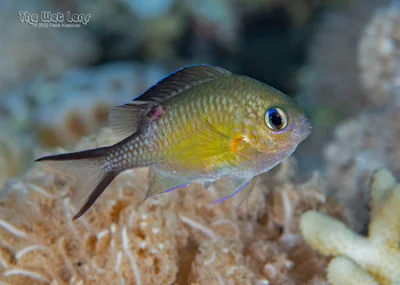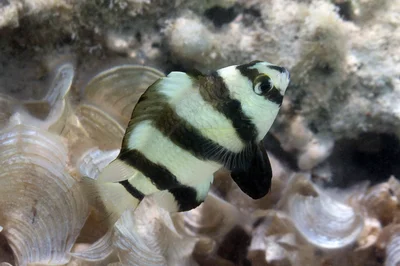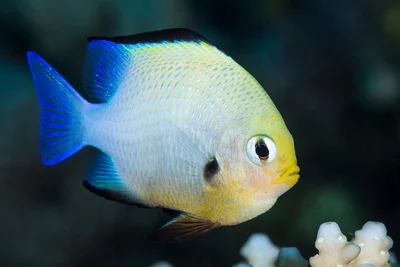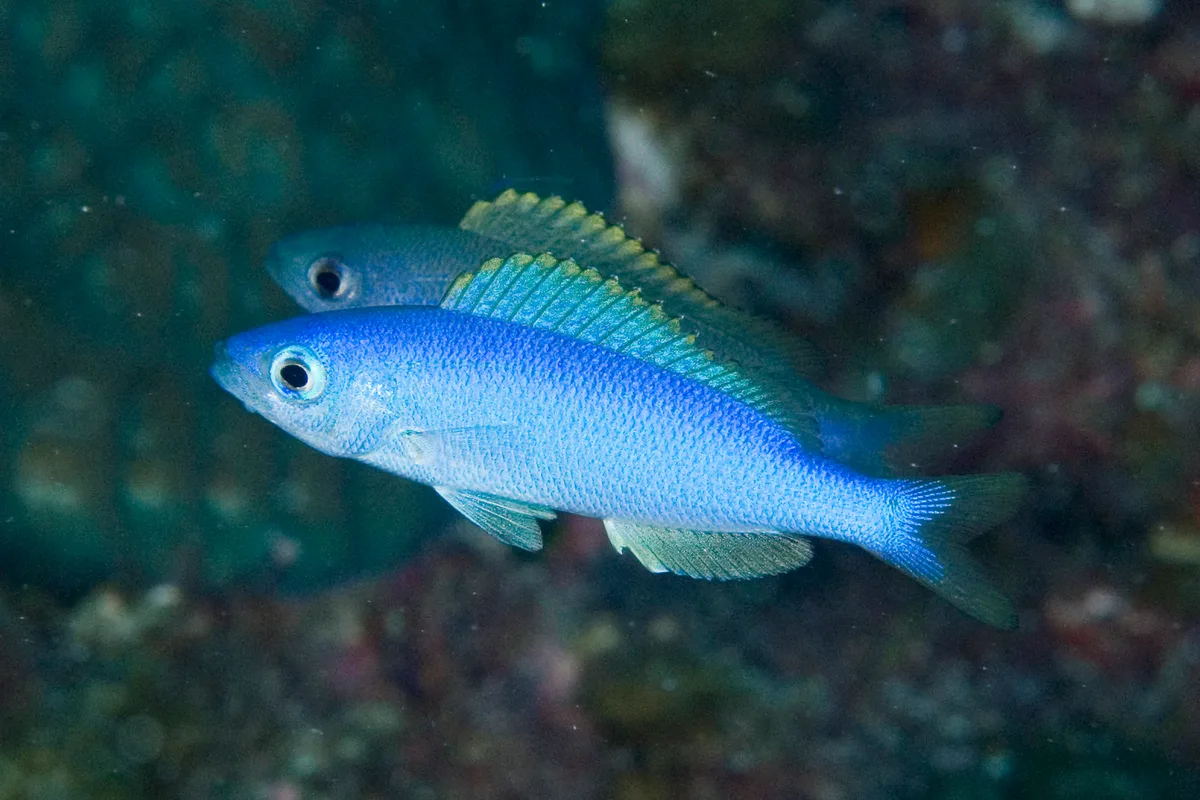
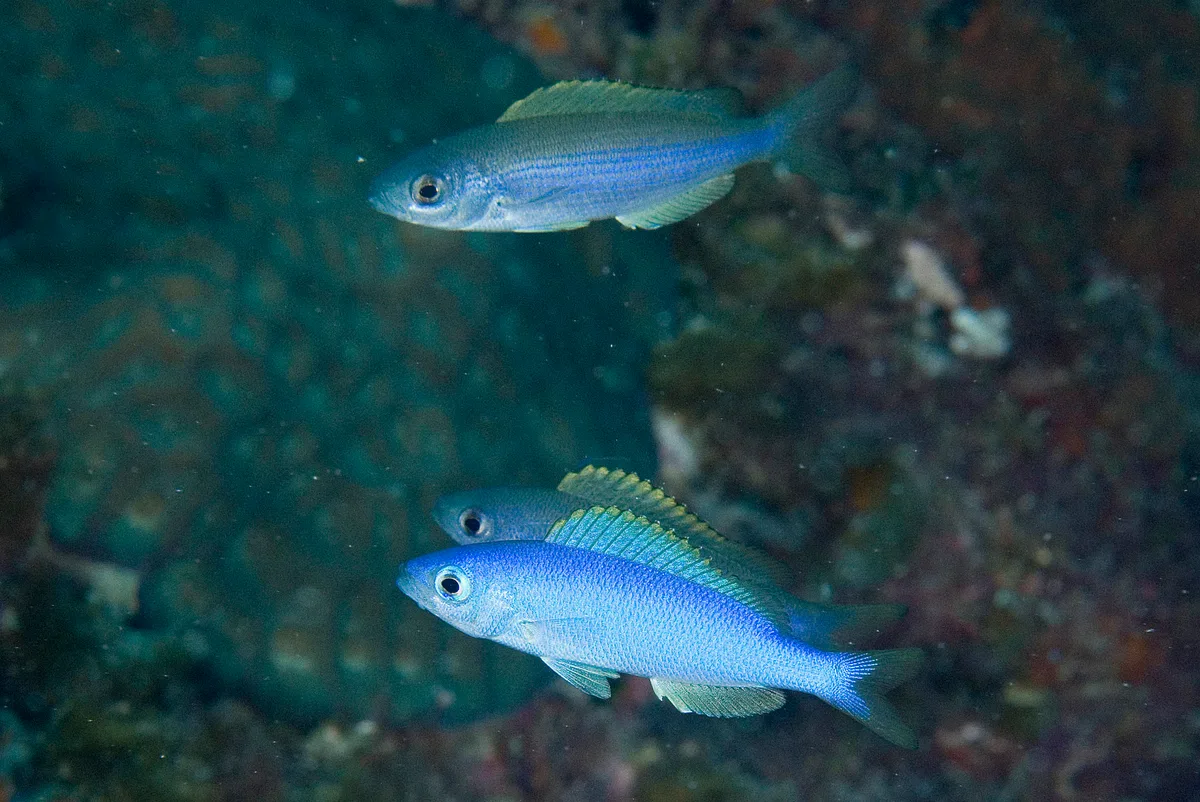
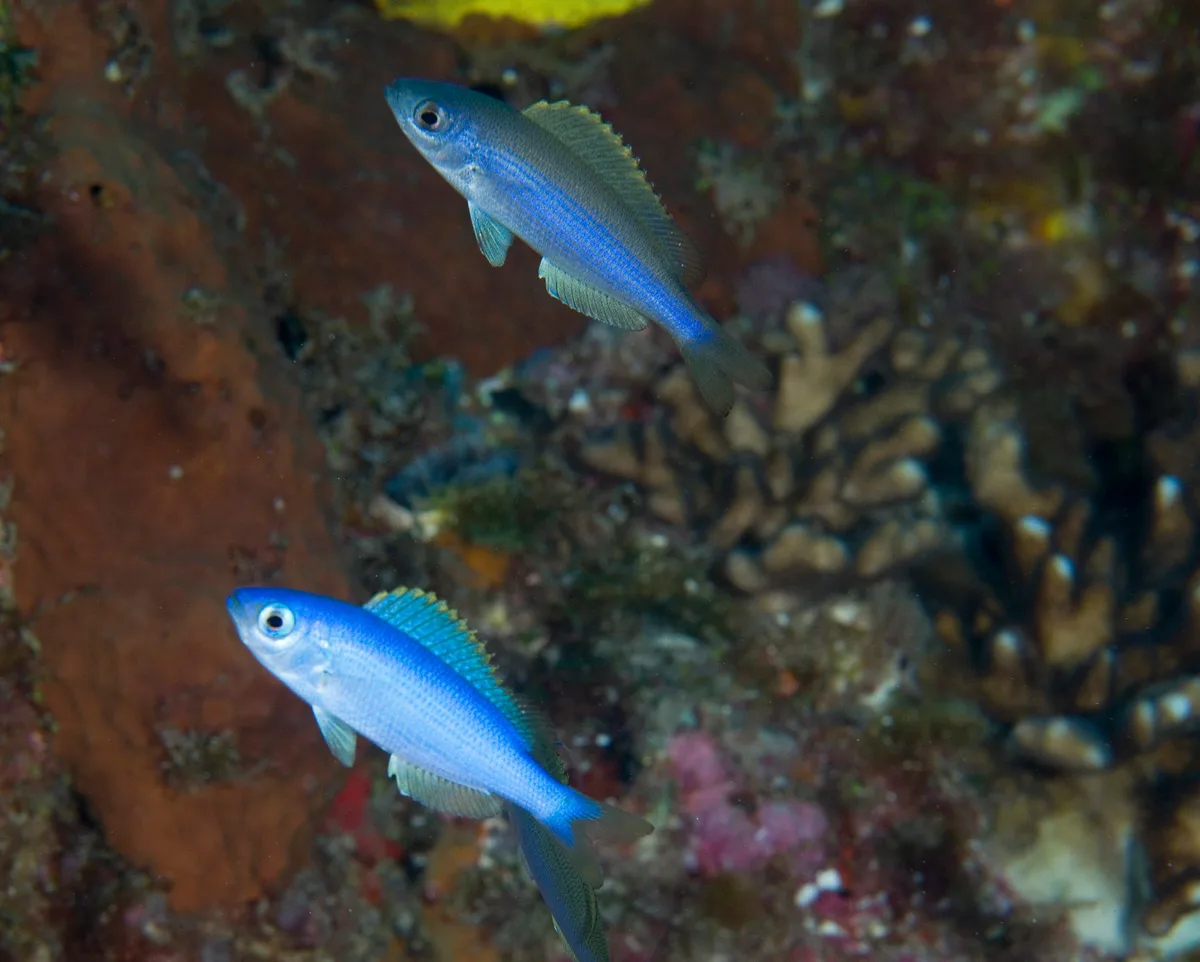
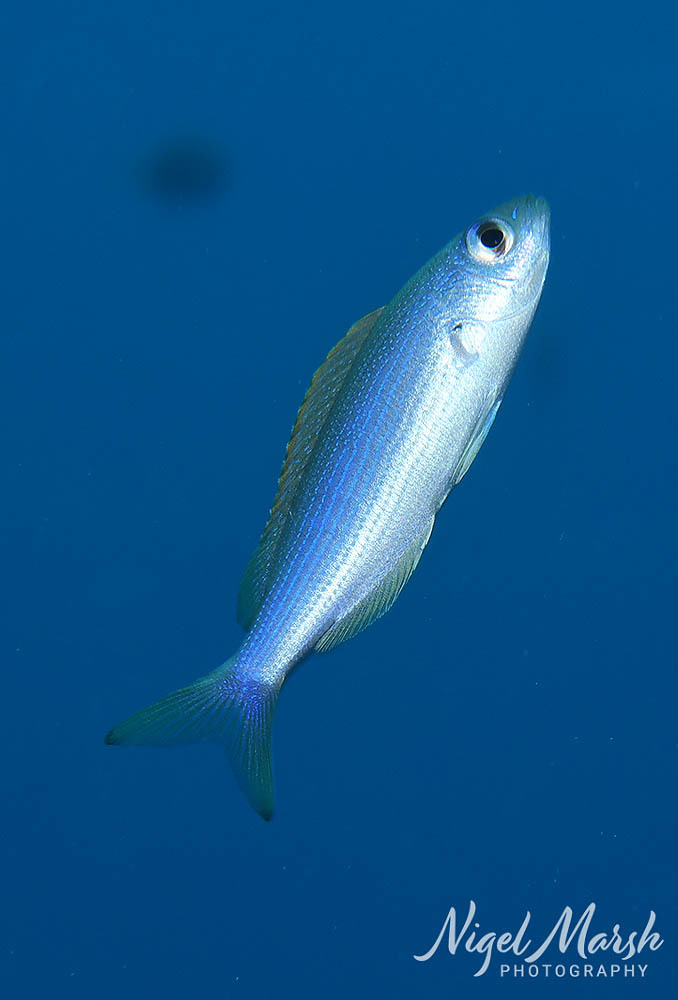
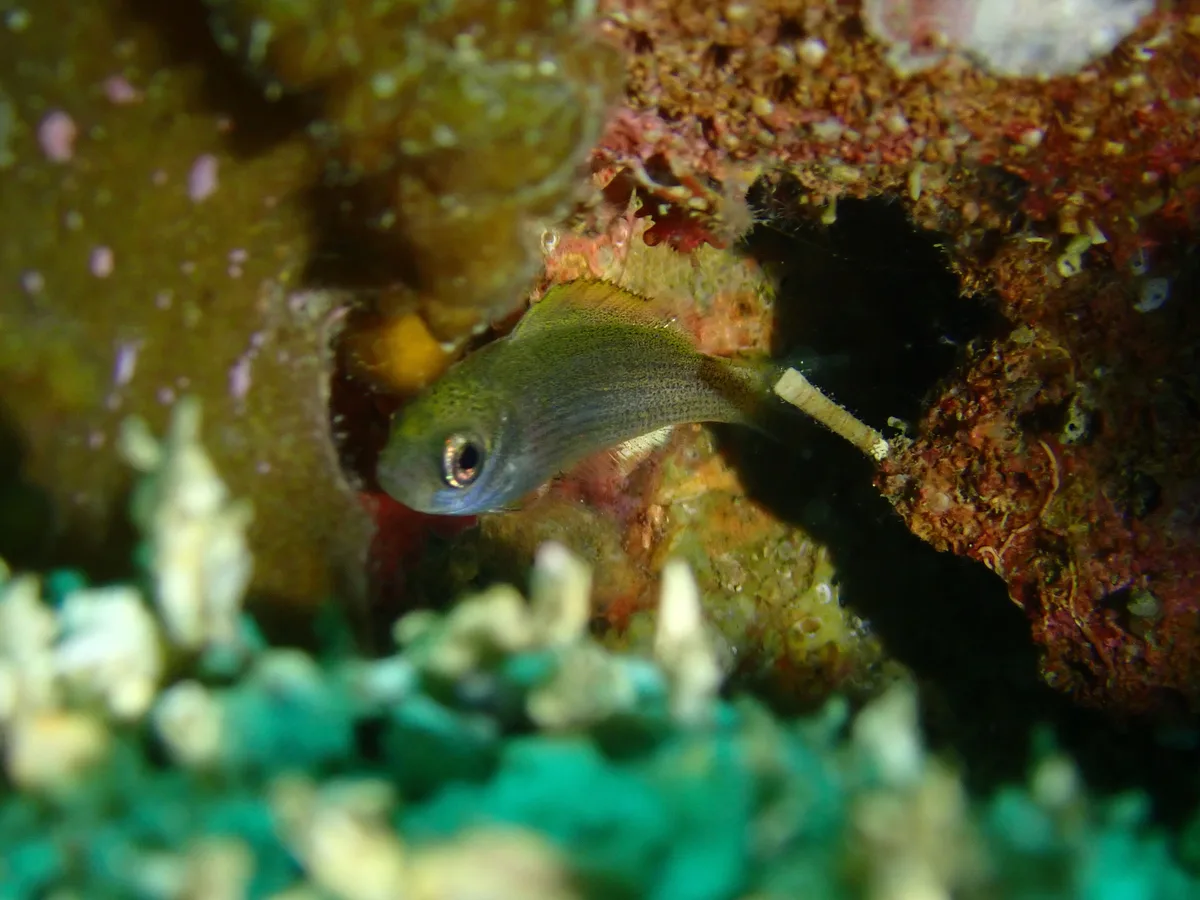
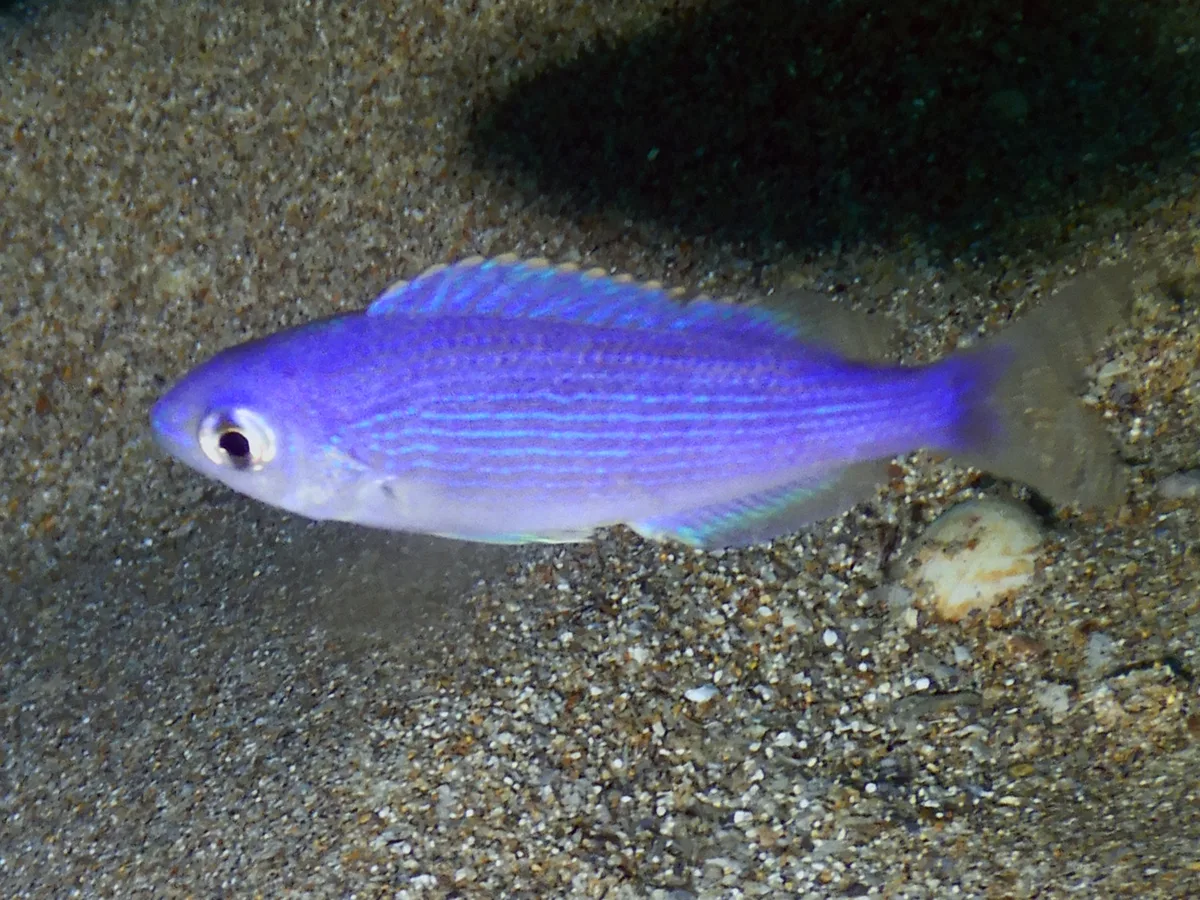
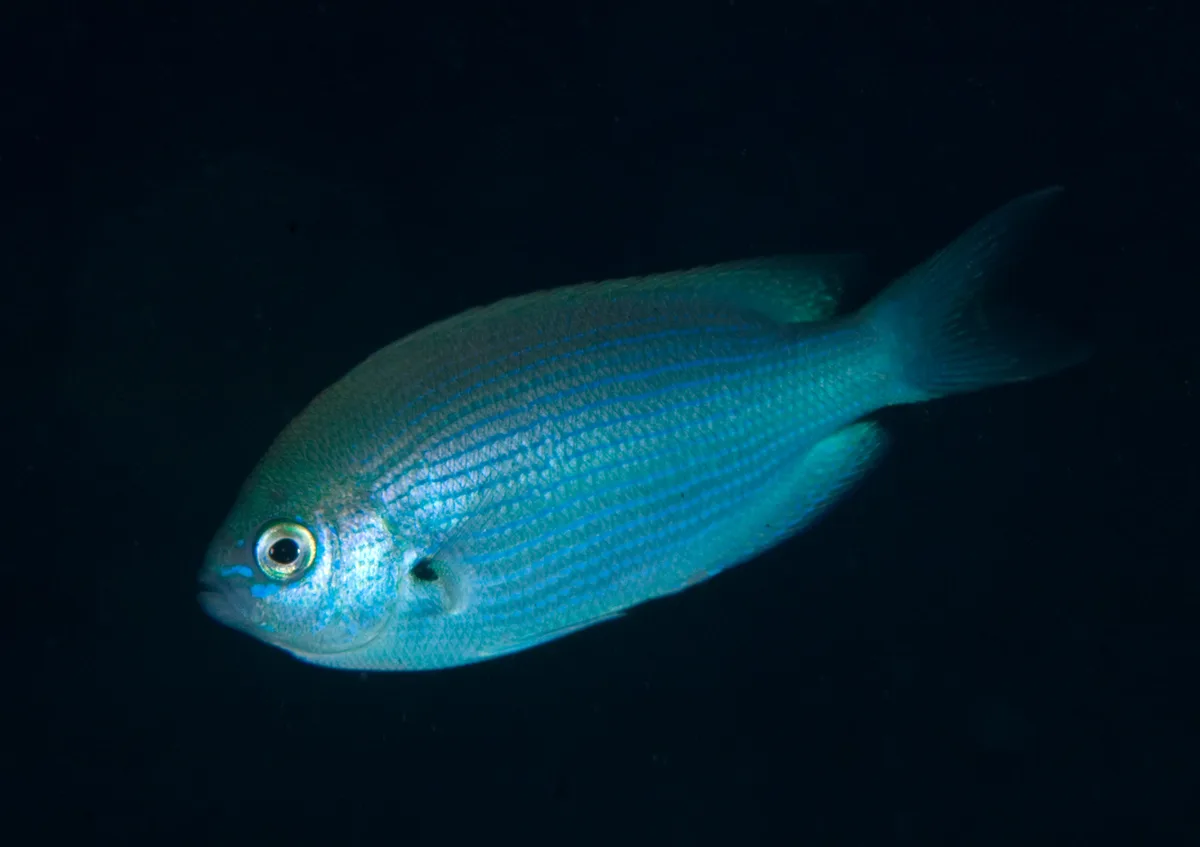
A slender pale damselfish schooling over seagrass and sand - which is not where damselfish are supposed to be.
The family is defined by attachment to structure: a coral head to drop into, a patch of rock to defend, a territory to hold. This one gave that up. It lives in open water over soft bottom, in schools, with nothing to hide in, and it is built for it - longer, slimmer and faster than the stocky fish that live in coral.
It feeds on plankton in midwater and spawns on whatever hard surface it can find, which on a seagrass flat means a shell, a stone or a scrap of rubble, guarded by the male as usual.
Fourteen centimeters (5.5 in). Divers cross these flats on the way to the reef and see the school without registering what it is, because a damselfish in open water over grass does not look like a damselfish.
The genus. Teixeirichthys Smith 1953 - Named in honour of Gabriel M. Teixeira. ETYFish
The species. Teixeirichthys jordani (Rutter 1897) - Honours Rutter’s ichthyology professor. ETYFish
- slender pale gray-blue fish, more elongated than a typical damselfish
- small dark spot at the upper base of the pectoral fin
- in schools over seagrass and sand, not over coral
- length up to 14 cm
Why it's threatened
It is unlikely that any major threat is impacting this species. Trawl fisheries may represent a threat as well as habitat destruction in some parts of the range (G.R. Allen pers. comm. 2009).
Threat classification from the IUCN Red List.