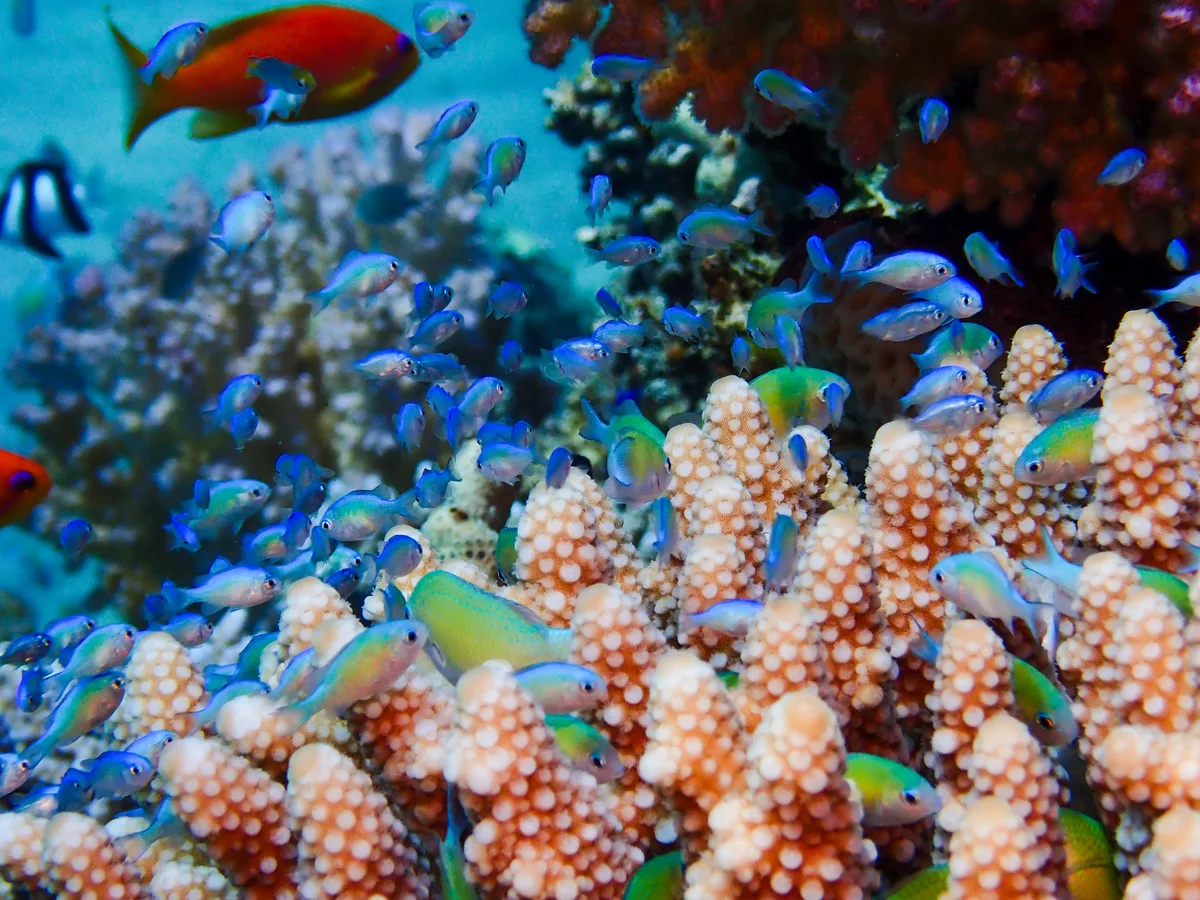
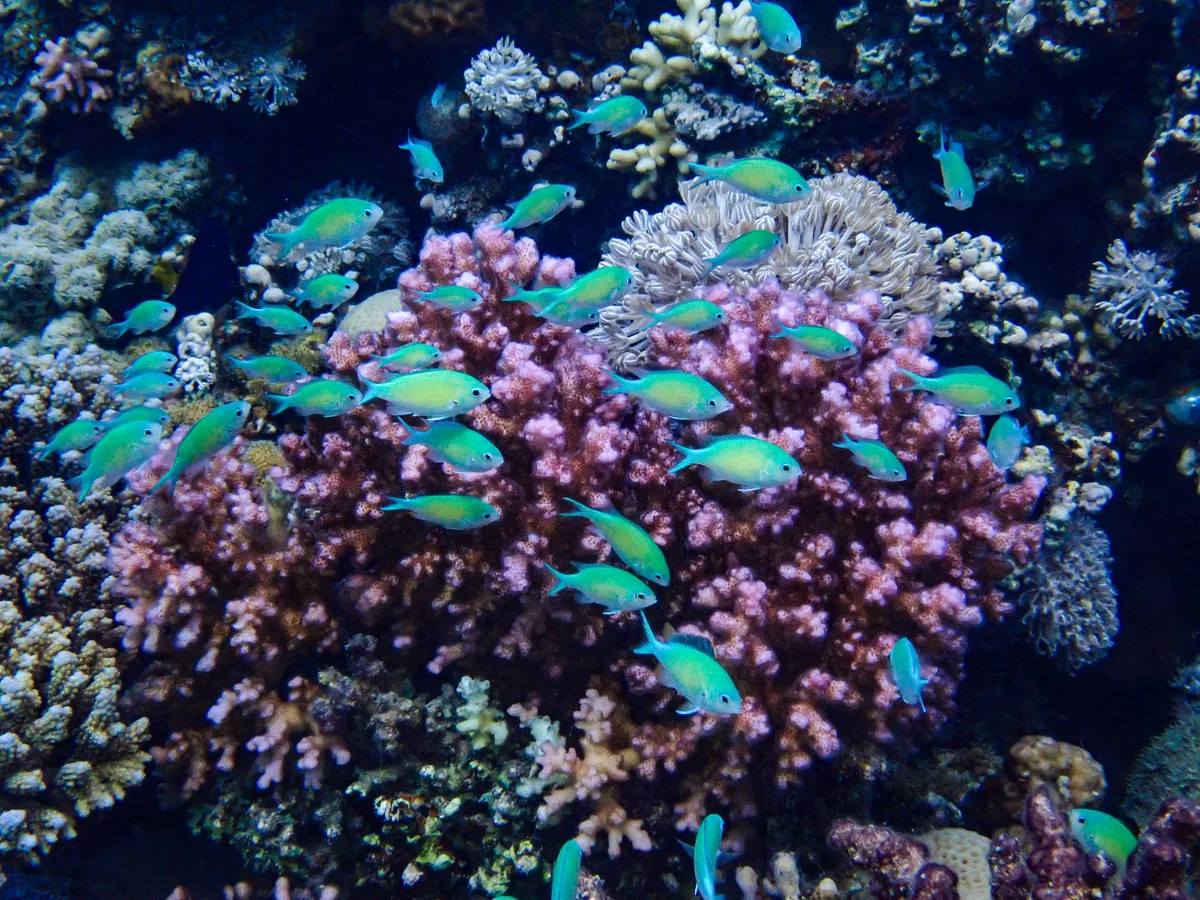
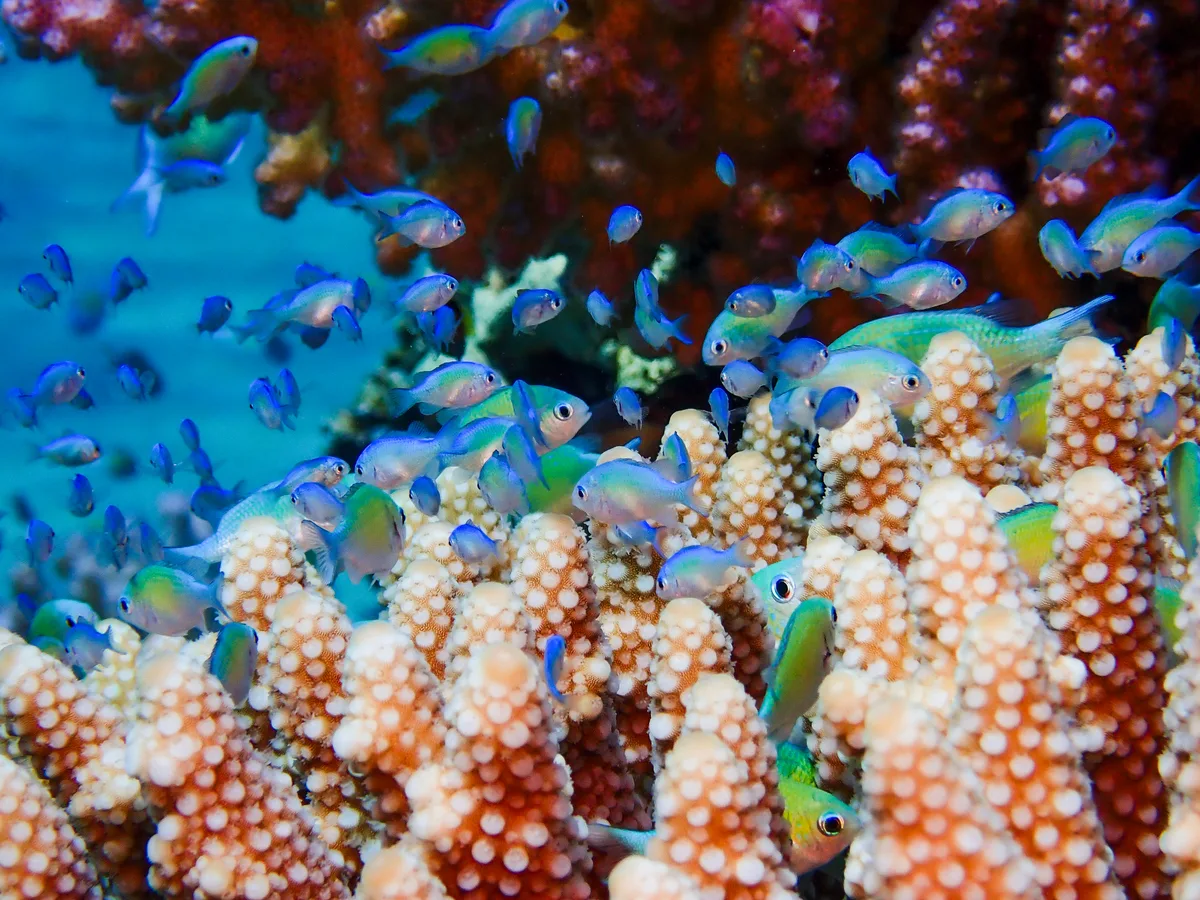
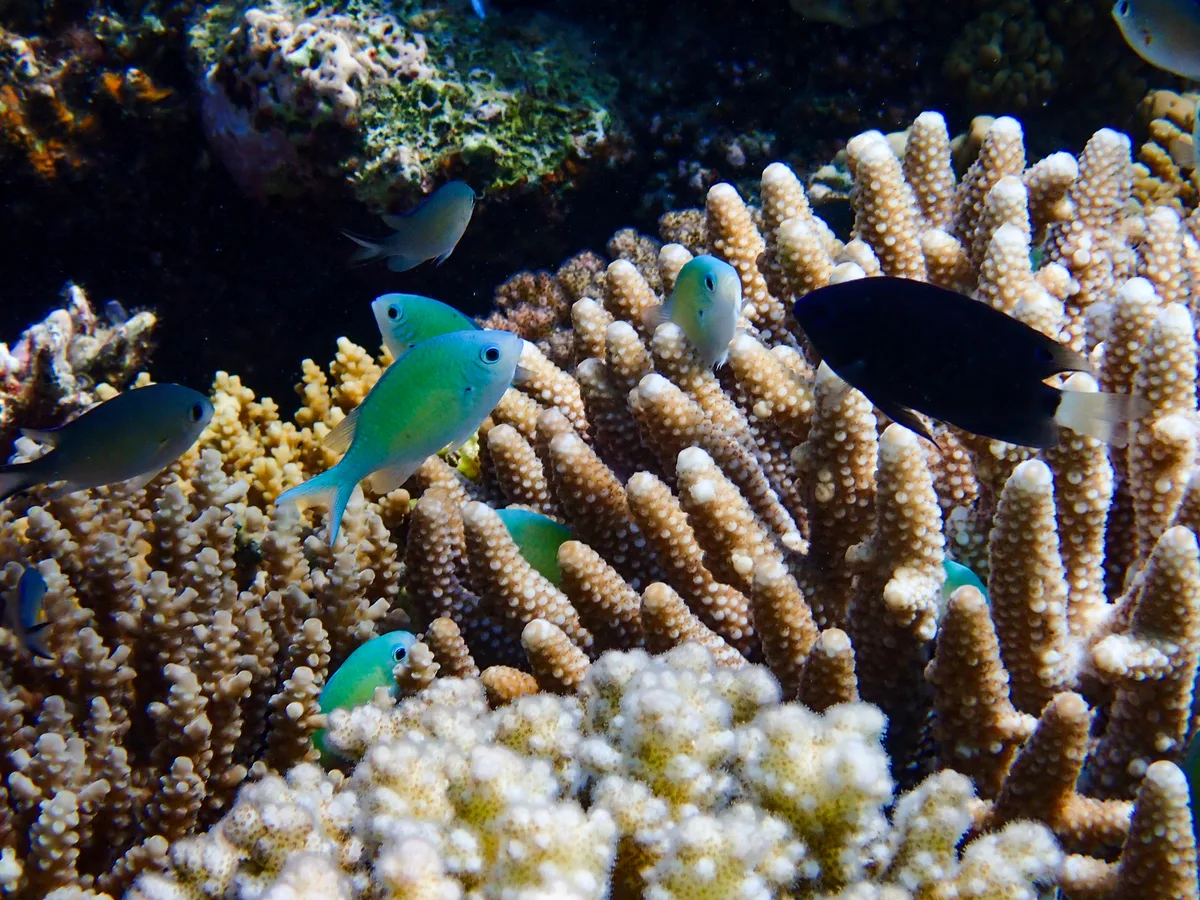
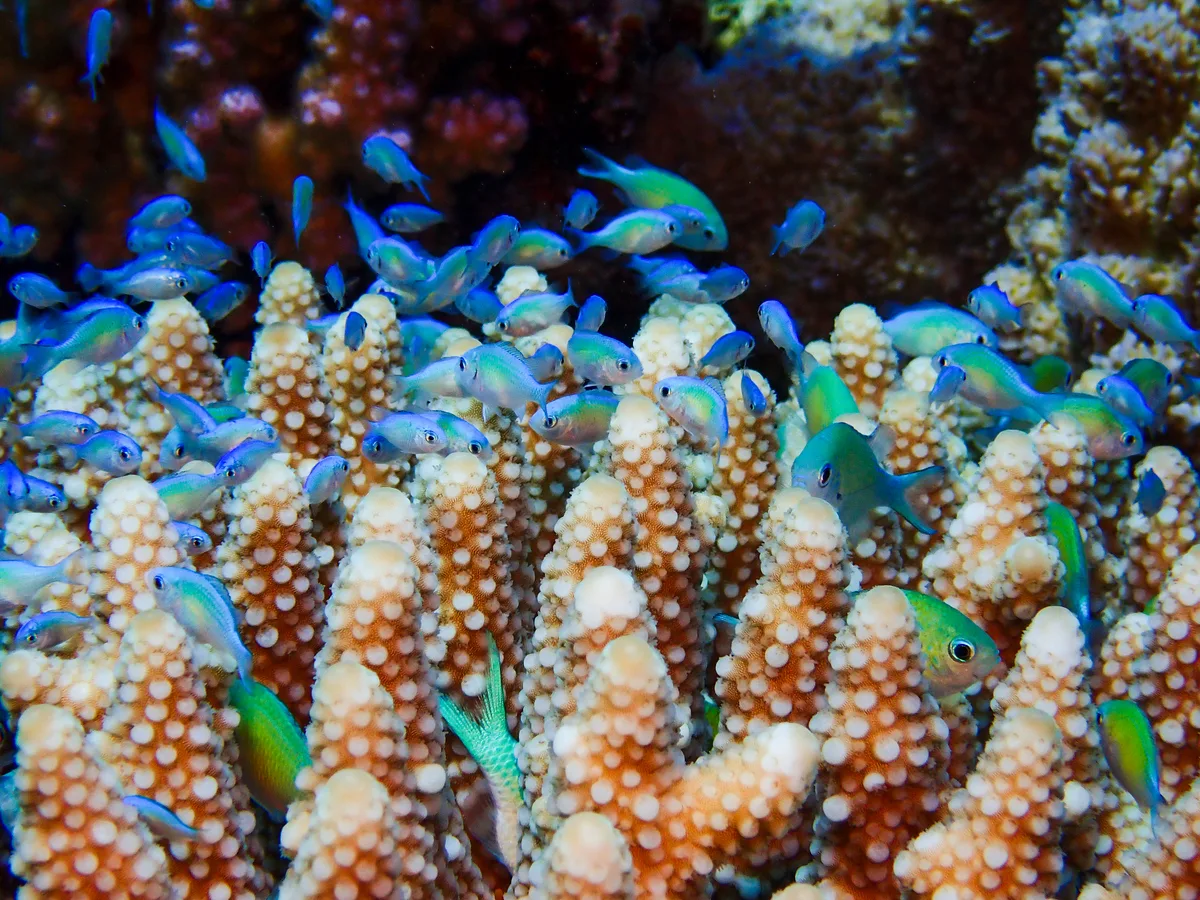
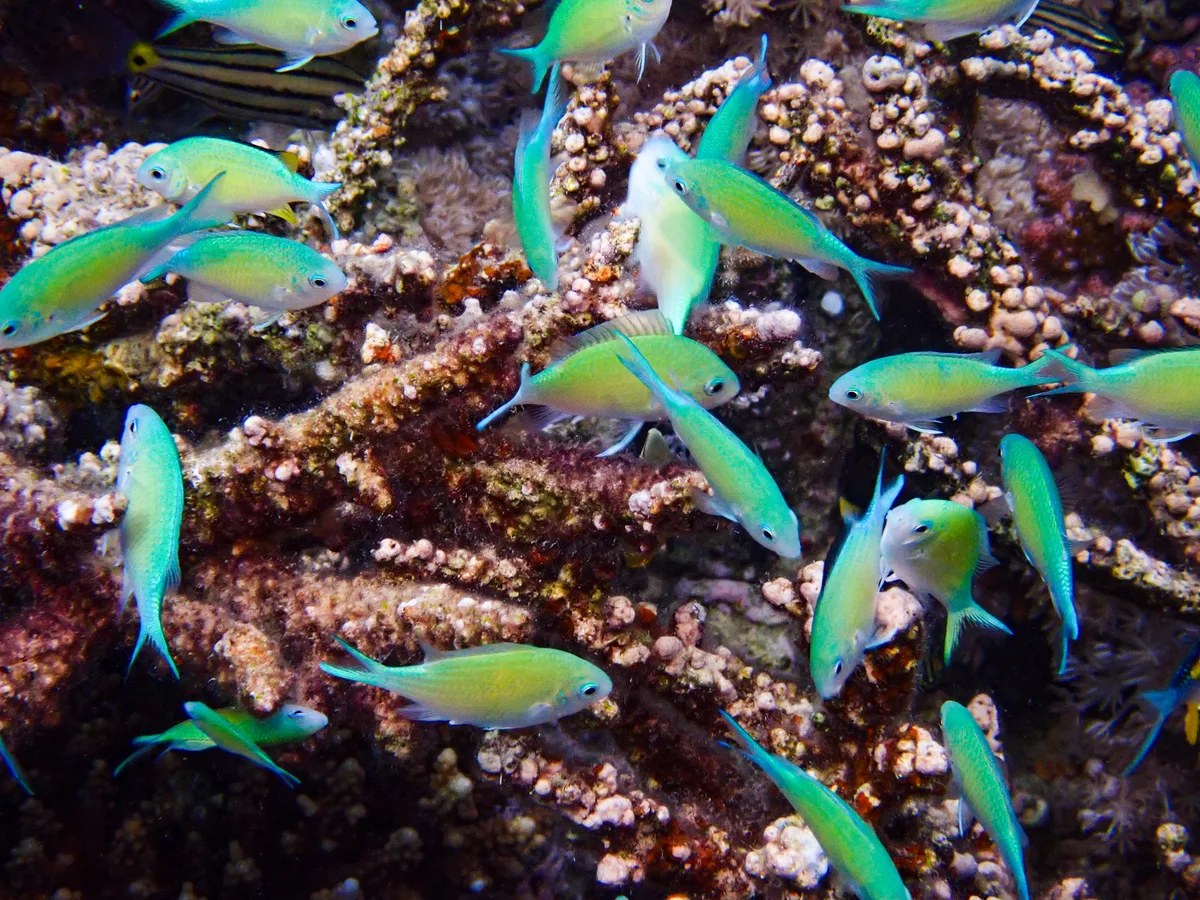
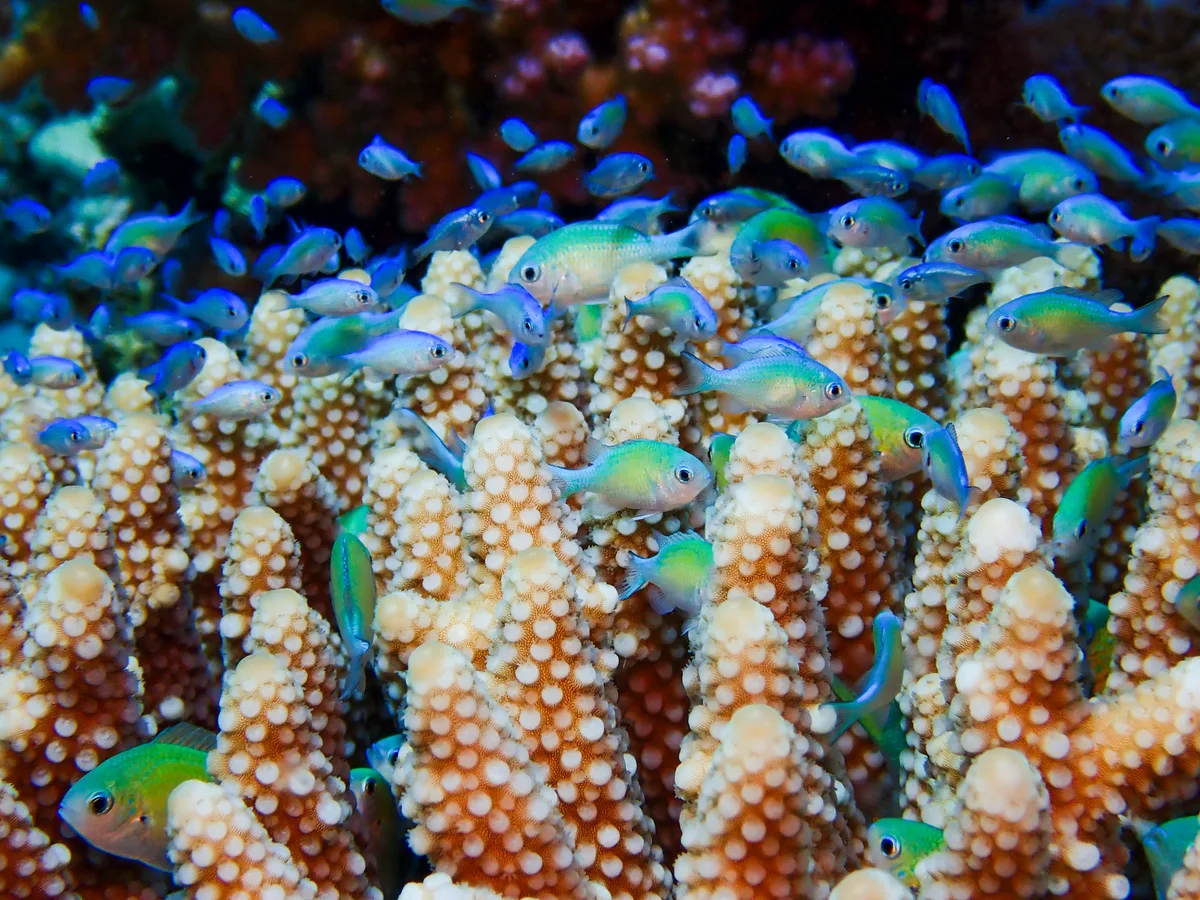
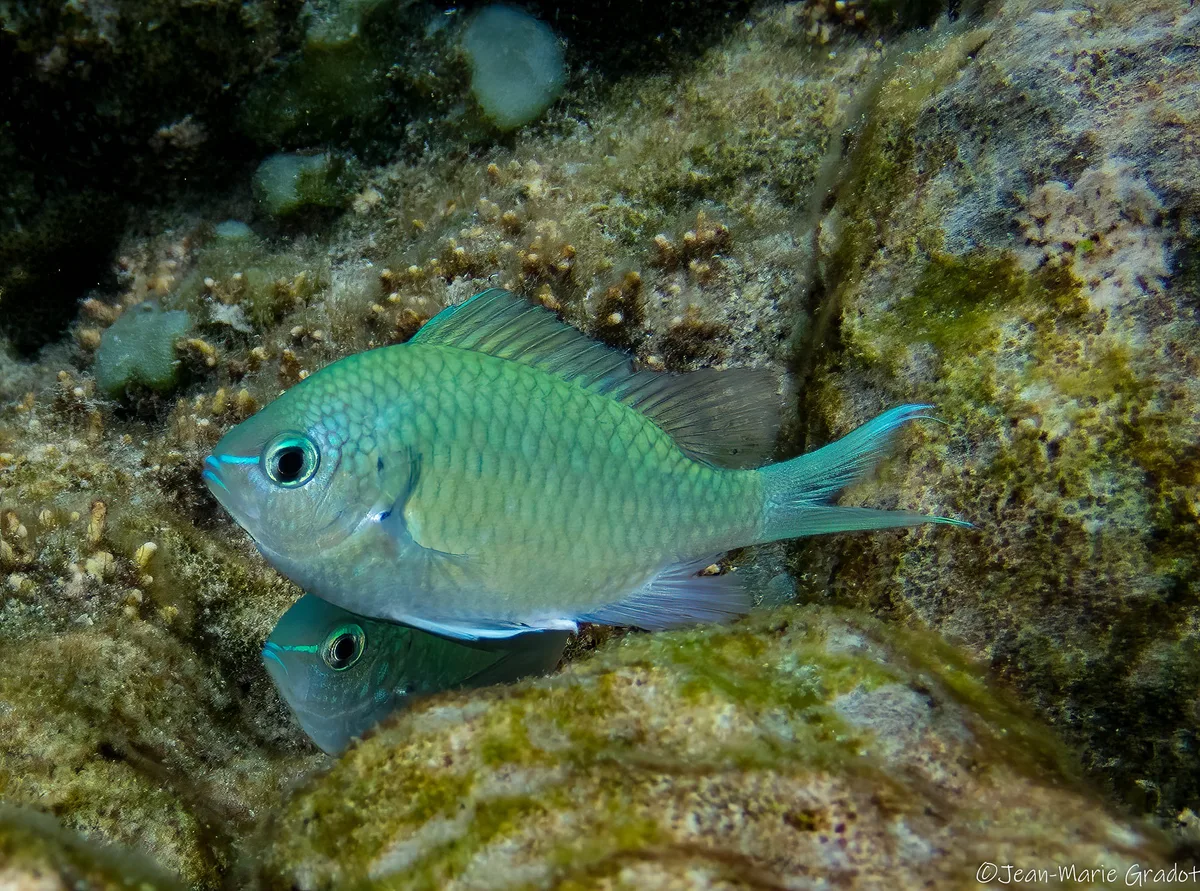
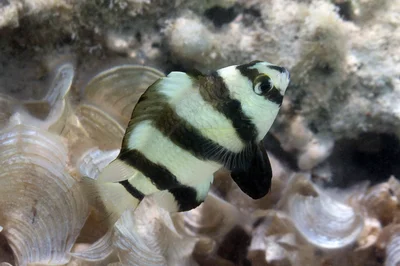
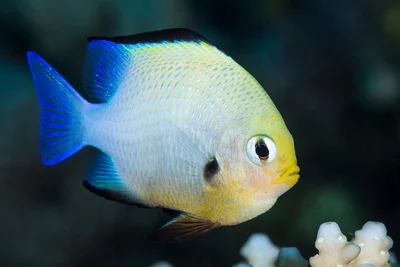
The blue-green cloud over a coral head in shallow water - hundreds of small fish facing into the current, picking plankton out of it one item at a time, and the first thing most people photograph on a reef.
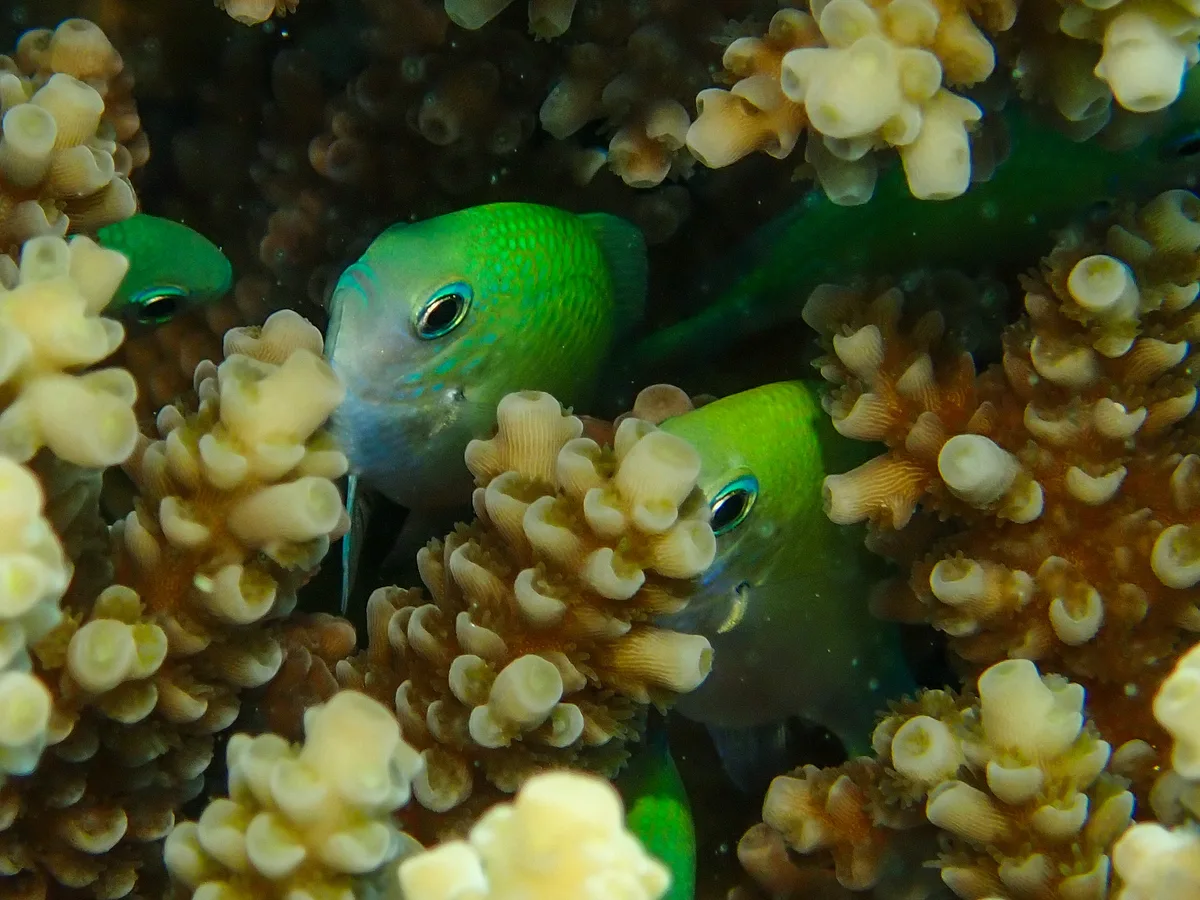
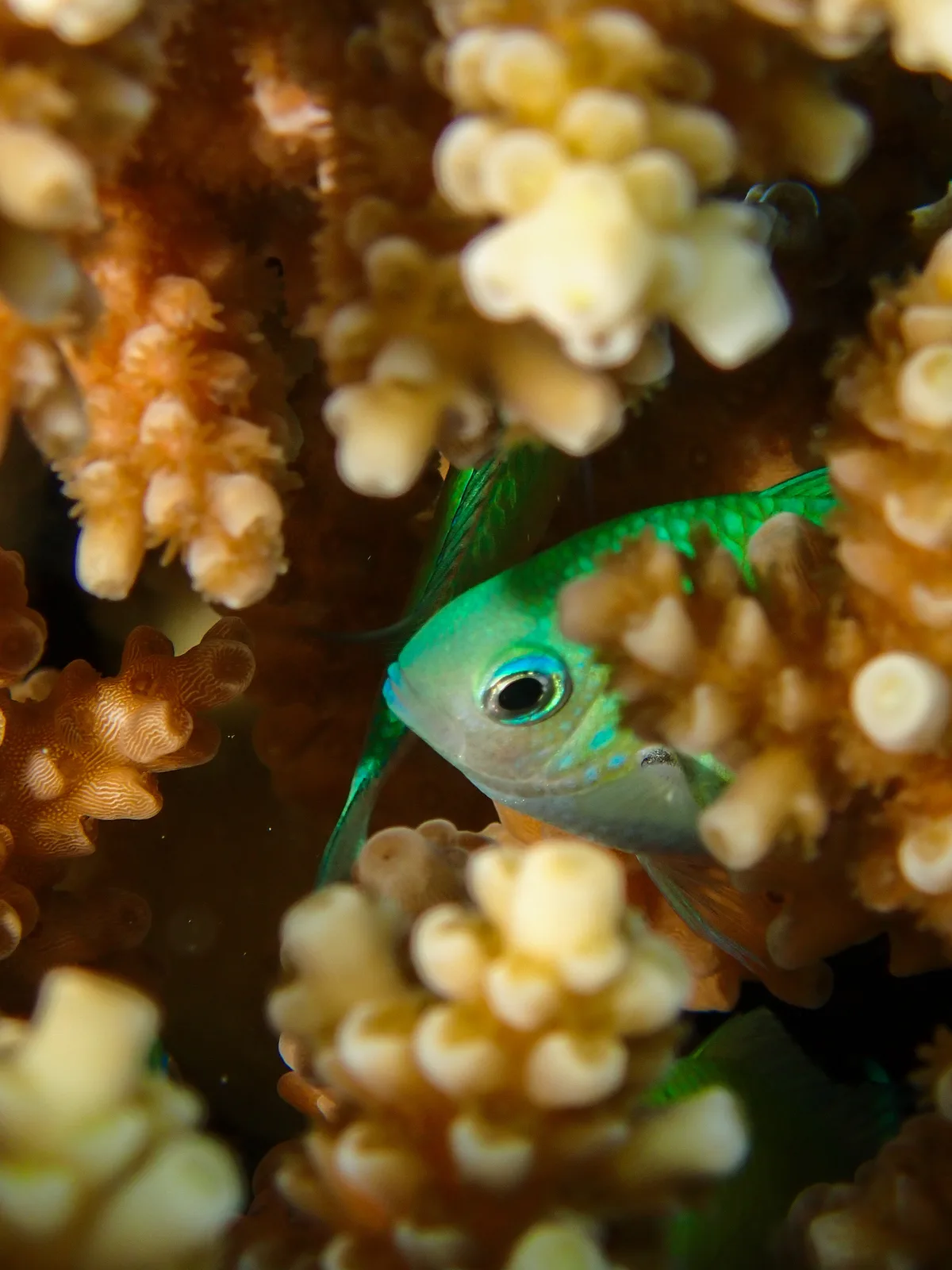
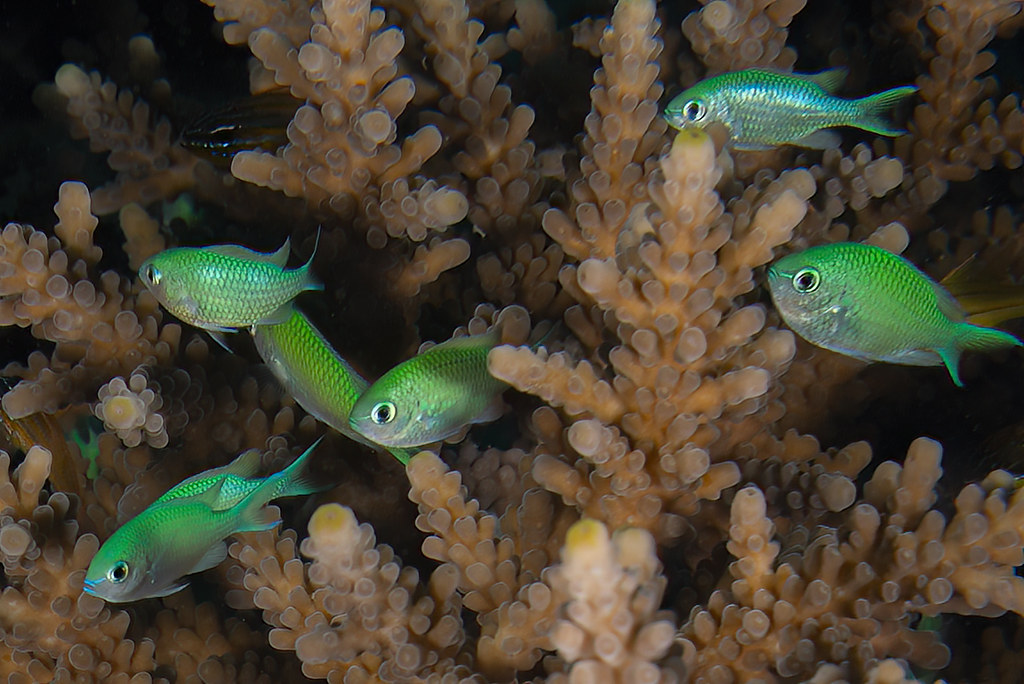
Watch what happens when a shadow passes. The entire cloud drops into the branches of the coral below it simultaneously, the head swallows them, and the water is empty. Half a minute later they filter back out. That coral is not decoration: the fish live above it precisely because it is a shelter they can all fit into at once, and a colony that dies takes its cloud with it.
They feed all day and return the favor. The nutrients the fish release fertilize the coral they shelter in, and colonies with a resident group grow measurably faster than colonies without one.
Males clean a patch of dead coral at the base, court females over it, and guard the eggs until they hatch - the family's standard arrangement, run at the bottom of the same coral head the cloud lives above.
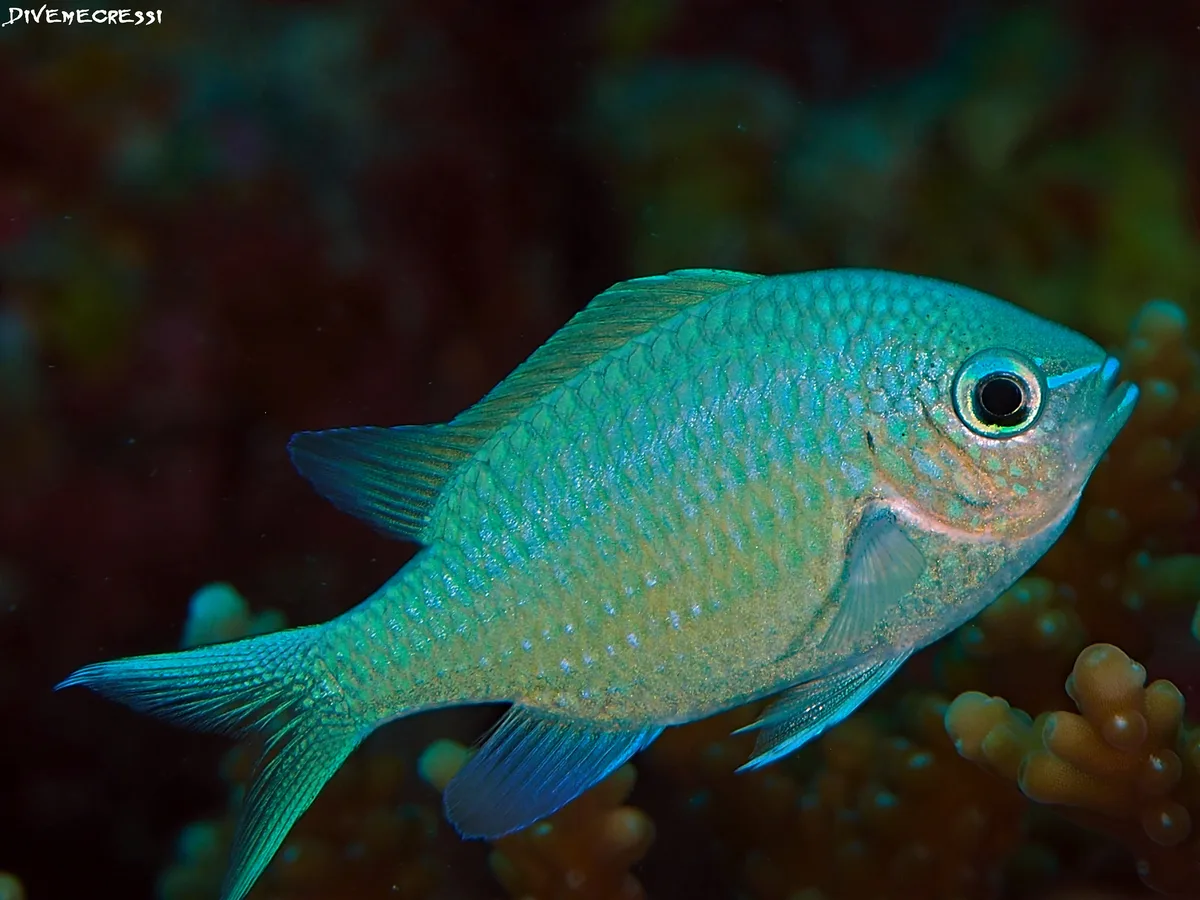
The species.Chromis viridis (Cuvier 1830) - green. ETYFish
How to recognise it
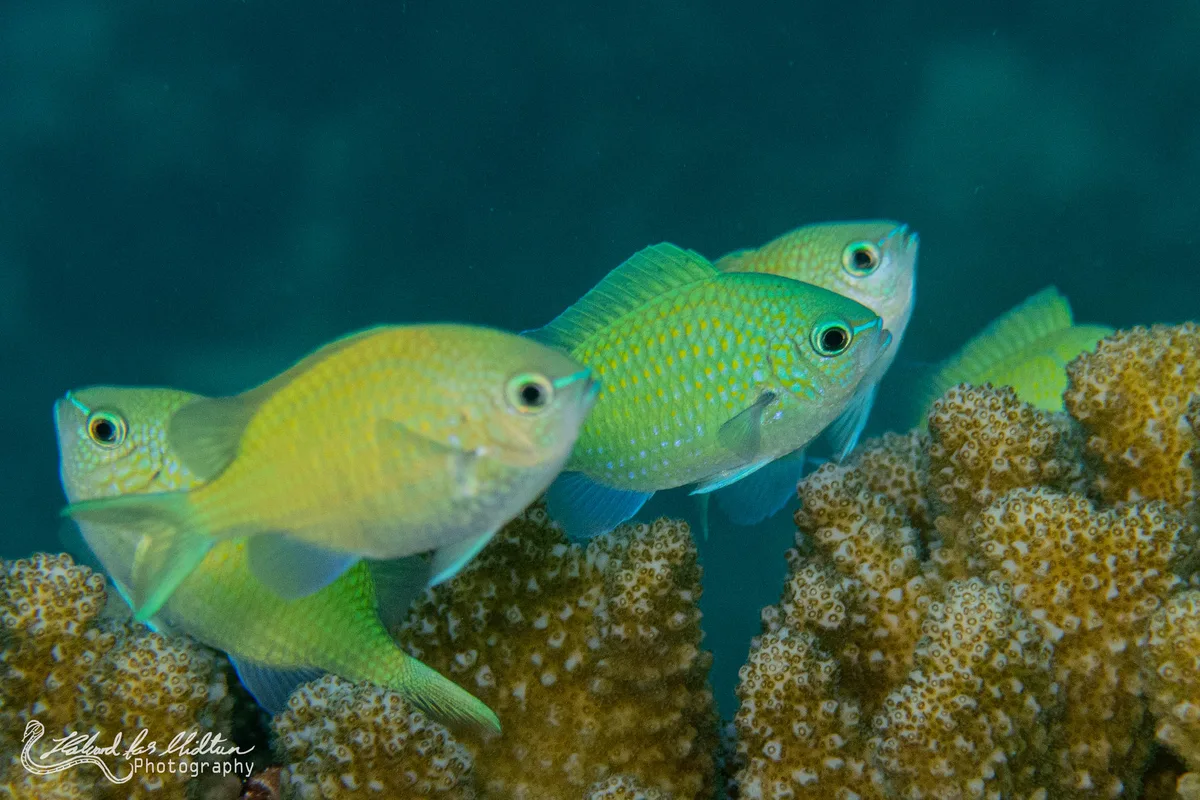
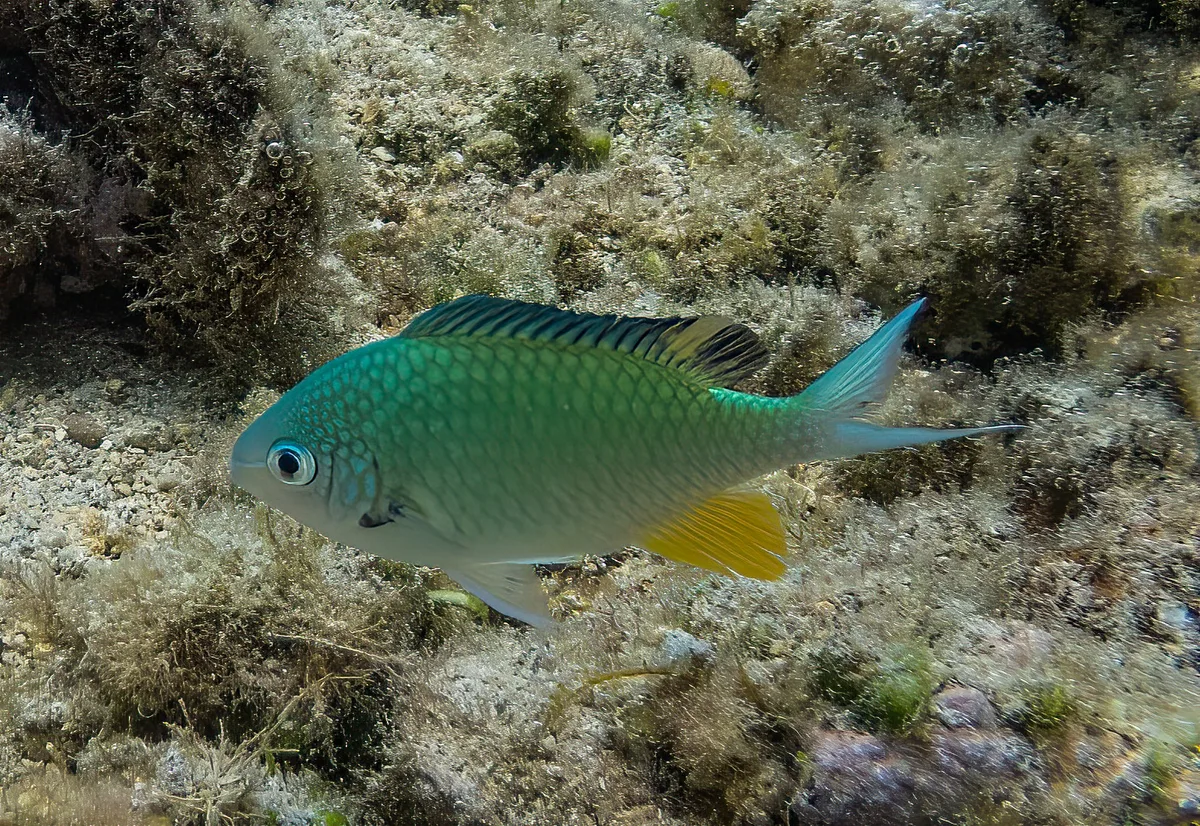
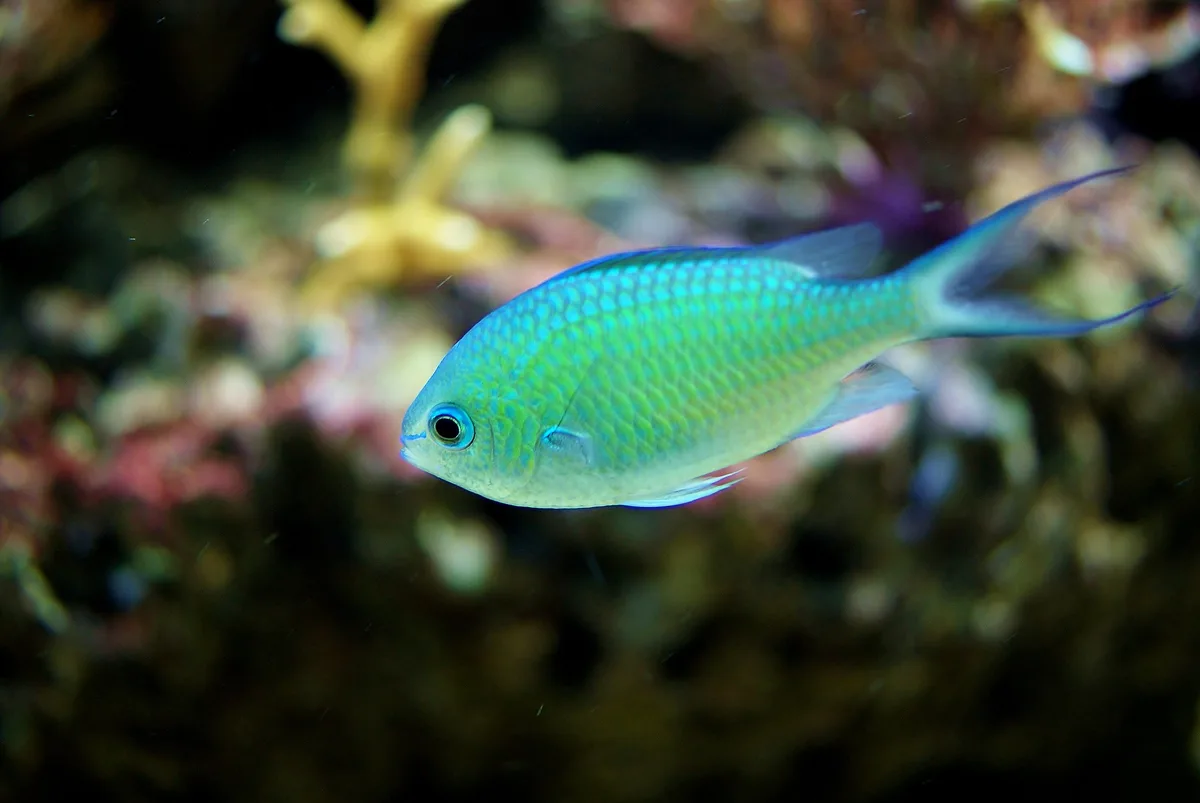
brilliant blue-green, almost luminous in sunlight
in a cloud of dozens to hundreds above one coral head
the whole group drops into the coral at once when threatened
This species is heavily reliant on live coral reef habitat. In most of its range, there have been coral reef declines with pronounced declines in southeast Asia and the Indian Ocean and declines are expected to continue due to climate change impacts. This species relies on Acropora for habitat and a large number of Acropora species are considered threatened, particularly in the Coral Triangle (Carpenter et al. 2008). It is also heavily exploited in southeast Asia for the marine aquarium trade and localized declines may occur.
Threat classification from the IUCN Red List.
Comments
Please, sign in to leave a comment
Continue with a social account - yours will be created automatically.