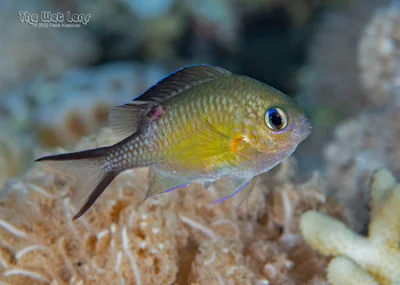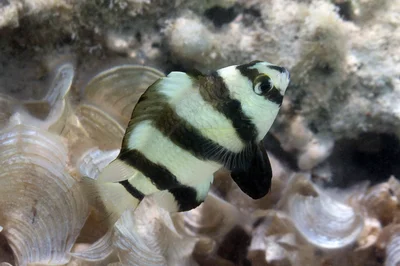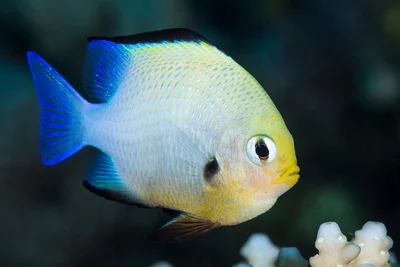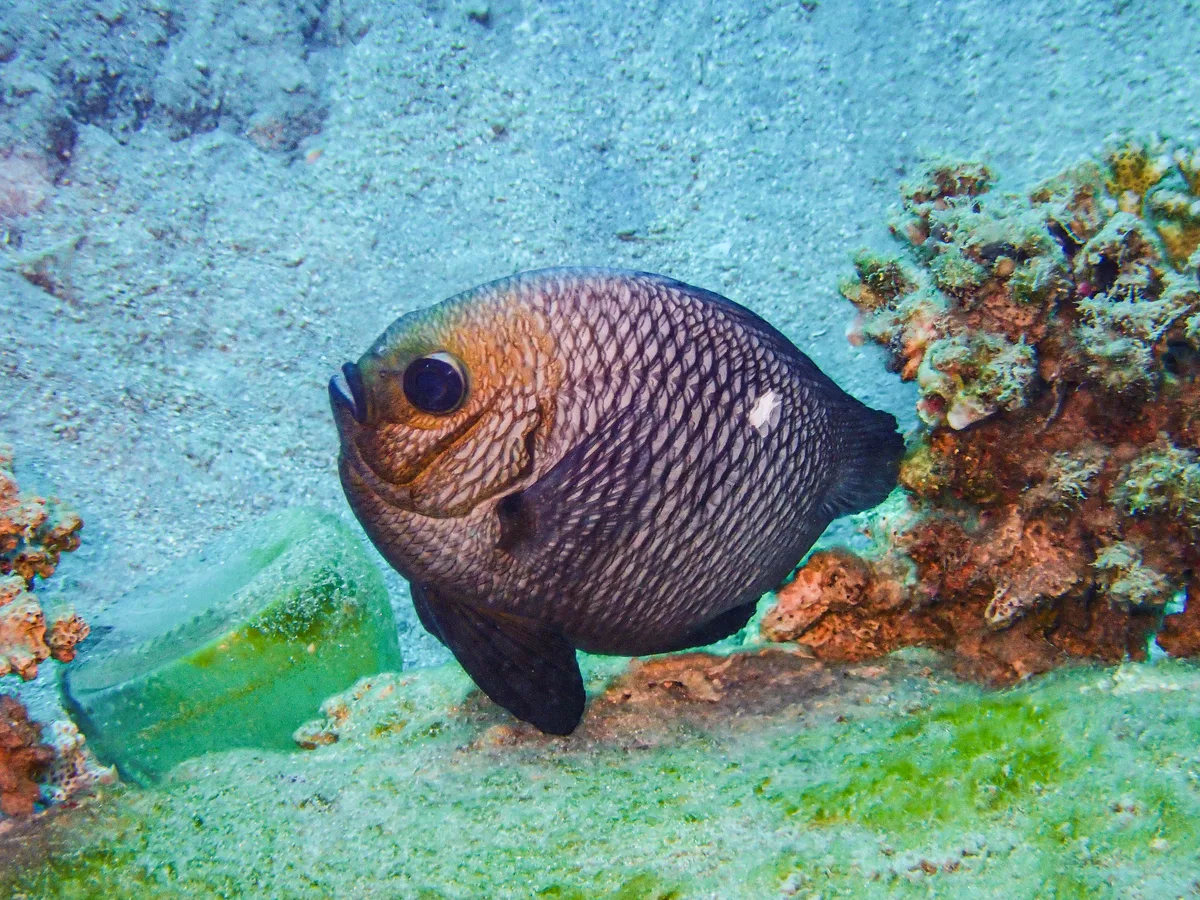
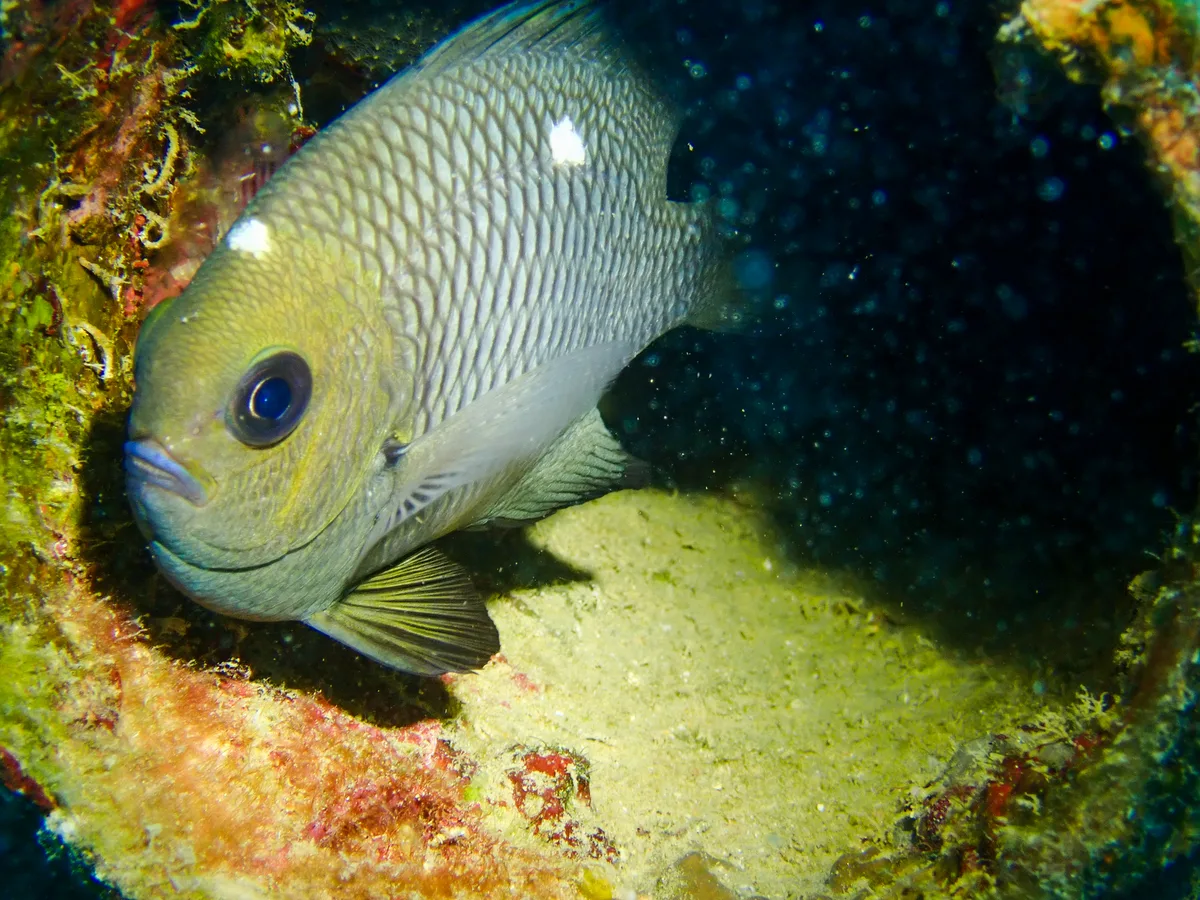
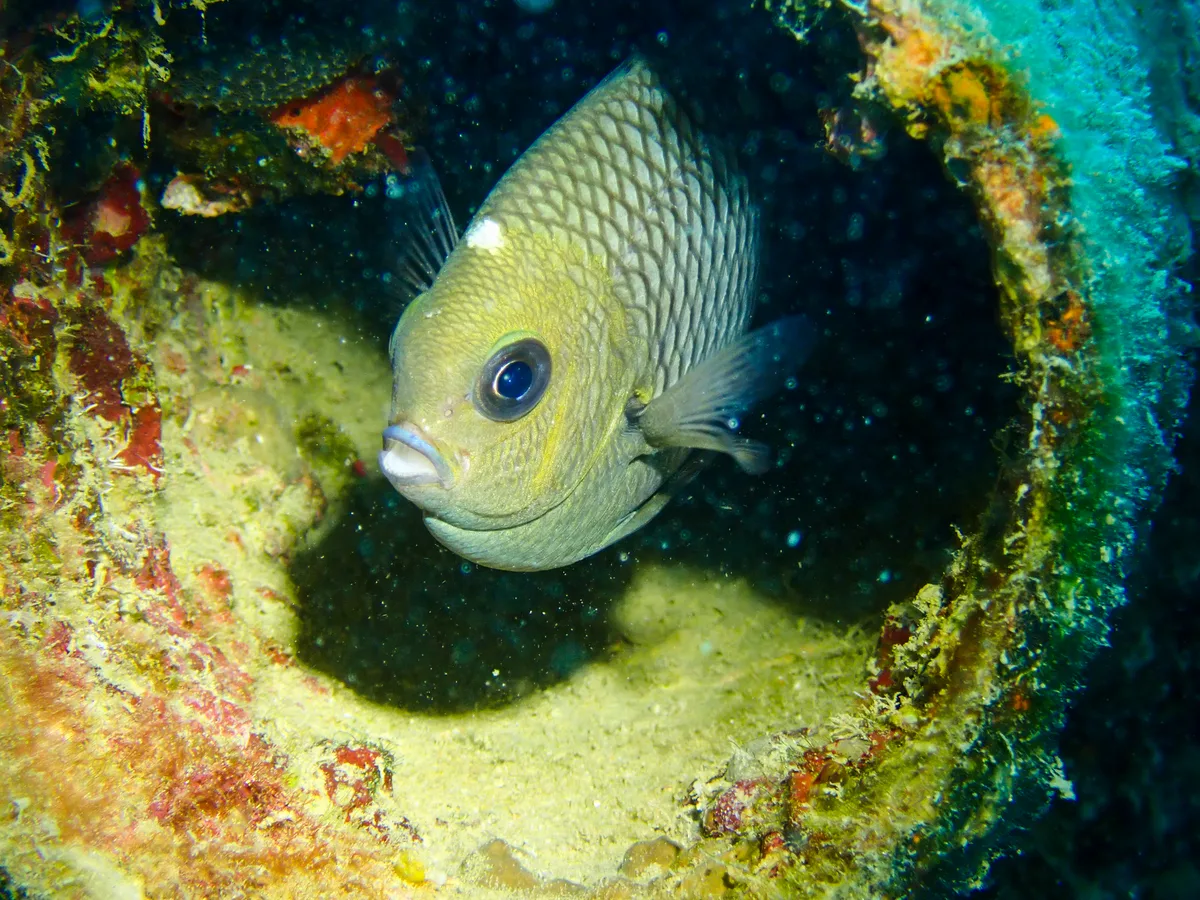
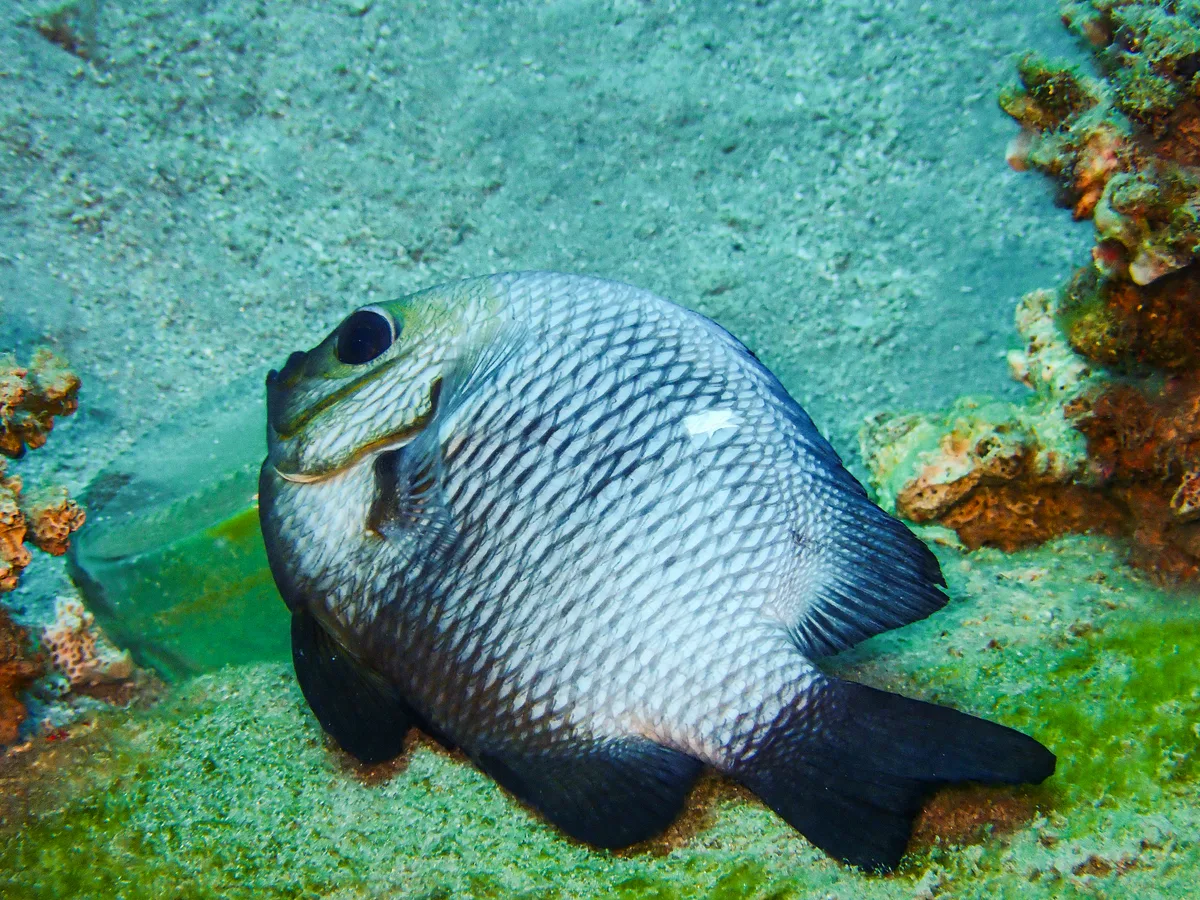
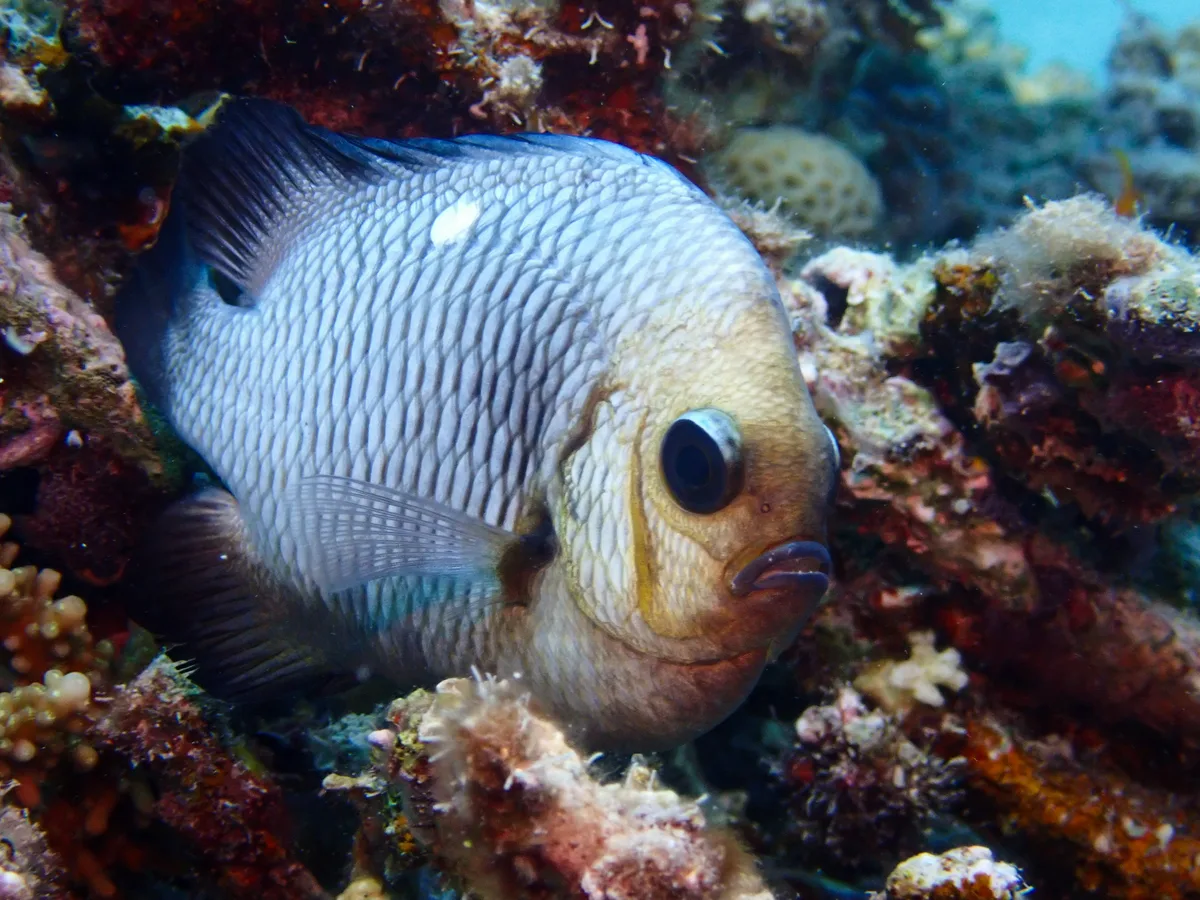
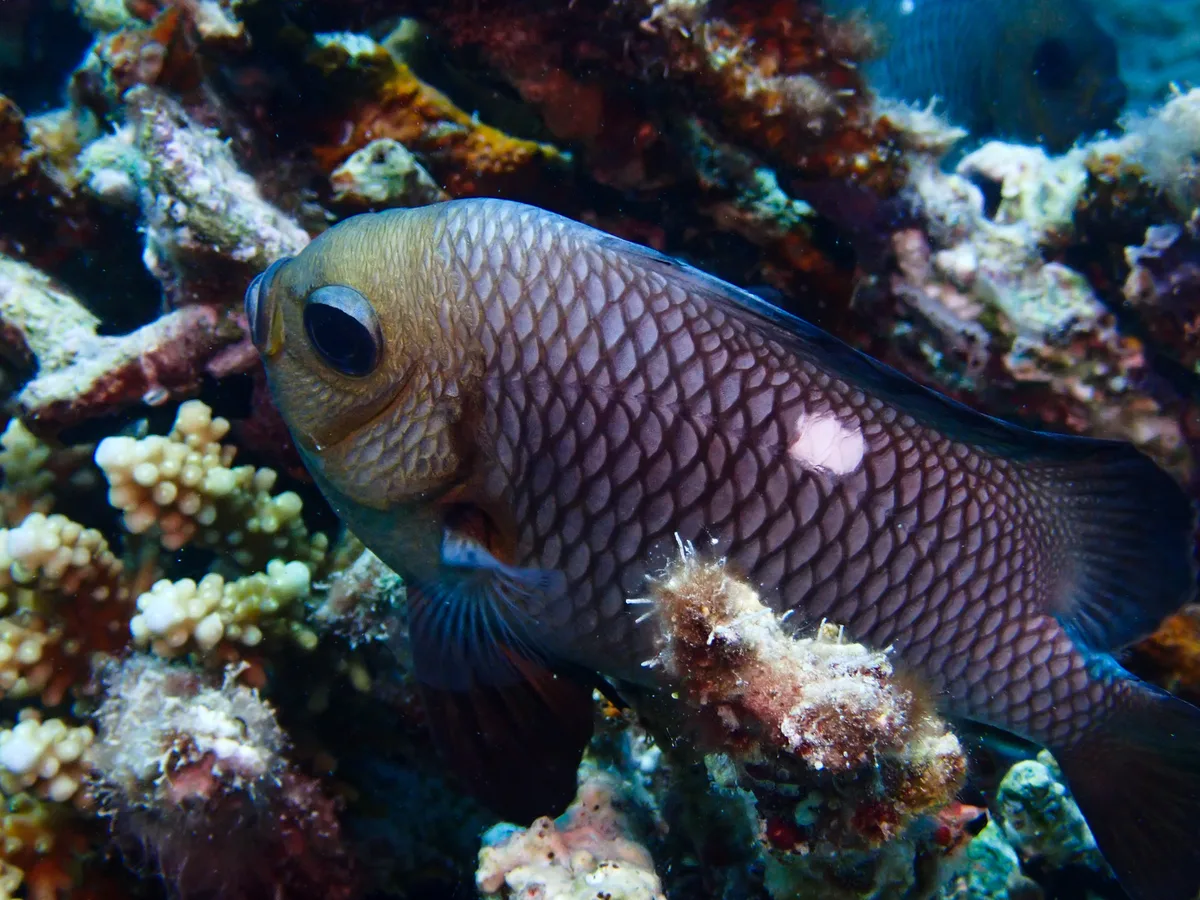
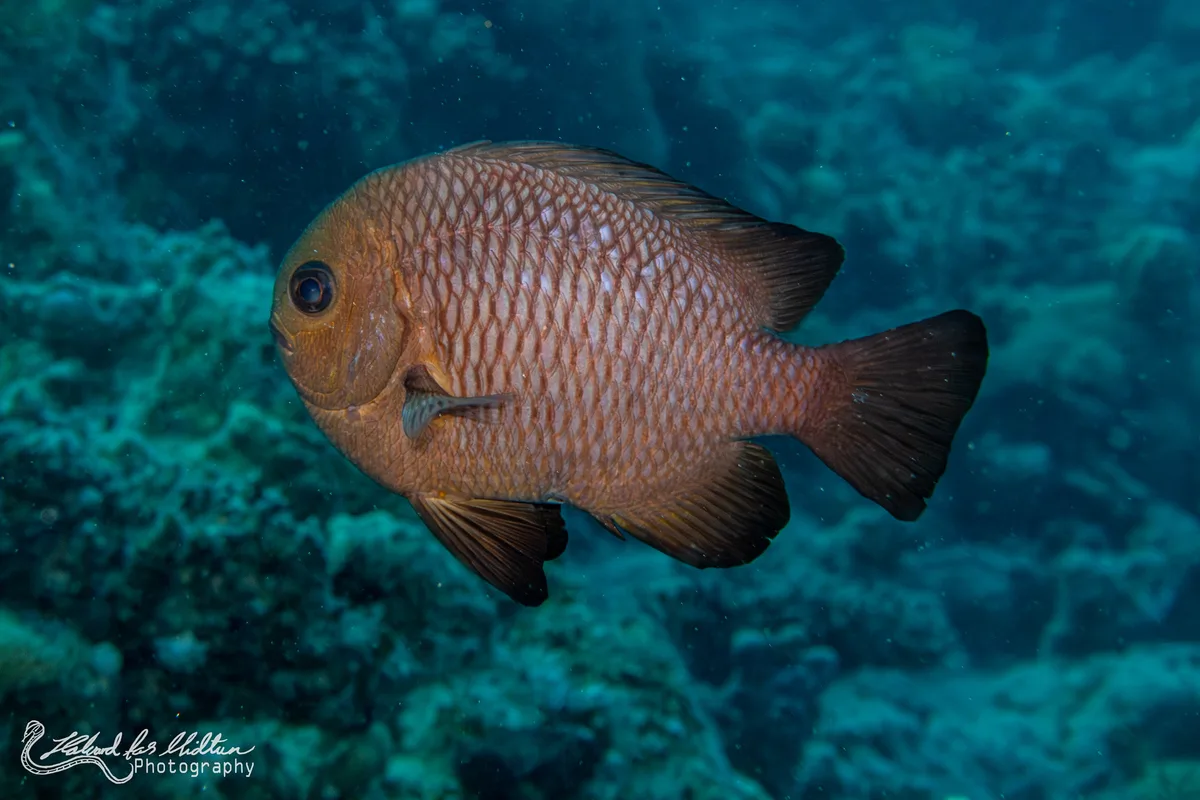
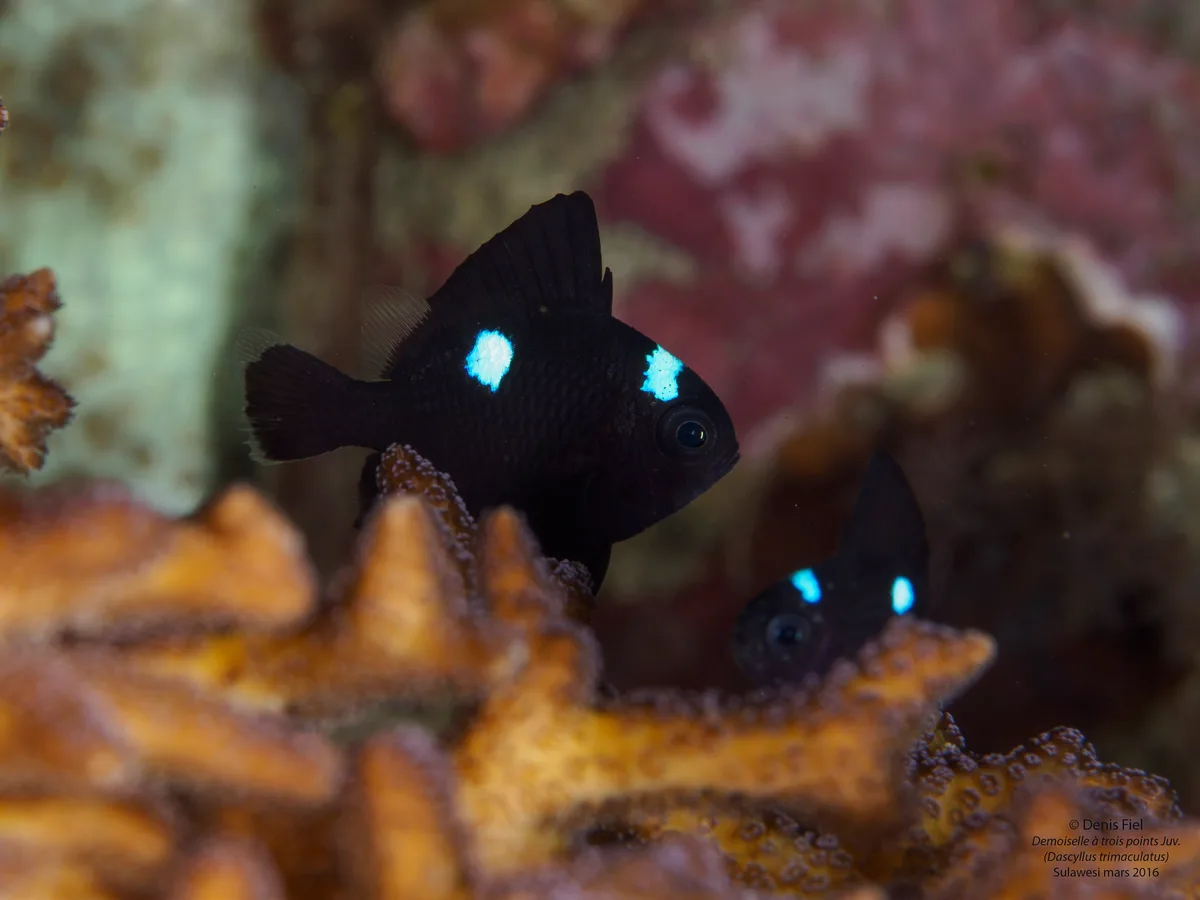
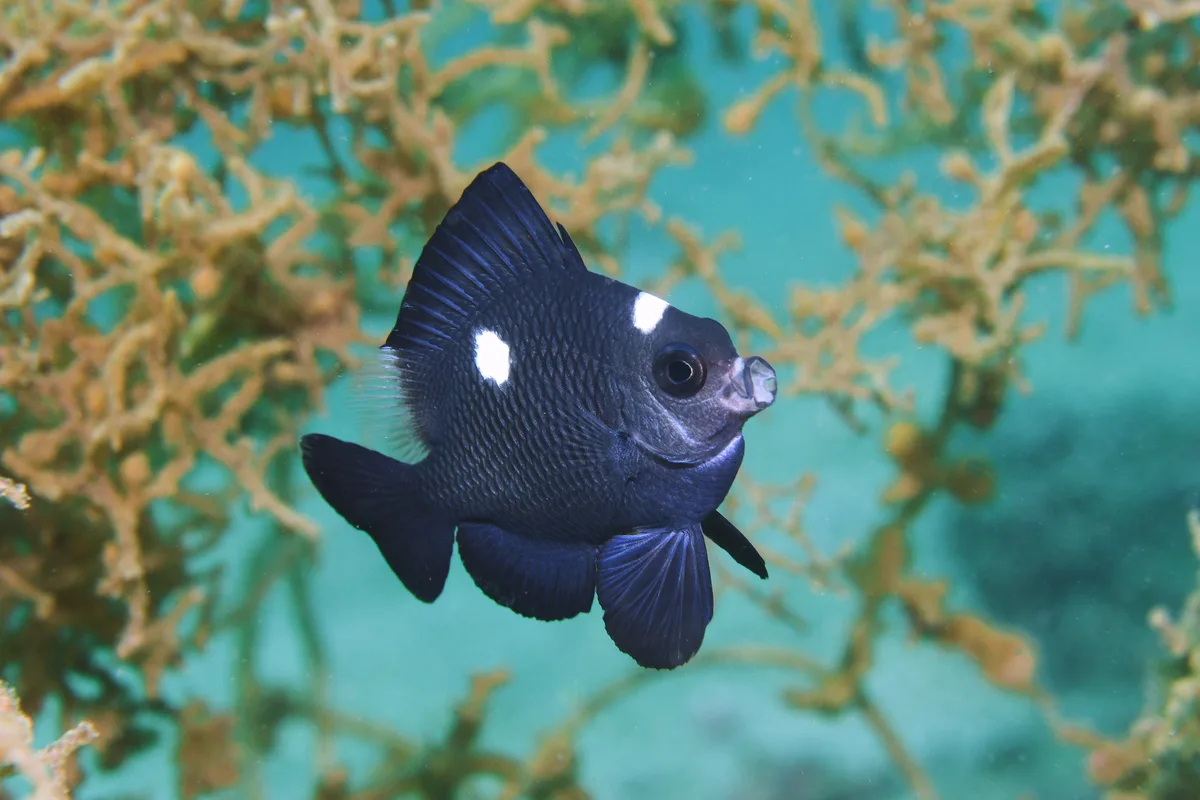
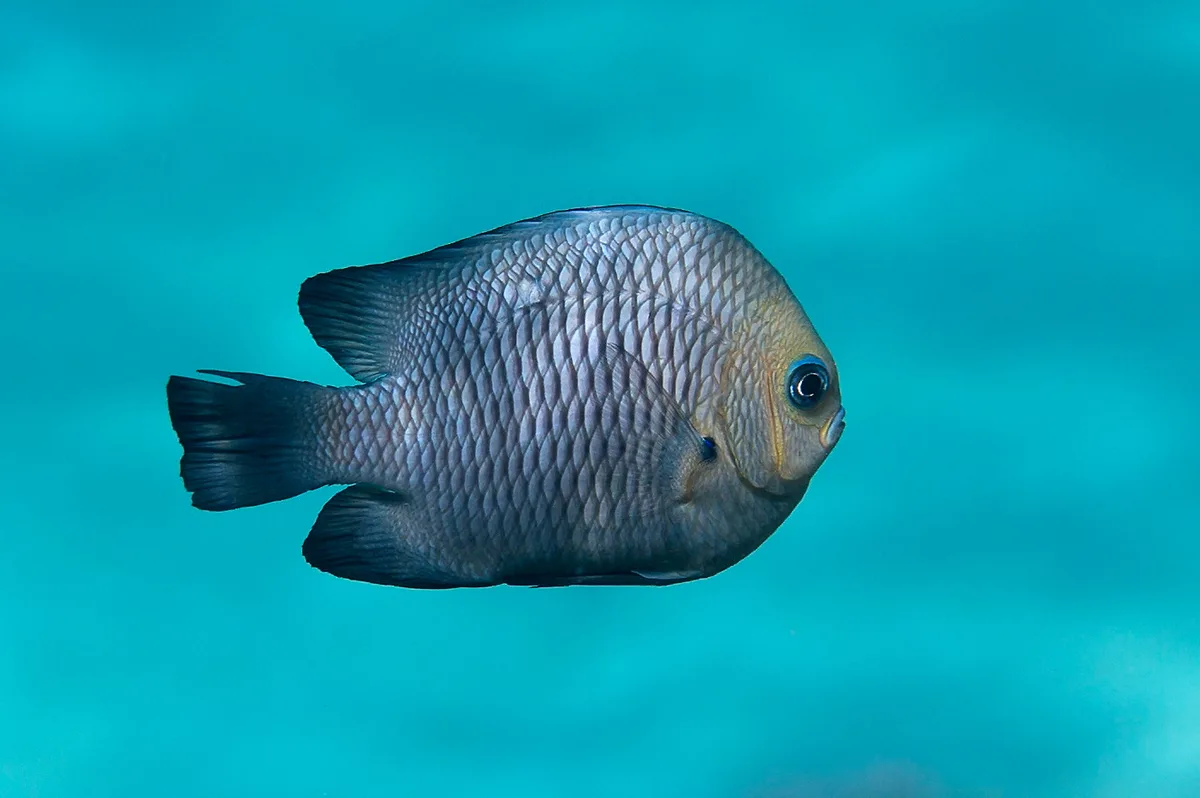
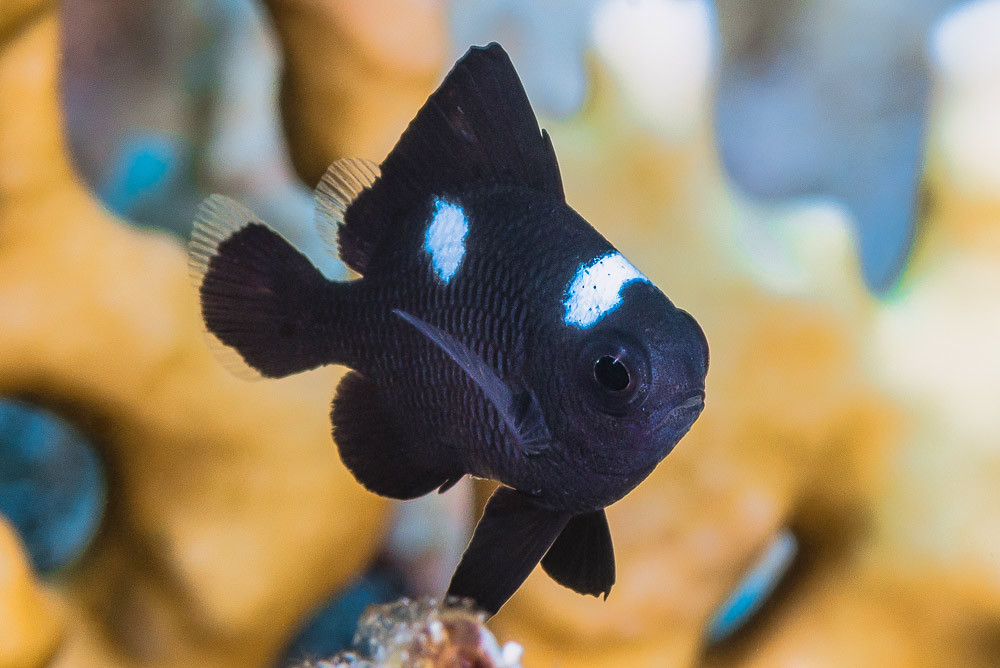
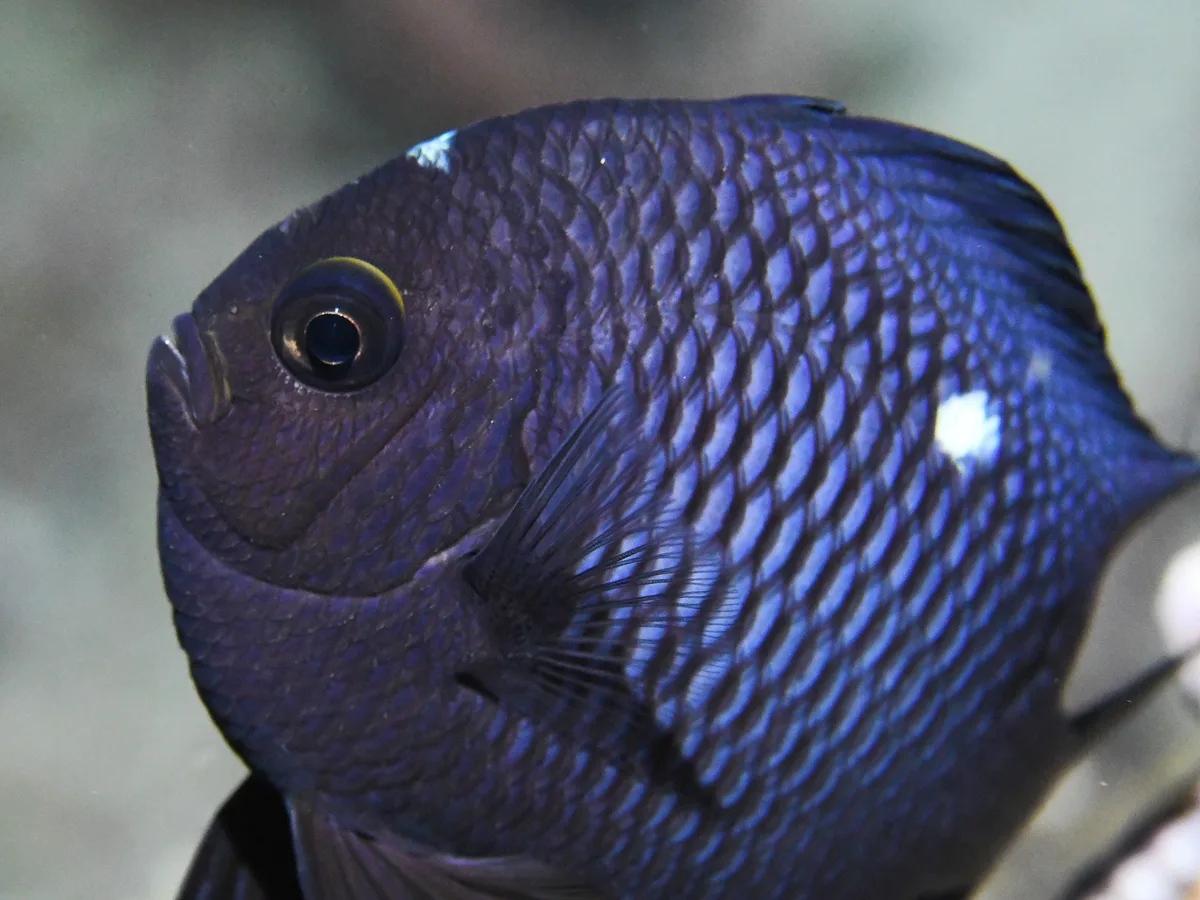
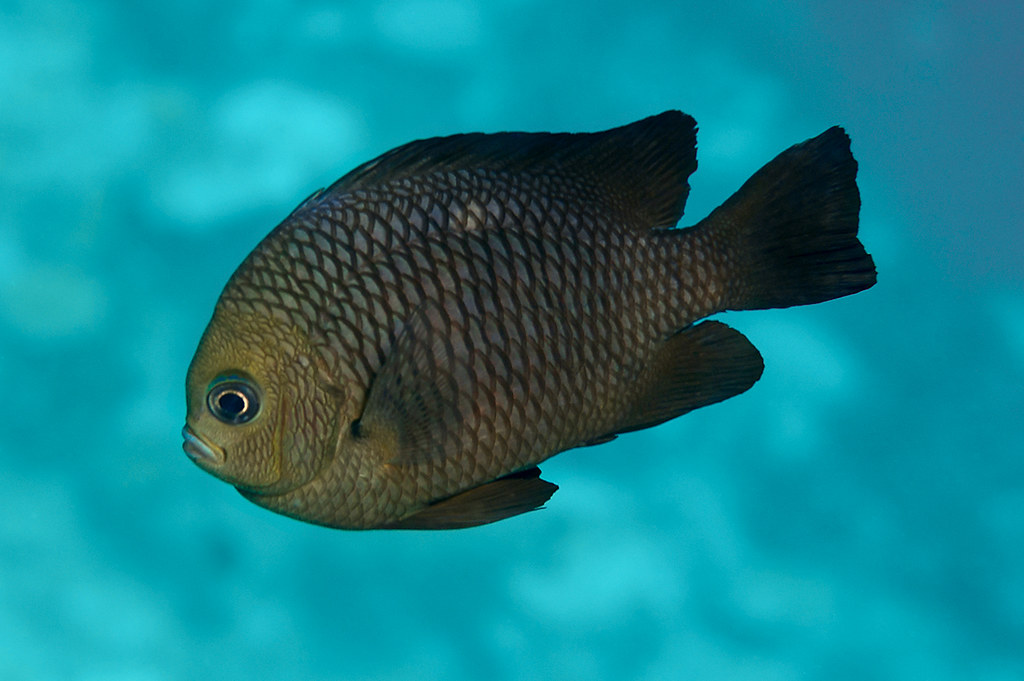
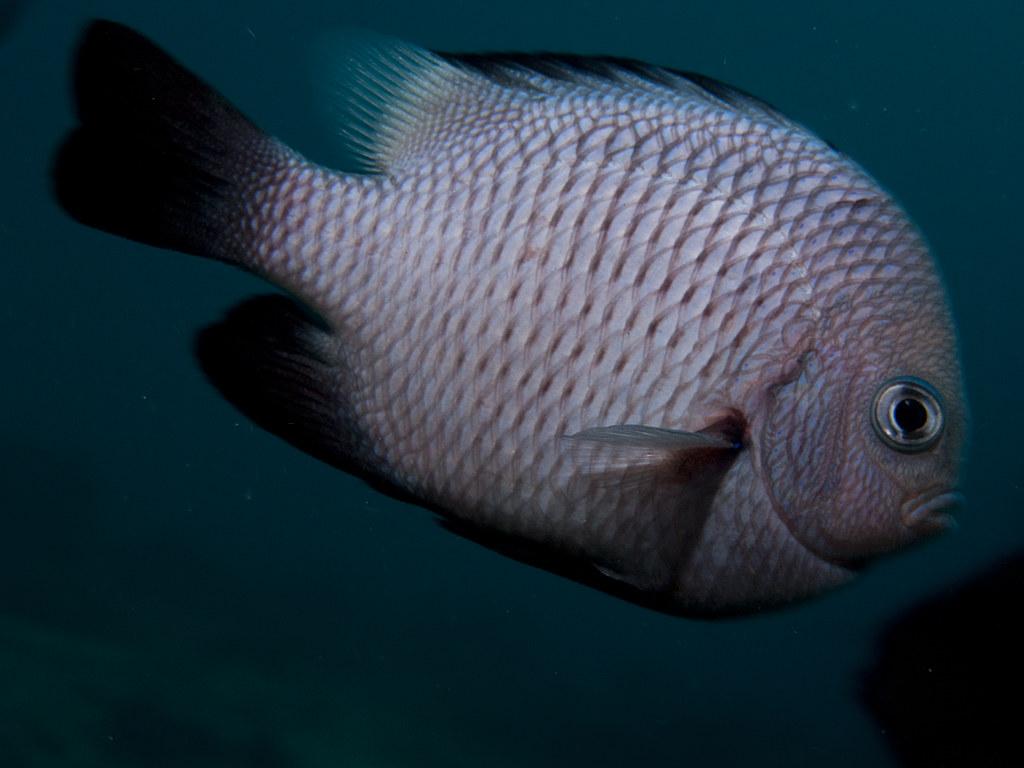
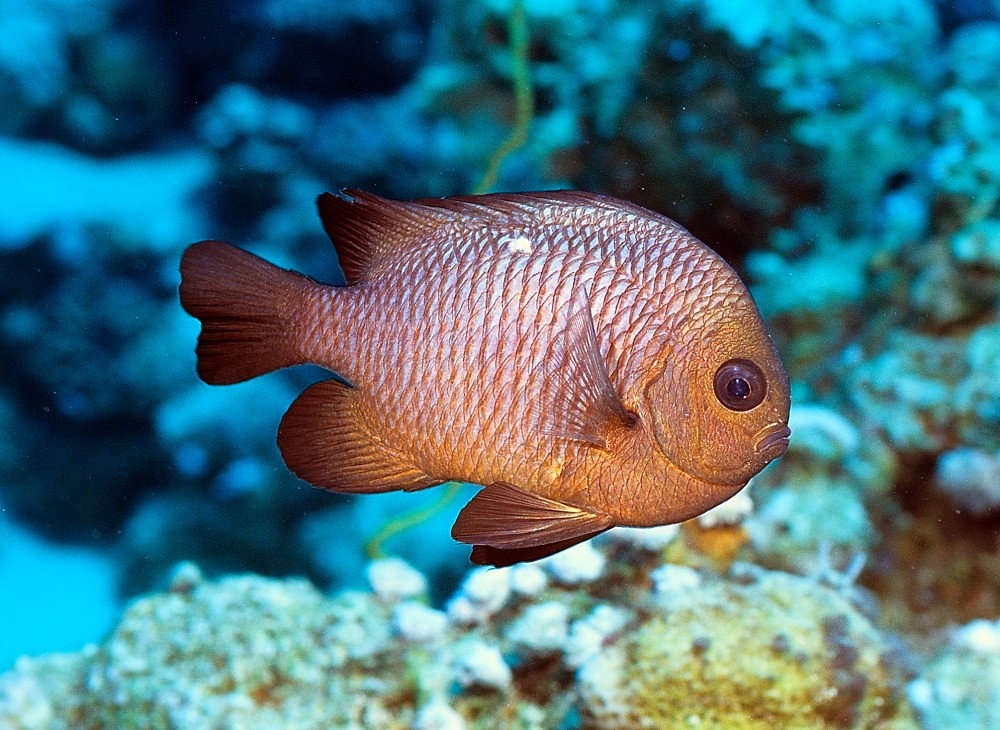
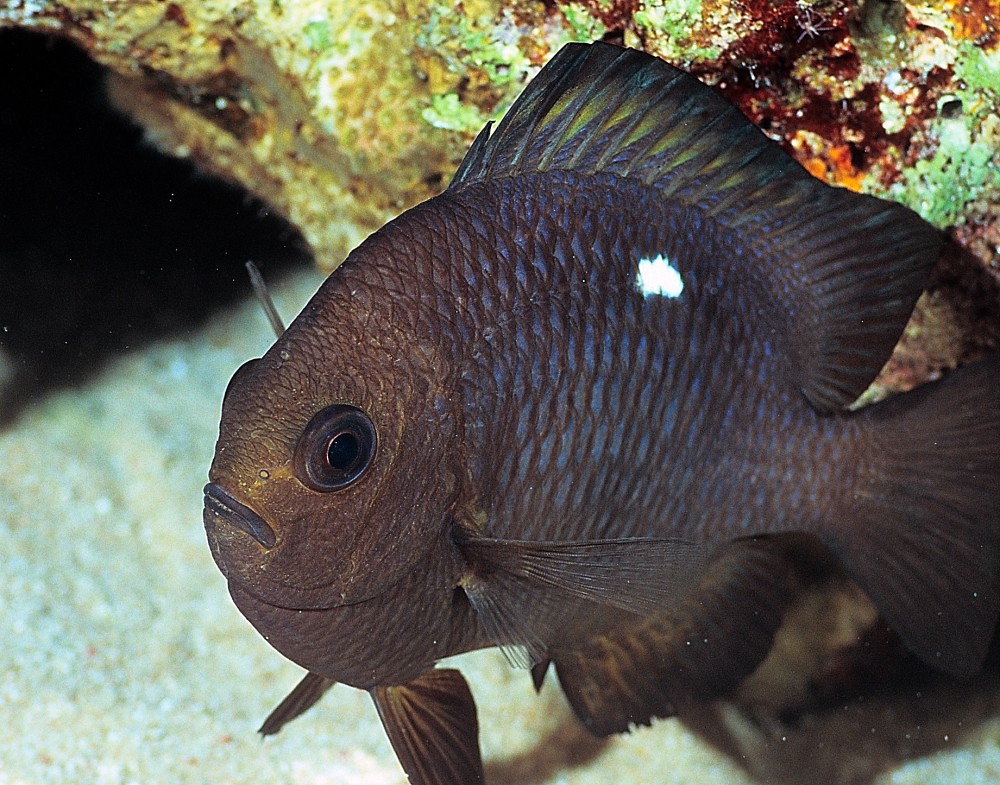
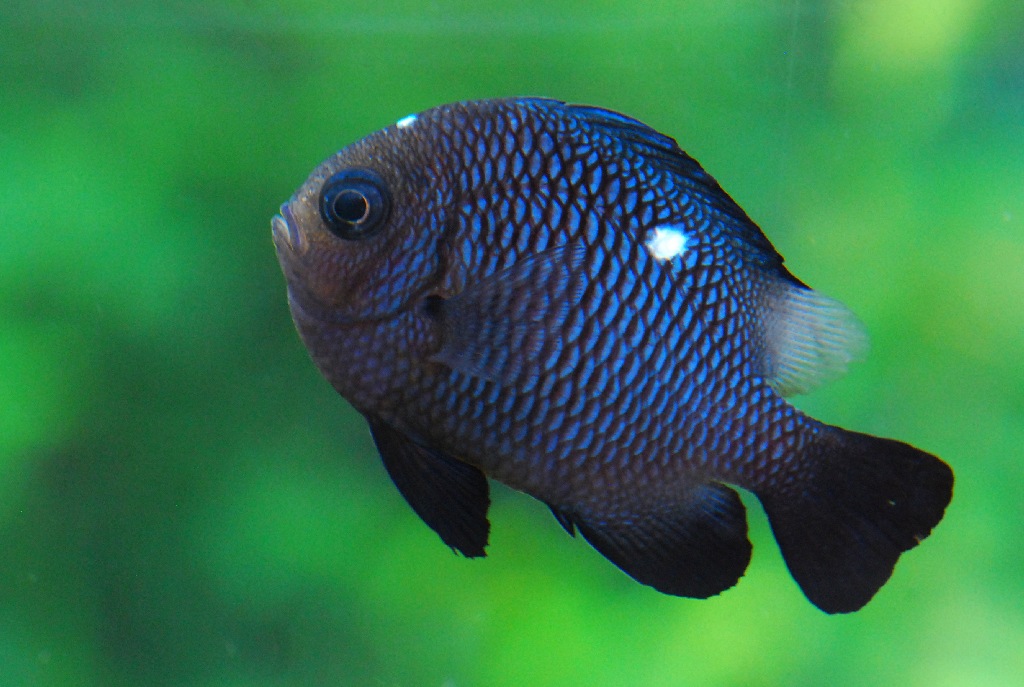
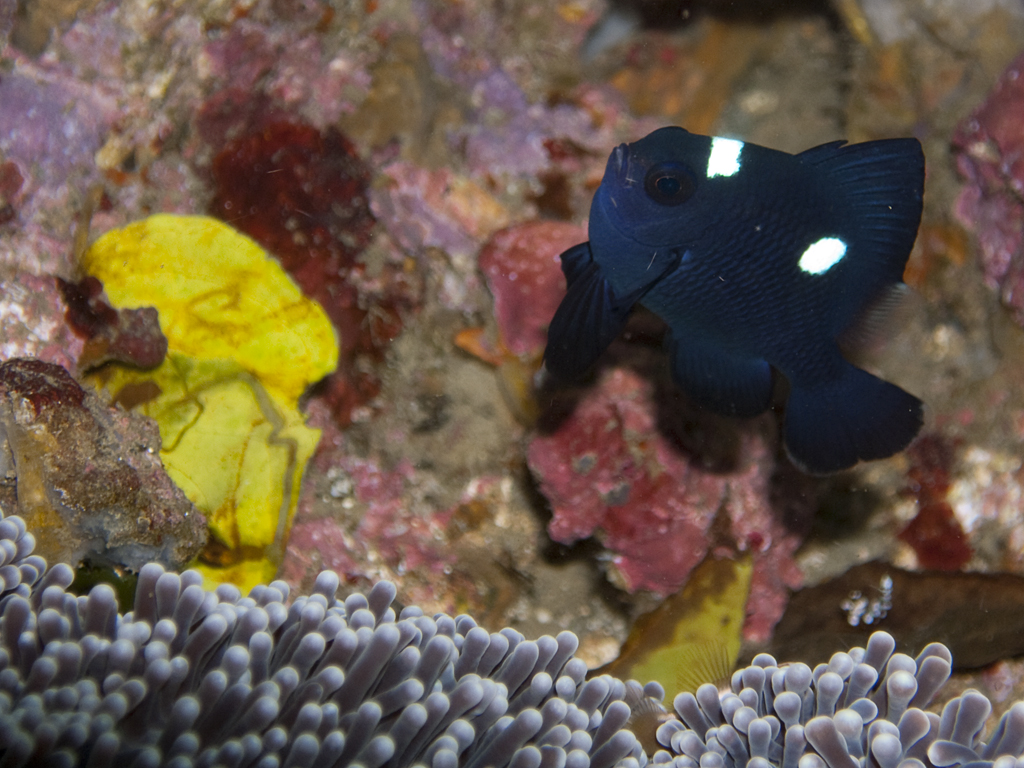
The domino. Three white spots on a black fish, one on each flank and one on the forehead, and they fade as it grows, so the largest adults are nearly plain black with the pattern barely readable.
The interesting part is the young. A juvenile threespot does what a clownfish does: it lives among the tentacles of a large anemone, protected from the stinging cells, and it will use fire coral or the spine thicket of a Diadema urchin in the same way. It is not a clownfish and has no lasting partnership with the anemone. It borrows the shelter for the few months it is small enough to be worth eating, then leaves and joins the adults on the coral heads.
Adults hover in loose groups a meter or two above a coral head or boulder, picking copepods and other plankton out of the water and grazing algae, and they drop into the coral the instant anything comes at them.
Males clear a patch of rock, court passing females over it, and then guard the eggs laid on it, fanning them until they hatch.
The species. Dascyllus trimaculatus (Rüppell 1829) - tri- (three) + maculatus (spotted). ETYFish
- black oval body with a white spot on each flank and one on the forehead
- spots fade with age, so large adults look almost plain black
- juveniles among anemone tentacles or inside urchin spines
- hovers a meter or two above a coral head and drops into it when threatened
- up to 13 cm