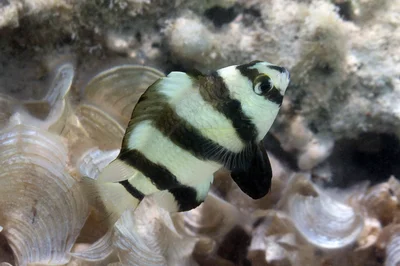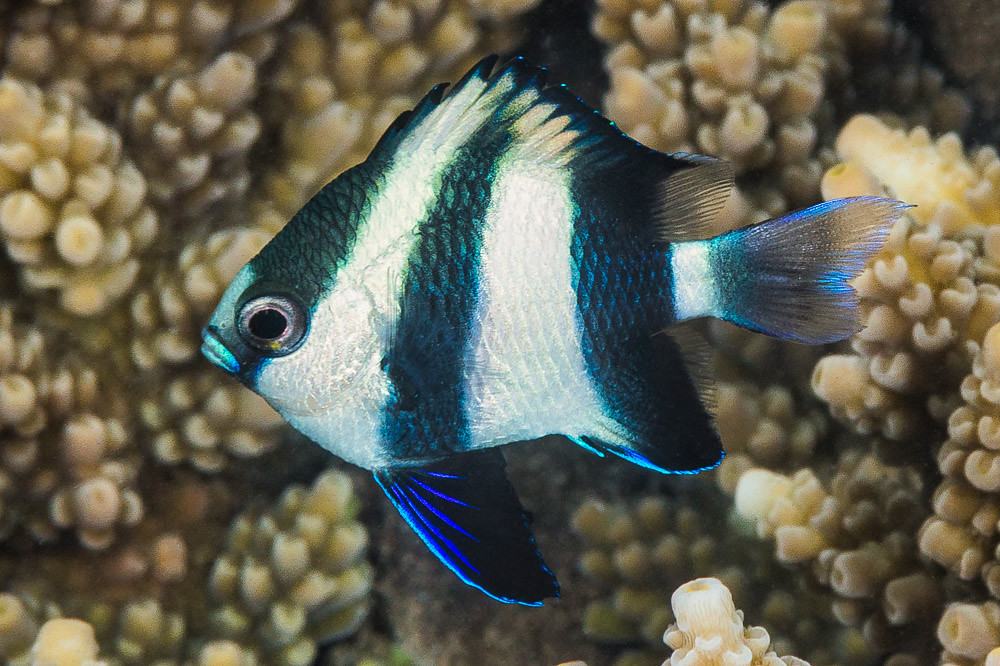
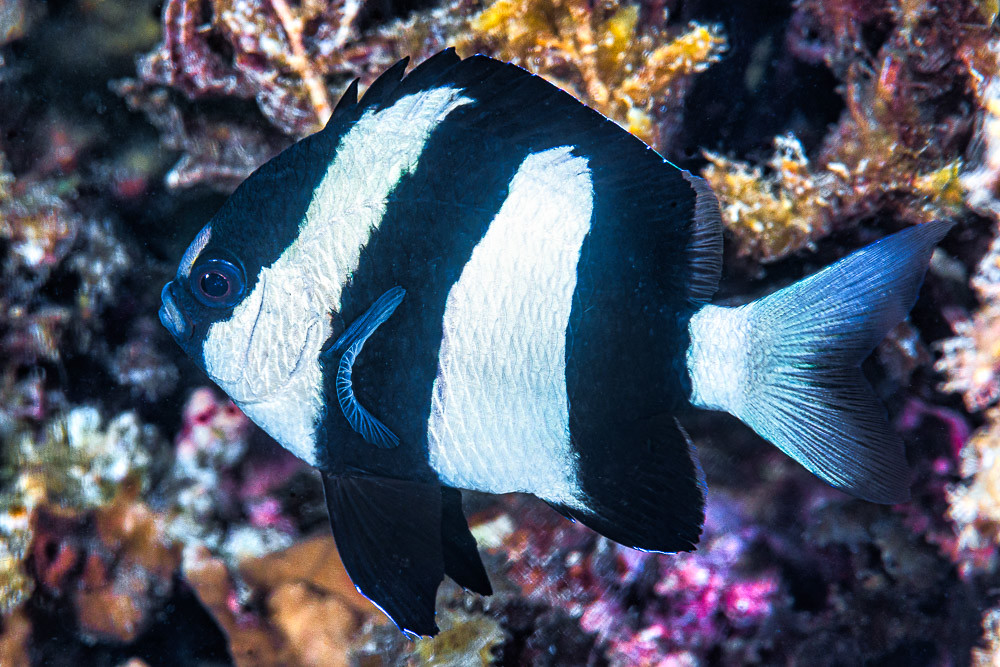
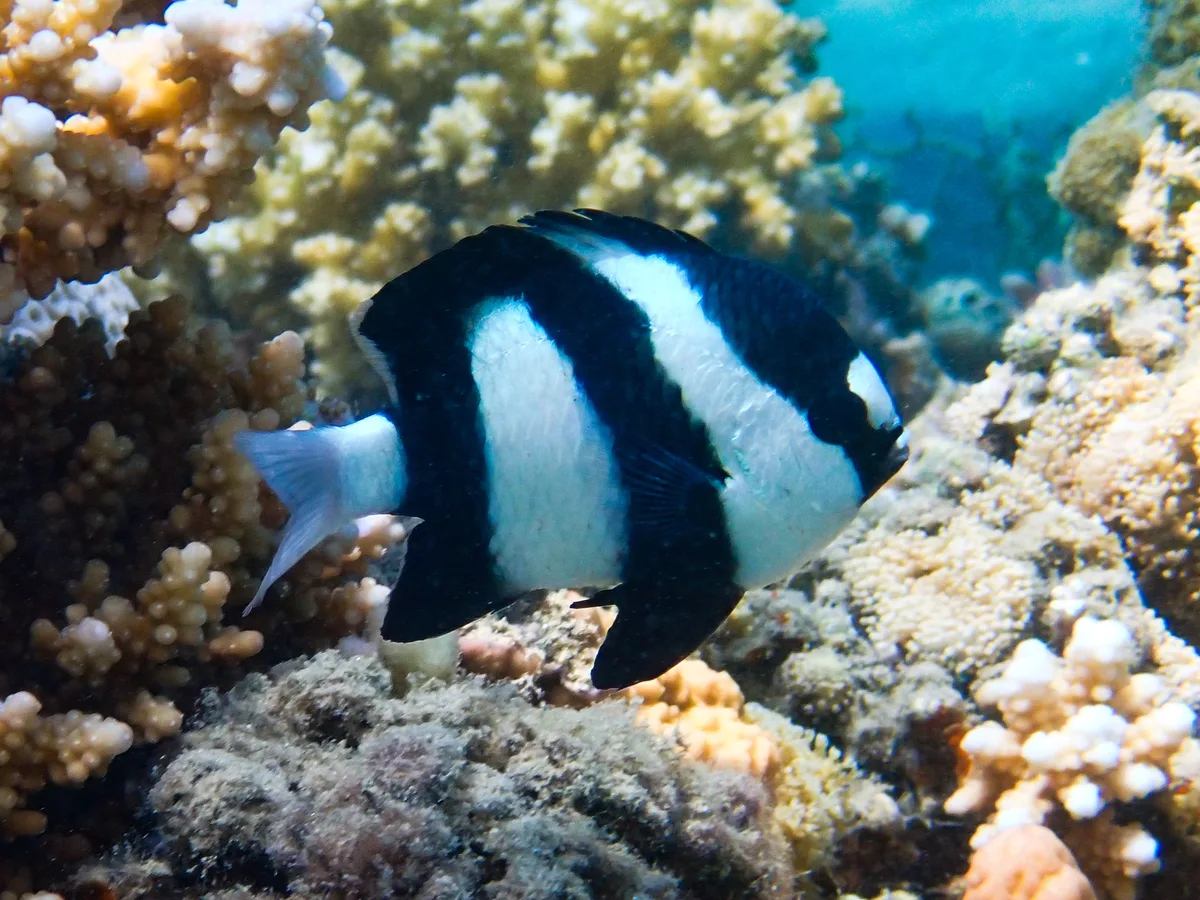
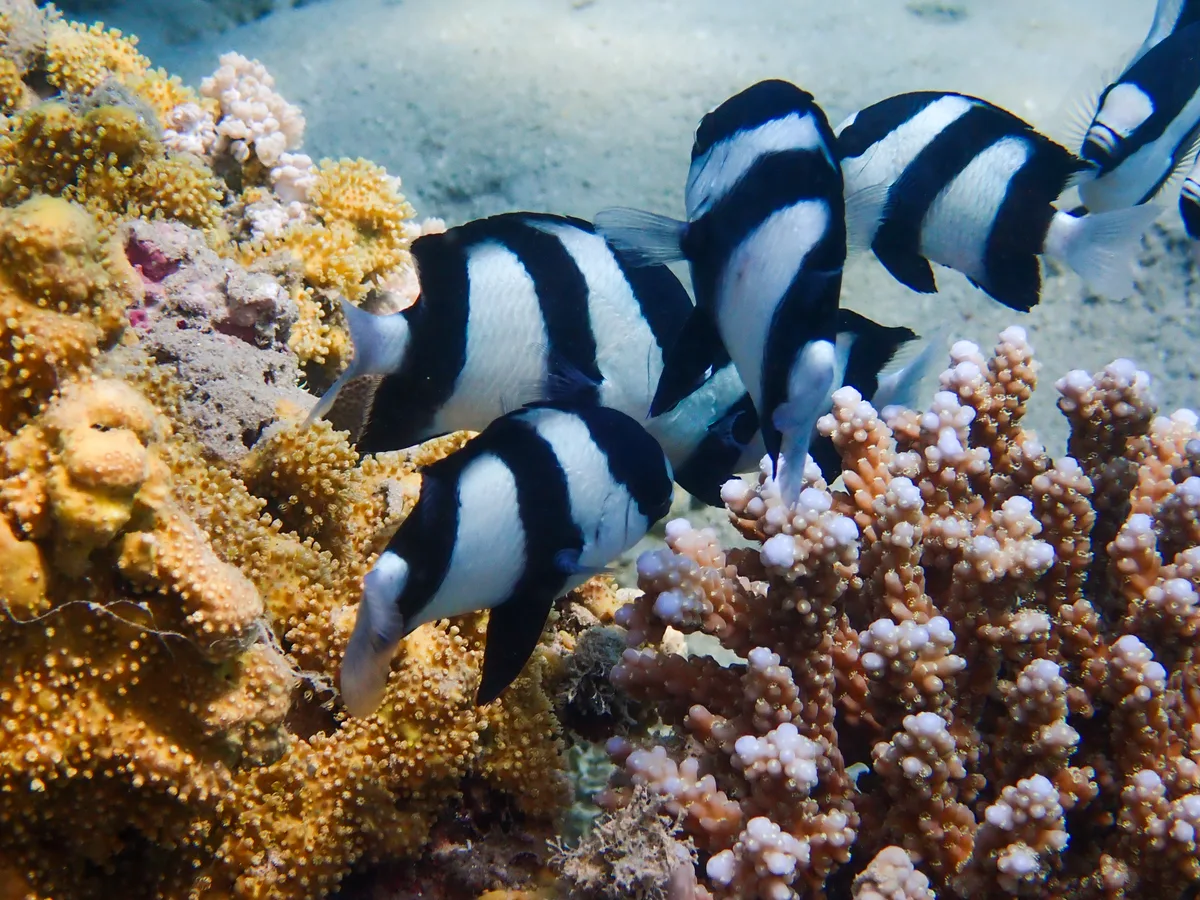
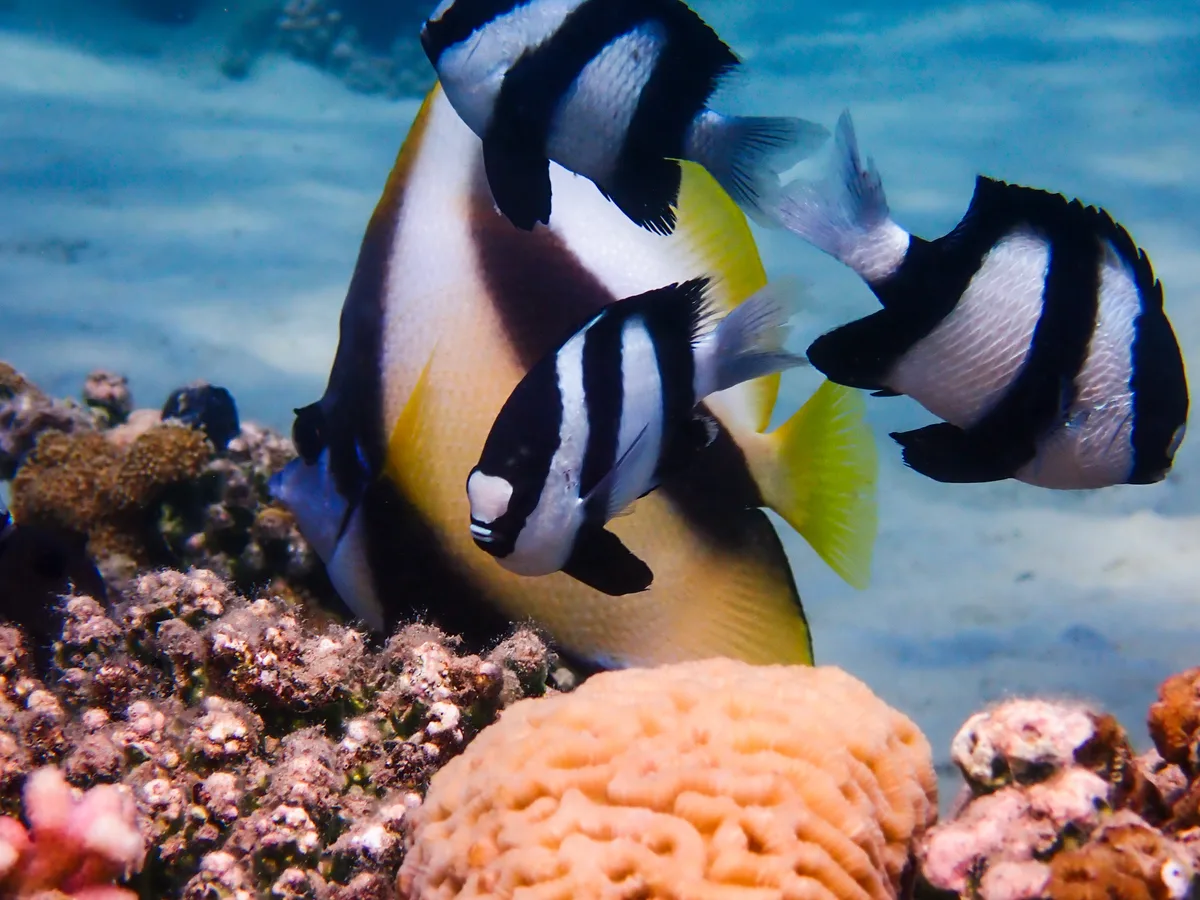
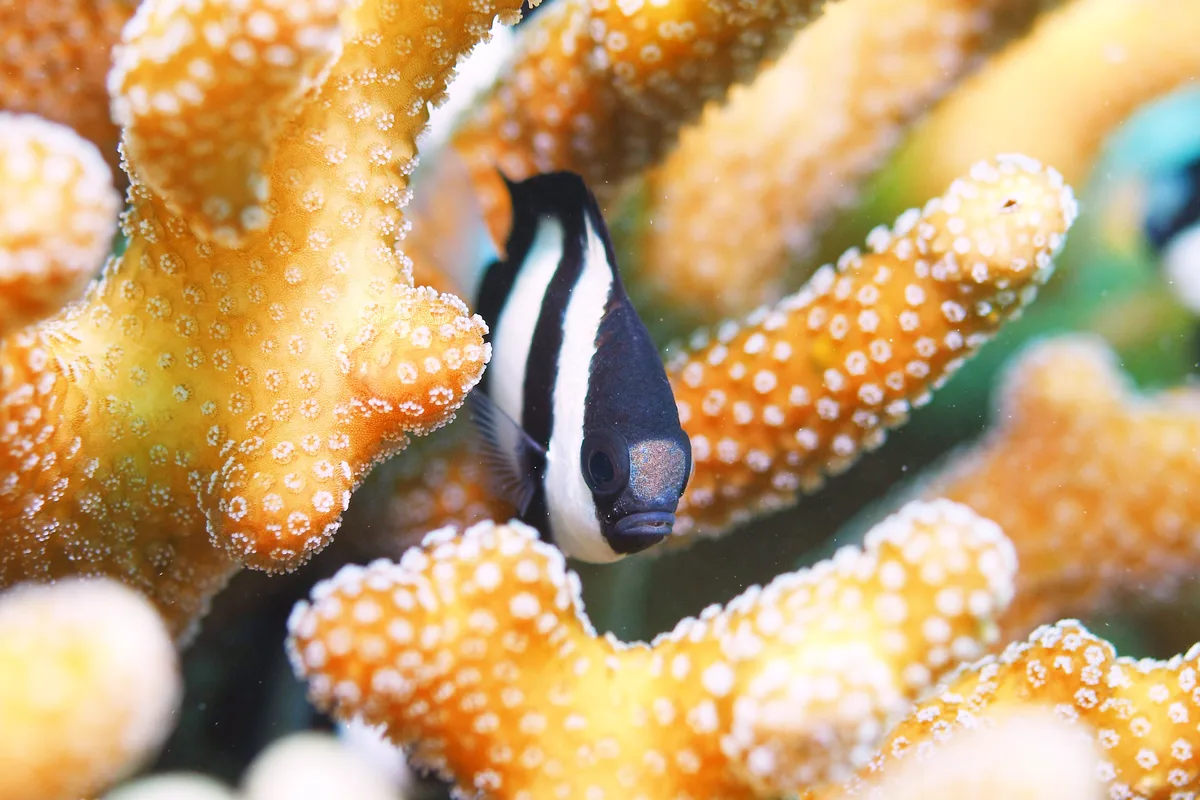
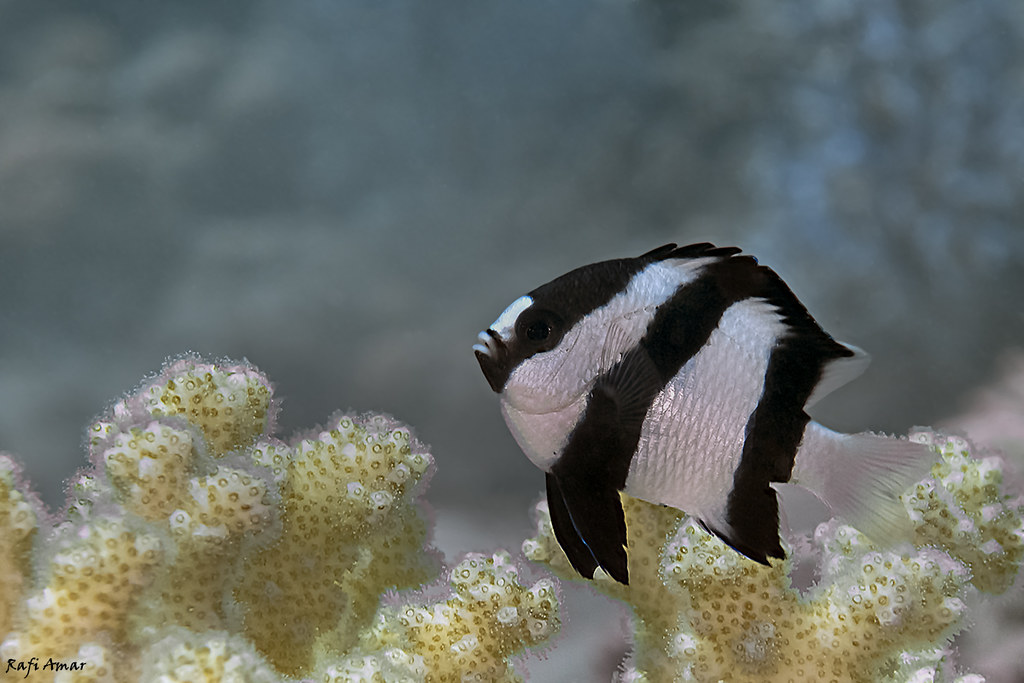
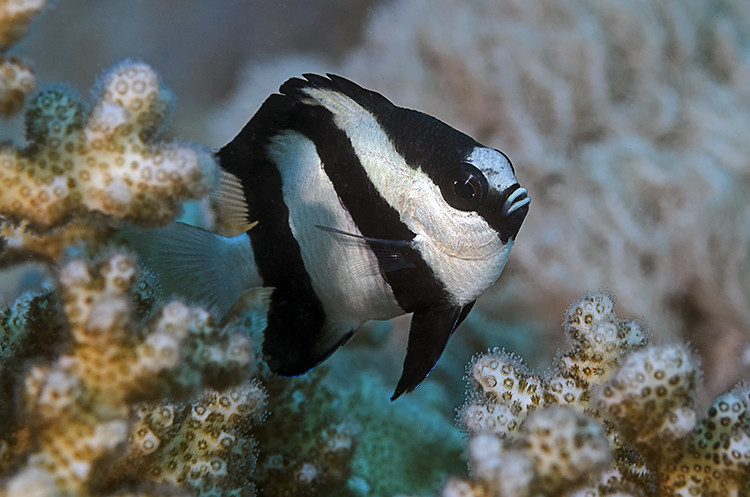
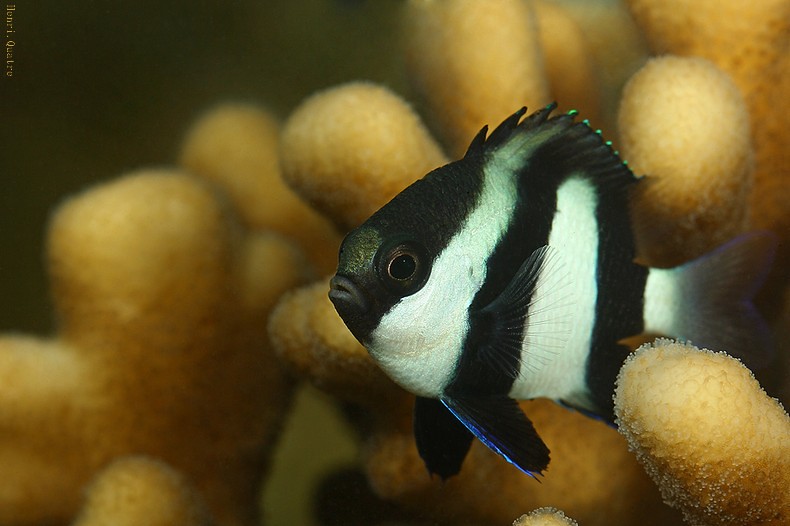
Black and white bars over a branching coral head, in a group of a dozen that never leaves it. The pattern gives the fish its English name and the whole group its character: a humbug is a striped sweet, and nothing else on the reef is marked quite this starkly.
The group has a structure. It is a size-ordered hierarchy with one dominant breeding pair at the top, and the fish below queue - a subordinate that grows too fast is chased out, so individuals regulate their own growth to stay a safe step behind the fish above them. When the top fish disappears everyone moves up one place, and a female can become male on the way.
The coral head is the whole world. These fish do not move between colonies as adults, they shelter in the same branches every night, and when the colony bleaches and dies the group is left standing over a skeleton with nowhere to drop into.
Males clean a patch at the base of the coral, court with a sharp clicking sound, and guard the eggs there until they hatch.
- white body with two broad black bars and a black snout
- small groups hovering directly over one branching coral head
- never far from the branches - the whole group drops in at a threat
- length up to 10 cm
Why it's threatened
Though there have been significant coral declines in its distribution, this species is not an obligate coral dweller, preferring high relief habitat.
Threat classification from the IUCN Red List.