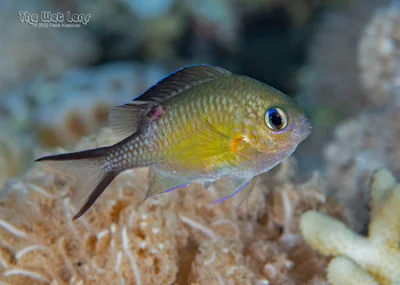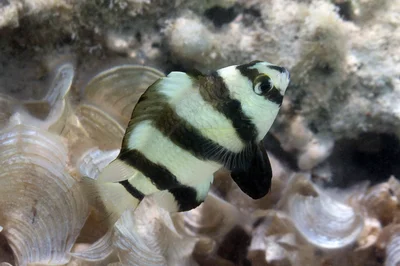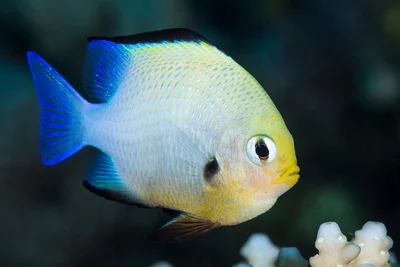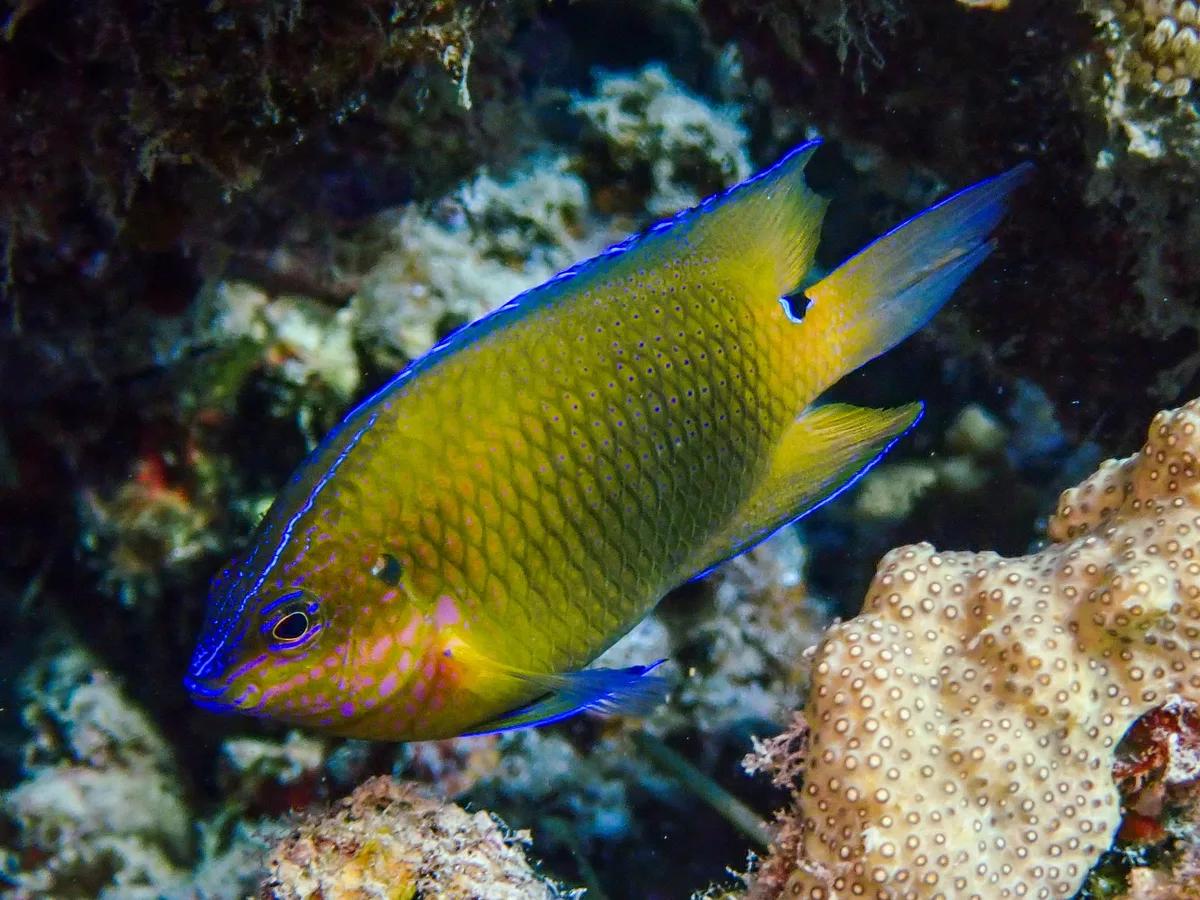
The Threeline Damselfish, scientifically known as Pomacentrus trilineatus, is a captivating marine species that thrives in tropical waters. These fish are predominantly found in coral reefs and rocky inshore areas, preferring shallow depths ranging from 1 to 4 meters. They are non-migratory, meaning they stay in one location throughout the year. The Threeline Damselfish can reach a maximum length of about 10 centimeters, making them a modest-sized inhabitant of the vibrant reef ecosystem.
Their geographical distribution spans the 🌊 Western Indian Ocean, with populations present in the 🌊 Red Sea, along the east African coast down to 🇲🇿 Mozambique, and around 🇲🇬 Madagascar. This species plays a crucial role in the reef communities they inhabit, contributing to the complex biodiversity that characterizes these marine environments. Known for their vibrant appearance, Threeline Damselfish add splashes of color to the reefs they call home.
During the breeding season, these fish are oviparous and exhibit distinct pairing behaviors. The females lay demersal eggs, which means the eggs sink and attach to the substrate on the ocean floor. Males take on the responsibility of guarding and aerating the eggs, ensuring their safety and proper development. This protective role highlights the intricate breeding behaviors that have evolved in Threeline Damselfish to boost the chances of survival for their offspring.
Understanding the ecology and behaviors of the Threeline Damselfish helps researchers and enthusiasts appreciate the delicate balance within coral reef ecosystems and the importance of conserving these vibrant underwater landscapes.
The genus. Pomacentrus Lacepède 1802 - poma (lid or cover) + kentron (thorn or spine). ETYFish
The species. Pomacentrus trilineatus Cuvier 1830 - tri- (three) + lineatus (lined). ETYFish
Why it's threatened
Threat classification from the IUCN Red List.