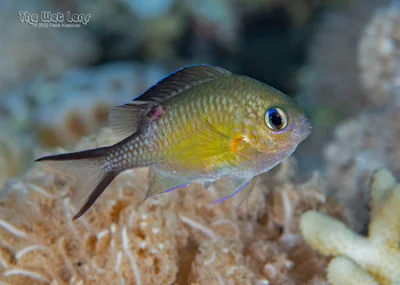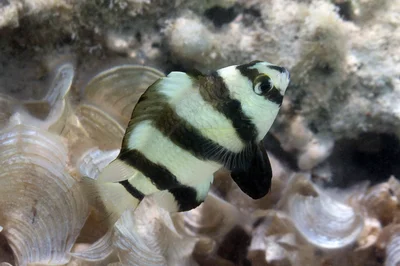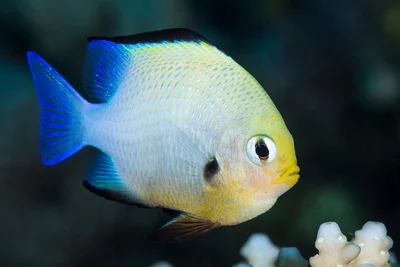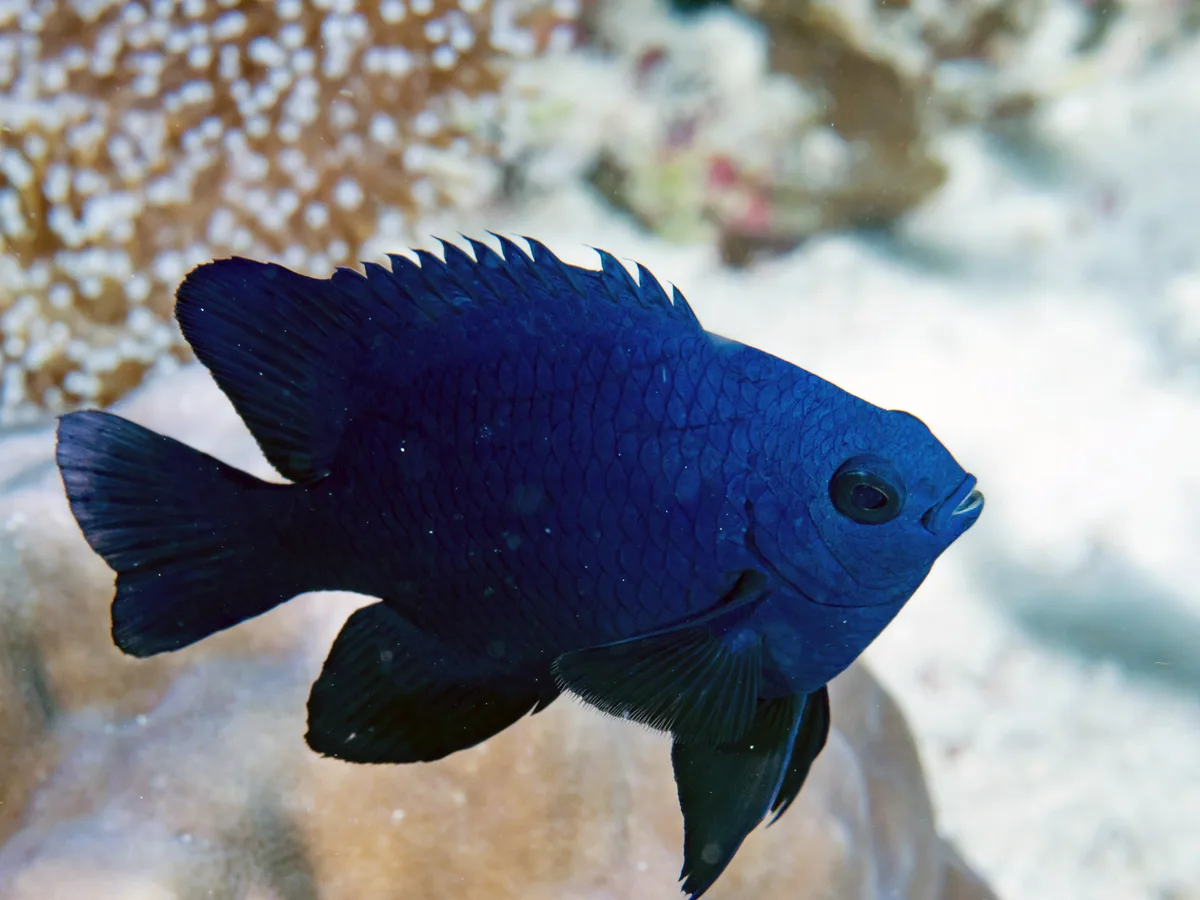

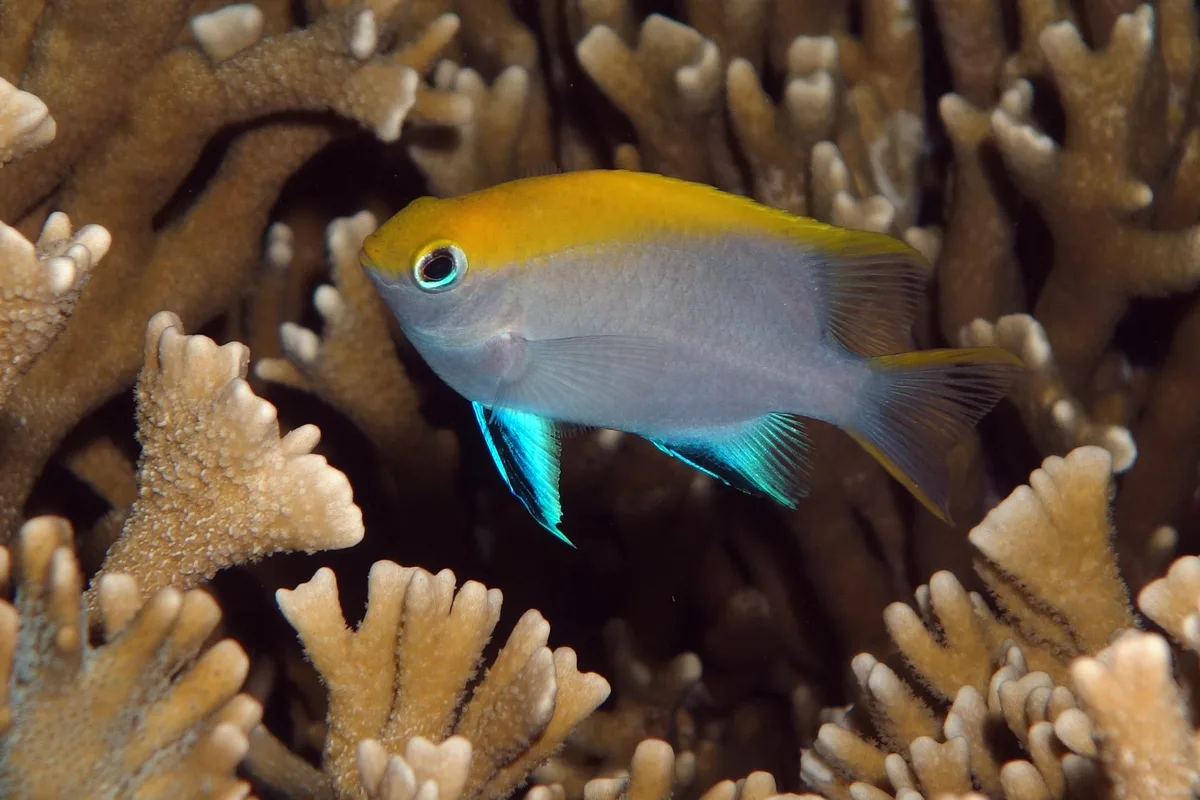
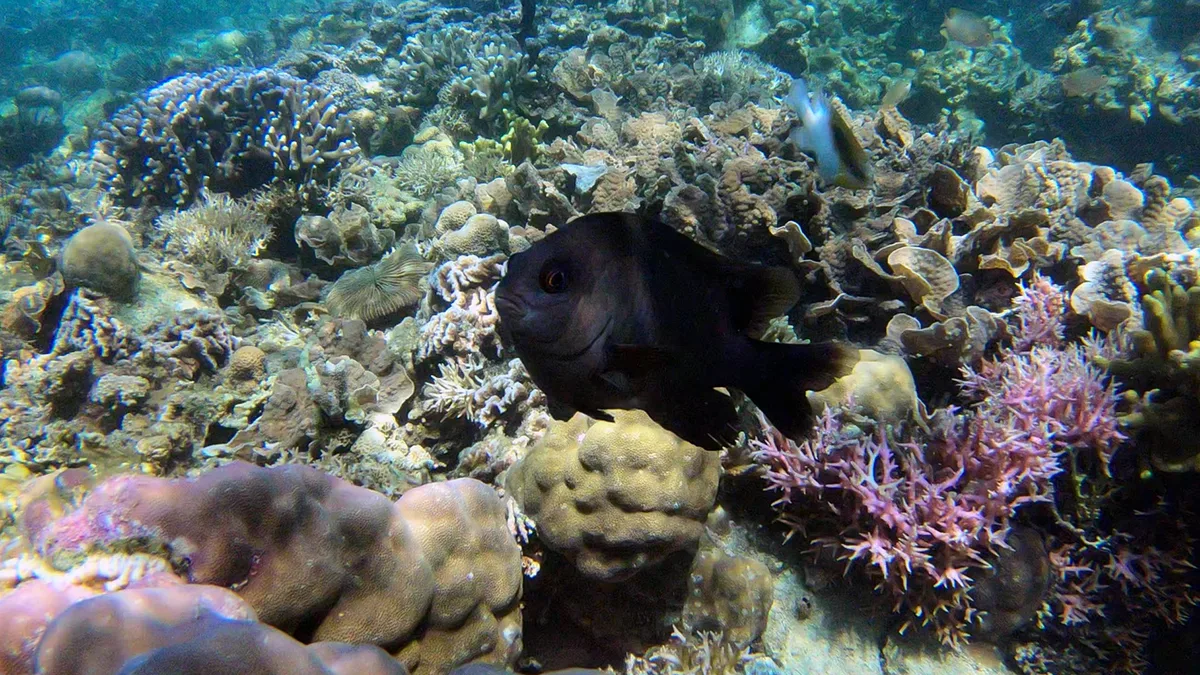
An adult is a plain sooty black damselfish with a faint blue sheen. A juvenile is bright yellow with electric blue lines across the head and back, and looks so unlike the adult that the two were long assumed to be different species. The change is gradual and a half-grown fish shows both patterns at once.
It eats soft coral. Where most damselfish farm algae or pick plankton, this one bites the polyps off leathery soft corals - a food nothing much competes for, because those corals are loaded with defensive compounds. That is also why the fish is always found within a body length of a colony.
Juveniles are territorial and conspicuous; adults are territorial and drab, which is the usual damselfish trajectory - the bright pattern advertises to rivals when the fish is small enough to need it and becomes a liability once it is worth eating.
Eggs are laid on a cleaned patch of hard surface and guarded by the male, who fans them and attacks anything that approaches, divers included. He will not hurt you; he will not stop trying either.
The genus. Neoglyphidodon Allen 1991 - neo- (new) + odon (tooth). ETYFish
The species. Neoglyphidodon melas (Valenciennes 1830) - black. ETYFish
- adults uniformly sooty black, sometimes with a faint blue sheen on the fins
- juveniles bright yellow with electric blue lines over the head and back
- usually within a body length of a soft coral colony
- length up to 18 cm
Why it's threatened
There are no known major threats.
Threat classification from the IUCN Red List.