
One of the most numerous fish on an Egyptian reef had no name until 1994. Arabian chromis were being looked at, photographed and swum through for decades before John Randall separated them out and described the species in a paper on two new damselfishes from Arabian waters.
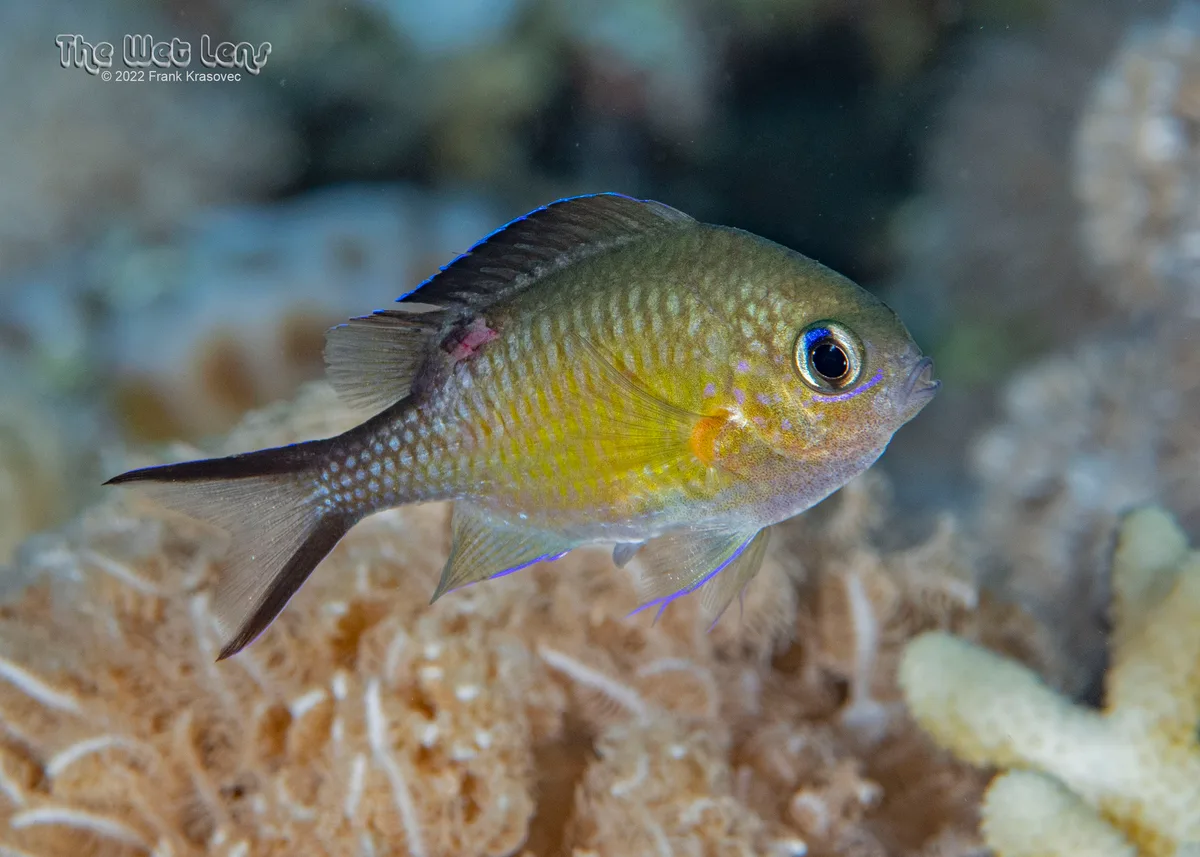
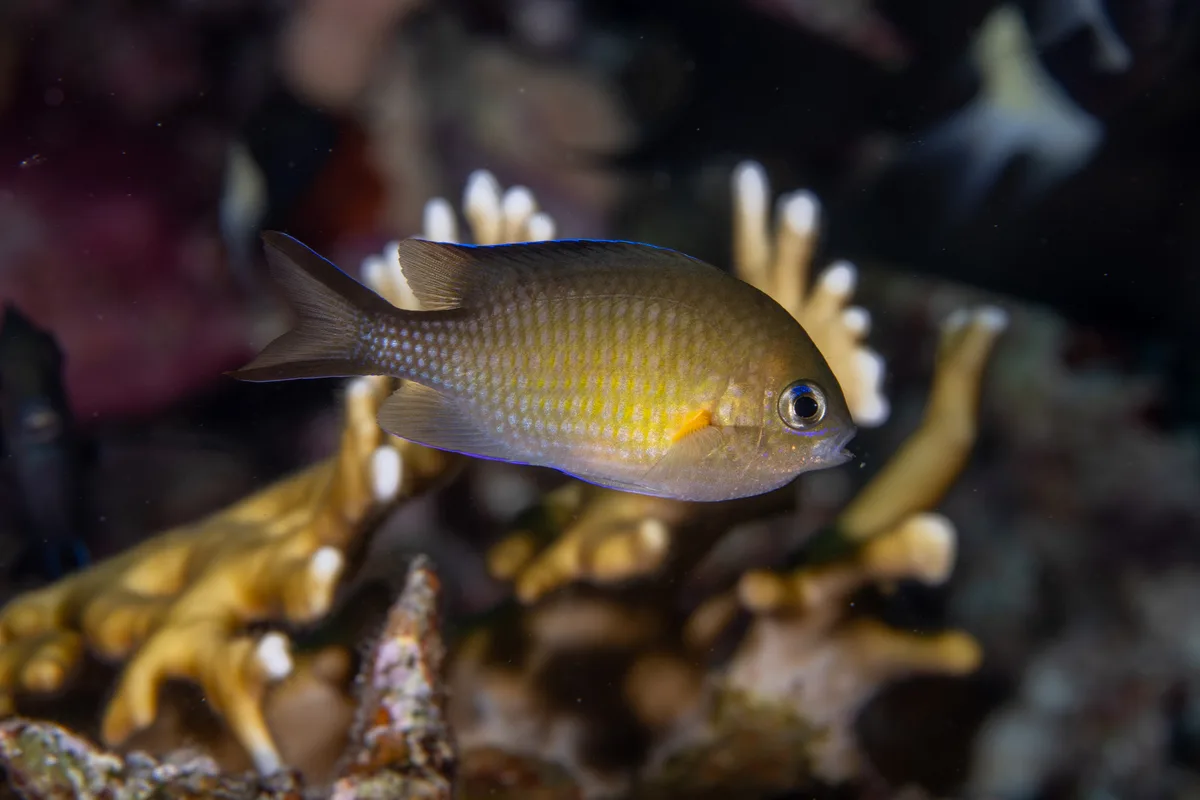
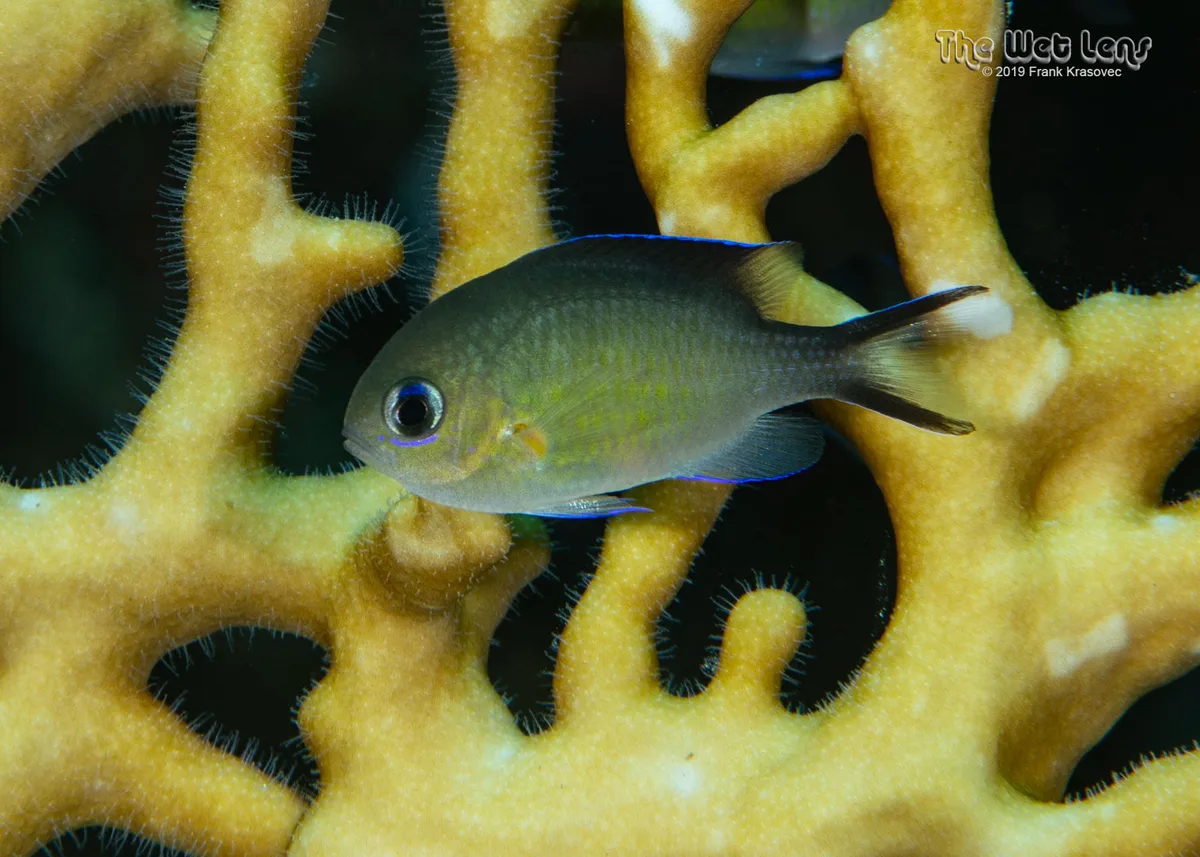
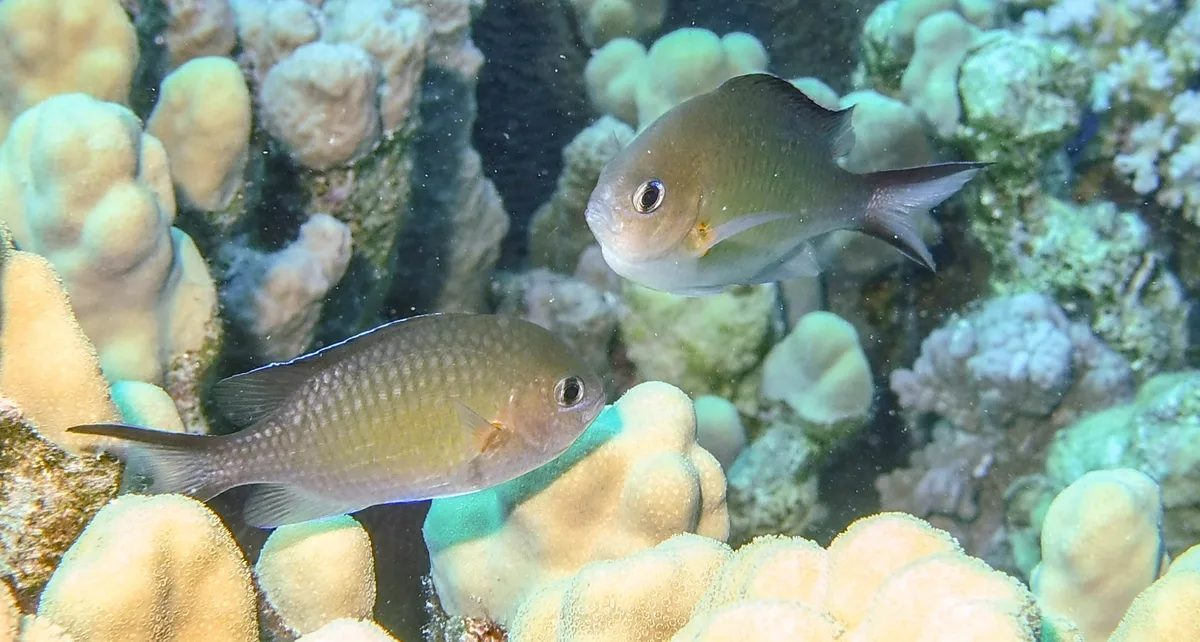
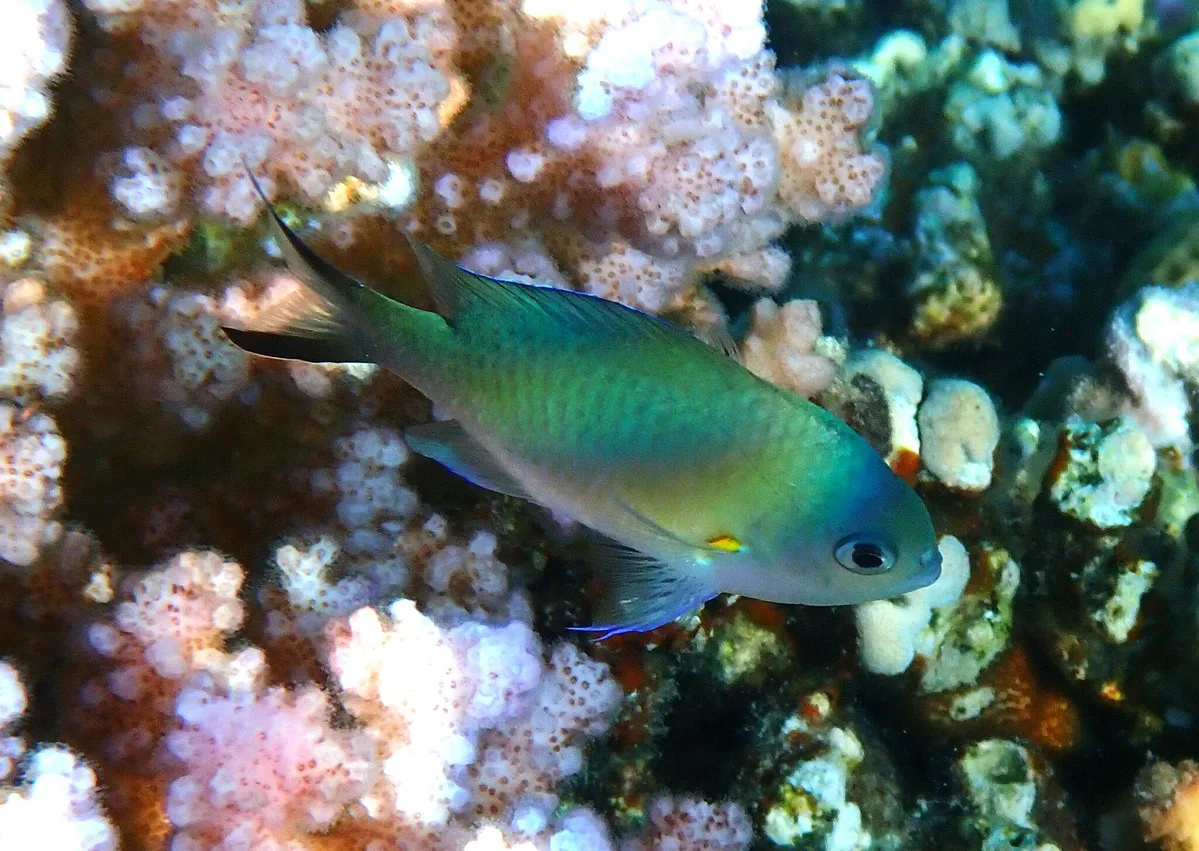
The name points at the mark: flavaxilla, yellow armpit. There is a bright orange-yellow patch in the axil of the pectoral fin, and it shows when the fin lifts. The rest is an olive-brown fish with dark scale edges that give the flank a fine lattice, blue margins along the spiny dorsal fin, the anal fin and the leading edge of the pelvics, and a pale tail carrying a broad black band in each lobe. That tail is usually the first thing you see.
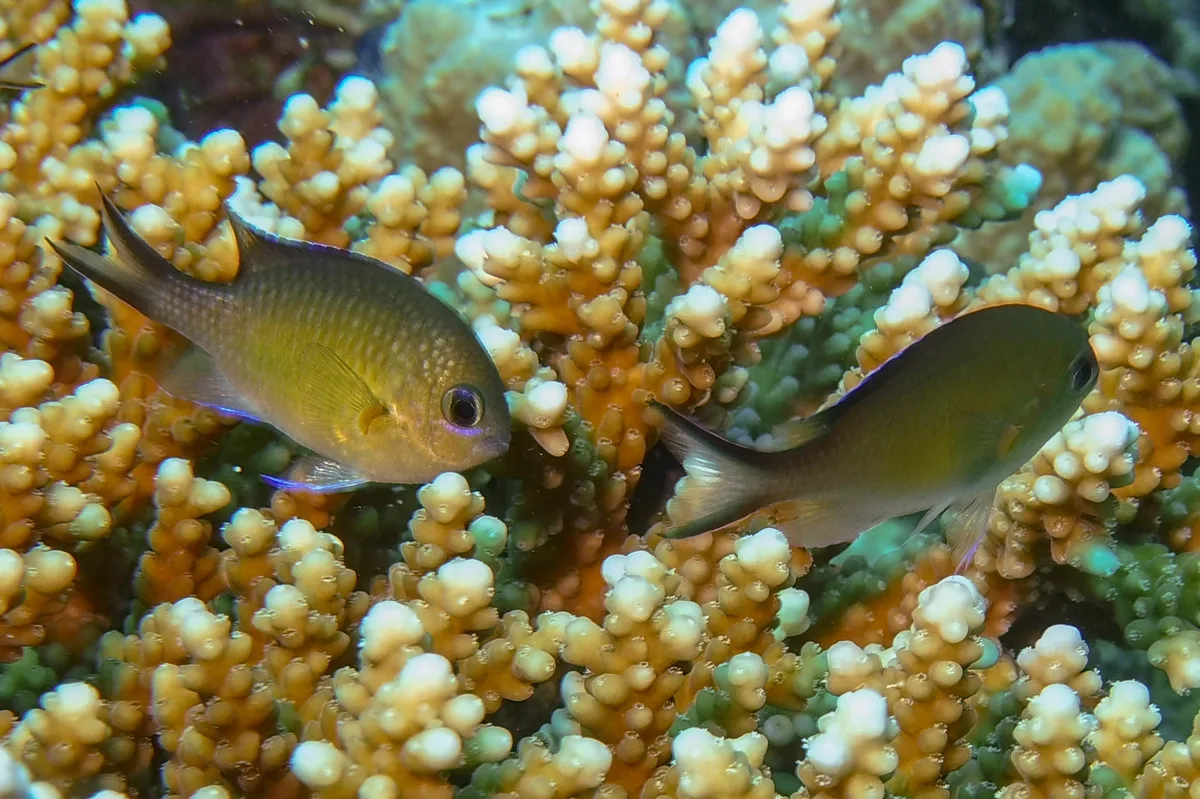
Watch a coral head on any shallow slope and the behavior is the whole story. A loose cloud of them hangs half a meter to a meter above the branches, each fish facing into the current and picking individual plankton animals out of it, and when a jack or a lizardfish comes through, the cloud drops into the coral as a single unit and is gone. Thirty seconds later they are back out, one at a time, at the same height above the same colony.
They stay with that colony. The coral is shelter, spawning site and address, and a group works the same head for as long as it stands.
Breeding is demersal and the male keeps the nest. He cleans a patch of hard surface, the female lays eggs that glue to it, and he guards and fans them until they hatch. The species runs from the northern 🌊 Red Sea round to the 🌊 Persian Gulf and nowhere else.
The species. Chromis flavaxilla Randall 1994 - flavus (yellow) + axilla (axil). ETYFish
- olive-brown body with dark scale edges, gray below
- orange-yellow patch in the pectoral armpit, showing when the fin lifts
- blue margins on the spiny dorsal, the anal fin and the front of the pelvic fins
- pale tail with a broad black band in each lobe
- up to 7 cm
Why it's threatened
Threat classification from the IUCN Red List.