Red Sea's Big Five Sea Turtles: Identification Guide and Their Precarious Future

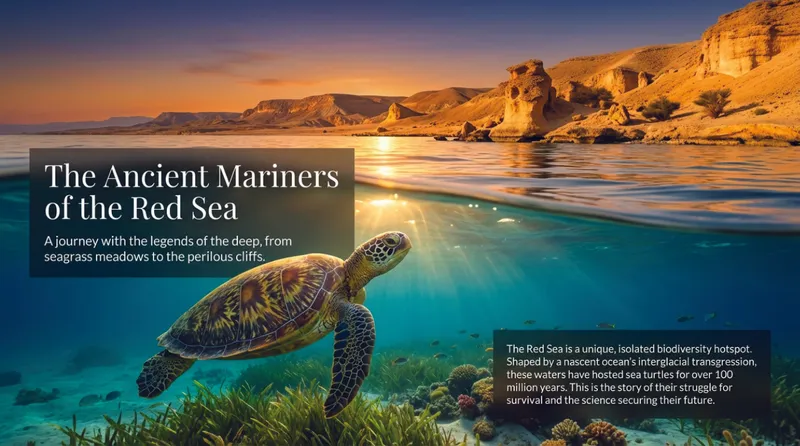
The Red Sea is far more than a premier diving destination; it is a unique, isolated biodiversity hotspot characterized by extreme environmental gradients and high salinity. Its unique hydrology, shaped by a nascent ocean’s interglacial transgression, has created a natural laboratory for evolution. While most visitors arrive to marvel at the vibrant coral reefs, the region's most ancient residents - sea turtles - have been navigating these waters for over 100 million years.
As a conservation biologist, I view these "marine legends" not just as charismatic megafauna, but as vital indicators of ecosystem health. However, they now face a rapidly changing world. From overheating sands to the surprising "cliff traps" created by rising tides, their survival is no longer guaranteed. This listicle serves as your guide to identifying the "Big Five" of the Red Sea and understanding the precarious future of these ecological engineers.
Meet the "Big Five": A Red Sea Identification Guide
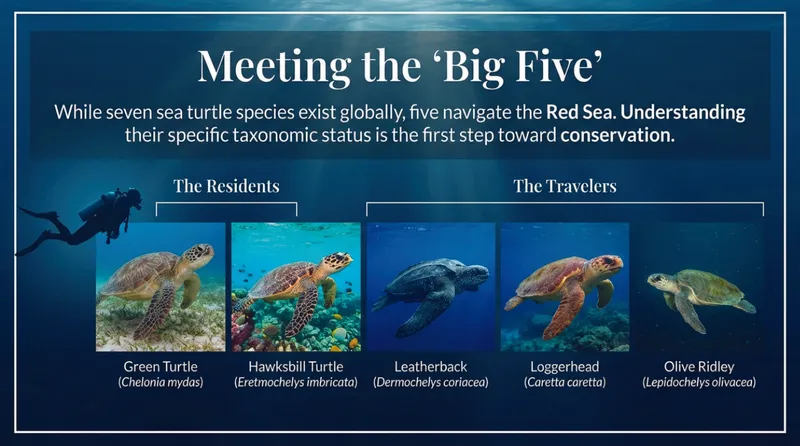
While seven sea turtle species exist globally, five utilize the Red Sea. Understanding their specific taxonomic status and behaviors is the first step toward effective conservation.
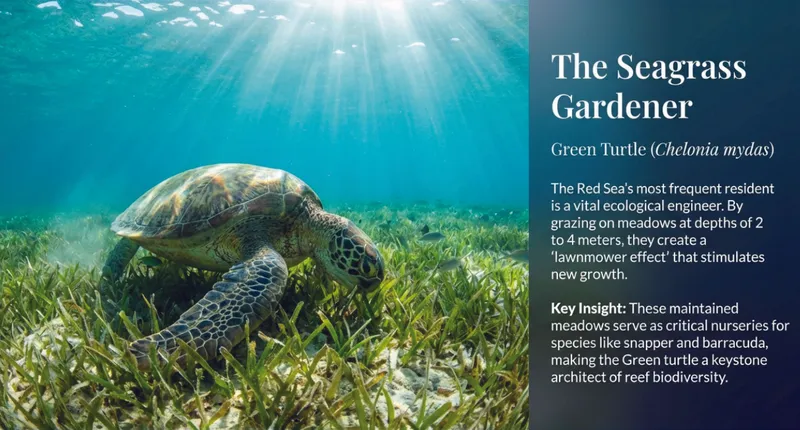
- Green Turtle (Chelonia mydas): The Red Sea’s most frequent resident and a vital "seagrass gardener." By grazing on meadows at depths of 2 to 4 meters, they provide a "lawnmower effect" that keeps the grass healthy. These meadows serve as a critical nursery for species like snapper and barracuda, making the Green turtle a keystone architect of reef biodiversity.
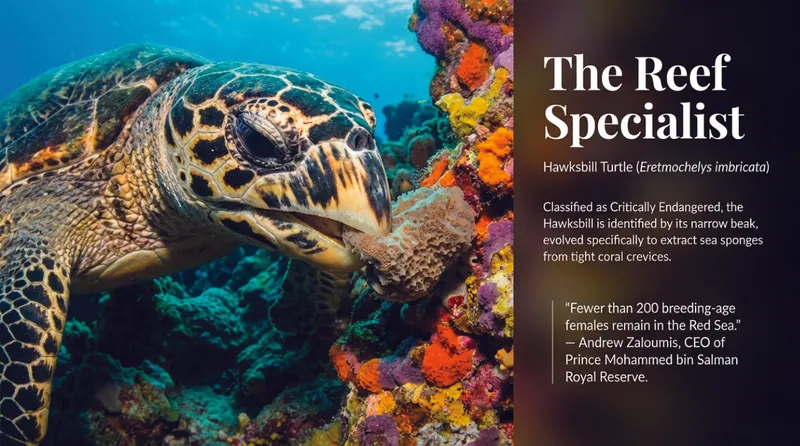
- Hawksbill Turtle (Eretmochelys imbricata): Classified as Critically Endangered, the Hawksbill is identified by its hawk-like beak, evolved to extract sea sponges from coral crevices. They prefer the southern regions and exhibit distinct nesting behavior, often choosing sites tucked within vegetation just above the dunes.
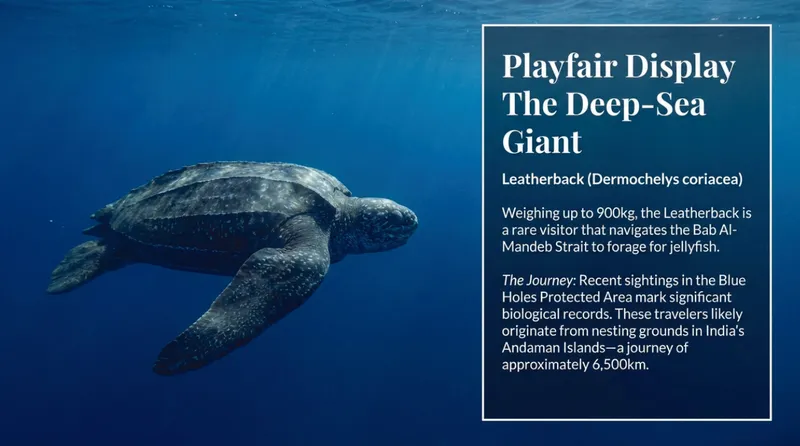
- Leatherback Turtle (Dermochelys coriacea): A rare, deep-diving giant weighing up to 900kg. They lack a hard shell, possessing instead a leathery black carapace with five longitudinal ridges. These travelers navigate the Bab Al-Mandeb Strait specifically to forage for jellyfish. While they can dive over 1,000 meters, their nearest nesting grounds are 6,500km away in India’s Andaman Islands.
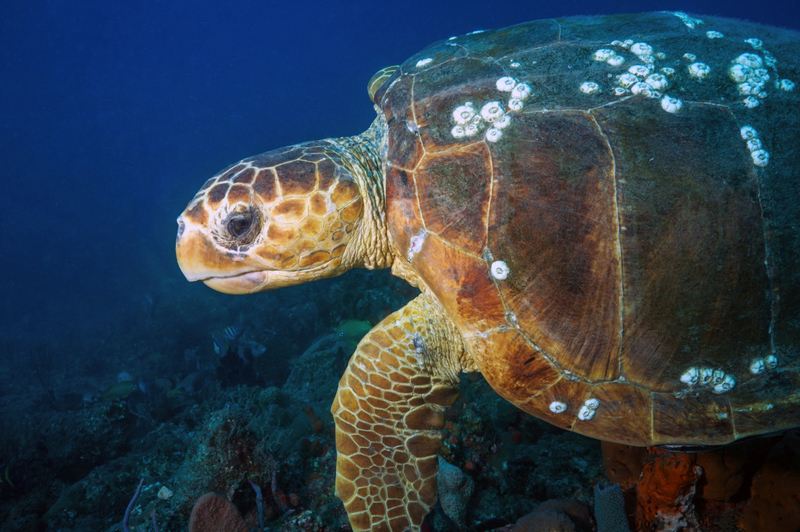
- Loggerhead Turtle (Caretta caretta): Frequently observed by regional projects like the Red Sea Project, though their specific spatial distribution and population status in the region remain unquantified and a subject of ongoing study.
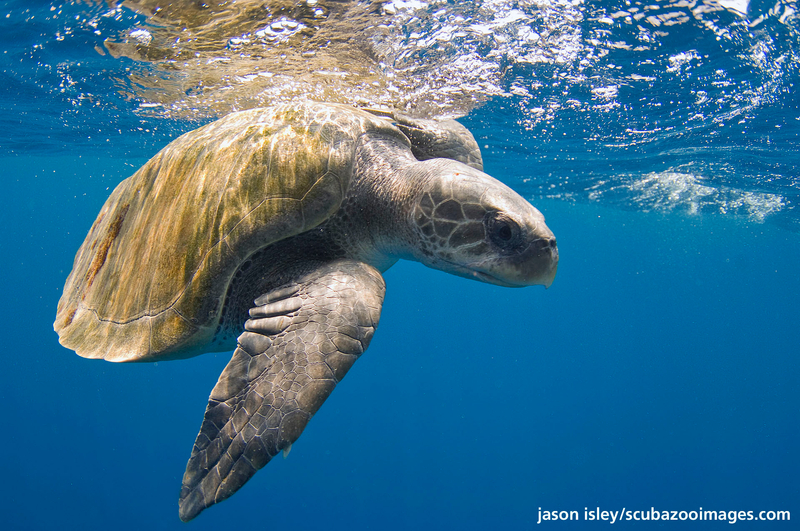
- Olive Ridley Turtle (Lepidochelys olivacea): While historical accounts suggest nesting in the southwestern Red Sea, modern scientific confirmation is still pending. To date, nesting activity in the Red Sea has only been confirmed for Green and Hawksbill turtles.
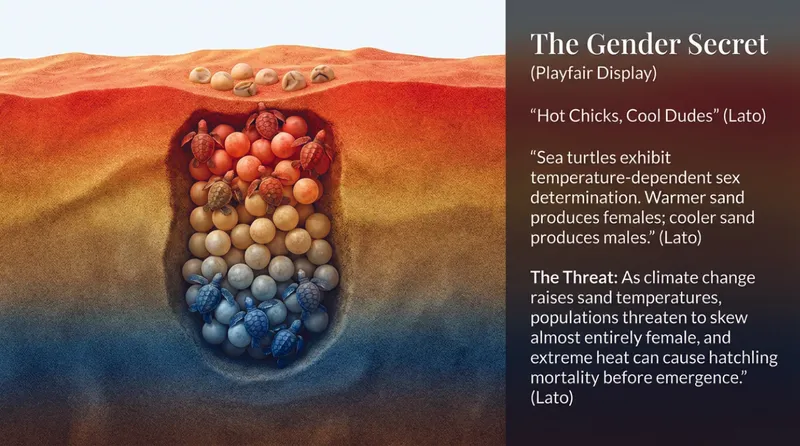
The Science of Survival: Reproduction and the Temperature "Gender Secret"
For sea turtles, the beach is a nursery governed by a delicate biological balance. In the Red Sea, nesting peaks between June and August for Hawksbills and July through September for Green turtles. These species rely on "natal homing," a biological instinct that drives them to return to the exact beaches where they were born decades earlier.
The survival of these species is tethered to sand temperature through temperature-dependent sex determination. The heat of the nest defines the hatchlings' gender; warmer sands produce females, while cooler sands produce males. Rapidly warming global temperatures threaten to skew these ratios and impact hatchling viability.
"Climate change poses a significant threat to sea turtles, primarily due to the effects of warming on the sex definition and viability of hatchlings, sea-level rise and altered storm patterns." - Wildermann et al., Global Ecology and Conservation (2024)
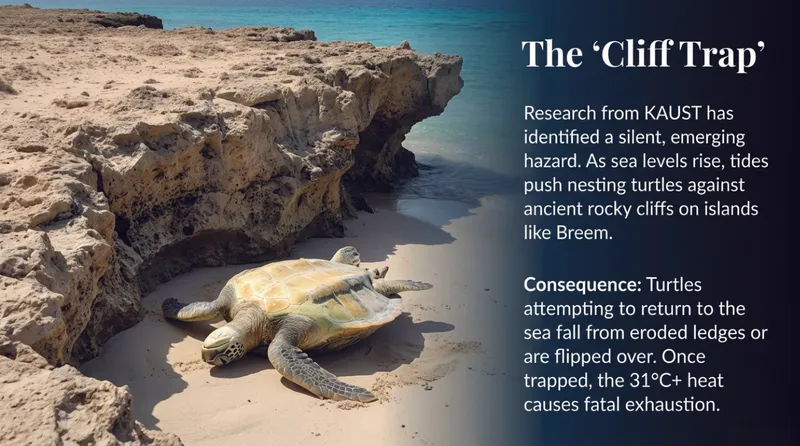
The "Cliff Trap" and Rising Tides: A New Hazard
Recent research from the King Abdullah University of Science and Technology (KAUST) has identified a tragic "indirect effect" of climate change on Breem Island, home to the Red Sea’s second-largest Green turtle population.
As sea levels rise, beach erosion creates a "sand-to-rock continuum," exposing sharp limestone terraces. Green turtles, which often crawl longer distances in search of high-ground nesting sites, find themselves atop these 1-to-2-meter cliffs. When attempting to return to the sea, they frequently fall, landing upside-down and trapped.
In the extreme Red Sea heat - where mean temperatures are 31°C and maximums reach 44°C - these turtles face a narrow window for rescue. KAUST researchers documented a mortality rate of 1.5-3.75% of the nesting population due to these falls. This represents a massive biological loss: because sea turtles are long-lived species with late maturity, these adult females hold the highest reproductive value for the population. Interestingly, Hawksbill turtles are largely unaffected by this "trap" because they prefer shorter crawls and nesting near the safety of the dunes.
Guardians of the Grass and Victims of Plastic
Sea turtles are "ecological engineers." By maintaining seagrass health, Green turtles support carbon sinks that combat climate change and provide shelter for juvenile fish. However, this habitat is becoming a minefield.
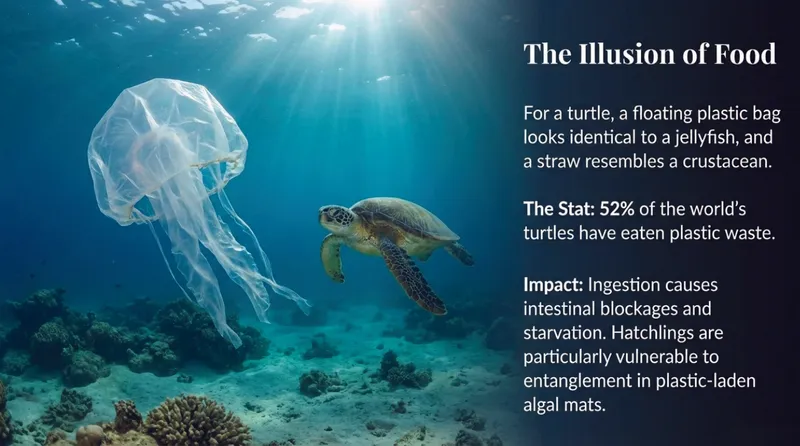
- The Plastic Threat: Approximately 52% of the world's turtles have ingested plastic. Juveniles are the most vulnerable, as they spend their early years in "floating algal mats" and drift lines of flotsam where plastic debris naturally accumulates.
- Ingestion vs. Entanglement: Ingesting plastic bags (mistaken for jellyfish) can cause internal ruptures and starvation. Entanglement in "ghost gear" leads to limb loss or drowning.
- The Light Mirage: Artificial hotel lights pose a lethal threat to the "sea-finding" process. Hatchlings often confuse these bright lights for the natural starlight or moonlight over the Red Sea, leading them inland toward roads and predators rather than the safety of the waves.
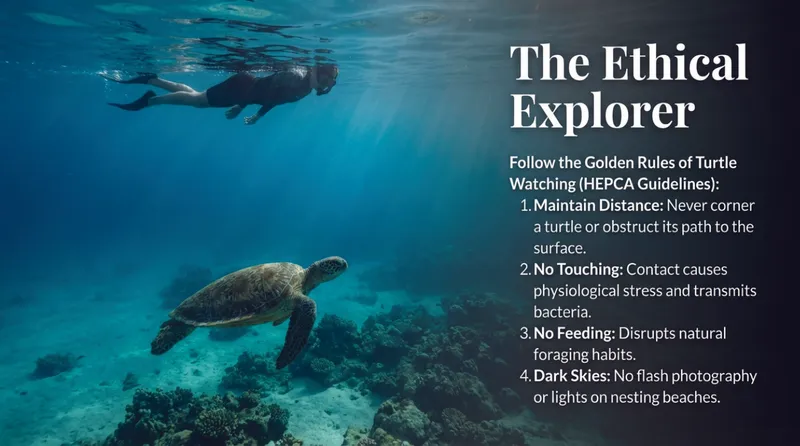
The Ethical Explorer: Guidelines for Encounters
Conservation requires closing "knowledge gaps" through programs like the satellite tracking launched by the Prince Mohammed bin Salman Royal Reserve. These tags help us identify migratory corridors across the 800km of protected Red Sea coastline. You can join this mission by following the Golden Rules of Turtle Watching:
- Maintain Your Distance: Never corner a turtle or obstruct its path to the surface or the beach.
- Strictly No Touching: Do not touch, grab, or lean on a turtle; this causes immense physiological stress.
- No Feeding: Offering food disrupts natural foraging and health.
- Preserve Dark Skies: Avoid flash photography or campfires on nesting beaches. Hatchlings need to follow the moon, not your fire.
- Report Sightings: Support data collection by reporting sightings or injuries to organizations like HEPCA or the Red Sea Project.
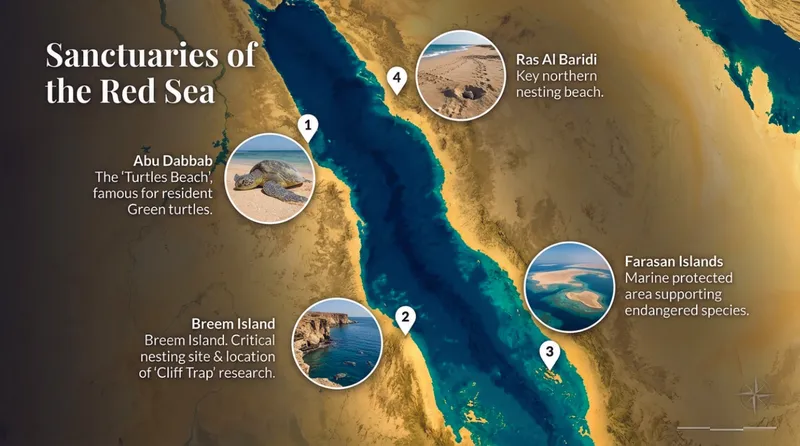
"Critically Endangered Hawksbill turtles face an extremely high risk of extinction in the wild within our lifetime. With fewer than 200 breeding-age females remaining in the Red Sea, their survival depends on closing vital knowledge gaps." - Andrew Zaloumis, CEO of Prince Mohammed bin Salman Royal Reserve
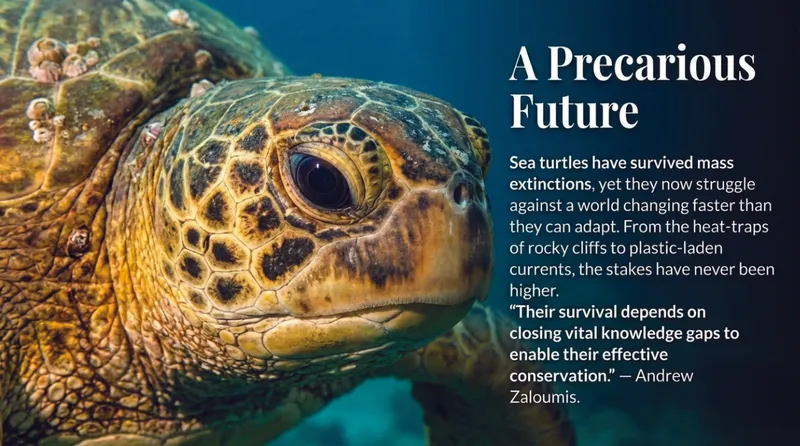
Conclusion: A Question for the Future
Sea turtles have survived mass extinctions for millions of years, yet they are now struggling against a world changing faster than they can adapt. From the "cliff traps" of Breem Island to the plastic-laden algal mats of the open sea, the stakes have never been higher for these ancient mariners.
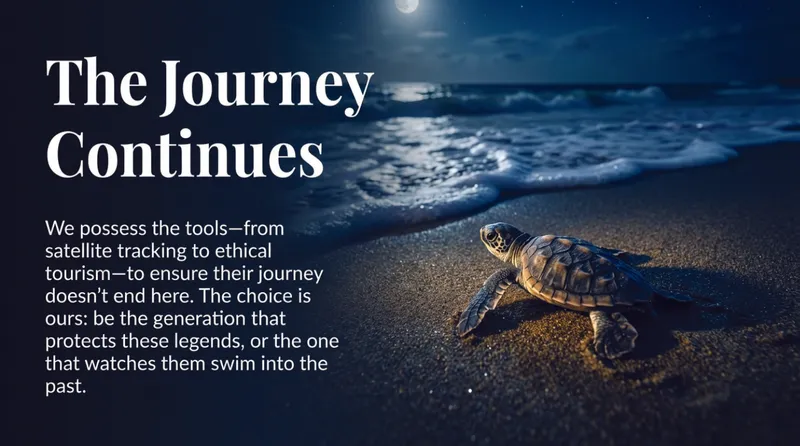
We have the tools - from satellite tracking to habitat restoration - to ensure their journey continues. The question is: will we choose to be the generation that protected these legends, or the one that watched them swim into the past?
PADI Divemaster and underwater storyteller with over 7 years of hands-on Red Sea diving experience, documenting marine life, mapping dive sites, and promoting responsible ocean conservation.