
26 species in Groupers
Cephalopholis
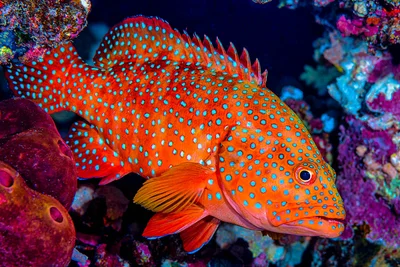
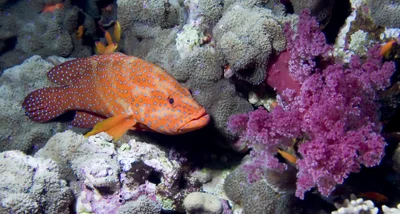
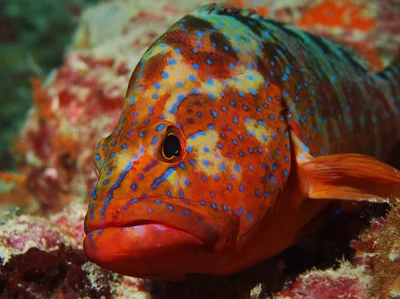
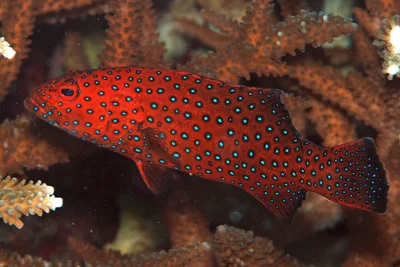
5The hinds. Smaller than the reef groupers, red to orange, covered in small blue spots ringed darker - and every line of the outline is rounded, the tail and the soft fins included, with no spine tips breaking the profile. That roundness separates one from a young Epinephelus of the same length and color faster than any spot pattern will.

Epinephelus
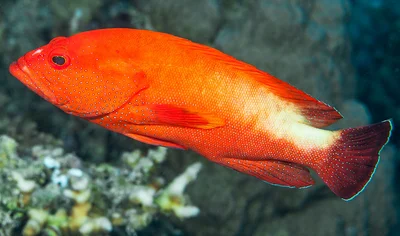
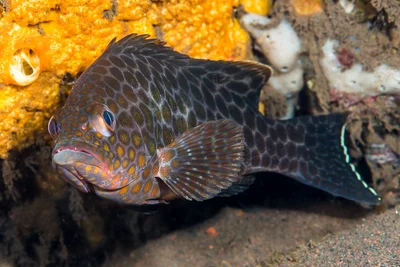
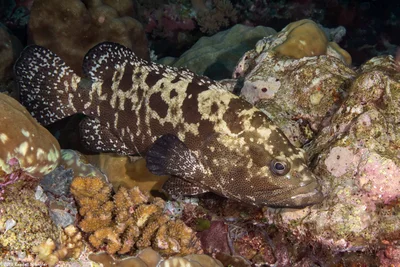
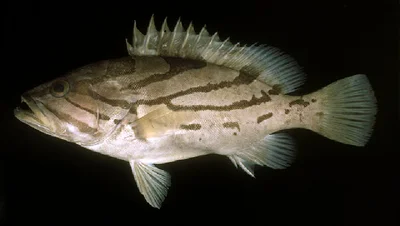
14The heavy reef groupers, and more than half of this page. Identification here is genuinely bad, because the color changes within seconds and the plate in the book was painted from one mood. What does not change is the geometry: whether the spots are round, polygonal or broken into blotches, and whether a dark saddle sits on the stalk in front of the tail. Work from those and ignore the shade of brown.




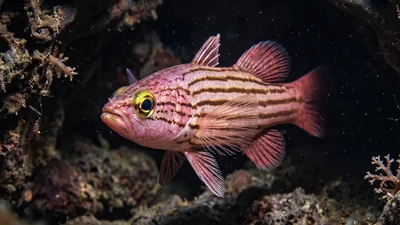
Liopropoma
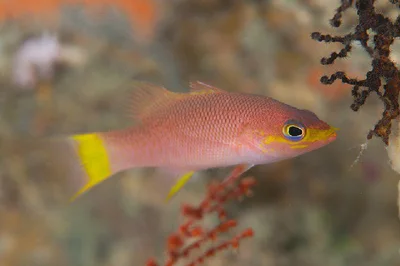
2Groupers the size of a finger. Under ten centimeters, built exactly like their large relatives in miniature, and living so far back inside caves and rubble that most sightings happen in a torch beam rather than in open water.
Plectropomus
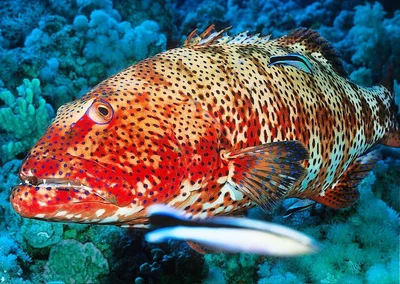
2The coral groupers: the ones that hunt instead of waiting. The tail is cut square or slightly hollow rather than rounded, the body carries small blue spots, and this is the genus that recruits moray eels to drive prey out of the reef - the work that documented it was done in this sea, on the roving coralgrouper.
Other genera
3

Other bottom-dwellers
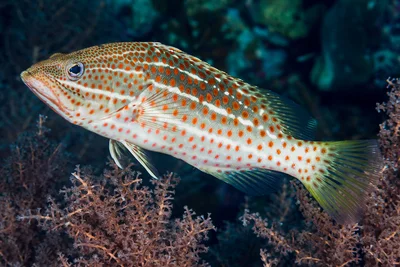
Similar silhouette underwater - worth a look if this was not your animal.


Last Update: August 23, 2026