What Happens If You Can't Remove a Sea Urchin Spine? Risks, Treatments & When to See a Doctor

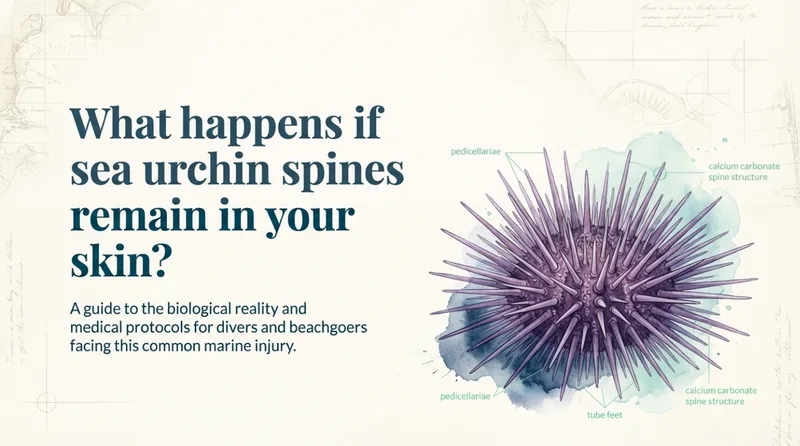
As divers and snorkelers, we live for those magical moments gliding through the water, eyes wide at the reef's colorful chaos. But let's be real - one careless flipper kick or outstretched hand, and bam! You're tangled with one of the ocean's prickliest gatekeepers: the sea urchin. Those spiky little punks pack a punch, and if you've ever felt their wrath, you know the real drama starts when a spine snaps off and refuses to budge.
We've all been there, poking and prodding, only to make it worse. The big question on everyone's mind? "What happens if I can't get the spine out?" Stick with me, friend - I'm breaking it down with the why, the what-now, and when to wave the white flag for pro help. Your next dive could thank you.
Why Are Sea Urchin Spines So Stubbornly Brittle?
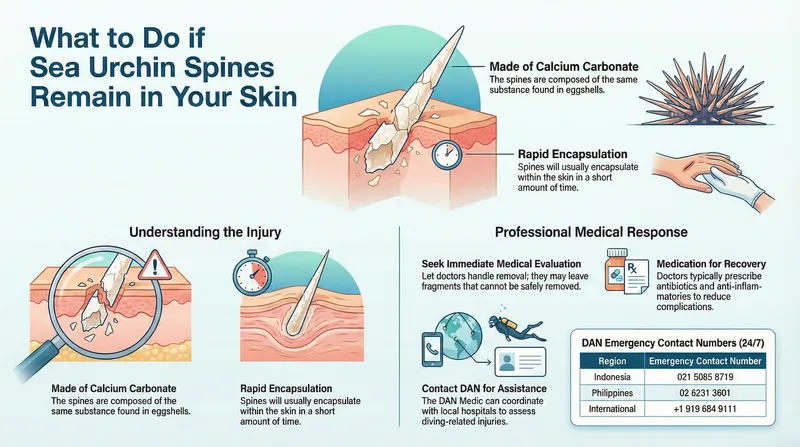
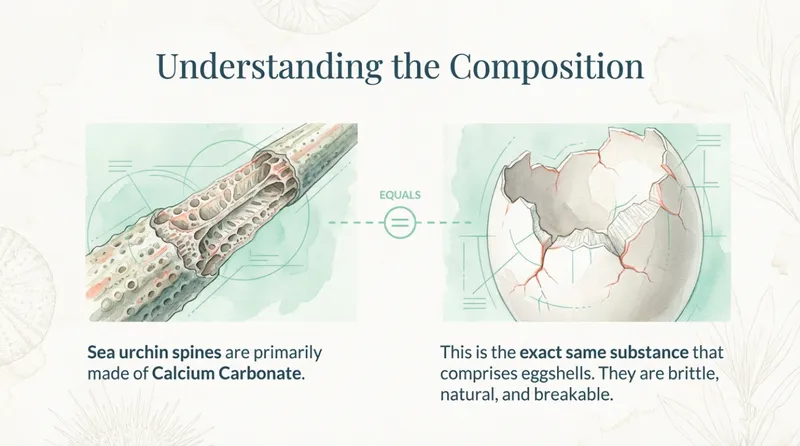
You’re not imagining the frustration - they're designed to be fragile on purpose. Sea urchin spines are made of calcium carbonate, the same tough-yet-brittle stuff in eggshells. Picture grabbing a handful of dry spaghetti; one wrong tug, and it shatters into tiny, skin-hiding shards. That's your spine situation - super breakable to deter predators, but a nightmare for us humans trying a DIY extraction.[4][5]
These spines aren't just pokey; some species even tip them with venom that amps up the burn, turning a simple step into throbbing agony. Vivid, right? But understanding this makes you appreciate the reef's clever defenses even more.
How Does Your Body Fight Back?
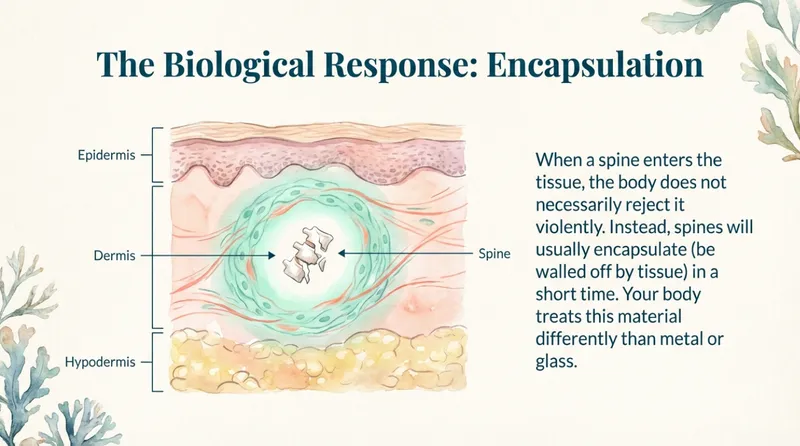
Don't panic if a fragment burrows deep - your body's got a slick defense squad on standby. Left alone, it often encapsulates the intruder, walling it off with tissue like a natural quarantine zone. Over days or weeks, this cyst-like bubble isolates the spine, letting it harmlessly dissolve or stay put without causing chaos.[1]
Shallow bits might even work their way out like a splinter from a thornbush. But here's the mix of short and sweet: not all spines play nice. Some trigger swelling, redness, or worse - infection - if venom or bacteria tag along.[2][5]
When Should You Call in the Pros?
Minor pricks? Handle at home with care (more on that soon). But deeper wounds? Seek medical evaluation immediately. Digging around yourself risks pushing fragments further or sparking infection - deep punctures are bacteria's dream party, especially for tetanus.[2][4]
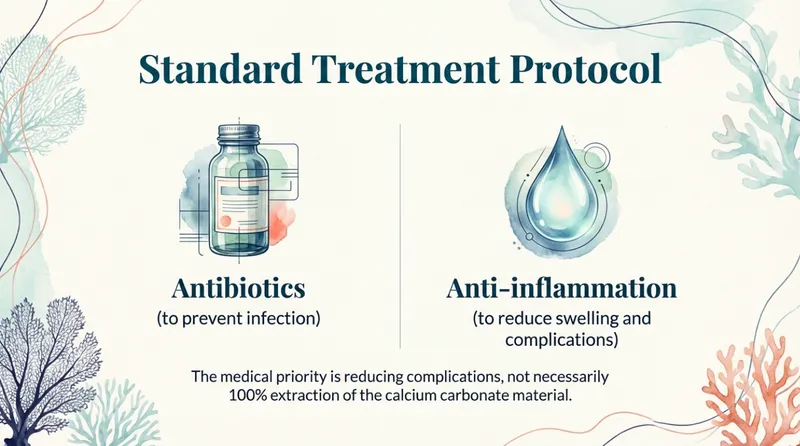
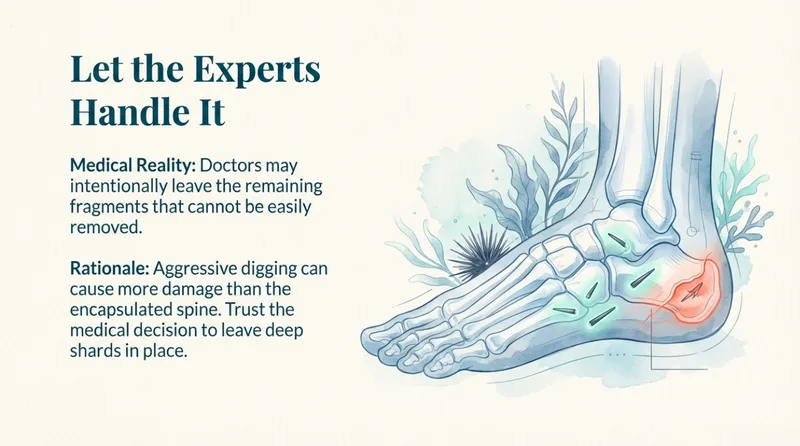
Doctors are wizards here. They might skip chasing every tiny shard, leaving unremovable ones encapsulated to dodge extra damage. Instead, expect antibiotics to fend off bugs and anti-inflammatory meds (like ibuprofen) to tame the fire. In rare bad cases, surgery extracts stubborn spines near joints.[1][5][6]
And watch for red flags screaming "ER now!":
- Intense swelling, pus, fever, or spreading redness.
- Muscle weakness, paralysis, or breathing trouble (super rare, but serious).
- Pain that won't quit after home care.
While heading to help, ease the ouch with proven tricks:
- Hot water soak: Dunk in the hottest you can stand (under 113°F/45°C) for 30-90 mins. It breaks down venom like magic.[1][4][6]
- Vinegar or acidic rinse: Neutralizes sting - vinegar, lemon juice, even pineapple. Alternate with hot soaks.[2][3]
- Tweezers for visibles: Pull gently, no digging. Flush with soap/salt water after.[3][5]
- Topicals: Antibiotic ointment, keep open and clean - no bandaging![2][4]
Pro tip: Test hot water on yourself first - pain can trick your tolerance.
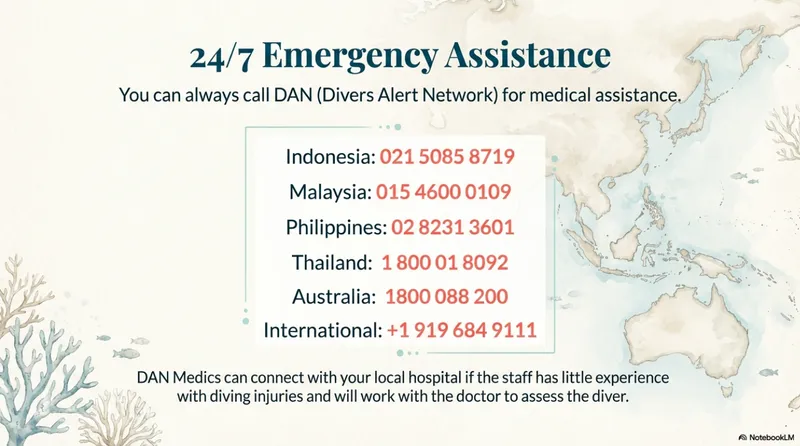
Your Dive Lifeline: Call Divers Alert Network (DAN)
Unsure if it's bad? Don't guess - dial Divers Alert Network (DAN). These dive med heroes assess over the phone, guide first aid, and link you to experienced docs, especially in remote spots where local hospitals might not know urchin woes.[4]
Save these 24/7 DAN Emergency Hotlines now:
- International: +1 919 684 9111
- Indonesia: 021 5085 8719
- Malaysia: 015 4600 0109
- Philippines: 02 8231 3601
- Thailand: 1 800 01 8092
- Australia: 1800 088 200
Respect the reef, nail your buoyancy, and keep exploring safely. Those urchins are just doing their job - let's coexist without the drama. Happy diving!
Big thanks to Dr. Mel for inspiring this article!
References
PADI Divemaster and underwater storyteller with over 7 years of hands-on Red Sea diving experience, documenting marine life, mapping dive sites, and promoting responsible ocean conservation.