Another Heartbreaking Loss: Katina Joins Kshamenk in Captivity's Tragic Toll

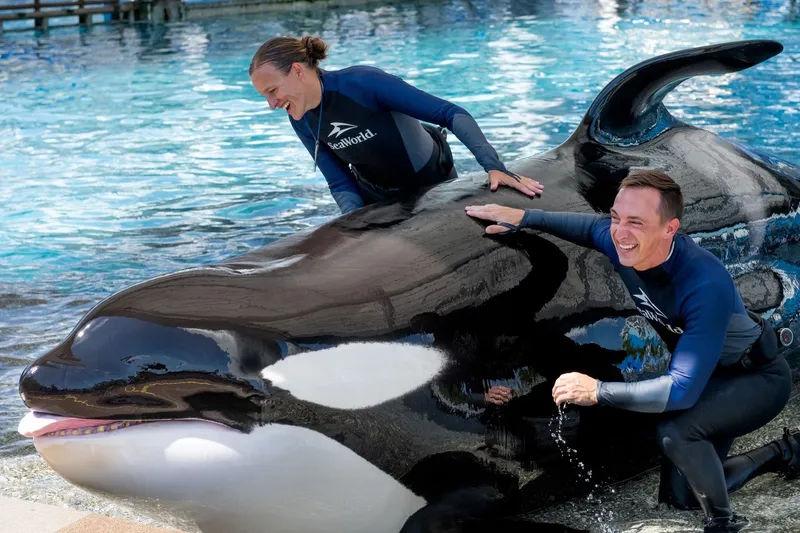
Hey, if you're anything like me, your heart sinks every time you hear about a captive orca passing away. Just days after Kshamenk's death, SeaWorld announced that Katina, one of their "beloved" killer whales, died at the age of 50 on December 21, 2025. Surrounded by care teams who'd known her for nearly 40 years, Katina's health had been declining due to chronic respiratory disease. That's two orcas gone in less than a week - a grim reminder of what happens when these ocean giants are confined to concrete tanks.
Picture this: Katina, famous for cheekily sticking out her tongue and zooming around her enclosure in those "speed swims" that thrilled crowds. She inspired millions, sure, but instead of roaming vast seas with her pod, she spent decades in a pool that couldn't even hold a fraction of her natural world. It's the kind of story that hits hard, especially when you learn this isn't isolated - it's the predictable fallout from an industry that's treated cetaceans like tradable goods for far too long.
The Hidden Scale of Captivity in Europe
While SeaWorld grabs headlines, let's zoom out to Europe, where the numbers are staggering. Did you know Spain operates a whopping 8 active dolphinariums? That's more than anywhere else on the continent - Italy trails with just 3. Together, these facilities in Spain hold nearly 100 captive cetaceans, mostly bottlenose dolphins, orcas, and even belugas, all splashing around for cheers and tickets.
- These aren't vast ocean habitats; they're stark concrete tanks that echo with echolocation gone wrong.
- Orcas like Katina, who could swim 100 miles a day in the wild, are stuck pacing the same small space, their dorsal fins collapsing from stress and poor conditions - like Katina's own fin injury back in 2018.
- And the "entertainment"? It often hides shortened lifespans, broken families, and mental anguish no wild pod would ever endure.
Shifting gears from the U.S. spotlight to Spain feels eye-opening, right? But it's all connected in this global web of captivity.
A Mafia-Like Industry Running on Empty
This isn't just about one orca or one park - it's a worldwide operation that moves these intelligent beings like mafia shipments, trucking them across borders until their bodies and minds shatter. Kshamenk and Katina? They're the 46th orca to die under SeaWorld's watch alone, as advocates point out. We're beyond fed up with the excuses.
These animals aren't performers; they're apex predators with complex social lives, dialects in their calls, and brains wired for freedom. Locking them up doesn't "educate" - it perpetuates a myth while real conservation happens in the wild.
Time for Accountability, Not Another Tank
The future of marine life doesn't look like more concrete prisons. It looks like seaside sanctuaries where survivors like those still at SeaWorld can retire to coastal pens mimicking the sea. Spain's 8 dolphinariums? They need phase-outs with real plans for the animals' well-being. We've phased out the worst of this industry before - think Blackfish's wake-up call - and we can finish the job.
Next time you hear cheers from a show, think of Katina's tongue-out grin and her final days. Let's push for a world where orcas thrive in oceans, not applaud from afar. What do you say - ready to dive into advocacy?
References
PADI Divemaster and underwater storyteller with over 7 years of hands-on Red Sea diving experience, documenting marine life, mapping dive sites, and promoting responsible ocean conservation.