10 Strange Marine Life Creatures You Have To See To Believe

The deep sea is home to some of the planet’s most bizarre, beautiful and barely-believed animals. Below are seven strange marine creatures - selected for their odd anatomies, behaviors, or extreme habitats - with clear, engaging descriptions and the science behind what makes each one extraordinary.
1. Vampire Squid (Vampyroteuthis infernalis)
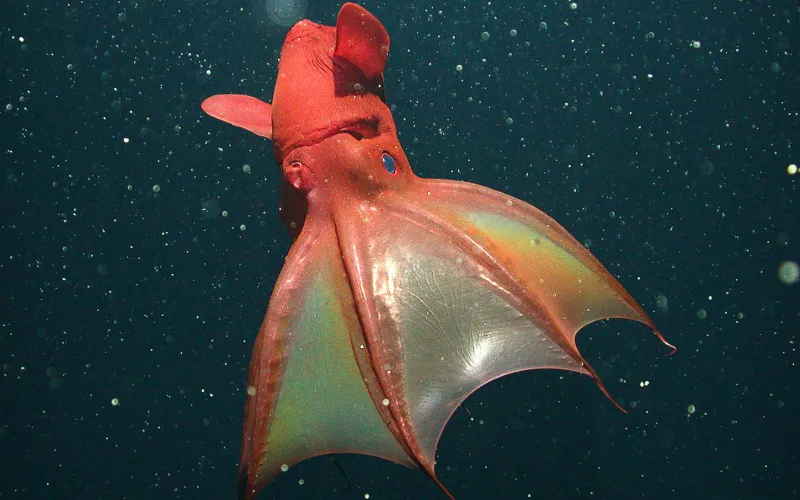
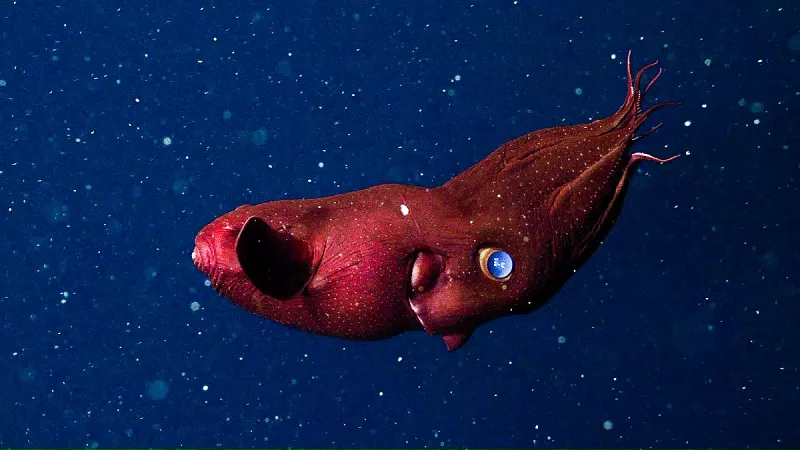
The vampire squid looks like something from a gothic cartoon: a small, dark cephalopod with red eyes and a webbed cloak of arms that it can pull over its body like a cape.According to deep-sea guides, it uses jet propulsion and can eject a sticky cloud of bioluminescent mucus when threatened.[6]
- Habitat and depth: Lives in low-oxygen “oxygen minimum zones” of the deep ocean, often several hundred to a few thousand meters down.[6]
- Anatomy and behavior: Though called a squid, it’s a unique cephalopod with filamentous “feeding filaments” rather than long tentacles for catching prey; it primarily feeds on marine detritus and particles rather than actively hunting large prey.[6]
- Why it’s strange: Its cloak-like webbing, glowing displays, and adaptation to extremely low-oxygen environments make it unlike most other cephalopods.[6]
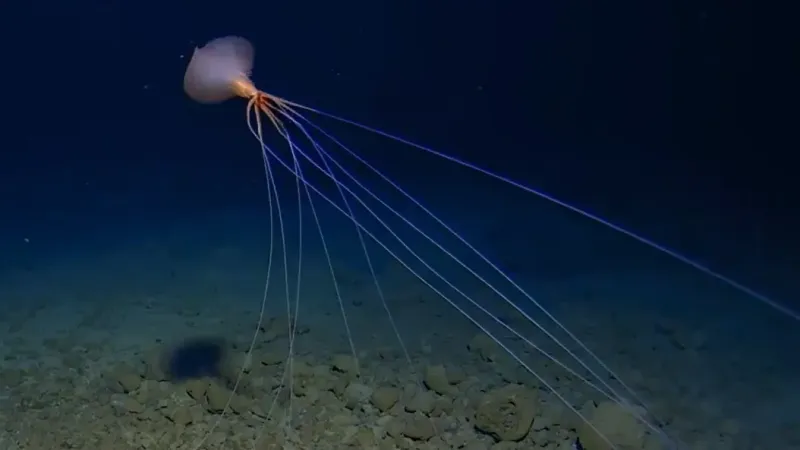
2. Bigfin Squid (Magnapinna spp.)
Bigfin squid are known from rare, high-resolution ROV footage and are famous for their impossibly long, thin arms and “elbowed” bends, which can make them look almost alien.[2]
- Size and shape: The arms and tentacles can extend to many times the mantle length (reports and footage suggest total apparent lengths up to several meters), while the squid’s mantle remains relatively small.[2]
- Rarity and mystery: These squids are seldom seen alive; their graceful, floating posture and long appendages give them an almost supernatural silhouette on camera.[2]
- Scientific note: Known chiefly from deep-water observations and a limited number of specimens and videos, so details about life history remain incomplete.[2]
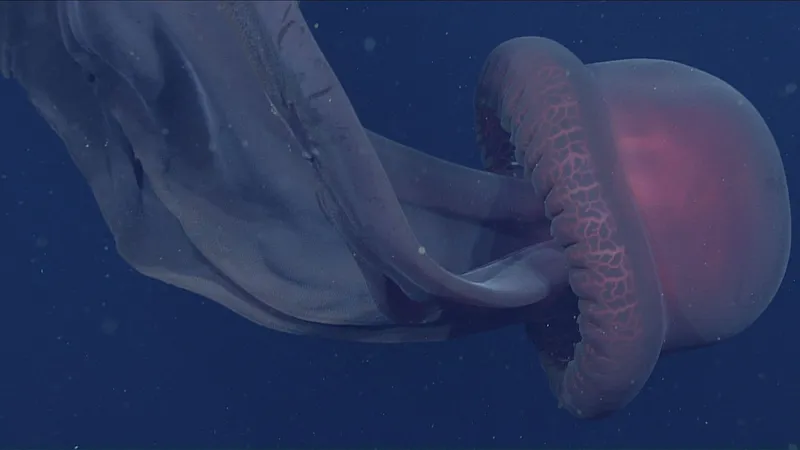
3. Giant Phantom Jellyfish (Tiburonia spp. and other large scyphozoans)
Some giant jellyfish species - often called “phantom” or giant jellyfish - have been observed with enormous, billowing bells and ribbon-like arms that trail dramatically through the depths.[1]
- Scale and habitat: Reports describe bells several feet across and arms that can extend many meters; many sightings are from the deep “midnight zone,” where sunlight never reaches.[1]
- Rarity: Despite large size, these jellyfish are rarely seen alive; some species have been observed only a handful of times since their scientific descriptions.[1]
- Visual impact: Their ghostlike movement and immense trailing tentacles create a spectral presence that underlies the “phantom” moniker.[1]
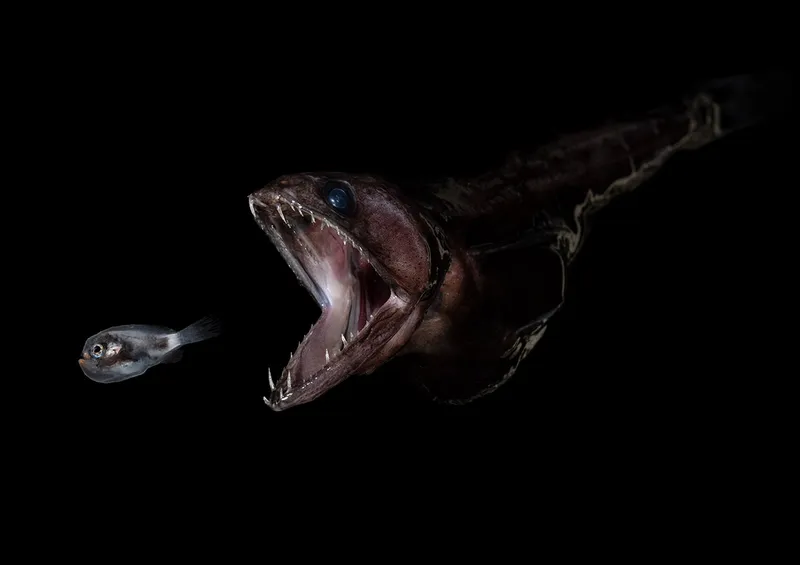
4. Black Swallower (Chiasmodon niger)
The black swallower is a deep-sea fish known for an extreme adaptation: it can ingest prey far larger than itself by expanding its stomach and body.[2][5]
- Feeding extreme: Specimens have been found containing fish much longer than the swallower’s own length due to extraordinary stomach elasticity.[2][5]
- Appearance and habitat: Dark, scaleless body; found at bathypelagic depths (hundreds to thousands of meters), mostly in temperate and tropical Atlantic waters.[2]
- Why it’s strange: The combination of a tiny body with a hugely expandable stomach and a bite designed to engulf very large prey makes it a dramatic example of deep-sea specialization.[2][5]
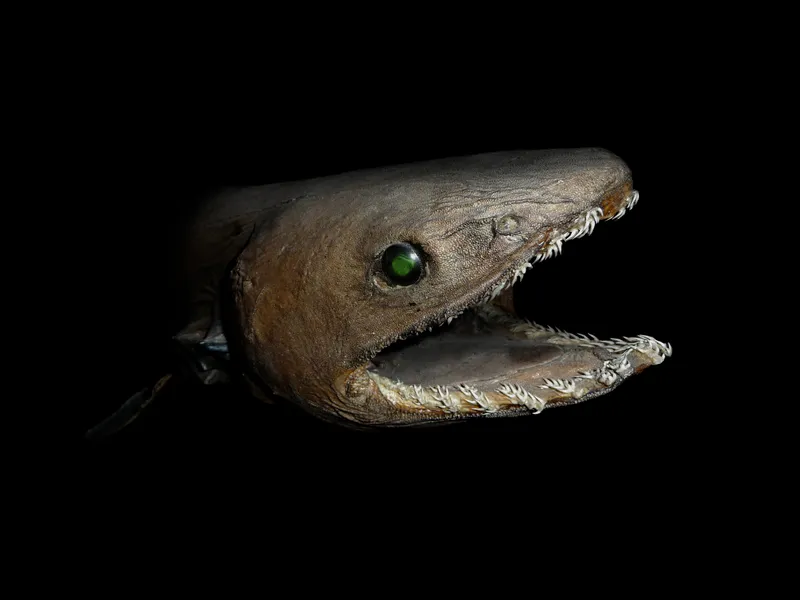
5. Frilled Shark (Chlamydoselachus anguineus)
Often called a “living fossil,” the frilled shark retains many primitive features and resembles a snake with a shark’s head.[5]
- Morphology: Long, eel-like body with frilly gill slits and many needlelike teeth adapted for snagging prey.[5]
- Fossil-style lineage: The frilled shark’s body plan closely resembles early shark fossils, giving it the “dinosaur” or “prehistoric” label in popular media.[5]
- Depth and sightings: It lives at great depths and is infrequently encountered, which adds to its mystique and to scarce knowledge of its life history.[5]
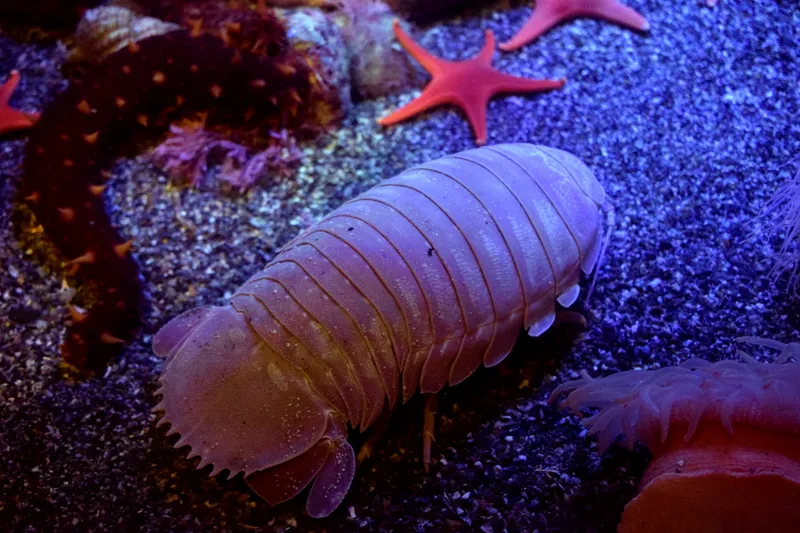
6. Giant Isopod (Bathynomus spp.)
Giant isopods are large crustaceans that look like oversized, armored pillbugs and roam the seafloor of deep, cold waters.[7]
- Size and form: Some species reach lengths of 30 cm (12 in) or more and have a rigid, segmented exoskeleton with many jointed legs.[7]
- Lifestyle: Scavengers that feed on carcasses and slow to move; their large size is an example of “deep-sea gigantism.”[7]
- Fascinating fact: Their slow metabolism and ability to survive long periods between meals suit them to the sparse resources of the deep sea.[7]
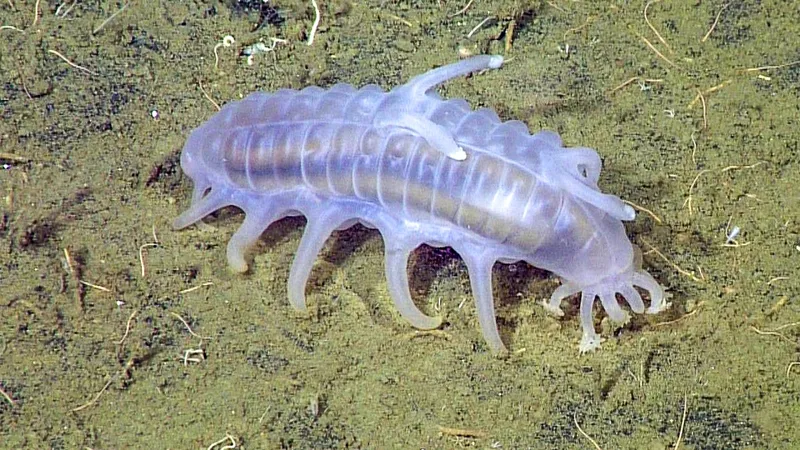
7. Sea Pig (Scotoplanes spp.)
Sea pigs are a type of deep-sea sea cucumber notable for their pudgy bodies and tube-like “legs” that walk across abyssal plains.[7]
- Appearance and movement: They use fleshy tube feet to “walk” along the sediment surface and are often found congregating above patches of organic seafloor detritus.[7]
- Ecosystem role: Sea pigs are deposit feeders - they process organic matter on the seafloor and play an important role in nutrient recycling.[7]
- Visual oddity: Their bulbous bodies and slow, purposeful gait make them one of the deep sea’s most endearing oddities.[7]
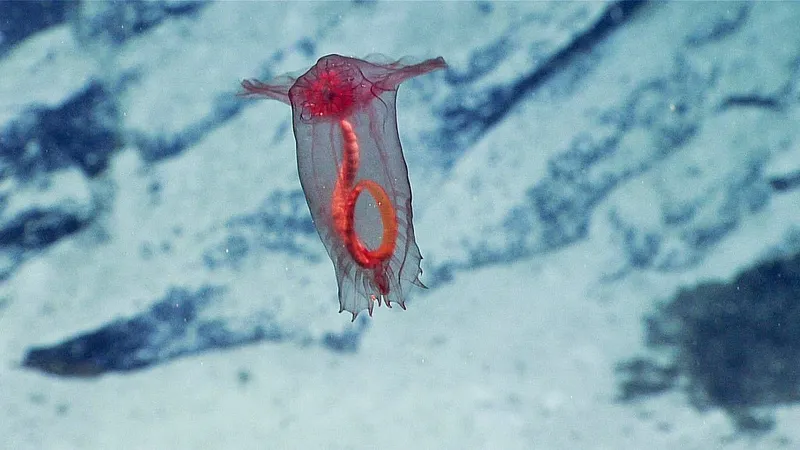
8. Pink See-through Fantasia (Enypniastes eximia)
Shifting to more ethereal oddities of the deep, the Pink See-through Fantasia stands apart from typical sea cucumbers. These rosy creatures glide slowly yet elegantly through the water, propelled by a sail-like veil encircling the upper portion of their bodies. They rest on or burrow into seafloor sediments as bottom-dwellers.
This fully transparent sea cucumber reveals its inner workings - including intestines and anus - visible right through its body. Bioluminescent, it glows softly and deploys this light in threats to ward off predators. It feeds by sifting organic matter from seafloor mud and sand.
- Size: 11-25 cm/4.3-9.8 inches long.
- Where to find it: Celebes Sea in the western Pacific Ocean at depths of over 2,000 meters/6,561 feet.
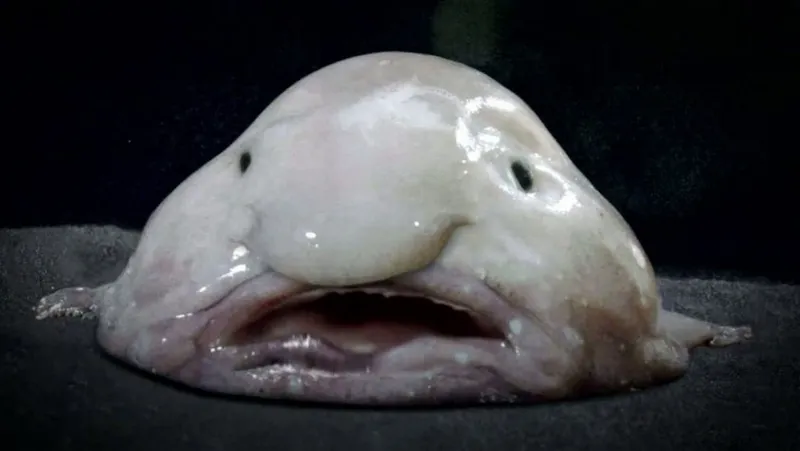
9. Blobfish (Psychrolutes microporos)
Ever seen a blobfish? It's this squishy, jelly-like deep-sea dweller with barely any muscles or a proper skeleton - just soft, flimsy bones in a gooey body. That weird look helps it handle the crushing pressure way down in the ocean, up to 120 times stronger than at the surface. Down there off Australia and New Zealand, at depths of 2,000 to 4,000 feet, it actually resembles a normal fish, floating effortlessly above the seafloor. But haul it up top, and the pressure drop turns it into that infamous floppy mess.
We don't know tons about how they act since they're stuck in the super-deep abyssal zone, tough for scientists to reach. Still, they're probably lazy ambush hunters, just hovering neutrally buoyant - neither sinking nor rising - and sucking in whatever prey drifts by, like crustaceans or snails, with their big jaws. They barely move, saving energy in their slow-motion deep-sea life, yet somehow this oddball became a viral sensation online.
- Size: 30 cm/12 inches long
- Where to find it: Waters around Australia and New Zealand at depths between 100 and 2,800 meters/328-9,186 feet
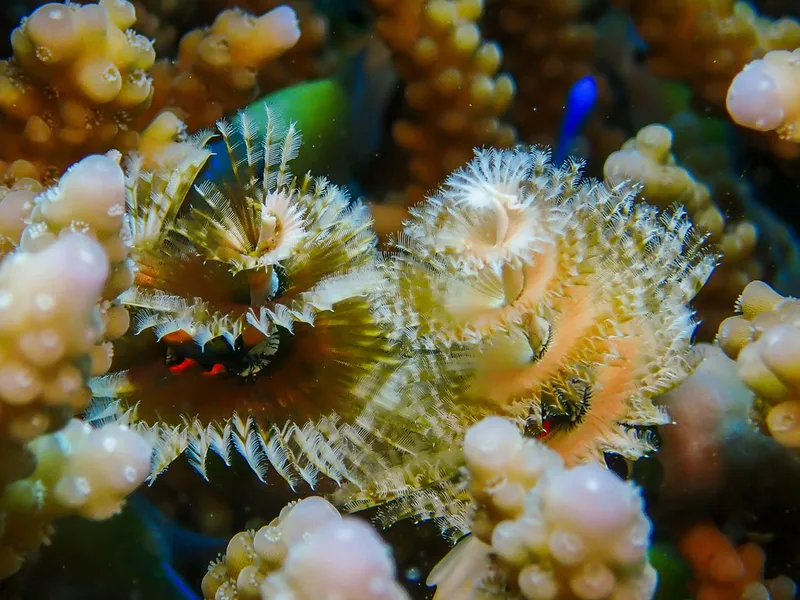
10. Christmas Tree Worms (Spirobranchus giganteus)
Every dive feels like Christmas when you spot these tube-building polychaete worms, known as Christmas tree worms (Spirobranchus giganteus). Their segmented bodies are bristled with chaetae, but what really stands out are the two “crowns” that resemble tiny, colorful Christmas trees. Those crowns aren’t just for show - they’re modified prostomial palps used to filter and trap food, and they also help the worm absorb oxygen.
These worms live in coral reefs, tucking their bodies against living coral tissue so the polyps grow around them and extend upward. They don’t choose corals at random; researchers have found that certain coral species are preferred, though the exact reason is still unclear - it might relate to the worms’ reproduction. Whatever the cause, Christmas tree worms make fantastic subjects for underwater photographers.
- Size: 3.8 cm/1.5 inches long
- Where to find it: Throughout the world’s tropical oceans, from the Caribbean to the Indo-Pacific in shallow water of 3-30 meters/10-100 feet

How scientists find and study these creatures
- ROVs, submersibles, and deep-sea cameras have been crucial for modern discoveries, because many of these animals live at depths where traditional trawling and diving are ineffective.[1][2][7]
- Many species remain known from only a few observations or specimens; the deep ocean still holds large gaps in our knowledge, so new surprises continue to appear as technology improves.[1][2]
Why these animals matter
- Each of these species demonstrates unique adaptations to the deep sea - extreme pressure, perpetual darkness, low food availability, or low oxygen - and reveals evolutionary solutions to harsh environments.[1][2][6][7]
- Studying them broadens understanding of biodiversity, resilience, and the range of life strategies on Earth, and can inform conservation of fragile deep-sea ecosystems.[1][3]
Further reading and image galleries from research institutions and aquarium science programs provide excellent visual references and the latest discoveries on many of these species.[2][7][1]
References
PADI Divemaster and underwater storyteller with over 7 years of hands-on Red Sea diving experience, documenting marine life, mapping dive sites, and promoting responsible ocean conservation.