Meet the Pink Sea Anemone That Builds Homes for Hermit Crabs

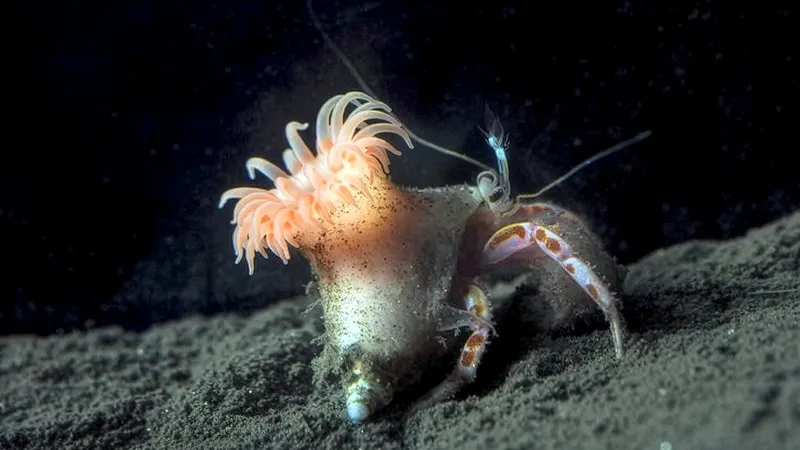
Deep beneath the Pacific Ocean off Japan’s coast, in the dimly lit world between 200 and 500 meters underwater, scientists have discovered an extraordinary partnership between two very different creatures: a pale pink sea anemone and a hermit crab. This anemone, named Paracalliactis tsukisome, does something truly unique - it actually builds and expands shell-like homes for its hermit crab companions.
A Rare Case of Mutualism in the Deep Sea
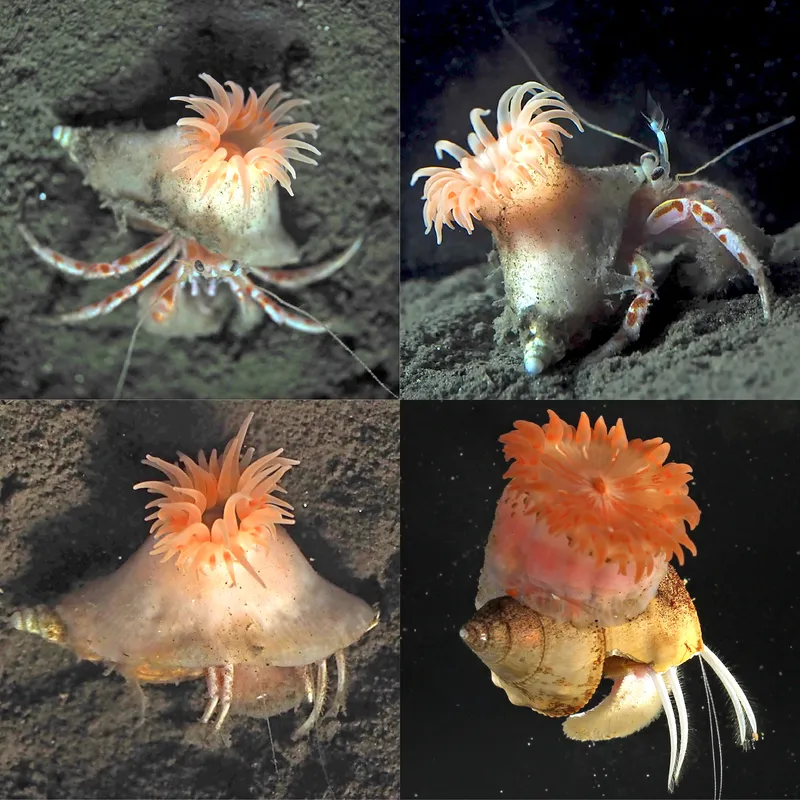
Unlike most sea anemones, which are soft-bodied and stationary animals, Paracalliactis tsukisome produces a special, tough structure called a carcinoecium. This shell-like covering doesn’t just sit on the crab’s existing snail shell; it grows and strengthens it over time, effectively giving the hermit crab a bigger and more secure home. This means the crab doesn’t have to find a new shell as it grows, which is a big advantage in the resource-scarce deep-sea environment.
In return, the hermit crab provides the anemone with nutrients. Stable isotope analyses reveal that the anemone partly feeds on organic particles in the water and also recycles nutrients from the crab’s feces. This efficient recycling system shows how both animals benefit - food for the anemone and shelter for the crab - in a fascinating display of biological teamwork.
How They Work Together
Using advanced 3D micro-CT scanning technology, scientists observed that the anemone attaches to the hermit crab’s shell in a consistent, directional pattern. This behavior suggests that the anemone’s shell-building is not random but carefully oriented to support both feeding and growth. The crab, meanwhile, gains a noticeable advantage; research shows that hermit crabs living with these anemones tend to grow larger than their relatives without such partners.
Why This Discovery Matters
This partnership between Paracalliactis tsukisome and its hermit crab host Oncopagurus monstrosus is more than just an interesting phenomenon - it sheds light on how deep sea life develops complex, mutually beneficial relationships despite harsh conditions like low light and scarce food. It also challenges previous ideas about life in the ocean’s depths, revealing surprising strategies even among simple animals.
Beyond expanding our knowledge of marine biology, this discovery opens doors for future research. Scientists are eager to explore whether other sea anemone species have evolved similar shell-building skills, and how hermit crab behaviors might influence the evolution of these shell-building anemones.
In Summary
- Paracalliactis tsukisome is a newly discovered pink sea anemone found off Japan’s Pacific coast.
- It creates a shell-like structure called a carcinoecium that expands and reinforces the hermit crab’s shell home.
- The anemone gains food by feeding on organic particles and the crab’s feces, showcasing a clever recycling strategy.
- The hermit crab benefits from increased protection and a growing home, often achieving larger body sizes.
- This mutualism highlights deep-sea co-evolution and complex interspecies teamwork in an extreme environment.
The discovery of Paracalliactis tsukisome is a remarkable example of how nature invents creative ways for life to thrive - even in the darkest corners of our oceans.
References
PADI Divemaster and underwater storyteller with over 7 years of hands-on Red Sea diving experience, documenting marine life, mapping dive sites, and promoting responsible ocean conservation.