Tetrodotoxin (TTX)
The pufferfish poison: about a thousand times more potent than cyanide by weight, unaffected by cooking, and with no antidote.
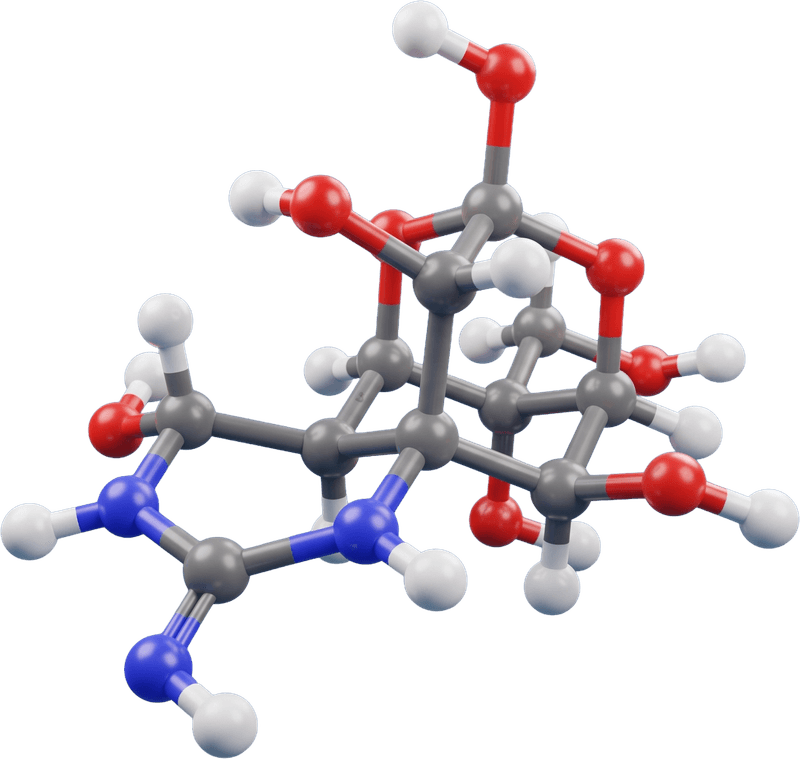
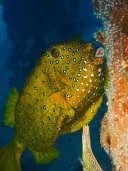
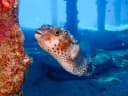
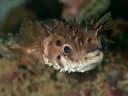
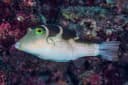
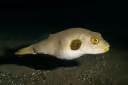
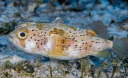
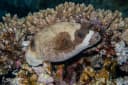
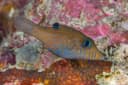
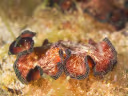
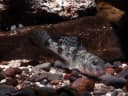
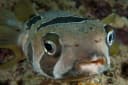
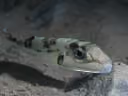
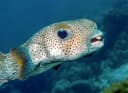
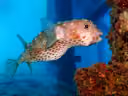
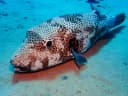
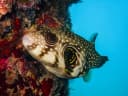
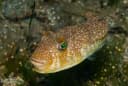
Tetrodotoxin (C₁₁H₁₇N₃O₈) is the poison of the pufferfishes, and it is also carried by porcupinefishes, some gobies, several octopuses, newts and a few flatworms. In a puffer it concentrates in the liver, the ovaries, the intestine and the skin - the muscle is comparatively clean, which is the entire basis of the Japanese fugu trade.
It works by plugging the voltage-gated sodium channel, the switch a nerve uses to fire at all. Blocked, the nerve carries nothing. Sensation goes first, then coordination, then the muscles that move the chest, and the victim suffocates while remaining conscious and aware - a detail that makes accounts of tetrodotoxin poisoning particularly unpleasant reading. There is no antidote. Treatment is to keep the person breathing, mechanically if necessary, until the body clears it, and people who reach that support usually survive.
Two things make it more dangerous than its reputation suggests. It has no taste, and cooking does nothing to it: boiling, frying and drying leave it intact. And the fish does not make it. The toxin is produced by bacteria and accumulates up the food chain, which is why farmed puffers raised on clean feed come out non-toxic, and why the same species can be dangerous in one place and harmless in another.
Its precision has made it a standard tool in neurophysiology - if you want to switch off sodium channels in an experiment, this is what you reach for - and it has been investigated as a painkiller for exactly the same reason.
First aid
There is no antidote, and no home remedy touches it. The whole treatment is keeping the person breathing until their body clears the toxin, which it does over roughly a day.
- Hospital, immediately, at the first tingling of the lips or tongue after a meal of fish - do not wait to see whether it gets worse.
- Do not induce vomiting.
- Watch the breathing continuously. It fails gradually, and the person stays conscious and aware the whole time, so keep talking to them.
- If breathing stops, give rescue breaths and do not stop. People who are ventilated through the paralysis generally recover fully; the deaths are the ones nobody was breathing for.
Found in21