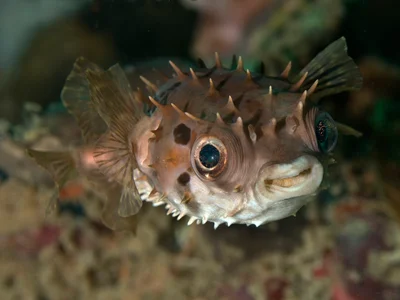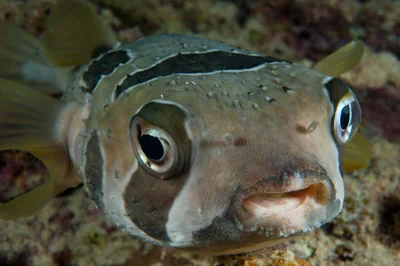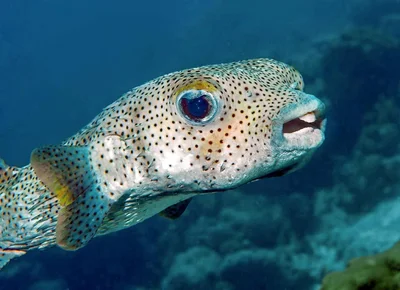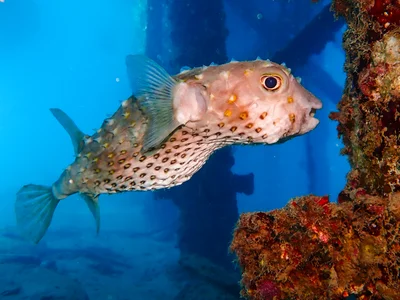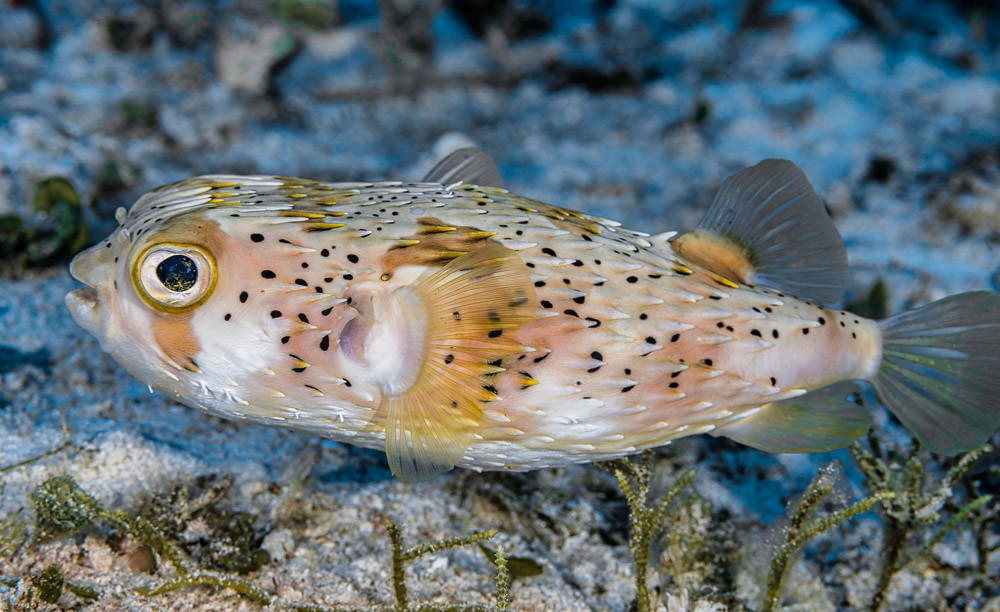
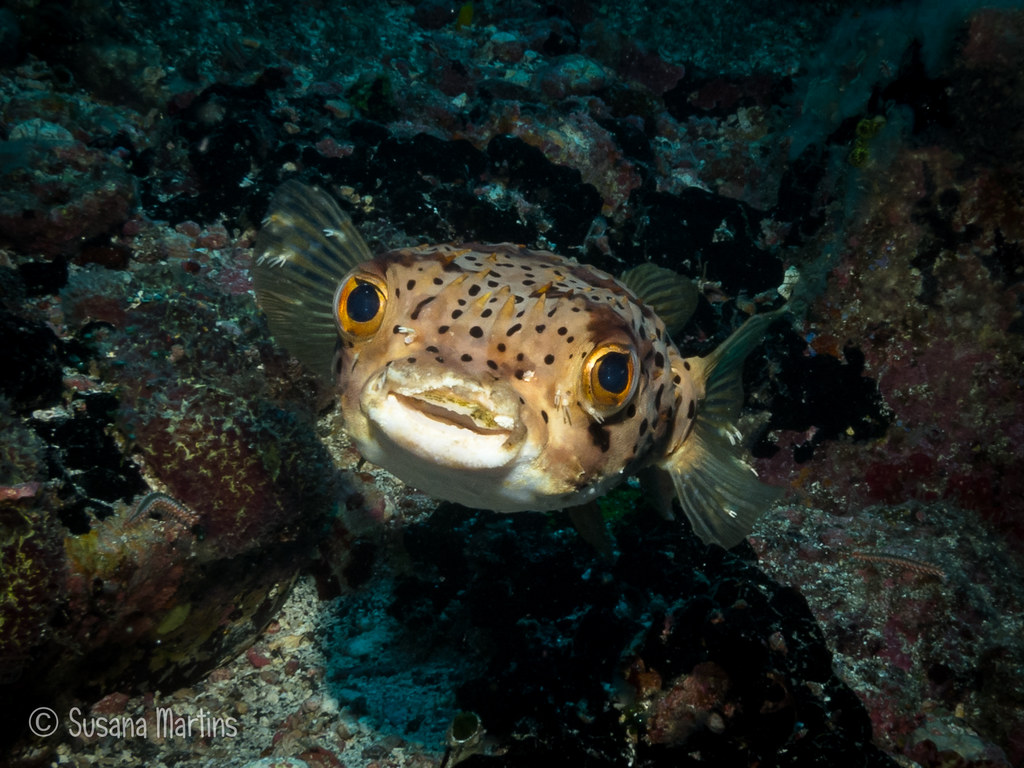
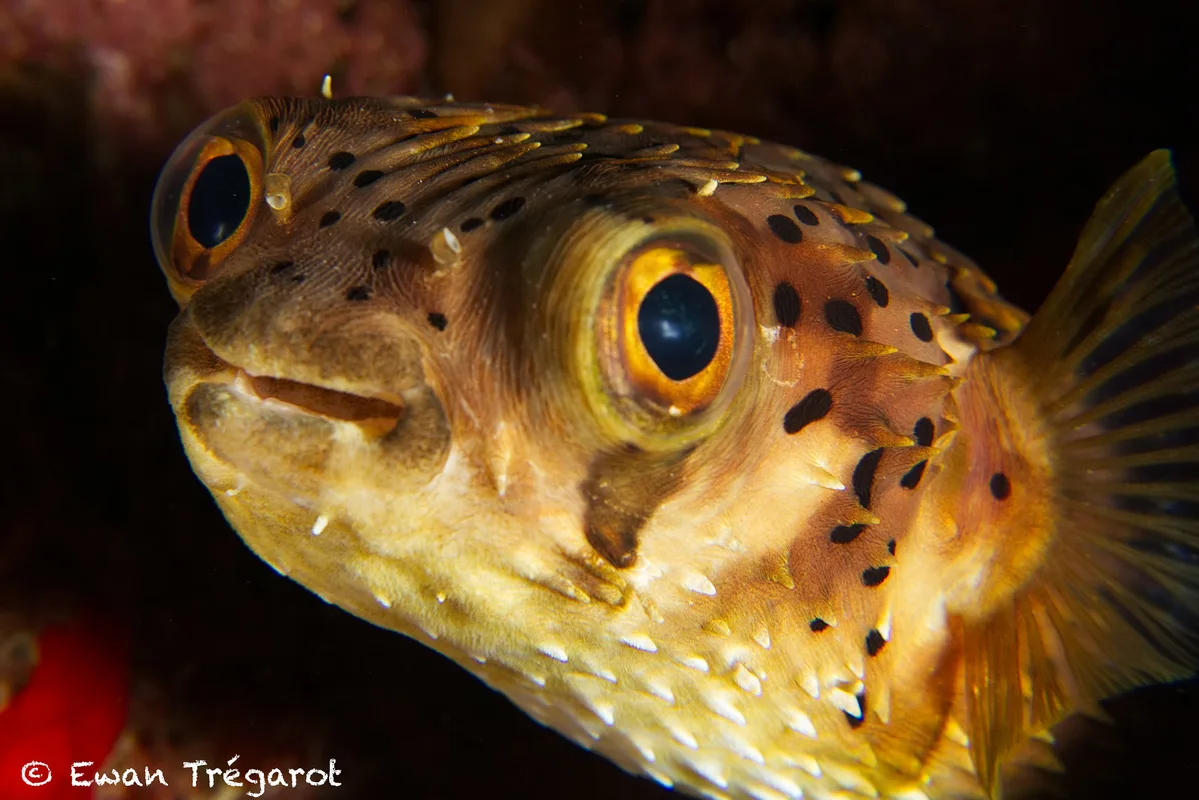
A soft, slow, big-eyed fish that spends the day tucked under a ledge and the night working the sand for snails and hermit crabs, cracking them with a beak of fused teeth. Dark blotches mark the back and one sits over each eye. The spines lie flat against the body and only stand up when the fish inflates, which is why a relaxed one looks nothing like the dried lampshade version sold in tourist shops.
Inflation is a last resort, not a greeting. The fish gulps water into a stretchable stomach until it is a rigid ball two or three times its normal width, spines locked outward, and a predator that has already committed finds itself holding something it cannot swallow. Doing it costs energy and leaves the fish exhausted, so a diver who chases one into inflating has taken something from it for a photograph.
Like other members of the family it carries tetrodotoxin in the skin and organs, the same poison that makes pufferfish lethal to eat. It is harmless to look at and to photograph, and dangerous only on a plate.
The genus. Diodon Linnaeus 1758 - di- (two) + odon (tooth). ETYFish
- long spines that stand up only when the fish inflates
- dark blotches over the back, including one over each eye
- big protruding eyes and a blunt beak of fused teeth
- hangs under a ledge by day, hunts the sand at night
Why it's threatened
There are no major threats known for this species.
Threat classification from the IUCN Red List.