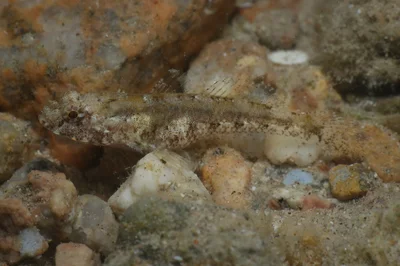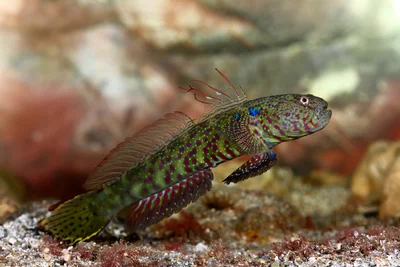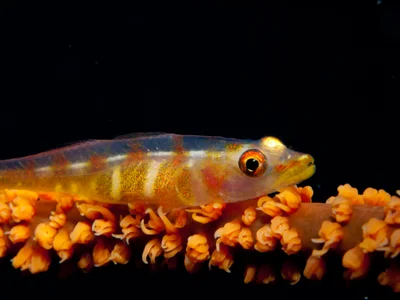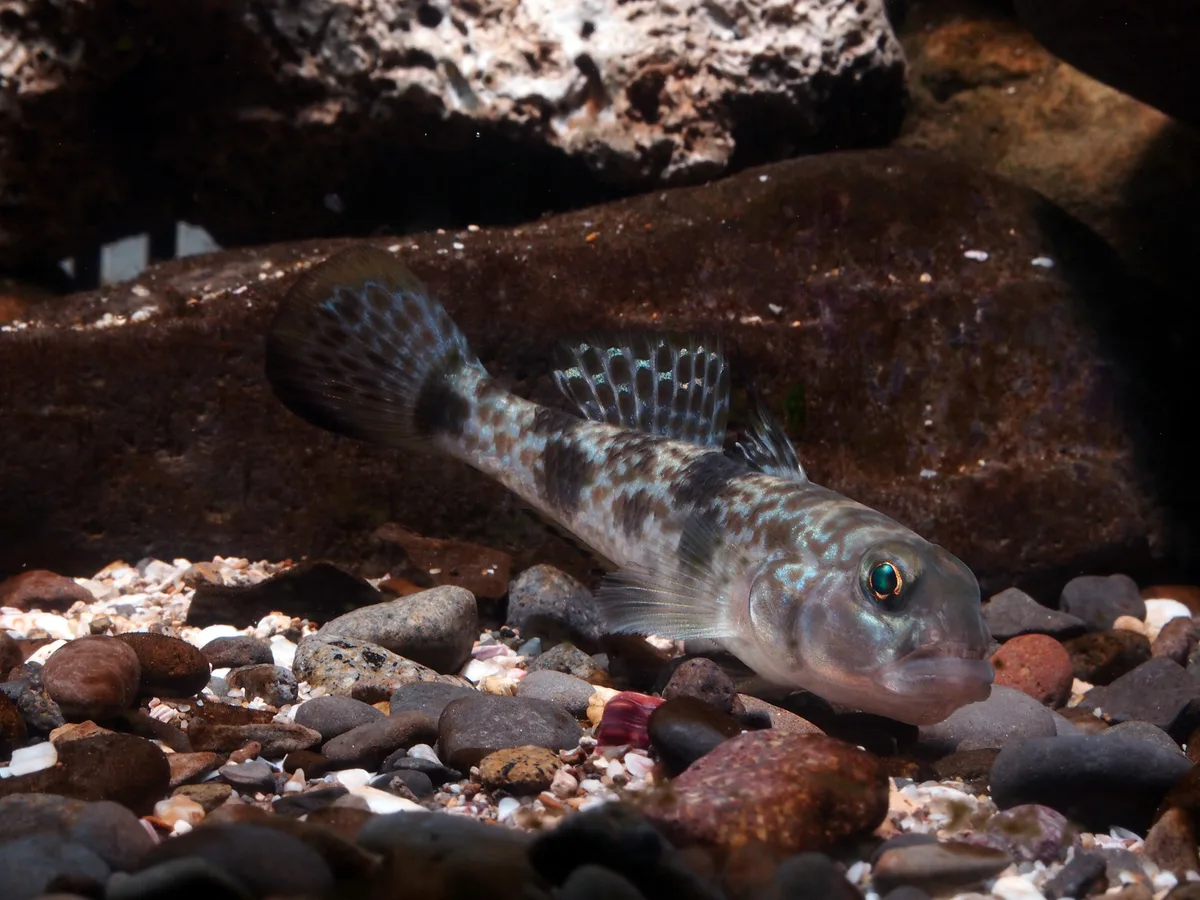
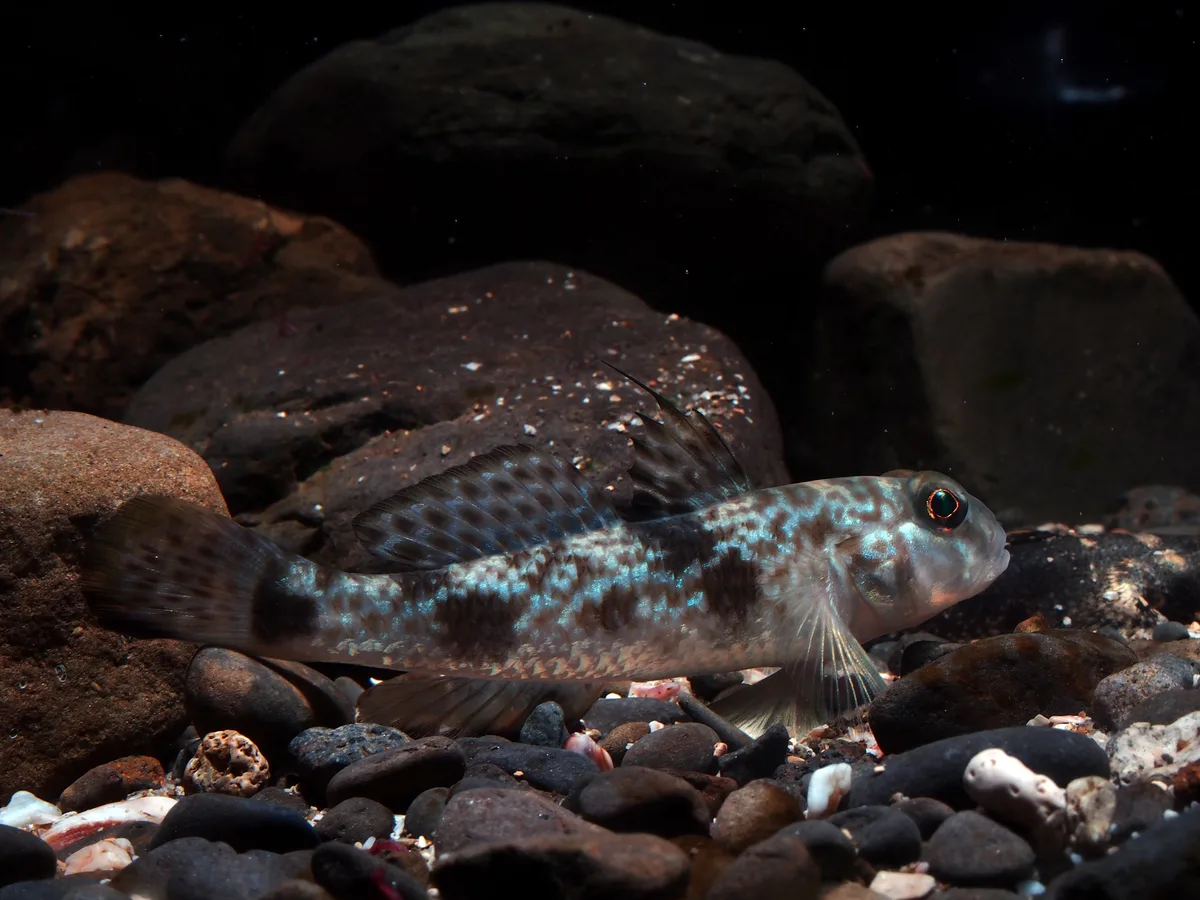
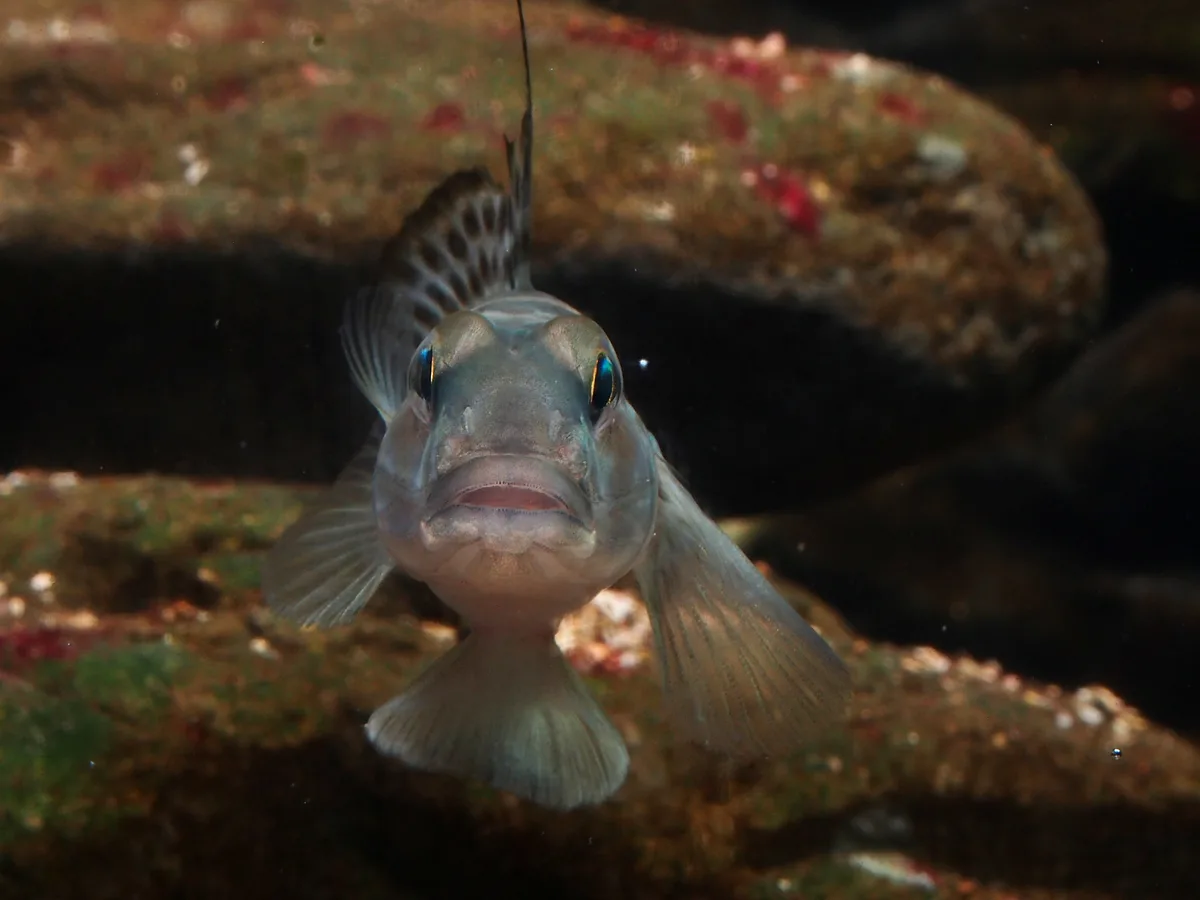
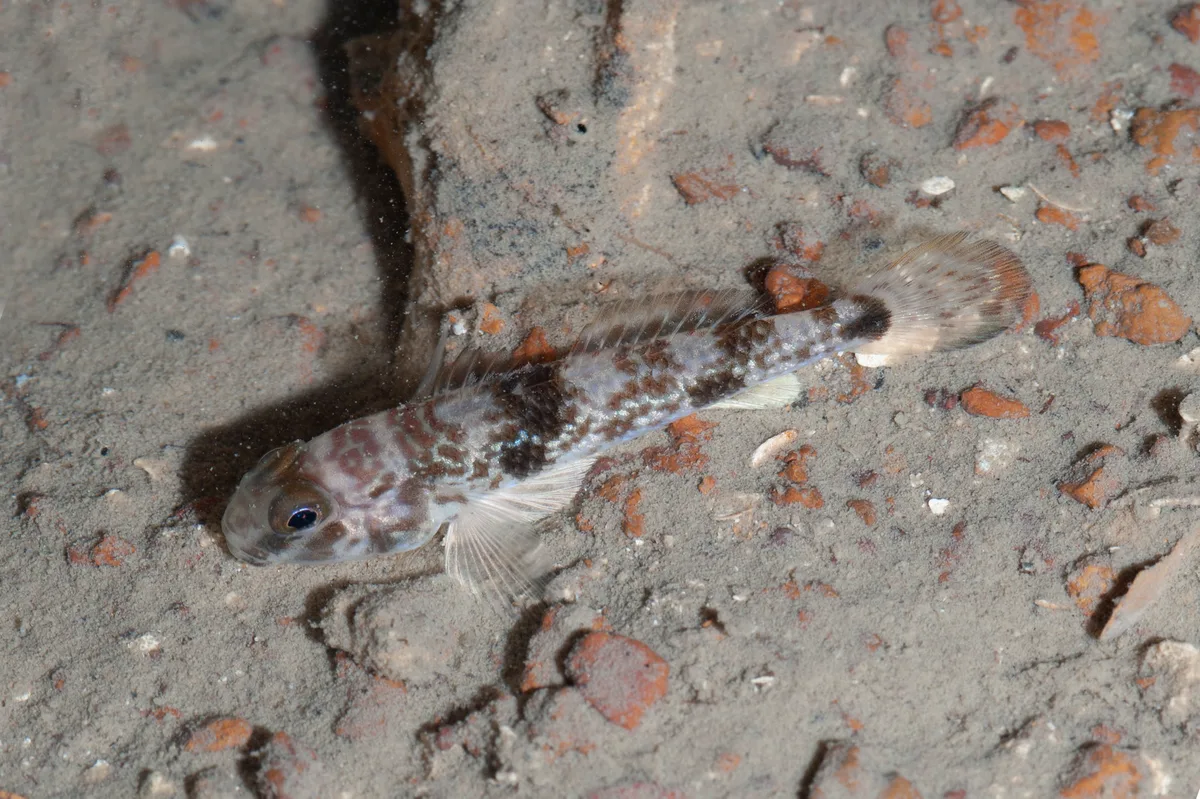
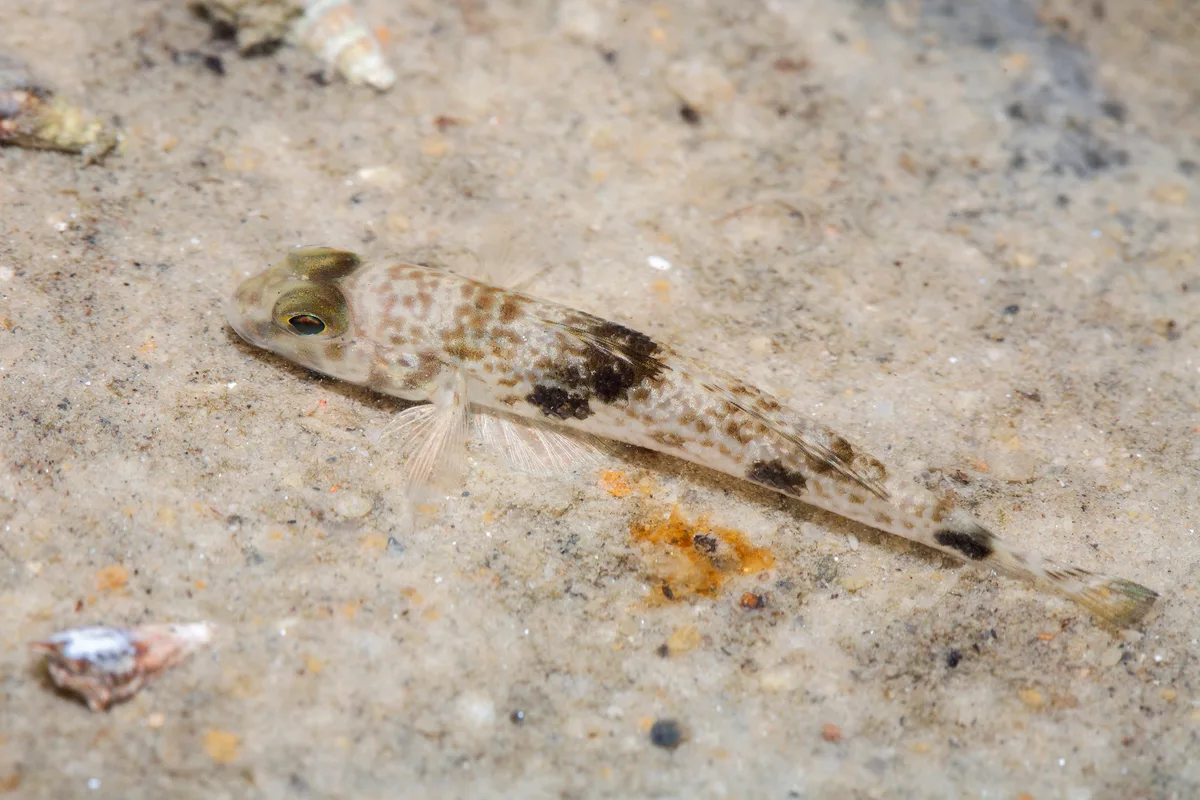
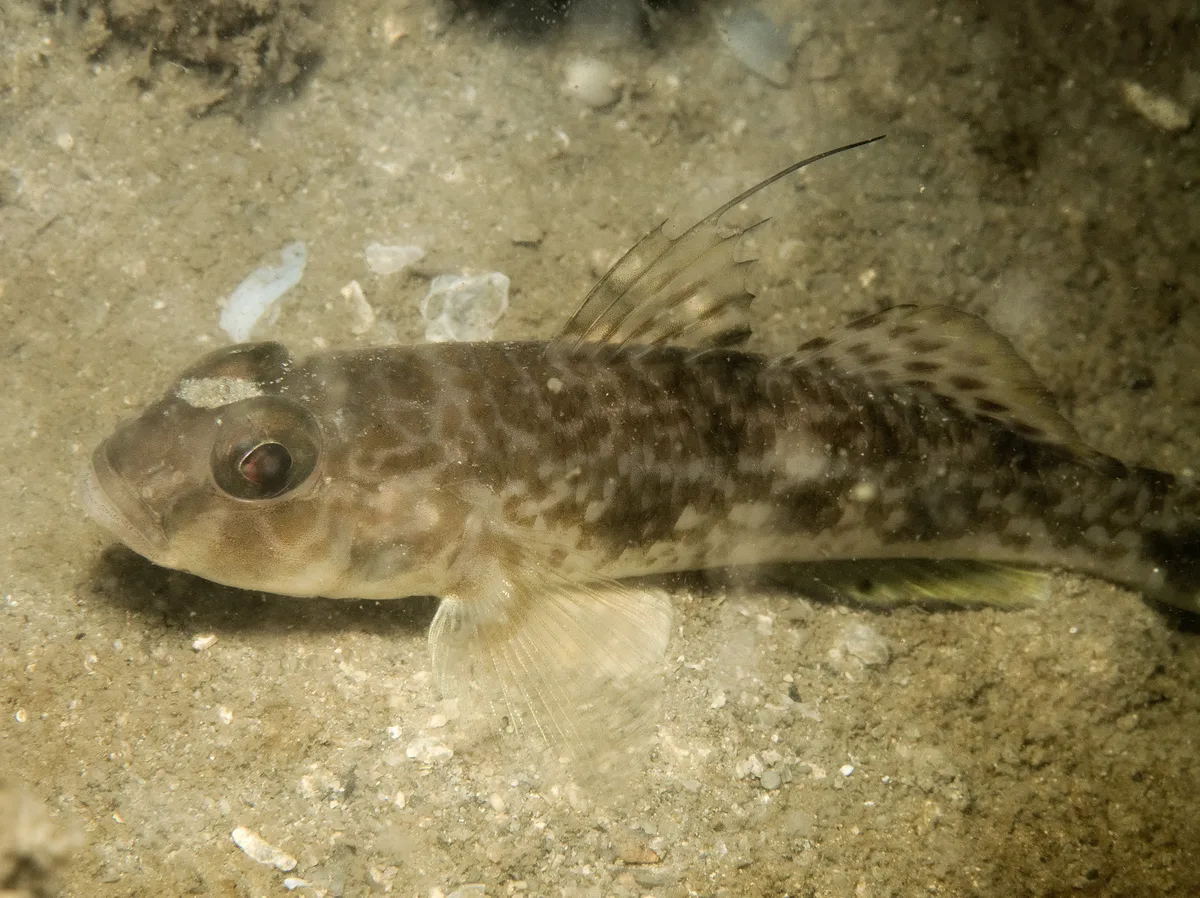
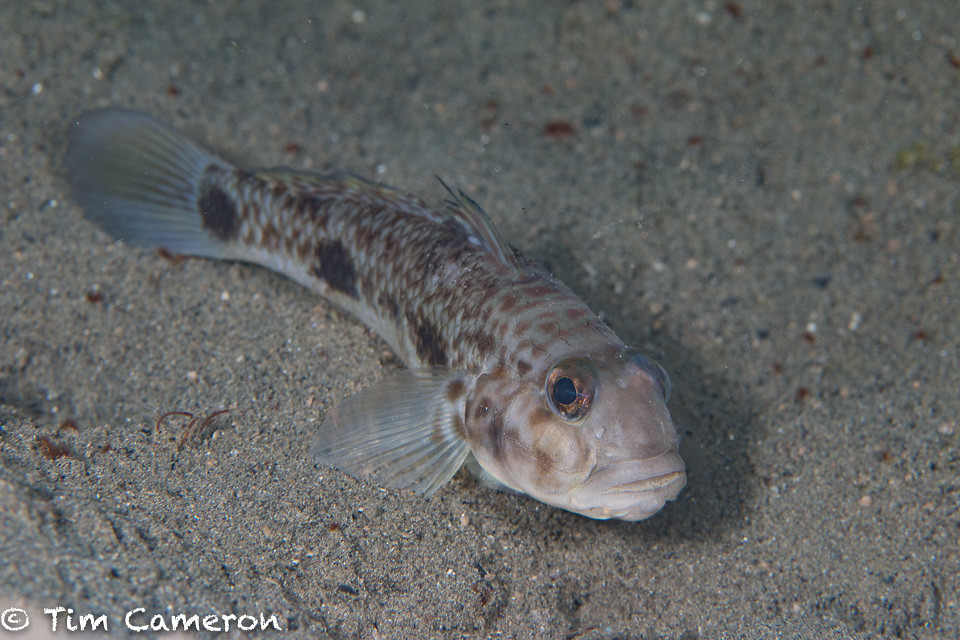
A blunt-headed goby of about 15 cm (6 in), mottled gray-brown with dark blotches along the flank, sitting motionless on silty sand and estuarine shallows where it is very nearly invisible until it moves.
It is worth knowing for a reason that has nothing to do with identification. Gobies of this genus carry tetrodotoxin, the pufferfish compound, in their flesh and organs, and the closely related shadow goby of the western Pacific has caused human poisonings, including fatal ones. Which species is involved in a given case is not always clear - the two are near-identical and have been confused in the literature for decades - so the sensible reading is that the genus is not food. Nothing about it is dangerous underwater; the toxin acts when eaten. Forsskål described it from this coast in 1775, and older records use the name Acentrogobius. It feeds at night on small crustaceans and worms, and by day does nothing at all, which is most of what makes it hard to find.
The genus. Yongeichthys Whitley 1932 - Named in honour of British marine biologist Charles Maurice Yonge. ETYFish
- mottled gray-brown with dark blotches along the flank
- blunt head, body thickest just behind the gills
- sits still on silty bottoms, often half-buried
- length up to 15 cm
Why it's threatened
There are no known major threats to this species. However, it may be locally threatened by mangrove destruction in the Philippines (Janssen and Padilla 1996).
Threat classification from the IUCN Red List.