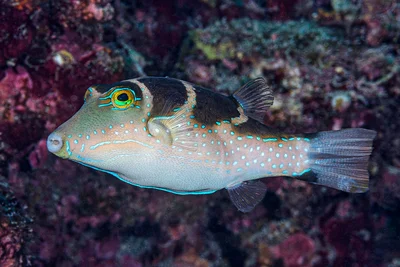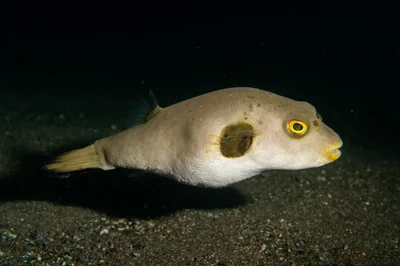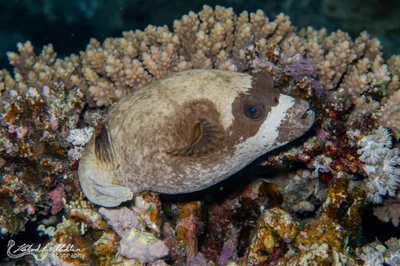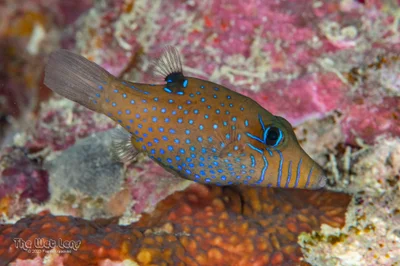
In 2003 a big silver puffer turned up in Gokova Bay on the Turkish coast. It had come up the Suez Canal (🇪🇬 Egypt) from this sea. Within twenty years three countries were paying fishermen to take it back out of the water: 🇹🇷 Turkey opened a bounty in 2021, at 25 lira for each one landed, and Cyprus and Greece now pay by the kilogram.
The reason is two-sided. It carries enough tetrodotoxin to kill an adult, and unlike the reef puffers it is regularly caught on hook and line, so people eat it - thirteen were poisoned in 🇮🇱 Israel in a single month in 2008, and poisonings have been repeated since, some of them fatal. Selling any pufferfish is illegal across the European Union for exactly this reason. The other half is the beak. Four fused teeth in a jaw built to crush crab shell go through monofilament without noticing, and a fisherman in the eastern Mediterranean now loses nets, lines and the catch hanging in them to a fish that was not there a generation ago.
Here it is none of those things. It is a native part of the fauna, an animal of open bottom away from the reef, and simply something to look at from a distance.
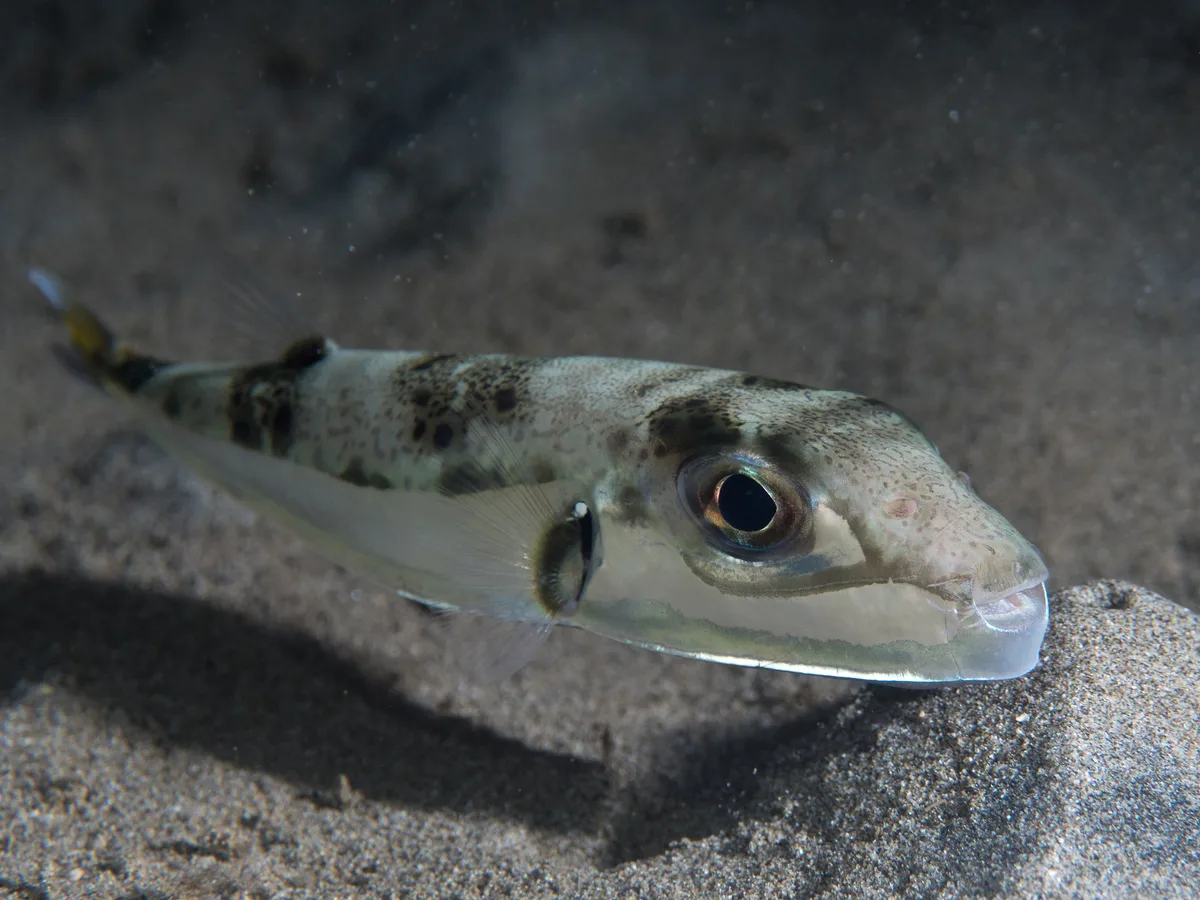
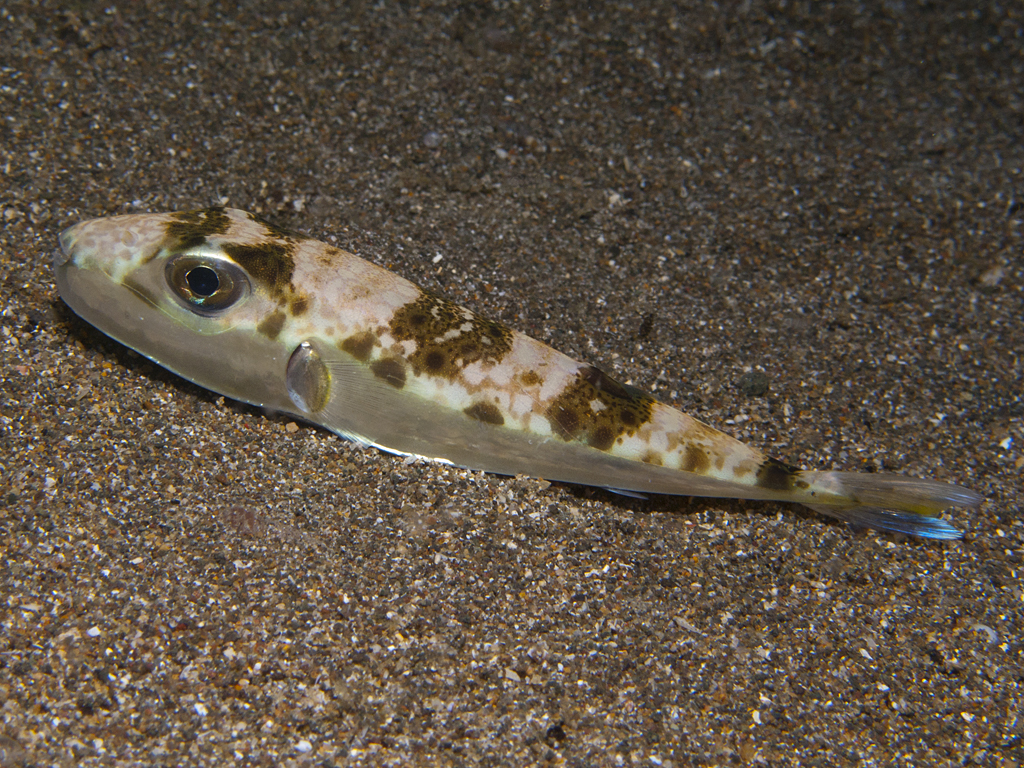
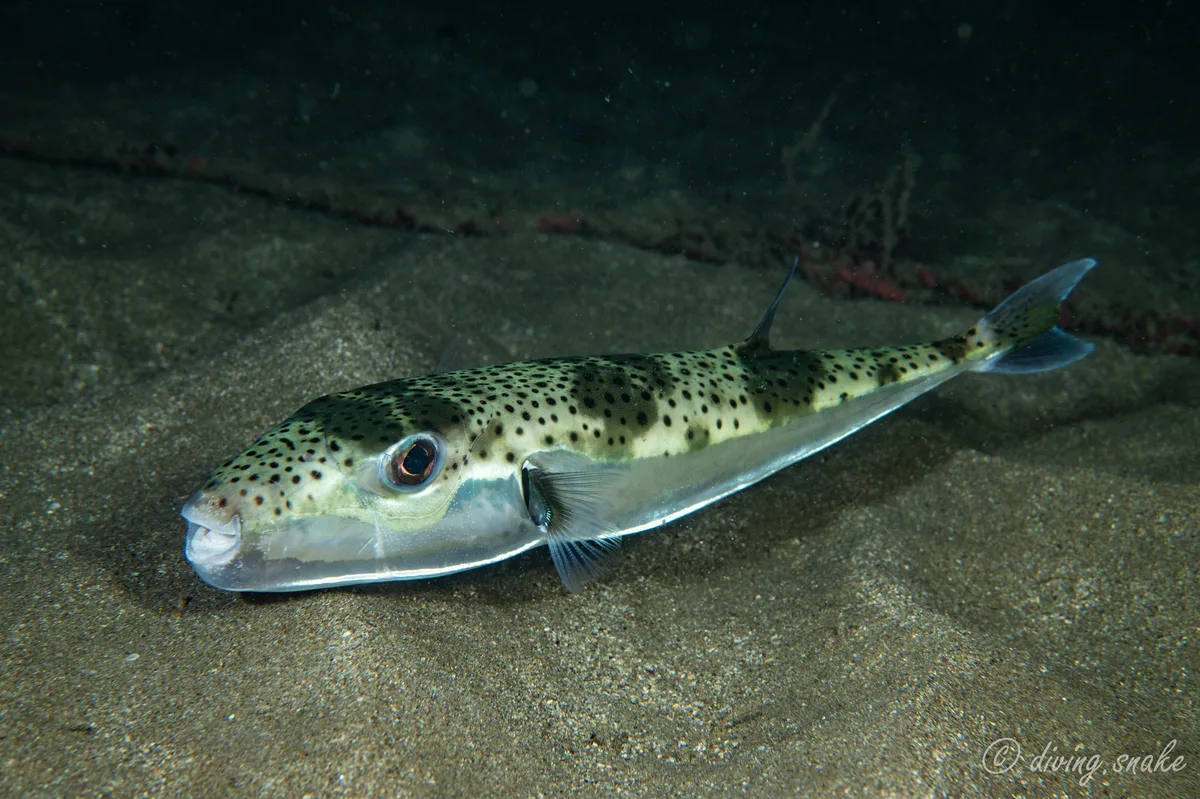
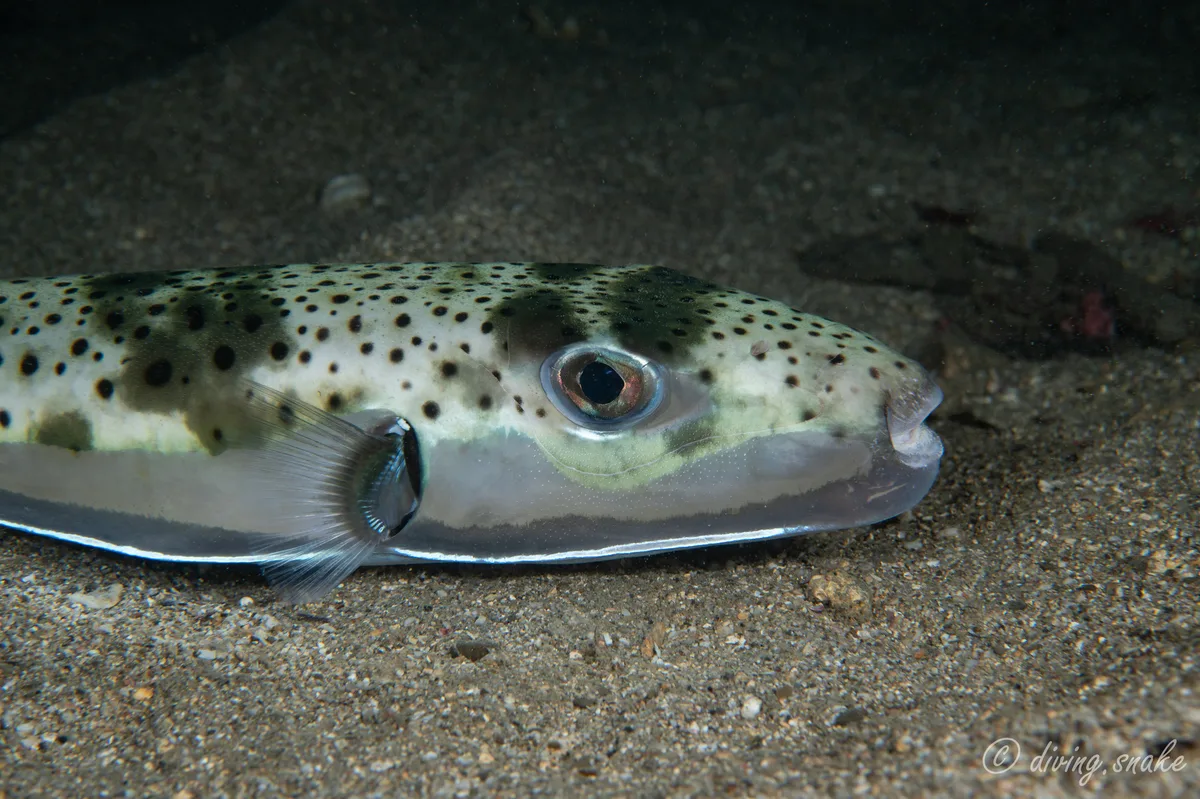
It is built differently from the puffers on the coral: streamlined, crescent-tailed, a strong swimmer, dark above with a bright silver band running from the mouth back along the flank and a black patch at the base of the pectoral fin. It reaches 1.1 m and 9 kg, which makes it one of the largest pufferfish in the world, and it hunts properly, taking crabs, cephalopods and fish.
The same animal, then, on both sides of one canal: a normal predator in the sea it evolved in, and an invasion with a body count in the sea it reached.
The genus. Lagocephalus Swainson 1839 - lagos (hare) + cephalus (head). ETYFish
The species. Lagocephalus sceleratus (Gmelin 1789) - noxious. ETYFish
- bright silver band running from the mouth back along the flank
- greenish above with dark spots, white below, black base to the pectoral fin
- crescent tail and a streamlined body, built for open water rather than coral
- over open bottom away from reef, and large - to 1.1 m
- up to 1.1 m and 9 kg
Why it's threatened
Threat classification from the IUCN Red List.