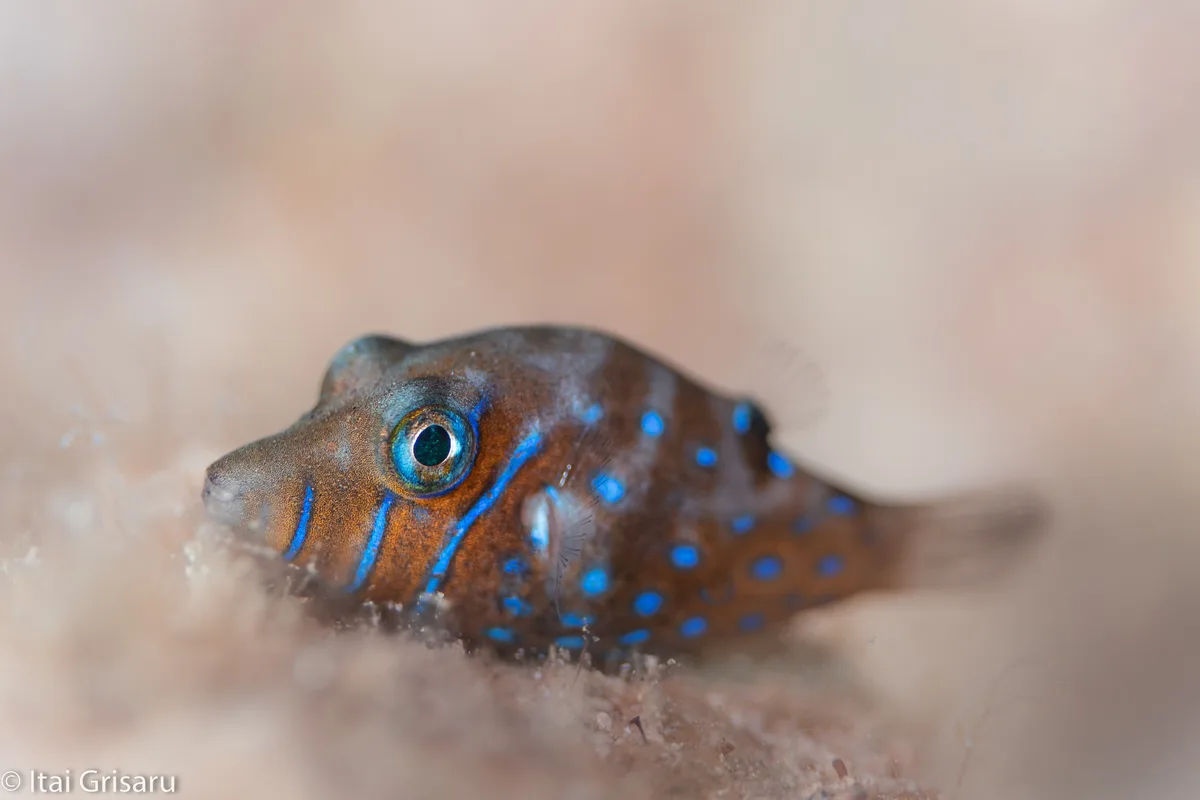
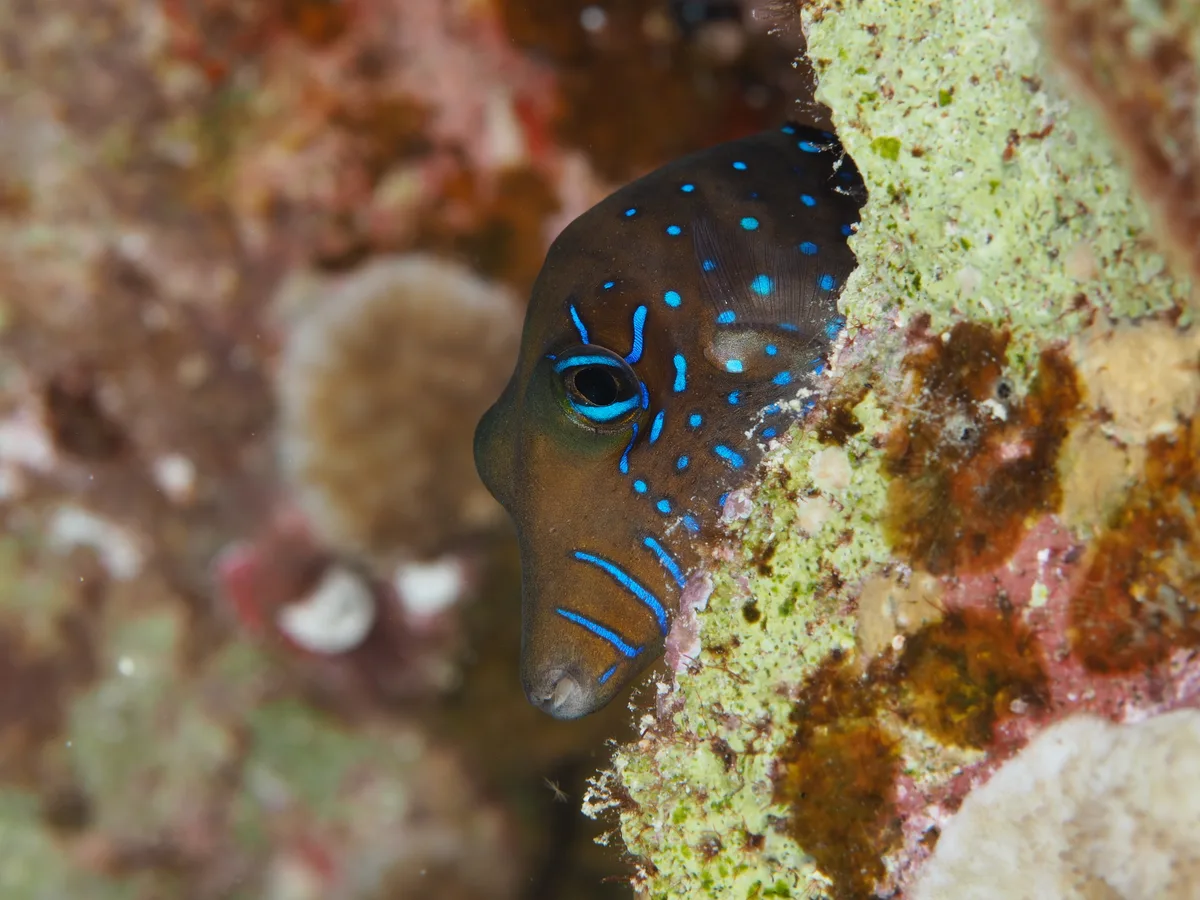
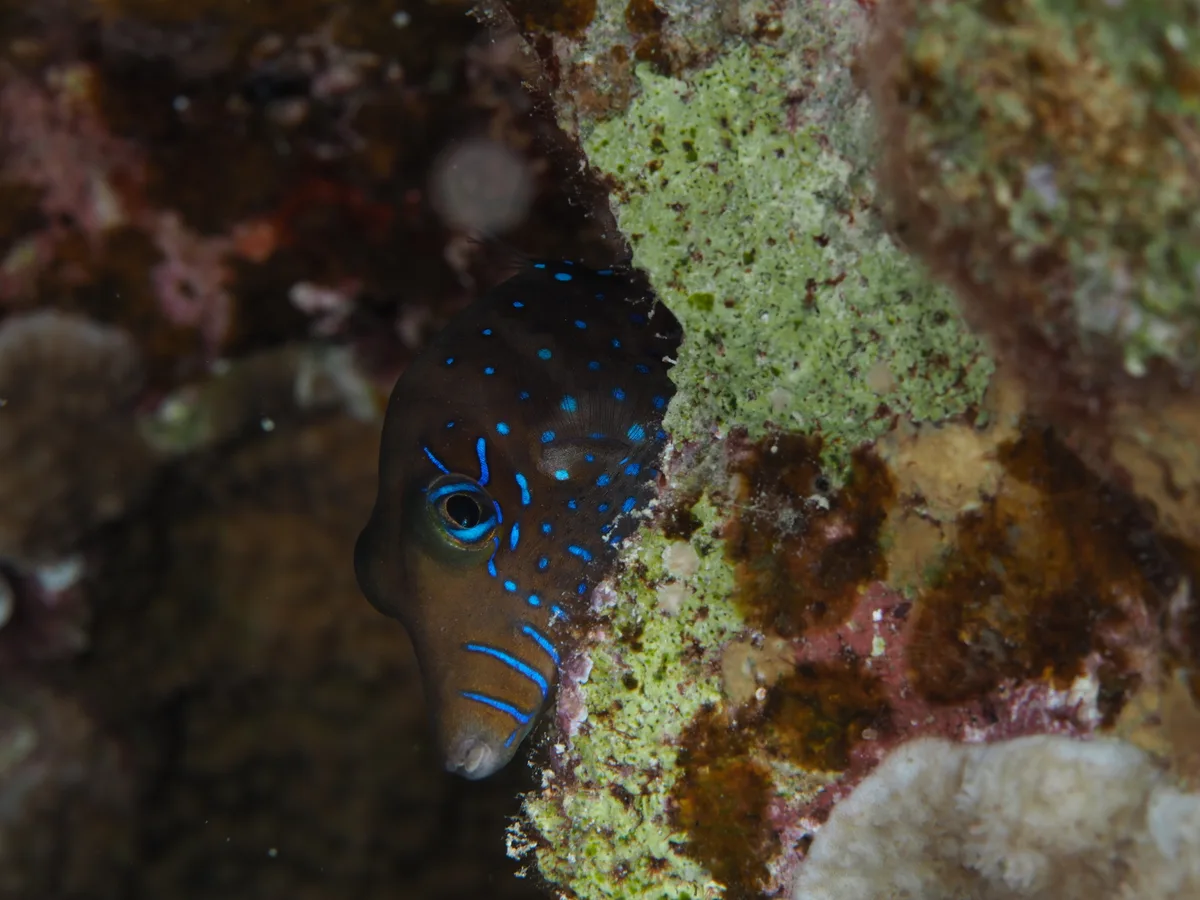
The poison in a puffer is not the puffer's work. Tetrodotoxin is made by bacteria, moves up the food chain, and the fish concentrates and stores it, mostly in skin, liver and gonads. The proof is on fish farms: puffers raised from the egg on controlled feed grow up harmless, and turn toxic again only when toxin is put back into what they eat. It is a borrowed defense, and a fish with a borrowed defense can afford to be slow.
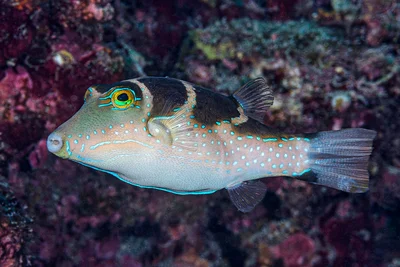
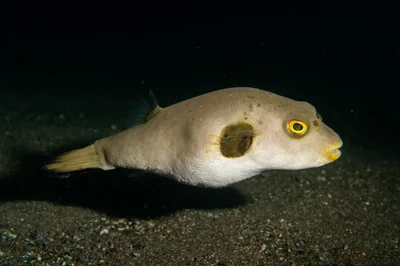
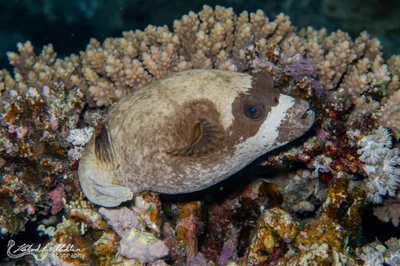
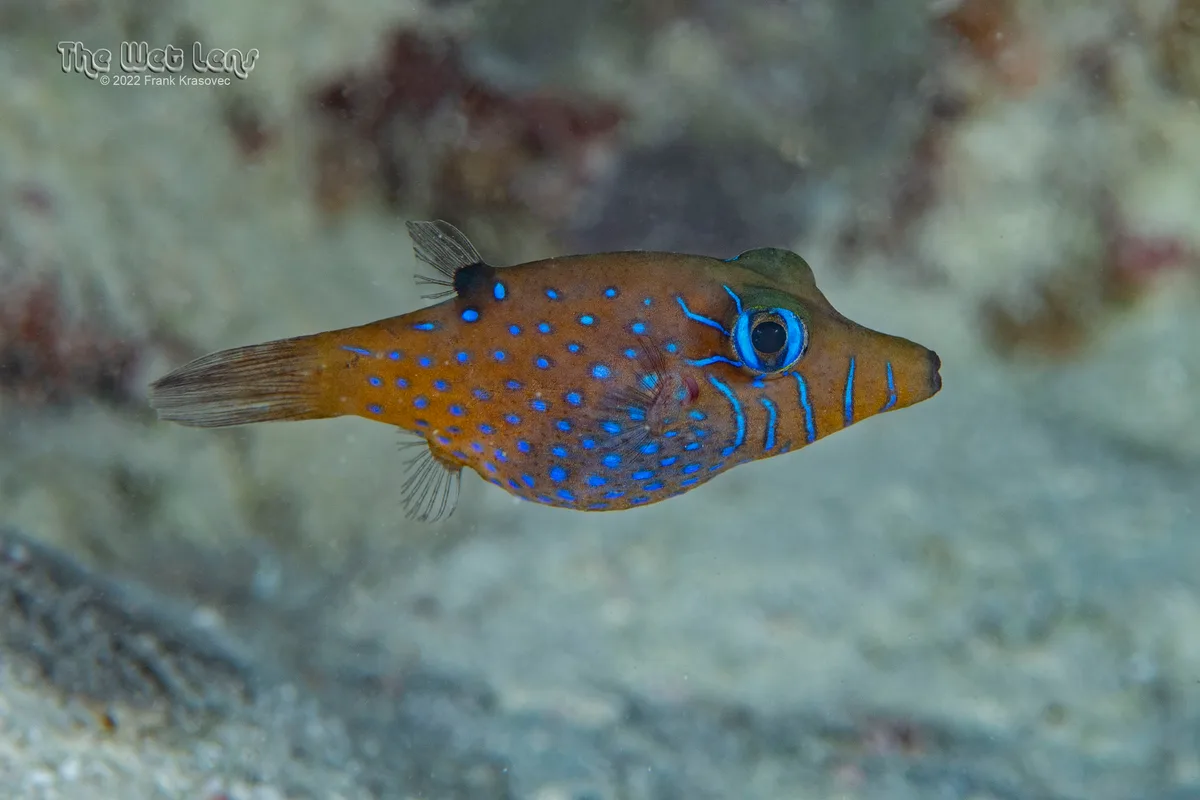
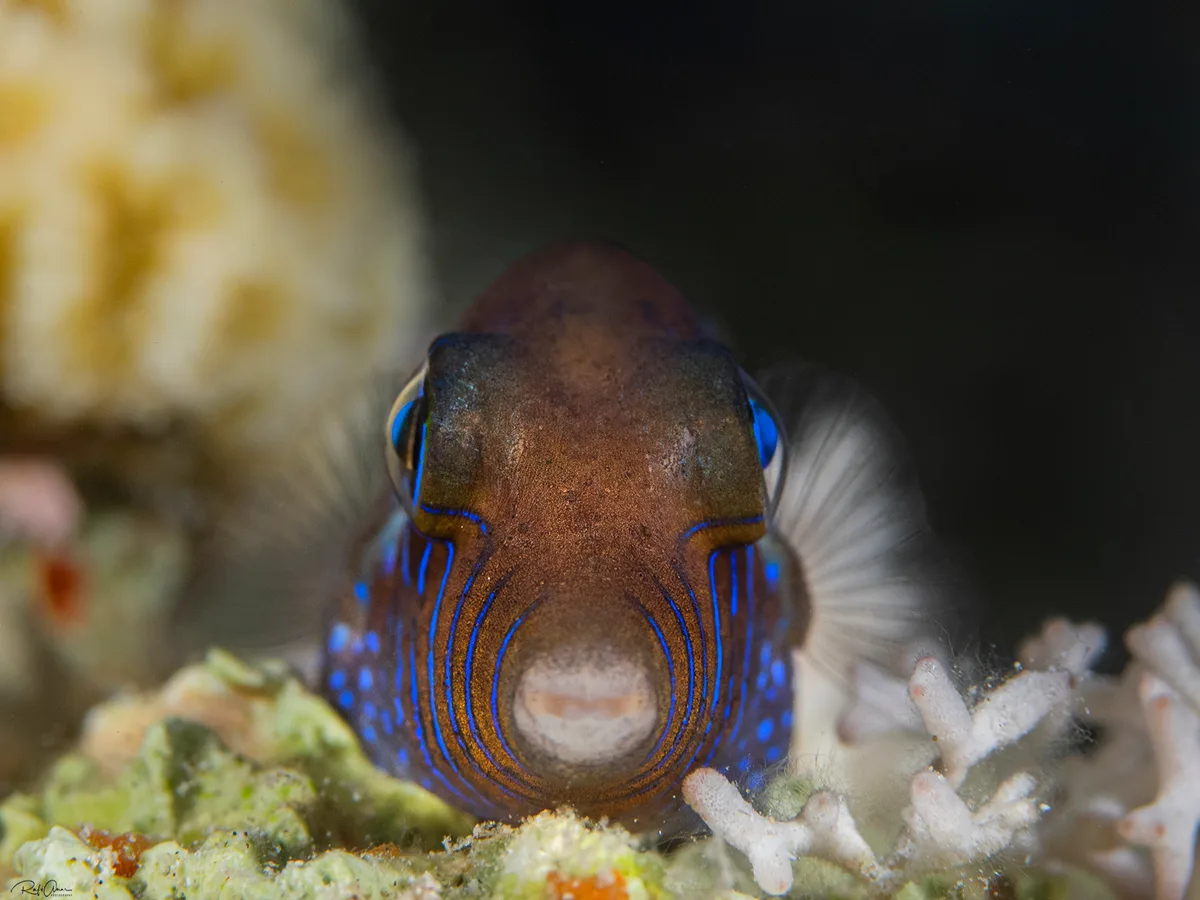
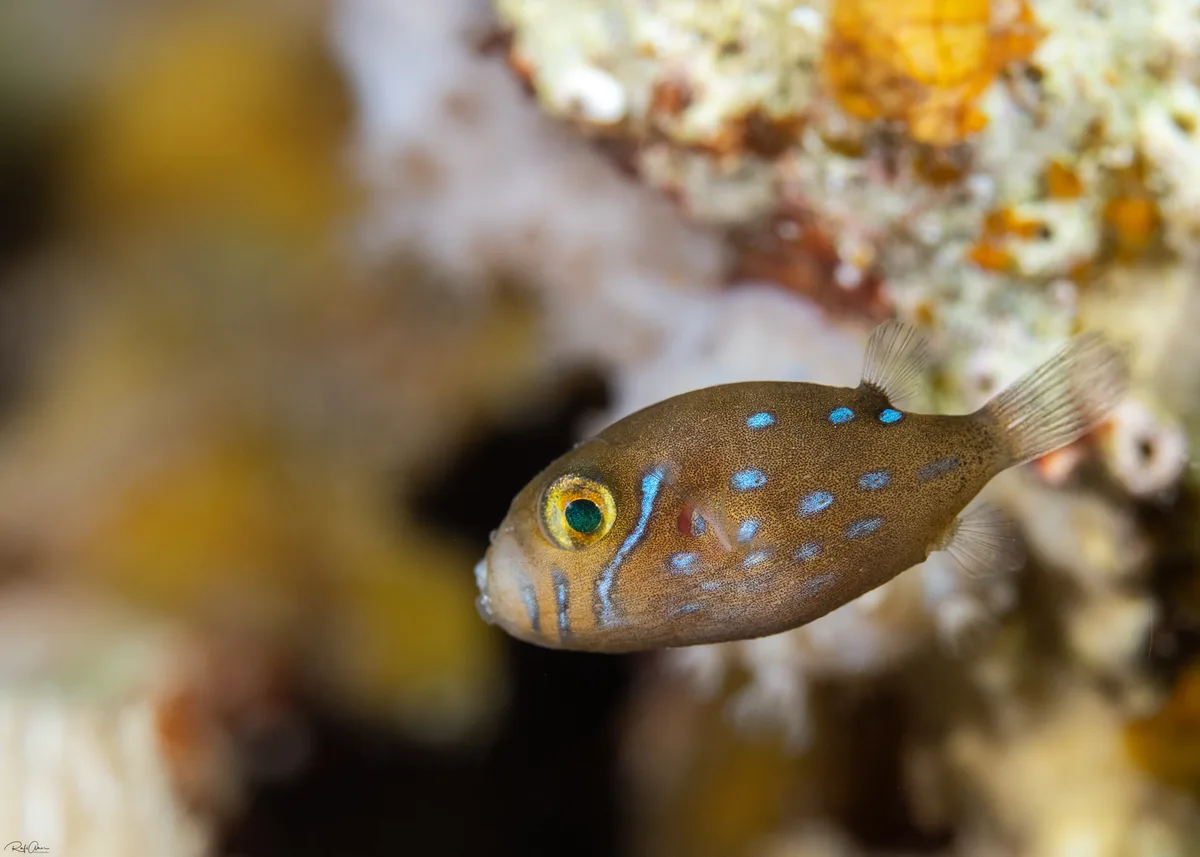
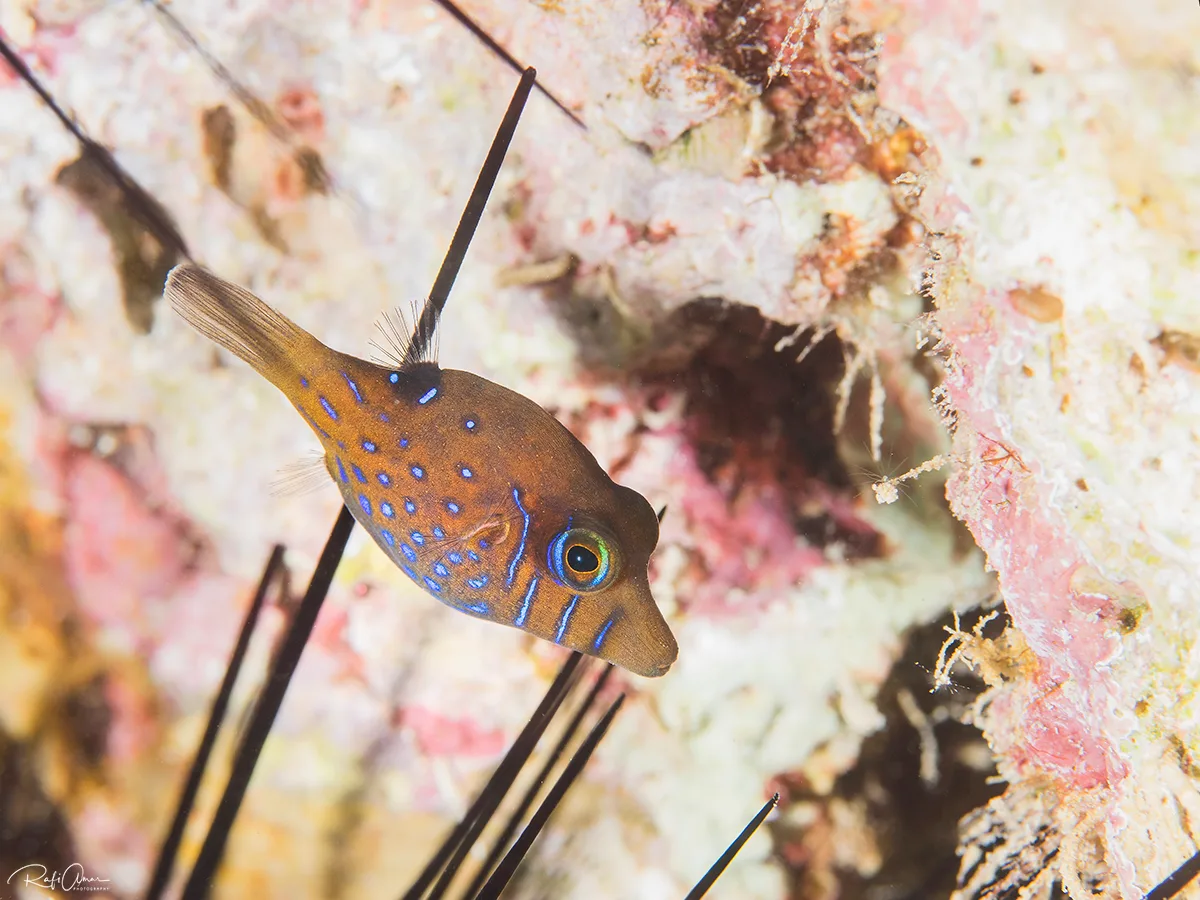
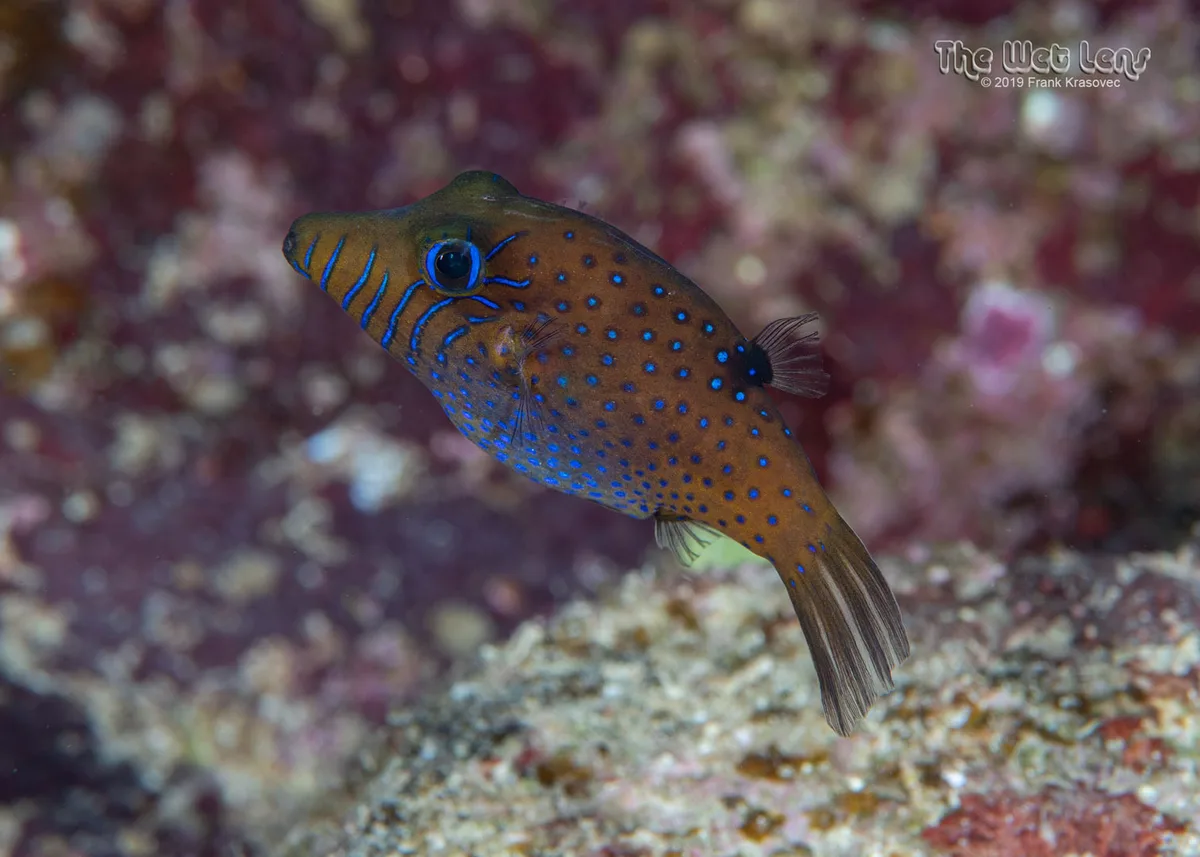
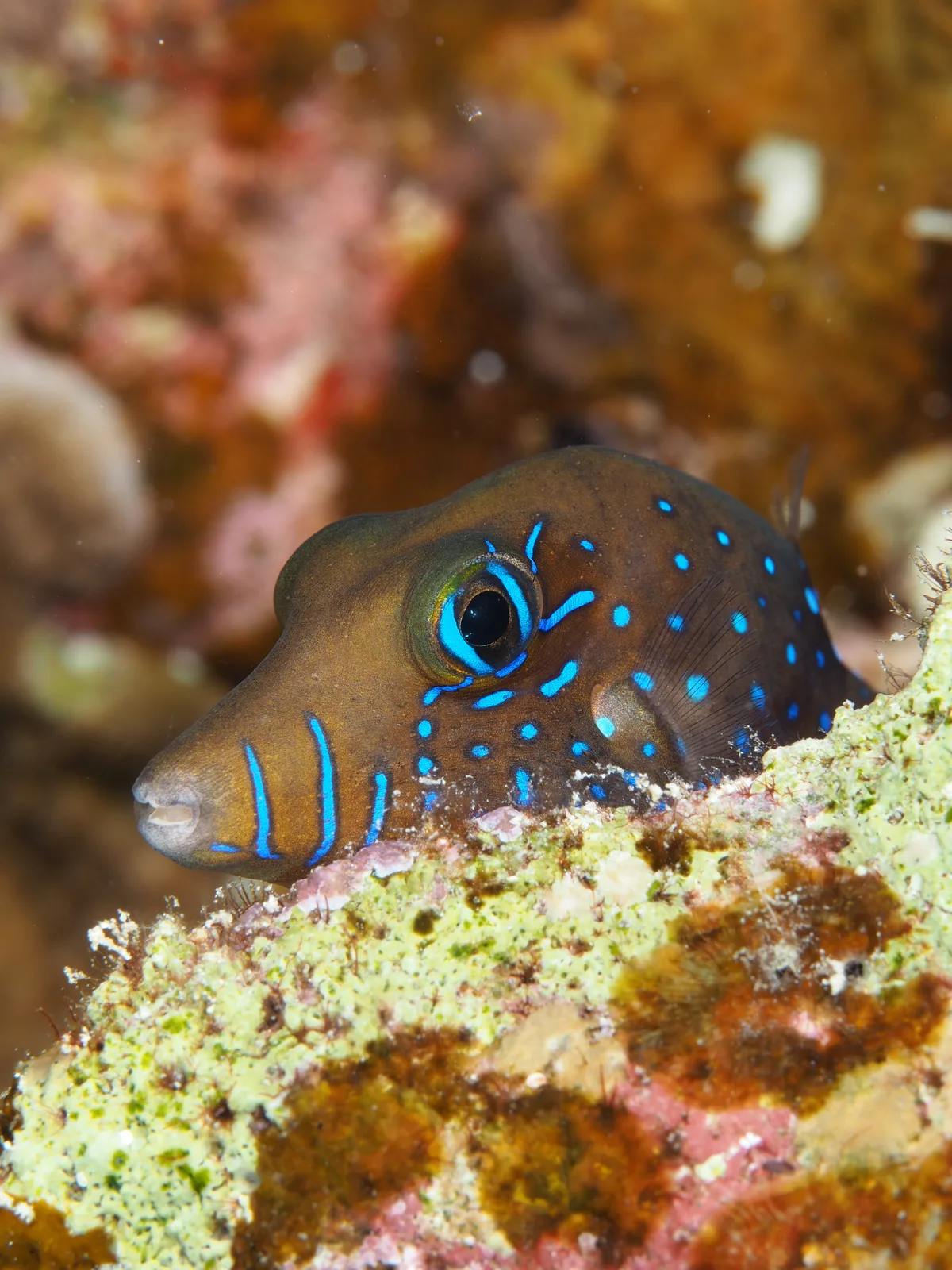
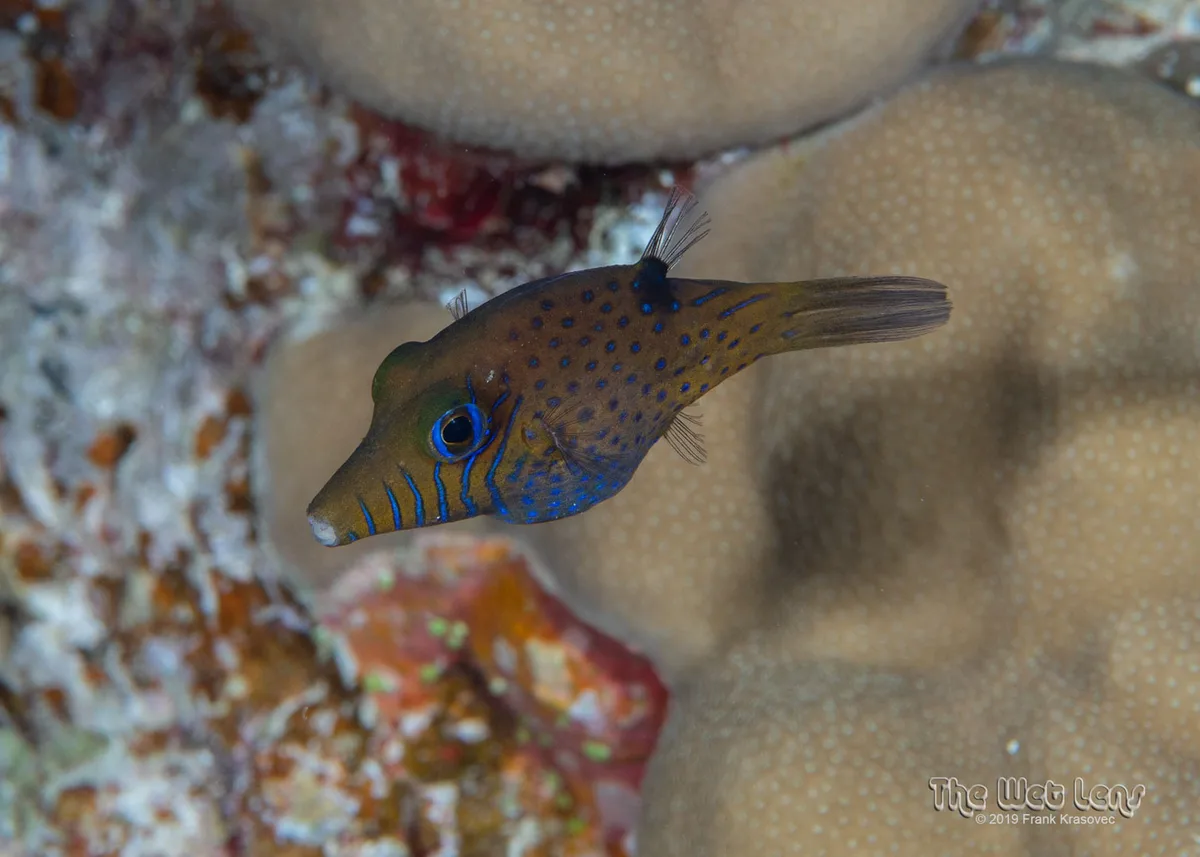
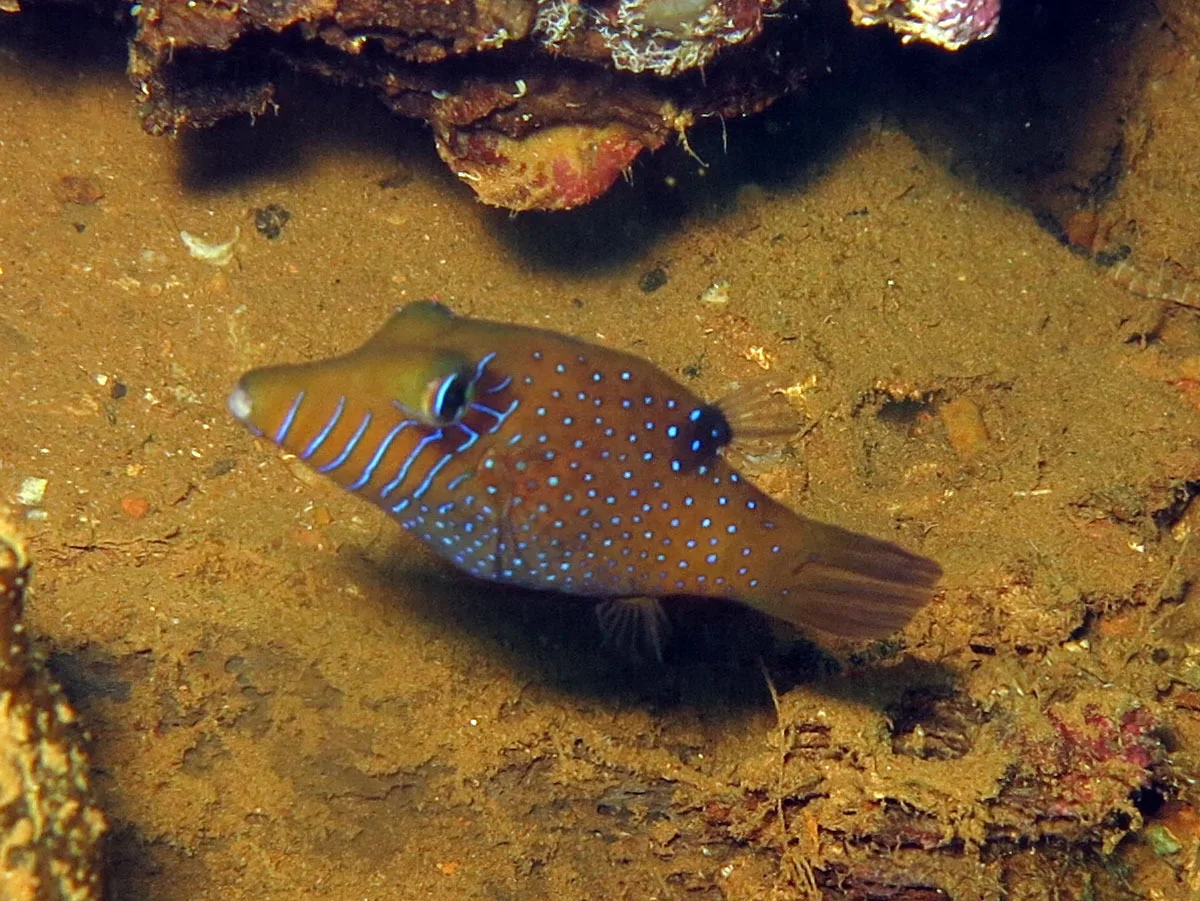
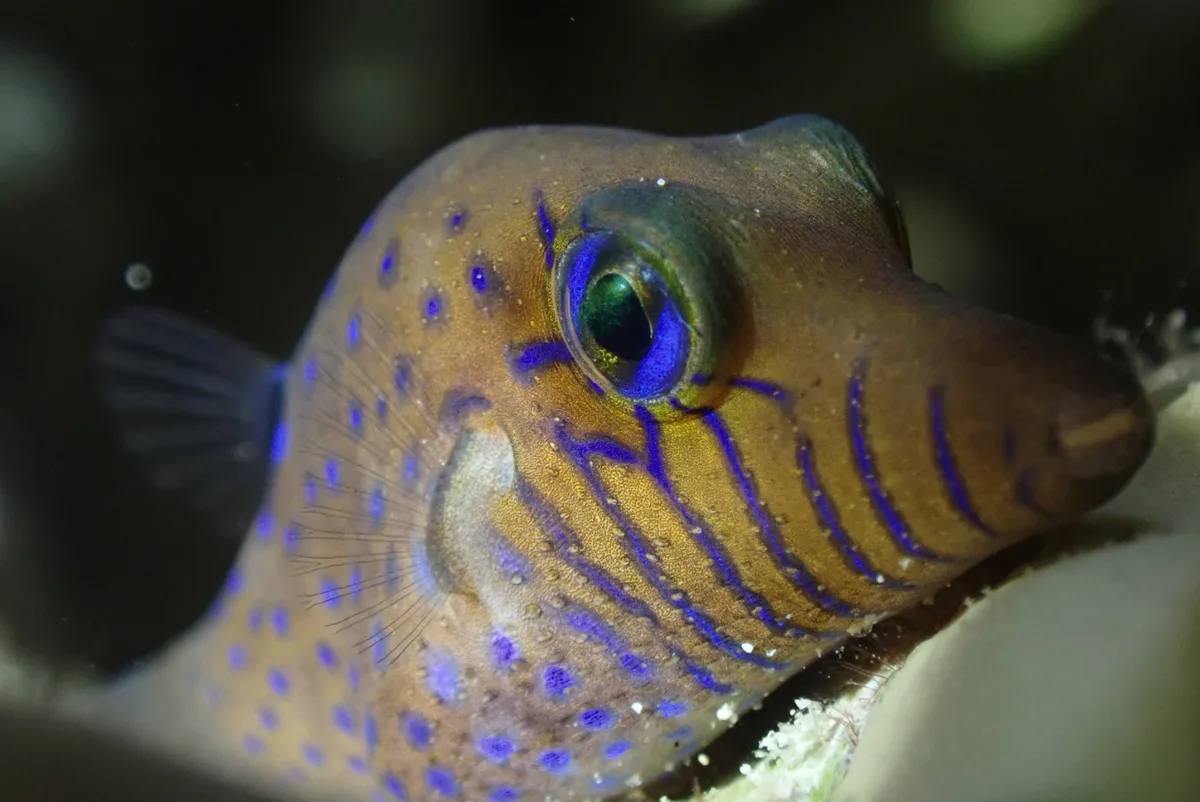
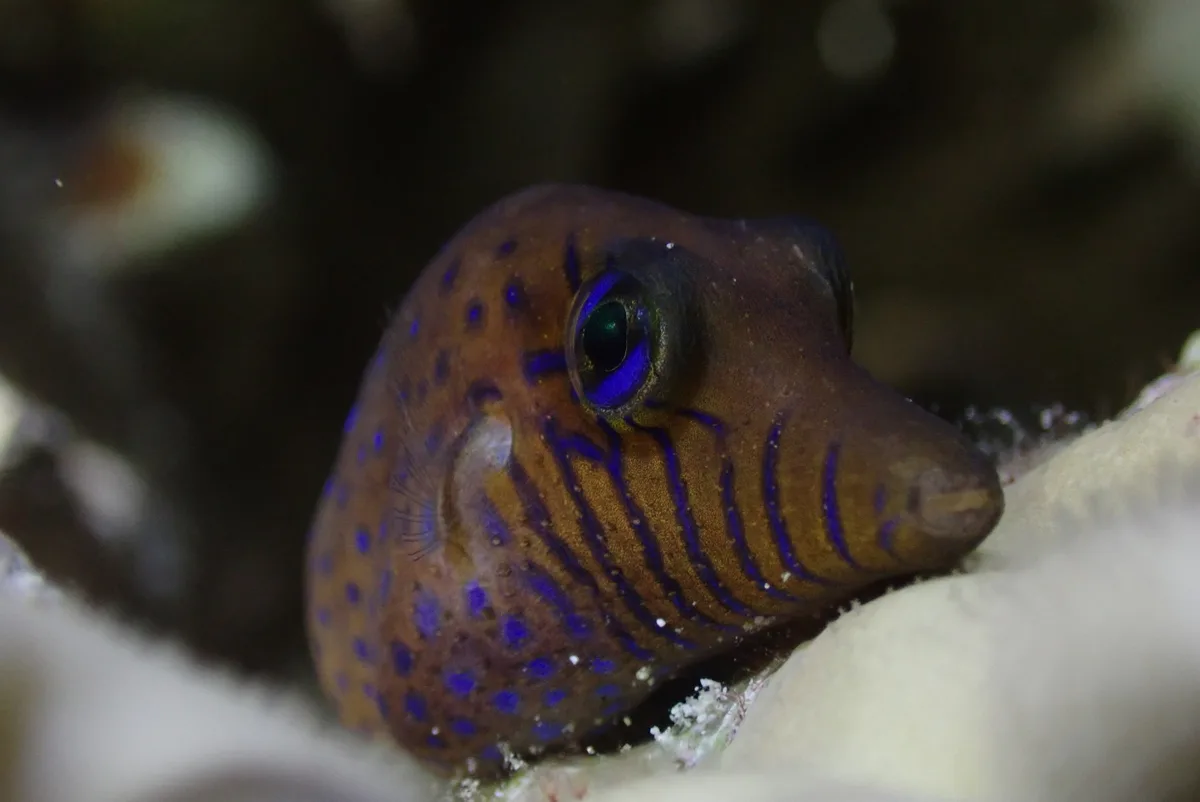
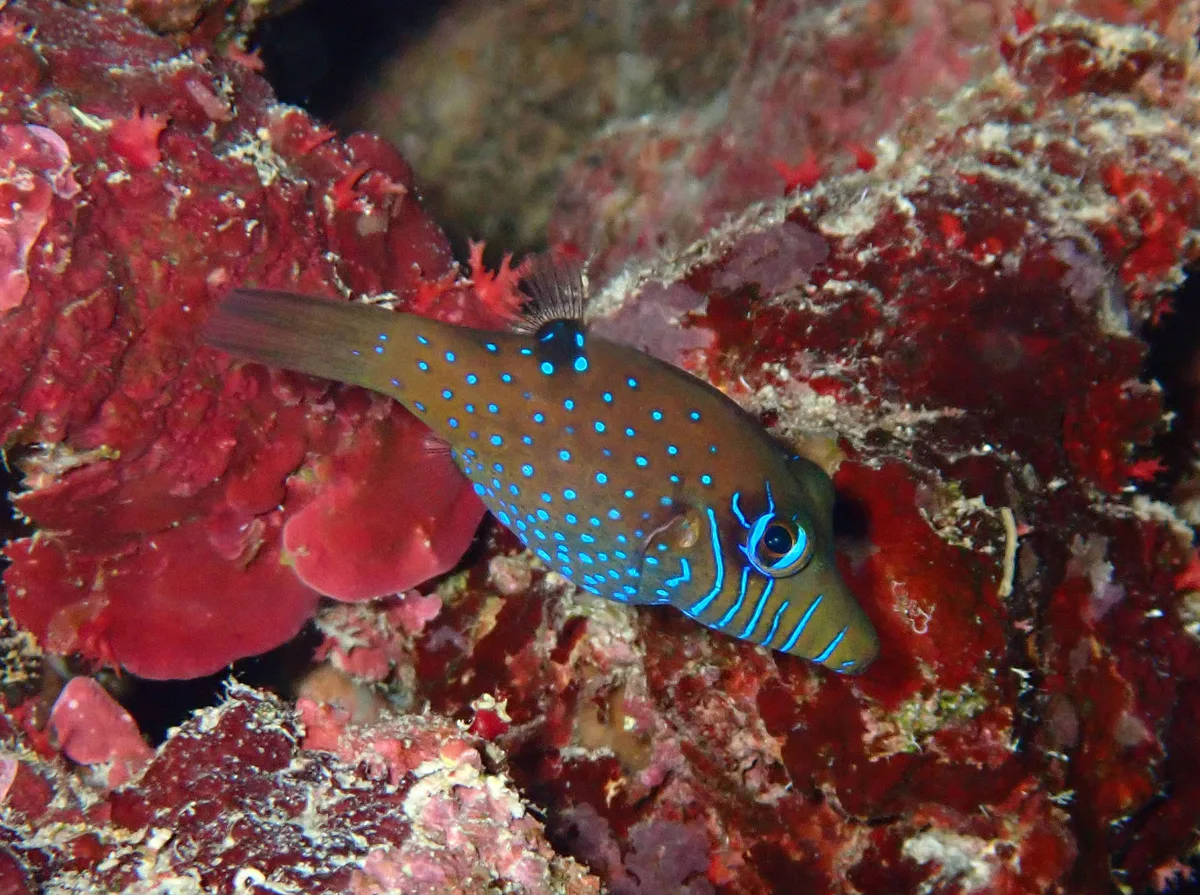
This one is the smallest puffer in the 🌊 Red Sea, under 6 cm fully grown. It is a sharpnose puffer, so the body is flattened side to side rather than round, with a ridge along the back and another along the belly, and a pointed snout ending in the family's four teeth, two above and two below, fused into a beak that takes chips out of coral and shell. It can swallow water and balloon, though at this size that is a last resort rather than a habit.
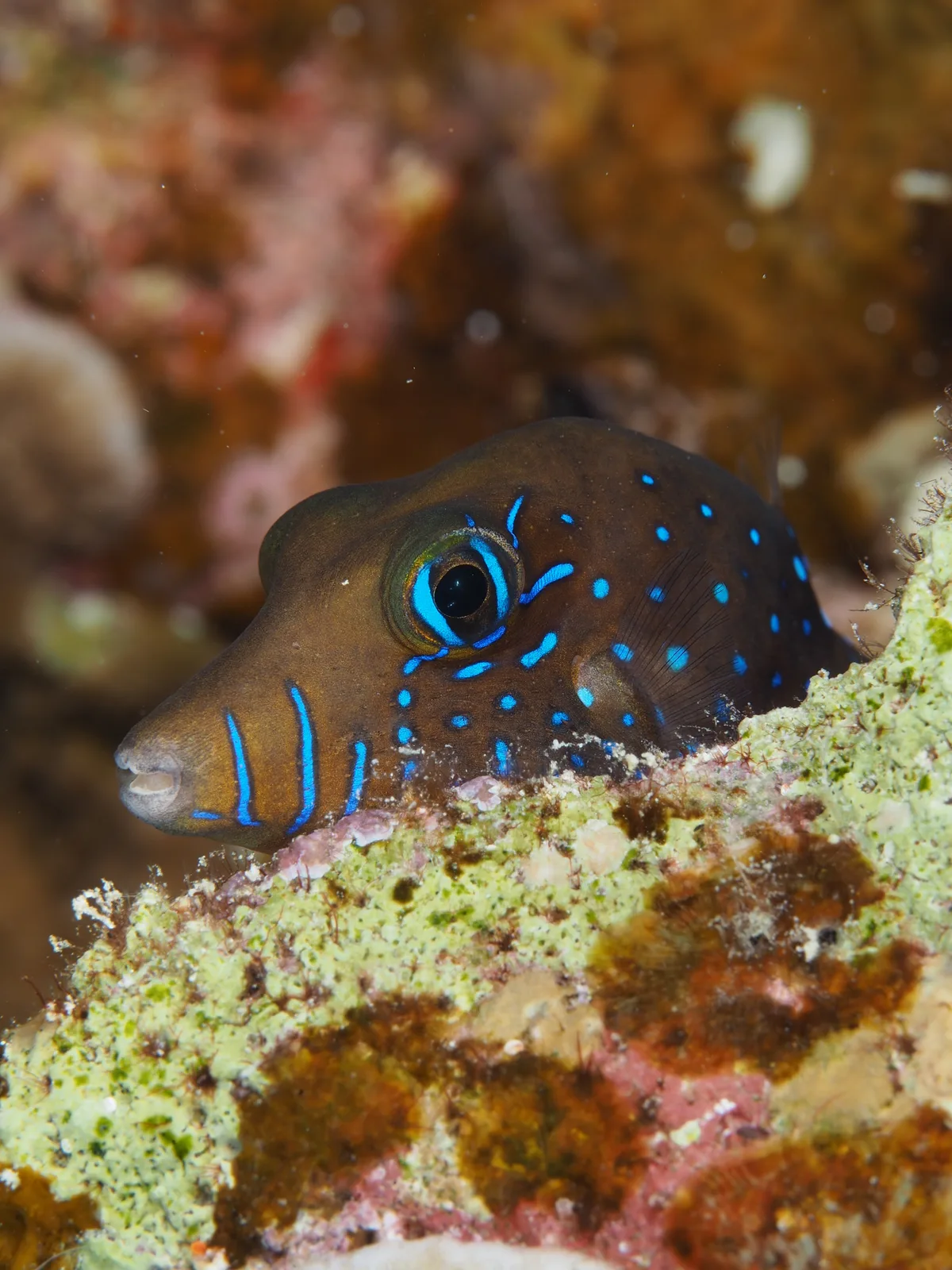
Finding it is a matter of looking in the right place. It lives in caves, under overhangs and in narrow holes rather than out on open reef, from about 2 m down to 30 m, and it backs deeper into the rock as soon as it notices you. It hovers rather than swims, sculling with the dorsal and anal fins with the tail folded until it needs to bolt.
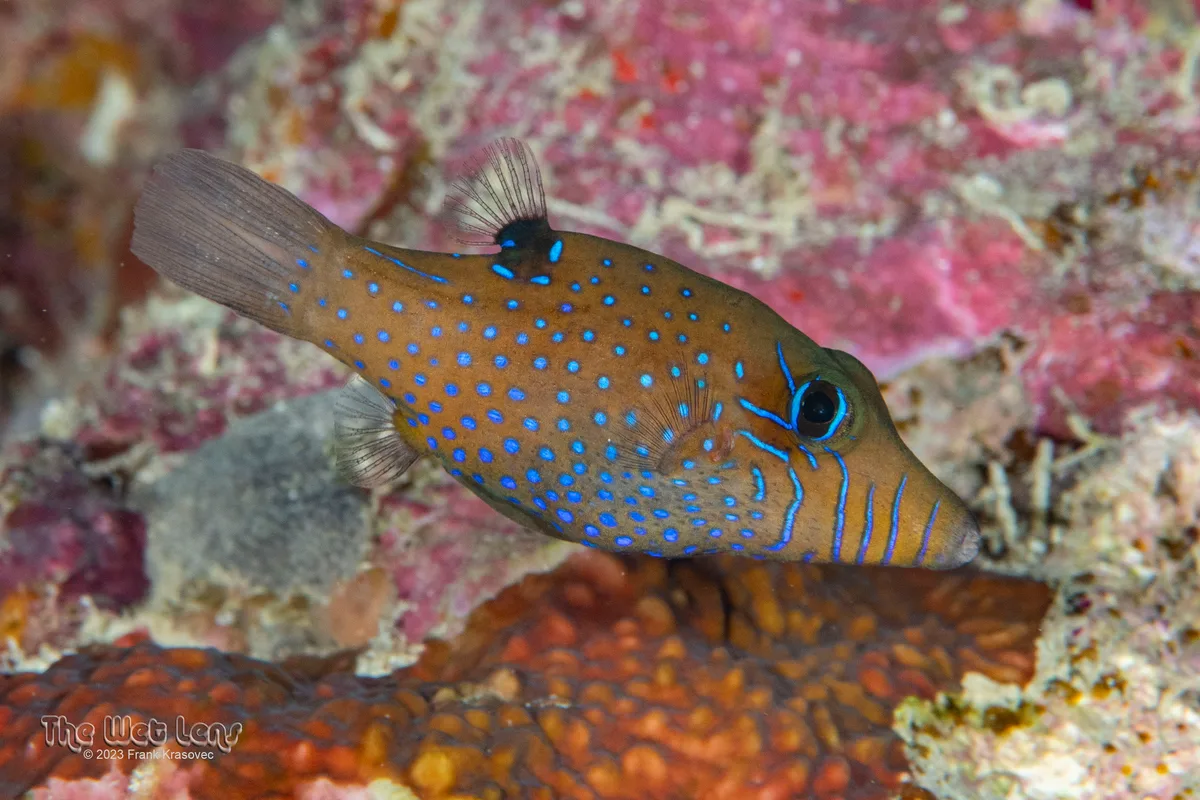
Be warned that published color descriptions of this species are thin, and the tobies of this sea are easy to mix up. Size, shape and where it came out of are what identify it in the water: the 🌊 Red Sea toby is twice as long and lives in shallow protected bays, and the blue-spotted toby carries neon lines around the eye.
It lays eggs and is known from the 🌊 Red Sea and nowhere else. Allen and Randall named it in 1977 in their review of the sharpnose puffers, and half a century later it is still only reported from here.
The genus. Canthigaster Swainson 1839 - [a]canthus (thorn or spine) + gaster (belly). ETYFish
The species. Canthigaster pygmaea Allen & Randall 1977 - small or dwarf. ETYFish
- Under 6 cm, the smallest puffer in this sea
- Body flattened side to side, with a ridge along back and belly
- Pointed snout ending in a four-toothed beak
- In caves, overhangs and holes rather than open reef
- up to 5.6 cm
Why it's threatened
Threat classification from the IUCN Red List.