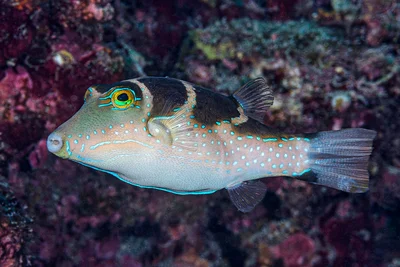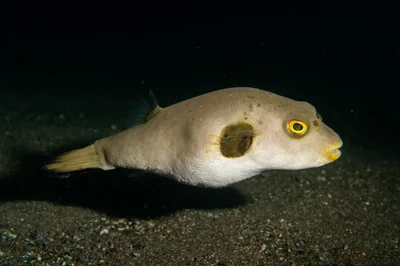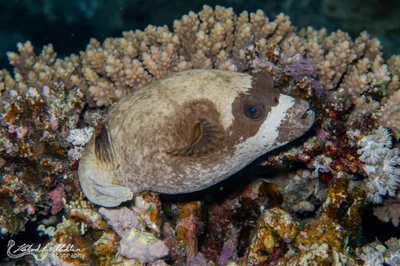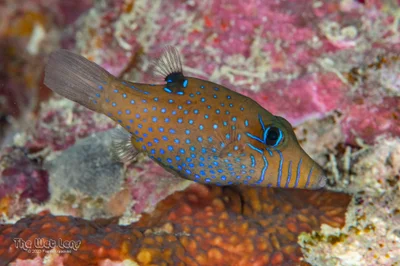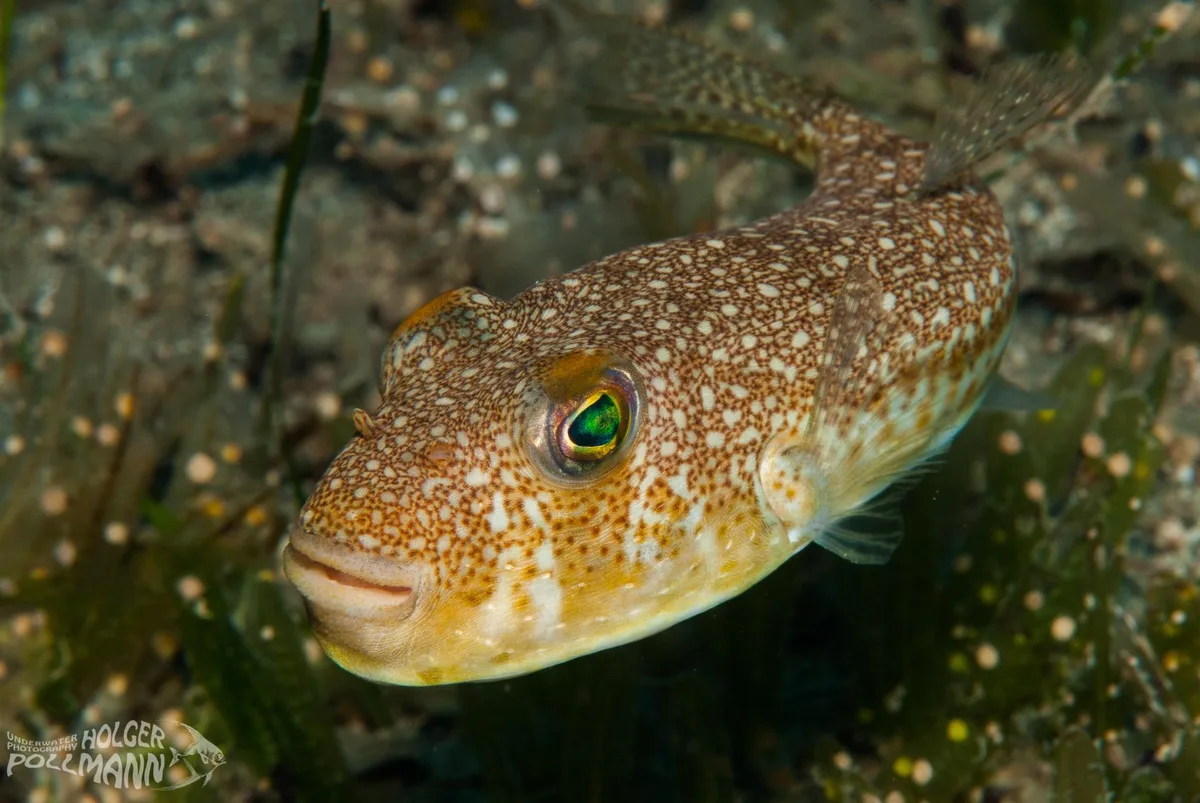
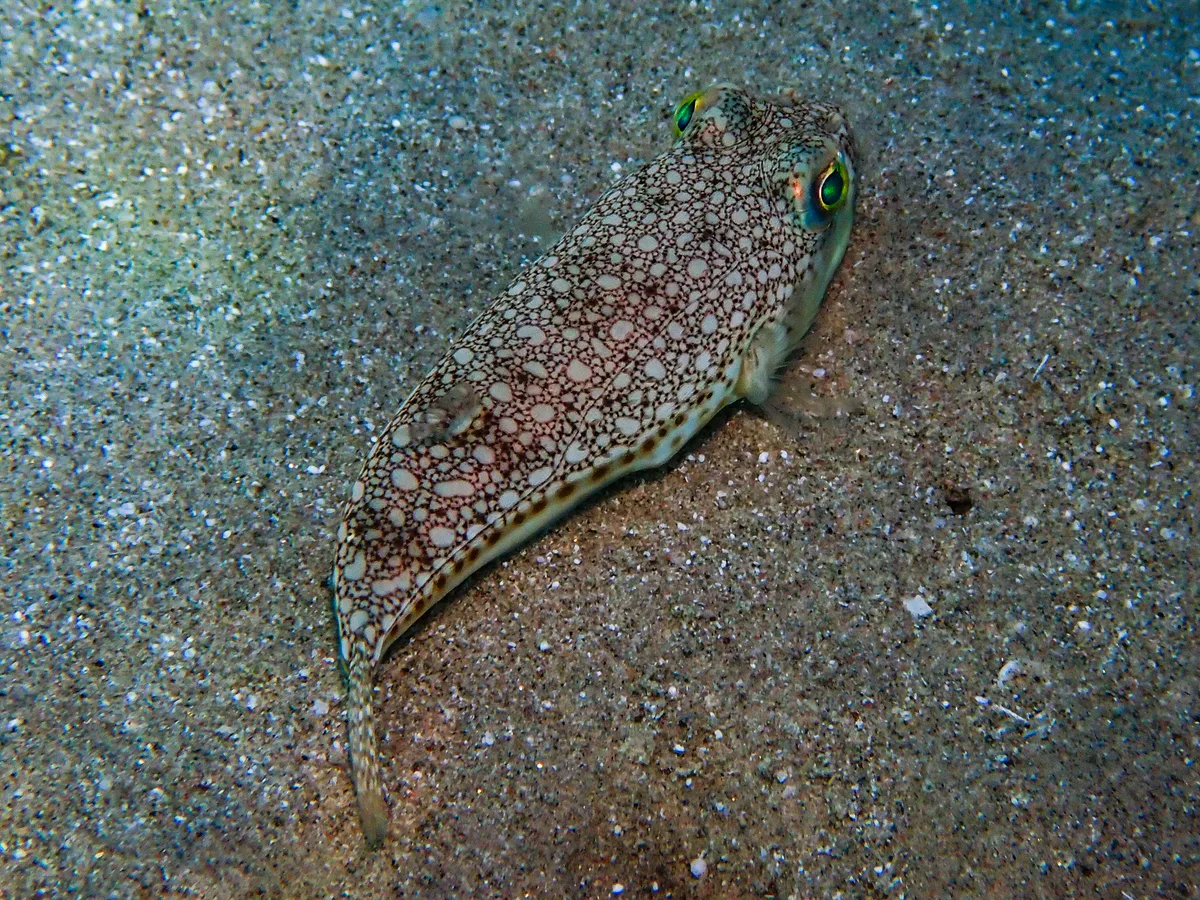
This is a 🌊 Red Sea fish that is now photographed far more often in Greece and 🇹🇷 Turkey than it is at home. It went north through the Suez Canal (🇪🇬 Egypt), was first caught off Haifa in 1987, and by 2002 held a self-sustaining population on the Turkish coast at Fethiye. Of the 820 records of the species in the public observation databases, eleven are from the 🌊 Red Sea and most of the rest are eastern Mediterranean. It has done better in the sea it invaded than in the one it came from.
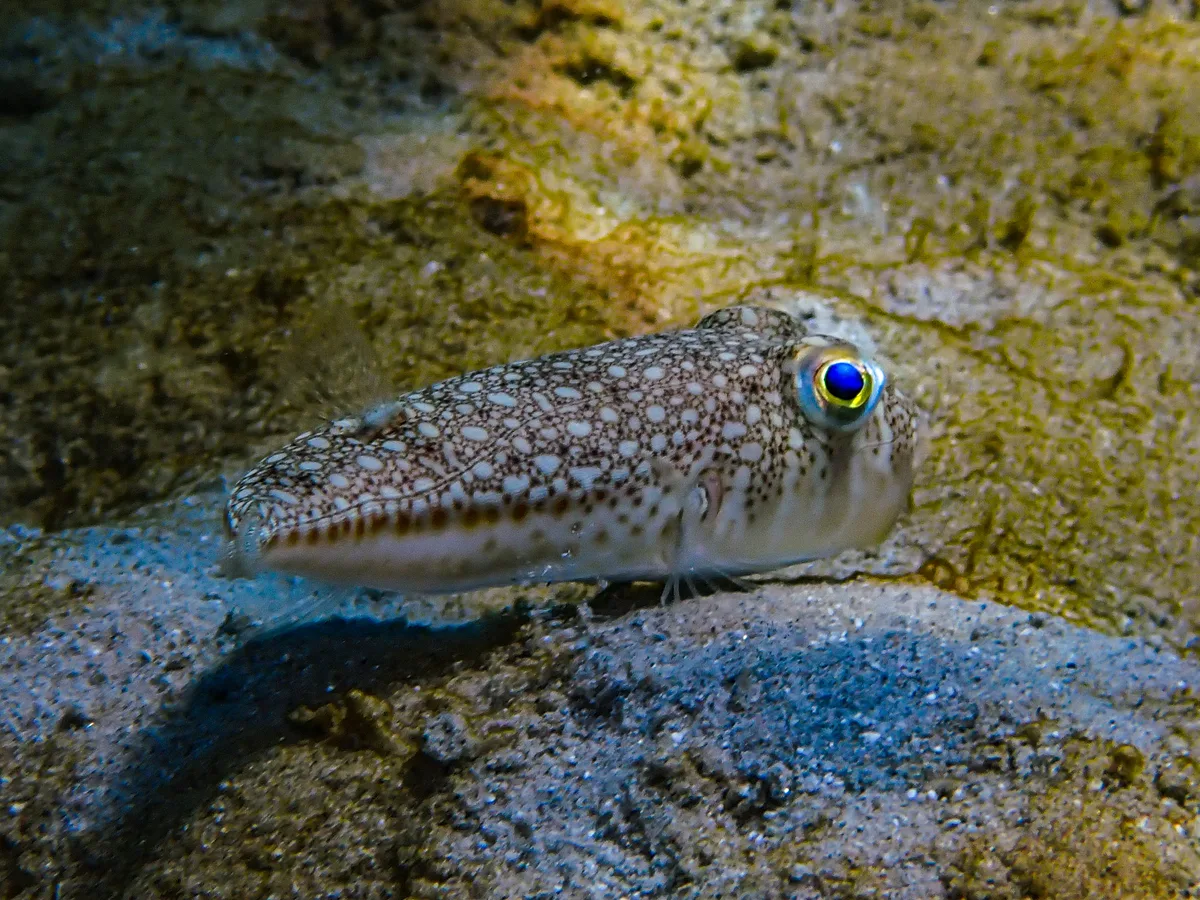
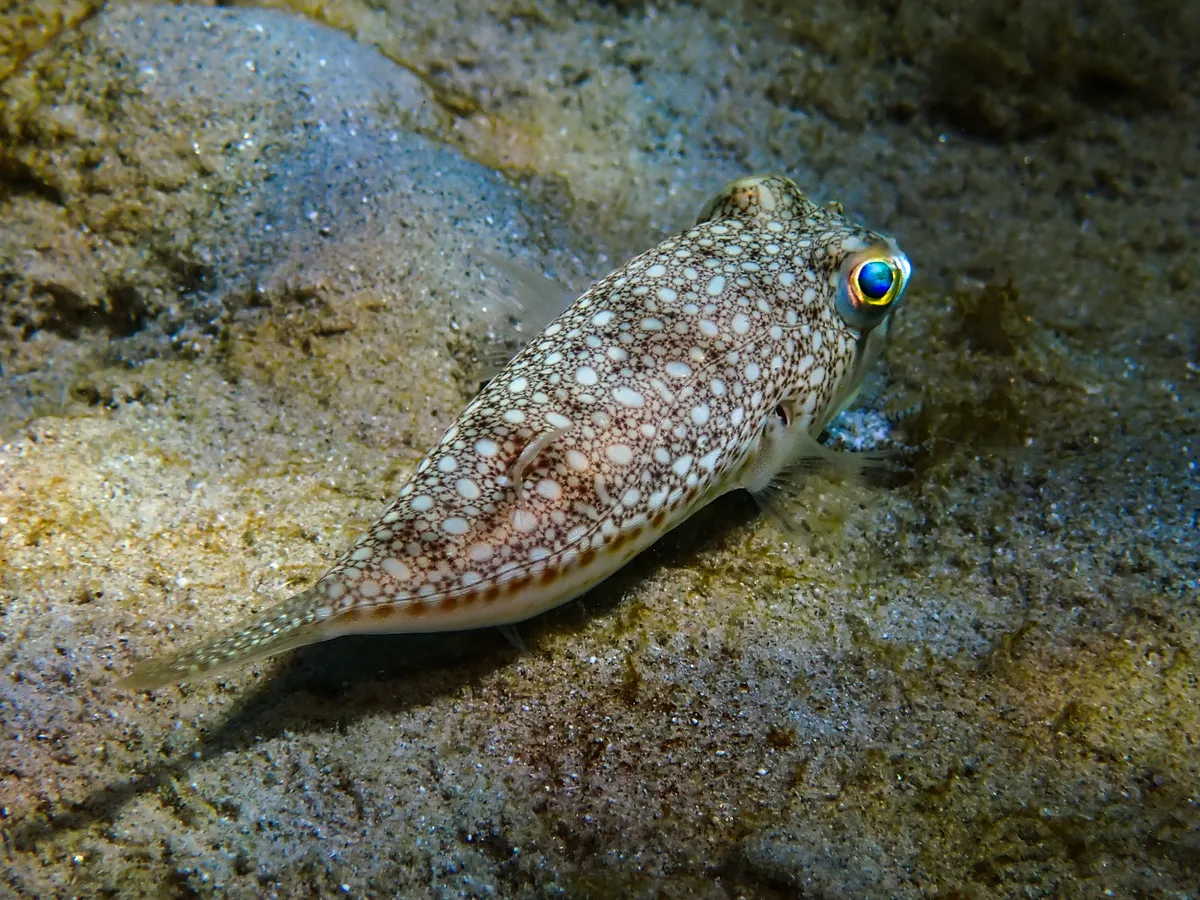
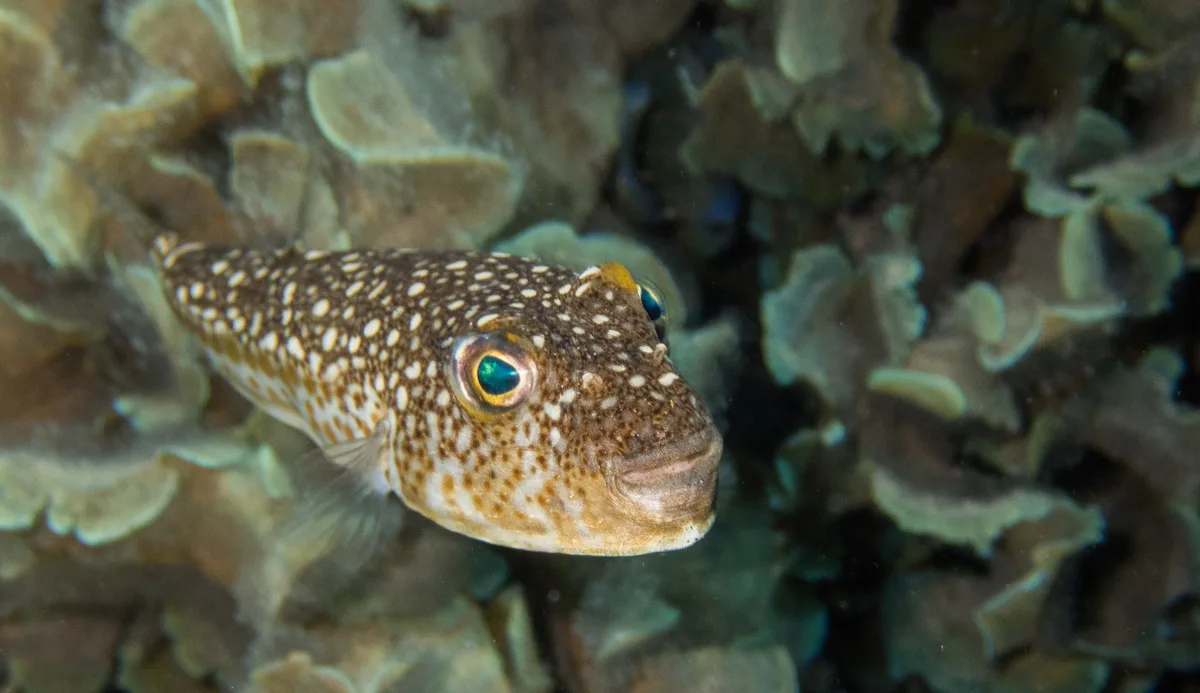
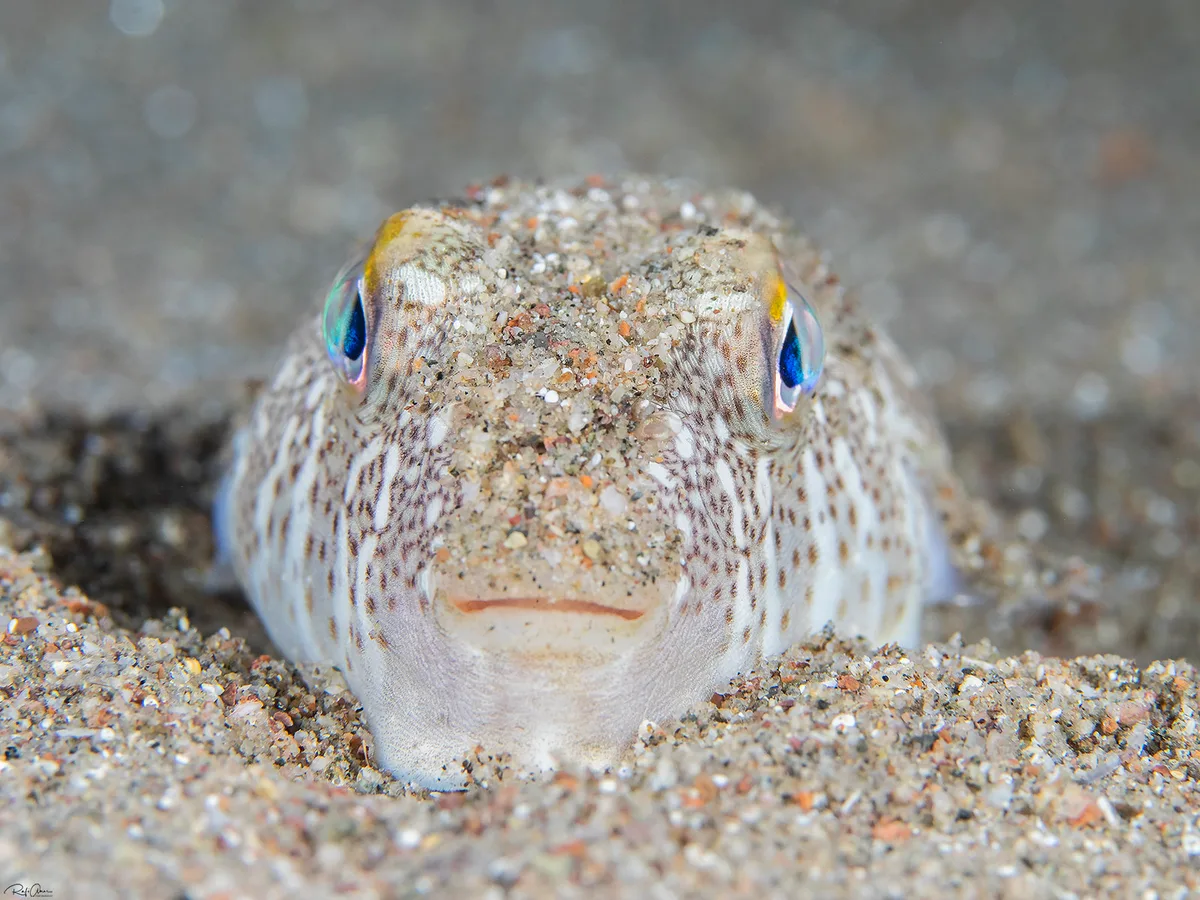
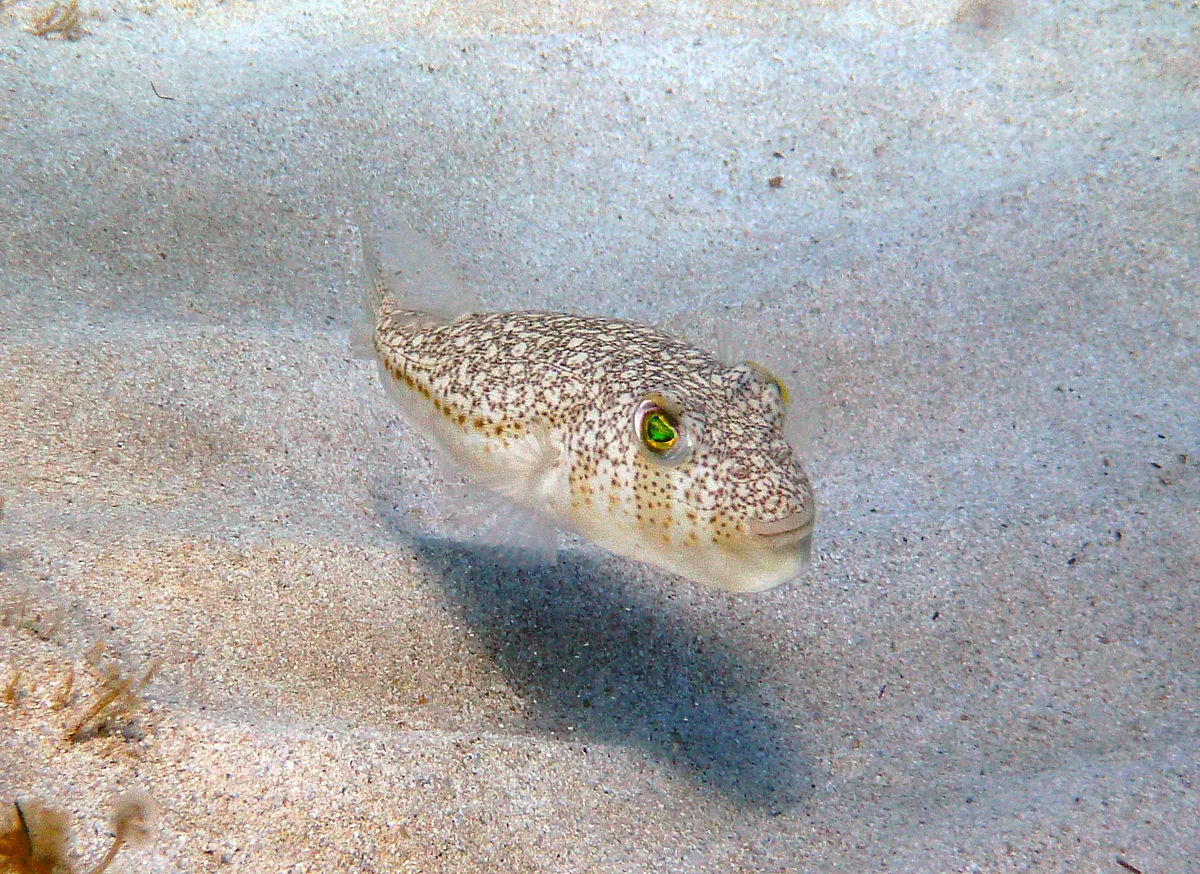
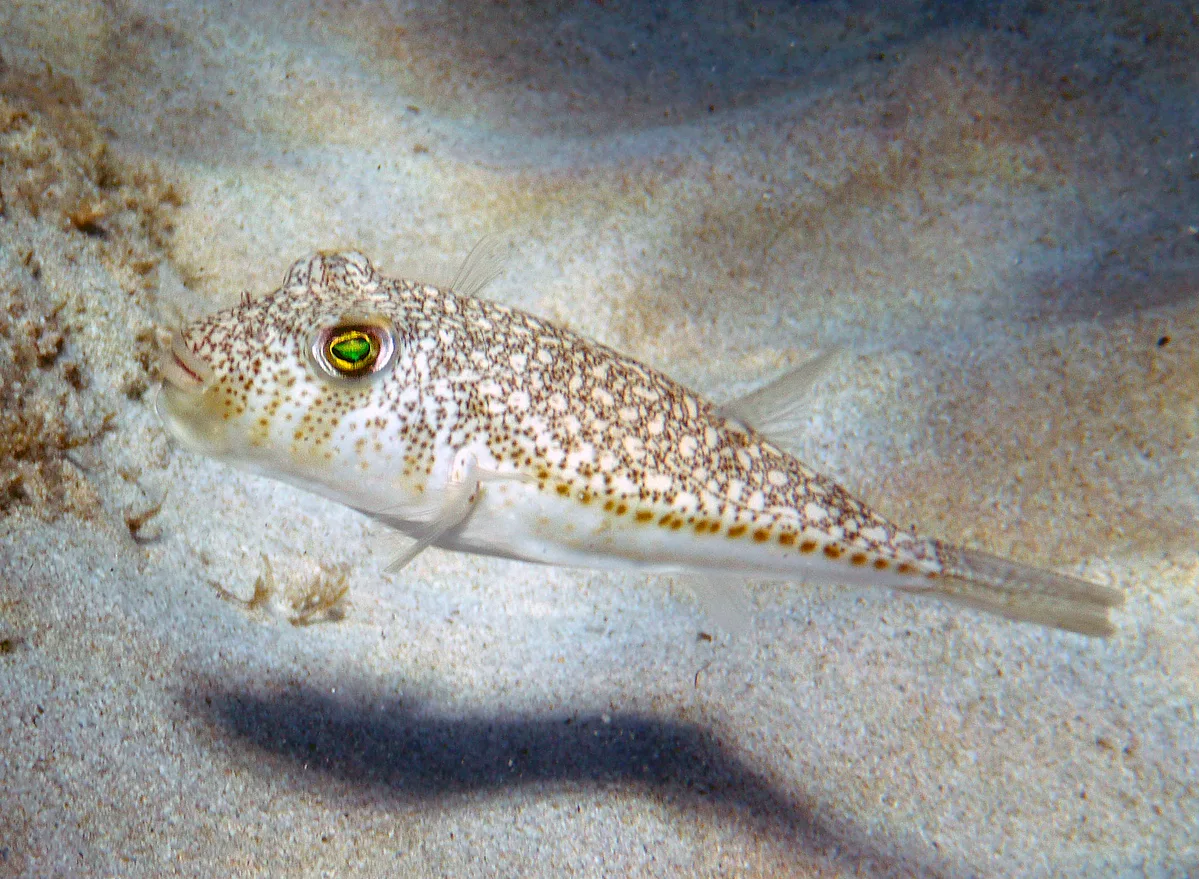
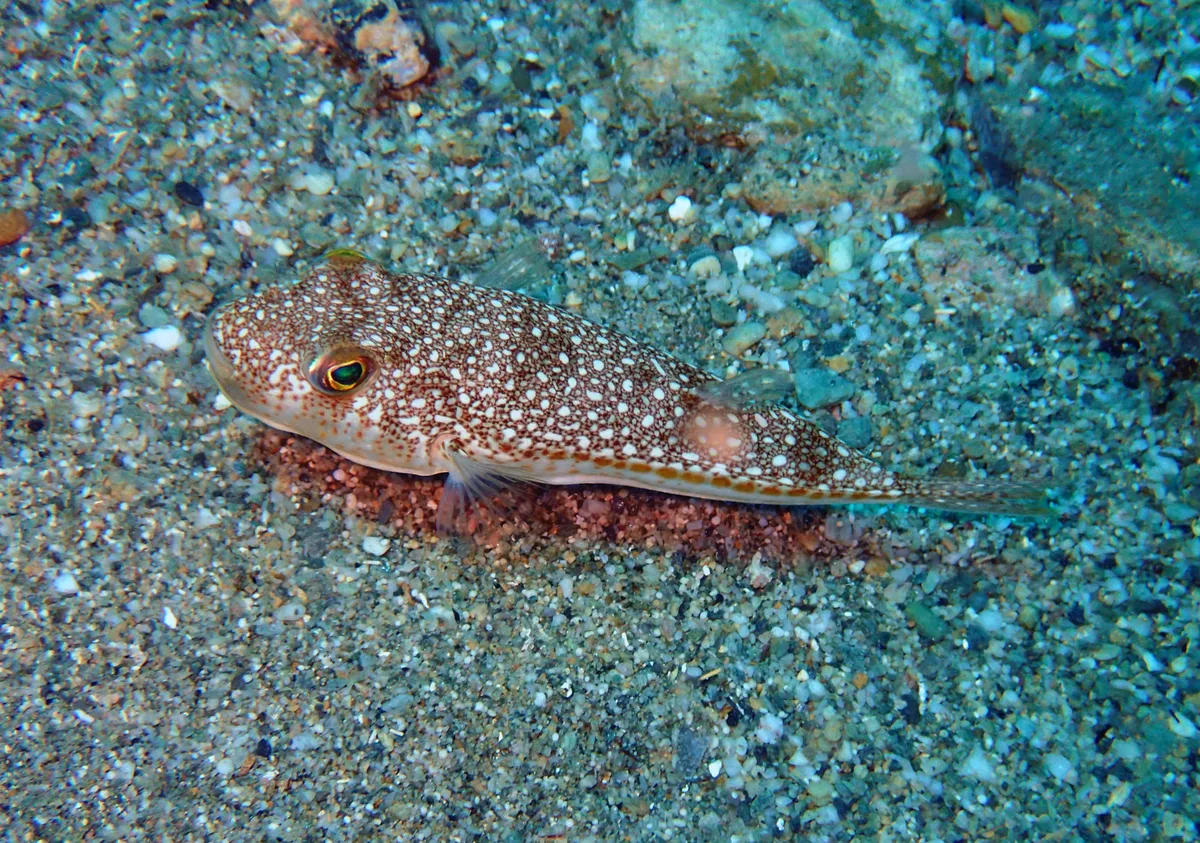
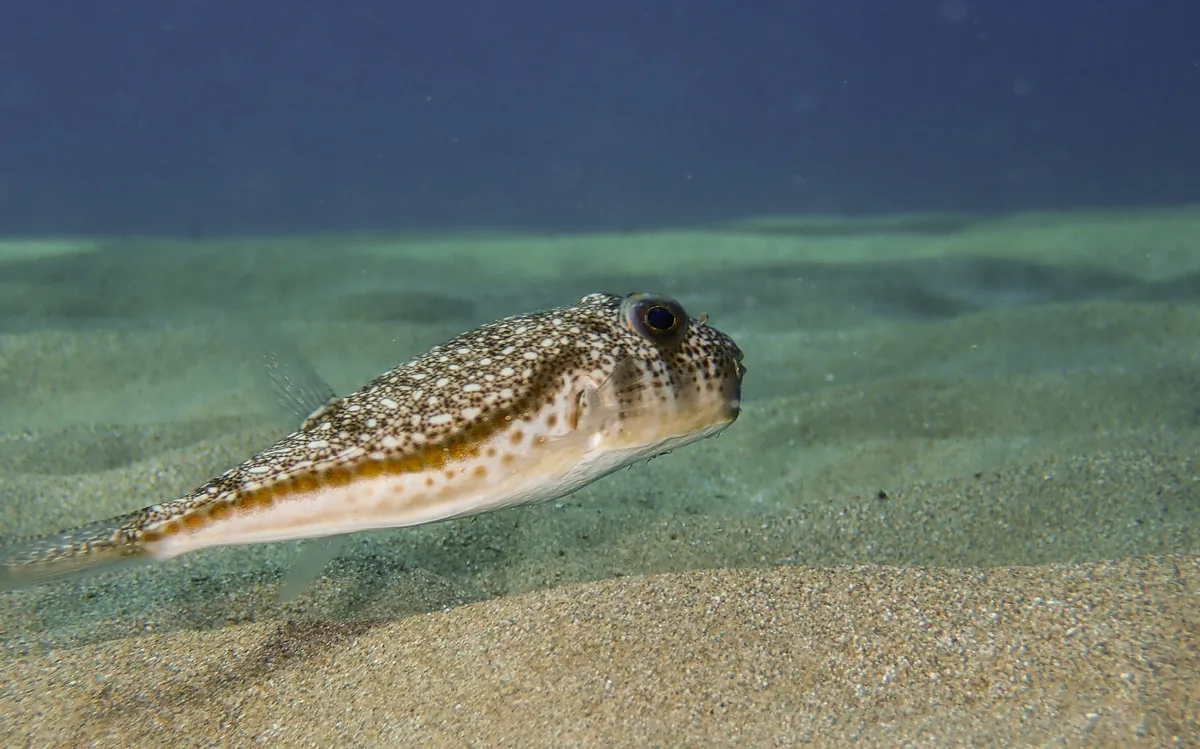
Here it is a fish of open sand and rubble beside reef, down to about 57 m, working the bottom for small invertebrates and drifting off if you crowd it. At 16 cm it is small. Look for a fine reddish-brown net over the back and upper flank, enclosing pale spots, a dark streak along the middle of the side, yellowish-brown spotting on the cheek broken into bars by white, and a clean white belly.
The genus does something remarkable, although not in this sea. In 2011 divers off 🇯🇵 Japan found geometric patterns on the sea floor, two meters across, ridged and rayed like a mandala, and nobody knew what made them. The answer was a puffer the size of a hand. A male works for about a week, swimming on his side and beating his fins to plow the sand into radiating ridges, hauling shell fragments in for decoration, and finishing with a bed of fine sediment at the center. The ridges slow the current and hold that fine sand in place, and the female lays there if she approves of the construction. The builder was described as a new species, Torquigener albomaculosus, in 2014.
And it is a puffer, so its tissue carries tetrodotoxin, produced by bacteria it takes up through its diet rather than by the fish itself. Nothing on the reef eats it. In the Mediterranean it now comes up in fishing nets, and its toxin content has been measured there for exactly that reason.
The species. Torquigener flavimaculosus Hardy & Randall 1983 - flavus (yellow) + maculosus (spotted). ETYFish
- fine reddish-brown net over the back and upper flank, enclosing pale spots
- dark streak running along the middle of the side
- yellowish-brown spotting on the cheek, broken into bars by white
- clean white belly; no scales and no pelvic fins
- over open sand rather than in coral
- up to 16 cm
Why it's threatened
Threat classification from the IUCN Red List.