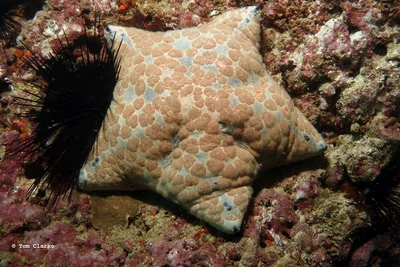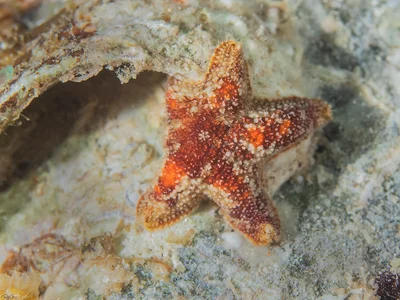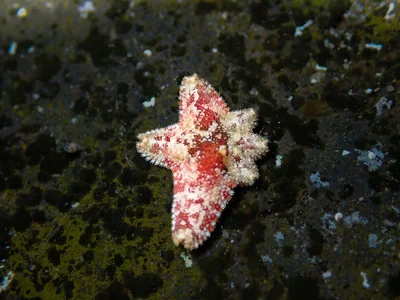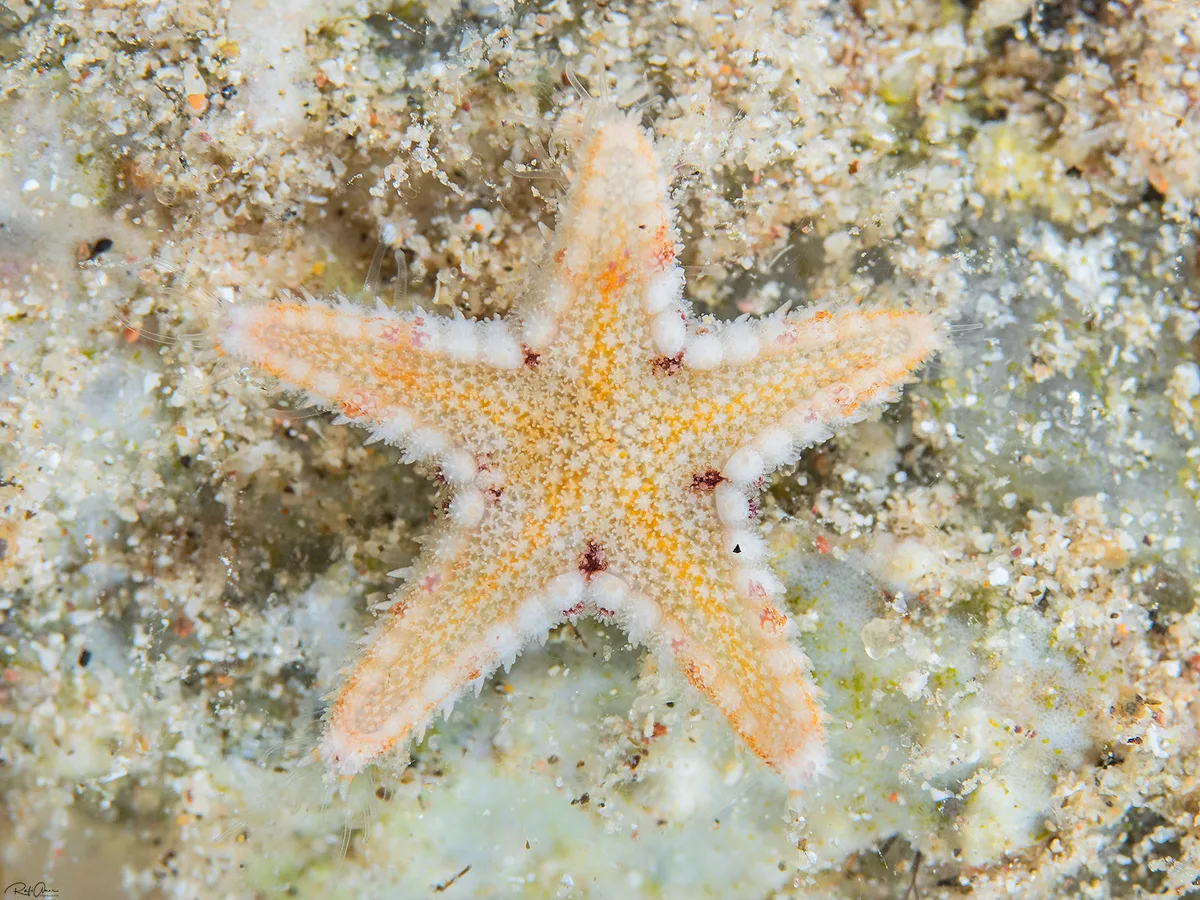
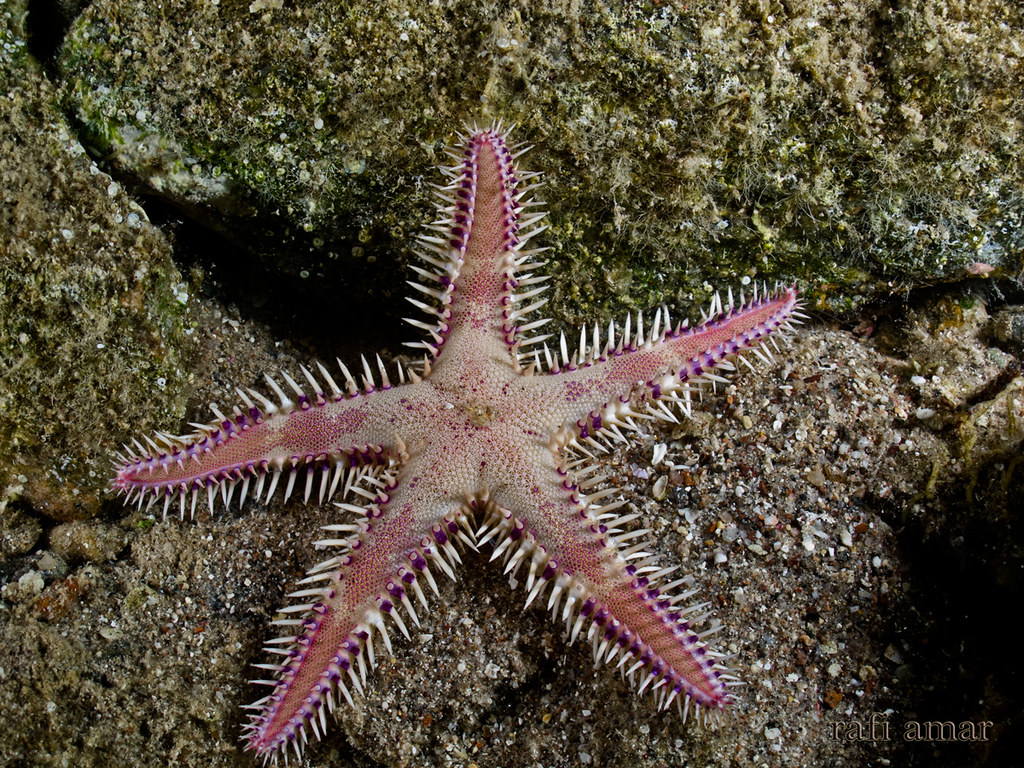
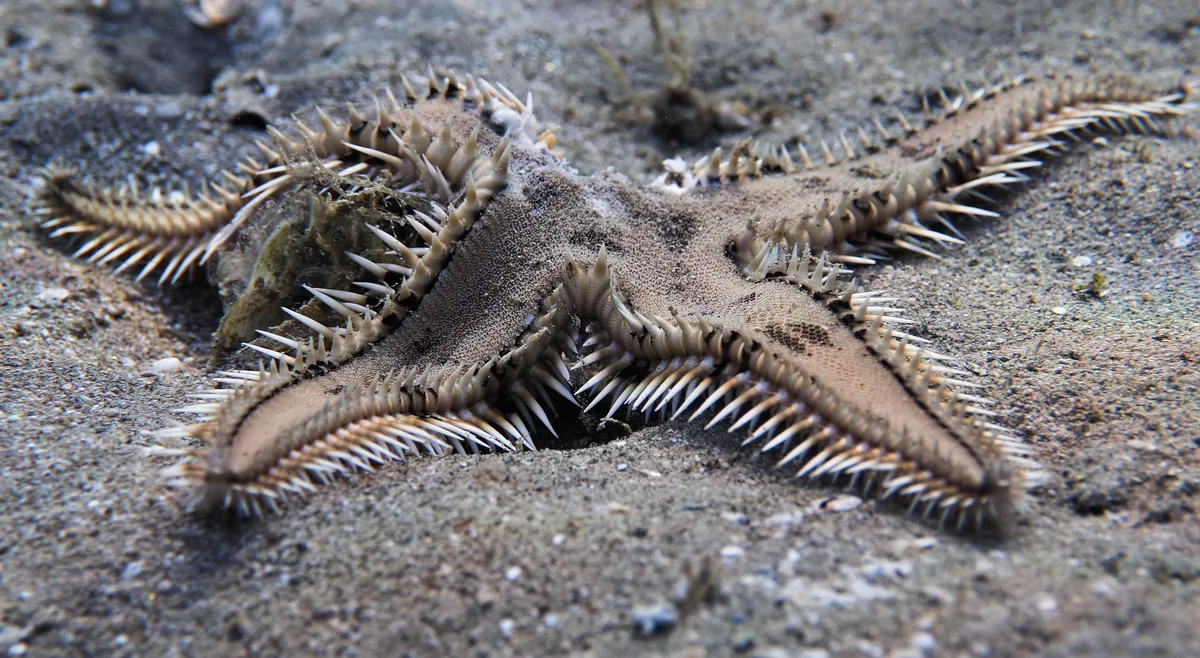
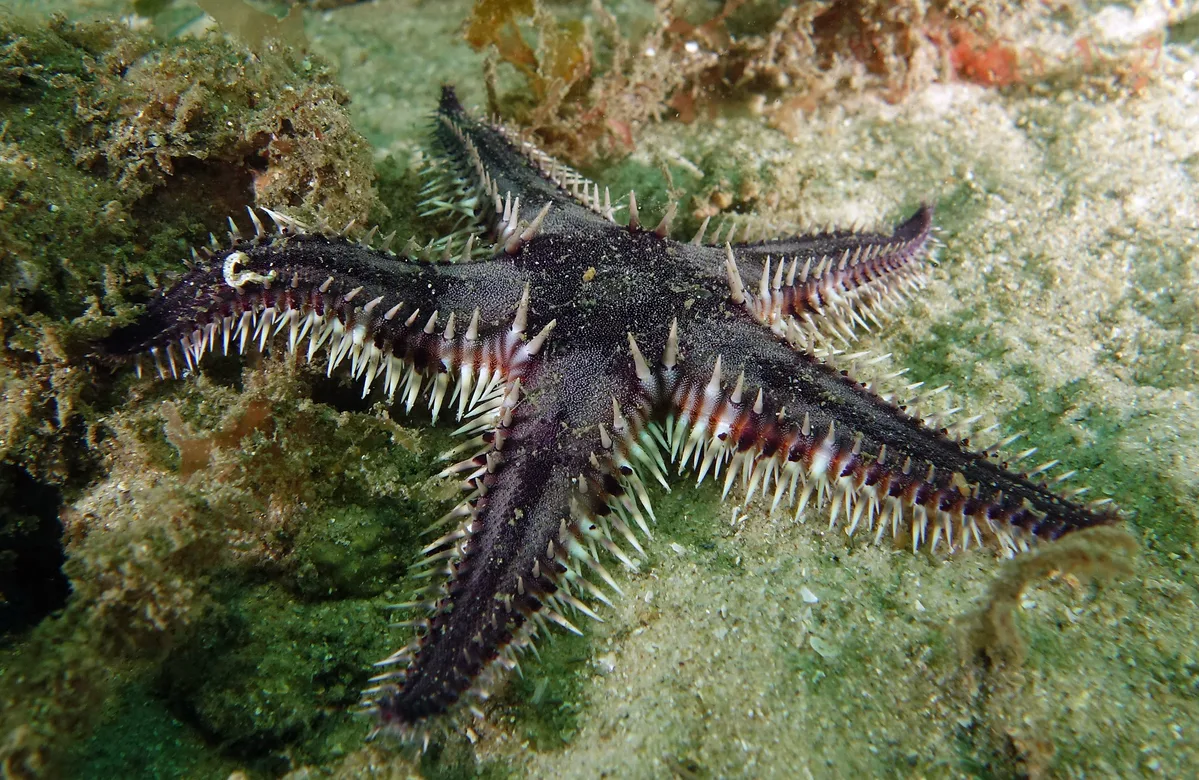
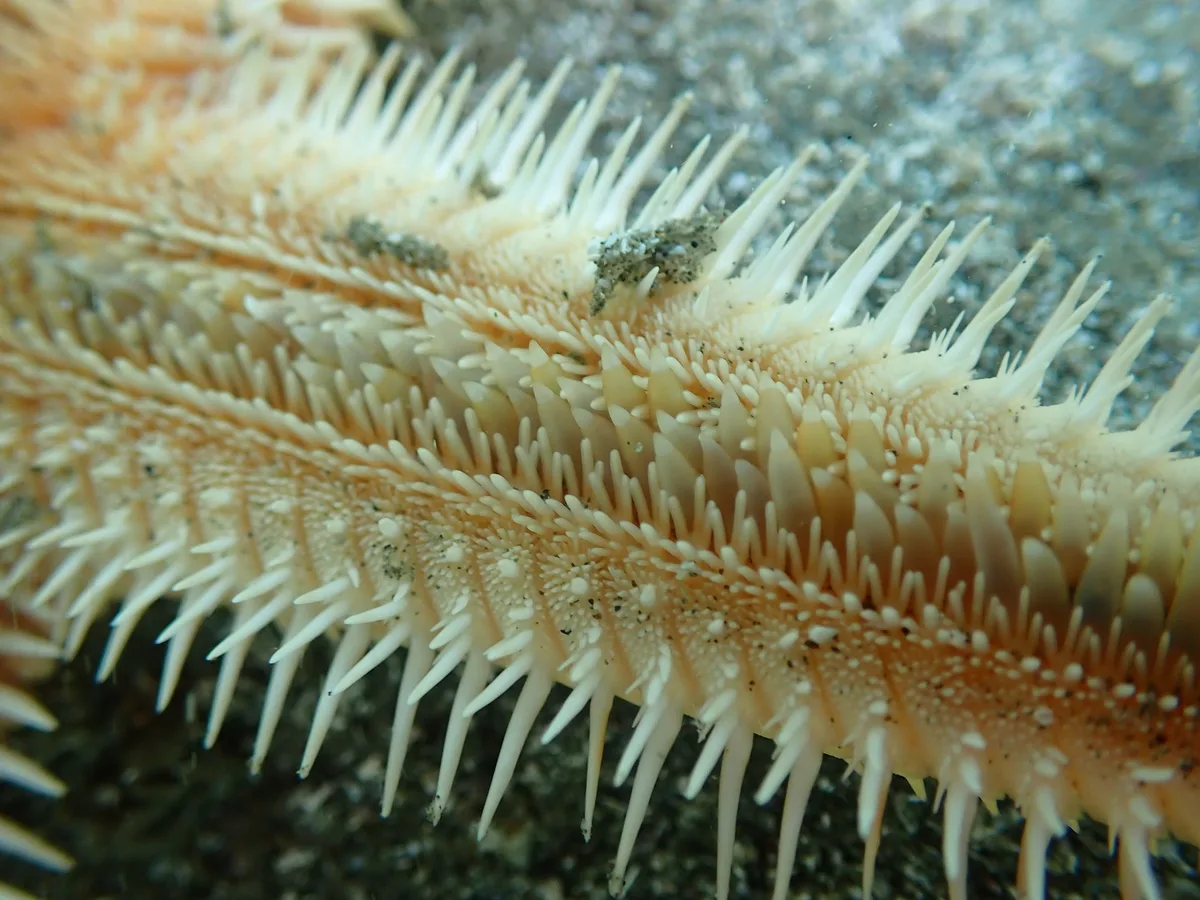
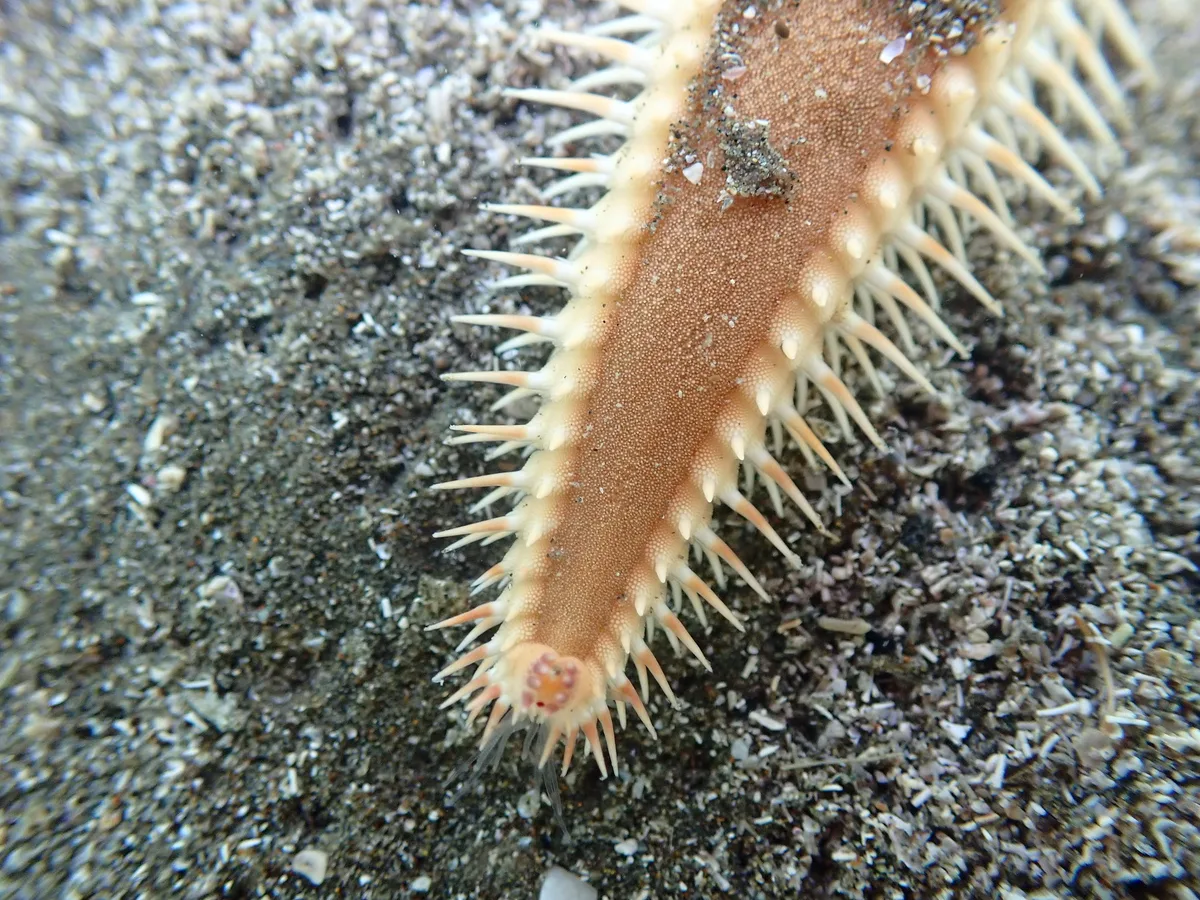
A flat, neatly geometric star to about 20 cm (8 in), sandy gray to beige, its straight-edged arms fringed with rows of comb-like marginal spines. Everything about it is built for sand: the flattened profile, the pointed tube feet that have no suckers and work as diggers rather than grippers, and the color that matches whatever bottom it is crossing.
It lives on open sand flats from the shallows to about 40 m (130 ft) and spends most daylight buried, leaving a faint star-shaped outline in the surface that a slow diver learns to spot. Feeding sets it apart from reef stars: instead of everting its stomach onto a surface, it swallows small snails and bivalves whole, digests them internally and ejects the empty shells. Where the sand is rich the animals can be numerous, and a night dive over a flat bottom often turns up a dozen plowing along in the open. It carries tetrodotoxin in its tissues, which deters most predators but poses no risk to a diver who does not eat it.
- flat five-pointed star with straight-edged arms
- white, elongated spines along the arm margins - the identifying character
- sandy gray to beige, matching the bottom
- usually buried by day, leaving a faint star-shaped outline in the sand
- diameter up to 20 cm