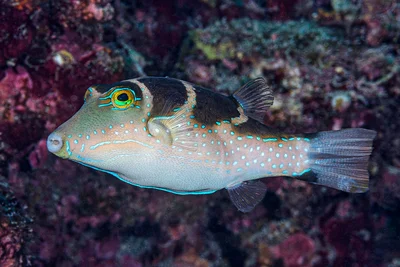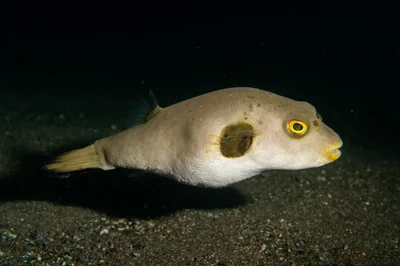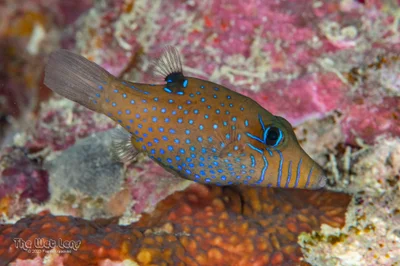
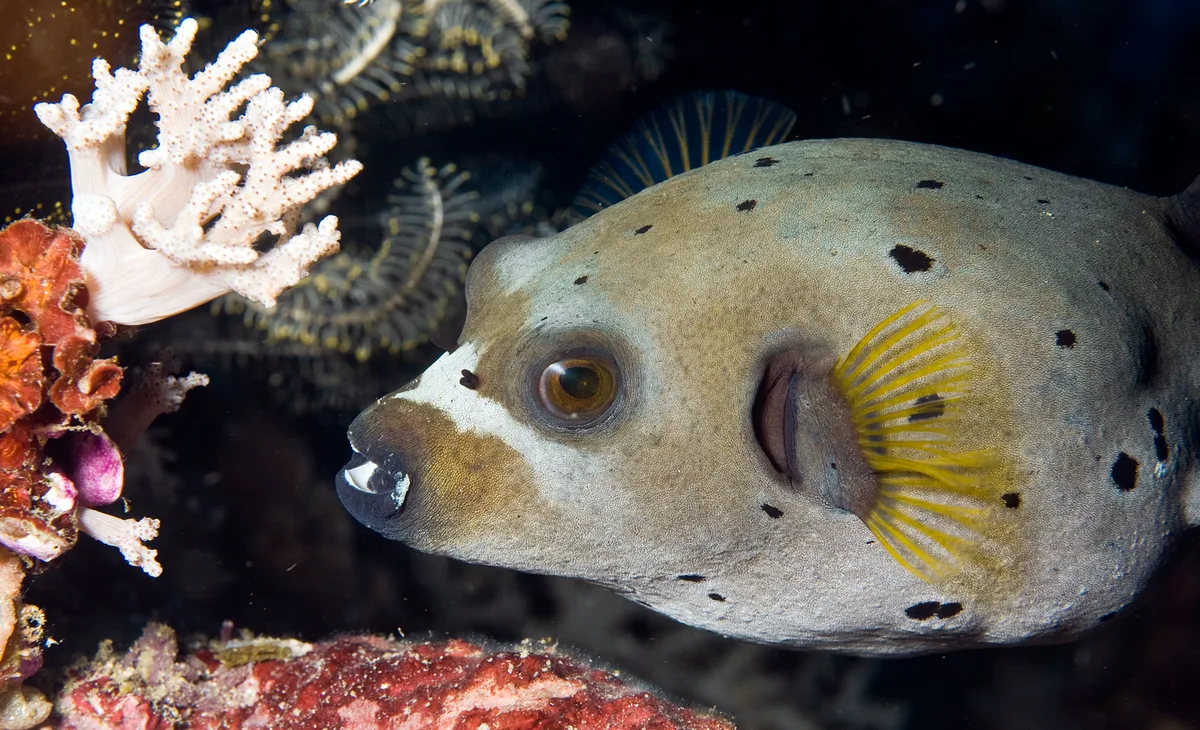
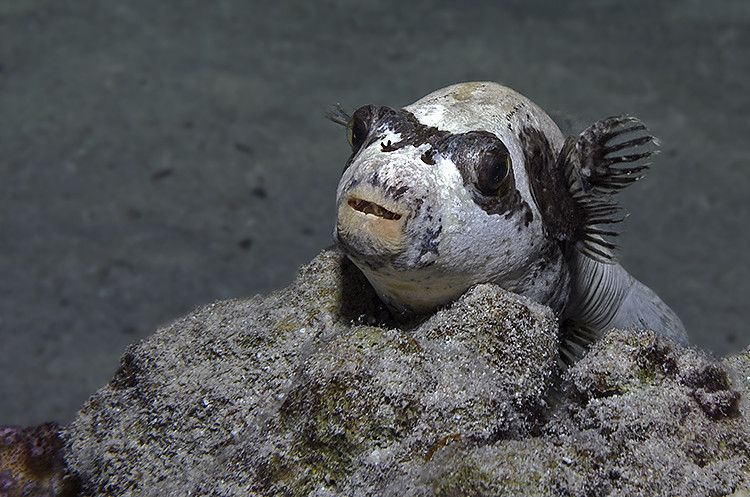
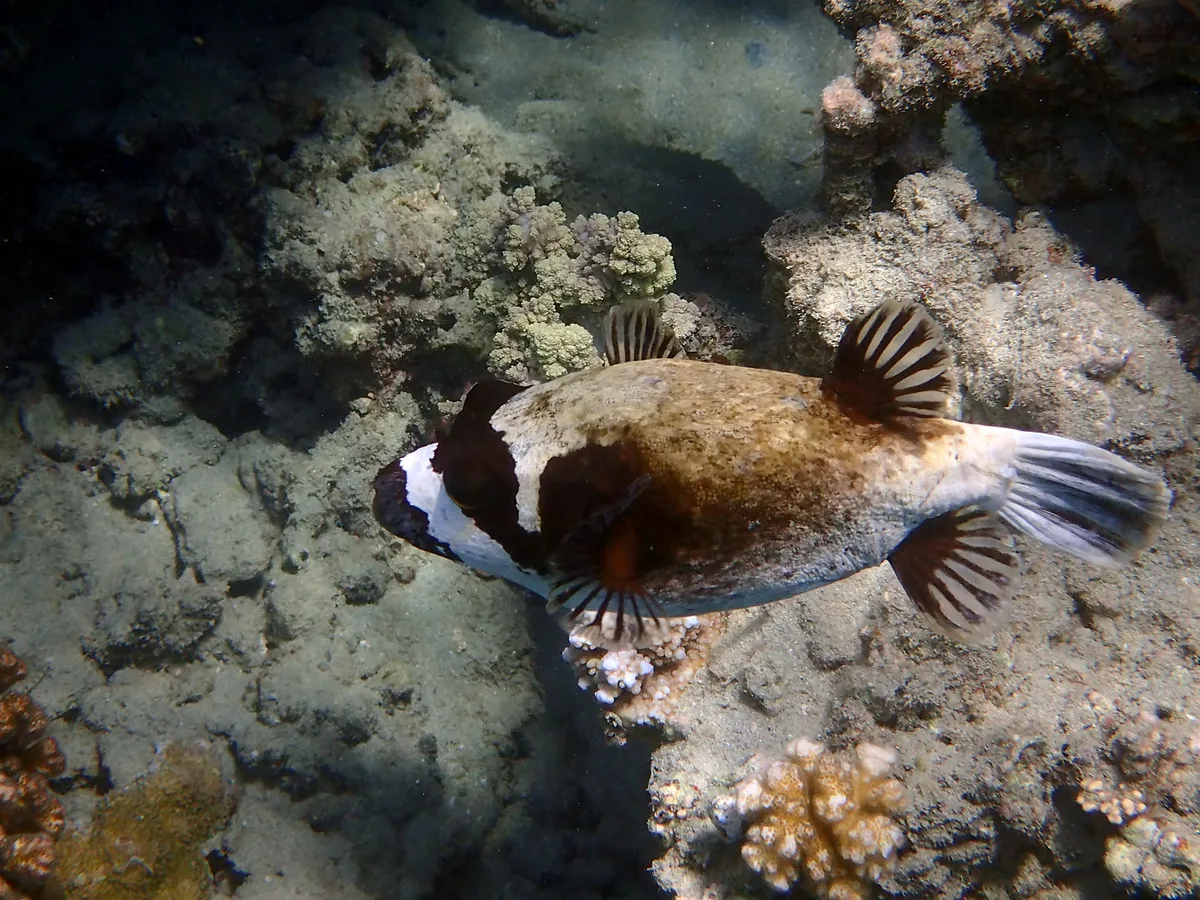
The most familiar puffer on this coast may not be a species of its own. FishBase records it as very closely related to the Indo-Pacific blackspotted puffer, Arothron nigropunctatus, and notes that some authors treat the two as one animal. What separates them is the mouth of this sea. The masked puffer is recorded from the 🌊 Red Sea and nowhere else; the blackspotted one holds the rest of the Indo-Pacific, from East Africa to the Pacific islands, and comes in gray, yellow and blue-gray forms. Where one ends the other begins, and they meet nowhere.
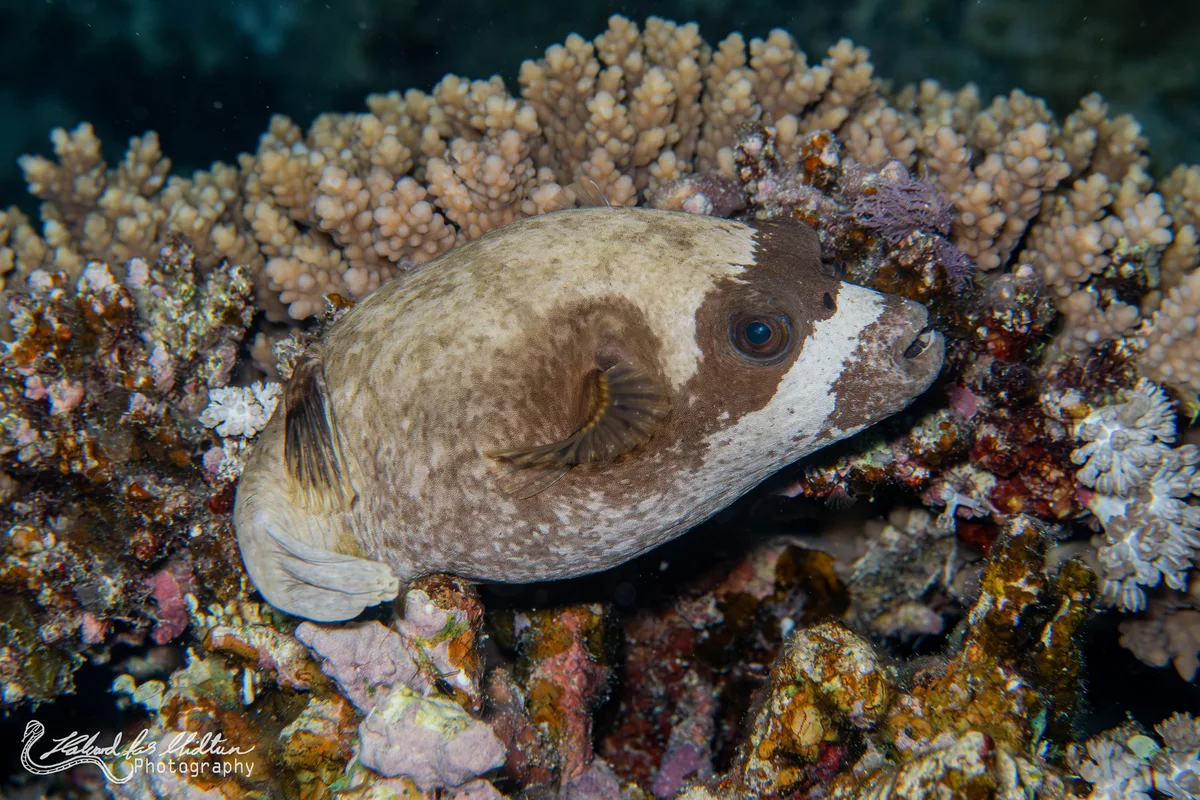
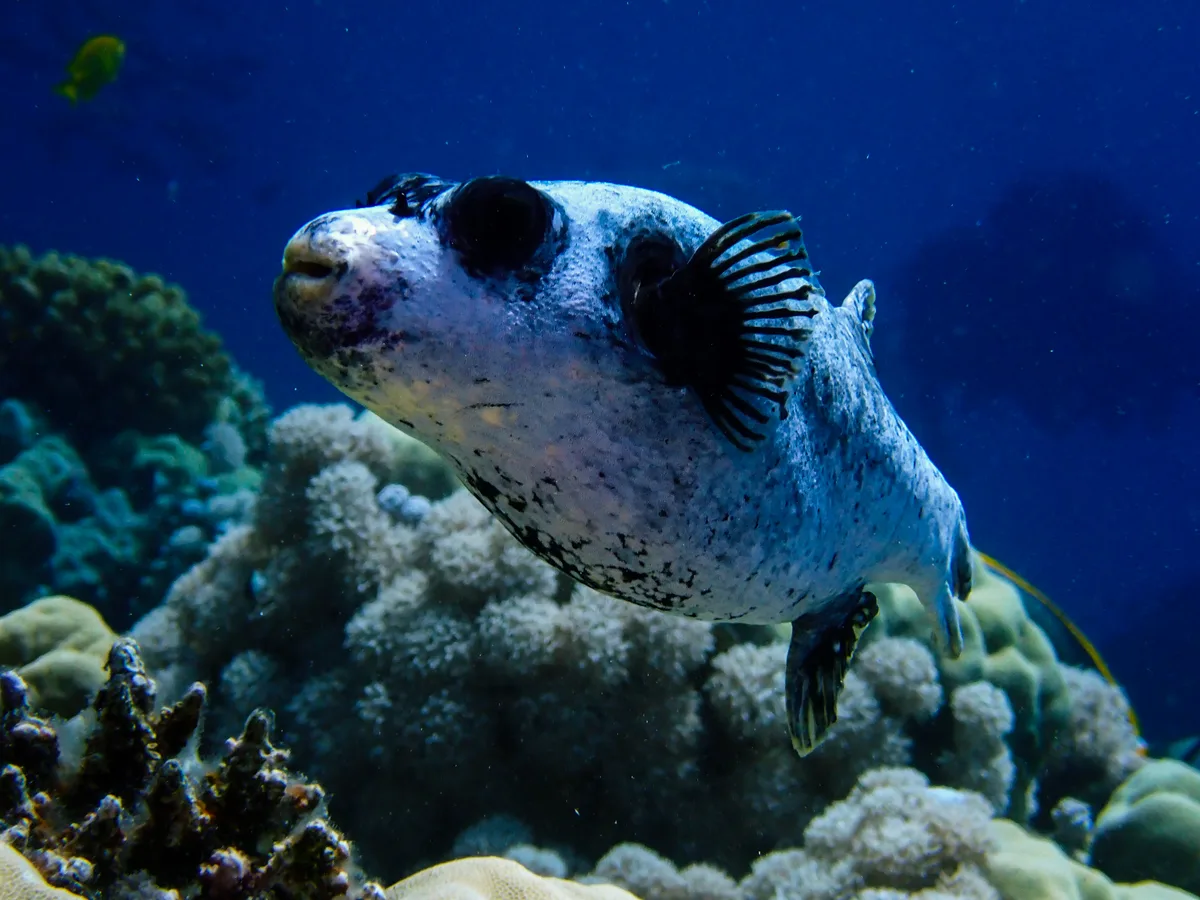
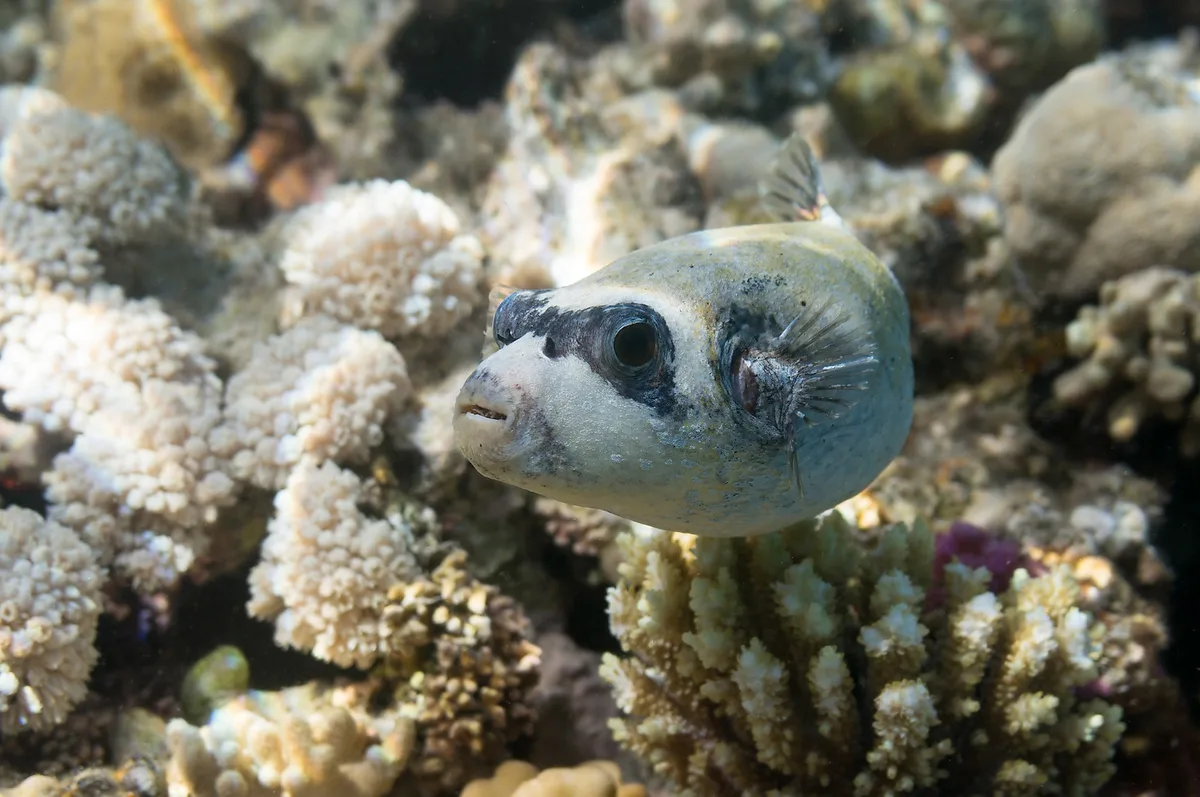
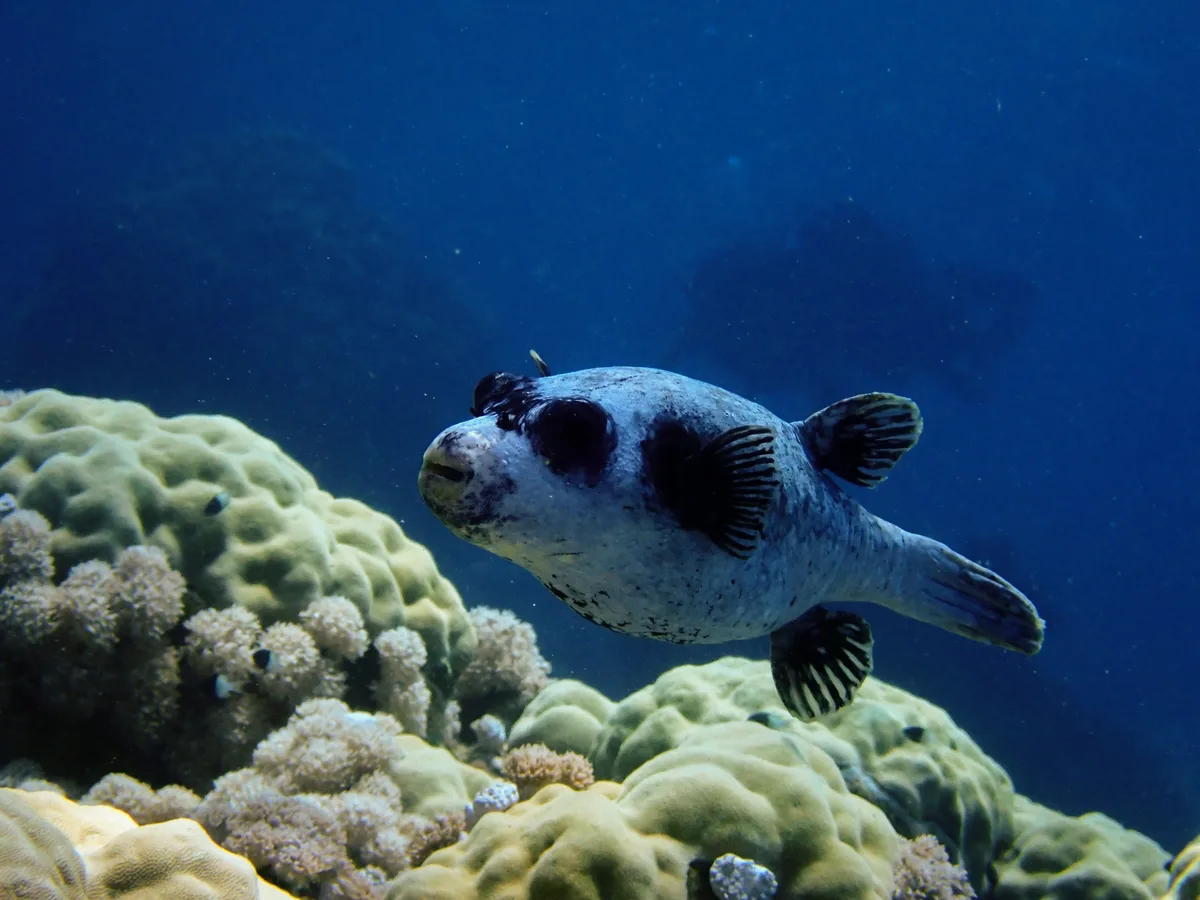
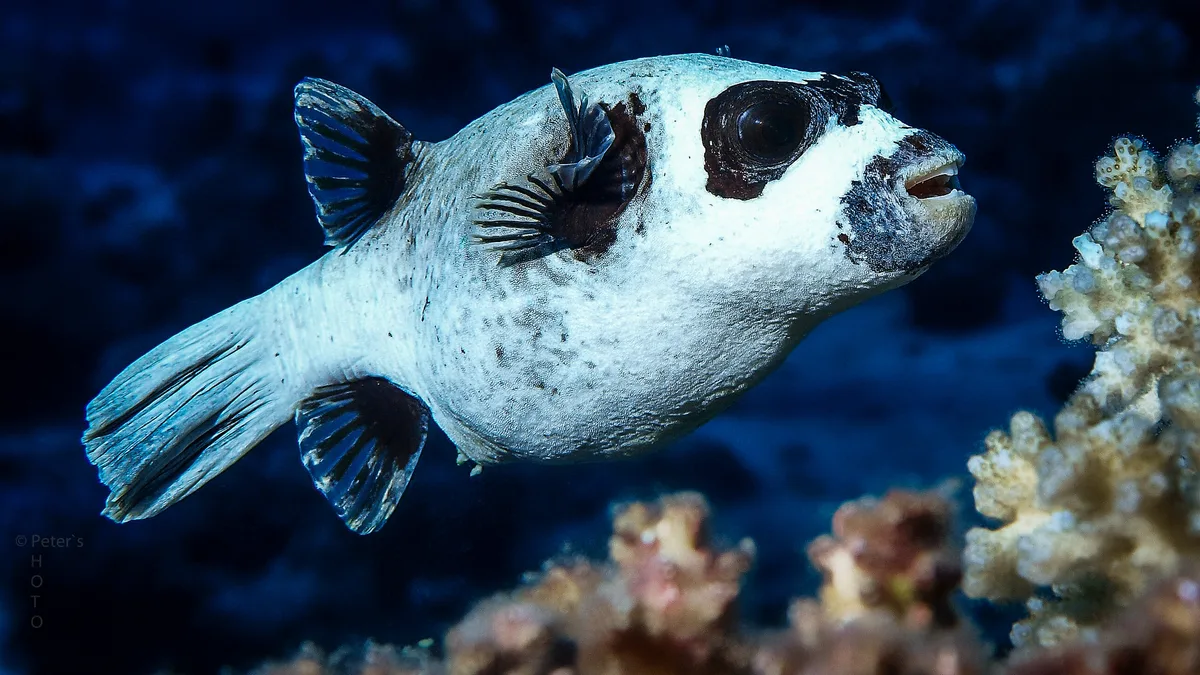
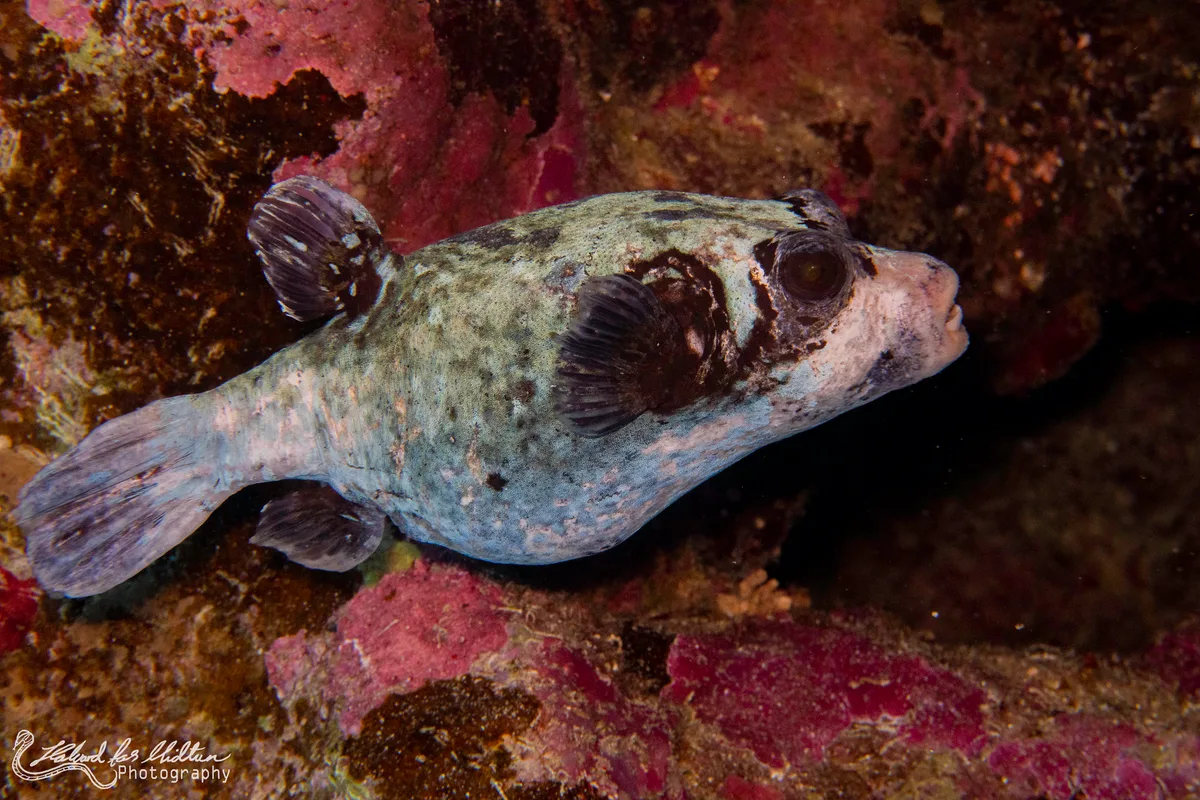
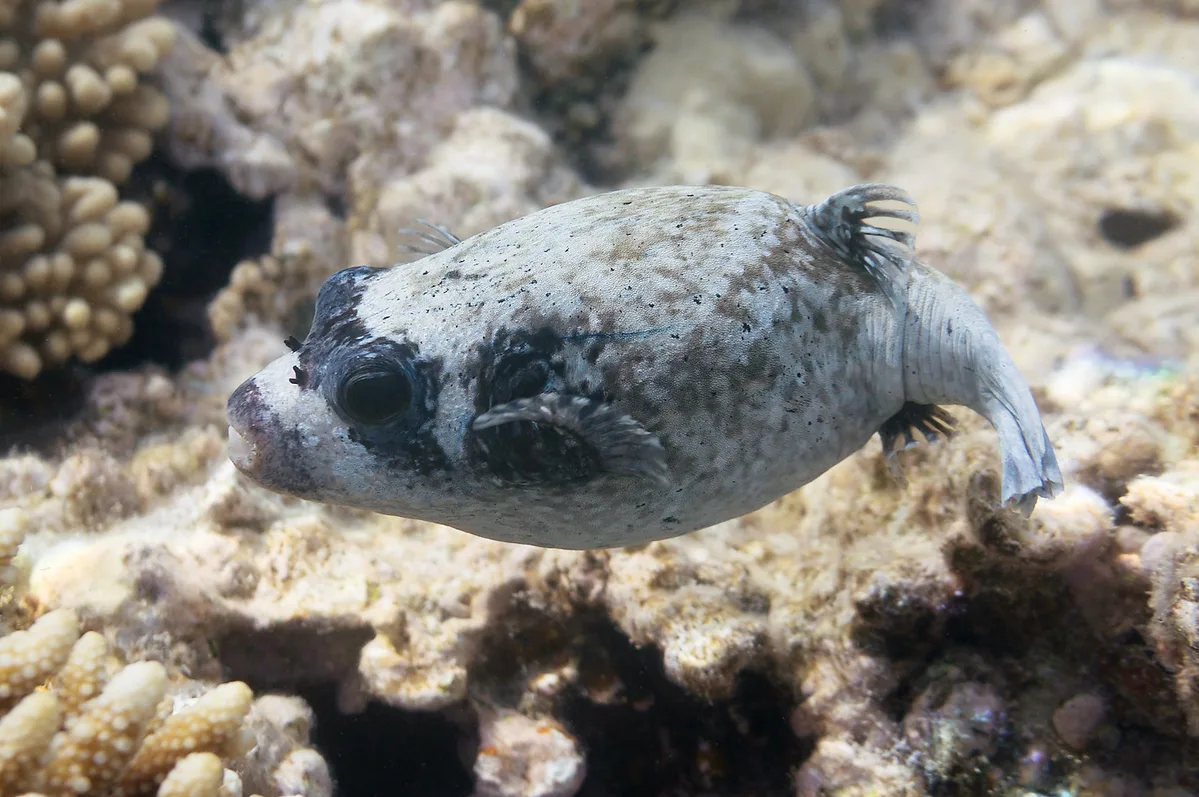
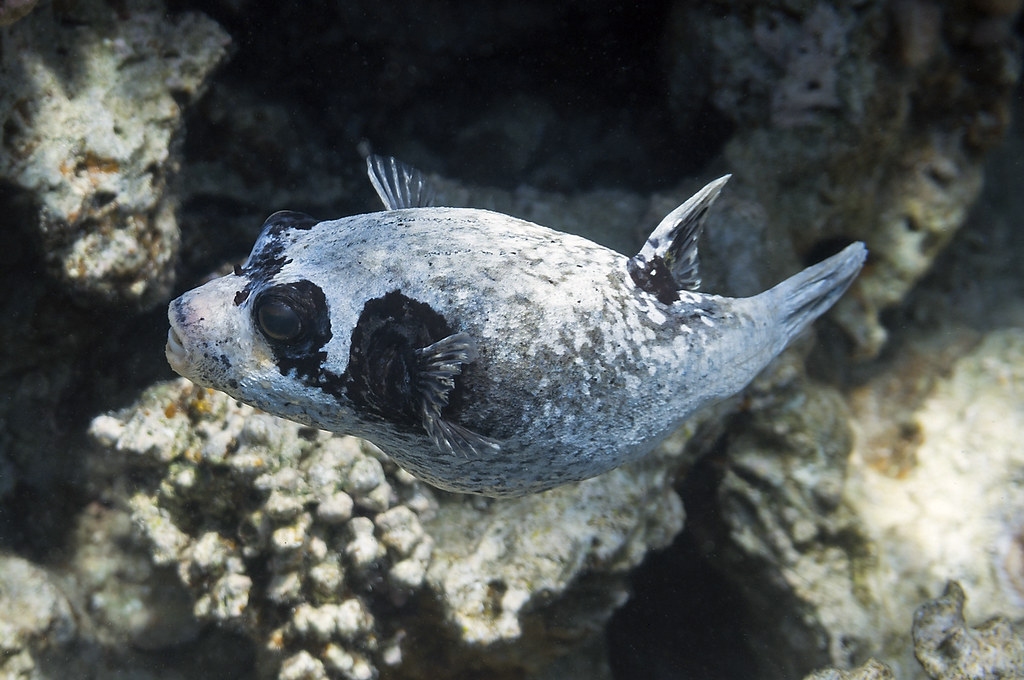
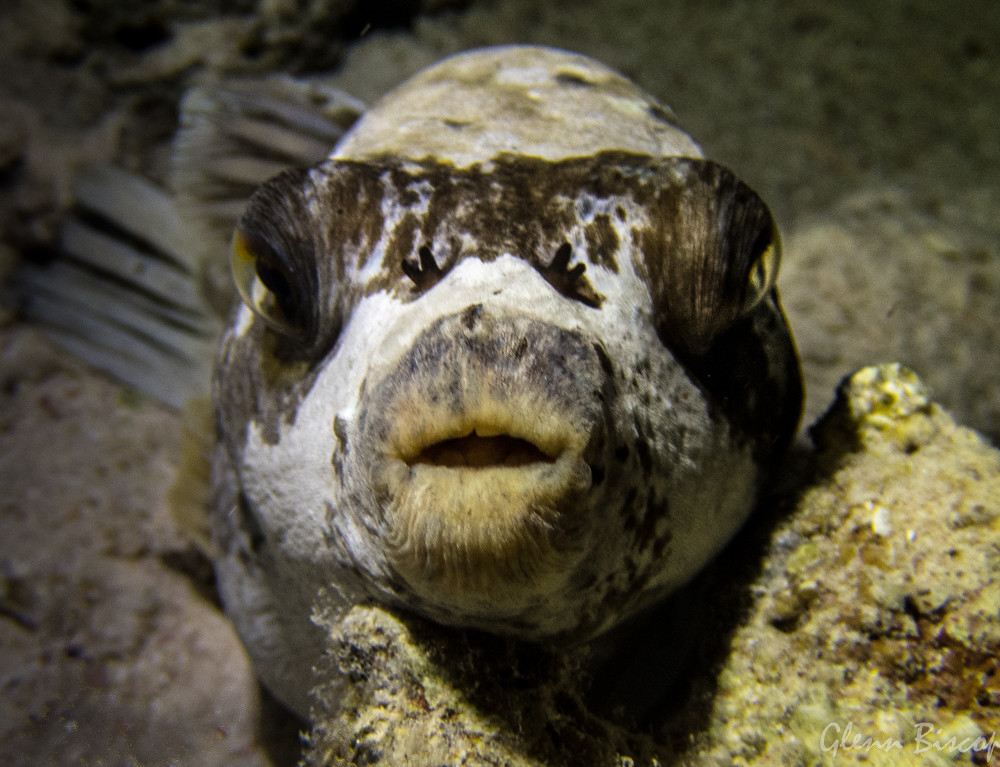
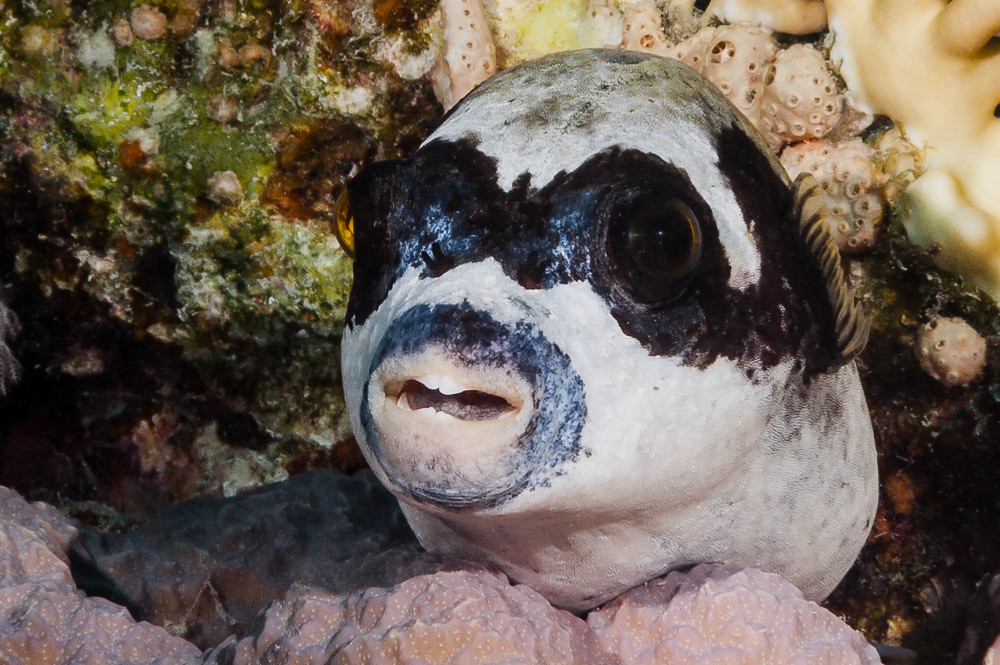
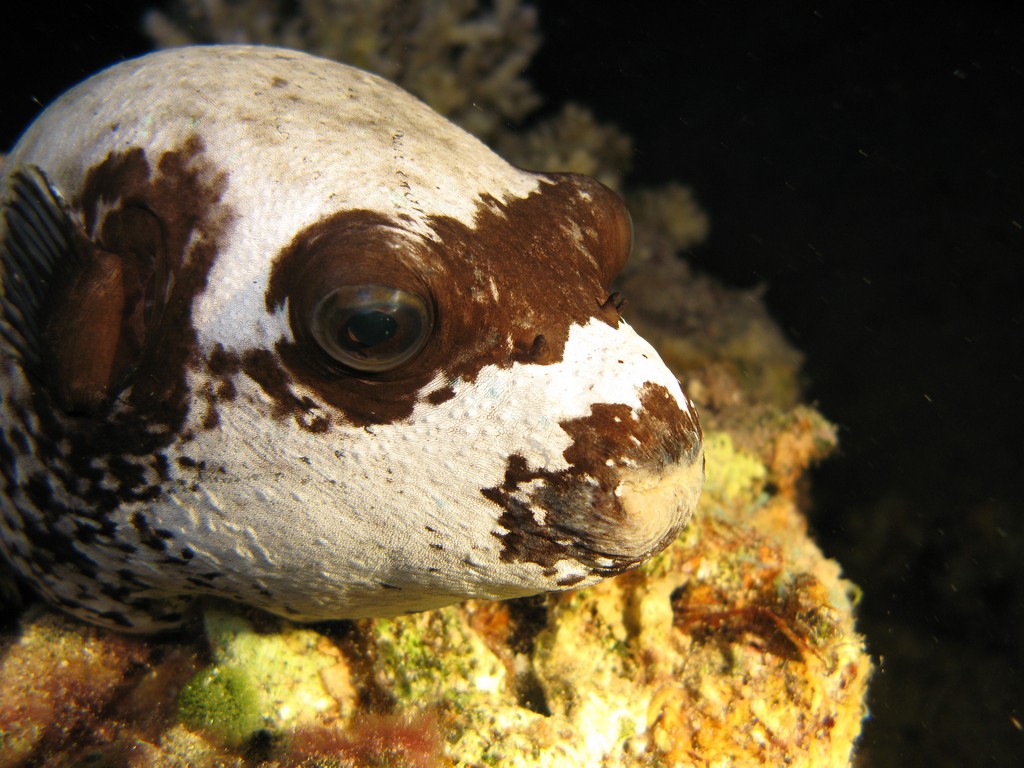
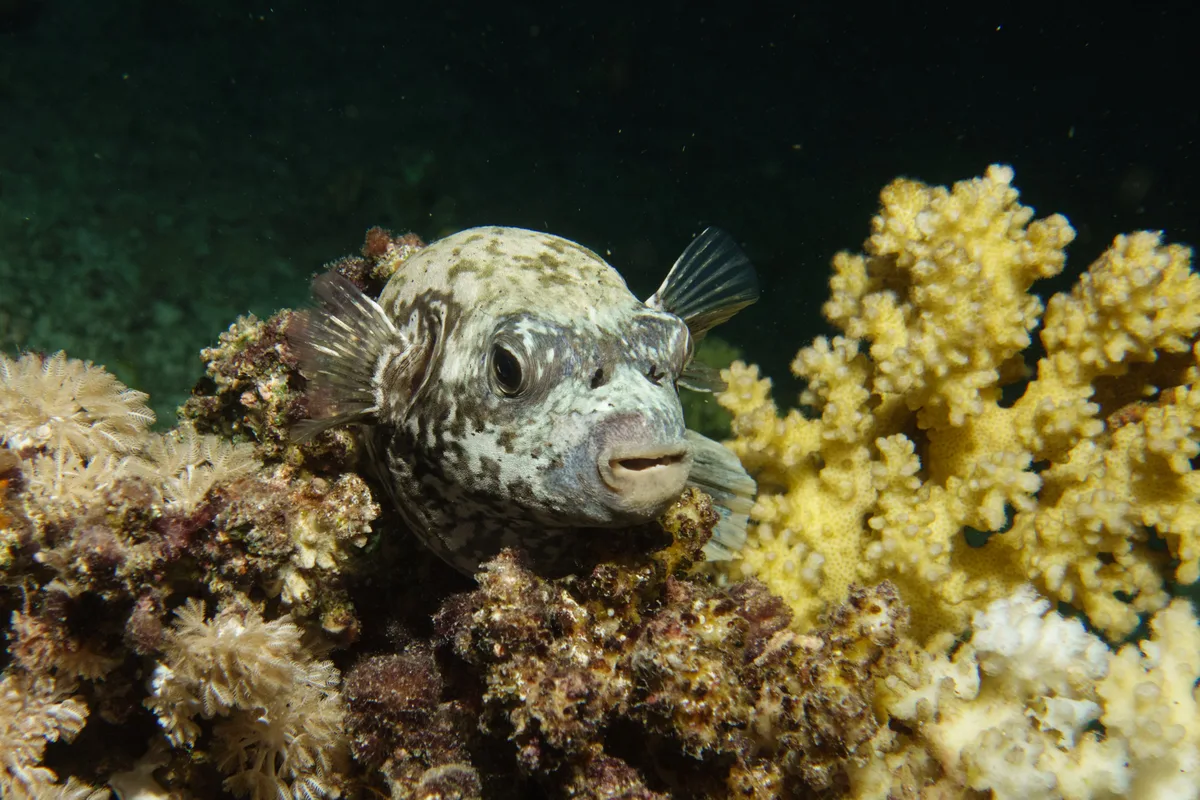
What you see is an olive-gray fish about 30 cm long with a black mask laid across the eyes and over the snout, a dark blotch at the base of each pectoral fin, hanging over coral-rich reef by itself and sculling gently with those pectorals. It has no pelvic fins at all and it is in no hurry, which is the surest sign that nothing is hunting it.
Tetrodotoxin blocks the sodium channels that nerves use to fire. A dose measured in milligrams paralyzes an adult, working inward from the face while the person stays conscious, and there is no antidote: treatment is to keep the patient breathing on a machine until the toxin clears. It is among the most potent poisons in the natural world.
The fish does not make it. Bacteria do, and they arrive with what the puffer eats, so the toxin is accumulated and concentrated rather than produced. Puffers raised in captivity on clean feed end up almost free of it, and become toxic again on a wild diet. The fish is a container.
Which is why this is a poison and not a weapon. Nothing is going to be envenomated by a masked puffer. The danger is entirely in eating one, and cooking does not destroy it.
The species. Arothron diadematus (Rüppell 1829) - crowned. ETYFish
- black mask across the eyes and over the snout, on an otherwise olive-gray fish
- dark blotch at the base of the pectoral fin
- no scales and no pelvic fins; sculls slowly with the pectorals
- hangs over coral-rich reef by itself, in no hurry
- up to 30 cm
Why it's threatened
Threat classification from the IUCN Red List.