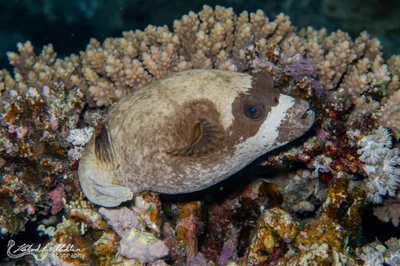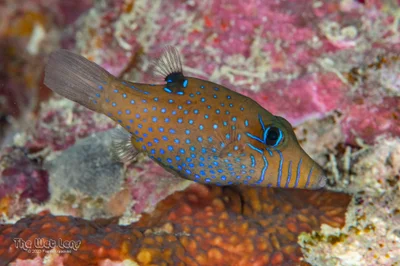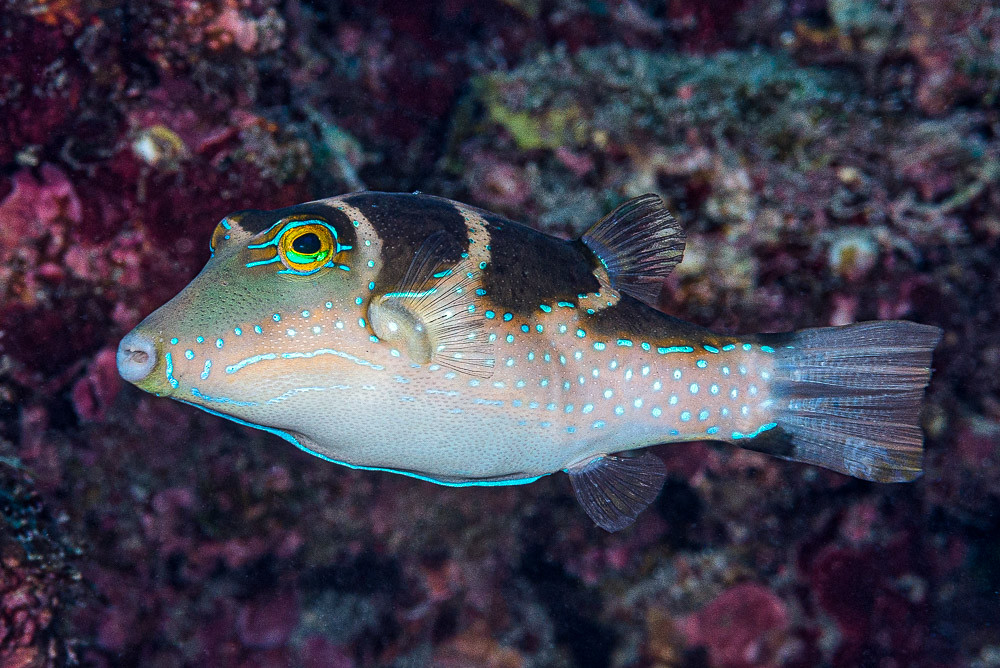
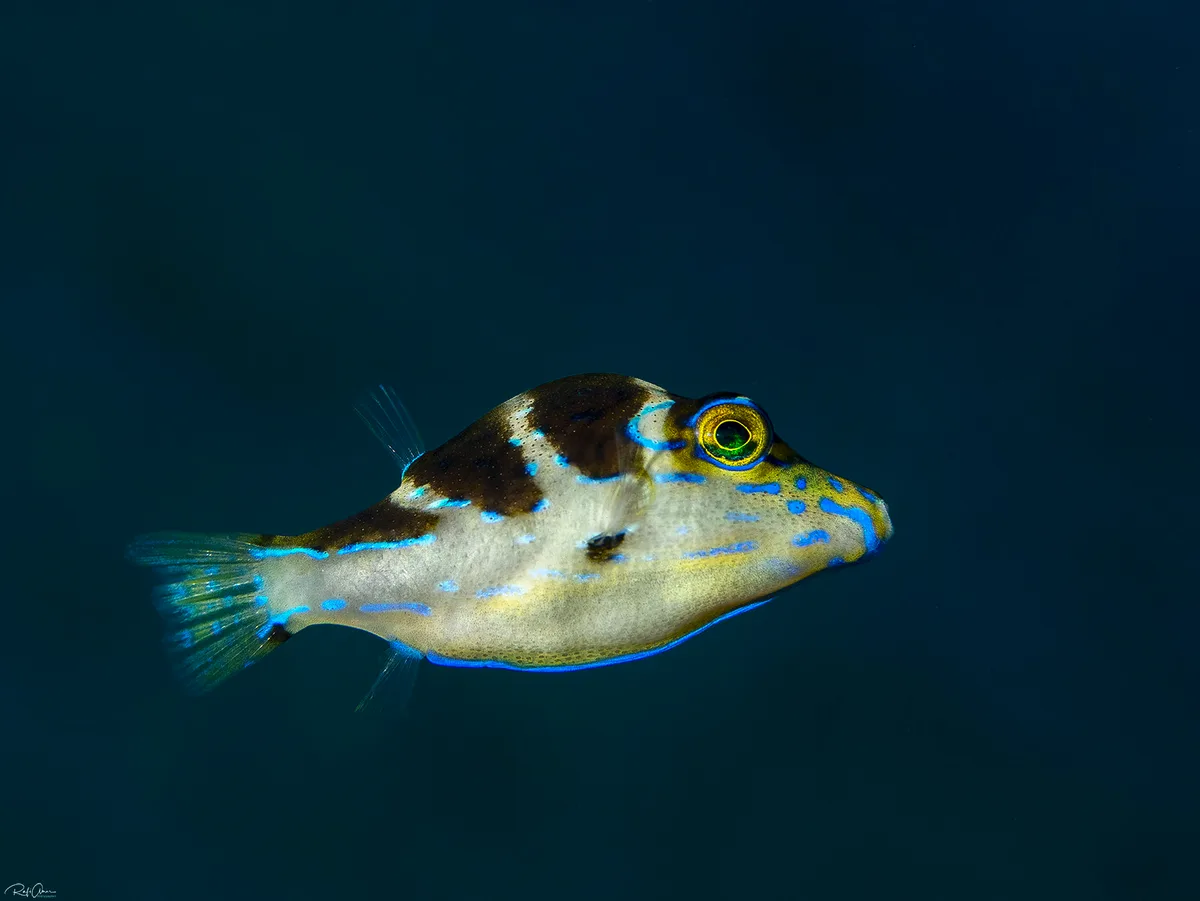
Blue-Spotted Toby
Crowned toby
Crowned toby
Crowned Toby
Crowned Toby
Crowned Toby
Crowned Toby
Crowned Toby
Crowned Toby
Crowned Toby
Poisonous
Fishes · Bony fishes · Puffers

Blue-Spotted Toby

Canthigaster cyanospilota Randall, Williams & Rocha, 2008
10.4 cm3-80 mPoisonousLeast Concern
883

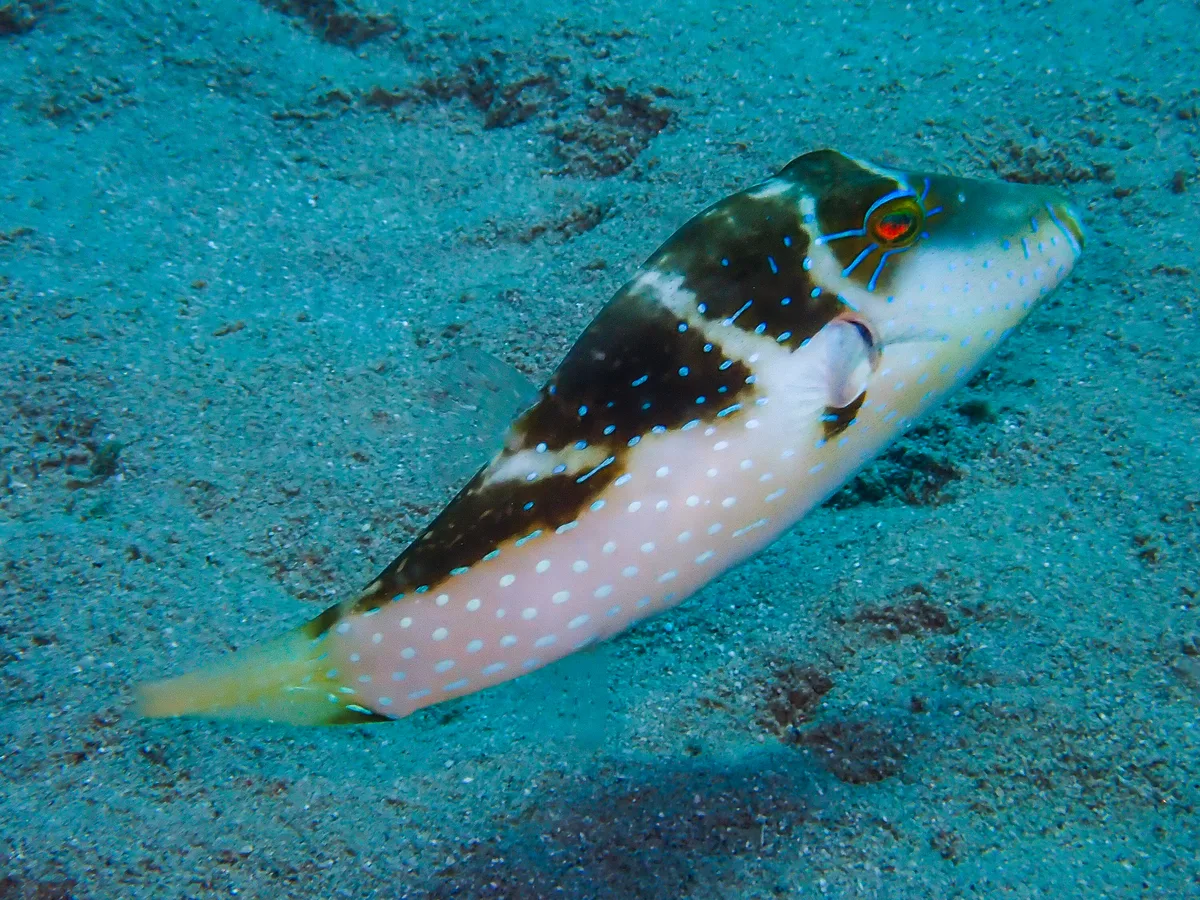
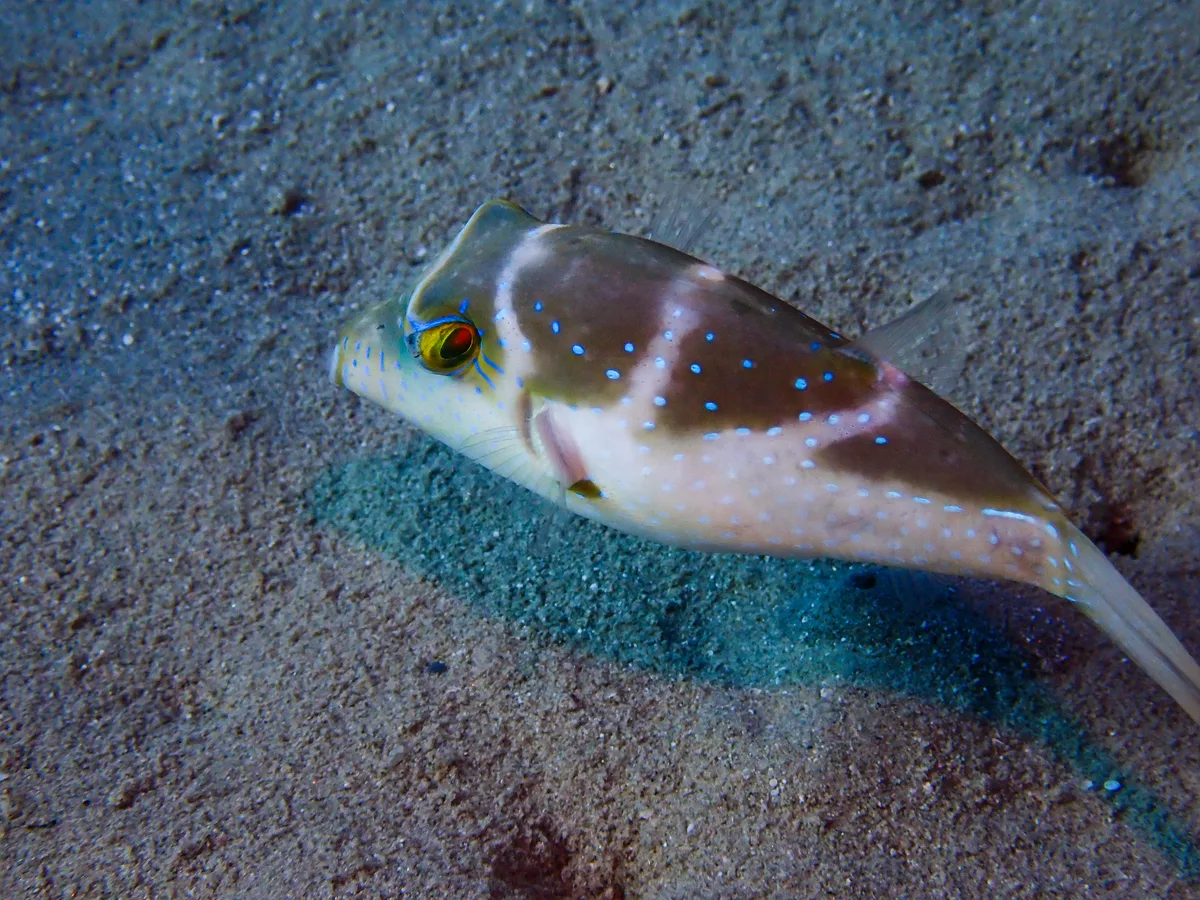
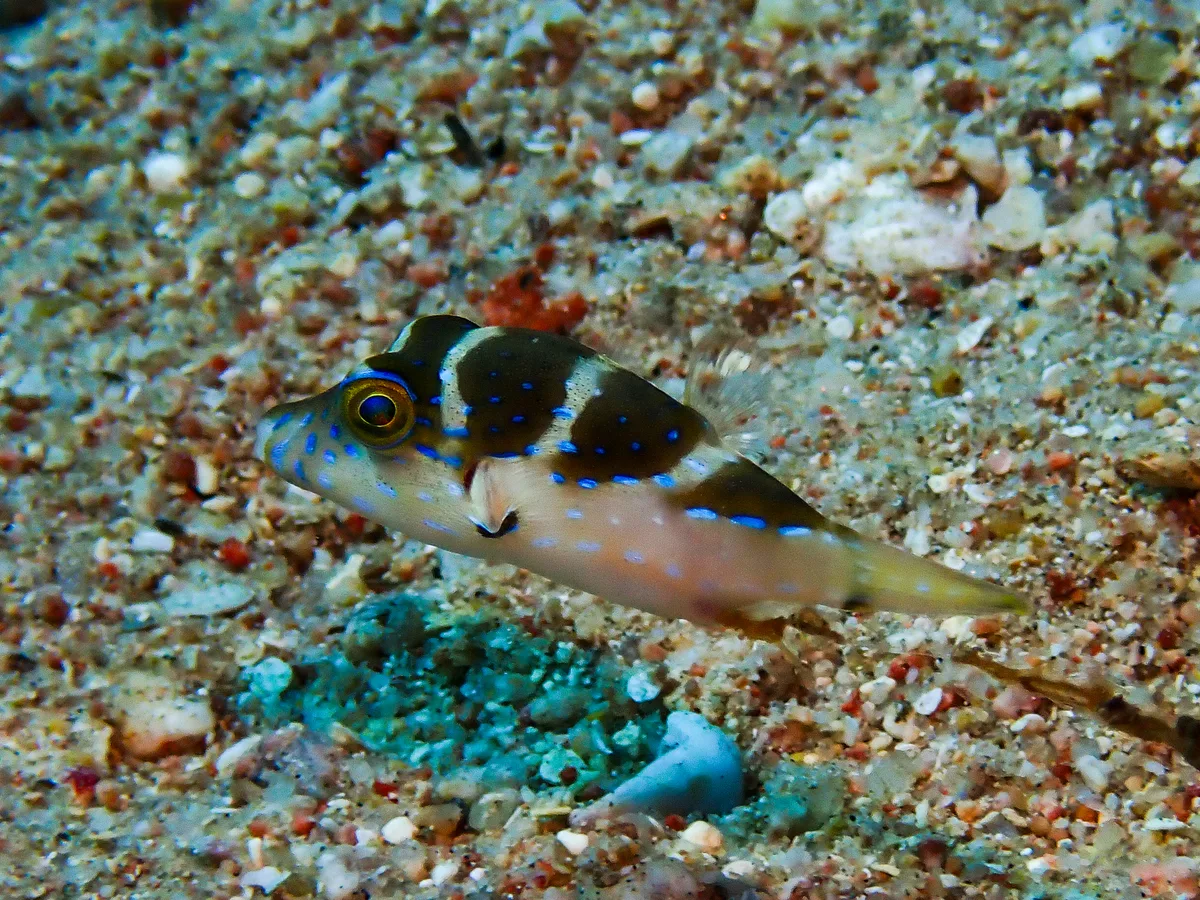
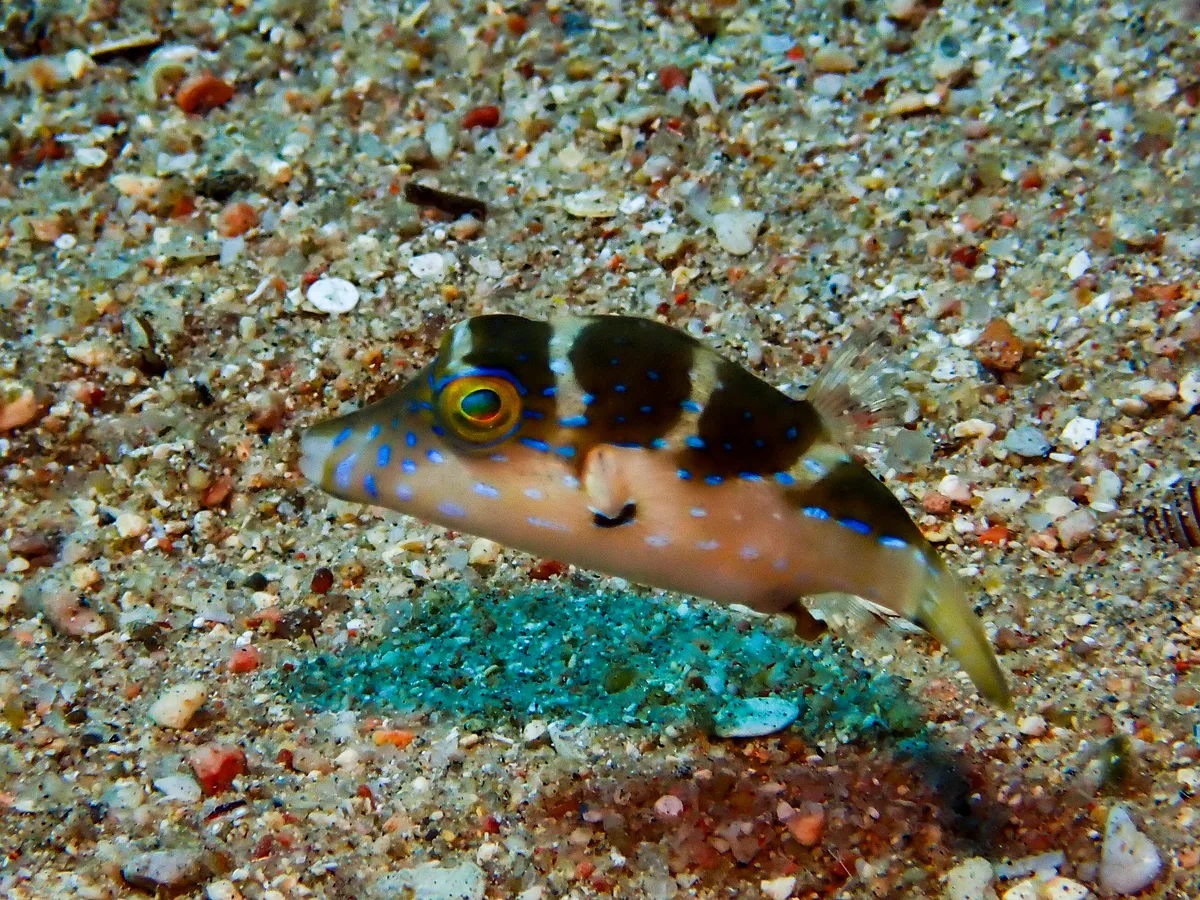
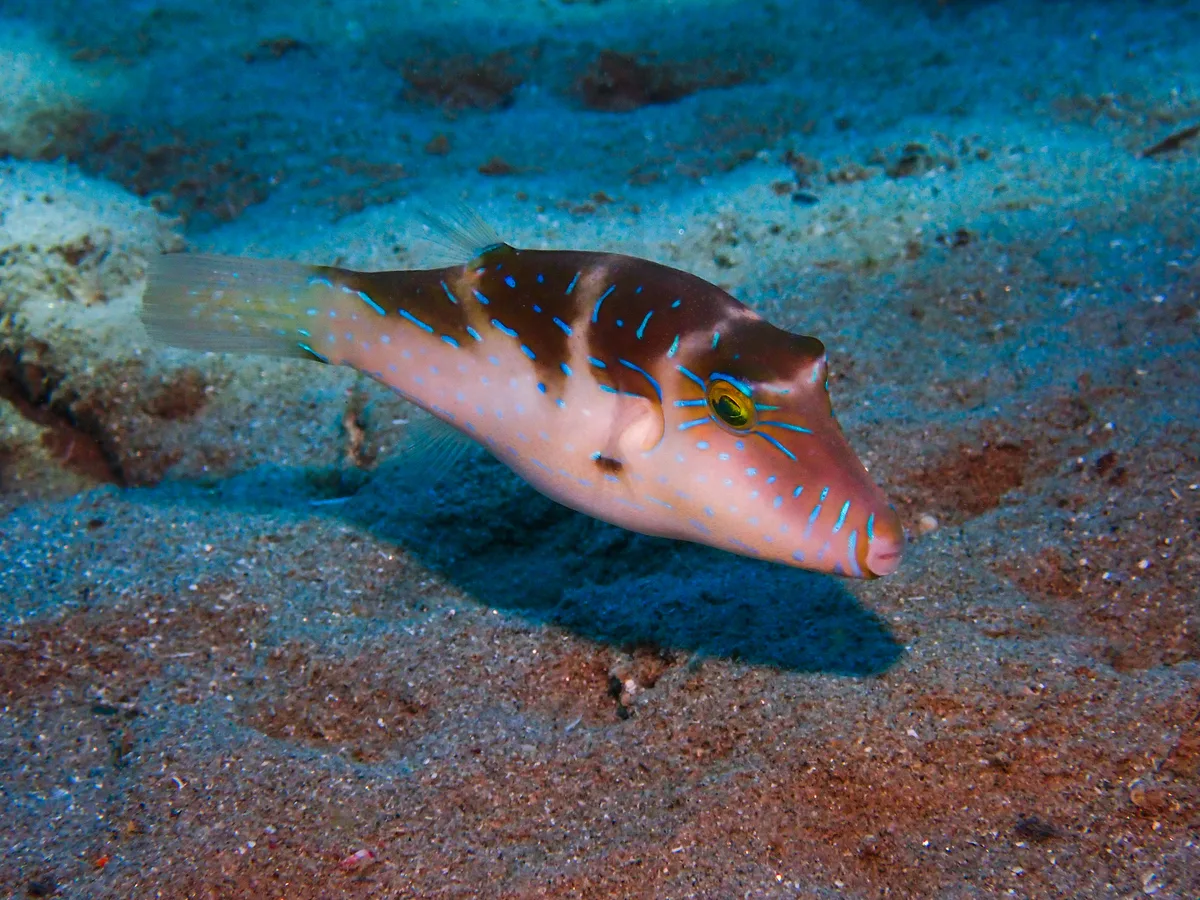
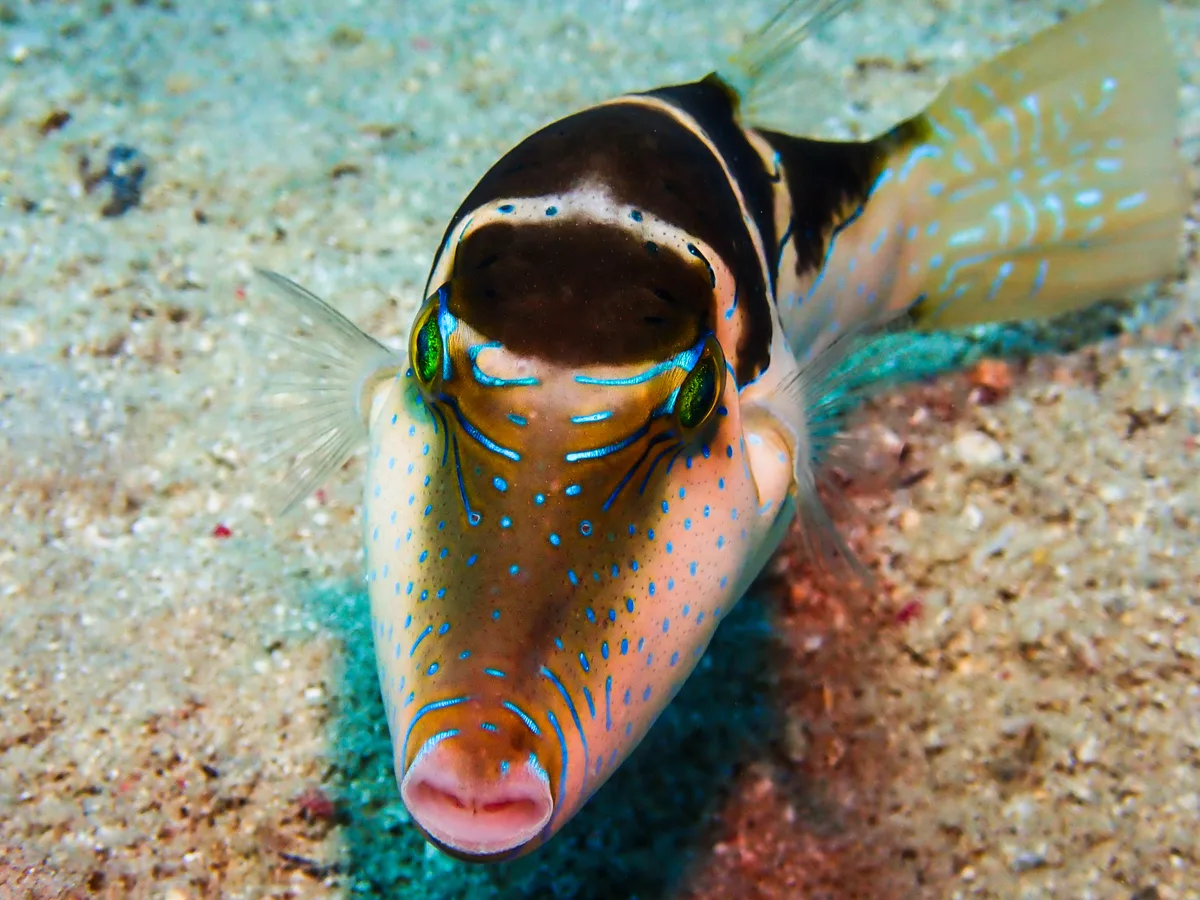
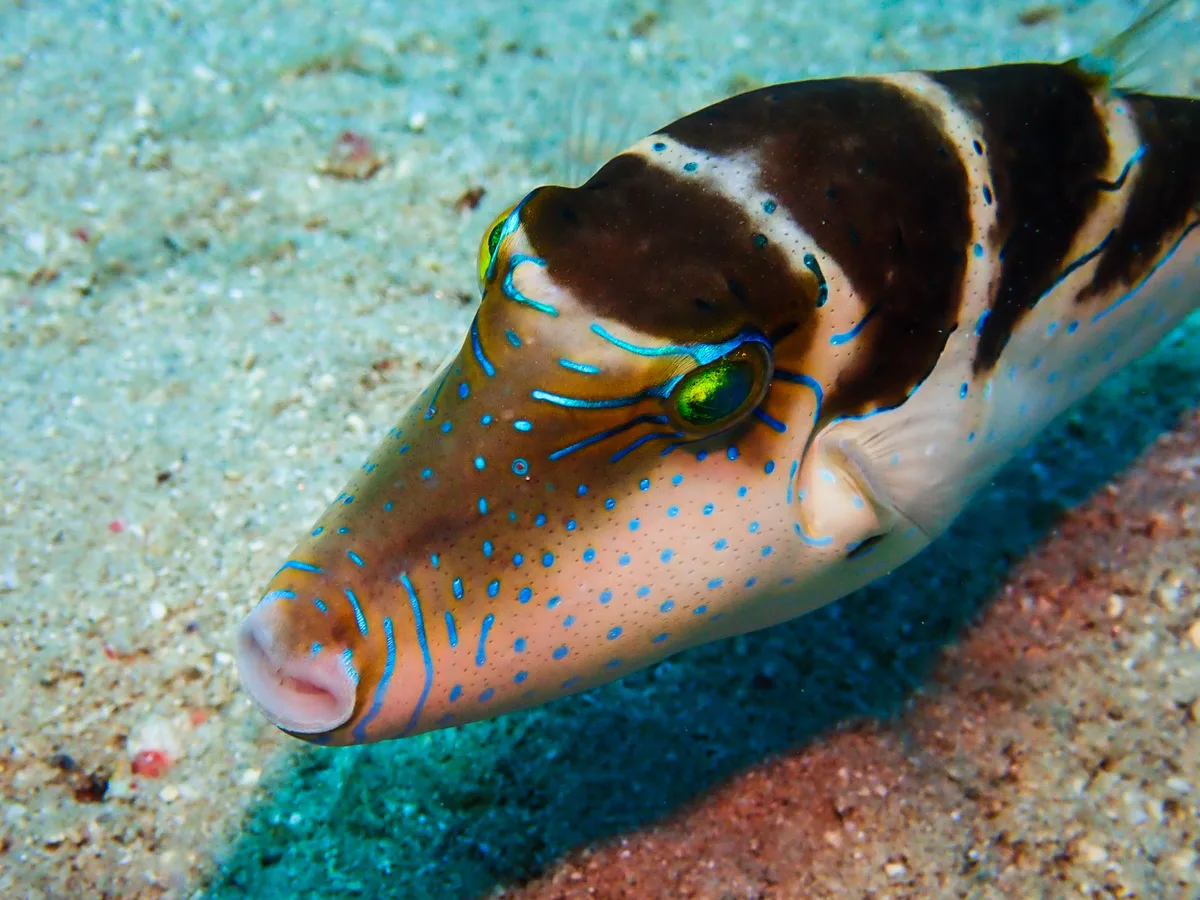
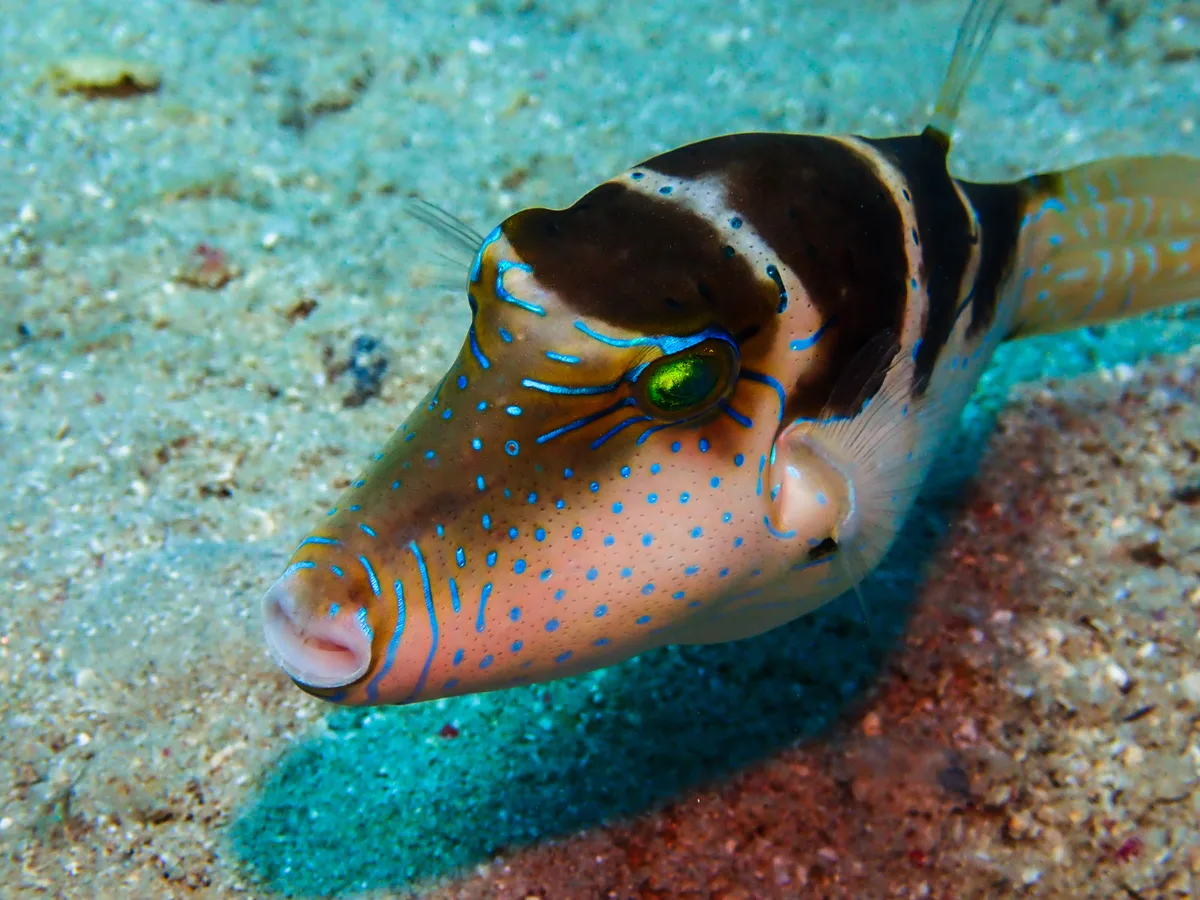
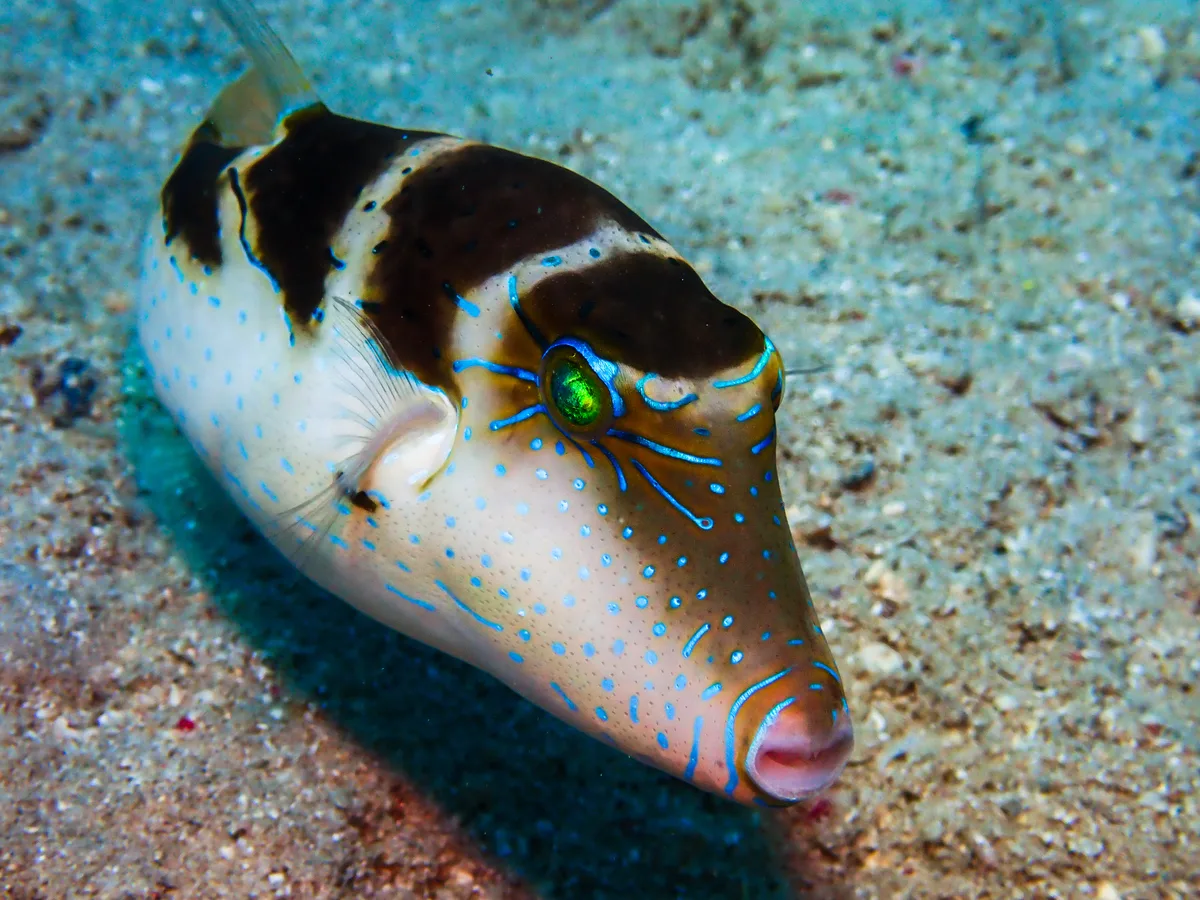
Canthigaster cyanospilota, commonly known as the blue-spotted toby, is a species of pufferfish in the Tetraodontidae family. This species inhabits the 🌊 Indian Ocean, including the 🌊 Red Sea and the Gulf of Aqaba. It lives in marine environments, particularly subtropical, demersal zones at depths ranging from 3 to 80 meters (10 to 262 feet). With a maximum length of 10.4 centimeters (about 4 inches), the blue-spotted toby is typically solitary and resides on seaward reefs with sand-rubble bottoms.

The anatomical features of this pufferfish include 9 to 11 dorsal soft rays, 8 to 10 anal soft rays, and 17 vertebrae. Its body has a depth between the origins of the dorsal and anal fins measuring approximately 3.15 to 3.6 times its standard length (SL), while the head length is around 2.2 to 2.5 times in SL. The interorbital width is about 4.25 to 4.85 times in the head length, with the gill opening length ranging from 5.4 to 6.5 times in head length. The anal fin originates posterior to the rear base of the dorsal fin, with a preanal length of 1.25 to 1.35 times in SL.

The preserved color of Canthigaster cyanospilota is typically pale grey to tan, displaying three oblique, saddle-like brown bars on its body and various brown dots and lines on the head and body. Some specimens from the 🌊 Red Sea have these markings within the saddles. The pectoral fin base features a dark brown spot, and a midventral brown line appears on the head and abdomen. The fins are pale yellowish. In living specimens, the dark dots and lines are bright blue, and the caudal fin prominently displays longitudinal blue lines or rows of small blue spots and short lines. The snout often shows green coloration dorsally.

This fish feeds on various benthic invertebrates and is listed as "Least Concern" on the IUCN Red List. The name "Canthigaster" derives from Greek, meaning the corner of the eye and stomach, while "cyanospilota" refers to its numerous small bright blue markings. The Indo-Pacific region is home to this tetraodontid fish, forming part of a complex including Canthigaster coronata.

Why it's threatened

Residential & commercial development
Housing & urban areas · Commercial & industrial areas · Tourism & recreation areas
Pollution
Sewage · Run-off · Type Unknown/Unrecorded · Oil spills · Seepage from mining · Nutrient loads · Soil erosion, sedimentation · Herbicides and pesticides · Garbage & solid waste
Climate change & severe weather
Habitat shifting & alteration · Temperature extremes

There are no known species-specific threats to C. cyanospilota. However, due to its affinity with reefs, C. cyanospilota may be undergoing population declines. In the Red Sea, which includes 17,640 km2 of coral reef area, 4% of the reefs have been effectively lost (90% mortality), while another 4% are at a critical stage with 50–90% loss of coral cover as of 2008 (Wilkinson et al. 2008). In Northern and East Asia, which include 5,400 km2 of coral reef area, 20% of the reefs have been effectively lost (90% mortality), while 22% are at a critical stage with 50–90% loss of coral cover as of 2008 (Wilkinson et al. 2008).

Threat classification from the IUCN Red List.
Comments

Please, sign in to leave a comment

Continue with a social account — yours will be created automatically.

No comments yet — be the first.

Last Update: June 28, 2026