Beyond the Horizon: 5 Reasons the Tide is Turning for Our Oceans


It is easy to get lost in the relentless cycle of environmental decline. We are constantly met with headlines of warming seas, plastic-choked currents, and the precarious state of marine life. This steady drip of "climate doom" creates a narrative where the ocean’s health feels like a foregone conclusion - a tragedy already written.
However, beneath the surface of this familiar gloom, a more resilient story is unfolding. There is a surge of evidence-based progress - real, measurable triumphs - that rarely makes the front page. These victories suggest that our oceans are not just a victim of human activity, but a biological powerhouse capable of stunning recovery when we provide the right conditions.
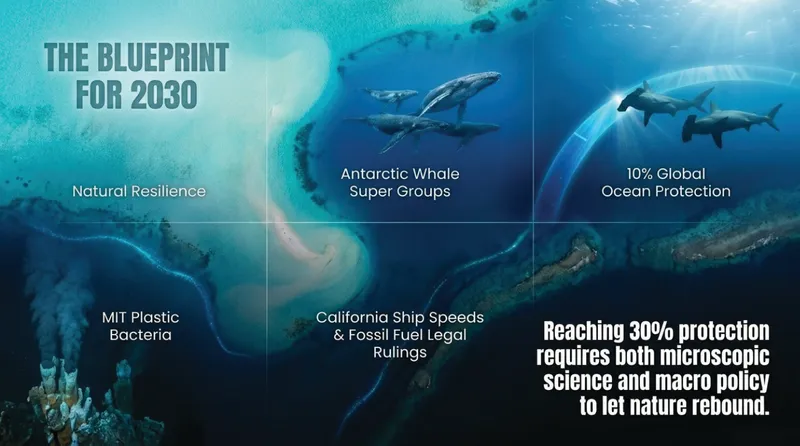
While we are far from the finish line, the following five developments represent seismic shifts in how we protect our blue planet. They prove that the tide is not just turning; it is being turned by deliberate, systemic effort. The narrative of inevitable loss is finally being replaced by a map for restoration.
1. Crossing the 10% Threshold
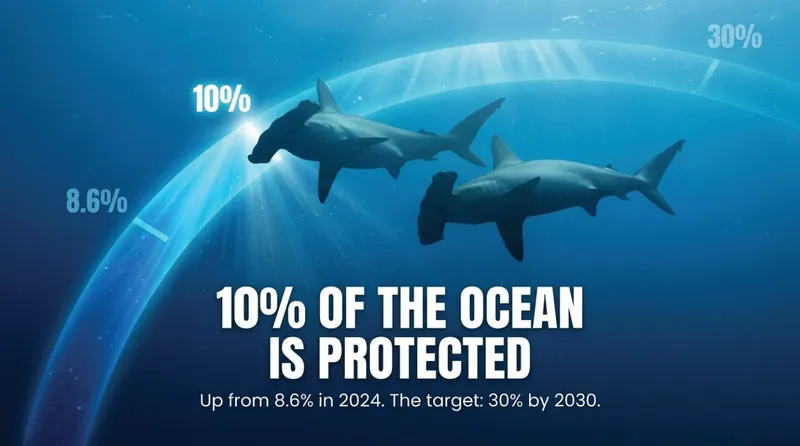
The global community recently crossed a psychological and ecological finish line. For the first time in history, more than 10% of the global ocean is officially under protection. This is not just a marginal gain; it is a rapid acceleration from the 8.6% figure recorded in early 2024.
Over 10% of the global ocean is now protected for the first time, up from 8.6% in 2024, moving toward a target of 30% by 2030.
This sudden jump reveals that we have finally hit the "steep part of the curve" in international cooperation. Reaching double digits indicates that the "30 by 30" target - the global commitment to protect 30% of the seas by 2030 - is no longer a lofty ideal, but a tangible trajectory. Nations are beginning to treat marine health as a core component of geopolitical stability rather than an afterthought.
2. The Return of the "Super Groups"
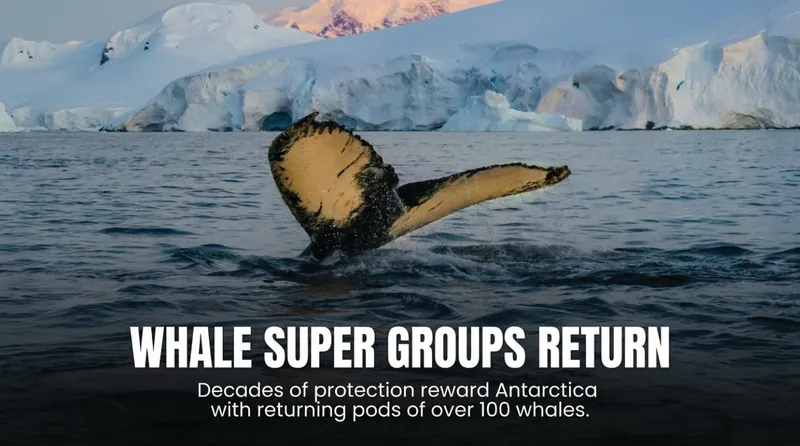
In the inky, nutrient-rich waters of Antarctica, a phenomenon once thought lost to the era of industrial whaling has reappeared. Researchers are now documenting "super groups" - dense, churning pods of over 100 whales feeding in unison. To see 1,000 tons of biology moving through a single patch of ocean, with the cacophony of a hundred blows breaking the surface against a glacial backdrop, is to witness nature’s sheer scale restored.
This recovery did not happen by accident; it is the hard-won result of decades of ironclad protection and the cessation of commercial hunting. These massive congregations are the "interest" being paid on a long-term ecological investment. They remind us that nature requires a different timeline than our own, and when given the space of generations, the biological payoff is spectacular.
3. A New Standard for the Giants
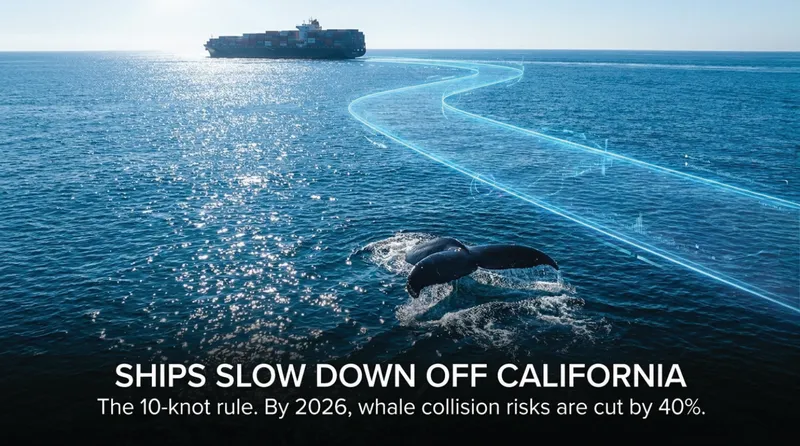
A pivotal shift in maritime logistics is about to make the California coast a sanctuary rather than a hazard. By 2026, vessels traversing most of the state’s coastline are being asked to adhere to a 10-knot speed limit. By asking the titans of global commerce to slow their pace, we are effectively removing the primary threat to migrating whales: the lethal ship strike.
Key Stat: Reducing ship speeds to 10 knots could cut the risk of whale collisions by up to 40%.
This shift highlights how a relatively simple logistical adjustment can have a disproportionately large impact on biodiversity. It demonstrates that protecting the ocean doesn't always require futuristic technology. Often, it just requires the humility to adjust the "speed" of human industry to accommodate the natural rhythms of the creatures that were there first.
4. MIT’s Microscopic Cleanup Crew
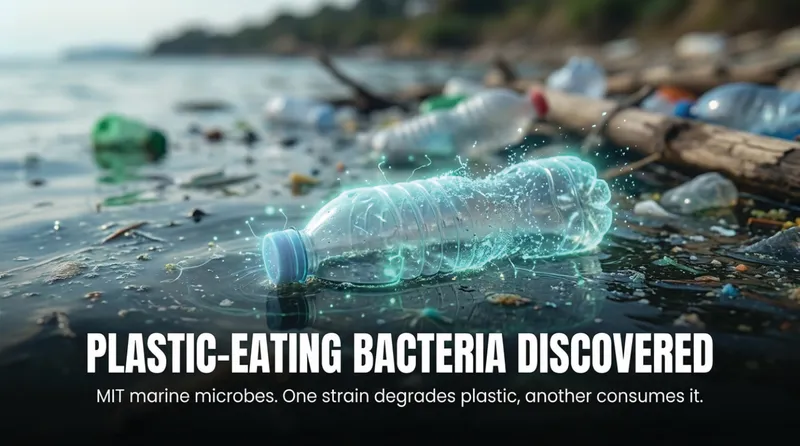
While we work on the surface, researchers at MIT are uncovering solutions hidden at the microscopic level. They have identified specific marine microbes that have evolved a remarkable "dual-action" capability to process plastic waste. This isn't just a passive occurrence; it is a complex biological sequence:
- Degradation: One strain of bacteria focuses on the physical and chemical breakdown of the plastic's structural integrity.
- Consumption: A second strain utilizes the resulting material as a source of energy, metabolically "eating" the waste.
This discovery reveals the surprising adaptability of life as it evolves to utilize human waste as a resource. It points toward a future where a technological-biological partnership could help us address deep-sea pollution that was once considered permanent. Life, it seems, is finding its own way to clean up our mess, provided we don't overwhelm it.
5. The Legal Sea Change
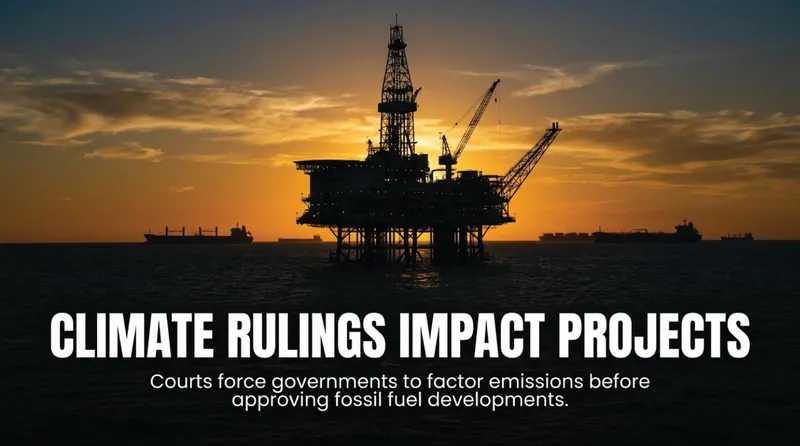
The most counter-intuitive wins are often won in the courtroom rather than on the water. A new wave of climate litigation is fundamentally rewriting the "math" of fossil fuel development. Recent court decisions are now forcing governments to legally account for future carbon emissions before any new project can be approved.
This changes the financial reality for industrial expansion. When companies are forced to factor in the environmental costs and future emissions today, projects that once looked profitable suddenly look like "stranded assets" or high-risk liabilities. By embedding conservation directly into the legal framework of development, we are ensuring that the protection of our oceans is no longer a choice, but a requirement of the law.
The Ripple Effect
These "Tides of Progress" represent a fundamental shift in the global conservation strategy. We are moving away from reactive, piecemeal efforts and toward a systemic, legal, and biological restoration of our blue world. These victories prove that conservation is not a lost cause; it is a proven strategy that yields results when given time and legal backing.
The narrative is changing, and the momentum is building. As we look toward the ambitious goals of 2030, these unseen wins provide the fuel for the journey ahead.
The evidence is clear: the ocean is ready to heal if we are willing to let it. The only question that remains is whether you are ready to trade the comfort of "climate doom" for the difficult, rewarding work of restoration.
PADI Divemaster and underwater storyteller with over 7 years of hands-on Red Sea diving experience, documenting marine life, mapping dive sites, and promoting responsible ocean conservation.